10 original Tier 2 practice questions with checked answers and explanations. Clearly labelled practice material, separate from SSC previous-year papers.
Practice provenance
These ten original questions replace unusable bank items for practice. They are not SSC PYQs and are excluded from real-PYQ mock pools. Each has a checked answer and explanation.
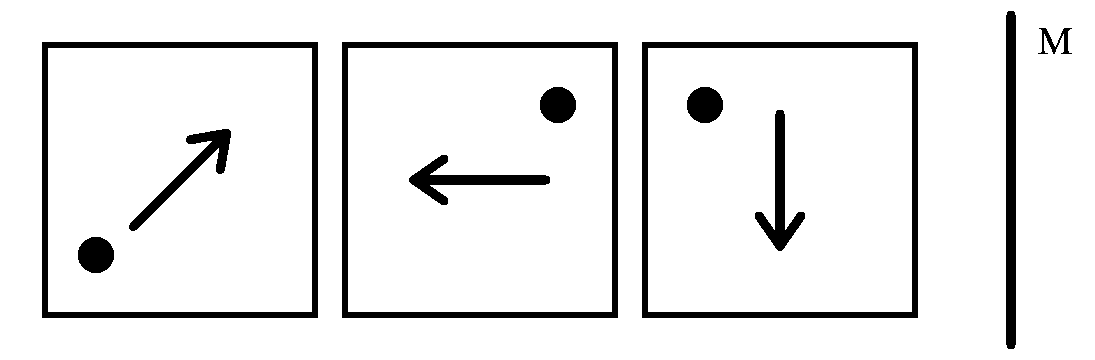
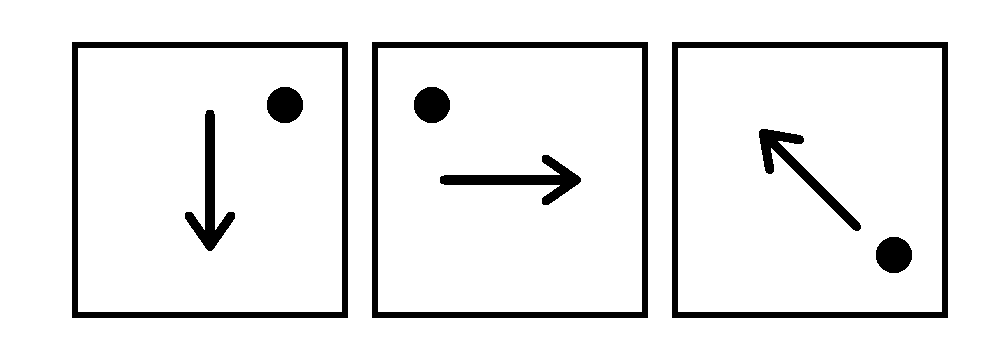
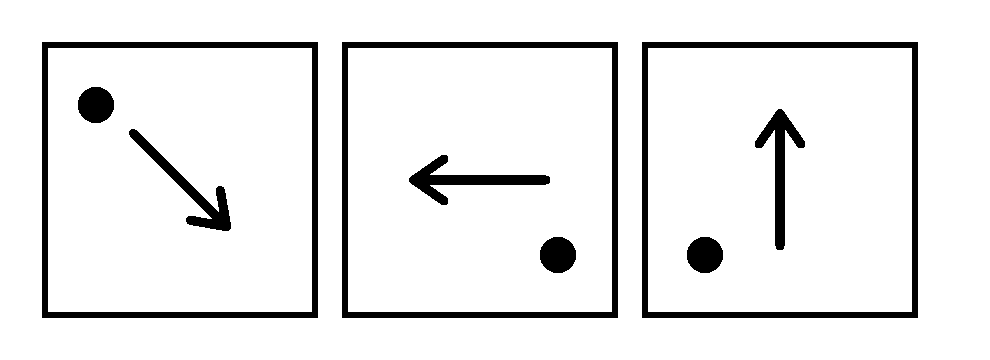
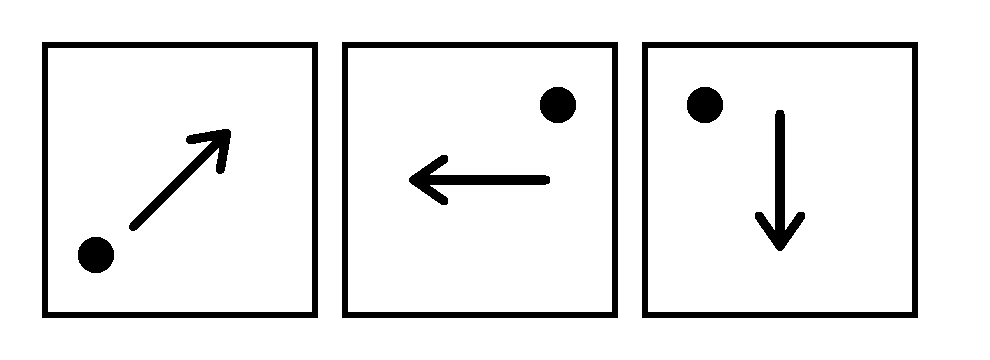
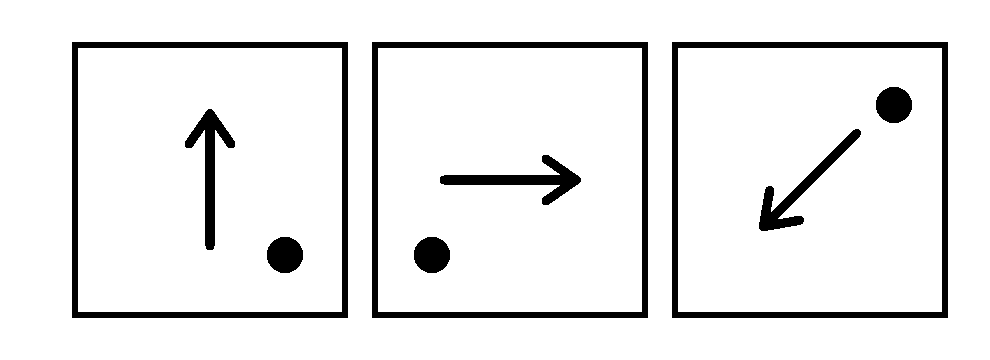
A vertical mirror is placed at line M on the right of the figure. Which option shows the mirror image of the entire arrangement?
Select to open the figure full size.
Option A
Option B
Option C
Option D
Checked practice answer: A (option 1)
Explanation:A vertical mirror reverses the order of the three cells and the horizontal direction of each arrow and dot position. Vertical positions remain unchanged.
Q2 · Non verbal reasoning: Figure completion and matching
Practice question · not from an SSC paper
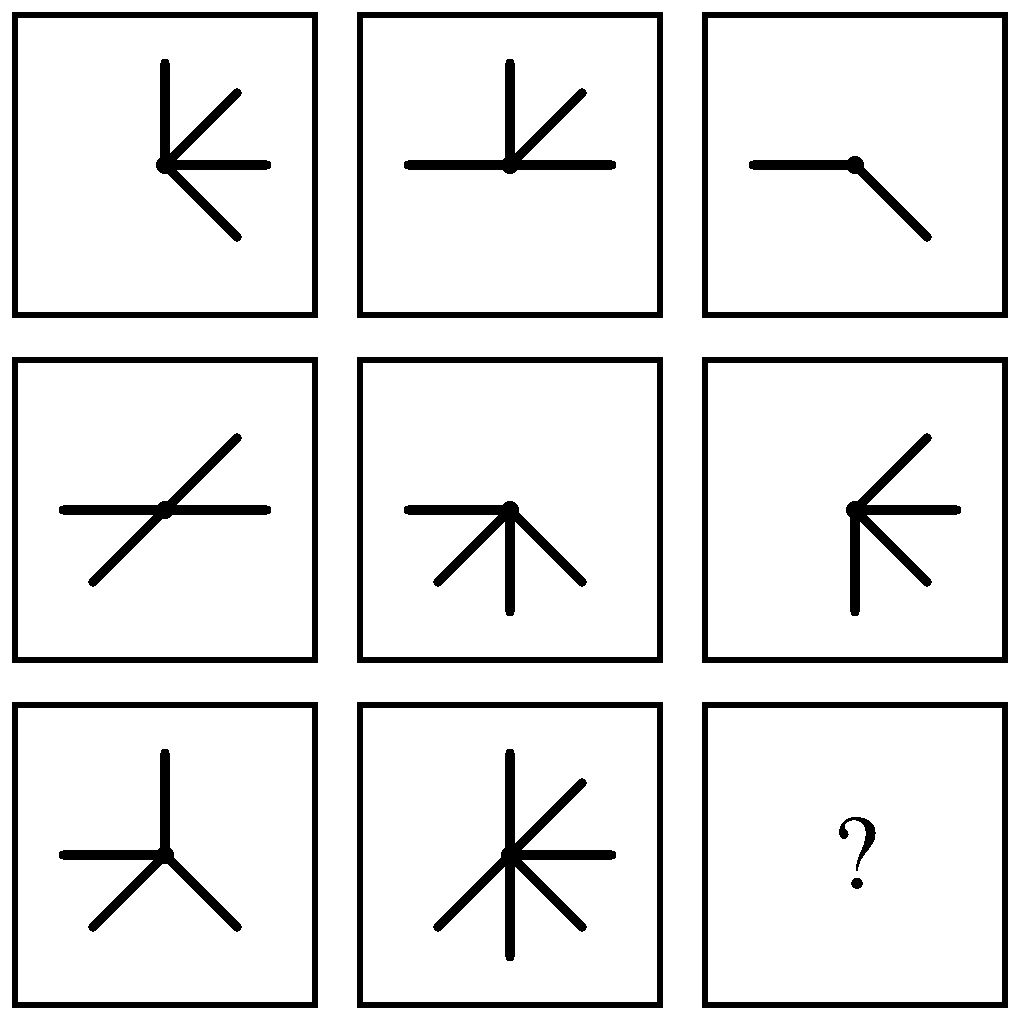
Within each row, the third figure is formed by superimposing the first two figures and deleting every spoke present in both. The square frames and centre points are only guides. Which option replaces the missing figure?
Select to open the figure full size.
Option A
Option B
Option C
Option D
Checked practice answer: B (option 2)
Explanation:Cancel the spokes common to the first two cells of the last row. Keep every spoke that appears in exactly one of those cells.
Q3 · Non verbal reasoning: Figure completion and matching
Practice question · not from an SSC paper
Rotate the entire square pattern through 90∘ clockwise, then reflect the result in a vertical mirror. Which option shows the final pattern?
Select to open the figure full size.
Option A
Option B
Option C
Option D
Checked practice answer: B (option 2)
Explanation:Apply the clockwise rotation first, and then reverse the left-to-right order of the cells in each row. The order of operations matters.
Q4 · Non verbal reasoning: Counting figures
Practice question · not from an SSC paper
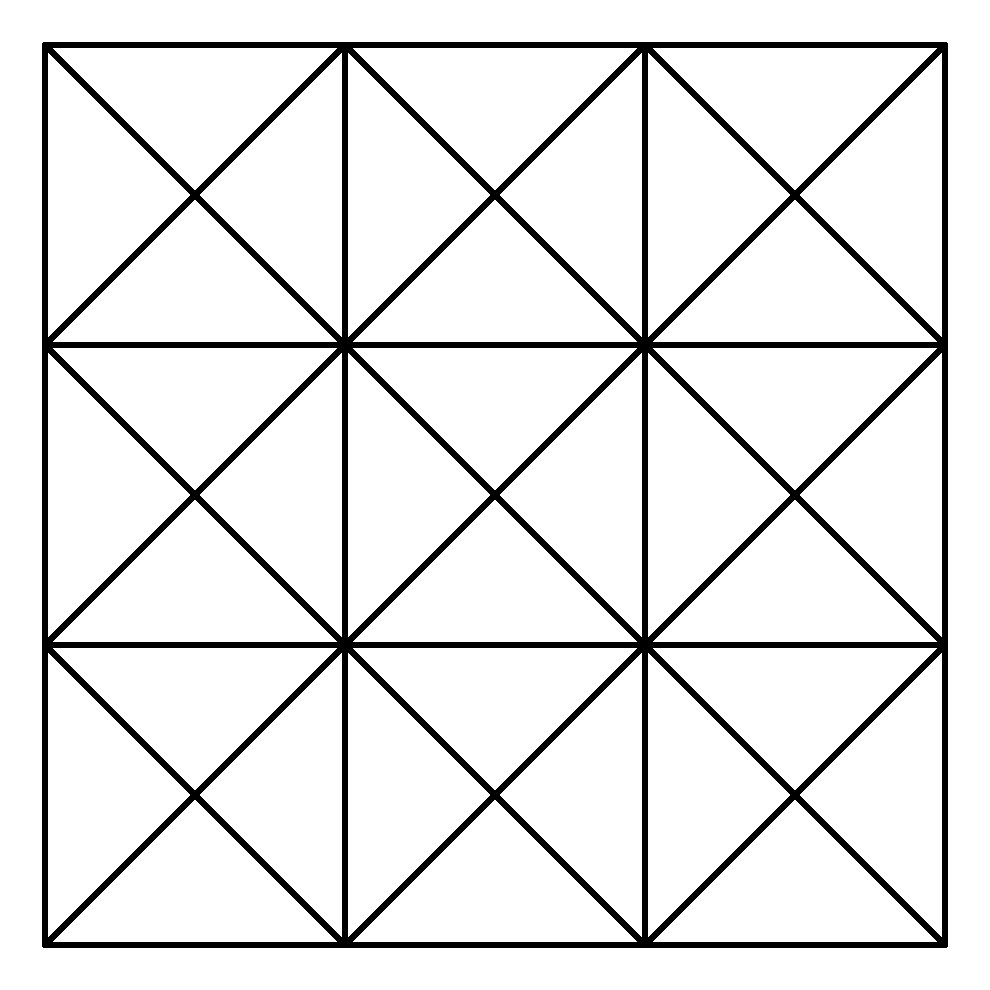
How many squares of all sizes and orientations are present in the figure? Count a square only when all four of its sides are fully drawn.
Select to open the figure full size.
29
26
31
35
Checked practice answer: C (option 3)
Explanation:There are 9+4+1=14 squares aligned with the grid. The diagonals form another 12 squares of side length 21 unit and 5 of side length 2 units. Thus the total is 14+12+5=31.
English Language and Comprehension
Q1 · Reading comprehension: Passage comprehension
Practice question · not from an SSC paper
Reading passage
A town reading room had two shelves of books requested by members. Volunteers proposed lending these books for a small refundable deposit. They expected that lending would make the collection useful to people who could not spend an afternoon in the room. A committee member objected that a deposit, although refundable, would still exclude readers who could not spare the money.
Rather than settle the disagreement by a vote, the volunteers offered lending without a deposit for four weeks. They recorded every loan and asked borrowers to return books within seven days. Loans increased, and most books came back on time. The volunteers called the trial a success. However, a regular visitor pointed out that the register recorded people who borrowed books, not people who arrived and found the books they wanted unavailable. She had stopped requesting two popular titles after finding them absent on successive visits.
The committee therefore kept the register but added a request slip beside each empty space. A reader could name an unavailable book and say whether another title would meet the need. The slips were not treated as votes against lending. They were intended to reveal a cost that the loan register could not show.
At the next meeting, the committee continued lending but shortened the loan period only for titles that repeatedly appeared on the slips. It did not conclude that every missing book represented an unmet need: a reader might be satisfied by an alternative. Nor did it assume that readers who made no request had found what they wanted. The trial had answered whether books would circulate. It had not, by itself, answered whether access had improved for everyone.
Which conclusion about the first four-week trial is best supported by the passage?
It established that a refundable deposit would have prevented the shortage of popular titles.
It showed that readers who found books unavailable generally preferred to borrow a different title.
It showed that lending was used, but did not measure how it affected readers who wanted books that were already on loan.
It established that lending without a deposit improved access for every member of the reading room.
Checked practice answer: C (option 3)
Explanation:The register measured loans and timely returns. It did not record the needs of readers who encountered an empty space, so increased circulation did not establish improved access for everyone.
Q2 · Reading comprehension: Passage comprehension
Practice question · not from an SSC paper
Reading passage
A town reading room had two shelves of books requested by members. Volunteers proposed lending these books for a small refundable deposit. They expected that lending would make the collection useful to people who could not spend an afternoon in the room. A committee member objected that a deposit, although refundable, would still exclude readers who could not spare the money.
Rather than settle the disagreement by a vote, the volunteers offered lending without a deposit for four weeks. They recorded every loan and asked borrowers to return books within seven days. Loans increased, and most books came back on time. The volunteers called the trial a success. However, a regular visitor pointed out that the register recorded people who borrowed books, not people who arrived and found the books they wanted unavailable. She had stopped requesting two popular titles after finding them absent on successive visits.
The committee therefore kept the register but added a request slip beside each empty space. A reader could name an unavailable book and say whether another title would meet the need. The slips were not treated as votes against lending. They were intended to reveal a cost that the loan register could not show.
At the next meeting, the committee continued lending but shortened the loan period only for titles that repeatedly appeared on the slips. It did not conclude that every missing book represented an unmet need: a reader might be satisfied by an alternative. Nor did it assume that readers who made no request had found what they wanted. The trial had answered whether books would circulate. It had not, by itself, answered whether access had improved for everyone.
Which assumption most directly supports the committee's decision to shorten the loan period only for titles repeatedly named on the slips?
Every reader who does not submit a slip has obtained a satisfactory alternative.
Borrowers will stop using the lending service if the loan period is shortened for all titles.
A title borrowed many times must also be the title that readers most often fail to obtain.
Repeated requests for an unavailable title provide more relevant evidence of pressure on that title than the overall number of loans does.
Checked practice answer: D (option 4)
Explanation:The decision is title-specific. Repeated requests identify pressure on particular titles, whereas the total number of loans cannot identify which titles are unavailable when needed.
Q3 · Reading comprehension: Passage comprehension
Practice question · not from an SSC paper
Reading passage
A town reading room had two shelves of books requested by members. Volunteers proposed lending these books for a small refundable deposit. They expected that lending would make the collection useful to people who could not spend an afternoon in the room. A committee member objected that a deposit, although refundable, would still exclude readers who could not spare the money.
Rather than settle the disagreement by a vote, the volunteers offered lending without a deposit for four weeks. They recorded every loan and asked borrowers to return books within seven days. Loans increased, and most books came back on time. The volunteers called the trial a success. However, a regular visitor pointed out that the register recorded people who borrowed books, not people who arrived and found the books they wanted unavailable. She had stopped requesting two popular titles after finding them absent on successive visits.
The committee therefore kept the register but added a request slip beside each empty space. A reader could name an unavailable book and say whether another title would meet the need. The slips were not treated as votes against lending. They were intended to reveal a cost that the loan register could not show.
At the next meeting, the committee continued lending but shortened the loan period only for titles that repeatedly appeared on the slips. It did not conclude that every missing book represented an unmet need: a reader might be satisfied by an alternative. Nor did it assume that readers who made no request had found what they wanted. The trial had answered whether books would circulate. It had not, by itself, answered whether access had improved for everyone.
Which finding would most weaken the claim that shorter loans for repeatedly requested titles reduced unmet reading needs?
Volunteers needed slightly longer to record the dates on which the selected titles were due.
Some borrowers returned the selected titles before the shorter deadline.
The number of distinct titles borrowed increased after the shorter loan periods were introduced.
The same readers continued to report that they could not obtain those titles when needed, even though the titles were returned more frequently.
Checked practice answer: D (option 4)
Explanation:More frequent returns are a circulation measure. Continued inability to obtain the requested titles directly challenges the claim about reduced unmet needs; the other findings do not establish that access remained unsatisfied.
Statistics
Q1 · Probability distributions: Random variables and distributions
Practice question · not from an SSC paper
The joint probability density of X and Y is f(x,y)=kx for 0<y<x<2, and zero elsewhere, where k is the normalising constant. Find P(X+Y>2∣Y<1).
115
116
165
85
Checked practice answer: A (option 1)
Explanation:Normalisation gives k=83. The probability of Y<1 is k[∫01x2dx+∫12xdx]=1611. The joint event has probability k∫12x(x−1)dx=165. Their ratio is 115.
Q2 · Descriptive statistics: Dispersion
Practice question · not from an SSC paper
Group A contains 8 observations with mean 12 and variance 9. Group B contains 12 observations with mean 17 and variance 4. Each A observation x is replaced by 2x+1, and each B observation y is replaced by y−3. What is the population variance of the combined 20 transformed observations? Each stated variance uses its group size as the divisor.
251146
584
251098
251218
Checked practice answer: A (option 1)
Explanation:The transformed group means are 25 and 14, and variances are 36 and 4. The combined mean is 592. Including within-group and between-group variation gives 208[36+(25−92/5)2]+12[4+(14−92/5)2]=251146.
Q3 · Probability distributions: Random variables and distributions
Practice question · not from an SSC paper
Let X have a binomial distribution with 5 trials and success probability 31. Define Y=∣X−2∣. Find P(Y=2∣Y>0).
16310
16342
8114
16332
Checked practice answer: B (option 2)
Explanation:The event Y=2 is X=0 or X=4, with total probability 24332+10. The event Y>0 excludes X=2, whose probability is 24380. Thus the conditional probability is 243−8042=16342.