96 questions available to read. Bina signup padho; timed practice ke liye free sign in karo.
Archive coverageThis saved paper contains 100 of 100 expected questions. 4 stored records are excluded from this study page while their source or wording is checked. Missing original questions: 0. Local question numbers follow the saved archive; match the wording and choices when comparing another response sheet.
Archived marked answers and available solution notes are preserved. These are not claimed to be fully checked final SSC keys. How questions are checked.
Reasoning
Q1 · Series
In the following question, select the missing number from the given series.
169, 196, 225, 256, ?
- 289
- 343
- 441
- 384
Answer aur solution dekho
Archived marked answer: A
The logic followed here is:
169 = 13²
196 = 14²
225 = 15²
256 = 16²
Next
17² = 289
The missing number in the series is 289.
Hence, the correct answer is Option 1.
Q2 · Series
If H = 17, I = 19, J = 21, then M = ?
- 23
- 29
- 25
- 27
Answer aur solution dekho
Archived marked answer: D
The logic followed here is:
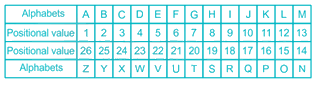 H = 17, I = 19, J = 21
The letters are increasing by one (H, I, J) and the numbers are increasing by 2 each time (17, 19, 21)
M:
H → 17 I → 19 J → 21 K → 23 L → 25 M → 27
Hence, the correct answer is Option 4.
Q3 · Series
Alphanumeric Series: W % ^ K V P 1 I 7 E O & 2 9 A F Z N 4 * @ U ? M What is the second element from the right of the 7th element from left?
- P
- 1
- 7
- ?
Answer aur solution dekho
Archived marked answer: C
The logic followed here:
Counting from left:
1 → W
2 → %
3 → ^
4 → K
5 → V
6 → P
7 → 1
The 7th element from the left is 1.
Find the second element from the right of 1.
Elements to the right of 1 are:
I (1st), 7 (2nd), E (3rd), ...
The second element from the right of 1 is 7.
Hence, the correct answer is Option 3.
Q4 · Analogy
Solve: BG : DJ :: FM : ?
- IP
- HM
- KP
- HP
Answer aur solution dekho
Archived marked answer: D
The logic followed here is:
BG : DJ
Analyze the pattern for letters:
B →+2 D ,G →+3 J
F → H (+2) M → P (+3)
FM : HP
the correct answer is Option 4.
Q5 · Analogy
In a code language, CHAIR becomes BGBHQ, what is the code for STOOL?
- RSPNK
- RSPML
- RSQMK
- RSPKN
Answer aur solution dekho
Archived marked answer: A
The logic followed here:
C → B (−1)
H → G (−1)
A → B (+1)
I → H (−1)
R → Q (−1)
The pattern is:
−1, −1, +1, −1, −1
STOOL:
S → R (−1)
T → S (−1)
O → P (+1)
O → N (−1)
L → K (−1)
So, STOOL → RSPNK
Hence, the correct answer is Option 1. Q6 · Analogy
What comes next in the series?
M, N, P, S, W, ?
- X
- Z
- A
- B
Answer aur solution dekho
Archived marked answer: D
The logic followed here:
M = 13
N = 14 (+1)
P = 16 (+2)
S = 19 (+3)
W = 23 (+4)
The pattern is increasing by +1, +2, +3, +4.
Next increase should be +5.
23 + 5 = 28
Hence, the correct answer is Option 4. Q7 · Analogy
What comes next?
PL, OK, NJ, ?
- LH
- MI
- KG
- JF
Answer aur solution dekho
Archived marked answer: B
The logic followed here:
First letters:
P → O → N → ?
(Each step −1)
N − 1 = M
Second letters:
L → K → J → ?
(Each step −1)
J − 1 = I
So, the next pair is MI.
Hence, the correct answer is Option 2. Q8 · Analogy
If FRIEND is coded as HUMJTK, how is CANDLE written in that code?
- EDOFMG
- EDRIRL
- DCPEMG
- DCQFME
Answer aur solution dekho
Archived marked answer: B
The logic followed here:
F → H (+2)
R → U (+3)
I → M (+4)
E → J (+5)
N → T (+6)
D → K (+7)
The pattern is increasing by +2, +3, +4, +5, +6, +7.
CANDLE:
C → E (+2)
A → D (+3)
N → R (+4)
D → I (+5)
L → R (+6)
E → L (+7)
CANDLE → EDRIRL
Hence, the correct answer is Option 2. Q9 · Analogy
Find the missing number: 10 : 21 :: 12 : ?
- 20
- 21
- 24
- 25
Answer aur solution dekho
Archived marked answer: D
The logic followed here is:
10 : 21
10 × 2 + 1 = 21
Apply the same pattern to 12
12 × 2 + 1 = 25
the missing number is 25.
Hence, the correct answer is 25.
Q10 · Analogy
Complete the series.
7, 14, 12, 24, 22, ?
- 44
- 40
- 45
- 42
Answer aur solution dekho
Archived marked answer: A
The logic followed here:
7 × 2 = 14
14 − 2 = 12
12 × 2 = 24
24 − 2 = 22
The pattern is:
×2, −2, ×2, −2, ...
22 × 2 = 44
Hence, the next number is 44.
Hence, the correct answer is Option 1.
Q11 · Puzzle Subtypes Not To Miss
If 9 @ 3 = 12, 5 @ 2 = 7, 8 @ 1 = 9, then 7 @ 4 = ?
- 11
- 10
- 13
- 12
Answer aur solution dekho
Archived marked answer: A
The logic followed here is:
9 @ 3 = 12
5 @ 2 = 7
8 @ 1 = 9
the pattern follow is:
@ means: first number + second number
9 + 3 = 12
5 + 2 = 7
8 + 1 = 9
7 @ 4:
7 + 4 = 11
7 @ 4 = 11
Hence, the correct answer is Option 1.
Q12 · Puzzle Subtypes Not To Miss
Direction: Read the information given below and answer the question that follows.
There is office of eight companies - Airtel, Amazon, Facebook, Flipkart, Google, HCL, Infosys and Jio on different floor of 8-storey building. The bottommost floor is numbered as 1 while the topmost floor is numbered as 8. At least two companies have offices above the office of Flipkart. Neither Facebook nor Google has office adjacent to the office of HCL. The office of Flipkart is two floors above the office of Jio. The office of Airtel is on even numbered floor. The office of HCL is on 7th floor and is not adjacent to office of Airtel. The office of Infosys is neither on any even numbered floor nor on any prime numbered floor. There is one floor between the office of Facebook and Google.
How many floors are above the office of Google?
- Cannot be determined
- Two
- Three
- Five
Answer aur solution dekho
Archived marked answer: A
Fixed Positions (Common in all valid cases):
- HCL = 7th floor
- Infosys = 1st floor
- Facebook & Google have one floor between them
- Neither Facebook nor Google adjacent to HCL(so not on 6 or 8)
- Airtel even numbered and not adjacent to 7 (so not on 6 or 8)
Case 1A: Flipkart = 4, Jio = 2
Floor
Company
8
Amazon
7
HCL
6
Airtel
5
Google
4
Flipkart
3
Facebook
2
Jio
1
Infosys
Google → 5 → Floors above = 3
Case 1B: Flipkart = 4, Jio = 2
Floor
Company
8
Amazon
7
HCL
6
Airtel
5
Facebook
4
Flipkart
3
Google
2
Jio
1
Infosys
Google → 3 → Floors above = 5
Case 2A: Flipkart = 5, Jio = 3
Floor
Company
8
Amazon
7
HCL
6
Airtel
5
Flipkart
4
Google
3
Jio
2
Facebook
1
Infosys
Google → 4 → Floors above = 4
Case 2B: Flipkart = 5, Jio = 3
Floor
Company
8
Amazon
7
HCL
6
Airtel
5
Flipkart
4
Facebook
3
Jio
2
Google
1
Infosys
Google → 2 → Floors above = 6
Case 3: Flipkart = 6, Jio = 4
Floor
Company
8
Amazon
7
HCL
6
Flipkart
5
Google
4
Jio
3
Facebook
2
Airtel
1
Infosys
Google → 5 → Floors above = 3
Conclusion
Possible number of floors above Google = 3, 4, 5 or 6
Therefore answer is clearly:
Hence the correct option is Option 1.
Q13 · Classification Odd One Out
Which roll number is a perfect cube?
- 216
- 225
- 243
- 256
Answer aur solution dekho
Archived marked answer: A
The logic followed here is:
1³ = 1, 2³ = 8, 3³ = 27, 4³ = 64, 5³ = 125, 6³ = 216, 7³ = 343
216 = 6³ is perfect cube
225 Not a cube
243 Not a cube
256 Not a cube
Hence, the correct answer is Option 1.
Q14 · Classification Odd One Out
What is the next number in the series?
1, 3, 9, 27, __
- 72
- 80
- 81
- 90
Answer aur solution dekho
Archived marked answer: C
The logical followed here:
1 × 3 = 3
3 × 3 = 9
9 × 3 = 27
The series is multiplied by 3 each time.
27 × 3 = 81
the next number in the series is 81.
Hence, the correct answer is "Option 3".
Q15 · Classification Odd One Out
If MAP is coded as 13116, what is the code for LAP?
- 12116
- 12115
- 12117
- 12114
Answer aur solution dekho
Archived marked answer: A
The logic followed here:
MAP → 13116
M = 13
A = 1
P = 16
So, MAP → 13 1 16
Now for LAP:
L = 12
A = 1
P = 16
LAP → 12 1 16 → 12116
Hence, the correct answer is Option 1. Q16 · Logical Reasoning
Read the following statement carefully and identify the conclusion that follows.
Statement: All poets are writers. Some writers are thinkers. All thinkers are critics.
Conclusions:
I. Some poets are critics.
II. Some writers are critics.
- Only II follows
- Only I follows
- Both I and II follow
- Neither I nor II follows
Answer aur solution dekho
Archived marked answer: A
Given Statements:
The least possible Venn diagram for the given statement is:
Conclusions:
I. Some poets are critics – False
(Because, no definite relation is given between Poets and Thinkers. The writers who are thinkers may or may not be poets.)
II. Some writers are critics – True
(Because, some writers are thinkers and all thinkers are critics.)
So, Only conclusion II follows.
Hence, the correct answer is Option 1.
Q17 · Logical Reasoning
Read the following statement carefully and identify the conclusion that follows.
Statement: Some stars are planets. No planet is a comet.
Conclusions:
I. Some stars are not comets.
II. All comets are planets.
- Only I follows
- Only II follows
- Both I and II follow
- Neither I nor II follows
Answer aur solution dekho
Archived marked answer: A
Given Statements:
Some stars are planets.
No planet is a comet.
The least possible Venn diagram for the given statement is:
Conclusions:
I. Some stars are not comets – True
(Because, the stars which are planets cannot be comets, as no planet is a comet.)
II. All comets are planets – False
(Because, the statement clearly says no planet is a comet, so this is not possible.)
So, Only conclusion I follows.
Hence, the correct answer is Option 1
Q18 · Alphabet Test
By rearranging the letters of 'AEGORST,' we get a meaningful English word of seven letters. Each letter is denoted with a different number as shown in the table below.
The combination of the numbers for a meaningful word is ______.
1 2 3 4 5 6 7
A E G O R S T
- 5412367
- 3245671
- 6745132
- 5267413
Answer aur solution dekho
Archived marked answer: C
The logic followed here is:
A
E
G
O
R
S
T
1
2
3
4
5
6
7
Rearrange the letters to form a meaningful seven-letter English word.
Rearranging the letters, we get the word: STORAGE
S → 6, T → 7, O → 4, R → 5, A → 1, G → 3, E → 2
STORAGE is 6745132.
Therefore, the correct answer is Option 3.
Q19 · Alphabet Test
Which one is not like the others?
- Curtain
- Pillow
- Brain
- Mattress
Answer aur solution dekho
Archived marked answer: C
The logic followed here is:
Curtain, Pillow, Brain, Mattress
Curtain, Pillow, and Mattress are items used in a bedroom or for sleeping.
Brain is a part of the human body and not a bedroom item.
Hence, the correct answer is Option 3.
Q20 · Alphabet Test
Find the odd one out:
Python, Java, HTML, C++, Ruby
- Python
- Java
- HTML
- Ruby
Answer aur solution dekho
Archived marked answer: C
Given words:
Python, Java, C++ and Ruby are programming languages.
HTML is a markup language, not a programming language.
HTML is the odd one out.
Hence, the correct answer is Option 3.
Q21 · Similarity and Differences
Choose the address that is exactly the same as the one given below.
House No. 18, Sector 17, Chandigarh - 160017
- House No. 18, Sector 17, ChandIgarh - 160017
- House No. 18, Sector i7, Chandigarh - 160017
- House No. 18, Sector 17, Chandigarh - 160017
- House No. 18, Sector 17, Chandigerh - 160017
Answer aur solution dekho
Archived marked answer: C
House No. 18, Sector 17, ChandIgarh - 160017 ('I' instead of 'i' in word Chandigarh)
House No. 18, Sector i7, Chandigarh - 160017 (i7 instead of 17)
House No. 18, Sector 17, Chandigarh - 160017 (*Exactly same*)
House No. 18, Sector 17, Chandigerh - 160017 (Spelling mistake in word Chandigarh)
Hence, the correct option is Option (3).
Q22 · Logical Statement Questions
Read the following statement carefully and identify the action that follows.
Statement: A company is facing frequent data breaches. Course of Action:
1. Hire a cybersecurity team.
2. Shut down the IT infrastructure.
- Only 1 follows
- Only 2 follows
- Both follow
- Neither follows
Answer aur solution dekho
Archived marked answer: A
The logic followed here is:
Course of Action 1:
Hiring a cybersecurity team directly addresses the problem of data breaches. It is a practical and effective solution.
Course of Action 2:
Shutting down the entire IT infrastructure is an extreme and impractical step. It would stop company operations instead of solving the issue prope
Hence, the correct answer is Option 1 (Only 1 follows).
Q23 · Miscellaneous Other Possibilities
You're a municipal officer and a factory dumps waste in the river at night. What should you prioritize?
- Wait for higher authorities to act.
- Fine the factory after a month.
- Secretly record the act and leak it.
- Take legal action and inform environment department.
Answer aur solution dekho
Archived marked answer: D
Wait for higher authorities to act – Not appropriate (Immediate environmental damage is occurring, and delaying action can worsen the situation.)
Fine the factory after a month – Not appropriate (Delaying enforcement allows the factory to continue polluting and does not address the urgency of the issue.)
Secretly record the act and leak it – Not appropriate (Leaking information is not an official or lawful action and may create legal and ethical complications.)
Take legal action and inform environment department – Appropriate (It ensures immediate lawful intervention, proper documentation, and coordination with the concerned environmental authorities.)
Hence, the correct answer is option 4.
Q24 · Clock and Calendar
Bengaluru event: 5th October, Hyderabad:15th October Chennai event date is a perfect cube between them. What's the date?
- 1st October
- 8th October
- 14th October
- 9th October
Answer aur solution dekho
Archived marked answer: B
The logic followed here is:
Bengaluru: 5th October
Hyderabad: 15th October
Chennai which is a perfect cube lying between 5 and 15.
The perfect cubes of numbers starting from 1 are:
1³ = 1, 2³ = 8, 3³ = 27, 4³ = 64 ...
Among these, the only date between 5 and 15 is 8.
the Chennai event will be on 8th October.
Hence, the correct answer is Option 2.
Q25 · Mathematical Operations
A man buys 3 pens and 2 notebooks for ₹76. If a pen costs ₹12, what is the cost of a notebook?
- 20
- 22
- 23
- 25
Answer aur solution dekho
Archived marked answer: A
Given:
3 pens + 2 notebooks = ₹76
Cost of 1 pen = ₹12
Formula used:
Total cost = Quantity × Price
Calculation:
Cost of 3 pens
⇒ 3 × 12 = 36
Remaining amount for notebooks
⇒ 76 − 36 = 40
Cost of 2 notebooks = 40
Cost of 1 notebook
⇒ 40 ÷ 2 = 20
∴ Cost of one notebook = ₹20.
General Awareness
Q1 · Art and Culture
"Yakshagana" is a traditional folk dance from which state?
- Karnataka
- Gujarat
- Odisha
- West Bengal
Answer aur solution dekho
Archived marked answer: A
The correct answer is Karnataka.
Key Points
- Yakshagana is a traditional folk dance-drama form that originated in the state of Karnataka, India.
- It is a unique blend of dance, music, dialogue, costumes, and stage techniques with a distinct style and form.
- The performance is primarily based on mythological stories and epics such as the Ramayana and Mahabharata.
- It is traditionally performed in an open-air theatre, usually during the night, and can last for several hours, sometimes extending till dawn.
- The musical instruments used in Yakshagana include the chenda, maddale (a percussion instrument), and the harmonium, which accompany the actors' performances.
Additional Information
- Characteristics of Yakshagana:
- Yakshagana is known for its elaborate costumes, rich facial makeup, and colorful headgear, which add grandeur to the performance.
- The dance is performed by a group of artists, where one plays the role of the narrator (called Bhagavata) and the others enact the story.
- The dialogues are often improvised, making each performance unique.
- The language used is mainly Tulu or Kannada, depending on the region of the performance.
- Regional Variations:
- Yakshagana has two prominent styles: Tenkutittu (southern style) and Badagutittu (northern style).
- The Tenkutittu style is more focused on dance, while Badagutittu emphasizes dialogue delivery and dramatic performance.
- Historical Context:
- Yakshagana is believed to have originated around the 11th to 16th centuries, evolving from ancient forms of dance and drama in South India.
- It was influenced by temple arts and folk traditions, making it a significant cultural heritage of Karnataka.
- Performances and Audience:
- The performances are typically organized during festivals and special occasions, especially in rural areas of Karnataka.
- Yakshagana has also gained international recognition and is performed in various countries to showcase India's rich cultural diversity.
Important Points
- Other Folk Arts of Karnataka:
- Dollu Kunitha: A drum dance performed by men in groups, showcasing synchronized drumbeats and movements.
- Krishna Parijatha: A folk theatre form focusing on the life and stories of Lord Krishna.
- Puppetry: Karnataka is renowned for its leather puppetry shows, which narrate mythological tales.
- Yakshagana in Modern Times:
- Efforts are being made to preserve and promote Yakshagana through cultural organizations and government initiatives.
- Educational institutions in Karnataka also include Yakshagana in their cultural programs to teach younger generations about this art form.
Q2 · Indian Polity and Constitution
Which Article provides the President with the power to declare Financial Emergency?
- Article 352
- Article 356
- Article 360
- Article 365
Answer aur solution dekho
Archived marked answer: C
The correct answer is Article 360.
Key Points
- Article 360 of the Indian Constitution empowers the President of India to declare a Financial Emergency in the country if he/she is satisfied that the financial stability or credit of India or any part of its territory is threatened.
- During a Financial Emergency, the executive authority of the Union extends over all financial matters in the country.
- The President can issue directions to states to ensure financial propriety, including reducing the salaries and allowances of government employees, including those of judges of the Su
Q3 · Indian Polity and Constitution
Which of the following is the objective of the Bharatiya Sakshya Adhiniyam?
- Reduce the role of evidence in trials
- Ensure admissibility of modern evidence
- Make only physical evidence valid
- Allow anonymous evidence without checks
Answer aur solution dekho
Archived marked answer: B
The correct answer is Ensure admissibility of modern evidence.
Key Points
- The Bharatiya Sakshya Adhiniyam, also known as the Indian Evidence Act, was enacted in 1872 and has undergone amendments to incorporate modern developments in evidence law.
- The main objective of the Act is to regulate the admissibility of evidence in Indian courts to ensure justice.
- With advancements in technology, the Act has been updated to include provisions for the admissibility of modern evidence, such as electronic records and digital evidence.
- The admissibility of modern evidence ensures that contemporary forms of proof, like emails, CCTV footage, digital signatures, and electronic com
Q4 · Indian Polity and Constitution
In which year was the National Anti-Doping Agency (NADA) in India formed?
- 2000
- 2005
- 2009
- 2012
Answer aur solution dekho
Archived marked answer: B
The correct answer is 2005.
Key Points
- National Anti-Doping Agency (NADA) was established in 2005 under the aegis of the Ministry of Youth Affairs and Sports, Government of India.
- The primary purpose of NADA is to promote clean sport and ensure the integrity of athletes by preventing the use of performance-enhancing drugs.
- NADA operates in accordance with the World Anti-Doping Code, which is a set of global standards for anti-doping measures created by the World Anti-Doping Agency (WADA).
- The agency is responsible for conducting dope testing, educating athletes about anti-doping rules, and implementing awareness programs.
- NADA's jurisdiction includes domestic athletes and events, ensuring compliance with anti-doping regulations at the national level.
Additional Information
- Functions of NADA:
- Testing and Investigation: NADA conducts doping tests during competitions and outside of competitions to ensure adherence to anti-doping rules.
- Education and Awareness: The agency organizes workshops, seminars, and campaigns to educate athletes, coaches, and support staff about the consequences of doping.
- Results Management: NADA handles the process of analyzing test results and taking necessary disciplinary actions against those found guilty of doping violations.
- Coordination with WADA: NADA ensures compliance with international anti-doping standards and collaborates with WADA for global anti-doping efforts.
- World Anti-Doping Agency (WADA):
- WADA was established in 1999 as an independent agency to combat doping in sports worldwide.
- The agency introduced the World Anti-Doping Code to unify anti-doping policies globally.
- WADA's headquarters are located in Montreal, Canada, and it oversees compliance for all national anti-doping organizations.
- Significant Achievements of NADA:
- NADA has successfully conducted thousands of doping tests and implemented stringent measures for ensuring fair play in sports.
- The agency actively collaborates with international bodies like WADA and regional anti-doping organizations to enhance its capabilities.
- It has played a critical role in preventing doping scandals and maintaining India's reputation in the global sports arena.
- Anti-Doping Rules in India:
- The Anti-Doping Rules, 2021 were introduced to align with WADA's 2021 Code and improve the enforcement of anti-doping measures.
- These rules cover various aspects, including testing protocols, prohibited substances, therapeutic use exemptions (TUEs), and penalties for violations.
- They emphasize the importance of athlete education and aim to create a doping-free sports culture.
Important Points
- Prohibited Substances:
- NADA publishes a list of prohibited substances and methods annually, which is based on WADA's guidelines.
- Substances like anabolic steroids, stimulants, narcotics, and masking agents are banned for athletes.
- Consequences of Doping:
- Athletes found guilty of doping face sanctions, including disqualification, suspension, fines, and lifetime bans depending on the severity of the violation.
- Repeated violations can lead to harsher penalties and loss of reputation in the sports community.
- Role of Athletes:
- Athletes are required to stay updated on anti-doping regulations and avoid using prohibited substances.
- They must ensure compliance with testing protocols and cooperate with NADA during investigations. </ul
Q5 · Indian Polity and Constitution
To which level of government do taxes on railway fares and freights accrue?
- Union
- State
- Municipal Corporation
- Panchayat
Answer aur solution dekho
Archived marked answer: A
The correct answer is Union.
Key Points
- Taxes on railway fares and freights are a part of the revenue collected by the Union Government in India. This is because railways fall under the Union List of the Seventh Schedule of the Indian Constitution.
- The Union List enumerates subjects on which only the Parliament has the power to legislate, and railways are one of these subjects (Entry 22 of the Union List).
- The revenue generated from taxes on railway fares and freight charges is used by the Union Government to manage and maintain the Indian Railways, which is one of the largest railway networks in the world.
- State governments, municipal corporations, and panchayats do not have any jurisdiction over railway taxation as it is exclusively managed by the Union Government.
- This centralized system ensures uniformity in railway operations and taxation across the country.
Additional Information
- Seventh Schedule of the Indian Constitution:
- It defines the division of powers between the Union Government and State Governments through three lists: Union List, State List, and Concurrent List.
- The Union List contains subjects of national importance such as defense, foreign affairs, atomic energy, and railways.
- Only the Parliament can legislate on matters in the Union List.
- Indian Railways:
- Indian Railways is a centralized organization under the Ministry of Railways.
- It operates one of the largest rail networks in the world, with over 68,000 kilometers of track.
- The revenue generated from freight and passenger services contributes significantly to the Union Government's budget.
- Role of the Union Government:
- The Union Government is responsible for the operation, maintenance, and expansion of the railway network in India.
- It also determines the fares, freight rates, and taxation policies for railways.
- Importance of Railways:
- Railways are the lifeline of India's economy, providing affordable and efficient transportation for goods and passengers.
- They play a critical role in national integration and economic development.
Important Points
- Entry 22 of the Union List: Railways are explicitly mentioned in Entry 22 of the Union List, giving the Union Government exclusive power to legislate on matters related to railways, including taxation.
- Railway Budget: Until 2017, a separate railway budget was presented in the Parliament. However, it has now been merged with the general Union budget.
- Revenue Sources: The major sources of revenue for Indian Railways include passenger fares, freight charges, and other taxes collected by the Union Government.
- Centralized Governance: The centralized governance of railways ensures a unified and consistent approach to railway management, safety, and development across the country. </ul
Q6 · Indian Economy
Who gave the scarcity definition of economics?
- Adam Smith
- P.A. Samuelson
- Alfred Marshall
- Lionel Robbins
Answer aur solution dekho
Archived marked answer: D
The correct answer is Lionel Robbins.
Key Points
- Lionel Robbins, a renowned British economist, gave the scarcity definition of economics in his famous book, *An Essay on the Nature and Significance of Economic Science*, published in 1932.
- According to Robbins, economics is the science which studies human behavior as a relationship between ends (wants) and scarce means which have alternative uses.
- He emphasized that resources are limited, and human wants are unlimited, creating a condition of scarcity.
- The scarcity definition highlights the concept of choice and opportunity cost, where individuals must prioritize their needs and decide how to allocate scarce resources efficiently.
- This definition shifted economics from a study of wealth (as proposed by Adam Smith) to a study of human behavior and decision-making under condit
Q7 · Indian Economy
FDI is a part of which reform pillar?
- Liberalisation
- Privatisation
- Globalisation
- Nationalisation
Answer aur solution dekho
Archived marked answer: C
The correct answer is Globalisation.
Key Points
- Foreign Direct Investment (FDI) is a key component of globalisation, as it involves the investment of capital by a foreign entity into the economy of another country.
- FDI facilitates the integration of domestic economies with the global market, enabling the exchange of resources, technology, and expertise across borders.
- The concept of globalisation involves the removal of barriers to international trade and investment, including policies that encourage FDI, such as easing trade restrictions and reducing tariffs.
- FDI is critical for fostering economic growth and development in countries by bringing in foreign capital, creating jobs, and improving infrastructure and technology.
- Globalisation promotes an interconnected world where FDI plays a pivotal role in enabling businesses to operate internationally, establish global supply chains, and enhance competitiveness.
Q8 · Indian Economy
What was the main focus of India's Sixth Five-Year Plan (1980-1985)?
- Heavy industrialization and capital goods
- Food self-sufficiency through agriculture
- Poverty alleviation and modernization of technology
- Economic liberalization and globalization
Answer aur solution dekho
Archived marked answer: C
The correct answer is Poverty alleviation and modernization of technology.
Key Points
- The Sixth Five-Year Plan (1980-1985) of India aimed at achieving a balance between growth and social justice. Its primary focus was on poverty alleviation through employment generation and modernization of industries.
- It introduced programs like the Integrated Rural Development Programme (IRDP) and National Rural Employment Programme (NREP), which were key strategies for reducing poverty by providing employment opportunities in rural areas.
- The plan emphasized the modernization of technology to boost productivity in both agriculture and industry. This included promoting mechanization in agriculture and upgradin
Q9 · Sports Static GK
What is the term for a successful shot in basketball where the ball goes directly through the hoop?
- Slam dunk
- Swish
- Layup
- Alley-oop
Answer aur solution dekho
Archived marked answer: B
The correct answer is Swish.
Key Points
- A swish in basketball refers to a successful shot where the ball passes cleanly through the hoop without touching the rim or backboard.
- It is considered a perfect shot, demonstrating precision and accuracy in shooting.
- The swish sound occurs due to the ball brushing against the net, creating an audible "swish" sound that players and spectators recognize as a sign of skillful shooting.
- Swish shots are often celebrated in basketball as they symbolize a high level of shooting proficiency and are aesthetically pleasing.
- Players practice extensively to achieve consistent swish shots, as these contribute significantly to scoring efficiency and overall performance in the game.
Additional Information
- Slam Dunk:
- A slam dunk is a basketball move where a player jumps and forcefully scores by directly putting the ball into the hoop, often with one or both hands.
- It is an emphatic and high-energy play that is often used to showcase athleticism and skill.
- Slam dunks are popular in competitive games and highlight reels but are different from a swish as they involve physical contact with the hoop.
- Layup:
- A layup is a close-range shot where a player moves towards the hoop and gently places the ball into the basket using one hand, often off the backboard.
- It is a fundamental scoring move and is commonly used during fast breaks or close-range plays.
- Alley-oop:
- An alley-oop is a play where one player passes the ball near the basket, and another player catches it mid-air and scores, often with a dunk or layup.
- This move is a collaborative and visually impressive scoring method, requiring coordination and timing between teammates.
- Importance of Shooting Precision:
- Effective shooting contributes significantly to a team's success in basketball, with swish shots being a prime example of precise scoring.
- Players focus on improving their shooting techniques, such as grip, release angle, and follow-through, to achieve consistent accuracy.
Important Points
- Historical Context:
- The term "swish" became popular in basketball due to the distinct sound made when the ball cleanly goes through the net.
- Players like Larry Bird and Steph Curry are renowned for their ability to consistently produce swish shots, demonstrating exceptional shooting skills.
- Training Techniques:
- To achieve swish shots, players often practice using shooting drills that focus on form, release, and trajectory.
- Basketball coaches emphasize the importance of muscle memory and proper foot positioning during shooting practice. </ul
Q10 · Sports Static GK
Consider the following details about the 36th National Games of India:
1) It was held in 2022 in Gujarat across six cities.
2) Ahmedabad, Gandhinagar, Surat, Vadodara, Rajkot, and Bhavnagar hosted the events.
Which of the statements is/are correct?
- Only statement 1 is correct
- Only statement 2 is correct
- Both statements 1 and 2 are correct
- Neither 1 nor 2 is correct
Answer aur solution dekho
Archived marked answer: C
The correct answer is Both statements 1 and 2 are correct.
Key Points
- Statement 1: The 36th National Games of India were held in 2022 in the state of Gujarat. This is correct because Gujarat hosted the event, making it the first time the state organized the National Games.
- Statement 2: The events were hosted across six cities in Gujarat, namely Ahmedabad, Gandhinagar, Surat, Vadodara, Rajkot, and Bhavnagar. This statement is also correct as these cities were the venues for various sporting events.
- The 36th National Games were initially scheduled for 2020 but were postponed to 2022 due to the COVID-19 pandemic.
- It was one of the largest sporting events in India, with participation from athletes across the country competing in various disciplines.
- Gujarat made significant infrastructure advancements to successfully host the games, including setting up modern sports complexes in multiple cities.
Additional Information
- Historical Context:
- The National Games of India is a multi-sport event held every few years to showcase the best talent from different states and union territories.
- The first edition of the National Games was held in Lahore in 1924 (then part of British India).
- Key Features of the 36th National Games:
- The event featured over 36 sports disciplines, including traditional games like kabaddi, kho-kho, and mallakhamb, alongside modern sports.
- Approximately 7,000 athletes from 28 states and 8 union territories participated.
- The motto of the 36th National Games was "Celebrating Unity Through Sports."
- It was inaugurated by Prime Minister Narendra Modi on 29th September 2022 in Ahmedabad.
- Role of Gujarat:
- Gujarat became the first state to complete the National Games within a record time of just three months after being awarded the hosting rights.
- Significant investments were made in upgrading sports facilities, such as the Sardar Patel Sports Complex in Ahmedabad and the Ekana Sports City in other cities.
- Previous Editions:
- The 35th National Games were held in Kerala in 2015, with over 11,000 participants.
- The National Games are organized under the aegis of the Indian Olympic Association (IOA).
Important Points
- Significance of the National Games:
- The National Games serve as a platform for athletes to qualify for international events like the Asian Games, Commonwealth Games, and the Olympics.
- They promote sports culture and infrastructure development in the host state, leaving a lasting legacy.
- Challenges of Hosting:
- Logistical challenges include accommodating and managing thousands of athletes, officials, and spectators.
- Infrastructure upgrades and compliance with international standards are essential for successful hosting.
- Future Editions:
- The 37th National Games are scheduled to be held in Goa, with a focus on eco-friendly and sustainable practices.
</ul
Q11 · Indian Geography
Which of the following statements is/are INCORRECT regarding the density of roads in India?
A. Level of economic development and terrain are the determinants of road density in a region.
B. Road density is higher in the North-Eastern states than in the Southern states of India.
C. Road density of Kerala is higher than the average national road density.
- A only
- B only
- C only
- Both B and C
Answer aur solution dekho
Archived marked answer: B
The correct answer is 2) B only.
Key Points
- Statement A: Level of economic development and terrain are the determinants of road density in a region.
- This statement is correct. Economic development influences the availability of resources for infrastructure development, while terrain impacts construction costs and feasibility. For example, plains have higher road density due to easier construction, whereas hilly or forested terrains face challenges.
- Statement B: Road density is higher in the North-Eastern states than in the Southern states of India.
- This statement is incorrect. The Southern states like Kerala and Tamil Nadu have much higher road density compared to the North-Eastern states. Factors such as better economic development, higher population density, and favorable terrain contribute to this disparity.
- Statement C: Road d
Q12 · Indian Geography
What is the proportion of 'Juvenile Population' (0-14 years) in India, as per 2011 Census?
- 29.33 % of total population
- 30.76 % of total population
- 27.64 % of total population
- 33.54 % of total population
Answer aur solution dekho
Archived marked answer: B
The correct answer is 30.76 % of total population.
Key Points
- As per the 2011 Census of India, the proportion of the 'Juvenile Population' (individuals aged 0-14 years) was recorded at 30.76% of the total population.
- The juvenile population is an essential demographic segment as it represents the country's future workforce and potential contributors to economic and social development.
- The total population of India as per the 2011 Census was approximately 1.21 billion, and out of this, about 373 million people belonged to the 0-14 years age group.
- This percentage highlights the significance of investing in healthcare, education, and child welfare to ensure the holistic development of this segment.
- In comparison to global standards, India had a relatively high proportion of
Q13 · Indian Geography
Which river, called the Lion's Mouth or Singi Khamban in Tibet, flows northwest between Ladakh and Zaskar, cuts a gorge near Gilgit, and enters Pakistan near Nanga Parbat?
- Shayok River
- Sutlej River
- Indus River
- Galvan River
Answer aur solution dekho
Archived marked answer: C
The correct answer is Indus River.
Key Points
- The Indus River, known as the "Lion's Mouth" or Singi Khamban in Tibet, originates near the Mansarovar Lake in Tibet.
- It flows in a northwest direction through the regions of Ladakh and Zaskar, carving deep gorges as it progresses. *Hence, this statement is correct.*
- Near Gilgit, the river cuts a spectacular gorge, which is one of the remarkable geographical features of the Indus River. *This statement is correct.*
- The Indus River enters Pakistan near the towering peak of Nanga Parbat, marking a significant turn in its flow. *This statement is correct.*
- The Indus is one of the world's longest rivers, covering a total length of approximately 3,180 kilometers, passing through China, India, and Pakistan.
Additional Information
- Shayok River:
- The Shayok River is a tributary of the Indus River and flows through the Ladakh region.
- It originates from the Rimo Glacier in the Karakoram Range.
- Although it merges with the Indus, it does not cut through regions like Zaskar or Gilgit.
- Sutlej River:
- The Sutlej is one of the major tributaries of the Indus River and originates from Rakshastal Lake near Mansarovar in Tibet.
- It flows through Himachal Pradesh and Punjab but does not pass through the regions mentioned in the question.
- Galwan River:
- The Galwan River is a small tributary of the Shyok River, located in the Ladakh region.
- It became internationally significant due to the India-China clashes in the Galwan Valley.
- However, this river is not the correct answer as it is not connected to the regions like Zaskar or Gilgit.
- Indus River Facts:
- The Indus River is the primary water source for Pakistan and supports its agriculture and economy.
- It is also the source of the name of the country India, derived from the term "Sindhu," the Sanskrit name for the Indus.
- The river has a large basin spanning over 1.1 million square kilometers, encompassing parts of China, India, Afghanistan, and Pakistan.
Important Points
- Indus Waters Treaty (1960):
- This treaty, signed between India and Pakistan, governs the sharing of the waters of the Indus and its tributaries.
- It was brokered by the World Bank and is considered one of the most successful water-sharing agreements globally.
- Historical Significance:
- The Indus Valley Civilization, one of the world's oldest urban civilizations, developed along the banks of the Indus River.
- Major cities like Harappa and Mohenjo-Daro flourished near its basin.
- Hydroelectric Projects:
- Several hydroelectric projects have been developed along the Indus River, especially in Pakistan, such as the Tarbela Dam.
- India is also utilizing its share of water through projects like the Baglihar Dam on the Chenab River, a tributary of the Indus. </ul
Q14 · Modern Indian History
The policies of Lord Curzon as Viceroy of India (1899-1905) are often viewed as a mix of progressive reforms and measures aimed at consolidating British control. Which of the following best exemplifies a policy that was primarily intended to strengthen British administration and strategic interests?
- The establishment of the Imperial Department of Agriculture to promote agricultural research and education.
- The reorganization of the police and the establishment of the Criminal Investigation Department (CID).
- The introduction of reforms in the education system, including the Universities Act of 1904.
- The preservation of ancient monuments and the establishment of the Archaeological Survey of India.
Answer aur solution dekho
Archived marked answer: B
The correct answer is The reorganization of the police and the establishment of the Criminal Investigation Department (CID).
Key Points
- Lord Curzon's tenure as Viceroy of India (1899-1905) was marked by several administrative reforms aimed at strengthening British control over India.
- The reorganization of the police force and the establishment of the Criminal Investigation Department (CID) were intended to enhance law enforcement capabilities and improve the surveillance network for maintaining British authority.
- The CID was introduced as a specialized department to handle criminal investigations, intelligence gathering, and monitoring revolutionary activities, which were on the rise during British rule.
- This reform was primarily aimed at consolidating British strategic interests by curbing dissent and ensuring the stability of colonial administration.
- While the CID contributed to improving policing infrastructure, its emphasis on intelligence and surveillance highlighted its role in safeguarding British dominance rather than addressing local needs.
Additional Information
- Lord Curzon's reforms:
- Imperial Department of Agriculture: Established to promote agricultural research and education, this initiative aimed at improving the agricultural economy but wasn't directly tied to British strategic interests.
- Universities Act of 1904: Curzon introduced this act to regulate higher education in India, enhance academic standards, and centralize control over universities. This was more focused on educational reforms rather than administrative control.
- Preservation of ancient monuments: Curzon took steps to protect India's heritage by establishing the Archaeological Survey of India. This was more cultural and conservation-oriented rather than a measure to consolidate British power.
- The police reorganization and CID establishment were directly linked to improving governance and ensuring the suppression of anti-colonial movements, making it a key strategy for consolidating British control.
- Functions of the CID:
- The CID focused on investigating criminal cases, collecting intelligence, and tracking revolutionary activities.
- It played a pivotal role in monitoring political dissent and nationalist movements that posed a threat to British rule.
- The establishment of CID was critical in maintaining colonial law and order during a period of growing unrest and dissatisfaction among Indians.
- Historical Context:
- During Curzon's tenure, nationalist movements such as the Swadeshi movement and calls for self-rule were gaining momentum.
- The CID served as a mechanism to counteract revolutionary activities and suppress freedom movements.
- Legacy:
- The CID continues to exist as an integral part of India's police structure, playing a vital role in modern criminal investigations and intelligence operations.
- The reorganization of the police force under Curzon laid the foundation for a systematic and centralized policing framework in India.
Important Points
- Lord Curzon: Served as Viceroy of India from 1899 to 1905.
- Reorganization of Police: Focused on improving law enforcement and intelligence gathering during British rule.
- CID Establishment: Specialized department created to monitor revolutionary activities and ensure British administrative control.
- Role in Nationalist Movements: CID was instrumental in suppressing emerging freedom movements, reflecting its strategic importance to colonial governance.
- Impact: Laid the groundwork for modern police infrastructure in India, with lasting effects on intelligence and investigation processes.
</ul
Q15 · Modern Indian History
Jinnah: His Successes, Failures and Role in History' was authored by?
- H.M. Seervai
- Ishtiaq Ahmed
- Maulana Azad
- Rafiq Zakaria
Answer aur solution dekho
Archived marked answer: B
The correct answer is Ishtiaq Ahmed.
Key Points
- Dr. Ishtiaq Ahmed is the author of the book titled "Jinnah: His Successes, Failures and Role in History." The book provides an in-depth analysis of Muhammad Ali Jinnah, the founder of Pakistan.
- The book was published in 2020 and critically examines Jinnah's political journey, his successes, failures, and his role in shaping the subcontinent's history.
- Ishtiaq Ahmed is a renowned political scientist and historian of Pakistani origin. He is an Emeritus Professor of Political Science at Stockholm University, Sweden.
- The book highlights Jinnah's transformation from a staunch advocate of Hindu-Muslim unity to the leader of the Muslim League, advocating for the creation of Pakistan.
- It delves into key historical events such as the Lucknow Pact (1916), Pakistan Resolution (1940), and the eventual Partition of India (1947), analyzing Jinnah's role in each.
Additional Information
- About the Author:
- Dr. Ishtiaq Ahmed has written extensively on South Asian politics, history, and the partition of India. His works are known for their neutral and factual approach.
- He has contributed significantly to the understanding of the complex relationship between India and Pakistan through his academic and research work.
- Key Themes of the Book:
- The book explores how Jinnah's political ideology evolved over time, from being a liberal secularist to a leader advocating for a separate nation for Muslims.
- It critically examines Jinnah's failures, such as his inability to prevent communal violence during the partition.
- The book also sheds light on the internal workings of the Muslim League and its strategy to achieve the goal of Pakistan.
- Important Historical Context:
- The partition of India in 1947 led to the creation of two nations, India and Pakistan. Jinnah played a pivotal role in this process as the leader of the Muslim League.
- The book discusses how Jinnah's vision of Pakistan as a secular state was later overshadowed by religious and political factors.
- Other Works on Jinnah:
- Books like "Jinnah of Pakistan" by Stanley Wolpert and "The Sole Spokesman" by Ayesha Jalal also provide significant insights into Jinnah's life and politics.
- However, Dr. Ishtiaq Ahmed's work stands out for its comprehensive analysis and critical approach.
Important Points
- Muhammad Ali Jinnah:
- Born on 25 December 1876 in Karachi, Jinnah was a barrister by profession and became the leader of the All-India Muslim League.
- He is often referred to as the "Quaid-e-Azam" (Great Leader) in Pakistan.
- Jinnah's leadership played a crucial role in the passage of the Pakistan Resolution in 1940.
- Partition of India:
- The partition in 1947 was one of the largest mass migrations in history, resulting in significant loss of life and property.
- Jinnah's demand for a separate homeland for Muslims was based on the Two-Nation Theory, which argued that Hindus and Muslims were distinct nations with their own customs, religion, and traditions.
- Legacy of Jinnah:
- Jinnah's vision for Pakistan remains a subject of debate, with differing interpretations of his secular and Islamic ideologies.
- He passed away on 11 September 1948, just over a year after Pakistan's independence.
``
Q16 · Modern Indian History
Rani Gaidinliu was known as a 'Naga spiritual and political leader' who led a fierce armed rebellion against the British in which region of Northeast India?
- Arunachal Pradesh (Naga Hills)
- Meghalaya (Khasi Hills)
- Manipur (Naga Hills)
- Mizoram (Lushai Hills)
Answer aur solution dekho
Archived marked answer: C
The correct answer is Manipur (Naga Hills).
Key Points
- Rani Gaidinliu was a prominent Naga spiritual and political leader from the Zeliangrong tribe of the Naga community.
- She led a fierce armed rebellion against the British colonial rule in the Naga Hills of Manipur in the 1930s, aiming to secure the independence of her people.
- She was deeply influenced by the Heraka religious movement, which sought to revive Naga tribal culture and traditions, and used it as a platform to unite her community against colonial oppression.
- At the young age of 16, she was captured by the British in 1932 and sentenced to life imprisonment but was later released in 1947 after India gained independence.
- Rani Gaidinliu is honored in Indian history as a freedom fighter and is
Q17 · Current Affairs
Who was the Solicitor General of India in 2024, who was re-appointed in 2023?
- Ranjit Kumar
- Mukul Rohatgi
- Tushar Mehta
- K.K. Venugopal
Answer aur solution dekho
Archived marked answer: C
The correct answer is Tushar Mehta.
Key Points
- Tushar Mehta was reappointed as the Solicitor General of India for a term of three years in 2023. He continued in this role in 2024, making him the incumbent Solicitor General during that year.
- The Solicitor General is the second-highest law officer in India, assisting the Attorney General in legal matters related to the government.
- Tushar Mehta has been serving as Solicitor General of India since October 2018. His tenure has been marked by handling several high-profile cases.
- The Solicitor General is appointed by the President of India on the advice of the Union Cabinet. The appointment is typically for a term of three years.
- Mehta has represented the Union Government in various cases concerning constitutional, civil, and criminal matters, including landmark hearings in the Supreme Court.
Additional Information
- Solicitor General of India:
- The Solicitor General is responsible for advising the government on legal matters and representing it in courts, particularly in the Supreme Court.
- The position is a statutory one, but not explicitly mentioned in the Indian Constitution. It is governed by statutory rules under the Law Officers (Conditions of Service) Rules, 1987.
- The Solicitor General assists the Attorney General of India, who is the highest law officer of the country.
- The office of the Solicitor General is supported by several Additional Solicitors General, who also represent the Union Government in various courts.
- Role and Functions:
- The Solicitor General does not have independent executive authority and works under the direction of the Attorney General.
- They provide advice on legal issues and appear on behalf of the government in high-profile cases.
- Prominent cases handled by the Solicitor General include disputes involving constitutional law, taxation, and criminal law.
- Historical Context:
- Previous Solicitor Generals have included eminent legal personalities like K.K. Venugopal, Mukul Rohatgi, and Ranjit Kumar.
- The position is considered prestigious and crucial in maintaining the legal framework of the government.
- Important Developments:
- Tushar Mehta has represented the government in cases like the abrogation of Article 370, the Citizenship Amendment Act (CAA), and various economic and criminal matters.
- His tenure has been extended multiple times, reflecting the confidence of the government in his legal expertise.
Important Points
- Appointment Process:
- The Solicitor General is appointed by the President of India on the recommendation of the Union Cabinet.
- The term of appointment is typically three years, but extensions are possible based on performance and the government’s discretion.
- Eligibility and Qualifications:
- The Solicitor General is typically an eminent lawyer with extensive experience in constitutional and civil law.
- They must possess a strong understanding of judicial processes and have a proven track record in handling complex legal cases.
- Difference from Attorney General:
- While the Attorney General is the chief legal advisor to the government and represents it in crucial cases, the Solicitor General assists in these responsibilities and handles specific cases as directed.
- The Solicitor General does not directly advise the government but focuses on litigation and courtroom representation.
Q18 · General Science Biology
All eukaryotic cells are supported structurally by an internal network of proteins known as:
- cytoskeleton
- nucleus
- mitochondria
- ribosomes
Answer aur solution dekho
Archived marked answer: A
The correct answer is cytoskeleton.
Key Points
- The cytoskeleton is an internal network of protein filaments and tubules present in all eukaryotic cells.
- It provides structural support to the cell, maintaining its shape and organization.
- The cytoskeleton is composed of three primary components: microfilaments (actin filaments), microtubules, and intermediate filaments.
- This network is involved in various cellular processes, including intracellular transport, cell division (mitosis and meiosis), and cell signaling.
- The cytoskeleton plays a crucial role in cell motility, enabling cells to move and change shape during processes like wound healing and immune responses.
Q19 · General Science Chemistry
Which two gases dominate Earth's surface atmosphere?
- O₂ & Ar
- N₂ & Ne
- N₂ & O₂
- O₂ & Ne
Answer aur solution dekho
Archived marked answer: C
The correct answer is N₂ & O₂.
Key Points
- Earth's atmosphere is primarily composed of nitrogen (N₂) and oxygen (O₂), which together account for nearly 99% of the atmosphere by volume.
- Nitrogen (N₂) constitutes approximately 78% of Earth's atmosphere, making it the most abundant gas.
- Oxygen (O₂) is the second most abundant gas, constituting roughly 21% of the atmosphere.
- Other gases like argon (Ar), carbon dioxide (CO₂), and trace amounts of neon (Ne), helium (He), and others make up the remaining 1%.
- The dominance of N₂ and O₂ plays a crucial role in supporting life on Earth, with oxygen being essential for respiration and nitrogen being integral to biological processes like protein synthesis.
Additional Information
- Nitrogen (N₂):
- Nitrogen is a chemically inert gas under normal conditions, which helps stabilize the atmosphere and prevent rapid combustion.
- It is essential for life as it is a fundamental component of amino acids, DNA, and RNA, and is utilized in biological processes like the nitrogen cycle.
- Nitrogen is widely used in industries, such as in the production of fertilizers, explosives, and refrigerants.
- Oxygen (O₂):
- Oxygen is vital for cellular respiration, which is the process by which organisms convert glucose into energy.
- It is highly reactive and combines with other elements to form oxides, which are crucial for various chemical reactions.
- Oxygen also supports combustion and is used in industries like welding, metallurgy, and medical applications.
- Other Gases:
- Argon (Ar): Constitutes about 0.93% of the atmosphere. It is inert and is primarily used in welding and lighting applications.
- Carbon Dioxide (CO₂): Although present in small amounts (~0.04%), it plays a critical role in the greenhouse effect and is essential for photosynthesis in plants.
- Neon (Ne): A trace gas used in lighting and high-voltage indicators.
- Atmospheric Layers:
- Earth's atmosphere is divided into layers: Troposphere, Stratosphere, Mesosphere, Thermosphere, and Exosphere.
- The gases are most concentrated in the troposphere, where weather phenomena occur.
Important Points
- Historical Context: Earth's atmosphere has evolved over billions of years, transitioning from a primordial atmosphere rich in carbon dioxide and methane to the current nitrogen-oxygen-rich composition.
- Impact on Life: The presence of oxygen in the atmosphere increased significantly during the Great Oxidation Event, approximately 2.5 billion years ago, enabling the evolution of complex life forms.
- Industrial Applications: Atmospheric gases are extracted for various uses, such as liquid nitrogen for cryopreservation and oxygen tanks for medical purposes.
- Climate Change: The increase in greenhouse gases like CO₂ due to human activities is altering the atmospheric composition, impacting global temperatures and ecosystems.
Q20 · Medieval Indian History
Which among the following was NOT a Mughal provincial capital?
- Lahore
- Allahabad
- Ajmer
- Bidar
Answer aur solution dekho
Archived marked answer: D
The correct answer is Bidar.
Key Points
- Lahore: Lahore was one of the prominent provincial capitals of the Mughal Empire. It served as the capital of the Punjab Subah (province) and was a center of administration and culture during the Mughal period. Hence, this option is incorrect.
- Allahabad: Allahabad (modern-day Prayagraj) held significance during the Mughal era and was designated as a provincial capital. It played a crucial role in administration and strategy. Hence, this option is incorrect.
- Ajmer: Ajmer was a key provincial capital in the Mughal Empire, especially under Akbar's reign. It was also an important center for trade and Sufi culture. Hence, this option is incorrect.
- Bidar: Bidar was historically significant, especially during the Bahmani and later Deccan Sultanates,
Q21 · Medieval Indian History
Which of the following Mughal emperors was responsible for the construction of the Red Fort in Delhi?
- Babur
- Akbar
- Shah Jahan
- Aurangzeb
Answer aur solution dekho
Archived marked answer: C
The correct answer is Shah Jahan.
Key Points
- Shah Jahan, the fifth Mughal emperor, was responsible for constructing the iconic Red Fort in Delhi.
- The Red Fort, also known as Lal Qila, was built in 1639 when Shah Jahan decided to shift his capital from Agra to Delhi.
- The fort was designed by architect Ustad Ahmad Lahauri, who is also credited with designing the Taj Mahal.
- The Red Fort served as the main residence of the Mughal emperors for nearly 200 years, until the British colonial period.
- The fort is constructed primarily using red sandstone, giving it its distinctive appearance and name.
- The Red Fort is a UNESCO World Heritage Site, recognized for its historical and architectural significance.
Additional Information
- Architecture of the Red Fort:
- The fort complex includes structures such as the Diwan-i-Aam (Hall of Public Audience), Diwan-i-Khas (Hall of Private Audience), Moti Masjid, and Rang Mahal.
- It features a blend of Persian, Timurid, and Indian architectural styles.
- The fort's walls stretch for approximately 2.5 kilometers and are about 18 meters high.
- Historical Significance:
- The Red Fort became the symbol of sovereignty after India gained independence in 1947.
- Every year, on Independence Day (15th August), the Prime Minister hoists the national flag and delivers a speech from the Red Fort.
- Shah Jahan’s Legacy:
- Shah Jahan is remembered for his patronage of art and architecture, evident in monuments like the Taj Mahal, Jama Masjid, and Shalimar Gardens.
- His reign is often considered the golden age of Mughal architecture.
- Other Mughal Contributions:
- Babur: Laid the foundation of the Mughal Empire and introduced Persian-style gardens, known as Charbagh.
- Akbar: Known for constructing Fatehpur Sikri and the Agra Fort, showcasing his architectural innovation.
- Aurangzeb: Built structures such as the Bibi Ka Maqbara, but his reign focused more on military campaigns than architecture.
Important Points
- The Red Fort was commissioned by Shah Jahan in 1638 and took 10 years to complete.
- The fort's design reflected the Mughal vision of paradise on Earth, with extensive gardens and water channels.
- During colonial rule, the British destroyed many of the fort’s internal structures and used it as a military barracks.
- The fort remains one of India's most visited tourist sites and serves as a symbol of India’s rich heritage.
- Its preservation is managed by the Archaeological Survey of India (ASI).
67:T
Q22 · Ancient Indian History
Who was the first Tirthankara of Jainism?
- Parshvanath
- Rishabhadev
- Sambhavnath
- Chandaprabha
Answer aur solution dekho
Archived marked answer: B
The correct answer is Rishabhadev.
Key Points
- Rishabhadev, also known as Adinath, is considered the first Tirthankara of Jainism. The Tirthankaras are revered spiritual teachers in Jain philosophy who have achieved enlightenment.
- He is mentioned in Jain scriptures as the one who inaugurated the tradition of Jain teachings and established the core tenets of Jainism.
- Rishabhadev is also depicted as the one who taught people various fundamental skills such as agriculture, trade, and governance, contributing significantly to the development of society.
- He is believed to have lived in the ancient period, and his teachings are considered timeless, forming the foundation of Jain philosophy.
- The Jain tradition holds that there are 24 Tirthankaras, and Rishabhadev was the first among them. He is often symbolized with the bull (his emblem), which represents strength and determination.
Additional Information
- Jain Tirthankaras:
- Jainism recognizes 24 Tirthankaras or spiritual teachers who have attained liberation and guide others on the path to enlightenment.
- The last Tirthankara, Mahavira, was a contemporary of Buddha and lived around the 6th century BCE.
- Symbolism of Rishabhadev:
- The bull is the symbol associated with Rishabhadev, representing power, patience, and work ethic.
- In Jain art and iconography, he is depicted as a serene figure with the bull as his identifying emblem.
- Key Teachings of Rishabhadev:
- He is believed to have introduced the concept of non-violence (Ahimsa), which is one of the core principles of Jainism.
- He emphasized the importance of renunciation, self-discipline, and ethical living.
- Comparison with Other Tirthankaras:
- Unlike Mahavira, who focused on organizing and spreading Jain teachings, Rishabhadev is credited with laying the foundational principles of Jainism.
- He is often considered a figure of mytho-historical importance and is revered both in Jainism and other Indic traditions.
- Historical Evidence:
- Although Jain texts provide a detailed account of Rishabhadev, historical evidence about his existence is sparse and mostly symbolic.
- References to Rishabhadev can also be found in other ancient Indian scriptures like the Bhagavata Purana, which mentions him as a significant figure. </ul
Q23 · Government Schemes and Welfare Static Semi Static
Which government scheme aims to provide financial assistance to women Self-Help Groups (SHGs)?
- Rashtriya Mahila Kosh (RMK)
- Deendayal Antyodaya Yojana-National Rural Livelihoods Mission (DAY-NRLM)
- Pradhan Mantri Jan Dhan Yojana (PMJDY)
- Mahila E-Haat
Answer aur solution dekho
Archived marked answer: B
The correct answer is Deendayal Antyodaya Yojana-National Rural Livelihoods Mission (DAY-NRLM).
Key Points
- Deendayal Antyodaya Yojana-National Rural Livelihoods Mission (DAY-NRLM) was launched by the Ministry of Rural Development, Government of India, in June 2011.
- The scheme aims to reduce rural poverty by enabling poor households to access gainful self-employment and skilled wage employment opportunities.
- It focuses on building strong institutional platforms for the rural poor, particularly women Self-Help Groups (SHGs), to enable them to achieve sustainable livelihoods.
- The program provides financial assistance and capacity building to women SHGs, helping them start micro-enterprises and other income-generating activities.
- DAY-NRLM also provides interest subvention o
Q24 · General Science Physics
A sound wave travels from air into water.
How do its speed and wavelength change?
- Speed increases, wavelength decreases.
- Speed decreases, wavelength increases.
- Speed increases, wavelength increases.
- Speed decreases, wavelength decreases.
Answer aur solution dekho
Archived marked answer: C
The correct answer is Speed increases, wavelength increases..
Key Points
- When a sound wave travels from air to water, its speed increases. This is because the speed of sound depends on the medium's density and elasticity. Water, being denser and more elastic than air, allows sound to travel faster.
- The wavelength of the sound wave also increases when it enters water. This is because the wavelength is proportional to the speed of the wave when the frequency remains constant.
- Frequency of the sound wave does not change during the transition between two media. It remains constant because frequency is determined by the source of the sound and not by the medium.
- The relationship between the speed, wavelength, and frequency is given by the formula: v = f × λ, where v is the speed, f is the frequency, and λ is the wavelength. When speed (v) increases and frequency (f) remains constant, the wavelength (λ) must also increase.
- As water is a denser and more elastic medium compared to air, sound travels approximately 4.3 times faster in water than in air.
Additional Information
- Speed of Sound in Different Media:
- The speed of sound in air (at 20°C) is approximately 343 m/s.
- In water, the speed of sound is about 1482 m/s (at 25°C), which is much faster than in air.
- In solids like steel, sound travels even faster, at around 5000 m/s.
- Factors Affecting Speed of Sound:
- Density: Higher density generally decreases speed; however, in liquids and solids, elasticity plays a more significant role.
- Elasticity: Greater elasticity increases the speed of sound.
- Temperature: In gases, an increase in temperature increases the speed of sound.
- Why Frequency Remains Constant:
- The frequency of a wave is determined by its source and does not change when the wave moves between different media.
- As a result, changes in the wave's speed directly affect its wavelength in the new medium.
- Applications of Sound Wave Properties:
- Sonar systems use the increased speed of sound in water for underwater navigation and communication.
- Medical ultrasonography leverages the varying speeds of sound in different tissues for imaging.
Important Points
- Formula for Wave Behavior: The equation v = f × λ is critical for understanding how speed, frequency, and wavelength are interrelated.
- Why Sound Travels Faster in Water: Water molecules are more tightly packed compared to air molecules, allowing sound waves to transfer energy more efficiently.
- Effect of Medium on Amplitude: While speed and wavelength may change, the amplitude of the sound wave can also vary, affecting the wave's intensity.
- Real-Life Phenomena: This principle explains why sounds underwater (like a dolphin's echolocation clicks) can be heard over long distances.
62:T20
Q25 · General Science
What is the significance of the Bharatiya Antariksh Station?
- It will be India's first lunar base
- It will be India's space station in orbit
- It is a deep-space observatory
- It aims to mine asteroids
Answer aur solution dekho
Archived marked answer: B
The correct answer is It will be India's space station in orbit..
Key Points
- The Bharatiya Antariksh Station is envisioned as India's first indigenous space station, which will serve as a permanent platform in orbit for scientific research, technology testing, and other space-related activities.
- The Indian Space Research Organisation (ISRO) announced plans for the space station in 2019, with the goal of achieving operational capability by the 2030s.
- The station will be smaller in scale compared to the International Space Station (ISS), with an expected weight of about 20 tonnes and designed to accommodate astronauts for missions lasting 15-20 days.
- This initiative is part of India's growing ambitions in space exploration, which include the Gaganyaan mission—India's first crewed spaceflight scheduled for the near future.
- The space station will facilitate long-duration human spaceflight, support scientific experiments in microgravity, and enable India to expand its capabilities in space technology.
Mathematics
Q1 · Geometry
Chord AB and chord CD are equal and subtend angles of 50° and x° at the center respectively. Find x
- 25°
- 50°
- 75°
- 100°
Answer aur solution dekho
Archived marked answer: B
Shortcut Trick
According to the properties of circles, equal chords of a circle subtend equal angles at the center.
Since chord AB = chord CD, the angles subtended by them must be exactly equal.
∠AOB = ∠COD ⇒ 50° = x° ⇒ x = 50.
∴ The correct answer is 50°.
Alternate Method
Given:
⇒ Chord AB = Chord CD
⇒ Angle subtended by AB at center (∠AOB) = 50°
⇒ Angle subtended by CD at center (∠COD) = x°
Q2 · Geometry
The angle subtended by an arc at the center is 72°, and its length is 22 cm. Find the radius of the circle.
- 17.5 cm
- 11 cm
- 10 cm
- 8.75 cm
Answer aur solution dekho
Archived marked answer: A
Shortcut Trick
The radius of a circle can be calculated directly using the arc length (l) and central angle (θ): r = (l × 360°) ÷ (θ × 2π)
⇒ r = (22 × 360) ÷ (72 × 2 × 22/7)
⇒ r = (360 × 7) ÷ (72 × 2)
⇒ r = (5 × 7) ÷ 2 = 35 ÷ 2
⇒ r = 17.5 cm
∴ The correct answer is 17.5 cm.
Alternate Method
72°
Arc length (l) = 22 cm
r
r
O
Given:
Arc length (l) = 22 cm
Central angle (θ) = 72°
Formula Used:
Length of an arc = (θ ÷ 360°) × 2πr
Calculations:
⇒ 22 = (72° ÷ 360°) × 2 × (22 ÷ 7) × r
⇒ 22 = (1 ÷ 5) × (44 ÷ 7) × r
Dividing both sides by 22:
⇒ 1 = (1 ÷ 5) × (2 ÷ 7) × r
⇒ 1 = (2 ÷ 35) × r
⇒ r = 35 ÷ 2
⇒ r = 17.5 cm
∴ The correct answer is 17.5 cm.
Additional Information
Area of a Sector
The area of a sector of a circle with central angle θ is given by A = (θ ÷ 360°) × πr². Alternatively, if the arc length (l) is known, the area can be calculated as A = (1 ÷ 2) × l × r.
Radian Measure
When the central angle θ is measured in radians, the formula for the arc length simplifies to l = r × θ. Note that 180° is equal to π radians.
Circumference and Area of Circle
The total boundary length (circumference) of a complete circle is 2πr, corresponding to an angle of 360°. The total area enclosed by the circle is πr².
</p
Q3 · Geometry
At an intersection of two lines, two angles are vertically opposite. If one of the angles measures 45°, what is the measure of the other angle?
- 45°
- 90°
- 135°
- 180°
Answer aur solution dekho
Archived marked answer: A
Shortcut Trick
When two straight lines intersect, the vertically opposite angles are always equal in measure.
Since one of the angles is given as 45°, its vertically opposite angle must exactly be 45°.
∴ The correct answer is 45°.
Alternate Method
Given:
One angle at the intersection of two lines = 45°.
Q4 · Geometry
If in triangle ABC, DE || BC and AD/DB= 1/2, and AE = 5 cm, then EC is:
- 2.5 cm
- 5 cm
- 10 cm
- 7.5 cm
Answer aur solution dekho
Archived marked answer: C
Shortcut Trick
By the Basic Proportionality Theorem (Thales Theorem), if DE || BC, then AD / DB = AE / EC.
Given AD / DB = 1 / 2 and AE = 5 cm.
Substitute directly: 1 / 2 = 5 / EC ⇒ EC = 5 × 2 = 10 cm.
∴ The correct answer is 10 cm.
Alternate Method
Given:
⇒ In ΔABC, DE || BC
⇒ AD / DB = 1 / 2
⇒ AE = 5 cm
Formula Used:
Basic Proportionality Theorem: If a line is drawn parallel to one side of a triangle to intersect the other two sides in distinct points, the other two sides are divided in the same ratio.
- A
B
C
D
E
1 part
2 parts
AE = 5 cm
EC = ?
Calculation:
⇒ According to the theorem, AD / DB = AE / EC
⇒ Substituting the given values: 1 / 2 = 5 / EC
⇒ EC = 5 × 2
⇒ EC = 10 cm
∴ The correct answer is 10 cm.
Additional Information
Basic Proportionality Theorem (BPT)
Also known as Thales Theorem. If a line parallel to one side of a triangle intersects the other two sides, it divides them proportionally: AD / DB = AE / EC.
Converse of BPT
If a line divides any two sides of a triangle in the same ratio, then the line must be parallel to the third side.
Similar Triangles (AA Similarity)
Since DE || BC, ΔADE ∼ ΔABC. The ratio of their corresponding sides is equal: AD / AB = AE / AC = DE / BC.
Mid-Point Theorem
A special case of BPT where D and E are mid-points. The line segment connecting the mid-points is parallel to the third side and half of its length (DE = BC / 2).
</p
Q5 · Geometry
The Incenter of a triangle is located at (3, 4). The length of the altitude from the Incenter to side AB is 2 units. What is the radius of the triangle's incircle?
- 2 units
- 3 units
- 4 units
- 5 units
Answer aur solution dekho
Archived marked answer: A
Shortcut Trick
The incenter of a triangle is exactly the center of its inscribed circle.
By definition, the perpendicular distance (altitude) from the incenter to any side of the triangle is equal to the inradius.
Given the altitude to side AB is 2 units, the inradius directly equals 2 units.
The coordinates of the incenter (3, 4) are provided merely as a distractor and are not needed.
∴ The correct answer is 2 units.
Alternate Method
Q6 · Trigonometry
If tan A = 3/4, find sin A.
- 3/5
- 4/5
- 5/3
- 5/4
Answer aur solution dekho
Archived marked answer: A
Shortcut Trick
Given tan A = Perpendicular ÷ Base = 3 ÷ 4.
Using the standard Pythagorean triplet (3, 4, 5), the Hypotenuse directly becomes 5.
We know, sin A = Perpendicular ÷ Hypotenuse.
Hence, sin A = 3 ÷ 5 = 3/5.
∴ The correct answer is 3/5.
Alternate Method
Given:
tan A = 3/4
Q7 · Trigonometry
In △ABC, right-angled at C, if sin A = 5/13, then cos B = ?
- 5/13
- 2/13
- 7/13
- 9/13
Answer aur solution dekho
Archived marked answer: A
Shortcut Trick
In a right-angled ▵ABC at C, the sum of the remaining two angles is 90°.
⇒ ∠A + ∠B = 90° → B = 90° − A
Using the complementary angle property: cos(90° − θ) = sin θ
⇒ cos B = cos(90° − A) = sin A = 5/13
∴ The correct answer is 5/13.
Alternate Method
Q8 · Trigonometry
If A + B = 90°, and sin A = 5/13, then what is cos B?
- 5/13
- 12/13
- 13/5
- 1
Answer aur solution dekho
Archived marked answer: A
Shortcut Trick
If the sum of two angles is 90°, they are complementary angles.
For any two complementary angles A and B (where A + B = 90°), we have the standard trigonometric identity: cos B = sin A.
Since we are given that sin A = 5/13, we can substitute this value directly.
Therefore, cos B = 5/13.
∴ The correct answer is 5/13.
Alternate Method
Given:
A + B = 90°
sin A = 5/13
Formula Used:
In a right-angled triangle:
⇒ sin θ = Opposite Side ÷ Hypotenuse
⇒ cos θ = Adjacent Side ÷ Hypotenuse
A
B
A
C
B
5
12
13
Right Triangle ABC
Calculations:
⇒ Let us consider a right-angled triangle ABC, right-angled at C.
⇒ Since A + B = 90°, A and B are the two acute angles of this right-angled triangle.
⇒ We are given sin A = 5/13, which means the ratio of the side Opposite to A (BC) to the Hypotenuse (AB) is 5/13.
⇒ Let BC = 5 units and AB = 13 units.
⇒ Using Pythagoras theorem: AC² + BC² = AB²
⇒ AC² + 5² = 13²
⇒ AC² + 25 = 169
⇒ AC² = 144 ⇒ AC = 12 units
⇒ We need to find the value of cos B.
⇒ For angle B, the adjacent side is BC.
⇒ cos B = Adjacent Side ÷ Hypotenuse = BC / AB
⇒ cos B = 5 / 13
∴ The correct answer is 5/13.
Additional Information
Complementary Angles in Trigonometry
If two angles A and B sum up to 90°, they are known as complementary angles. Important conversion identities include sin A = cos B, tan A = cot B, and sec A = cosec B.
Basic Trigonometric Ratios
In any right-angled triangle, the sine function (sin θ) represents the ratio of the Perpendicular to the Hypotenuse, and the cosine function (cos θ) represents the ratio of the Base to the Hypotenuse.
Pythagorean Triplets
A set of three positive integers that strictly satisfy the condition a² + b² = c² is called a Pythagorean triplet. Frequently tested triplets in exams include (3, 4, 5), (5, 12, 13), (7, 24, 25), and (8, 15, 17).
</p
Q9 · Trigonometry
Convert 3° to radians.
- 5π/180
- 5π/360
- π/60
- π/180
Answer aur solution dekho
Archived marked answer: C
Shortcut Trick
To convert from degrees to radians, simply multiply the given angle by π ÷ 180.
Angle in radians = 3 × (π ÷ 180)
Angle in radians = π ÷ 60
∴ The correct answer is π/60 radians.
Alternate Method
Given:
Angle = 3°
Formula Used:
Angle in radians = Angle in degrees × (π ÷ 180)
- - 180° = π rad
0°
Center
- 3°
π/60
Degree to Radian Conversion
Calculations:
⇒ We know that a half circle measures 180° and is equivalent to π radians.
⇒ 1° = π ÷ 180 radians
⇒ 3° = 3 × (π ÷ 180) radians
⇒ 3° = (3 × π) ÷ 180 radians
⇒ Simplifying the fraction by dividing the numerator and denominator by 3:
⇒ 3° = π ÷ 60 radians
∴ The correct answer is π/60 radians.
Additional Information
Radian to Degree Conversion
To convert an angle from radians back to degrees, multiply the value by 180 ÷ π.
Relationship between Arc Length and Radius
Angle in radians (θ) = Arc length (s) ÷ Radius (r). This is the fundamental geometrical definition of a radian.
Common Angles in Radians
30° = π/6 | 45° = π/4 | 60° = π/3 | 90° = π/2 | 360° = 2π
</p
Q10 · Mensuration 2D
A rectangular parallelepiped has dimensions in arithmetic progression. If the sum of its dimensions is 21 cm and the volume is 168 cm³, find its dimensions.
- 4 cm, 7 cm, 10 cm
- 3 cm, 7 cm, 11 cm
- 5 cm, 6 cm, 10 cm
- 2 cm, 7 cm, 12 cm
Answer aur solution dekho
Archived marked answer: D
Shortcut Trick
Let the dimensions in Arithmetic Progression (AP) be (a − d), a, and (a + d).
Sum of dimensions = 3a = 21 ⇒ a = 7 cm. So, the middle dimension must be exactly 7 cm.
Check the given options for a middle value of 7 cm and a product (volume) of 168 cm³.
Only Option 4 has dimensions 2 cm, 7 cm, and 12 cm.
Sum = 2 + 7 + 12 = 21 cm | Volume = 2 × 7 × 12 = 168 cm³ (Both conditions satisfied).
∴ The correct answer is 2 cm, 7 cm, 12 cm.
Alternate Method
Given:
Sum of the three dimensions = 21 cm
Volume of the parallelepiped = 168 cm³
Formula Used:
Volume of a cuboid (parallelepiped) = Length × Breadth × Height
Rectangular Parallelepiped
Volume = 168 cm³, Sum of dimensions = 21 cm
Length (a + d)
Height (a)
Width (a − d)
Calculation:
⇒ Let the dimensions in AP be (a − d), a, and (a + d).
⇒ Sum of dimensions = (a − d) + a + (a + d) = 21
⇒ 3a = 21
⇒ a = 7 cm
⇒ Volume = (a − d) × a × (a + d) = 168
⇒ a(a² − d²) = 168
⇒ 7(7² − d²) = 168
⇒ 49 − d² = 168 ÷ 7
⇒ 49 − d² = 24
⇒ d² = 49 − 24 = 25
⇒ d = 5 cm
⇒ The required dimensions are: (7 − 5) cm, 7 cm, and (7 + 5) cm.
⇒ The dimensions are 2 cm, 7 cm, and 12 cm.
∴ The correct answer is 2 cm, 7 cm, 12 cm.
Additional Information
Arithmetic Progression (AP)
When taking 3 unknown terms in an AP, always assume them as (a − d), a, (a + d). This instantly eliminates the common difference (d) when their sum is provided.
Rectangular Parallelepiped
A rectangular parallelepiped is simply a 3D box or a cuboid. Its volume is given by Length × Breadth × Height.
Total Surface Area of Cuboid
The total surface area is 2(lb + bh + hl) where l, b, and h are its side dimensions.
Q11 · Mensuration 2D
If a prism's height is tripled while the base area remains constant, what happens to the volume?
- Doubled
- Tripled
- Quadrupled
- Remains same
Answer aur solution dekho
Archived marked answer: B
Shortcut Trick
The volume of any prism is given by the product of its base area and height.
Volume = Base Area × Height.
When the base area is kept constant, the volume becomes directly proportional to the height (Volume ∝ Height).
Therefore, if the height is multiplied by 3, the volume is also multiplied by 3.
∴ The correct answer is Tripled.
Alternate Method
Area = A
h
Volume = V
Height × 3 →
Area = A
3h
Volume = 3V
Given:
Initial Base Area = A
Initial Height = h
New Height = 3h
Formula Used:
Volume of a prism (V) = Base Area × Height
Calculations:
⇒ Let the initial volume be V₁.
⇒ V₁ = A × h
⇒ Let the new volume be V₂.
⇒ V₂ = A × (3h)
⇒ V₂ = 3 × (A × h)
⇒ V₂ = 3 × V₁
∴ The correct answer is Tripled.
Additional Information
Volume of a Pyramid
A pyramid's volume is exactly one-third of the volume of a prism that has the identical base area and vertical height. Formula: V = 1/3 × Base Area × Height.
Scaling 3D Shapes
When all dimensions of a perfectly similar 3D shape are multiplied by a uniform scale factor 'k', its total surface area is scaled by k², and its overall volume is scaled by k³.
Volume of a Cylinder
A cylinder functions identically to a prism but features a circular base rather than a polygon. Its volume is directly calculated as Area of Circular Base × Height, which evaluates to π × r² × h.
</p
Q12 · Mensuration 2D
The volumes of two right circular cylinders have a ratio of 2:3. If the radii of these cylinders are in the ratio of 1:2, what is the ratio of their heights?
- 1:3
- 3:4
- 4:3
- 8:3
Answer aur solution dekho
Archived marked answer: D
Shortcut Trick
Since Volume ∝ r² × h, we have height h ∝ V / r².
Ratio of heights (h₁/h₂) = (V₁/V₂) × (r₂/r₁)²
⇒ h₁/h₂ = (2/3) × (2/1)²
⇒ h₁/h₂ = (2/3) × 4 = 8/3
∴ The correct answer is 8:3.
Alternate Method
Given:
Ratio of volumes (V₁ : V₂) = 2 : 3
Ratio of radii (r₁ : r₂) = 1 : 2
Formula Used:
Volume of a cylinder (V) = πr²h
- 1x
- h₁
V₁ = 2 units
- 2x
- h₂
V₂ = 3 units
Calculations:
⇒ Volume of the first cylinder, V₁ = π × (r₁)² × h₁
⇒ Volume of the second cylinder, V₂ = π × (r₂)² × h₂
⇒ Ratio V₁ / V₂ = [π × (1x)² × h₁] / [π × (2x)² × h₂]
⇒ 2 / 3 = (x² × h₁) / (4x² × h₂)
⇒ 2 / 3 = (1 / 4) × (h₁ / h₂)
⇒ h₁ / h₂ = (2 × 4) / 3
⇒ h₁ / h₂ = 8 / 3
∴ The correct answer is 8:3.
Additional Information
Curved Surface Area of a Cylinder
The lateral or curved surface area is calculated as CSA = 2πrh, where 'r' is the base radius and 'h' is the height.
Total Surface Area of a Cylinder
The total surface area includes the curved surface and the two circular bases: TSA = 2πr(r + h).
Proportionality in Cylinders
If the radius is doubled while keeping the height constant, the volume increases by a factor of 4 (since Volume ∝ r²).
</p
Q13 · Mensuration 2D
A cone is melted and recast into another cone with half the radius. Find the new height if the original height was 12 cm.
- 48 cm
- 36 cm
- 24 cm
- 18 cm
Answer aur solution dekho
Archived marked answer: A
Shortcut Trick
When a solid is melted and recast, its total volume remains constant.
The volume of a cone is directly proportional to r² × h.
If the radius is halved, its square (r²) becomes 1/4 of the original.
To keep the overall volume constant, the new height must become 4 times the original.
New height = 4 × 12 = 48 cm.
∴ The correct answer is 48 cm.
Alternate Method
Given:
Original height of cone (h₁) = 12 cm
Original radius (r₁) = r
New radius (r₂) = r / 2
Let the new height be h₂.
Formula Used:
Volume of a cone = 1/3 × π × r² &t
Q14 · Mensuration 2D
What is the area of the segment formed by a chord in a circle of radius 10 cm, if the angle subtended at the center is 90°?
- 25π-50
- 50π-50
- 100π-50
- 25π-25
Answer aur solution dekho
Archived marked answer: A
Shortcut Trick
For a segment subtending 90° at the center, we can directly use the formula: Area = r² × (π/4 − 1/2)
⇒ Area = 10² × (π/4 − 1/2)
⇒ Area = 100 × (π/4 − 1/2)
⇒ Area = 25π − 50 cm²
∴ The correct answer is 25π − 50 cm².
Alternate Method
Q15 · Algebra
Given, x = √3, what is (x + 1)² + (x - 1)² ?
- 8
- 7
- 9
- 6
Answer aur solution dekho
Archived marked answer: A
Shortcut Trick
Use the standard algebraic identity: (a + b)² + (a − b)² = 2(a² + b²)
Substitute x for a and 1 for b: Expression = 2(x² + 1²)
Given x = √3, its square is x² = 3.
Expression = 2(3 + 1) = 2 × 4 = 8.
∴ The correct answer is 8.
Alternate Method
Given:
x = √3
Formula Used:
(a + b)² = a² + b² + 2ab
(a − b)² = a² + b² − 2ab
Calculations:
⇒ Expand the first term: (x + 1)² = x² + 1 + 2x
⇒ Expand the second term: (x − 1)² = x² + 1 − 2x
⇒ Add both expressions together: (x² + 1 + 2x) + (x² + 1 − 2x)
⇒ Group the like terms: x² + x² + 1 + 1 + 2x − 2x
⇒ The 2x and −2x terms cancel each other out.
⇒ Sum = 2x² + 2
⇒ Substitute the value of x = √3 into the simplified expression.
⇒ Sum = 2(√3)² + 2
⇒ Sum = 2 × 3 + 2
⇒ Sum = 6 + 2 = 8
∴ The correct answer is 8.
Additional Information
Related Algebraic Identity
When subtracting the squares of sums and differences, use the counterpart formula: (a + b)² − (a − b)² = 4ab.
Difference of Squares
Another highly useful algebraic property in simplification problems is: a² − b² = (a − b)(a + b).
Properties of Surds
The square of a square root returns the original number value: (√a)² = a, assuming a ≥ 0.
</p
Q16 · Profit and Loss
A store offers a "25% off" discount but charges 5% VAT on the discounted price. If the marked price is Rs. 1600, what is the final amount paid?
- Rs. 1200
- Rs. 1260
- Rs. 1275
- Rs. 1320
Answer aur solution dekho
Archived marked answer: B
Shortcut Trick
Direct multiplying factor method for successive percentage changes:
Final Amount = MP × (100 − Discount)% × (100 + VAT)%
Final Amount = 1600 × 75% × 105%
Final Amount = 1600 × (3 ÷ 4) × (21 ÷ 20)
Final Amount = 1600 × (63 ÷ 80) = 20 × 63 = 1260
∴ The correct answer is ₹1260.
Alternate Method
Given:
Marked Price (MP) = ₹1600
Discount = 25%
VAT = 5%
Formula Used:
Selling Price (SP) = MP &mi
Q17 · Time and Work
Lalit can finish a work in 15 days. Laxman can finish the same work in 25 days. They work together for 5 days. If the rest of the work is finished by Lalit and Deven in 4 days, then in how many days can Deven alone finish the work?
- 30 days
- 25 days
- 21 days
- 20 days
Answer aur solution dekho
Archived marked answer: D
Shortcut Trick
Total work = LCM(15, 25) = 75 units.
Lalit's efficiency = 75 ÷ 15 = 5 units/day | Laxman's efficiency = 75 ÷ 25 = 3 units/day.
Work completed by both in 5 days = 5 × (5 + 3) = 40 units.
Remaining work = 75 − 40 = 35 units, which Lalit and Deven do in 4 days.
Deven's efficiency = (35 ÷ 4) − 5 = 8.75 − 5 = 3.75 units/day.
∴ The correct answer is 20 days.
Alternate Method
Given:
Time taken by Lalit to finish the work = 15 days
Time taken by Laxman to finish the work = 25 days
They work together for 5 days, and then Lalit and Deven finish the rest in 4 days.
Person
Days
Total Work
Efficiency
Lalit
15
75
5
Laxman
25
3
Calculations:
⇒ Efficiency of Lalit + Laxman = 5 + 3 = 8 units/day
⇒ Work done by Lalit and Laxman in 5 days = 8 × 5 = 40 units
⇒ Remaining work to be done = 75 − 40 = 35 units
⇒ Lalit and Deven complete these 35 units in 4 days.
⇒ Combined efficiency of Lalit and Deven = 35 ÷ 4 = 8.75 units/day
⇒ Let Deven's efficiency be D.
⇒ 5 + D = 8.75
⇒ D = 8.75 − 5 = 3.75 units/day
⇒ Time taken by Deven alone to finish the whole work = Total Work ÷ D
⇒ Time taken = 75 ÷ 3.75 = 20 days
∴ The correct answer is 20 days.
Additional Information
Pipes and Cisterns
Works on the same mathematical principle as time and work, where inlet pipes have a positive efficiency and outlet (leak) pipes possess a negative efficiency.
Work and Wages
Total wages are distributed among workers in the direct ratio of the total amount of work physically done by each individual, not simply by their daily efficiency unless they work for the same number of days.
Alternate Day Work
Calculate the total work done in one complete cycle of days, divide the total work by this cycle work to find the number of full cycles, and assign the remaining work to the correct person based on their starting turn.
</p
Q18 · Time and Work
A can complete a task in 30 days, and B can complete the same task in 40 days. They work together for 10 days, and then C joins them and completes the remaining work in 5 days. How long will C alone take to complete the task?
- 25 days
- 26 days
- 40 days
- 27 days
Answer aur solution dekho
Archived marked answer: C
Shortcut Trick
Total work = LCM(30, 40) = 120 units.
Efficiency of A = 4, B = 3 ⇒ Combined efficiency of A + B = 7 units/day.
Work done by A and B in 10 days = 10 × 7 = 70 units.
Remaining 50 units done by A, B, and C in 5 days ⇒ A + B + C efficiency = 50 ÷ 5 = 10 units/day.
C's efficiency = 10 − 7 = 3 units/day ⇒ C alone takes = 120 ÷ 3 = 40 days.
∴ The correct answer is 40 days.
Alternate Method
Given:
Time taken by A to complete the task = 30 days
Time taken by B to complete the task = 40 days
A and B work together for 10 days, and then C joins them to complete the remaining work in 5 days.
Formula Used:
Total Work = Efficiency × Time
Person
Days
Total Work
Efficiency
A
30
120
4
B
40
3
Calculations:
⇒ Efficiency of A + B = 4 + 3 = 7 units/day
⇒ Work completed by A and B in 10 days = 10 × 7 = 70 units
⇒ Remaining work = 120 − 70 = 50 units
⇒ C joins A and B, and they complete the remaining 50 units in 5 days together.
⇒ Efficiency of A + B + C = Remaining Work ÷ Days taken = 50 ÷ 5 = 10 units/day
⇒ Efficiency of C = Efficiency of (A + B + C) − Efficiency of (A + B)
⇒ Efficiency of C = 10 − 7 = 3 units/day
⇒ Time taken by C alone to complete the total work = Total Work ÷ Efficiency of C
⇒ Time taken = 120 ÷ 3 = 40 days
∴ The correct answer is 40 days.
Additional Information
Work & Wages
Wages are distributed in proportion to the total work done by individuals. If everyone works for the exact same number of days, the wages can be directly distributed in the ratio of their efficiencies.
Pipes & Cisterns
This concept is identical to Time & Work. The only difference is that an inlet pipe has a positive efficiency (filling the tank), while an outlet pipe or leak has a negative efficiency (emptying the tank).
Alternate Day Work
When individuals work on alternate days, first calculate the total work done in a complete cycle (e.g., A works on day 1, B on day 2 → 1 cycle = 2 days). Use this to find out how many complete cycles are required to finish the work.
</p
Q19 · Time and Distance
A car covers three equal distances at speeds of 30 km/h, 45 km/h, and 90 km/h, respectively. What is the average speed of the car for the entire journey?
- 50 km/h
- 48 km/h
- 60 km/h
- 45 km/h
Answer aur solution dekho
Archived marked answer: D
Shortcut Trick
Using the LCM method for equal distances:
LCM of given speeds (30, 45, 90) = 90. Let each equal distance segment be 90 km.
Total Distance = 3 × 90 = 270 km.
Total Time = (90 ÷ 30) + (90 ÷ 45) + (90 ÷ 90) = 3 + 2 + 1 = 6 hours.
Average Speed = Total Distance ÷ Total Time = 270 ÷ 6 = 45 km/h.
∴ The correct answer is 45 km/h.
Alternate Method
Given:
Three equal distances are covered at speeds of 30 km/h, 45 km/h, and 90 km/h.
Formula Used:
Average Speed = Total Distance ÷ Total Time
Time = Distance ÷ Speed
30 km/h
Dist = d
45 km/h
Dist = d
90 km/h
Dist = d
- - - Total Distance = 3d
Result: Average Speed = 45 km/h
Calculations:
⇒ Let each equal distance part be d km.
⇒ Total Distance = d + d + d = 3d km.
⇒ Time taken for the first part = d ÷ 30 hours.
⇒ Time taken for the second part = d ÷ 45 hours.
⇒ Time taken for the third part = d ÷ 90 hours.
⇒ Total Time = (d ÷ 30) + (d ÷ 45) + (d ÷ 90)
⇒ Taking the LCM of denominators (30, 45, and 90), which is 90:
⇒ Total Time = (3d + 2d + d) ÷ 90 = 6d ÷ 90 = d ÷ 15 hours.
⇒ Average Speed = Total Distance ÷ Total Time
⇒ Average Speed = 3d ÷ (d ÷ 15)
⇒ Average Speed = 3 × 15 = 45 km/h.
∴ The correct answer is 45 km/h.
Additional Information
Average Speed for Two Equal Distances
When two equal distances are covered at speeds x and y, the average speed can directly be calculated using the formula: 2xy ÷ (x + y).
Average Speed for Three Equal Distances
When three equal distances are covered at speeds x, y, and z, the average speed formula expands to: 3xyz ÷ (xy + yz + zx).
General Average Speed Formula
For unequal distance splits, the direct formulas do not apply. Always use the fundamental definition: Average Speed = Total Distance Covered ÷ Total Time Taken.
</p
Q20 · Time and Distance
Suraj travels at a speed of 30 kmph. Find the distance covered by him in 72 seconds.
- 650 m
- 600 m
- 450 m
- 700 m
Answer aur solution dekho
Archived marked answer: B
Shortcut Trick
Convert speed directly to m/s and multiply by time to find the distance.
Distance = Speed × Time
Distance = 30 × (5/18) × 72
Distance = (25/3) × 72 = 600 m
∴ The correct answer is 600 m.
Alternate Method
- Start
End
Speed = 30 kmph = 25/3 m/s
Time = 72 seconds
Distance = ?
Given:
Speed of Suraj = 30 kmph
Time taken = 72 seconds
Formula Used:
Distance = Speed × Time
1 kmph = 5/18 m/s
Calculations:
⇒ First, convert the speed into m/s.
⇒ Speed = 30 × (5/18) m/s
⇒ Speed = 150/18 m/s = 25/3 m/s
⇒ Now, substitute the values into the distance formula.
⇒ Distance = (25/3) × 72
⇒ Distance = 25 × 24
⇒ Distance = 600 m
∴ The correct answer is 600 m.
Additional Information
Unit Conversion
To convert km/h to m/s, multiply the speed by 5/18. To convert m/s to km/h, multiply the speed by 18/5.
Average Speed
When traveling equal distances at different speeds S₁ and S₂, the average speed formula is (2 × S₁ × S₂) ÷ (S₁ + S₂).
Relative Speed
If two objects are moving in the same direction, relative speed is |S₁ − S₂|. In opposite directions, it is S₁ + S₂.
</p
Q21 · Simplification
Solve: (34.12)²-7396
- -6231.8256
- 6231.8256
- -9251.8256
- 9251.8256
Answer aur solution dekho
Archived marked answer: A
Shortcut Trick
Recognize that 7396 = 86² and use the algebraic identity a² − b² = (a − b)(a + b).
⇒ (34.12)² − (86)²
⇒ (34.12 − 86) × (34.12 + 86)
⇒ (−51.88) × 120.12 = −6231.8256
∴ The correct answer is −6231.8256.
Alternate Method
Given:
Expression = (34.12)² − 7396
Calculations:
⇒ First, find the exact square value of 34.12.
⇒ (34.12)² = 34.12 × 34.12 = 1164.1744
⇒ Substitute this calculated value back into the original expression.
⇒ 1164.1744 − 7396
⇒ −6231.8256
∴ The correct answer is −6231.8256.
Additional Information
Algebraic Identities
The difference of squares formula, a² − b² = (a − b)(a + b), is very helpful for quickly solving expressions involving squared numbers.
Perfect Squares Near 100
Estimating squares helps in quick identification: since 80² = 6400 and 90² = 8100, a perfect square ending in 6 between them must be 84² or 86². Checking 86 gives exactly 7396.
BODMAS Rule
Always follow the operational order for simplification: Brackets, Orders (Powers and Roots), Division and Multiplication, Addition and Subtraction.
</p
Q22 · Simplification
A man spends 30% of his salary on rent, 20% on groceries, and 25% on other expenses. If he saves Rs. 9,000, what is his salary?
- Rs. 24,000
- Rs. 27,000
- Rs. 30,000
- Rs. 36,000
Answer aur solution dekho
Archived marked answer: D
Shortcut Trick
Total expenditure = 30% + 20% + 25% = 75%.
Remaining savings = 100% − 75% = 25%.
Given that 25% of the total salary corresponds to Rs. 9,000.
Total Salary (100%) = Rs. 9,000 × 4 = Rs. 36,000.
∴ The correct answer is Rs. 36,000.
Alternate Method
Given:
Percentage spent on rent = 30%
Percentage spent on groceries = 20%
Percentage spent on other expenses = 25%
Total savings = Rs. 9,000
Q23 · Simple Interest
Rs. 1500 is lent out at 6 % per annum simple interest for 3 years. Find the amount after 3 years.
- 1900
- 2000
- 1600
- 1770
Answer aur solution dekho
Archived marked answer: D
Shortcut Trick
Effective Simple Interest rate for 3 years = 6% × 3 = 18%
Total Amount = Principal + Interest = 100% + 18% = 118%
Total Amount = 118% of 1500
⇒ Amount = (118 × 1500) ÷ 100 = 1770
∴ The correct answer is Rs. 1770.
Alternate Method
Given:
Principal (P) = Rs. 1500
Rate (R) = 6% per annum
Time (T) = 3 years
Formula Used:
Simple Interest (I) = (P × R × T) ÷ 100
Amount (A) = P + I
Q24 · Compound Interest
The production of bottles rose to 26000 from 16000 in 2 years. Find the rate of growth per annum.
- 26.47%
- 37.47%
- 28.47%
- 27.5%
Answer aur solution dekho
Archived marked answer: D
Shortcut Trick
Rate of Growth = [ √(Final Value ÷ Initial Value) − 1 ] × 100
Rate = [ √(26000 ÷ 16000) − 1 ] × 100
Rate = [ √1.625 − 1 ] × 100
Rate ≈ [ 1.2747 − 1 ] × 100 ≈ 27.47% ≈ 27.5%
∴ The correct answer is 27.5%.
Alternate Method
Given:
Initial production (P) = 16000
Final production (A) = 26000
Time (n) = 2 years
Formula Used:
A = P × (1 + R/100)ⁿ
Q25 · Mixture and Alligation
A 40-litres mixture of acid and water contains acid and water in the ratio 3:1. 8 litres of this mixture is removed and replaced with another solution of acid and water in the ratio 1:3. What is the final ratio of acid to water in the resulting mixture?
- 1:1
- 13:7
- 13:5
- 5:3
Answer aur solution dekho
Archived marked answer: B
Shortcut Trick
Remaining mixture = 40 − 8 = 32 L. Acid = 32 × (3/4) = 24 L, Water = 32 − 24 = 8 L.
Added mixture = 8 L. Acid = 8 × (1/4) = 2 L, Water = 8 − 2 = 6 L.
New Acid = 24 + 2 = 26 L
New Water = 8 + 6 = 14 L
Final ratio = 26 : 14 = 13 : 7
∴ The correct answer is 13:7.
Alternate Method
Given:
Initial mixture = 40 L
Initial ratio of Acid : Water = 3 : 1
Mixture removed = 8 L
Mixture added = 8 L (Acid : Water = 1 : 3)
Remaining 32 Litres Acid: 24L Water: 8L + Added 8 Litres Acid: 2L Water: 6L = Final 40L Acid: 26L Water: 14L Final Ratio = 26 : 14 = 13 : 7
Calculations:
⇒ Volume of the mixture remaining = 40 − 8 = 32 L
⇒ In 32 L mixture, amount of Acid = 32 × (3/4) = 24 L
⇒ In 32 L mixture, amount of Water = 32 × (1/4) = 8 L
⇒ In 8 L added solution, amount of Acid = 8 × (1/4) = 2 L
⇒ In 8 L added solution, amount of Water = 8 × (3/4) = 6 L
⇒ Final amount of Acid = 24 + 2 = 26 L
⇒ Final amount of Water = 8 + 6 = 14 L
⇒ Final ratio of Acid to Water = 26 : 14 = 13 : 7
∴ The correct answer is 13:7.
Additional Information
Alligation Rule
When mixing two quantities of concentrations C and D to get a mixture of mean concentration M, the ratio is (D − M) : (M − C).
Replacement Formula
When y units are repeatedly removed from x units of pure liquid and replaced with water n times, final pure liquid = x × (1 − y/x)ⁿ.
Multiple Mixtures
When multiple mixtures are combined, the total quantity of each individual component is directly summed up to find the resulting final ratio.
English
Q1 · Vocabulary
Select the most appropriate antonym of the given word. Esoteric
- Obscure
- Straight Forward
- Cryptic
- Abstract
Answer aur solution dekho
Archived marked answer: B
The correct answer is: Option 2 i.e. Straight Forward.
Key Points
- The word "Esoteric" refers to something that is intended for or likely to be understood by only a small number of people with a specialized knowledge or interest.
- Example: The professor gave an esoteric lecture on quantum mechanics, which only a few students could comprehend.
- "Straight Forward" means something that is simple, easy to understand, and direct, without any hidden meaning or complexity.
- Example: Her instructions were straightforward, making it easy for everyone to follow the process.
- Hence, the opposite of "Esoteric" is "Straight Forward".
Therefore, the correct answer is: Option 2 i.e. Straight Forward.
Additional Information
Here are the other options explained along with their Hindi meanings and example sentences:
- Obscure: Something that is unclear, uncertain, or not well known.
- Example: The origin of the artifact remains obscure, even to experts.
- Cryptic: Having a meaning that is mysterious or difficult to understand.
- Example: The cryptic message left everyone puzzled and searching for answers.
- Abstract: Existing in thought or as an idea but not having a physical or concrete existence.
- Example: The artist’s work was highly abstract, leaving viewers to interpret its meaning in their own way.
The correct answer is: Fire.
Q2 · Vocabulary
Select the sentence containing the homonym of the highlighted word:
The current debate involves key economic issues.
- The swimmer fought against the current.
- The current trends favor decentralization.
- His current address is unknown.
- The minister spoke on current policy.
Answer aur solution dekho
Archived marked answer: A
The correct answer is: Option 1 i.e. "The swimmer fought against the current."
Key Points
- The word "current" in the highlighted sentence refers to something happening or existing at the present time.
- Example: The current debate involves key economic issues.
- The correct word "current" as used in Option 1 refers to the flow of water, electricity, or air in a particular direction.
- Example: The swimmer struggled to swim against the strong river current.
- Since "current" in Option 1 represents a homonym (same spelling but different meaning) of the highlighted word, Option 1 is the correct choice.
Therefore, the correct answer is: Option 1.
Additional Information
Here are the other options explained along with their Hindi meanings and example sentences:
- Option 2: "The current trends favor decentralization." - Refers to something happening in the present time.
- Example: The current trends in technology emphasize sustainability.
- Option 3: "His current address is unknown." - Refers to the present or latest address.
- Example: Please provide us with your current address for correspondence.
- Option 4: "The minister spoke on current policy." - Refers to the existing or ongoing policy.
- Example: The minister emphasized the benefits of the current education policy.
The logic followed here:</span
Q3 · Vocabulary
What does the idiom "There is no gainsaying the fact that the country is in difficulties" mean?
- There is no denying that the country is facing challenges.
- The country is making significant progress.
- The country is refusing to acknowledge its problems.
- The country is avoiding difficult situations.
Answer aur solution dekho
Archived marked answer: A
The correct answer is: Option 1 i.e. There is no denying that the country is facing challenges.
Key Points
- The idiom "There is no gainsaying" means that something is undeniable or cannot be disputed.
- Example: There is no gainsaying the importance of education in shaping a child's future.
- "Denying" refers to refusing to accept or acknowledge the truth or existence of something.
- Example: She kept denying the fact that she was involved in the project.
- Hence, the statement means that it is undeniable that the country is facing challenges.
Therefore, the correct answer is: Option 1.
Additional Information
Here are the other options explained along with their Hindi meanings and example sentences:
- Option 2: The country is making significant progress: This indicates that the country is advancing or moving forward successfully, which contradicts the statement in the question.
- Example: The country is making significant progress in technology and infrastructure development.
- Option 3: The country is refusing to acknowledge its problems: This suggests denial of the country's problems, which is not the meaning of the idiom used in the statement.
- Example: The government is refusing to acknowledge its problems, which is making the situation worse.
- Option 4: The country is avoiding difficult situations: This implies that the country is deliberately staying away from challenges, which is unrelated to the idiom used.
- Example: By avoiding difficult situations, the country is missing out on opportunities for growth.
Q4 · Vocabulary
Choose the correct meaning of idiom:
Kicked up a row
- Created chaos with calculated logic
- Reacted aggressively in a social setting
- Silently withdrew from a discussion
- Avoided confrontation altogether
Answer aur solution dekho
Archived marked answer: B
The correct answer is: Option 2 i.e. Reacted aggressively in a social setting.
Key Points
- The idiom "Kicked up a row" means to create a noisy disturbance or argument, especially in an aggressive or disruptive manner.
- Example: He kicked up a row at the restaurant when he realized his food order was incorrect.
- The correct meaning of this idiom is "Reacted aggressively in a social setting."
- Example: The customer kicked up a row when he discovered that the store refused to honor the discount policy.
Therefore, the correct answer is: Option 2.
Additional Information
Here are the other options explained along with their Hindi meanings and example sentences:
- Option 1: Created chaos with calculated logic: This option refers to deliberately creating confusion or disorder using strategic reasoning, which is unrelated to the idiom's meaning.
- Example: The politician created chaos with calculated logic during the debate to confuse the audience.
- Option 3: Silently withdrew from a discussion: This refers to quietly leaving a conversation or debate without making a scene, which is the opposite of what "kicked up a row" implies.
- Example: She silently withdrew from the discussion when the argument became heated.
- Option 4: Avoided confrontation altogether: This means steering clear of any kind of conflict or disagreement, which is again contrary to the idiom's meaning.
- Example: He avoided confrontation altogether by changing the topic during the argument.
The correct answer is: Numismatics.
Q5 · Vocabulary
Choose the correct one-word substitute for: 'The study of coins and medals'.
- Cartography
- Numismatics
- Epigraphy
- Cryptography
Answer aur solution dekho
Archived marked answer: B
The correct answer is: Numismatics.
Key Points
- The word "Numismatics" refers to the study or collection of coins, currency, and medals.
- Example: His passion for numismatics led him to collect rare ancient coins from different civilizations.
- Now, let's understand the word "Numismatics" in detail:
- English meaning: The academic study or collection of coins, tokens, paper money, and related objects.
- Hindi meaning:
- Example: The numismatics exhibition showcased coins from the Roman Empire and medieval India.
Therefore, the correct answer is: Numismatics.
Additional Information
Here are the other options explained along with their Hindi meanings and example sentences:
- Cartography: The study and practice of making maps.
- Example: Cartography played a crucial role in the exploration of new territories during the Age of Discovery.
- Epigraphy: The study of inscriptions or epigraphs as writing; it is the science of identifying graphemes.
- Example: The archaeologist studied ancient scripts through the field of epigraphy.
- Cryptography: The art of writing or solving codes.
- Example: Cryptography ensures secure communication in modern digital systems.
Q6 · Vocabulary
Choose the correct one-word substitute for: 'Fear of open spaces.'
- Xenophobia
- Claustrophobia
- Acrophobia
- Agoraphobia
Answer aur solution dekho
Archived marked answer: D
The correct answer is: Agoraphobia.
Key Points
- The word "Fear of open spaces" refers to an intense fear or anxiety about being in places where escape might be difficult or help unavailable, often leading to avoidance of public areas.
- Example: She avoids going to large parks or open markets due to her agoraphobia.
- "Agoraphobia" is the specific term used to describe the fear of open spaces or crowded public places.
- Example: Due to his agoraphobia, he prefers staying at home and avoids crowded events.
- Hence, the term that matches the description of "Fear of open spaces" is Agoraphobia.
Therefore, the correct answer is: Agoraphobia.
Additional Information
Here are the other options explained along with their Hindi meanings and example sentences:
- Xenophobia: Fear or hatred of strangers, foreigners, or anything perceived as foreign.
- Example: Xenophobia can lead to social tensions and discrimination against immigrants.
- Claustrophobia: Fear of confined spaces or being trapped in small areas.
- Example: His claustrophobia makes it difficult for him to use elevators.
- Acrophobia: Fear of heights.
- Example: Her acrophobia prevents her from enjoying scenic views from tall buildings.
Q7 · Vocabulary
Fill in the blank with the correctly spelt word.
The scientist was awarded for her work in ______ chemistry.
- organometallic
- organomettallic
- organometallik
- organometalic
Answer aur solution dekho
Archived marked answer: A
The correct answer is option 1.
Key Points
The correctly spelt word is 'organometallic'.
- The word 'organometallic' refers to a branch of chemistry that studies compounds containing bonds between carbon and metal atoms.
- Organomet
Q8 · Vocabulary
Which spelling is correct for a word meaning 'deeply thoughtful or melancholy in tone'?
- Pensieve
- Pensive
- Penssive
- Pensiff
Answer aur solution dekho
Archived marked answer: B
The correct answer is option 2.
Key Points
The correct spelling is 'Pensive'.
- 'Pensive' is an adjective that means 'deeply thoughtful, reflective, or melancholy in tone'.
- Example - She sat by the window, lost in a pensive mood.
Therefore, the correct spelling is 'Pensive'.
Additional Information
Explanation of the other options -
- Pensieve - This is a fictional term from the Harry Potter series, used to describe a magical object that stores memories. It is not correct in this context.
- Penssive - This is a misspelled version of 'Pensive'.
- Pensiff - This is another misspelling of the word 'Pensive'.
</ul
Q9 · Vocabulary
Spot the correct spelling of heat-energy physics.
- Thermodinamics
- Thermdynamics
- Thermodynamics
- Thermodynemics
Answer aur solution dekho
Archived marked answer: C
The correct answer is option 3.
Key Points
The correctly spelled word is 'Thermodynamics'.
- Thermodynamics is the branch of physics that deals with heat, energy, and their relationship to work and other forms of energy.
- The term 'Thermodynamics' comes from the Greek words 'therme' meaning heat and 'dynamis' meaning power.
- For Example -
- The first law of thermodynamics states that energy cannot be created or destroyed, only transformed.
Therefore, the correct spelling is 'Thermodynamics'.
Additional Information
Let's understand the importance of thermodynamics in physics -
- Thermodynamics plays a crucial role in understanding the laws of energy transfer.
- It has applications in various fields such as engineering, chemistry, biology, and environmental science.
- Key concepts include the laws of thermodynamics, heat engines, and entropy.
</ul
Q10 · Vocabulary
Select the most appropriate synonym of the given word: CONFLAGRATION
- Fire
- Explosion
- Storm
- Flood
Answer aur solution dekho
Archived marked answer: A
The correct answer is: Fire.
Key Points
- The word "Conflagration" refers to a large and destructive fire that causes significant damage to property, land, or buildings.
- Example: The forest conflagration destroyed thousands of acres of land, leaving many animals homeless.
- "Fire" is a synonym for "Conflagration" and means the combustion or burning of something, often producing heat, light, and smoke.
- Example: The fire in the warehouse spread quickly, consuming everything in its path.
- Hence, we can conclude that the most appropriate synonym for 'Conflagration' is 'Fire'.
Therefore, the correct answer is: Fire.
Additional Information
Here are the other options explained along with their Hindi meanings and example sentences:
- Explosion: A sudden and violent release of energy, usually accompanied by a loud noise.
- Example: The explosion at the chemical plant was heard miles away.
- Storm: A violent disturbance in the atmosphere, often with strong winds and heavy rain.
- Example: The storm caused widespread power outages across the city.
- Flood: An overflow of a large amount of water beyond its normal confines, especially over what is normally dry land.
- Example: The flood submerged several villages and displaced thousands of people.
Fixed Positions (Common in al
Q11 · Grammar
Find the part of the sentence that contains an error:
The workshop aims at providing entrepreneurs (1)/ with practical advices (2)/ on scaling operations (3)/ in emerging markets. (4)/
- (1)
- (2)
- (3)
- (4)
Answer aur solution dekho
Archived marked answer: B
The correct answer is Option 2.
Key Points
- The primary error in the sentence is the use of the plural form "advices."
- In English, "advice" is an uncountable (or mass) noun, meaning it cannot be pluralized by adding an "s."
- The correct phrase should be "with practical advice" (or "with practical pieces of advice").
- Thus, the error is located in part 2 of the sentence.
Therefore, the correct answer is 2.
Correct Sentence: *"The workshop aims at providing entrepreneurs with practical advice on scaling operations in emerging markets."*
Additional Information
- 1: "The workshop aims at providing entrepreneurs" – This part correctly uses the verb phrase "aims at" followed by a gerund ("providing"), establishing a clear subject and action.
- 3: "on scaling operations" – This prepositional phrase correctly links to the advice being given and uses the gerund "scaling" appropriately.
- 4: "in emerging markets." – This part correctly provides the locational context for the operations and is grammatically sound.
Q12 · Grammar
Choose the correct phrasal verb:
After months of negotiation, the two sides finally _____ an agreement acceptable to both parties.
- arrived to
- arrived at
- arrived on
- arrived with
Answer aur solution dekho
Archived marked answer: B
The correct answer is 'arrived at'.
Key Points
- The phrasal verb "arrived at" is used to indicate reaching a conclusion, decision, or agreement.
- In the given sentence, the context involves reaching an agreement after negotiations, making "arrived at" the correct choice.
- Options 1, 3, and 4 are incorrect because they are not idiomatically used for reaching an agreement.
Therefore, the correct answer is Option 2.
Complete Sentence: *"After months of negotiation, the two sides finally arrived at an agreement acceptable to both parties."*
Additional Information
- Option 1: "arrived to" is incorrect as it is not idiomatically used in English for reaching an agreement or conclusion.
- Option 3: "arrived on" is incorrect; it is typically used with physical locations or dates, not agreements.
- Option 4: "arrived with" is incorrect because it implies bringing something physically, which does not fit the context.
</ul
Q13 · Grammar
A sentence is provided in indirect speech. From the four given options, choose the one that most accurately conveys the sentence in its corresponding direct speech.
The envoy reported that the negotiations were languishing because neither party would concede procedural precedence.
- The envoy reported, "The negotiations languish because neither party would concede procedural precedence."
- The envoy said, "The negotiations are languishing because neither party will be conceding procedural precedence."
- The envoy said, "The negotiations are languishing because neither party will concede procedural precedence."
- The envoy said, "Negotiations languished, no party conceding precedence."
Answer aur solution dekho
Archived marked answer: C
The correct answer is Option 3.
Key Points
- Indirect Speech: The envoy reported that the negotiations were languishing because neither party would concede procedural precedence.
- Key Conversions:
- "were languishing" becomes "are languishing"
- Because the reporting verb is in the past tense ("reported"), the verb tenses in the indirect speech are backshifted. To convert back to direct speech, the Past Continuous ("were languishing") reverts to the Present Continuous ("are languishing").
- "would concede" becomes "will concede"
- The modal "would" is the past-tense equivalent of "will". In direct speech, the envoy was expressing a present fact about future willingness ("will concede"), which became "would concede" in reported speech.
- Reporting verb and conjunction:
- The reporting structure "reported that" is adapted to "said," to introduce the direct quote in the correct option.
- The conjunction "that" is removed.
- Punctuation and Format:
- The exact words spoken are enclosed in quotation marks.
- A comma separates the reporting clause from the quoted speech.
- The first letter inside the quotation marks is capitalized.
Therefore, the correct answer is Option 3.
Correct Sentence: *The envoy said, "The negotiations are languishing because neither party will concede procedural precedence."*
Additional Information
- Option 1: "The negotiations languish because neither party would concede..."
- Incorrect because it uses the Simple Present ("languish") instead of Present Continuous, and it incorrectly leaves "would concede" unchanged instead of converting it to "will".
- Option 2: "...because neither party will be conceding procedural precedence."
- Incorrect because "will be conceding" is the Future Continuous tense, which would backshift to "would be conceding" in indirect speech, not "would concede."
- Option 4: "Negotiations languished, no party conceding precedence."
- Incorrect because it changes the tense to Simple Past ("languished") and severely alters the original sentence structure, losing the meaning of "would concede".
Q14 · Grammar
A sentence is provided in direct speech. From the four given options, choose the one that most accurately conveys the sentence in its corresponding indirect speech.
She said, "I was very tired yesterday."
- She said she had been very tired the day before.
- She said she was very tired yesterday.
- She said she had been very tired yesterday.
- She said she is very tired the day before.
Answer aur solution dekho
Archived marked answer: A
The correct answer is Option 1.
Key Points
- Direct Speech: She said, "I was very tired yesterday."
- Key Conversions:
- "I" becomes "she"
- The first-person pronoun "I" in the direct speech changes to the third-person pronoun "she" to match the speaker in the indirect speech.
-
Q17 · Voice Change
Change the following from active to passive:
They had sent the invitations by courier.
- The invitations were sent by courier.
- The invitations have been sent by courier.
- The invitations had been sent by courier.
- The invitations had been being sent by courier.
Answer aur solution dekho
Archived marked answer: C
The correct answer is Option 3.
Key Points
- Passive voice structure: The object of the active voice sentence becomes the subject of the passive voice sentence.
- In the active voice, the sentence is: "They had sent the invitations by courier."
- To convert to passive voice: Place the object "the invitations" at the beginning of the sentence.
- Change the active verb form "had sent" to
Q18 · Voice Change
Convert the sentence provided below from its passive voice structure to an active voice structure:
The machinery was known to have been operated manually during the testing phase.
- Manual operators were known to test the machinery.
- Someone was known to operate the machinery manually during testing.
- It was known that the machinery had been manually tested.
- It was known that someone manually operated the machinery during testing.
Answer aur solution dekho
Archived marked answer: D
The correct answer is Option 4.
Key Points
- Passive voice structure: The subject of the active voice sentence becomes the object of the passive voice sentence.
- The sentence in the active voice must clearly specify the subject performing the action.
- In the given sentence, "The machinery was known to have been operated manually during the testing phase," the active voice version shifts focus to the subject performing the action.
- The correct active voice version aligns with Option 4: "It was known that someone manually operated the machinery during testing."
- This version clearly states the action and maintains the original meaning of the sentence.
Therefore, the correct answer is Option 4.
Correct Sentence: *"It was known that someone manually operated the machinery during testing."*
Additional Information
- Option 1: "Manual operators were known to test the machinery." – Incorrect as it changes the meaning of the sentence.
- Option 2: "Someone was known to operate the machinery manually during testing." – Incorrect as it does not align with the original sentence structure.
- Option 3: "It was known that the machinery had been manually tested." – Incorrect as it remains in passive voice.
52:T
Q19 · Voice Change
Identify the tense and voice used in the sentence:
‘Early prototypes, such as horse-drawn wagon ways in 16th-century Europe, represented rudimentary precursors to modern trains…
- Past Perfect Passive
- Simple Past Active
- Present Perfect Active
- Past Continuous Passive
Answer aur solution dekho
Archived marked answer: B
The correct answer is 'Option 2'.
Key Points
- *Identifying the Tense:*
- The verb in the sentence is "represented." This is the Simple Past form of the verb "represent." It describes a completed action or state that occurred in the 16th century, which is a specific point in the past.
- *Identifying the Voice:*
- The sentence is in the Active Voice because the subject ("Early prototypes") is the entity performing the action of representing. The structure is *[Subject] + [Past Tense Verb] + [Direct Object]*.
- *Eliminating Other Options:*
- Option 1 (Past Perfect Passive): Would require "had been represented."
- Option 3 (Present Perfect Active): Would require "have represented."
- Option 4 (Past Continuous Passive): Would require "were being represented."
Therefore, the correct answer is Simple Past Active.
Additional Information
- Historical Context: The passage uses the Simple Past Tense throughout the first two paragraphs (e.g., "marked," "represented," "ignited," "demonstrated") to establish the historical timeline of railway development.
- Active vs. Passive: In the Active voice, the subject acts upon the verb. In the Passive voice, the subject receives the action. Since the prototypes themselves "represented" precursors, the sentence is active.
Q20 · Para Jumble
Rearrange the following sentences in correct order to make a logical passage:
1. Data from multiple sources was compiled for the report.
2. The data was analyzed to derive logical insights.
3. The insights were used to make strategic decisions.
4. A report was generated to present the findings.
- 3-2-1-4
- 1-3-2-4
- 1-2-4-3
- 2-4-1-3
Answer aur solution dekho
Archived marked answer: C
The correct answer is Option 3.
Key Points
- The sentences need to be rearranged to form a coherent and logical passage.
- Sentence 1 is the first sentence as it introduces the process by mentioning the compilation of data:
- "Data from multiple sources was compiled for the report."
- Sentence 2 follows as it describes the analysis of the compiled data:
- "The data was analyzed to derive logical insights."
- Sentence 4 comes next, describing the generation of a report to present the findings:
- "A report was generated to present the findings."
- Sentence 3 is the final sentence as it concludes the passage by explaining how the insights were used for decision-making:
- "The insights were used to make strategic decisions."
- The correct sequence is 1-2-4-3.
Coherent passage after rearrangement:
"Data from multiple sources was compiled for the report. The data was analyzed to derive logical insights. A report was generated to present the findings. The insights were used to make strategic decisions."</÷
Q21 · Para Jumble
Rearrange the following sentences to form a meaningful passage:
1. Scientists had long theorized the existence of gravitational waves.
2. Their detection confirmed a major prediction of Einstein's theory.
3. They were eventually observed by LIGO in 2015.
4. The event opened new avenues in astrophysics.
- 1-3-2-4
- 2-3-1-4
- 3-2-4-1
- 4-1-3-2
Answer aur solution dekho
Archived marked answer: A
The correct answer is Option 1.
Key Points
- The paragraph begins by introducing the long-standing theory of gravitational waves and ends with the significance of their detection in astrophysics.
- Sentence 1 is the first sentence as it introduces the theoretical existence of gravitational waves:
- "Scientists had long theorized the
Q24 · Comprehension
What grammatical function does the phrase "utilizing wooden rails to minimize friction" serve in the sentence?
"Early prototypes, such as horse-drawn wagon ways in 16th-century Europe, represented rudimentary precursors to modern trains, utilizing wooden rails to minimize friction and facilitate the movement of goods..."
- Adjective clause modifying "wagon ways"
- Adverbial phrase explaining the manner
- Noun clause functioning as object
- Gerund phrase acting as the subject
Answer aur solution dekho
Archived marked answer: B
The correct answer is 'Option 2'.
Key Points
- *Understanding the Participle Phrase:*
- The phrase "utilizing wooden rails..." starts with a present participle ("utilizing"). In this sentence, it functions as a partic
Q25 · Comprehension
What is the meaning of the word "epochal" as used in the context:
"....each epochal shift reflects broader socio-technological metamorphoses."
- Ancient
- Minor
- Highly significant or defining
- Predictable
Answer aur solution dekho
Archived marked answer: C
The correct answer is: Option 3) i.e. Highly significant or defining.
Key Points
- The word "epochal" refers to something that is uniquely important, momentous, or influential enough to form a new era or "epoch" in history.
- Example: The invention of the internet was an epochal event that changed how the entire world communicates.
- "Highly significant or defining" captures the essence of an epochal shift, which isn't just a small change but one that defines a whole period of time or a major transition in society.
- Example: The transition from manual labor to industrial machinery was a highly significant or defining moment in human history.
- Therefore, the correct answer is- Highly significant or defining.
Additional Information
Here are the other options explained along with their Hindi meanings and example sentences:
- Ancient : Belonging to the very distant past and no longer in existence.
- Example: Archeologists recently discovered the ruins of an ancient city buried beneath the desert sands.
- Minor : Lesser in importance, seriousness, or significance.
- Example: The software update included only minor bug fixes and no major new features.
- Predictable: Behaving or occurring in a way that is expected and not surprising.
- Example: The plot of the romantic comedy was quite predictable, ending exactly how everyone thought it would.