97 questions available to read. Bina signup padho; timed practice ke liye free sign in karo.
Archive coverageThis saved paper contains 99 of 100 expected questions. 2 stored records are excluded from this study page while their source or wording is checked. Missing original questions: 1. Local question numbers follow the saved archive; match the wording and choices when comparing another response sheet.
Archived marked answers and available solution notes are preserved. These are not claimed to be fully checked final SSC keys. How questions are checked.
Reasoning
Q1 · Series
What is the next number in the series?
625, 125, 25, _____
- 10
- 5
- 15
- 1
Answer aur solution dekho
Archived marked answer: B
The logic is followed here:
625 ÷ 5 = 125
125 ÷ 5 = 25
25 ÷ 5 = 5
Each number is divided by 5.
Hence, the correct answer is Option 2.
Q2 · Series
Complete the series.
2, 3, 5, 7, ?
- 9
- 11
- 13
- 15
Answer aur solution dekho
Archived marked answer: B
The logic is followed here
2, 3, 5, 7 are prime numbers.
The next prime number after 7 is 11.
Hence, the correct answer is "Option 2".
Q3 · Series
What should come in place of the question mark '?' in the following number series?
76, 80, 71, 87, 62, ?
- 86
- 98
- 72
- 106
Answer aur solution dekho
Archived marked answer: B
The logic is followed here
76 → 80 (+4)
80 → 71 (−9)
71 → 87 (+16)
87 → 62 (−25)
The pattern is
+2², −3², +4², −5²
Next should be:
+6² = +36
62 + 36 = 98
Hence, the correct answer is Option 2.
Q4 · Series
In the following number series, a wrong number is given. Find out the WRONG number.
9, 19, 39, 78, 159, 319
- 9
- 39
- 78
- 159
Answer aur solution dekho
Archived marked answer: C
The logic is followed here
Checking the pattern
9 × 2 + 1 = 19
19 × 2 + 1 = 39
39 × 2 + 1 = 79 (But given 78)
79 × 2 + 1 = 159
159 × 2 + 1 = 319
Multiply by 2 and add 1.
Hence, the WRONG number is Option 3.
Q5 · Analogy
What comes next?
AZ, BY, CX, DW, ?
- EV
- FU
- GT
- HS
Answer aur solution dekho
Archived marked answer: A
Given Series:
AZ, BY, CX, DW, ?
Observe the pattern
A ↔ Z
B ↔ Y
C ↔ X
D ↔ W
Each pair consists of opposite letters in the English alphabet.
(A is opposite of Z, B is opposite of Y, C is opposite of X, D is opposite of W)
E is opposite of V.
Hence, the correct answer is Option 1.
Q6 · Analogy
If "DELHI" is coded as "CDKGH", how is "MUMBAI" coded?
- LTLABH
- LTLAZH
- LULABH
- KTLAAH
Answer aur solution dekho
Archived marked answer: B
The logic is followed here
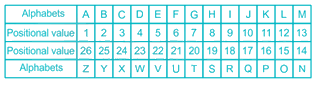 DELHI → CDKGH
D
E
L
H
I
C (−1)
D (−1)
K (−1)
G (−1)
H (−1)
Each letter is shifted one step backward in the alphabet.
M
U
M
B
A.
I
L (−1)
T (−1)
L (−1)
A (−1)
Z (−1)
H (−1)
MUMBAI → LTLAZH
Hence, the correct answer is Option 2.
Q7 · Analogy
What comes next?
AG, BH, CI, ?
- DJ
- EK
- FL
- GM
Answer aur solution dekho
Archived marked answer: A
The logic is followed here
AG, BH, CI, ?
Observe the pattern
First letters: A, B, C → increasing by 1 → Next = D
Second letters: G, H, I → increasing by 1 → Next = J
Form the next pair
D + J = DJ
Hence, the correct answer is Option 1.
Q8 · Analogy
If SMART is coded as UNCTU, how is TRICK coded?
- UTJDL
- VSKEL
- WKIRT
- XPQYU
Answer aur solution dekho
Archived marked answer: B
The logic is followed here
S → U (+2)
M → N (+1)
A → C (+2)
R → T (+2)
T → U (+1)
Pattern: +2, +1, +2, +2, +1
Applying the same pattern to TRICK
T → V (+2)
R → S (+1)
I → K (+2)
C → E (+2)
K → L (+1)
TRICK → VSKEL
Hence, the correct answer is "Option 2". Q9 · Analogy
If BRIDGE is coded as CSJEHF, how is CSJEHF coded?
- DTKFIG
- DTJFGI
- DSJFGI
- DTKFHI
Answer aur solution dekho
Archived marked answer: A
Given:
BRIDGE → CSJEHF
Finding the pattern:
B → C (+1)
R → S (+1)
I → J (+1)
D → E (+1)
G → H (+1)
E → F (+1)
Each letter is shifted one step forward in the alphabet.
C → D (+1)
S → T (+1)
J → K (+1)
E → F (+1)
H → I (+1)
F → G (+1)
CSJEHF → DTKFIG
Hence, the correct answer is Option 1.
Q10 · Analogy
If in a code language, MOBILITY is written as NPCJMJUZ, how is EXAMPLE written in that code?
- FYBNQMF
- EYBNQMF
- FYBNRME
- FZBNQMF
Answer aur solution dekho
Archived marked answer: A
The logic is followed here
M → N (+1)
O → P (+1)
B → C (+1)
I → J (+1)
L → M (+1)
I → J (+1)
T → U (+1)
Y → Z (+1)
Each letter is shifted one step forward in the alphabet.
E → F (+1)
X → Y (+1)
A → B (+1)
M → N (+1)
P → Q (+1)
L → M (+1)
E → F (+1)
Hence, the correct answer is Option 1. Q11 · Analogy
If 11 → 1331, 12 → 1728, then 13 → ?
- 2028
- 2400
- 2197
- 2500
Answer aur solution dekho
Archived marked answer: C
Given
11 → 1331
12 → 1728
Finding the pattern:
11³ = 11 × 11 × 11 = 1331
12³ = 12 × 12 × 12 = 1728
Pattern: Number → Cube of the number (n³)
Now,
13³ = 13 × 13 × 13 = 2197
Hence, the correct answer is Option 3.
Q12 · Analogy
Find the missing number: 12 : 441 :: 13 : ?
- 961
- 967
- 964
- 965
Answer aur solution dekho
Archived marked answer: A
Given
12 : 441
Find the pattern
12² = 144
Reverse of 144 = 441
13² = 169
Reverse of 169 = 961
Hence, the correct answer is Option 1.
Q13 · Puzzle Subtypes Not To Miss
If P + Q = 2R and R + S = 2P, then:
- P + R = Q + S
- P + R = 2S
- P + S = Q + R
- P + R = 2Q
Answer aur solution dekho
Archived marked answer: A
Given
P + Q = 2R …… (1)
R + S = 2P …… (2)
From equation (1)
Q = 2R − P
From equation (2)
S = 2P − R
Q + S
Q + S = (2R − P) + (2P − R)
= 2R − P + 2P − R
= R + P
So, P + R=Q + S
Hence, the correct answer is Option 1.
Q14 · Puzzle Subtypes Not To Miss
A man rows 12 km downstream in 3 hours and 6 km upstream in 2 hours. What is the speed of the stream?
- 1 km/h
- 0.5 km/h
- 2 km/h
- 1.5 km/h
Answer aur solution dekho
Archived marked answer: B
Given:
Distance downstream = 12 km in 3 hours
Distance upstream = 6 km in 2 hours
Find speeds
Downstream speed = 12 ÷ 3 = 4 km/h
Upstream speed = 6 ÷ 2 = 3 km/h
Use formula
Speed of stream = (Downstream speed − Upstream speed) ÷ 2
= (4 − 3) ÷ 2
= 1 ÷ 2
= 0.5 km/h
Hence, the correct answer is "Option 2".
Q15 · Puzzle Subtypes Not To Miss
Choose the address that is the same as the one given below.
Flat No. 6A, Pearl View, Salt Lake, Kolkata,West Bengal - 700091
- Flat No. 6A, Pearl View, Salt Lake, Kolkata,West Bengal - 700091
- Flat No. 6A, Pearl View, Salt Lake, Kolkata, Assam - 700091
- Flat No. 6A, Pearl View, Salt Lake, Kolkata, Odisha - 700091
- Flat No. 6A, Pearl View, Salt Lake, Kolkata, Bihar - 700091
Answer aur solution dekho
Archived marked answer: A
Given Address:
Flat No. 6A, Pearl View, Salt Lake, Kolkata, West Bengal - 700091
Option 1
Flat No. 6A, Pearl View, Salt Lake, Kolkata, West Bengal - 700091
Flat Number — Same
Building Name — Same
Area — Same
City — Same
State — Same
PIN Code — Same
Option 2
Flat No. 6A, Pearl View, Salt Lake, Kolkata, Assam - 700091
State is different
Option 3
Flat No. 6A, Pearl View, Salt Lake, Kolkata, Odisha - 700091
State is different
Option 4
Flat No. 6A, Pearl View, Salt Lake, Kolkata, Bihar - 700091
State is different
Hence, the correct answer is Option 1.
Q16 · Puzzle Subtypes Not To Miss
Seminars were held in Bhopal, Indore, and Raipur on 7th, 9th, and 11th August.
- Indore's seminar was held after Bhopal's.
- Raipur's seminar was not on 11th August.
When was the Indore seminar held?
- 7th August
- 9th August
- 11th August
- 8th August
Answer aur solution dekho
Archived marked answer: C
Logical arrangement using elimination
⇒ Raipur ≠ 11th ⇒ Raipur is either 7th or 9th
⇒ If Raipur = 9th ⇒ Bhopal must be 7th (since Indore after Bhopal)
⇒ Then Indore = 11th (valid)
⇒ Check all conditions satisfied
⇒ If Raipur = 7th ⇒ Bhopal must be before Indore
⇒ Possible: Bhopal = 9th, Indore = 11th
⇒ But Raipur already 7th, still valid
⇒ Both cases give Indore = 11th
∴ Indore seminar was held on 11th August
Q17 · Puzzle Subtypes Not To Miss
What is the remainder when 987654321 is divided by 9?
- 1
- 3
- 0
- 9
Answer aur solution dekho
Archived marked answer: C
Given:
Find the remainder when 987654321 is divided by 9.
Rule:
A number is divisible by 9 if the sum of its digits is divisible by 9. The remainder when dividing by 9 is the same as the remainder of the sum of its digits divided by 9.
9 + 8 + 7 + 6 + 5 + 4 + 3 + 2 + 1 = 45
Divide 45 by 9
45 ÷ 9 = 5 (remainder 0)
Hence, the remainder is Option 3.
Q18 · Puzzle Subtypes Not To Miss
A rectangular field has a length of 50 meters and a width of 30 meters. What is the length of its diagonal?
- 58 m
- 56 m
- 50 m
- 54 m
Answer aur solution dekho
Archived marked answer: A
Given:
Length = 50 m
Width = 30 m
Use Pythagoras Theorem
Diagonal² = Length² + Width²
= 50² + 30²
= 2500 + 900
= 3400
Diagonal = √3400 ≈ 58.3 m
Closest option = 58 m
Hence, the correct answer is Option 1.
Q19 · Puzzle Subtypes Not To Miss
What is the product of all the digits on a calculator keypad (0-9)?
- 0
- 326592
- 5040
- 45360
Answer aur solution dekho
Archived marked answer: A
Since the product includes 0, and any number multiplied by 0 becomes 0, the final product is 0.
Correct answer: Option 1.
Q20 · Logical Reasoning
Read the following statement carefully and identify the conclusion that follows.
Statement: Some trees are tall. All tall things are visible.
Conclusions:
I. Some trees are visible.
II. All trees are visible.
- Only I follows
- Only II follows
- Both I and II follow
- Neither I nor II follows
Answer aur solution dekho
Archived marked answer: A
Given Statements:
1. Some trees are tall.
2. All tall things are visible.
Conclusions:
I. Some trees are visible → True (Since some trees are tall and all tal
Q21 · Alphabet Test
Given in the table are the number codes for the given letters. Select the combination of numbers so that the letters arranged accordingly will form a meaningful word.
5 4 3 2 1
R O I C D
- 2, 4, 5, 3, 3, 1, 4, 5
- 2, 4, 5, 5, 3, 1, 4, 5
- 2, 5, 5, 3, 1, 4, 5, 4
- 2, 4, 4, 5, 3, 1, 3, 5
Answer aur solution dekho
Archived marked answer: B
Given:
Codes: 5 4 3 2 1
Letters: R O I C D
Formula used:
Match numbers with corresponding letters and form meaningful word
Calculation:
⇒ 5 → R
Q22 · Alphabet Test
Find the odd one out.
Lucknow, Kanpur, Varanasi, Jaipur, Agra
- Varanasi
- Lucknow
- Jaipur
- Kanpur
Answer aur solution dekho
Archived marked answer: C
Given Options:
Lucknow, Kanpur, Varanasi, Jaipur, Agra
Observation:
Lucknow, Kanpur, Varanasi and Agra are cities in Uttar Pradesh.
Jaipur is in Rajasthan.
Hence, the correct answer is Option 3.
Q23 · Alphabet Test
Which of the following is not an anagram of the word "INTEGRAL"?
- ALERTING
- RELATING
- TRIANGLE
- LITERAL
Answer aur solution dekho
Archived marked answer: D
The logic is followed here
Check letters of INTEGRAL
Letters: I, N, T, E, G, R, A, L
Compare options
1) ALERTING → A, L, E, R, T, I, N, G (Same letters)
2) RELATING → R, E, L, A, T, I, N, G (Same letters)
3) TRIANGLE → T, R, I, A, N, G, L, E (Same letters)
4) LITERAL → L, I, T, E, R, A, L (Missing N and G; extra L)
LITERAL is not an anagram of INTEGRAL.
Hence, the correct answer is Option 4.
Q24 · Logical Statement Questions
Read the following statement carefully and identify the assumption that follows.
Statement:
A school circular states: "Mobile phones are not allowed inside classrooms."
Assumptions:
I. Phones distract students.
II. Students often bring phones to class.
- Only I is implicit
- Only II is implicit
- Both are implicit
- Neither is implicit
Answer aur solution dekho
Archived marked answer: C
Statement:
Assumption I: If phones are banned inside classrooms, it is reasonable to assume that they may distract students. Otherwise, there would be no need to prohibit them. So, this assumption is implicit.
Assumption II: The circular implies that students bring phones to class; otherwise, there would be no need to issue such a rule. Hence, this assumption is also implicit.
Hence, the correct answer is Option 3.
Q25 · Number Digit Operations
When all the digits of the number '8372625374895' are arranged in descending order, what is the number obtained when the 3rd digit from the right end is subtracted from the 4th digit from the left, after replacement?
- 4
- 8
- 5
- 6
Answer aur solution dekho
Archived marked answer: A
Descending order gives 9887765543322. The fourth digit from the left is 7 and the third from the right is 3. Their difference is 7 − 3 = 4.
General Awareness
Q1 · Art and Culture
Which is the largest and most famous monastery in Sikkim, known for its colorful murals and mask dances?
- Enchey Monastery
- Rumtek Monastery
- Pemayangtse Monastery
- Tashiding Monastery
Answer aur solution dekho
Archived marked answer: B
The correct answer is Rumtek Monastery.
Key Points
- Rumtek Monastery, located near Gangtok, the capital of Sikkim, is the largest and most famous monastery in the region.
- It was originally built in the 16th century by the 9th Karmapa Wangchuk Dorje, later renovated by the 16th Karmapa Rangjung Rigpe Dorje in the 1960s.
- This monastery serves as the seat of the Karma Kagyu lineage, one of the oldest schools of Tibetan Buddhism.
- Rumtek Monastery is renowned for its colorful murals, sacred thangkas (scroll paintings), and intricate architectural designs inspired by Tibetan Buddhist traditions.
- The monastery is famous for hosting the annual Chaams (mask dances), which are vibrant and culturally significant events depicting Buddhist stories and teachings.
- It is surrounded by serene landscapes and offers stunning views of the mountains, attracting visitors and devotees from around the world.
Additional Information
- Pemayangtse Monastery:
- Located in Pelling, Sikkim, this monastery is one of the oldest in the state, established in the 17th century.
- It follows the Nyingma sect of Tibetan Buddhism and is famous for its wooden structure depicting the heavenly palace of Guru Rinpoche.
- Enchey Monastery:
- Situated in Gangtok, this monastery belongs to the Nyingma sect and was constructed in the 19th century.
- It is known for its sacred significance and hosts vibrant festivals like Chaam dances during January.
- Tashiding Monastery:
- Located near Yuksom, Tashiding Monastery is considered one of the holiest sites in Sikkim.
- It follows the Nyingma tradition and is famous for its sacred water festival, Bumchu.
- Significance of Monasteries in Sikkim:
- Monasteries serve as centers for Buddhist learning, meditation, and rituals.
- They preserve Tibetan art, culture, and traditions, making them significant landmarks for cultural tourism.
- Sikkim is home to over 200 monasteries, many of which are centuries old.
Important Points
- Buddhist Festivals:
- The monasteries of Sikkim host various festivals like Losar (Tibetan New Year), Saga Dawa, and Chaams (mask dances), which are deeply rooted in Buddhist traditions.
- These festivals attract devotees and tourists, offering insight into Buddhist spirituality and cultural richness.
- Architectural Style:
- Monasteries in Sikkim exhibit Tibetan architectural styles, featuring intricate woodwork, vibrant murals, and sacred objects like prayer wheels and flags.
- They are often located in scenic areas, symbolizing peace and harmony.
- Cultural Tourism:
- Sikkim’s monasteries play a vital role in promoting cultural and spiritual tourism, contributing to the state's economy.
- Visitors can engage in meditation retreats, learn about Buddhism, and participate in local festivals.
Q2 · Art and Culture
Which gharana was influenced directly by the dhrupad tradition?
- Gwalior Gharana
- Agra Gharana
- Jaipur Atroli Gharana
- Rampur Saheswan Gharana
Answer aur solution dekho
Archived marked answer: B
The correct answer is Agra Gharana.
Key Points
- The Agra Gharana traces its lineage back to the dhrupad tradition, one of the oldest forms of Indian classical music. It is directly influenced by the techniques and aesthetics of dhrupad singing.
- The gharana emphasizes razakhani and nomtom alap, which are stylistic features derived from the dhrupad tradition, showcasing its strong connection to the genre.
- The founder of the Agra Gharana, Haji Sujan Khan, was deeply rooted in the dhrupad style. His descendants further developed the gharana by incorporating khayal and other contemporary styles.
- Agra Gharana is known for its robust voice culture and the ability to blend elements of dhrupad w
Q3 · Art and Culture
Fill in the Blank:
Jhumara is a folk dance of _____.
- Odisha
- West Bengal
- Jharkhand
- Gujarat
Answer aur solution dekho
Archived marked answer: C
The correct answer is Jharkhand.
Key Points
- Jhumara is a popular folk dance that originates from the state of Jharkhand, India.
- This dance form is predominantly performed by the tribal communities of Jharkhand and is deeply rooted in their cultural traditions.
- Jhumara is primarily performed during festivals, social gatherings, and special occasions such as marriages or harvest celebrations.
- The dance is accompanied by traditional musical instruments like drums (dhol), nagara, and flute, which enhance its rhythmic and vibrant appeal.
- It is characterized by graceful movements and is performed in groups, often symbolizing unity and joy
Q4 · Art and Culture
What is a "mandapa" in traditional Indian temple architecture?
- Gateway tower
- Outer boundary wall
- Pillared hall for worshippers
- Water tank
Answer aur solution dekho
Archived marked answer: C
The correct answer is Pillared hall for worshippers.
Key Points
- The term mandapa refers to a pillared hall or pavilion that is an integral part of traditional Indian temple architecture. It is typically placed in front of the main sanctum (garbhagriha) of the temple.
- Mandapas serve as spaces where worshippers gather for prayers, rituals, and other religious activities. They act as transitional spaces leading to the sanctum.
- In most temples, the mandapa is intricately carved and decorated with sculptures, motifs, and symbols depicting mythological and religious themes.
- Depending on the scale of the temple, there may be multiple mandapas, such as the ardha-mandapa (half hall), maha-mandapa (great hall), or nata-mandapa (dance hall).
- Mandapa
Q5 · Art and Culture
In the context of medieval Islamic taxation, what did Khums refer to?
- A tax on agricultural produce
- One-fifth of war booty and hidden wealth
- A levy on trade caravans
- A land revenue assessed annually
Answer aur solution dekho
Archived marked answer: B
The correct answer is One-fifth of war booty and hidden wealth.
Key Points
- Khums is an Islamic tax, which literally means "one-fifth." It refers to the obligation of Muslims to pay 20% of certain types of wealth.
- Khums is primarily applied to war booty and hidden wealth discovered unexpectedly, such as treasures found underground. It is considered a mandatory tax under Islamic law.
- This tax is divided into two equal parts: one part goes to the Imam or religious leader, and the other part is distributed among needy categories such as orphans, the poor, and travelers.
- In the context of medieval Islamic states, Khums served as a crucial source of revenue for the ruler and the state, supporting both governance and religious functions.
- The concept of Khums is derived from the Quran, specifically from Surah Al-Anfal (8:41), which mentions that one-fifth of the spoils of war belongs to Allah, the Prophet, his relatives, orphans, and the needy.
Additional Information
- Islamic Taxation System:
- Islamic taxation includes various types of obligatory payments such as Zakat, Khums, and Jizya, each serving distinct purposes in society.
- Zakat is a mandatory charitable contribution, typically 2.5% of a Muslim's savings, aimed at helping the poor and needy.
- Jizya is a tax imposed on non-Muslim subjects of an Islamic state as a form of protection and exemption from military duties.
- Ushr refers to a tax on agricultural produce, generally set at 10% of the harvest.
- Historical Context of Khums:
- In medieval Islamic states, Khums was particularly significant during wars and conquests, as it applied to the spoils of war.
- It was one of the mechanisms to ensure the equitable distribution of wealth among the community while funding administrative and religious responsibilities.
- The tax facilitated the functioning of Islamic governance and supported the spread of Islam during the medieval period.
- Application of Khums:
- Khums is obligatory upon all Muslims under specific conditions. For example, it applies to war booty, discovered treasures, certain types of earnings, and unused savings after expenses.
- In the Shiite tradition, Khums also extends to net earnings after deducting necessary expenses, making it a broader form of taxation.
- Comparison with Other Taxes:
- Unlike Zakat, which is a fixed annual obligation, Khums is situational, depending on the acquisition of specific types of wealth.
- It is distinct from Jizya, which is levied on non-Muslims, and Ushr, which is tied to agricultural produce.
Important Points
- Historical Example: The implementation of Khums was observed during the early Islamic caliphates, where it played a significant role in the redistribution of wealth obtained from conquests.
- Modern Practice: In contemporary times, Khums is primarily observed among Shiite Muslims, with specific guidelines provided by religious scholars and leaders.
- Quranic Basis: The concept of Khums is rooted in Islamic scripture, ensuring its significance in Islamic jurisprudence and theology.
- Role in Islamic Society: Khums contributes to social welfare and religious activities, emphasizing the importance of wealth redistribution in Islam.
- Administration: Historically, the collection and distribution of Khums were managed by the ruler or religious authorities, ensuring adherence to Islamic principles. </ul
Q6 · Indian Polity and Constitution
The Logistics Performance Index (LPI) is published by which international organization?
- World Bank
- IMF
- WTO
- UNCTAD
Answer aur solution dekho
Archived marked answer: A
The correct answer is World Bank.
Key Points
- The Logistics Performance Index (LPI) is a biennial index published by the World Bank. It was first introduced in 2007.
- The LPI measures the ease and efficiency of logistics in a country, providing a global benchmark for logistics and trade facilitation performance.
- The index evaluates countries based on six key components: Customs performance, infrastructure quality, ease of arranging shipments, quality of logistics services, tracking & tracing, and timeliness.
- In the 2023 edition, the LPI ranked 139 countries, using data collected through surveys of logistics prof
Q7 · Indian Economy
Consider the following statements and choose the correct option:
Statement 1: Income tax and dividends from PSUs are classified as revenue receipts in the government budget.
Statement 2: Disinvestment in PSUs is also a revenue receipt as it brings income to the government.
- Only Statement 1 is correct
- Only Statement 2 is correct
- Both Statement 1 and Statement 2 are correct
- Neither Statement 1 nor Statement 2 is correct
Answer aur solution dekho
Archived marked answer: A
The correct answer is Only Statement 1 is correct.
Key Points
- Statement 1: Income tax and dividends from Public Sector Undertakings (PSUs) are classified as revenue receipts in the government budget because they are recurring incomes for the government without creating any liabilities. Hence, statement 1 is correct.
- Statement 2: Disinvestment in PSUs is classified as a capital receipt in the government budget, not a revenue receipt. This is because disinvestment involves the sale of government assets, which is a one-time transaction and leads to a reduction in government assets rather than generating recurring income. Hence, statement 2 is incorrect.
- Revenue Receipts: These include income earned by the government through taxation (like income tax, GST, etc.) and non-tax revenues (like dividends from PSUs, interest on loans given by the government, etc.). They do not lead to an increase in liabilities or a decrease in a
Q8 · Indian Economy
Read the following statements carefully and choose the correct option regarding Assertion (A) and Reason (R).
Assertion (A): Globalization has led to increased outsourcing of services to India.
Reason (R): India offers high-cost, low-skill services to foreign companies.
- Both A and R are true and R is the correct explanation of A.
- Both A and R are true but R is not the correct explanation of A.
- A is true but R is false.
- A is false but R is true.
Answer aur solution dekho
Archived marked answer: C
The correct answer is A is true but R is false.
Key Points
- Assertion (A): Globalization has led to increased outsourcing of services to India.
- Globalization has allowed companies to transcend geographic boundaries, leading to outsourcing as a cost-effective strategy.
- India has become a preferred outsourcing destination due to its large pool of skilled professionals, especially in sectors like IT and customer service.
- The availability of English-speaking professionals and advancements in technology have further boosted India's position in global outsourcing.
- *Hence, Assertion (A) is correct.*
- Reason (R): India offers high-cost, low-skill services to foreign companies.
- This statement is incorrect because India is known for offering low-cost, high-skill services, particularly in areas such as IT, software development, and business process outsourcing.
- India's services are competitively priced and backed by skilled professionals, making it an attractive destination for outsourcing.
- Examples include the IT hubs of Bengaluru, Hyderabad, and Pune, which cater to high-end technological services.
- *Hence, Reason (R) is false.*
- Correct Analysis:
- While Assertion (A) is true, Reason (R) does not correctly explain or align with the assertion.
- The outsourcing boom is driven by India's capabilities in delivering cost-effective and high-quality services, not by low-skill services.
Additional Information
- Globalization and Outsourcing:
- Globalization has enabled businesses to access resources and talent from across the world.
- India has emerged as a leading hub for outsourcing, especially in Information Technology Enabled Services (ITES), customer support, and software development.
- Companies like TCS, Infosys, and Wipro are global leaders in outsourcing solutions.
- Foreign companies outsource to India to reduce costs while ensuring high-quality output.
- Factors Contributing to India's Outsourcing Strength:
- Cost Advantage: Labor costs in India are significantly lower compared to developed nations.
- Skilled Workforce: India boasts a large pool of highly educated professionals, particularly in STEM fields.
- Technology and Infrastructure: With advancements in IT infrastructure, India provides seamless services to global clients.
- Language Proficiency: English proficiency among Indian professionals makes communication with global clients easier.
- Common Outsourced Services:
- IT Services: Software development, cloud computing, and cybersecurity.
- Customer Support: Call centers and live chat support services.
- Business Process Outsourcing (BPO): Data entry, payroll processing, and financial services.
- KPO (Knowledge Process Outsourcing): Legal services, market research, and analytics.
- Examples of Global Outsourcing to India:
- Microsoft and IBM have major operations in India for software development.
- Amazon outsources customer support and IT services to Indian professionals.
- Google has research and development centers in Bengaluru and Hyderabad.
Important Points
- Historical Background: The outsourcing trend began in the 1990s, driven by advancements in IT and the liberalization of India's economy.
- IT Sector Contribution: The IT sector contributes significantly to India's GDP, and outsourcing plays a key role in this growth.
- Challenges in Outsourcing: Despite its advantages, outsourcing faces challenges such as data security concerns and cultural differences.
- Future Trends: With emerging technologies like AI and blockchain, India's outsourcing industry is evolving to handle more complex and high-value tasks.
</ul
Q9 · Indian Economy
What was the aim of the Sixth Plan (1980-85)?
- Defense expansion
- Faster industrialization
- Poverty reduction and modernization
- Export-led growth
Answer aur solution dekho
Archived marked answer: C
The correct answer is Poverty reduction and modernization.
Key Points
- The Sixth Five-Year Plan (1980-85) was focused on achieving poverty reduction and modernization of industries in India. It aimed to improve the living standards of people and ensure balanced economic development.
- The plan emphasized the importance of economic self-reliance and targeted reducing the percentage of people living below the poverty line through employment generation and rural development.
- Key sectors prioritized under this plan included agriculture, energy, industry, and human resource development, which were seen as critical for modernization and sustainable growth.
- The government introduced several schemes and programs to foster rural development, including Integrated Rural Development Programme (IRDP) and National Rural Employment Programme (NREP).
- The Sixth Plan also emphasized technological upgradation and modernization in industries to make them more competitive globally. This was aimed at reducing dependency on imports and achieving self-reliance.
Additional Information
- Integrated Rural Development Programme (IRDP):
- Launched in 1980, the IRDP aimed to provide employment opportunities and improve the quality of life in rural areas by offering productive assets to the poor.
- The program targeted individuals below the poverty line, including small farmers, landless laborers, and rural artisans.
- National Rural Employment Programme (NREP):
- Introduced during the Sixth Plan, this program focused on creating employment opportunities in rural areas through labor-intensive projects like road construction, irrigation, and afforestation.
- The program also aimed at improving rural infrastructure to support economic development.
- Modernization of Industries:
- The Sixth Plan promoted the adoption of modern technologies to enhance industrial efficiency and productivity.
- It aimed at reducing import dependency and fostering self-reliance in key sectors like energy, steel, and engineering goods.
- Poverty Reduction:
- The Sixth Plan sought to reduce the percentage of people living below the poverty line from 48% to 30% by the end of the plan period.
- This was to be achieved through a combination of employment generation, rural development, and targeted welfare programs.
Important Points
- Planning Commission: The Sixth Plan was prepared and implemented by the Planning Commission of India, which has since been replaced by NITI Aayog in 2015.
- Self-Reliance: A key feature of the Sixth Plan was its focus on achieving economic self-reliance through domestic production and reduced import dependency.
- Achievements: The Sixth Plan successfully achieved a growth rate of 5.4%, exceeding its target of 5.2%, and made significant contributions to poverty alleviation and industrial modernization.
- Legacy: The initiatives introduced during this period laid the foundation for several future programs and policies aimed at rural development and poverty reduction in India. </ul
Q10 · Sports Static GK
Who won India's first gold in athletics at the CWG 2022?
- Avinash Sable
- Eldhose Paul
- Murali Sreeshankar
- Neeraj Chopra
Answer aur solution dekho
Archived marked answer: B
The correct answer is Eldhose Paul.
Key Points
- Eldhose Paul became the first Indian to win a gold medal in triple jump at the Commonwealth Games (CWG) 2022 held in Birmingham.
- He achieved this historic milestone on August 7, 2022, with a best jump of 17.03 meters, showcasing exceptional skill and determination.
- Paul's victory marked a significant achievement for Indian athletics as it was the first-ever gold medal in triple jump at the Commonwealth Games.
- His gold medal performance led to a double podium finish for India, with Abdulla Aboobacker securing the silver medal in the same event.
- The win highlighted India's growing dominance in athletics on the global stage, especially in field events.
Additional Information
- Commonwealth Games 2022:
- The 2022 Commonwealth Games were held in Birmingham, England, from July 28 to August 8, 2022.
- India sent a 215-member contingent to compete in 16 sports, winning a total of 61 medals (22 gold, 16 silver, and 23 bronze).
- Eldhose Paul:
- Born in Kerala, India, Eldhose Paul is a professional athlete specializing in the triple jump.
- He is part of the Indian Navy and has represented India in multiple international athletics events.
- Paul's performance at CWG 2022 was a result of years of rigorous training and dedication.
- Triple Jump:
- The triple jump is a track and field event where athletes perform a hop, step, and jump into a sandpit.
- The event requires a combination of speed, strength, and technique to achieve maximum distance.
- India has been gaining recognition in this discipline, with athletes like Eldhose Paul and Abdulla Aboobacker making significant contributions.
- Other Indian Achievements at CWG 2022:
- Murali Sreeshankar: Won a silver medal in the men's long jump event, making history as India's first medalist in the discipline at CWG.
- Avinash Sable: Secured a silver medal in the 3000m steeplechase, breaking the Kenyan dominance in the event.
- Neeraj Chopra: Although absent in CWG 2022 due to injury, he remains an inspiration in Indian athletics with his Olympic gold in javelin throw.
Important Points
- India's Performance in Athletics:
- India has been steadily improving in athletics, with athletes excelling in both track and field events on the global stage.
- Other notable field event athletes include Neeraj Chopra, Annu Rani, and Tajinderpal Singh Toor.
- Significance of CWG 2022:
- The event provided a platform for Indian athletes to showcase their talent and gain international recognition.
- India's successes in disciplines like weightlifting, wrestling, and badminton further solidified its position as a sporting powerhouse. </ul
Q11 · Sports Static GK
Where was the Yonex-Sunrise 47th Inter State - Inter Zonal & Junior National Badminton Championships 2024 held?
- Bhubaneswar, Odisha
- Hyderabad, Telangana
- Lucknow, Uttar Pradesh
- Guwahati, Assam
Answer aur solution dekho
Archived marked answer: A
The correct answer is Bhubaneswar, Odisha.
Key Points
- The Yonex-Sunrise 47th Inter State - Inter Zonal & Junior National Badminton Championships 2024 was held in Bhubaneswar, Odisha, a city well-known for hosting major sporting events and promoting badminton at the grassroots level.
- Bhubaneswar is a key hub for sports in India, with infrastructure such as Kalinga Stadium, which frequently hosts national and international sporting events.
- The event featured participation from various state and zonal teams across India, bringing together young badminton players to compete at a high level of intensity and skill.
- This championship is vital for nurturing and identifying future badminton talents in India, contributing to the development of the sport nationally.
-
Q12 · Sports Static GK
Which of the following statements about basketball rules and skills is/are correct?
1) A team gaining ball possession must attempt a shot within 24 seconds, or it results in a shot clock violation.
2) A disqualification foul is awarded only when a player accumulates five personal fouls.
3) Reverse spin dribble is a defensive maneuver used exclusively for ball interception.
- Only 1 is Correct
- Only 2 is Correct
- Only 3 is correct
- 1, 2 and 3 all are Correct
Answer aur solution dekho
Archived marked answer: A
The correct answer is Only 1 is Correct.
Key Points
- Statement 1: A team gaining ball possession must attempt a shot within 24 seconds, or it results in a shot clock violation.
- This statement is correct. In basketball, the shot clock rule enforces that a team must take a shot within a stipulated time (24 seconds in professional games, such as the NBA). This ensures the game remains fast-paced and competitive.
- Statement 2: A disqualification foul is awarded only when a player accumulates five personal fouls.
- This statement is incorrect. The disqualification foul criteria depend on the competition. For example, in the NBA, players are disqualified after six personal fouls, while in FIBA (International Basketball F
Q13 · Indian Geography
Consider the following statements regarding minerals in India.
1. The Himalayan belt of India consists of copper, zinc, cobalt, and lead.
2. Most of the building stones, such as granite, marble, and gypsum, are found in Rajasthan.
Which of the statement(s) given above is/are CORRECT?
- 1 only
- 2 only
- Both 1 and 2
- Neither 1 nor 2
Answer aur solution dekho
Archived marked answer: C
The correct answer is Both 1 and 2.
Key Points
- Statement 1: The Himalayan belt of India consists of copper, zinc, cobalt, and lead.
- The Himalayan region is rich in mineral resources like copper, zinc, lead, cobalt, and other metallic minerals.
- This is due to the geological structure and tectonic activities in the region, which have resulted in the formation of mineral-rich zones. *Hence, this statement is correct.*
- Statement 2: Most of the building stones, such as granite, marble, and gypsum, are found in Rajasthan.
- Rajasthan is well-known for its vast reserves of building stones like granite, marble, sandstone, and gypsum.
- The state contributes significantly to India's production of these materials and is often referred to as the hub for marble and sandstone mining. *Hence, this statement is correct.*
- As both statements are correct, the correct answer is Both 1 and 2.
Additional Information
- Mineral Resources in the Himalayan Belt:
- The Himalayan region, due to its complex geological structure, is rich in metallic minerals like copper, lead, zinc, and cobalt.
- Some parts of the Himalayan belt are also known for the presence of mica, gypsum, and other non-metallic minerals.
- These resources play a key role in the industrial development of the region, especially in states like Himachal Pradesh, Uttarakhand, and Jammu & Kashmir.
- Building Stones in Rajasthan:
- Rajasthan is India's largest producer of marble, contributing significantly to both domestic use and export.
- The state is also rich in granite, which is used extensively for construction and decorative purposes.
- Gypsum, another important resource found in Rajasthan, is used in the production of cement, plaster, and other construction materials.
- Key regions in Rajasthan for mineral extraction include Kishangarh, Makrana, and Udaipur.
- Importance of Minerals in India:
- India is rich in mineral diversity, which contributes to its economic development.
- Minerals like iron ore, coal, bauxite, and limestone are critical for industries like steel, power, and cement.
- The country is also a significant producer of mica, manganese, and chromite.
- Geological Factors:
- The geological structure of India, including its Precambrian rocks, Gondwana formations, and the Himalayan orogeny, has contributed to the rich distribution of minerals.
- Regions like the Aravalli range (Rajasthan) and the Vindhyan system are known for their mineral wealth. </ul
Q14 · Modern Indian History
Alluri Sitarama Raju led the Rampa Rebellion in the 1920s, mobilizing tribal communities against British rule. He primarily operated in which modern-day Indian state?
- Odisha
- Madhya Pradesh
- Andhra Pradesh
- Chhattisgarh
Answer aur solution dekho
Archived marked answer: C
The correct answer is Andhra Pradesh.
Key Points
- Alluri Sitarama Raju was a prominent freedom fighter who led the Rampa Rebellion in the 1920s, a tribal uprising against British rule. The rebellion took place in the regions that now form part of modern-day Andhra Pradesh.
- The rebellion primarily occurred in the Godavari Agency area, which is located in the Eastern Ghats. This area was heavily populated by tribal communities.
- Alluri Sitarama Raju mobilized the tribal population against the oppressive policies of the British, especially against the Forest Act, which restricted the rights of the tribals to use forest resources.
- His leadership in guerrilla warfare strategies against the British made him a revered figure among the tribal communities and earned him the nickname "Manyam Veerudu" (Hero of the Jungle).
- The rebellion ended in 1924 when Alluri Sitarama Raju was captured and executed by the British, but his legacy continues to inspire freedom movements and tribal rights advocacy.
Additional Information
- Rampa Rebellion:
- The rebellion occurred in the 1922-1924 period and was centered in the Rampa region of the Godavari districts in Andhra Pradesh.
- It was a tribal revolt against British colonial oppression, particularly against the restrictions imposed by the Madras Forest Act of 1882.
- The act limited the tribals' access to the forest, which was their primary source of livelihood, pushing them into hardship and poverty.
- Alluri Sitarama Raju:
- Born on 4th July 1897, in Pandrangi village in the Visakhapatnam district of Andhra Pradesh.
- He was inspired by the ideals of the Indian freedom struggle and was deeply moved by the plight of tribal communities under British rule.
- His leadership in armed rebellion against the British made him a folk hero among tribals.
- He was captured and executed by the British in 1924, but his efforts laid the groundwork for future tribal movements.
- Impact of the Forest Act:
- The Madras Forest Act restricted the usage of forest resources, including grazing, collecting firewood, and hunting, which were integral to the tribal way of life.
- The act alienated the tribal communities from their traditional lands and pushed them into economic distress, leading to widespread resentment.
- This resentment culminated in revolts like the Rampa Rebellion, which aimed to restore tribal rights and autonomy.
- Guerrilla Warfare Strategy:
- Alluri Sitarama Raju adopted guerrilla warfare tactics to fight against the British forces.
- He led surprise attacks on British police stations, seized arms, and disrupted their administration in the tribal areas.
- His deep knowledge of the terrain and support from tribal communities made these tactics highly effective.
Important Points
- Legacy: Alluri Sitarama Raju is remembered as a symbol of tribal resistance and patriotism. His life and sacrifices continue to inspire movements advocating for tribal rights and environmental protection.
- Recognition: The Indian government has honored his contributions by naming institutions and projects after him, such as the Alluri Sitarama Raju University.
- Regional Significance: The rebellion is seen as a pivotal moment in the history of Andhra Pradesh and is celebrated annually in the region.
- Tribal Movements: The Rampa Rebellion is part of a larger context of tribal uprisings during British rule, such as the Santhal Rebellion and Munda Rebellion, highlighting the widespread discontent among indigenous communities. </ul
Q15 · Modern Indian History
Identify the tribal leader who led the Kol Revolt (1831-1832) in Chotanagpur against British exploitation.
- Budhu Bhagat mobilized tribal peasantry in Chotanagpur during the Kol uprising.
- Raghunath Mahato initiated a farmers' revolt against forced taxation.
- Raghoji Bhangre led uprisings in Maharashtra's hilly terrain against colonial forces.
- Tantiya Tope fought alongside Rani Laxmibai during the 1857 Rebellion.
Answer aur solution dekho
Archived marked answer: A
The correct answer is Budhu Bhagat.
Key Points
- Budhu Bhagat was a prominent tribal leader who mobilized the tribal peasantry in the Chotanagpur region during the Kol Revolt of 1831-1832.
- The Kol Revolt was an uprising led by the Kol tribal community against British exploitation, oppressive revenue policies, and the encroachment of their lands.
- Budhu Bhagat became the face of the resistance, organizing the tribal peasants to fight against the colonial forces and their local collaborators, including zamindars.
- The movement was marked by guerrilla warfare tactics, with tribal warriors attacking British establishments and symbols of exploitation in the Chotanagpur Plateau.
- The revolt was eventually suppressed by the British, but it highlighted the growing discontent among tribal communities regarding colonial policies. *Hence, statement 1 is correct.*
Additional Information
- Kol Revolt (1831-1832):
- The Kol Revolt was primarily triggered by the exploitation of tribal communities, including high land taxes, forced labor, and the loss of their ancestral lands.
- It was a significant uprising that involved various tribal groups, including the Kols, Mundas, and Oraons.
- The revolt spread across regions of modern-day Jharkhand and parts of Bihar, impacting British administrative control in these areas.
- Key Tribal Leaders:
- Budhu Bhagat: Known for his leadership during the Kol Revolt in Chotanagpur.
- Raghunath Mahato: Initiated a farmers' revolt against forced taxation but was not part of the Kol Revolt. *Statement 2 is incorrect.*
- Raghoji Bhangre: Led uprisings in Maharashtra against colonial forces but had no connection to the Kol Revolt. *Statement 3 is incorrect.*
- Tantiya Tope: Played a significant role in the 1857 Rebellion alongside Rani Laxmibai, but was not involved in tribal uprisings like the Kol Revolt. *Statement 4 is incorrect.*
- Geographical Context:
- The Kol Revolt was concentrated in the Chotanagpur Plateau, which is rich in mineral resources and has historically been home to tribal communities.
- British exploitation of these resources and imposition of zamindari systems disrupted the traditional tribal way of life.
- Impact of the Kol Revolt:
- Although the revolt was suppressed, it forced the British to reconsider their revenue and administrative policies in tribal regions.
- The uprising laid the foundation for subsequent tribal revolts, such as the Munda Rebellion (1899-1900) led by Birsa Munda.
Important Points
- Tribal Movements in India:
- Tribal revolts were often triggered by the loss of autonomy, exploitation by landlords, and oppressive colonial policies.
- Prominent uprisings include the Santal Rebellion (1855-1856), the Munda Rebellion (1899-1900), and the Chuar Revolt (1767-1809).
- These movements were typically localized but were critical in shaping the narrative of resistance against colonial rule.
- Role of Tribal Leaders:
- Tribal leaders like Budhu Bhagat, Birsa Munda, and Sidu-Kanhu became symbols of resistance and are still revered as heroes in their communities.
- They played an essential role in mobilizing tribal populations and preserving their cultural identity in the face of external threats. </ul
Q16 · Modern Indian History
The Subsidiary Alliance system had which of the following conditions for the allied Indian rulers?
- They were allowed to maintain their own independent armies.
- They had to keep a British Resident in their court.
- They were free to enter into alliances with other Indian rulers without British consent.
- They were not required to pay any revenue to the British.
Answer aur solution dekho
Archived marked answer: B
The correct answer is The Subsidiary Alliance system had which of the following conditions for the allied Indian rulers?.
Key Points
- Statement 1: They were allowed to maintain their own independent armies. This statement is incorrect as the Subsidiary Alliance system required allied Indian rulers to disband their independent armies and instead rely on British forces for defense.
- Statement 2: They had to keep a British Resident in their court. This statement is correct. Under the Subsidiary Alliance, the allied Indian rulers were required to maintain a British Resident at their court to oversee administrative matters and safeguard British interests.
- Statement 3: They were free to enter into alliances with other Indian rulers without British consent. This statement is incorrect. The system explicitly prohibited allied Indian rulers from entering into diplomatic or military alliances with other rulers without British approval.
- Statement 4: They were not required to pay any revenue to the British. This statement is incorrect. The allied rulers had to pay a subsidy or revenue to the British for the maintenance of the British troops stationed within their territories.
- Correct Answer: The correct condition under the Subsidiary Alliance was that allied Indian rulers had to keep a British Resident in their court (Statement 2).
Additional Information
- Subsidiary Alliance System:
- The Subsidiary Alliance system was introduced by Lord Wellesley, the Governor-General of India from 1798 to 1805, as part of British expansionist policies in India.
- It was designed to establish British dominance over Indian states without direct annexation, enabling the British to control the political and military affairs of allied states.
- Allied rulers under the Subsidiary Alliance system had to accept the presence of British troops within their territories.
- They were required to pay a financial subsidy to the British for maintaining these troops, which often led to financial strain on the allied states.
- Key Features of Subsidiary Alliance:
- Allied rulers had to disband their independent armies and rely on British forces for protection against external and internal threats.
- The British Resident stationed at the ruler's court acted as a political agent and monitored the ruler's actions to ensure alignment with British policies.
- Allied rulers were prohibited from entering into alliances or engaging in diplomatic relations with other states without British approval.
- The system often resulted in the erosion of sovereignty and autonomy of Indian rulers, making them dependent on British support.
- Examples of States under Subsidiary Alliance:
- Hyderabad: The Nizam of Hyderabad was among the first rulers to accept the Subsidiary Alliance in 1798.
- Mysore: After the defeat of Tipu Sultan in the Fourth Anglo-Mysore War, Mysore was brought under the Subsidiary Alliance in 1799.
- Awadh: The Nawab of Awadh signed the Subsidiary Alliance in 1801, leading to significant British control over the region.
Important Points
- Consequences of Subsidiary Alliance:
- The system led to the loss of sovereignty and independence of Indian states, turning them into British dependencies.
- It facilitated the expansion of British influence and control over Indian territories without direct annexation.
- The financial burden of maintaining British troops often led to economic decline and political instability in allied states.
- Many Indian rulers resented the system, considering it an infringement on their autonomy and dignity.
- Historical Context:
- The Subsidiary Alliance system played a crucial role in the establishment of British dominance in India during the late 18th and early 19th centuries.
- It was an essential component of British imperial policies aimed at controlling Indian territories through indirect means.
- The system laid the foundation for subsequent British annexations and consolidation of power in India. </ul
Q17 · Current Affairs
What does the BSA, 2023 provide about secondary evidence (like photocopies or scanned documents)?
- It is always preferred over primary evidence
- It is admissible only if the original is lost, destroyed, or unavailable for valid reasons
- It must be printed in color only
- It cannot be used in criminal cases
Answer aur solution dekho
Archived marked answer: B
The correct answer is It is admissible only if the original is lost, destroyed, or unavailable for valid reasons.
Key Points
- Secondary evidence refers to a reproduction or substitution of original documents, such as photocopies, scanned documents, or certified copies, which can be admitted in court under specific conditions.
- According to the BSA, 2023, secondary evidence is admissible only when the original document is proven to be lost, destroyed, or unavailable for valid and reasonable reasons.
- Such evidence must satisfy the court's conditions of authenticity and reliability before being admitte
Q18 · Current Affairs
The "Jal Jeevan Mission" aims to provide functional household tap connections (FHTCs) to all rural households by 2024. Which of the following is a key challenge in achieving this ambitious goal?
- Lack of sufficient funding allocation for the mission.
- Ensuring the long-term sustainability of water sources and the quality of water supplied.
- Limited participation of local communities in the planning and implementation process.
- Absence of a robust monitoring mechanism to track progress.
Answer aur solution dekho
Archived marked answer: B
The correct answer is Ensuring the long-term sustainability of water sources and the quality of water supplied..
Key Points
- Ensuring the long-term sustainability of water sources: The success of the Jal Jeevan Mission depends on the availability of sustainable water sources. Over-extraction of groundwater, pollution, and irregular rainfall patterns have posed significant challenges in maintaining the availability of water resources.
- Water quality issues: Delivering safe drinking water is critical. Contaminants like arsenic, fluoride, and nitrates in groundwater, as well as bacterial contamination, make it difficult to ensure the supply of potable water to rural households.
- Climate change impact: Erratic rainfall patterns, frequent droughts, and depletion of water tables due to climate change exacerbate the problem of water source sustainability, directly impacting the mission's goals.
- Community participation and awareness: While the mission emphasizes local-level involvement, many communities lack the technical knowledge or resources to ensure the long-term sustainability of water sources and to monitor the quality of water supplied.
- Infrastructure maintenance: Even when functional household t
Q19 · General Science Biology
The process of "coral bleaching" within the Indian Ocean is most directly linked to:
- Anthropogenically induced sea surface temperature increases
- Increased deep-sea mining
- Increased levels of ocean acidification from river runoff
- The effects of increased Arctic ice melt
Answer aur solution dekho
Archived marked answer: A
The correct answer is Anthropogenically induced sea surface temperature increases.
Key Points
- Coral bleaching occurs when corals lose their symbiotic algae (zooxanthellae), which provide them with energy through photosynthesis. This phenomenon is primarily triggered by stress due to elevated sea surface temperatures.
- The primary cause of increased sea surface temperatures is anthropogenic climate change, driven by greenhouse gas emissions from human activities like burning fossil fuels, deforestation, and industrial processes.
- When sea temperatures rise beyond the tolerance level of corals (typically 1-2°C above the seasonal maximum), the corals expel their zooxanthellae, leading to a loss of color and energy sources, which can result in mass mortality.
- Studies in the Indian
Q20 · General Science Chemistry
What does an alpha particle represent in the process of alpha decay?
- Hydrogen
- Helium
- Lithium
- Deuterium
Answer aur solution dekho
Archived marked answer: B
The correct answer is Helium.
Key Points
- An alpha particle consists of two protons and two neutrons, which is the same as the nucleus of a helium atom. Hence, the correct answer is helium.
- In the process of alpha decay, an unstable nucleus emits an alpha particle to achieve a more stable state, reducing its atomic number by 2 and mass number by 4.
- The emitted alpha particle is positively charged because it contains two protons but no electrons.
- Alpha decay typically occurs in heavy elements like uranium, thorium, or radium, where the nucleus has excess energy or is unstable due to its large size.
- The process of alpha emission decreases the element's position on the periodic table by two places, transforming it into a different element.
Additional Information
- Alpha Decay Process:
- Alpha decay is a type of radioactive decay in which an unstable atomic nucleus releases an alpha particle.
- The general representation of alpha decay is: *Parent Nucleus → Daughter Nucleus + Alpha Particle (He²⁺)*.
- For example, Uranium-238 undergoes alpha decay to form Thorium-234: U-238 → Th-234 + He²⁺.
- Characteristics of Alpha Particles:
- Alpha particles are large and heavy compared to other types of radioactive emissions like beta particles or gamma rays.
- They have low penetration power and can be stopped by a sheet of paper or human skin.
- Due to their high mass and charge, alpha particles are highly ionizing, meaning they can cause significant damage to biological tissues if ingested or inhaled.
- Comparison with Other Particles:
- Hydrogen: A hydrogen atom consists of one proton and one electron, and it is unrelated to alpha decay.
- Lithium: Lithium is a light element with three protons and is not emitted during alpha decay.
- Deuterium: Deuterium is a heavy isotope of hydrogen with one proton and one neutron, also unrelated to alpha decay.
- Applications of Alpha Particles:
- Alpha particles are used in smoke detectors and certain types of cancer treatments, such as targeted alpha therapy (TAT).
- They are also employed in scientific research to study atomic structures and nuclear reactions.
- Important Examples of Alpha-Emitting Elements:
- Uranium (U): A well-known radioactive element undergoing alpha decay.
- Radium (Ra): Known for its use in early medical treatments and its radioactive properties.
- Polonium (Po): A highly radioactive element used in some industrial applications.
79:T1cbe
Q21 · Awards Static
Which of these writers won the International Booker Prize in 2021, along with translator Megan McDowell?
- Olga Tokarczuk
- Jokha Alharthi
- David Diop
- Mariana Enriquez
Answer aur solution dekho
Archived marked answer: C
The correct answer is David Diop.
Key Points
- David Diop won the International Booker Prize in 2021 for his novel *At Night All Blood is Black*.
- The book was translated from French to English by Megan McDowell, and the prize is awarded jointly to the author and translator.
- *At Night All Blood is Black* is a profound exploration of themes such as war, trauma, and brotherhood, set during World War I.
- The novel received critical acclaim for its lyrical prose, emotional depth, and depiction of the psychological effects of war.
- David Diop is a French author of Senegalese descent, and this recognition highlights the growing diversity in global literature.
Q22 · Ancient Indian History
Which among the following is NOT true about the Harappan culture?
- They worshipped a male deity called Pashupati.
- Women wore ornaments made of gold, silver, copper, and bronze.
- There is clear evidence for the practice of Sati.
- Wheat and barley were the main crops grown.
Answer aur solution dekho
Archived marked answer: C
The correct answer is There is clear evidence for the practice of Sati..
Key Points
- The worship of Pashupati: The Harappan civilization practiced religious rituals, and seals depicting a male deity resembling Lord Shiva, referred to as "Pashupati," have been found. These depictions suggest the worship of a male deity in Harappan culture. *Hence, this statement is correct.*
- Women wearing ornaments: Archaeological evidence, such as figurines and jewelry, confirms that women in the Harappan civilization wore ornaments made of gold, silver, copper, and bronze. These artifacts highlight the advanced craftsmanship of the Harappans. *Hence, this statement is correct.*
- Practice of Sati: There is no evidence to suggest that the Harappan civilization practiced Sati. Sati, the ritual of a widow immolating herself on her husband's funeral pyre, emerged much later in Indian history and is associated with a different cultural context. *Hence, this statement is incorrect.*
- Main crops grown: Wheat and barley were indeed the primary crops cultivated by the Harappans. Evidence from granaries and other agricultural artifacts confirms their reliance on these crops for sustenance. *Hence, this statement is correct.*
Additional Information
- Harappan Civilization Overview:
- The Harappan civilization, also known as the Indus Valley Civilization, flourished between 2600 BCE to 1900 BCE in the northwestern regions of South Asia.
- It spanned modern-day Pakistan and parts of northwestern India, with prominent cities like Harappa, Mohenjo-Daro, Lothal, and Dholavira.
- Religious Practices:
- The Harappans worshipped natural elements, animals, and male and female deities. The "Pashupati seal" suggests the worship of a proto-Shiva figure.
- Terracotta figurines and seals also indicate the worship of Mother Goddess, symbolizing fertility.
- Jewelry and Ornaments:
- Harappan craftsmanship was highly advanced, evident in gold, silver, and copper ornaments. Beads, bangles, and necklaces were common among women and men.
- Such ornaments were often traded, highlighting the civilization's commercial prowess.
- Agriculture:
- The Harappans were skilled agriculturalists, cultivating crops like wheat, barley, peas, and sesame.
- They used advanced irrigation techniques and plowed fields using oxen, as evidenced by terracotta models of plows.
Important Points
- Absence of Sati Practice:
- The Harappan civilization's burial practices included extended burials, pot burials, and wooden coffins. These were devoid of rituals like Sati, which became prominent in later periods.
- Sati is historically linked to the post-Vedic and medieval period in India, primarily among specific communities.
- Trade and Economy:
- The Harappans engaged in trade with Mesopotamia and other regions, exchanging goods like cotton, metals, and ornaments.
- Seals and scripts found at Harappan sites point to a well-organized economic system.
- Architectural Advancements:
- Harappan cities were characterized by grid layouts, advanced drainage systems, and public baths, showcasing their expertise in urban planning.
- Structures like the Great Bath of Mohenjo-Daro highlight their architectural prowess and cultural significance. </ul
Q23 · World Geography
With reference to the theory of demographic transition, consider the following statements:
1. For the initial two state of the demographic cycle, a high fertility rate and death rate would result in high population growth.
2. In the third stage, both fertility and mortality factors would decline significantly.
3. The demographic transition theory does not explicitly take into account the migration factor.
4. Social and cultural factors can greatly affect the population, which can impact what the theory predicts.
Which of the statements given above is/are CORRECT?
- 1, 2, and 3 only
- 2, 3, and 4 only
- 1, 3, and 4 only
- 2 and 4 only
Answer aur solution dekho
Archived marked answer: B
The correct answer is 2, 3, and 4 only.
Key Points
- Statement 1: For the initial two stages of the demographic cycle, a high fertility rate and death rate would result in high population growth.
*This statement is incorrect.* In the first two stages of the demographic transition, while both fertility and death rates are high, population growth remains low due to the balance between the two. Only in the latter part of the second stage does population growth increase due to a decline in mortality while fertility remains high.
- Statement 2: In the third stage, both fertility and mortality factors would decline significantly.
*This statement is correct.* The third stage is characterized by a significant decline in both fertility and mortality rates, leading to a slowing of population growth.
- Statement 3: The demographic transition theory does not explicitly take into account the migration factor.
*This statement is correct.* The theory primarily focuses on birth and death rates and their impact on population growth, excluding migration as a variable in its framework.
- Statement 4: Social and cultural factors can greatly affect the population, which can impact what the theory predicts.
*This statement is correct.* Social and cultural factors such as traditions, education, and economic conditions can influence fertility and mortality rates, thereby affecting the outcomes predicted by the demographic transition theory.
- *Hence, the correct answer is 2, 3, and 4 only.*
Additional Information
- Demographic Transition Theory:
- The theory describes the transition of a population from high birth and death rates to low birth and death rates as a country develops economically.
- It is divided into four stages: High Stationary, Early Expanding, Late Expanding, and Low Stationary.
- The theory was developed based on observations of demographic changes in Western countries during the Industrial Revolution.
- Stages of Demographic Transition:
- Stage 1: High birth and death rates lead to a stable and low population growth.
- Stage 2: Death rates decline due to better healthcare and sanitation, while birth rates remain high, resulting in rapid population growth.
- Stage 3: Birth rates begin to decline due to societal changes such as urbanization and education, causing population growth to slow down.
- Stage 4: Both birth and death rates are low, leading to stable or even declining population growth.
- Factors Excluded from the Theory:
- Migration is not considered a factor in the demographic transition theory, despite its impact on population size and structure.
- External factors like wars, pandemics, or government policies are also not included in the theory.
- Impact of Social and Cultural Factors:
- Social norms, traditions, and cultural values can influence fertility rates significantly.
- Economic conditions such as poverty or wealth also impact birth and death rates.
- Government initiatives like family planning programs can accelerate or decelerate demographic transitions.
``
Q24 · Static GK
Which of the following Air Chiefs in India was commissioned into the fighter stream of IAF in Dec 1984?
- RKS Bhadauria
- AP Singh
- B S Dhanoa
- Vivek Ram Chaudhari
Answer aur solution dekho
Archived marked answer: B
The correct answer is AP Singh.
Key Points
- AP Singh was commissioned into the fighter stream of the Indian Air Force (IAF) in December 1984, making him a significant figure in the Indian Air Force's history.
- He has had a distinguished career in the IAF, holding key operational and administrative positions during his tenure.
- As a fighter pilot, he has been part of several critical missions, contributing to the defense and operational strategies of the Indian Air Force.
- His leadership and expertise in the fighter stream have earned him numerous accolades and recognition within the armed forces.
- AP Singh’s commissioning in
Q25 · General Science
The Chandrayaan-3 lander, Vikram, used which advanced technology for hazard detection and avoidance during landing?
- Lander Hazard Detection and Avoidance Camera and Processing Algorithm
- Synthetic Aperture Radar (SAR)
- Laser Doppler Imaging and Al-assisted navigation
- Laser Doppler Velocimeter
Answer aur solution dekho
Archived marked answer: A
The correct answer is Lander Hazard Detection and Avoidance Camera and Processing Algorithm.
Key Points
- The Chandrayaan-3 lander, Vikram, utilized advanced technology known as the Lander Hazard Detection and Avoidance Camera and Processing Algorithm for identifying and avoiding potential hazards during its landing process.
- This technology is crucial for ensuring a safe and precise landing on the uneven lunar surface, which is scattered with craters, rocks, and slopes.
- The hazard detection system works by employing high-resolution cameras and computational algorithms to scan the landing site in real-time, identifying safe zones and avoiding risky areas.
- It plays a pivotal role in the autonomous decision-making of the lander, enabling it to adjust its trajectory and orientation without human intervention.
- Such technology significantly enhances the mission’s success rate, as it ensures the lander avoids areas that could potentially damage the spacecraft or jeopardize the mission.
Additional Information
- Chandrayaan-3 Mission:
- Chandrayaan-3 is India's third lunar exploration mission, launched by the Indian Space Research Organisation (ISRO).
- The mission's primary objective is to demonstrate safe landing and rover operations on the lunar surface.
- It builds upon the learnings from Chandrayaan-2, which faced landing challenges in 2019.
- The spacecraft comprises a lander (Vikram) and a rover (Pragyan) with advanced scientific instruments for studying the lunar surface.
- Key Features of Lander Hazard Detection Technology:
- The system uses optical cameras and sensor arrays to analyze the terrain during descent.
- It integrates with navigation systems to provide real-time data for trajectory correction.
- The onboard algorithms are capable of recognizing features like craters, slopes, and boulders and selecting a safe landing spot.
- Other Technologies Used in Chandrayaan-3:
- Laser Doppler Velocimeter: Measures the speed of the lander relative to the lunar surface during descent.
- Al-assisted navigation systems: Enhance the precision of landing and rover mobility.
- Synthetic Aperture Radar (SAR): Used for detailed mapping of the lunar surface prior to landing.
- Global Context:
- India joins the elite group of countries with advanced lunar landing capabilities, including the USA, Russia, and China.
- Such missions contribute to the global understanding of lunar geology and open avenues for future human exploration.
Important Points
- ISRO’s Achievements:
- India's space agency, ISRO, has successfully launched over 100 spacecraft missions.
- Its lunar exploration missions, including Chandrayaan-1, Chandrayaan-2, and Chandrayaan-3, demonstrate India's growing expertise in space technology.
- Scientific Goals of Chandrayaan Missions:
- To study the lunar surface composition, mineralogy, and elemental distribution.
- To explore potential sites for future lunar bases and resource utilization.
- To enhance understanding of the Moon's geological history and evolution.
59
Mathematics
Q1 · Geometry
A triangle with sides 5 cm, 12 cm, and 13 cm has an inradius of 2 cm. What is its area?
- 10 cm²
- 20 cm²
- 30 cm²
- 40 cm²
Answer aur solution dekho
Archived marked answer: C
Shortcut Trick
The area of any triangle can be calculated directly by multiplying its inradius (r) by its semi-perimeter (s).
Semi-perimeter (s) = (5 + 12 + 13) ÷ 2 = 15 cm
Area = r × s = 2 × 15
Area = 30 cm²
∴ The correct answer is 30 cm².
Alternate Method
Given:
Sides of the triangle: a = 5 cm, b
Q2 · Geometry
The sum of the interior angles of a regular polygon is six times the sum of its exterior angles. Determine the number of diagonals in the polygon.
- 67
- 77
- 59
- 97
Answer aur solution dekho
Archived marked answer: B
Shortcut Trick
Sum of exterior angles of any regular polygon is always 360°.
Therefore, Sum of interior angles = 6 × 360° = 2160°.
Since each internal triangle contributes 180°, number of triangles = 2160° ÷ 180° = 12.
Number of sides = Number of triangles + 2 = 12 + 2 = 14 sides.
Number of diagonals = Sides × (Sides − 3) ÷ 2 = 14 × 11 ÷ 2 = 77.
∴ The correct answer is 77 diagonals.
Alternate Method
Given:
Sum of the interior angles of a regular polygon = 6 × Sum of its exterior angles
Sum of Interior Angles = 6 × 360°
- - - Interior Angle
Exterior Angle
Polygon Inside
Formulas Used:
Sum of exterior angles of a polygon = 360°
Sum of interior angles of an n-sided polygon = (n − 2) × 180°
Number of diagonals in an n-sided polygon = n(n − 3) ÷ 2
Calculations:
⇒ Sum of exterior angles = 360°
⇒ Sum of interior angles = 6 × 360° = 2160°
⇒ (n − 2) × 180° = 2160°
⇒ n − 2 = 2160° ÷ 180°
⇒ n − 2 = 12
⇒ n = 14
The regular polygon has 14 sides.
⇒ Number of diagonals = 14 × (14 − 3) ÷ 2
⇒ Number of diagonals = 14 × 11 ÷ 2 = 154 ÷ 2 = 77
∴ The correct answer is 77 diagonals.
Additional Information
Interior Angle of a Regular Polygon
Each interior angle of a regular polygon with n sides is calculated as: [(n − 2) × 180°] ÷ n.
Exterior Angle of a Regular Polygon
Each exterior angle of a regular polygon is calculated as: 360° ÷ n. The sum of an interior angle and its corresponding straight-line exterior angle is always 180°.
Number of Diagonals
A diagonal is a line segment connecting two non-adjacent vertices. The total number of diagonals in an n-sided polygon is given by the exact formula: n(n − 3) ÷ 2.
</p
Q3 · Geometry
In a circle, there is a chord measuring 20 cm that is located 15 cm away from the center. What is the approximate radius of the circle?
- 10 cm
- 18 cm
- 20 cm
- 25 cm
Answer aur solution dekho
Archived marked answer: B
Shortcut Trick
Radius of a circle = √(Distance² + (Chord / 2)²)
⇒ Radius = √(15² + (20 / 2)²)
⇒ Radius = √(225 + 100) = √325
Since 18² = 324, we can say √325 ≈ 18 cm.
∴ The correct answer is 18 cm.
Alternate Method
Given:
Length of chord (AB) = 20 cm
Distance of chord from center (OM) = 15 cm
- - - O
15 cm
r = ?
10 cm
10 cm
M
A
B
Formula Used:
The perpendicular drawn from the center of a circle to a chord bisects the chord.
Pythagoras Theorem: Hypotenuse² = Base² + Perpendicular²
Calculation:
⇒ Half-length of the chord (MB) = 20 ÷ 2 = 10 cm
In the right-angled triangle OMB formed by the radius, distance to the chord, and half-chord:
⇒ OB² = OM² + MB²
⇒ r² = 15² + 10²
⇒ r² = 225 + 100
⇒ r² = 325
⇒ r = √325
Since √324 = 18, we get r ≈ 18 cm.
∴ The correct answer is 18 cm.
Additional Information
Perpendicular from Center to a Chord
A perpendicular drawn from the center of a circle to any given chord bisects the chord into two equal halves.
Pythagoras Theorem
In a right-angled triangle, the square of the hypotenuse is equal to the sum of the squares of the other two perpendicular sides: Hypotenuse² = Base² + Perpendicular².
Longest Chord of a Circle
The longest chord of a circle passes through its center and is called the diameter. Its length is exactly twice the radius (Diameter = 2 × r).
</p
Q4 · Geometry
A tangent is drawn to a circle with a radius of 5 cm. At the point of tangency, what is the angle between the tangent and the radius?
- 45°
- 60°
- 90°
- 180°
Answer aur solution dekho
Archived marked answer: C
Shortcut Trick
By the fundamental tangent-radius theorem of geometry, the angle between a tangent and the radius at the point of contact is always a right angle.
The radius value of 5 cm is extra information provided to confuse you and does not change this universal geometric property.
∴ The correct answer is 90°.
Alternate Method
Given:
⇒ Radius of the circle (r) = 5 cm
- - O
P
r = 5 cm
Tangent Line
90°
Concept Used:
⇒ The tangent at any point of a circle is perpendicular to the radius through the point of contact.
Calculation:
⇒ Let O be the center of the circle and P be the point of tangency on the circle.
⇒ The tangent line touches the circle at exactly one single point, which is P.
⇒ In geometry, the shortest distance from the center of a circle to any straight line drawn completely outside the circle is the perpendicular distance.
⇒ Since OP represents the radius and perfectly meets the tangent line at P without crossing it, OP is that shortest distance.
⇒ Therefore, the radius OP is perpendicular to the tangent line at the point of tangency.
⇒ Hence, the angle formed between them is 90°.
∴ The correct answer is 90°.
Additional Information
Length of Tangents Theorem
When two separate tangent lines are drawn from a single external point to a circle, their lengths from the external point to the points of tangency are always equal.
Number of Tangents Rule
From a point situated inside the circle, zero tangents can be drawn. From a point located exactly on the circle, only 1 tangent can be drawn. From an external point outside the circle, exactly 2 tangents can be drawn.
Secant vs Tangent
A secant is a continuous straight line that cuts through and intersects a circle at two distinct points, whereas a tangent line merely grazes the circle, touching it at exactly one precise point.
</p
Q5 · Trigonometry
If sinA = (2x)/((1+x²)), then what is tanA in terms of x?
- (2x)/((1-x²))
- x
- 1/x
- ((1-x²))/(2x)
Answer aur solution dekho
Archived marked answer: A
Shortcut Trick
Let x = tanθ. Using standard trigonometric double angle identities:
Given sinA = 2x / (1 + x²) = 2tanθ / (1 + tan²θ) = sin(2θ)
⇒ A = 2θ
We need to find tanA = tan(2θ) = 2tanθ / (1 − tan²θ)
Substituting x = tanθ back into the formula, we directly get tanA = 2x / (1 − x²).
∴ The correct answer is 2x/(1−x²).
Alternate Method
Given:
sinA = 2x / (1 + x²)
Formula Used:
sinA = Perpendicular / Hypotenuse
tanA = Perpendicular / Base
Base = √(Hypotenuse² − Perpendicular²)
A
P = 2x
B = 1 − x²
H = 1 + x²
Calculations:
⇒ Perpendicular (P) = 2x
⇒ Hypotenuse (H) = 1 + x²
⇒ Base (B) = √((1 + x²)² − (2x)²)
⇒ Base (B) = √(1 + x⁴ + 2x² − 4x²)
⇒ Base (B) = √(1 + x⁴ − 2x²)
⇒ Base (B) = √((1 − x²)²)
⇒ Base (B) = 1 − x²
⇒ tanA = P / B = 2x / (1 − x²)
∴ The correct answer is 2x/(1−x²).
Additional Information
Trigonometric Double Angle Formulas
Formulas linking half angles with tangency: sin(2A) = 2tanA / (1 + tan²A), cos(2A) = (1 − tan²A) / (1 + tan²A), and tan(2A) = 2tanA / (1 − tan²A).
Algebraic Pythagorean Triplets
Just like numbers (3, 4, 5), an algebraic triplet such as (2x, 1 − x², 1 + x²) always forms the sides of a right-angled triangle since (2x)² + (1 − x²)² = (1 + x²)².
Basic Trigonometric Ratios
Remember the basic trigonometric acronym SOH CAH TOA: sinθ = Perpendicular / Hypotenuse, cosθ = Base / Hypotenuse, and tanθ = Perpendicular / Base.
</p
Q6 · Trigonometry
If sin x = cos y and cos x = sin y, then x + y equals:
- 45°
- 60°
- 90°
- 180°
Answer aur solution dekho
Archived marked answer: C
Shortcut Trick
In trigonometry, if the sine of one angle equals the cosine of another, the angles are complementary.
Mathematically, if sin A = cos B, then A + B = 90°.
Given that sin x = cos y and cos x = sin y.
Directly applying the complementary angle property, we get x + y = 90°.
∴ The correct answer is 90°.
Alternate Method
Given:
⇒ sin x = cos y
⇒ cos x = sin y
Formula Used:
⇒ cos θ = sin(90° − θ)
Calculations:
From the first equation:
⇒ sin x = sin(90° − y)
Equating the angles on both sides:
⇒ x = 90° − y
⇒ x + y = 90°
This relationship natively forms the acute angles of a right-angled triangle where the sum of non-right angles is always 90°.
x
y
A
B
C
Right Triangle: sin x = cos y ⇒ x + y = 90°
∴ The correct answer is 90°.
Additional Information
Complementary Angles in Trigonometry
When the sum of two angles is 90°, they are defined as complementary. Their trigonometric co-functions perfectly mirror each other: sin(90° − θ) = cos θ, tan(90° − θ) = cot θ, and sec(90° − θ) = cosec θ.
Pythagorean Trigonometric Identities
The primary fundamental identities are: sin²θ + cos²θ = 1, 1 + tan²θ = sec²θ, and 1 + cot²θ = cosec²θ.
Sum and Difference Formulas
sin(A ± B) = sin A × cos B ± cos A × sin B
cos(A ± B) = cos A × cos B ∓ sin A × sin B
</p
Q7 · Trigonometry
The angles of elevation of the top of a cliff from two points on the ground, 200 m apart, and on opposite sides of the cliff, are 30° and 45°. What is the height of the cliff?
- 100(√3 + 1)m
- 200(√3-1)m
- 100(√3-1)m
- 200 m
Answer aur solution dekho
Archived marked answer: C
Shortcut Trick
For a cliff of height h and two points on opposite sides with elevation angles θ₁ and θ₂, the distance d is:
d = h(cot θ₁ + cot θ₂)
Given d = 200 m, θ₁ = 30°, θ₂ = 45°
200 = h(cot 30° + cot 45°) = h(√3 + 1)
h = 200 ÷ (√3 + 1) = 100(√3 − 1) m
∴ The correct answer is 100(√3 − 1) m.
Alternate Method
Given:
Distance between points A and B = 200 m
Angle of elevation from point A = 30°
Angle of elevation from point B = 45°
Formula Used:
tan θ = Perpendicular ÷ Base
Calculations:
30°
45°
- C
A
B
D
h
h√3
h
- - - 200 m
Let the height of the cliff be CD = h and distance AD = x.
Then, distance BD = 200 − x.
In right-angled ΔACD:
⇒ tan 30° = CD ÷ AD
⇒ 1 ÷ √3 = h ÷ x
⇒ x = h√3
In right-angled ΔBCD:
⇒ tan 45° = CD ÷ BD
⇒ 1 = h ÷ (200 − x)
⇒ 200 − x = h
Substituting the value of x:
⇒ 200 − h√3 = h
⇒ h + h√3 = 200
⇒ h(√3 + 1) = 200
⇒ h = 200 ÷ (√3 + 1)
Rationalising the denominator by multiplying the numerator and denominator by (√3 − 1):
⇒ h = [200 × (√3 − 1)] ÷ [(√3 + 1) × (√3 − 1)]
⇒ h = 200(√3 − 1) ÷ (3 − 1)
⇒ h = 200(√3 − 1) ÷ 2
⇒ h = 100(√3 − 1) m
∴ The correct answer is 100(√3 − 1) m.
Additional Information
Points on the Same Side of a Tower
If both observation points are on the same side of a tower of height h with angles θ₁ and θ₂ (where θ₁ > θ₂), the distance between them is d = h(cot θ₂ − cot θ₁).
Angle of Elevation vs Depression
The angle of elevation of a point from an observer is geometrically equal to the angle of depression of the observer from that point, forming alternate interior angles.
Standard Trigonometric Ratios
Frequently used values in heights and distances are: tan 30° = 1/√3, tan 45° = 1, and tan 60° = √3. They represent the direct ratio of perpendicular height to base distance.
</p
Q8 · Mensuration 2D
A plot has an area of 625 m². If a footpath 1 m wide is constructed around it, what is the total area including the footpath?
- 729 m²
- 676 m²
- 784 m²
- 756 m²
Answer aur solution dekho
Archived marked answer: A
Shortcut Trick
Since the area of the plot is 625 m² (a perfect square), we consider it a square plot.
Side of the square plot = √625 = 25 m.
A 1 m wide path outside increases the side by 2 m (1 m on each opposite side).
New side of the boundary = 25 + 2 = 27 m.
Total area including the path = 27² = 729 m².
∴ The correct answer is 729 m².
Alternate Method
Area = 625 m²
Side = 25 m
- 1 m
- 1 m
- - - 27 m
Given:
Area of the plot = 625 m²
Width of the footpath (w) = 1 m
Formula Used:
Area of square = (Side)²
Outer side = Inner side + 2 × Width of path
Calculation:
⇒ Side of the square plot (a) = √625 = 25 m
⇒ The 1 m wide footpath surrounds the plot uniformly.
⇒ Total side length including the path = a + 2w = 25 + 2 × 1
⇒ Outer side = 27 m
⇒ Total area including the footpath = (27)²
⇒ Total area = 729 m²
∴ The correct answer is 729 m².
Additional Information
Area of Path Outside a Square/Rectangle
When a path of width 'w' is built completely outside a shape, its length and breadth both increase by 2w. For a square of side 'a', Area of path = 4w(a + w).
Area of Path Inside a Square/Rectangle
When a path of width 'w' is built completely inside a shape, its interior length and breadth both decrease by 2w. For a square of side 'a', Area of path = 4w(a − w).
Intersecting Paths (Cross Path)
If two perpendicular paths of width 'w' run parallel to the length and breadth through the center of a rectangular plot, Area of path = w(L + B − w).
Q9 · Mensuration 2D
A cuboid has a volume of 350 cm³ and its length is twice its height. If the breadth is 7 cm, find its dimensions.
- 14 cm × 7 cm × 7 cm
- 12 cm × 7 cm × 6 cm
- 10 cm × 7 cm × 5 cm
- 8 cm × 7 cm × 4 cm
Answer aur solution dekho
Archived marked answer: C
Shortcut Trick
Volume of a cuboid = Length × Breadth × Height = 350 cm³
Given Breadth = 7 cm, so Length × Height = 350 ÷ 7 = 50
Since Length = 2 × Height (H), we have 2H × H = 50 ⇒ 2H² = 50 ⇒ H² = 25 ⇒ H = 5 cm.
Therefore, Length = 2 × 5 = 10 cm.
∴ The correct answer is 10 cm × 7 cm × 5 cm.
Alternate Method
Given:</stron
Q10 · Mensuration 2D
A rectangle has a length that is four times its width. If the perimeter is 100 cm, what is the area of the rectangle?
- 400 cm²
- 500 cm²
- 540 cm²
- 640 cm²
Answer aur solution dekho
Archived marked answer: A
Shortcut Trick
Given the ratio of Length to Width = 4 : 1
Perimeter in ratio units = 2 × (4 + 1) = 10 units
Actual perimeter is 100 cm, so 10 units = 100 cm ⇒ 1 unit = 10 cm
Therefore, Length = 40 cm and Width = 10 cm
Area = 40 × 10 = 400 cm²
∴ The correct answer is 400 cm².
Alternate Method
Given:
Perimeter of the rectangle = 100 cm
Length (L) = 4 × Width (W)
Formula Used:
Perimeter = 2 × (L + W)
Area = L × W
Length = 4W
Width = W
Perimeter = 100 cm
Area = 400 cm²
Calculations:
⇒ 2 × (4W + W) = 100
⇒ 2 × 5W = 100
⇒ 10W = 100
⇒ W = 10 cm
⇒ L = 4 × 10 = 40 cm
⇒ Area = 40 × 10 = 400 cm²
∴ The correct answer is 400 cm².
Additional Information
Properties of a Rectangle
In a rectangle, opposite sides are parallel and equal in length. Furthermore, all four interior angles are exactly 90°.
Diagonal of a Rectangle
The length of a diagonal divides the rectangle into two right-angled triangles. It can be found using Pythagoras theorem: d = √(L² + W²).
Perimeter and Area Relation
For a given fixed perimeter, a square (where length equals width) will always enclose the maximum possible area among all rectangular shapes.
Q11 · Profit and Loss
A trader marks his goods 40% above the cost price and gives a discount of 25%. If he gains Rs. 75 on an item, what is the cost price of the item?
- Rs. 2500
- Rs. 3000
- Rs. 4000
- Rs. 1500
Answer aur solution dekho
Archived marked answer: D
Shortcut Trick
Let the Cost Price (CP) be 100x. Since markup is 40%, Marked Price (MP) = 140x.
Selling Price (SP) after 25% discount on MP = 140x × 0.75 = 105x.
Profit = SP − CP = 105x − 100x = 5x.
Given 5x = Rs. 75 ⇒ x = 15.
∴ The correct answer is Rs. 1500.
Alternate Method
Given:
Markup % = 40%
Discount % = 25%
Profit = Rs. 75
Formula Used:
Marked Price (MP) = CP × (100 + Markup %) ÷ 100
Selling Price (SP) = MP × (100 − Discount %) ÷ 100
Markup: +40%
Discount: -25%
CP = 100x
SP = 105x
MP = 140x
Profit: +5x
Profit (5x) = Rs. 75 ⇒ x = 15
Calculations:
⇒ Let the Cost Price (CP) be 100x.
⇒ Marked Price (MP) = 100x + (40 ÷ 100) × 100x = 140x
⇒ Discount given on MP = 25% of 140x = 35x
⇒ Selling Price (SP) = MP − Discount = 140x − 35x = 105x
⇒ Profit = SP − CP = 105x − 100x = 5x
⇒ We are given that Profit = Rs. 75
⇒ 5x = 75
⇒ x = 15
⇒ Cost Price (CP) = 100 × 15 = Rs. 1500
∴ The correct answer is Rs. 1500.
Additional Information
Marked Price & Discount
Discount is always calculated on the Marked Price (MP), never on the Cost Price. The formula for actual SP is: SP = MP × (1 − Discount / 100).
Successive Discounts
If two successive discounts of a% and b% are offered, the equivalent single discount percentage is given by: (a + b − a × b ÷ 100)%.
Direct Relation between CP and MP
A very useful trick for quick calculations: The ratio of Cost Price to Marked Price is exactly CP / MP = (100 − Discount %) / (100 + Profit %).
</p
Q12 · Profit and Loss
A shopkeeper marks an article at Rs. 720 and gives a discount of Rs. 144. He earns a profit of Rs. 36. What is the cost price?
- Rs. 500
- Rs. 520
- Rs. 540
- Rs. 560
Answer aur solution dekho
Archived marked answer: C
Shortcut Trick
Cost Price can be calculated directly by subtracting both the Discount and the Profit from the Marked Price.
CP = MP − Discount − Profit
CP = 720 − 144 − 36
CP = 720 − 180 = 540
∴ The correct answer is Rs. 540.
Alternate Method
Given:
Marked Price (MP) = Rs. 720
Discount = Rs. 144
Profit = Rs. 36
CP = ?
SP = 576
MP = 720
+ 36 (Profit)
− 144 (Discount)
Total Difference = 144 + 36 = 180
Price Relation Concept
Formula Used:
Selling Price (SP) = Marked Price − Discount
Cost Price (CP) = Selling Price − Profit
Calculation:
⇒ SP = 720 − 144 = 576
⇒ CP = 576 − 36 = 540
∴ The correct answer is Rs. 540.
Additional Information
Marked Price & Discount
Discount is always calculated on the Marked Price (MP) before any transaction takes place. Selling Price = MP × (1 − Discount% ÷ 100).
Profit & Loss
Profit or Loss is always evaluated based on the initial Cost Price (CP) of the article. Selling Price = CP × (1 + Profit% ÷ 100).
Markup Percentage
Markup is the additional amount added directly to the Cost Price in order to set the Marked Price. Markup% = (MP − CP) ÷ CP × 100.
</p
Q13 · Profit and Loss
P starts a business with Rs. 8,000. Q joins after 5 months with Rs. 12,000. If the profit at the end of the year is Rs. 6,800, what is Q's share (approx.)?
- Rs. 1,173.33
- Rs. 2,173.33
- Rs. 3,173.33
- Rs. 4,173.33
Answer aur solution dekho
Archived marked answer: C
Shortcut Trick
Profit ratio = (Capital₁ × Time₁) : (Capital₂ × Time₂)
Ratio (P : Q) = (8000 × 12) : (12000 × 7)
Ratio (P : Q) = 96000 : 84000 = 8 : 7
Total profit ratio parts = 8 + 7 = 15 parts
Q's share = (7 / 15) × 6800 ≈ Rs. 3173.33
∴ The correct answer is Rs. 3173.33.
Alternate Method
Given:
P's initial investment = Rs. 8,000
Investment duration for P = 12 months
Q's joining investment = Rs. 12,000
Investment duration for Q = 12 − 5 = 7 months
Total annual profit = Rs. 6,800
Q14 · Profit and Loss
A reduction of 20% in the price of sugar enables a person to buy 5 kg more for Rs. 200. What is the original price per kg?
- Rs. 20
- Rs. 10
- Rs. 5
- Rs. 15
Answer aur solution dekho
Archived marked answer: B
Shortcut Trick
Price drops by 20% (1÷5), so Price ratio (Original : Reduced) = 5 : 4
Quantity is inversely proportional to price, so Quantity ratio = 4 : 5
Increase in quantity ratio = 5 − 4 = 1 unit → 5 kg
Original quantity = 4 units = 4 × 5 = 20 kg
Original price = Total Expenditure ÷ Original Quantity = 200 ÷ 20 = Rs. 10
∴ The correct answer is Rs. 10.
Alternate Method
Given:
Total expenditure = Rs. 200
Reduction in price = 20%
Extra quantity purchased = 5 kg
Formula Used:
Expenditure = Price × Quantity
Price Ratio
Quantity Ratio
Original
Reduced
5
4
- - 4
5
+1 Unit
= 5 kg
Original Qty = 4 × 5 = 20 kg → Original Price = 200 ÷ 20 = Rs. 10
Calculations:
⇒ Let the original price be Rs. x per kg.
⇒ Original quantity = 200 ÷ x
⇒ Reduced price = x − 20% of x = 0.8x
⇒ New quantity = 200 ÷ 0.8x = 250 ÷ x
⇒ Difference in quantity = New quantity − Original quantity
⇒ (250 ÷ x) − (200 ÷ x) = 5
⇒ 50 ÷ x = 5
⇒ x = 10
∴ The correct answer is Rs. 10.
Additional Information
Direct Formula for Reduced Price
Reduced Price = (Reduction % ÷ 100) × (Total Amount ÷ Extra Quantity).
Direct Formula for Original Price
Original Price = [Reduction % ÷ (100 − Reduction %)] × (Total Amount ÷ Extra Quantity).
Inverse Proportion Rule
When the total expenditure remains constant, the Price of an item is inversely proportional to its Consumption Quantity (P ∝ 1 ÷ Q).
</p
Q15 · Time and Work
66 women can do a piece of work in 79 days. Find the number of days required by 6 women to complete 1 / 11th of the work.
- 75
- 77
- 80
- 79
Answer aur solution dekho
Archived marked answer: D
Shortcut Trick
Using the chain rule formula: M₁ × D₁ × W₂ = M₂ × D₂ × W₁
⇒ 66 × 79 × (1 / 11) = 6 × D₂ × 1
⇒ 6 × 79 = 6 × D₂
⇒ D₂ = 79
∴ The correct answer is 79 days.
Alternate Method
Given:
Number of women initially (M₁) = 66
Number of days taken initially (D₁) = 79
Number of women later (M₂) = 6
Work to be completed later = 1 / 11 of the total work
Method Used:
Total Work = Efficiency × Time (Assuming the efficiency of 1 woman is 1 unit/day)
Person
Days
Total Work
Efficiency
66 Women
79
5214
66
Calculations:
⇒ Total work completed by 66 women = 66 × 79 = 5214 units
⇒ Work to be completed by 6 women = 1 / 11 of Total work
⇒ Required work = 5214 ÷ 11 = 474 units
⇒ Efficiency of 6 women = 6 units/day
⇒ Number of days required = Required work ÷ Efficiency
⇒ Days = 474 ÷ 6 = 79
∴ The correct answer is 79 days.
Additional Information
MDH Rule (Chain Rule)
Used to compare two different groups working on a project: (M₁ × D₁ × H₁) / W₁ = (M₂ × D₂ × H₂) / W₂.
Work and Efficiency
Efficiency is inversely proportional to the time taken to complete a given amount of work. Total Work = Efficiency × Time.
Combined Work Rule
If person A takes x days and person B takes y days, their combined work per day is (1/x + 1/y).
</p
Q16 · Number System
What is the radian measure of 270°?
- 3π/2
- π/2
- π/3
- π/4
Answer aur solution dekho
Archived marked answer: A
Shortcut Trick
To convert an angle from degrees to radians, multiply the given angle by π / 180.
⇒ Radian measure = 270 × (π / 180)
⇒ Radian measure = 3π/2
∴ The correct answer is 3π/2 radians.
Alternate Method
Given:
Angle = 270°
Formula Used:
Angle in radians = Angle in degrees × (π / 180°)
- - - - 0° / 360°
90°
180°
270°
270°
= 3π/2
Calculations:
⇒ Angle in radians = 270 × (π / 180)
⇒ Angle in radians = (270 / 180) × π
⇒ Angle in radians = (3 / 2) × π
⇒ Angle in radians = 3π/2
∴ The correct answer is 3π/2 radians.
Additional Information
Degrees to Radians Conversion
To convert an angle from degrees to radians, you need to multiply the angle by π / 180.
Radians to Degrees Conversion
To convert an angle from radians to degrees, you need to multiply the angle by 180 / π.
Common Standard Angles
30° = π/6 | 45° = π/4 | 60° = π/3 | 90° = π/2 | 180° = π | 360° = 2π
</p
Q17 · Time and Distance
Sahil travelled a certain distance by bike at the rate of 25 kmph. And walked back at the rate of 4 kmph. If the whole journey took 5 hours 48 minutes, what was the distance?
- 25 km
- 22 km
- 20 km
- 18 km
Answer aur solution dekho
Archived marked answer: C
Shortcut Trick
When the same distance is covered at speeds S₁ and S₂ with total time T, Distance (D) = T × (S₁ × S₂) ÷ (S₁ + S₂)
Given, S₁ = 25 kmph, S₂ = 4 kmph, T = 5 hours 48 mins = 29/5 hours.
⇒ D = (29/5) × (25 × 4) ÷ (25 + 4)
⇒ D = (29/5) × (100/29)
⇒ D = 100 ÷ 5 = 20 km.
∴ The correct answer is 20 km.
Alternate Method
Start
End
- Bike: 25 kmph
Walk: 4 kmph
Distance = D
Total Time = 5 hr 48 min
Given:
Speed of bike (S₁) = 25 kmph
Speed while walking (S₂) = 4 kmph
Total journey time (T) = 5 hours 48 minutes
Formula Used:
Time = Distance ÷ Speed
Calculations:
⇒ Total time (T) = 5 + (48 ÷ 60) hours = 5 + 4/5 = 29/5 hours
⇒ Let the one-way distance be D km.
⇒ Time taken by bike = D / 25 hours
⇒ Time taken walking = D / 4 hours
⇒ Total Time = (D / 25) + (D / 4) = 29/5
⇒ (4D + 25D) ÷ 100 = 29/5
⇒ 29D / 100 = 29/5
⇒ D / 100 = 1/5
⇒ D = 100 ÷ 5 = 20
∴ The correct answer is 20 km.
Additional Information
Average Speed
When a person covers a certain distance at speed x and returns the same distance at speed y, the average speed for the whole journey is (2xy) ÷ (x + y).
Proportionality of Speed and Time
For a fixed distance, speed is inversely proportional to time. If the ratio of speeds is a : b, then the ratio of time taken will be b : a.
Relative Speed
If two objects move in opposite directions at speeds S₁ and S₂, their relative speed is S₁ + S₂. If moving in the same direction, it is |S₁ − S₂|.
</p
Q18 · Time and Distance
A train covers 3 equal distances at speeds in the ratio 4:5:6. What is the ratio of the average speed over the entire journey to the lowest speed?
- 15:4
- 60:17
- 45:37
- 60:13
Answer aur solution dekho
Archived marked answer: C
Shortcut Trick
Let speeds be 4, 5, 6 and each equal distance be their LCM, 60 units. (Lowest speed = 4)
Total Distance = 3 × 60 = 180 units.
Total Time = (60 ÷ 4) + (60 ÷ 5) + (60 ÷ 6) = 15 + 12 + 10 = 37 units.
Average Speed = Total Distance ÷ Total Time = 180 ÷ 37.
Required Ratio = Average Speed ÷ Lowest Speed = (180 ÷ 37) ÷ 4 = 45:37.
∴ The correct answer is 45:37.
Alternate Method
Given:
A train covers 3 equal distances at speeds in the ratio 4:5:6.
Formula Used:
Average Speed = Total Distance ÷ Total Time
Time = Distance ÷ Speed
- - - - - Distance = D
Distance = D
Distance = D
Speed = 4x
Speed = 5x
Speed = 6x
Time = D/4x
Time = D/5x
Time = D/6x
Journey of 3 Equal Distances
Calculations:
⇒ Let the 3 equal distances be D, D, and D. Total distance = 3D.
⇒ Let the respective speeds be 4x, 5x, and 6x. The lowest speed is 4x.
⇒ Total Time = (D ÷ 4x) + (D ÷ 5x) + (D ÷ 6x)
⇒ Total Time = (15D + 12D + 10D) ÷ 60x
⇒ Total Time = 37D ÷ 60x
⇒ Average Speed = Total Distance ÷ Total Time
⇒ Average Speed = 3D ÷ (37D ÷ 60x)
⇒ Average Speed = (3D × 60x) ÷ 37D = 180x ÷ 37
⇒ Required Ratio = Average Speed : Lowest Speed
⇒ Required Ratio = (180x ÷ 37) : 4x
⇒ Required Ratio = 180 : (37 × 4) = 180 : 148
⇒ Required Ratio = 45 : 37
∴ The correct answer is 45:37.
Additional Information
Average Speed for Two Equal Distances
When a person travels two equal distances at speeds x and y, the Average Speed = 2xy ÷ (x + y).
Average Speed for Three Equal Distances
When a person travels three equal distances at speeds x, y, and z, the Average Speed = 3xyz ÷ (xy + yz + zx).
Relative Speed
For two bodies moving in opposite directions, Relative Speed = S₁ + S₂. For bodies moving in the same direction, Relative Speed = |S₁ − S₂|.
</p
Q19 · Time and Distance
A train travels the first 100 km at 50 km/h and the next 100 km at 25 km/h. What is the average speed for the total journey?
- 33.33 km/h
- 37.5 km/h
- 35 km/h
- 40.33 km/h
Answer aur solution dekho
Archived marked answer: A
Shortcut Trick
When equal distances are covered at two different speeds x and y, the average speed = (2 × x × y) ÷ (x + y)
Here, x = 50 km/h and y = 25 km/h
Average Speed = (2 × 50 × 25) ÷ (50 + 25)
⇒ Average Speed = 2500 ÷ 75 = 100 ÷ 3 = 33.33 km/h
∴ The correct answer is 33.33 km/h.
Alternate Method
Given:
Distance 1 (D₁) = 100 km, Speed 1 (S₁) = 50 km/h
Distance 2 (D₂) = 100 km, Speed 2 (S₂) = 25 km/h
Formula Used:
Average Speed = Total Distance ÷ Total Time
Time = Distance ÷ Speed
- 100 km @ 50 km/h
100 km @ 25 km/h
Time = 2 hours
Time = 4 hours
Total: 200 km in 6 hours
Calculations:
⇒ Time taken for the first 100 km (T₁) = 100 ÷ 50 = 2 hours
⇒ Time taken for the next 100 km (T₂) = 100 ÷ 25 = 4 hours
⇒ Total Distance = 100 + 100 = 200 km
⇒ Total Time = 2 + 4 = 6 hours
⇒ Average Speed = 200 ÷ 6 = 100 ÷ 3
⇒ Average Speed = 33.33 km/h
∴ The correct answer is 33.33 km/h.
Additional Information
Average Speed for Unequal Distances
When distances covered are unequal, you must use the basic formula: Average Speed = Total Distance ÷ Total Time. You cannot simply average the speeds.
Average Speed for Three Equal Distances
If a journey is divided into three equal parts covered at speeds x, y, and z, the average speed is (3 × x × y × z) ÷ (xy + yz + zx).
Relative Speed Concept
When two objects move in opposite directions, their relative speed is the sum of their individual speeds (S₁ + S₂). When they move in the same direction, it is their difference (S₁ − S₂).
</p
Q20 · Simplification
Solve: √((7 × 447 ÷ 21 + 73–26))
- 14
- 15
- 16
- 17
Answer aur solution dekho
Archived marked answer: A
Shortcut Trick
Apply the BODMAS sequence directly to the expression:
⇒ √(7 × 447 ÷ 21 + 73 − 26)
⇒ √(447 ÷ 3 + 73 − 26)
⇒ √(149 + 73 − 26) = √196 = 14
∴ The correct answer is 14.
Alternate Method
Given:
Expression: √(7 × 447 ÷ 21 + 73 − 26)
Concept Used:
BODMAS Rule: Solve in the order of Brackets, Of, Division, Multiplication, Addition, Subtraction.
Calculations:
⇒ √(7 × 447 ÷ 21 + 73 − 26)
First, calculate the division and multiplication parts together:
⇒ 7 × (447 / 21)
⇒ (7 / 21) × 447
⇒ (1 / 3) × 447
⇒ 149
Substitute this value back into the original expression:
⇒ √(149 + 73 − 26)
Next, perform the addition:
⇒ √(222 − 26)
Finally, perform the subtraction and find the square root:
⇒ √(196)
⇒ 14
∴ The correct answer is 14.
Additional Information
BODMAS Rule
It dictates the proper sequence of operations in any mathematical expression: Brackets, Order (powers/roots), Division, Multiplication, Addition, and Subtraction.
Fraction Simplification Trick
When dividing and multiplying simultaneously, combining them as a single fraction (a × b / c) allows you to cancel common factors easily before doing large multiplication.
Common Square Roots
Memorizing squares of numbers up to 30 significantly speeds up simplification. For instance, knowing that 14² = 196 and 15² = 225 saves manual calculation time.
</p
Q21 · Proportion
A bag contains red, blue, and green balls in the ratio 4:5:6. If 6 red balls are removed and 3 green balls are added, the new ratio becomes 2:5:7. How many red balls were originally in the bag?
- 12
- 24
- 36
- 40
Answer aur solution dekho
Archived marked answer: A
Shortcut Trick
Old ratio → R : B : G = 4 : 5 : 6 and New ratio → R : B : G = 2 : 5 : 7
Since the blue ratio part is 5 in both cases, no scaling of the ratios is needed.
Decrease in red ratio parts = 4 − 2 = 2 parts, which corresponds to the 6 red balls removed.
⇒ 1 ratio part = 6 ÷ 2 = 3 balls.
⇒ Original red balls = 4 parts = 4 × 3 = 12 balls.
∴ The correct answer is 12 balls.
Alternate Method
Given:
Initial ratio of Red : Blue : Green = 4 : 5 : 6
Let the original number of balls be:
⇒ Red = 4x
⇒ Blue = 5x
⇒ Green = 6x
After the modifications, the new quantities become:
⇒ Red = 4x − 6
⇒ Blue = 5x (remains unchanged)
⇒ Green = 6x + 3
The new ratio is given as 2 : 5 : 7.
Ratio Change Tracking
Original
Red: 4x
Blue: 5x
Green: 6x
− 6
No change
+ 3
New
Red: 2y
Blue: 5y
Green: 7y
Since Blue is constant, 5x = 5y ⇒ x = y
Calculations:
Comparing the new quantities of Red and Blue balls to their ratio:
⇒ (4x − 6) / 5x = 2 / 5
Cross-multiplying the equation:
⇒ 5 × (4x − 6) = 2 × 5x
⇒ 20x − 30 = 10x
⇒ 10x = 30
⇒ x = 3
Verifying this using the Green and Blue balls ratio:
⇒ (6x + 3) / 5x = 7 / 5
⇒ 30x + 15 = 35x
⇒ 5x = 15 ⇒ x = 3 (Verified)
Calculating the original number of Red balls:
⇒ 4x = 4 × 3 = 12
∴ The correct answer is 12 balls.
Additional Information
Compound Ratio
When two or more ratios are multiplied together, it is called a compound ratio. For ratios a:b and c:d, the compound ratio is (a × c) : (b × d).
Duplicate & Triplicate Ratios
The duplicate ratio of a:b is a² : b², and the triplicate ratio is a³ : b³. Similarly, the sub-duplicate ratio is √a : √b.
Componendo and Dividendo
If a/b = c/d, then according to the rule of componendo and dividendo, (a + b) / (a − b) = (c + d) / (c − d). This property is highly useful for simplifying fraction equations directly.
</p
Q22 · Percentage
An online retailer offers a Rs. 150 discounts on an item originally priced at Rs. 1200. What percentage discount is being offered?
- 10.5%
- 12.5%
- 15.5%
- 20.5%
Answer aur solution dekho
Archived marked answer: B
Shortcut Trick
Discount percentage is the ratio of discount given to the original marked price.
Discount fraction = 150 ÷ 1200 = 1 ÷ 8
Converting the fraction directly to percentage gives exactly 12.5%.
∴ The correct answer is 12.5%.
Alternate Method
Given:
Original Price (Marked Price) = Rs. 1200
Discount offered = Rs. 150
Formula Used:
Discount % = (Discount ÷ Marked Price) × 100
- - - Marked Price = ₹1200 (100%)
Selling Price = ₹1050
₹150
- Discount %
(To Find)
Calculations:
⇒ Discount % = (150 ÷ 1200) × 100
⇒ Discount % = (15 ÷ 120) × 100
⇒ Discount % = (1 ÷ 8) × 100
⇒ Discount % = 100 ÷ 8 = 12.5%
∴ The correct answer is 12.5%.
Additional Information
Marked Price (MP)
It is the original or printed price of an item. All discounts are strictly calculated on the Marked Price unless specified otherwise.
Selling Price (SP) after Discount
The final price at which an item is sold. It is calculated as SP = MP − Discount, or SP = MP × (1 − d ÷ 100).
Successive Discounts
If two consecutive discounts of a% and b% are offered, the single equivalent discount percentage is given by (a + b − ab ÷ 100)%.
Common Fractional Equivalents
1 ÷ 8 = 12.5% | 1 ÷ 4 = 25% | 3 ÷ 8 = 37.5% | 5 ÷ 8 = 62.5%
a7:T
Q23 · Average
The average temperature of a city from Monday to Friday is 40° C. If the temperature on Saturday is 45° C, what will be the average temperature from Monday to Saturday?
- 41.35° C
- 42° C
- 40.83° C
- 41° C
Answer aur solution dekho
Archived marked answer: C
Shortcut Trick
Using the deviation method for averages:
New Average = Old Average + (Total Deviation ÷ Total Days)
Deviation on Saturday = 45° C − 40° C = +5° C
New Average = 40 + (5 ÷ 6) = 40 + 0.833 = 40.83° C
∴ The correct answer is 40.83° C.
Alternate Method
Given:
Average temperature from Monday to Friday (5 days) = 40° C
Temperature on Saturday = 45° C
Formula Used:
Average = Sum of all observations &d
Q24 · Simple Interest
If the simple interest on a certain sum of money for 4 years at 5% per annum is ₹500, what would be the simple interest on the same sum for 6 years at 7% per annum?
- ₹950
- ₹1,000
- ₹1,050
- ₹1,100
Answer aur solution dekho
Archived marked answer: C
Shortcut Trick
When the Principal is constant, Simple Interest (SI) is directly proportional to (Rate × Time).
Effective Rate percentage for Case 1 = 5% × 4 = 20%
Effective Rate percentage for Case 2 = 7% × 6 = 42%
Since 20% corresponds to ₹500, then 42% will correspond to (500 ÷ 20) × 42.
New Simple Interest = 25 × 42 = ₹1050.
∴ The correct answer is ₹1,050.
Alternate Method
Given:
SI₁ = ₹500
T₁ = 4 years, R₁ = 5% per annum
T₂ = 6 years, R₂ = 7% per annum
Formula Used:
Simple Interest (SI) = (P × R × T) ÷ 100
Principal (P)
- 4 years @ 5% p.a.
R × T = 20%
SI = ₹500
Principal (P)
- 6 years @ 7% p.a.
R × T = 42%
SI = ₹1050
Calculation:
Using the given data for Case 1 to find the Principal (P):
⇒ 500 = (P × 5 × 4) ÷ 100
⇒ 500 = (P × 20) ÷ 100
⇒ P = (500 × 100) ÷ 20
⇒ P = ₹2500
Now, finding the Simple Interest for Case 2 using the same Principal:
⇒ SI₂ = (2500 × 7 × 6) ÷ 100
⇒ SI₂ = 25 × 42
⇒ SI₂ = ₹1050
∴ The correct answer is ₹1,050.
Additional Information
Proportionality of Simple Interest
When the principal amount is kept constant, simple interest becomes strictly proportional to the product of Rate (R) and Time (T). Formula ratio form: SI₁ ÷ SI₂ = (R₁ × T₁) ÷ (R₂ × T₂).
Total Amount in Simple Interest
The total amount (A) after simple interest is accrued is given by A = P + SI = P(1 + (R × T) ÷ 100).
Difference between CI and SI for 2 Years
For any given principal P and rate R% per annum, the difference between Compound Interest and Simple Interest strictly for a 2-year period is D = P(R ÷ 100)².
Q25 · Mixture and Alligation
A tank contains 120 litres of liquid, 30% of which is alcohol. If 30 litres of this mixture is replaced by another liquid containing 50% alcohol, what is the percentage of alcohol in the resulting solution?
- 34%
- 35%
- 36%
- 37%
Answer aur solution dekho
Archived marked answer: B
Shortcut Trick
Using the weighted average method for replaced mixtures:
Net Alcohol % = [ (Remaining Vol × Old %) + (Replaced Vol × New %) ] ÷ Total Vol
Net Alcohol % = [ (90 × 30) + (30 × 50) ] ÷ 120
Net Alcohol % = (2700 + 1500) ÷ 120 = 4200 ÷ 120 = 35%
∴ The correct answer is 35%.
Alternate Method
Given:
Total volume of mixture = 120 L
Original alcohol concentration = 30%
Volume of mixture replaced = 30 L
Alcohol concentration in new liquid = 50%
Formula Used:
Alligation Ratio: (w₁ ÷ w₂) = (x₂ − m) ÷ (m − x₁)
Where w₁, w₂ are weights, x₁, x₂ are percentages, and m is the mean percentage.
Alligation Method
30%
(Leftover)
50%
(New added)
x%
- - - - 50 − x
3 Ratio (90L)
x − 30
1 Ratio (30L)
Calculations:
⇒ Remaining volume of original mixture = 120 − 30 = 90 L
⇒ Volume of new liquid added = 30 L
⇒ Ratio of quantities (w₁ : w₂) = 90 : 30 = 3 : 1
⇒ Let the concentration of the resulting mixture be x%.
⇒ Applying Alligation (from the diagram):
⇒ (50 − x) ÷ (x − 30) = 3 ÷ 1
⇒ 50 − x = 3 × (x − 30)
⇒ 50 − x = 3x − 90
⇒ 3x + x = 50 + 90
⇒ 4x = 140
⇒ x = 35%
∴ The correct answer is 35%.
Additional Information
Replacement Method
When a fraction of a mixture is replaced by another substance, the concentration of the left-over original mixture remains unchanged before mixing.
Rule of Alligation
It gives the ratio in which two ingredients at given percentages must be mixed to produce a mixture of a desired percentage.
Weighted Average
The combined percentage of two groups mixed in a ratio w₁ : w₂ is (w₁x₁ + w₂x₂) ÷ (w₁ + w₂).
</p
English
Q1 · Vocabulary
Select the most appropriate antonym of the given word. Quell
- Suppress
- Provoke
- Subdue
- Restrain
Answer aur solution dekho
Archived marked answer: B
The correct answer is: Provoke.
Key Points
- The word "Quell" means to suppress, subdue, or put an end to something, usually by force. It often refers to calming or pacifying a situation. /
- Example: The police were called in to quell the riots before they escalated further.
- "Provoke" refers to the act of stimulating or inciting someone to do or feel something, especially by arousing anger or annoyance.
- Example: His rude comments were meant to provoke a reaction from his opponent.
- Since "quell" means to suppress or calm, its antonym would be "provoke," which means to incite or stir up emotions or actions.
Therefore, the correct answer is: Provoke.
Additional Information
Here are the other options explained along with their Hindi meanings and example sentences:
- Suppress: To put an end to something, often by force.
- Example: The government tried to suppress the spread of misinformation through strict regulations.
- Subdue: To bring under control, often by using force or effort.
- Example: She managed to subdue her anger during the heated discussion.
- Restrain: To hold back or keep under control.
- Example: He had to restrain himself from speaking out during the meeting.
Q2 · Vocabulary
Select the sentence containing the homonym of the highlighted word:
The professor's dispatch of the rebuttal was swift and unyielding.
- The war correspondent filed a dispatch from the front lines.
- The diplomat's dispatch was firm but delayed.
- The minister's dispatch of aid drew criticism.
- The editor hailed the dispatch of bureaucratic red tape.
Answer aur solution dekho
Archived marked answer: A
The correct answer is: Option 1 i.e. "The war correspondent filed a dispatch from the front lines."
Key Points
- The word "dispatch" can have multiple meanings (homonyms), depending on the context.
- Meaning 1: To send someone or something to a destination quickly.
- Example: The manager dispatched the team to handle the urgent task.
- Meaning 2: A report or message sent quickly, often by a journalist or diplomat.
- Example: The journalist sent a dispatch from the conflict zone to the newsroom.
- In the given sentence, the highlighted word "dispatch" refers to the act of sending something quickly (as in "dispatch of the rebuttal"). The homonym, which refers to a report or message, is found in Option 1: "The war correspondent filed a dispatch from the front lines."
Therefore, the correct answer is: Option 1.
Additional Information
Here are the other options explained along with their Hindi meanings and example sentences:
- Option 2: "The diplomat's dispatch was firm but delayed."
- Here, "dispatch" refers to a message sent by a diplomat, which is not a homonym of the highlighted word in the question.
- Option 3: "The minister's dispatch of aid drew criticism."
- In this context, "dispatch" refers to the act of sending aid, which is the same meaning as the highlighted word and hence is not a homonym.
- Option 4: "The editor hailed the dispatch of bureaucratic red tape."
- Here, "dispatch" refers to the removal or elimination of bureaucratic red tape, which is not a homonym of the highlighted word.
The correct answer is
Q3 · Vocabulary
Choose the correct meaning of idiom:
Rising to the occasion
- Performing exceptionally under pressure
- Evading failure with excuses
- Taking advantage of a mistake
- Over-preparing for a situation
Answer aur solution dekho
Archived marked answer: A
The correct answer is: Option 1, i.e., "Performing exceptionally under pressure."
Key Points
- The idiom "Rising to the occasion" means to perform exceptionally well, especially under challenging circumstances or pressure.
- Example: Despite the stress of the final match, the player rose to the occasion and delivered an outstanding performance.
- "Performing exceptionally under pressure" signifies meeting the demands of a difficult situation with skill and determination.
- Example: The team rose to the occasion and completed the project ahead of schedule despite the tight deadline.
- Hence, the idiom "Rising to the occasion" aligns perfectly with "Performing exceptionally under pressure."
Therefore, the correct answer is: Option 1.
Additional Information
Here are the other options explained along with their Hindi meanings and example sentences:
- Option 2: Evading failure with excuses: This refers to avoiding accountability or responsibility by making excuses.
- Example: Instead of rising to the occasion, he evaded failure with excuses, blaming his teammates for the loss.
- Option 3: Taking advantage of a mistake: This means exploiting someone else's error for personal gain.
- Example: She took advantage of the opponent's mistake to secure the win.
- Option 4: Over-preparing for a situation: This refers to unnecessary or excessive preparation for an event or challenge.
- Example: He spent days over-preparing for the speech, but it wasn’t necessary.
The correct answer is: Remaining undecided.
Q4 · Vocabulary
Choose the correct meaning of idiom:
Sitting on the fence
- Supporting the weaker side
- Remaining undecided
- Taking immediate action
- Speaking openly
Answer aur solution dekho
Archived marked answer: B
The correct answer is: Remaining undecided.
Key Points
- The idiom "Sitting on the fence" refers to avoiding making a decision or choosing between two sides.
- Example: When asked about the controversial topic, she was sitting on the fence and refused to take a stand.
- "Remaining undecided" means being unable or unwilling to make a decision or commitment.
- Example: He remained undecided about whether to accept the job offer or not.
Therefore, the correct answer is: Remaining undecided.
Additional Information
Here are the other options explained along with their Hindi meanings and example sentences:
- Supporting the weaker side: Choosing to assist the party or side that is at a disadvantage.
- Example: She always supports the weaker side in debates to make the discussion fair.
- Taking immediate action: Acting without delay or hesitation.
- Example: The fire department took immediate action to control the blaze.
- Speaking openly: Expressing one’s thoughts or opinions without hesitation or fear.
- Example: He is known for speaking openly about social issues, even if it is controversial.
Q5 · Vocabulary
Choose the correct meaning of idiom:
Make a clean breast of it
- To admit something honestly
- To run away quickly
- To change sides
- To start a new job
Answer aur solution dekho
Archived marked answer: A
The correct answer is: Option 1 i.e. "To admit something honestly".
Key Points
- The idiom "Make a clean breast of it" means to confess or admit something openly and honestly, especially a wrongdoing or mistake.
- Example: He decided to make a clean breast of it and told his boss about the mistake he made in the project.
- "Admit something honestly" means to openly acknowledge or confess the truth without hiding anything.
- Example: She admitted honestly that she was the one who accidentally broke the vase.
Therefore, the correct answer is: Option 1 i.e. "To admit something honestly".
Additional Information
Here are the other options explained along with their Hindi meanings and example sentences:
- Option 2: To run away quickly
- Example: The thief ran away quickly as soon as he saw the police.
- Option 3: To change sides
- Example: During the debate, he suddenly changed sides and began supporting the opposition.
- Option 4: To start a new job
- Example: She started a new job at a multinational company last week.
The correct answer is: Sybarite.
Q6 · Vocabulary
Choose the correct one-word substitute for:
'A person who is fond of luxury and indulgence in sensual pleasures'.
- Stoic
- Aesthete
- Ascetic
- Sybarite
Answer aur solution dekho
Archived marked answer: D
The correct answer is: Sybarite.
Key Points
- The word "Sybarite" refers to a person who is fond of luxury and indulgence in sensual pleasures.
- Example: The wealthy businessman lived like a sybarite, surrounding himself with every luxury imaginable.
- Explanation: A sybarite is someone who seeks pleasure and comfort and tends to enjoy a lavish lifestyle.
- Example: She spent her vacation at a luxurious spa, indulging in sybaritic pleasures.
Therefore, the correct answer is: Sybarite.
Additional Information
Here are the other options explained along with their Hindi meanings and example sentences:
- Stoic : A person who can endure pain or hardship without showing their feelings or complaining.
- Example: Despite losing everything in the fire, he remained stoic and focused on rebuilding his life.
- Aesthete : A person who has a special appreciation of art and beauty.
- Example: As an aesthete, she spent hours admiring the artwork in the gallery.
- Ascetic : A person who practices severe self-discipline and abstains from all forms of indulgence, typically for religious reasons.
- Example: The monk led an ascetic life, renouncing all material possessions and comforts.
Q7 · Vocabulary
Choose the correct one-word substitute for: A substance that induces insensitivity to pain
- Sedative
- Analgesic
- Stimulant
- Tranquilizer
Answer aur solution dekho
Archived marked answer: B
The correct answer is: Analgesic.
Key Points
- The word "analgesic" refers to a substance that relieves pain without causing loss of consciousness.
- Example: Paracetamol is a common analgesic used to treat headaches and mild fevers.
- "A substance that induces insensitivity to pain" is best described by the term "analgesic." It specifically addresses the reduction or removal of pain sensations.
- Example: The doctor prescribed an analgesic to help the patient manage post-surgery pain.
Therefore, the correct answer is: Analgesic.
Additional Information
Here are the other options explained along with their Hindi meanings and example sentences:
- Sedative : A substance that induces calmness or reduces excitement and nervousness.
- Example: The doctor administered a mild sedative to help the patient sleep.
- Stimulant : A substance that increases physiological or nervous activity in the body.
- Example: Caffeine is a natural stimulant found in coffee and tea.
- Tranquilizer : A drug that has a calming effect and is used to reduce anxiety or tension.
- Example: The psychiatrist prescribed a tranquilizer to help the patient manage severe anxiety.
Q8 · Vocabulary
Fill in the blank with the correctly spelt word.
Their explanation was filled with _______, making it hard to discern the truth.
- obfuscation
- obfussation
- obfascation
- obfescation
Answer aur solution dekho
Archived marked answer: A
The correct answer is option 1.
Key Points
The correctly spelled word is 'obfuscation'.
- The word 'obfuscation' is a noun that means 'the action of making something obscure, unclear, or unintelligible'.
- For Exam
Q9 · Vocabulary
Spot the correct spelling of a schizotypal personality adj.
- Schizotipal
- Schizotypal
- Schizotypical
- Schitzotypal
Answer aur solution dekho
Archived marked answer: B
The correct answer is option 2.
Key Points
The correct spelling is 'schizotypal'.
- Schizotypal is an adjective used to describe a personality type characterized by eccentric behaviors, thoughts, or perceptions.
- This personality type is often associated with difficulties in social relationships and unusual beliefs or thought
Q10 · Vocabulary
Which of these is the correct spelling of a concept describing moral independence?
- Autarky
- Autarke
- Autarcky
- Autarchey
Answer aur solution dekho
Archived marked answer: A
The correct answer is option 1.
Key Points
The correct spelling of the concept describing moral independence is 'Autarky'.
- Autarky is a term that refers to a state of self-sufficiency, particularly in the context of moral or economic independence.
Q11 · Grammar
Find the part of the sentence that contains an error:
Several of the evidences (1)/ presented during the hearing (2)/ were considered circumstantial at best (3)/ and irrelevant at worst. (4)
- (1)
- (2)
- (3)
- (4)
Answer aur solution dekho
Archived marked answer: A
The correct answer is Option 1.
Key Points
- The primary error in the sentence is the use of the plural form "evidences."
- In English, "evidence" is an uncountable (or mass) noun. It does not have a plural form ending in "s."
- To express a plural quantity, the phrase should be written as "Several pieces of evidence" (which also correctly maintains subject-verb agreement with the plural verb "were" later in the sentence).
- Thus, the error is located in part 1 of the sentence.
Therefore, the correct answer is 1.
Correct Sentence: *"Several pieces of evidence presented during the hearing were considered circumstantial at best and irrelevant at worst."*
Additional Information
- 2: "presented during the hearing" – This part correctly functions as a participle phrase modifying the evidence and requires no changes.
- 3: "were considered circumstantial at best" – This part correctly uses the plural verb "were" to agree with the corrected subject ("Several pieces") and is grammatically sound.
- 4: "and irrelevant at worst." – This appropriately parallels the structure of "circumstantial at best" and contains no grammatical errors.
Q12 · Grammar
Identify the correct form of the verb to complete the sentence: "Sleep is not a passive state of rest but an active, meticulously orchestrated biological process involving intricate neural and hormonal _________."
- regulates
- regulation
- regulating
- regulated
Answer aur solution dekho
Archived marked answer: B
The correct answer is 'Option 2'.
Key Points
- *Understanding the Sentence Structure:*
- The sentence describes a "biological process involving intricate neural and hormonal _________." In this context, we need a noun to act as the object of the adjectives "neural" and "hormonal."
- *Identifying the Correct Part of Speech:*
- Option 2 (regulation) is a noun. It correctly completes the phrase by identifying *what* is being involving—the act or process of regulating. The passage explicitly uses this form to describe the complexity of sleep.
- *Eliminating Incorrect Verb Forms:*
- Option 1 (regulates) is a third-person singular verb, which does not fit after the adjectives "neural and hormonal."
- Option 3 (regulating) is a gerund/present participle. While it can sometimes act as a noun, "regulation" is the standard term for a biological control system.
- Option 4 (regulated) is a past participle/adjective, which would create a redundant or fragmented structure in this specific sentence.
Therefore, the correct answer is Regulation.
Additional Information
- Contextual Proof: The second sentence of the passage explicitly states: "Sleep is... an active, meticulously orchestrated biological process involving intricate neural and hormonal regulation."
- Grammar Tip: When a word follows a string of adjectives (like *intricate, neural, hormonal*), it is almost always a noun that those adjectives are modifying.
Q13 · Grammar
Complete the collocation by choosing a suitable word to fill in the blank.
Although the candidate lacked the conventional qualifications, she managed to secure the prestigious internship after her mentor discreetly ____ within the organization.
- call it a day
- to the point
- in the long term
- pulled a few strings
Answer aur solution dekho
Archived marked answer: D
The correct answer is 'pulled a few strings'.
Key Points
- The phrase "pulled a few strings" is an idiomatic expression that means using influence or connections to achieve a desired outcome.
- In this context, the mentor discreetly used their influence within the organization to help the candidate secure the internship.
- Options 1, 2, and 3 do not fit the meaning or grammatical structure of the sentence.
Therefore, the correct answer is Option 4.
Complete Sentence: *"Although the candidate lacked the conventional qualifications, she managed to secure the prestigious internship after her mentor discreetly pulled a few strings within the organization."*
Additional Information
- Option 1: "call it a day" is incorrect as it means to stop working on something for the day, which does not fit the context.
- Option 2: "to the point" is incorrect as it refers to being concise and relevant, which is unrelated to the context.
- Option 3: "in the long term" is incorrect as it refers to the distant future, which does not align with the sentence's meaning.
</ul
Q14 · Grammar
A sentence is provided in direct speech. From the four given options, choose the one that most accurately conveys the sentence in its corresponding indirect speech.
Father said, "Don't speak loudly."
- Father said don't speak loudly.
- Father told me not to speak loudly.
- Father asked not to speak loudly.
- Father said to me not speaking loudly.
Answer aur solution dekho
Archived marked answer: B
The correct answer is Option 2.
Key Points
- Direct Speech: Father said, "Don't speak loudly."
- Key Conversions:
- Sentence Type: Negative Imperative
- The quoted speech is a negative command or instruction. When converting imperative sentences to indirect speech, we use an infinitive structure.
- "Don't speak" becomes "not to speak"
- In negative commands, the imperative "Don't + base verb" changes to "not to + base verb" in the reported speech.
- Reporting verb and object:
- The reporting verb "said" is changed to a verb of command or instruction, such as "told" or "ordered".
- Because verbs like "told" require a direct object to make sense, the pronoun "me" is typically introduced as the implied receiver of the instruction.
- Punctuation and Format:
- The comma after the reporting clause and the quotation marks are removed.
Therefore, the correct answer is Option 2.
Correct Sentence: *Father told me not to speak loudly.*
Additional Information
- Option 1: "Father said don't speak loudly."
- Incorrect because it fails to convert the imperative "don't" into the required infinitive phrase "not to". It simply drops the quotation marks.
- Option 3: "Father asked not to speak loudly."
- Incorrect because the reporting verb "asked" (in the sense of a request or command) typically requires a direct object before the infinitive phrase (e.g., "asked me not to"). Without the object, it sounds grammatically incomplete.
- Option 4: "Father said to me not speaking loudly."
- Incorrect because it uses a gerund phrase ("not speaking") instead of the correct infinitive structure ("not to speak") required for reporting imperative sentences.
Q15 · Grammar
Select the correct option for the Direct Speech conversion of the sentence below.
The lecturer argued that, given sufficient entropic isolation, the reaction rate could asymptotically approach zero.
- The lecturer said, "Given sufficient entropic isolation, the reaction rate could asymptotically approach zero."
- The lecturer said, "If sufficient entropic isolation was given, the reaction rate will asymptotically approach zero."
- The lecturer said, "Given sufficient entropic isolation, the reaction rate can asymptotically approach zero."
- The lecturer said, "If the reaction rate approached zero, it must have had sufficient entropic isolation."
Answer aur solution dekho
Archived marked answer: C
The correct answer is Option 3.
Key Points
- Indirect Speech: The lecturer argued that, given sufficient entropic isolation, the reaction rate could asymptotically approach zero.
- Key Conversions:
- "could" becomes "can"
- In standard direct-to-indirect speech conversions, the present modal "can" (expressing possibility or ability) changes to its past equivalent "could" when the reporting verb (&
Q17 · Voice Change
Change the following from active to passive:
They had instructed us to prioritize systemic reforms.
- We were instructed by them to prioritize systemic reforms.
- We have been instructed by them to prioritize systemic reforms.
- We are being instructed by them to prioritize systemic reforms.
- We had been instructed by them to prioritize systemic reforms.
Answer aur solution dekho
Archived marked answer: D
The correct answer is Option 4.
Key Points
- Passive voice structure: The object of the active voice sentence becomes the subject of the passive voice sentence.
- In the active voice, the sentence is: "They had instructed us to prioritize systemic reforms."
- To convert to passive voice: Place the object "us" at the beginning (changed to "we" in subject form).
- Change the active verb form "had instructed" to "had been instructed" (past perfect passive).
- Add the preposition "by" followed by the original subject "them."
- Ensure the infinitive phrase "to prioritize systemic reforms" remains unchanged.
Therefore, the correct answer is Option 4.
Correct Sentence: *"We had been instructed by them to prioritize systemic reforms."*
Additional Information
- Option 1: "We were instructed by them to prioritize systemic reforms." – Incorrect tense (past simple passive instead of past perfect passive).
- Option 2: "We have been instructed by them to prioritize systemic reforms." – Incorrect tense (present perfect passive instead of past perfect passive).
- Option 3: "We are being instructed by them to prioritize systemic reforms." – Incorrect tense (present continuous passive instead of past perfect passive).
</ul
Q18 · Voice Change
Convert the sentence provided below from its passive voice structure to an active voice structure:
The suggestion that the vote had been manipulated was vehemently denied.
- The vote denied the manipulation of the suggestion.
- Someone denied manipulating the vote.
- It was denied that the vote had been manipulated.
- It was denied that someone manipulated the vote suggestion.
Answer aur solution dekho
Archived marked answer: B
The correct answer is Option 2.
Key Points
- Passive voice structure: The subject of the active voice sentence becomes the object of the passive voice sentence.
- In the passive voice, the sentence is: "The suggestion that the vote had been manipulated was vehemently denied."
- To convert to active voice: Identify the implied subject (someone) and restructure the sentence accordingly.
- The active sentence becomes: "Someone denied manipulating the vote."
- This active voice sentence conveys the same meaning as the passive version while clarifying the subject.
Therefore, the correct answer is Option 2.
Correct Sentence: *"Someone denied manipulating the vote."*
Additional Information
- Option 1: "The vote denied the manipulation of the suggestion." – Incorrect as it misrepresents the meaning of the original sentence.
- Option 3: "It was denied that the vote had been manipulated." – This is still in passive voice.
- Option 4: "It was denied that someone manipulated the vote suggestion." – Incorrect phrasing and passive structure.
Q19 · Para Jumble
Rearrange the following sentences in correct order to make a logical passage:
1. The team identified the core issues that needed to be addressed.
2. Solutions were proposed to resolve these issues.
3. A report was compiled to outline the findings.
4. The team implemented the solutions based on priority.
- 3-1-2-4
- 1-2-4-3
- 4-1-3-2
- 2-3-4-1
Answer aur solution dekho
Archived marked answer: B
The correct answer is Option 2.
Key Points
- The paragraph begins with identifying the core issues that need to be addressed, which is logically the first step in a problem-solving process.
- Sentence 1 is the first sentence as it establishes the starting point of identifying issues:
- "The team identified the core issues that needed to be addressed."<
Q20 · Para Jumble
Rearrange the following sentences in correct order to make a logical passage.
1. This can be achieved through regular reading and practice.
2. Improving vocabulary is essential for effective writing.
3. A wide vocabulary allows for greater precision and nuance.
4. It also enhances comprehension of complex texts.
- 2-1-3-4
- 2-4-1-3
- 4-3-2-1
- 2-3-4-1
Answer aur solution dekho
Archived marked answer: D
The correct answer is Option 4.
Key Points
- The paragraph focuses on improving vocabulary for effective writing and explains how it can enhance comprehension and precision.
- Sentence 2 comes first as it introduces the main idea of the passage:
- "Improving vocabulary is essential for effective writing."
Q21 · Para Jumble
Rearrange the following sentences to form a coherent paragraph:
1. The process involves a specific set of tools and commands that allow for the manipulation and tracking of changes.
2. Version control is a system that records changes to a file or set of files over time so that you can recall specific versions later.
3. This is especially useful in software development, where multiple programmers can work on the same codebase simultaneously without conflict.
4. By using version control, a project can maintain a complete history of its development, allowing for easy rollback and collaboration.
- 2, 4, 1, 3
- 2, 1, 4, 3
- 1, 2, 3, 4
- 4, 1, 2, 3
Answer aur solution dekho
Archived marked answer: B
The correct answer is Option 2.
Key Points
- The passage introduces the concept of version control, explains its process, highlights its benefits, and finally shows its practical application.
- Sentence 2 is the first sentence as it defines version control:
- "Version control is a system that records changes to a file or set of files over time so that you can recall specific versions later."
- Sentence 1 follows because it explains the tools and commands involved in the process:
- "The process involves a specific set of tools and commands that allow for the manipulation and tracking of changes."
- Sentence 4 is the third sentence as it highlights the benefits of version control:
- "By using version control, a project can maintain a complete history of its development, allowing for easy rollback and collaboration."
- Sentence 3 is the final sentence since it shows the practical application in software development:
- "This is especially useful in software development, where multiple programmers can work on the same codebase simultaneously without conflict."
- The correct sequence is 2-1-4-3.
Coherent paragraph after rearrangement:
"Version control is a system that records changes to a file or set of files over time so that you can recall specific versions later. The process involves a specific set of tools and commands that allow for the manipulation and tracking of changes. By using version control, a project can maintain a complete history of its development, allowing for easy rollback and collaboration. This is especially useful in software development, where multiple programmers can work on the same codebase simultaneously without conflict."
Q22 · Verbal Ability
What does "synaptic pruning" most likely refer to in the context of sleep?
- Growing new brain cells
- Strengthening all neural connections
- Removing unnecessary brain connections
- Halting brain activity completely
Answer aur solution dekho
Archived marked answer: C
The correct answer is 'Option 3'.
Key Points
- *Contextual Meaning in the Passage:*
- The passage lists "synaptic pruning" alongside "memory consolidation" and "detoxification" as vital activities the brain undergoes during sleep. This suggests it is a regulatory or cleaning process.
- *Defining "Pruning":*
- The term "pruning" typically refers to the act of trimming or cutting away parts (like branches on a tree) to improve health or growth. In a neurological context, it refers to the brain removing unnecessary or weak neural connections (synapses) to make the remaining ones more efficient.
- *The Role of Sleep:*
- The text describes sleep as an "active, meticulously orchestrated biological process." Synaptic pruning is part of this orchestration, ensuring the brain remains lean and functional by eliminating "noise" or irrelevant information accumulated during the day.
Therefore, the correct answer is Removing unnecessary brain connections.
Additional Information
- Option 1: Incorrect because growing new cells (neurogenesis) is a different biological process than pruning (removal).
- Option 2: Incorrect because strengthening connections is part of "memory consolidation," whereas pruning specifically refers to the reduction of connections.
- Option 4: Incorrect because the passage explicitly states that sleep is "not a passive state of rest but an active... process."
Q24 · Comprehension
Choose the correct relative clause connector: "This misalignment can lead to a condition _____ individuals experience chronic fatigue."
- who
- which
- where
- when
Answer aur solution dekho
Archived marked answer: C
The correct answer is: Option 3) i.e. where.
Key Points
- The word "where" is a relative adverb often used to introduce a relative clause that describes a situation, case, or condition in which something happens. /
- Example: We have reached a point where we must make a final decision about the project.
- "Where" as a relative connector refers back to the "condition" mentioned in the sentence, indicating the state or circumstance in which the fatigue occurs. /
- Example: She found herself in a difficult position where she had to choose between two great jobs.
- Therefore, the correct answer is- where.
Additional Information
Here are the other options explained along with their Hindi meanings and example sentences:
- who /: Used to refer to a person or people as the subject of a relative clause.
- Example: The creator who won the award has been making videos for ten years.
- which /: Used to refer to things or animals; it usually describes a specific attribute of the noun rather than the "circumstance" inside it.
- Example: It is a medical condition which requires immediate attention from a doctor.
- when: Used to refer to a specific time or period.
- Example: There are times when I feel completely overwhelmed by the workload.
The correct answe