98 questions available to read. Bina signup padho; timed practice ke liye free sign in karo.
Archive coverageThis saved paper contains 100 of 100 expected questions. 2 stored records are excluded from this study page while their source or wording is checked. Missing original questions: 0. Local question numbers follow the saved archive; match the wording and choices when comparing another response sheet.
Archived marked answers and available solution notes are preserved. These are not claimed to be fully checked final SSC keys. How questions are checked.
Reasoning
Q1 · Series
What should come at the place of question mark? : 98, 90, 82, 74, ?, 58
- 66
- 68
- 62
- 70
Answer aur solution dekho
Archived marked answer: A
The logic followed here is:
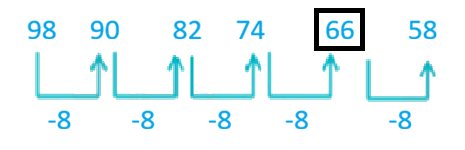 thus, "66" will replace the question mark in the given series.
Hence, the correct option is "Option 1".
Q2 · Series
What should come in place of the question mark '?' in the following number series? 45, 40, 50, ?, 55, 30
- 35
- 80
- 70
- 85
Answer aur solution dekho
Archived marked answer: A
The logic followed here is:
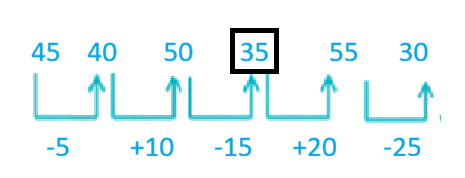 thus, "35" will replace the question mark in the given series.
Hence, the correct option is "Option 1".
Q3 · Series
What comes next? DA, EB, FC, ?
- HE
- GD
- IF
- JG
Answer aur solution dekho
Archived marked answer: B
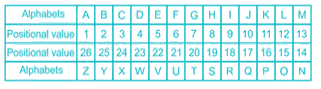 The logic followed here is:
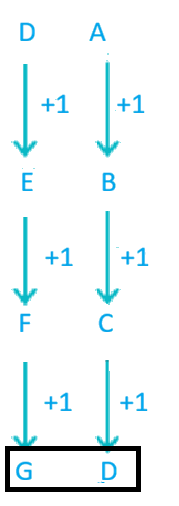 So, 'GD' will replace the question mark in the given series.
Hence, the correct answer is "Option 2"
Q4 · Series
Complete the series. 25, 36, 49, 64, 81, ?
- 90
- 96
- 100
- 99
Answer aur solution dekho
Archived marked answer: C
The logic followed here is:
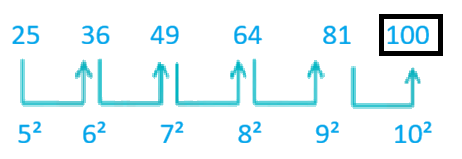 thus, "100" will replace the question mark in the given series.
Hence, the correct option is "Option 3".
Q5 · Series
Which word does NOT belong to the group based on meaning? CAT, DOG, FOX, RAT, RAZ
- CAT
- DOG
- FOX
- RAZ
Answer aur solution dekho
Archived marked answer: D
The logic followed here is:
All the words except RAZ are names of animals:
Word
Category
CAT
Animal
DOG
Animal
FOX
Animal
RAT
Animal
RAZ
Not an animal / Meaningless
So, the odd one out is RAZ.
Hence, the correct answer is "Option 4".
Q6 · Analogy
Find the missing number: 23 : 125 :: 31 : ?
- 69
- 65
- 46
- 64
Answer aur solution dekho
Archived marked answer: D
The logic followed here is:
Logic: (Sum of the digits of the first number)³ = second number.
Now,
For 23 : 125
⇒ (2 + 3)³
⇒ 5³ = 125
Similarly, for 31 : ?
⇒ (3 + 1)³
⇒ 4³ = 64
Hence, the correct answer is "Option 4".
Q7 · Analogy
Which city is different?
- Lucknow
- Varanasi
- Kanpur
- Hyderabad
Answer aur solution dekho
Archived marked answer: D
The logic followed here is:
Logic: Identify the city belonging to a different state
Given:
Lucknow → Uttar Pradesh
Varanasi → Uttar Pradesh
Kanpur → Uttar Pradesh
Hyderabad → Telangana
So, three cities are in Uttar Pradesh, while one is in Telangana
Therefore, Hyderabad is different
Hence, the correct answer is Option 4.
Q8 · Analogy
Find the ODD one out. Patna, Jaipur, Surat, Raipur, Chennai
- Patna
- Surat
- Jaipur
- Chennai
Answer aur solution dekho
Archived marked answer: B
The logic followed here is:
Logic: Identify the city that does not match the common pattern
Given:
Patna → State capital (Bihar)
Jaipur → State capital (Rajasthan)
Raipur → State capital (Chhattisgarh)
Chennai → State capital (Tamil Nadu)
Surat → Not a state capital (Gujarat’s capital is Gandhinagar)
So, four are state capitals, while one is not
Therefore, Surat is different
Hence, the correct answer is Option 2.
Q9 · Puzzle Subtypes Not To Miss
The seminar in Guntur occurred 2 days before Visakhapatnam, while Kakinada was 3 days after Visakhapatnam. If Kakinada's seminar was on 20th Feb, when did the Guntur seminar happen?
- 13th Feb
- 14th Feb
- 15th Feb
- 16th Feb
Answer aur solution dekho
Archived marked answer: C
Given:
Guntur is 2 days before Visakhapatnam.
Kakinada is 3 days after Visakhapatnam.
Kakinada = 20th Feb
Now,
Visakhapatnam = 20th Feb − 3 days = 17th Feb
Guntur = 17th Feb − 2 days = 15th Feb
Place
Date
Visakhapatnam
17th Feb
Kakinada
20th Feb
Guntur
15th Feb
Hence, the correct answer is Option 3.
Q10 · Puzzle Subtypes Not To Miss
if * = +, @ = -, # = x; then 5 * 3 # 2 @ 4 = ?
- 7
- 9
- 8
- 12
Answer aur solution dekho
Archived marked answer: A
BODMAS Table:
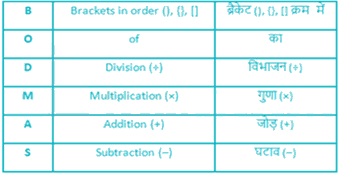 Given equation: 5 * 3 # 2 @ 4 = ?
Now, if * = +, @ = -, # = ×, then:
5 + 3 × 2 - 4 = ?
5 + 6 - 4 = ?
11 - 4 = 7
Hence, the correct answer is Option 1.
Q11 · Puzzle Subtypes Not To Miss
A train travels a distance of 360 km in 4 hours. If the train increases its speed by 10 km/h, how much time will it take to cover the same distance?
- 3 h
- 3.2 h
- 3.6 h
- 4 h
Answer aur solution dekho
Archived marked answer: C
Given:
Distance = 360 km
Time taken = 4 hours
Speed of the train = Distance ÷ Time
= 360 ÷ 4
= 90 km/h
If speed increases by 10 km/h, new speed = 100 km/h
New time = Distance ÷ New speed
= 360 ÷ 100
= 3.6 hours
Hence, the correct answer is Option 3.
Q12 · Puzzle Subtypes Not To Miss
If you multiply the first five natural numbers; what do you get?
- 100
- 120
- 60
- 240
Answer aur solution dekho
Archived marked answer: B
Given:
First five natural numbers = 1, 2, 3, 4, 5
Multiply them:
1 × 2 × 3 × 4 × 5
= 2 × 3 × 4 × 5
= 6 × 4 × 5
= 24 × 5
= 120
Hence, the correct answer is Option 2.
Q13 · Puzzle Subtypes Not To Miss
If 8 pens cost ₹80, how many pens can you buy for ₹200?
- 18
- 20
- 25
- 16
Answer aur solution dekho
Archived marked answer: B
Given:
8 pens cost ₹80
Cost of 1 pen = 80 ÷ 8 = ₹10
Number of pens that can be bought for ₹200:
200 ÷ 10 = 20
Hence, the correct answer is Option 2.
Q14 · Coding Decoding
If 3 × 3 = 27, then 4 × 4 = ?
- 256
- 216
- 126
- 144
Answer aur solution dekho
Archived marked answer: A
The logic followed here is:
Logic: Number × Number = Cube of the number
Given:
3 × 3 = 27
3 × 3 × 3 = 27
Now,
4 × 4 = 4 × 4 × 4 = 64 → Not in options, so check pattern carefully.
Try matching with given options:
4² = 16
16 × 16 = 256
So, 4 × 4 = 256
Hence, the correct answer is Option 1.
Q15 · Coding Decoding
If "MANDELA" is coded as "JXKABIX", what is the code for "GANDHI"?
- DEZJAG
- DFZKAG
- EZALEF
- DXKAEF
Answer aur solution dekho
Archived marked answer: D
The logic followed here is:
Logic: Each letter is shifted −3 in the English alphabetical order
Given: MANDELA → JXKABIX
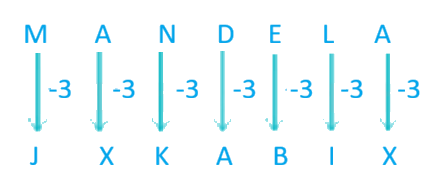 Now, GANDHI → ?
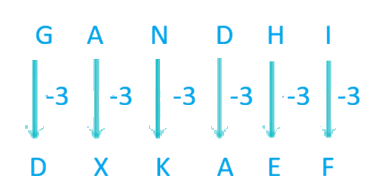 So, GANDHI → DXKAEF
Hence, the correct answer is Option 4.
Q16 · Coding Decoding
If in a certain code, 'NORTH' is written as 'HTRON', how will 'ORTHN' be written?
- RUKPN
- NHTRO
- XAHNL
- UJKE
Answer aur solution dekho
Archived marked answer: B
The logic followed here is:
Logic: The word is reversed
Given:
NORTH → HTRON
Now, ORTHN → ?
Reverse it → NHTRO
Hence, the correct answer is Option 2. Q17 · Coding Decoding
In a code language, "The book is interesting" is coded as "mo no lo po", "The book is boring" is coded as "mo no to po", "The movie is interesting" is coded as "do no lo po". What is the code for "The movie is boring"?
- mo do po to
- do no po to
- no so mo po
- ko fo vo po
Answer aur solution dekho
Archived marked answer: B
Logic: Same words have the same code in all sentences.
Given codes:
'The book is interesting' → mo, no, lo, po
'The book is boring' → mo, no, to, po
'The movie is interesting' → do, no, lo, po
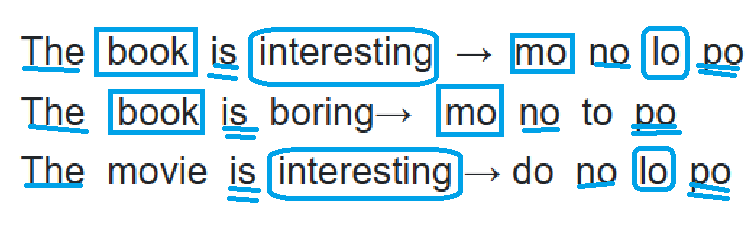 Therefore,
'The movie is boring' → do, no, po, to
Hence, the correct answer is Option 2.
Q18 · Coding Decoding
If in a certain language, 'COVERT' is written as 'BNUFQS', how is 'ABSENT' written in that code?
- ZARFMS
- ZATRDS
- ZATSRD
- ZASTRD
Answer aur solution dekho
Archived marked answer: A
The logic followed here is:
Logic: Each letter is shifted −1 in the English alphabetical order
Given: COVERT → BNUFQS
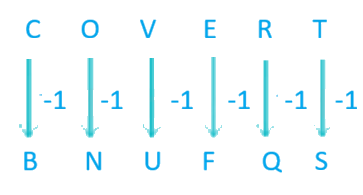 Now, ABSENT → ?
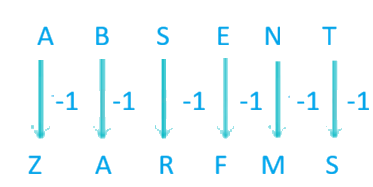 So, ABSENT → ZARFMS
Hence, the correct answer is Option 1.
Q19 · Coding Decoding
If WINDOW is coded as XJOEPX, how is XJOEPX coded?
- YKPFQY
- YKPFQX
- YKOEQY
- YKPEQY
Answer aur solution dekho
Archived marked answer: A
The logic followed here is:
Logic: Each letter is shifted +1 in the English alphabetical order
Given: WINDOW → XJOEPX
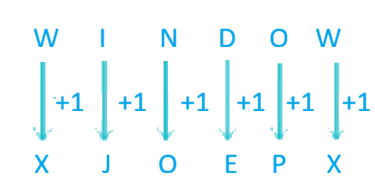 Now, XJOEPX → ?
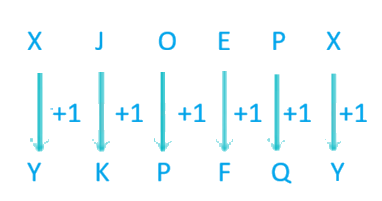 So, XJOEPX → YKPFQY
Hence, the correct answer is Option 1.
Q20 · Logical Reasoning
Read the given statement and conclusions carefully. Decide which of the given conclusions is/are definitely TRUE from the statement.
Statement: F G
- Both Conclusion I and Conclusion II are TRUE.
- Neither Conclusion I nor Conclusion II is TRUE.
- Only Conclusion II is TRUE.
- Only Conclusion I is TRUE.
Answer aur solution dekho
Archived marked answer: B
Given Statement:
F G → False (no definite relation)
Hence, the correct answer is Option 2.
Q21 · Logical Reasoning
Read the following statement carefully and identify the conclusion that follows.
Statement:
Some men are honest. All honest people are brave.
Conclusions:
I. Some men are brave.
II. All men are brave.
- Only I follows
- Only II follows
- Both I and II follow
- Neither I nor II follows
Answer aur solution dekho
Archived marked answer: A
Given Statements:
Some men are honest.
All honest people are brave.
From statements:
 Conclusions:
I. Some men are brave → True (since some men are honest and all honest are brave)
II. All men are brave → False (only some men are honest, not all)
Hence, the correct answer is Option 1.
Q22 · Logical Reasoning
Read the following statement carefully and identify the conclusion that follows.
Statement:
All keys are locks. Some locks are tools. No tool is a weapon.
Conclusions:
I. Some keys are not weapons.
II. All tools are locks.
- Only I follows
- Only II follows
- Both I and II follow
- Neither I nor II follows
Answer aur solution dekho
Archived marked answer: D
Given Statements:
All keys are locks.
Some locks are tools.
No tool is a weapon.
From statements:
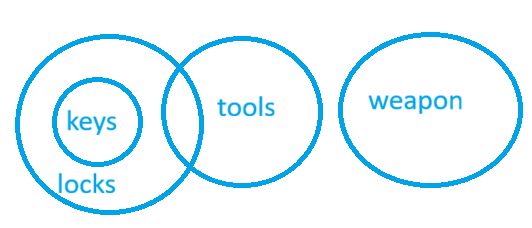 Conclusions:
I. Some keys are not weapons → False (no direct link between keys and tools/weapons)
II. All tools are locks → False (only some locks are tools, not all tools are locks)
Hence, the correct answer is Option 4.
Q23 · Blood Relations
A is the wife of B. C is the son of A. How is C related to B?
- Daughter
- Son
- Grandmother
- Mother
Answer aur solution dekho
Archived marked answer: B
Family Chart:
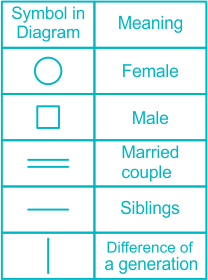 Given:
A is the wife of B.
C is the son of A.
 Therefore, C is the Son of B.
Hence, the correct answer is "Option 2".
Q24 · Alphabet Test
In the word "PHYSICS", what is the alphabetical index (A=1 to Z=26) of the 2nd letter from the right?
- 3
- 19
- 9
- 25
Answer aur solution dekho
Archived marked answer: A
Given word: PHYSICS
Letters
P
H
Y
S
I
C
S
Position from right
7
6
5
4
3
2
1<
Q25 · Similarity and Differences
Choose the address that is the same as the one given below.
Sample Address:12-B, Sunrise Apartments,Sector 14, Gurugram,Haryana - 122001
- 12B, Sunrise Apartments, Sector 14, Gurgaon, Haryana - 122001
- 12-B, Sunrise Apt., Sector 14, Gurugram, Haryana - 122001
- 12-B, Sunrise Apartments, Sector 14, Gurugram, Haryana - 122001
- 21-B, Sunrise Apartments, Sector 14, Gurugram, Haryana - 122001
Answer aur solution dekho
Archived marked answer: C
The address given in the problem is,
12-B, Sunrise Apartments, Sector 14, Gurugram, Haryana - 122001
Let's match this address with the given options one by one to figure out which one is exactly the same.
Option
Address in Option
Given Address
Comment
(1)
12B, Sunrise Apartments, Sector 14, Gurgaon, Haryana - 122001
12-B, Sunrise Apartments, Sector 14, Gurugram, Haryana - 122001
The building number has no hyphen and the city is 'Gurgaon' instead of 'Gurugram'.
(2)
12-B, Sunrise Apt., Sector 14, Gurugram, Haryana - 122001
12-B, Sunrise Apartments, Sector 14, Gurugram, Haryana - 122001
'Sunrise Apt.' is an abbreviation instead of 'Sunrise Apartments'.
(3)
12-B, Sunrise Apartments, Sector 14, Gurugram, Haryana - 122001
12-B, Sunrise Apartments, Sector 14, Gurugram, Haryana - 122001
The address is exactly the same as the given address.
(4)
21-B, Sunrise Apartments, Sector 14, Gurugram, Haryana - 12200
12-B, Sunrise Apartments, Sector 14, Gurugram, Haryana - 122001
The building number and the postal code are different from the given address.
So, the address that is exactly the same as the given address is in option (3).
Hence, the correct option is "option (3)".
General Awareness
Q1 · Art and Culture
The Taj Mahal was inspired by which famous monument?
- Humayun's Tomb
- Jama Masjid
- Victoria Memorial
- Qutub Minar
Answer aur solution dekho
Archived marked answer: A
The correct answer is Humayun's Tomb.
Key Points
- Humayun's Tomb, located in Delhi, India, served as a major inspiration for the design and architecture of the Taj Mahal.
- It was built in 1565-1572 by Empress Bega Begum, the wife of Mughal Emperor Humayun, and is considered the first garden-tomb in the Indian subcontinent.
- Humayun's Tomb is known for its distinctive Persian-style architecture, which features a symmetrical layout, a double dome, and intricate carvings.
- The architectural elements of Humayun's Tomb, including the use of white marble and red sandstone, influenced the construction of the Taj Mahal in Agra.
- The Taj Mahal, built by Emperor Shah Jahan in memory of his wife Mumtaz Mahal, incorporated the aesthetic principles seen in Humayun's Tomb, particularly the symmetry and Mughal garden layout.
Additional Information
- Humayun's Tomb:
- Located in Delhi, India, it is a UNESCO World Heritage Site.
- It was the first structure in India to use red sandstone on a large scale.
- The tomb was designed by Mirak Mirza Ghiyas, a Persian architect.
- Its design features a charbagh (four-part garden), a hallmark of Mughal architecture.
- Taj Mahal:
- Built in 1632-1653 in Agra, Uttar Pradesh, by Mughal Emperor Shah Jahan as a mausoleum for his wife Mumtaz Mahal.
- It is made of white marble and is recognized as one of the Seven Wonders of the World.
- The layout of the Taj Mahal is inspired by the Persian-style charbagh gardens seen in Humayun's Tomb.
- The Taj Mahal is also a UNESCO World Heritage Site and symbolizes the zenith of Mughal architecture.
- Other Options Explained:
- Jama Masjid: Built by Shah Jahan in Delhi, it is one of the largest mosques in India but does not share direct architectural influence with the Taj Mahal.
- Victoria Memorial: Located in Kolkata, this structure was built during British rule and has no connection to Mughal architecture or the Taj Mahal.
- Qutub Minar: A UNESCO World Heritage Site in Delhi, it is an ancient minaret from the Delhi Sultanate period and is unrelated to the architectural inspiration of the Taj Mahal.
-
Important Points
:
- The use of symmetry, domes, and gardens in Mughal architecture is a defining characteristic that connects Humayun's Tomb and the Taj Mahal.
- Both structures reflect the fusion of Persian, Islamic, and Indian architectural styles.
``
Q2 · Art and Culture
Read the below statements marked as Assertion (A) and Reason (R). Mark the correct options:
Assertion(A): Gandhara images frequently feature halo and curly hair.
Reasoning(R): These elements symbolise Graeco-Roman influence in North-West India.
- Both A and R are true, and R is the correct explanation of A.
- Both A and R are true, but R is not the correct explanation of A.
- A is true, but R is false.
- A is false, but R is true.
Answer aur solution dekho
Archived marked answer: A
The correct answer is 1) Both A and R are true, and R is the correct explanation of A..
Key Points
- Assertion (A): Gandhara images frequently feature halo and curly hair.
Gandhara art is renowned for its distinctive style, which blends Indian traditions with Graeco-Roman elements. Halo and curly hair are prominent features of Gandhara sculptures, especially in depictions of Buddha. These elements are visually striking and symbolic of divinity and enlightenment. *Hence, the assertion is correct.*
- Reasoning (R): These elements symbolize Graeco-Roman influence in North-West India.
The influence of Graeco-Roman art on Gandhara sculptures is evident in details such as curly hair, drapery resembling Roman togas, and the use of a halo to signify divinity. These features were introduced due to cultural exchanges following Alexander the Great's invasion and subsequent Indo-Greek rule in North-West India. *Hence, the reasoning is correct.*
- Connection between A and R:
The reasoning effectively explains the assertion, as the halo and curly hair are direct results of Graeco-Roman artistic influence. This cultural amalgamation shaped Gandhara art during the Kushan period. *Therefore, both A and R are true, and R is the correct explanation of A.*
Additional Information
- Gandhara Art:
Gandhara art flourished primarily in the regions of modern-day Pakistan and Afghanistan during the Kushan Empire (1st–5th century CE). It is notable for its synthesis of Indian, Greek, and Roman artistic traditions.
- Graeco-Roman Influence:
Greek and Roman styles significantly influenced Gandhara art due to cultural interactions from Alexander's campaigns and subsequent Indo-Greek and Kushan rulers. Elements such as realistic human forms, curly hair, drapery folds, and halos were adapted into Buddhist iconography.
- Features of Gandhara Sculptures:
Gandhara sculptures often depict Buddha with Greek-style curly hair, a urna (symbol of enlightenment), and a halo. The use of mathematical proportions and realistic anatomy also reflects Greek artistic principles.
- Kushan Empire:
The Kushan Empire (30–375 CE) played a pivotal role in promoting Gandhara art. Rulers such as Kanishka the Great patronized Buddhist art and architecture, facilitating the integration of Graeco-Roman styles into Indian traditions.
- Historical Significance:
Gandhara art represents a unique cultural fusion and serves as an important visual record of the spread of Buddhism and its adaptation to local traditions across regions.
Important Points
- Halo:
The halo in Gandhara art, used around the head of Buddha, symbolizes divinity, spiritual radiance, and enlightenment. This element was borrowed from Graeco-Roman religious art.
- Curly Hair:
The depiction of Buddha with curly hair is inspired by Greek artistic conventions, particularly those seen in sculptures of Greek gods like Apollo.
- Trade and Cultural Exchange:
Gandhara's position on the Silk Route facilitated extensive trade and cultural exchange, allowing Graeco-Roman styles to influence local art.
- Legacy:
Gandhara art significantly influenced later Buddhist art traditions in Central Asia, China, Korea, and Japan.
61
Q3 · Art and Culture
Tippani is a traditional folk dance performed mainly by women in which Indian state?
- Rajasthan
- Gujarat
- Maharashtra
- Punjab
Answer aur solution dekho
Archived marked answer: B
The correct answer is Gujarat.
Key Points
- Tippani Dance is a traditional folk dance performed primarily by women in the Indian state of Gujarat.
- It is particularly popular in the Saurashtra region of Gujarat, showcasing the vibrant and colorful culture of the state.
- The dance involves women using a long wooden stick, referred to as "tippani," to strike the ground rhythmically while performing.
- Costumes worn during the Tippani dance are traditionally colorful and bright, reflecting the lively spirit of Gujarati folk culture.
- This dance form is often performed during festivals, ceremonies, and special occasions, symbolizing unity and celebration among the community.
- The dance not only serves as entertainment but also emphasizes cooperation and synchronization among the performers.
Additional Information
- Traditional Folk Dances of Gujarat:
- Gujarat is known for its rich folk culture, including dance forms like Garba, Dandiya Raas, Tippani, and Bhavai.
- Garba and Dandiya Raas are widely recognized worldwide, performed during the festival of Navratri.
- Tippani Dance is unique in its use of tools (wooden sticks) to create rhythm and is a less commercialized yet culturally significant dance form.
- These dances reflect the agricultural and communal lifestyle of the state, celebrating nature, festivals, and social gatherings.
- Specific Characteristics of Tippani Dance:
- The wooden stick used in the dance is often decorated, symbolizing the artistic traditions of the region.
- The dance steps are synchronized and require coordination among the performers, reflecting the communal spirit of rural Gujarat.
- It is performed to the accompaniment of traditional folk music, enhancing its cultural essence.
- Other Indian Folk Dances:
- Rajasthan: Known for Ghoomar, Kalbelia, and Chari Dance, showcasing the royal heritage and desert lifestyle.
- Maharashtra: Famous for Lavani, a vibrant dance performed to rhythmic beats, often reflecting social themes.
- Punjab: Renowned for Bhangra and Giddha, dances full of energy and traditionally performed during harvest festivals.
- Cultural Significance:
- Folk dances like Tippani preserve the cultural heritage of the community and serve as a medium for storytelling and celebration.
- They act as a bridge between generations, passing down traditions, values, and artistic skills.
- Such dances are a part of the intangible cultural heritage of India and contribute to the diversity of the nation.
</ul
Q4 · Art and Culture
Fill in the blank: In Madhya Pradesh, the unmarried girls place lamps inside a decorated earthen pot called ______ during Gangaur.
- Kalash
- Ghudlia
- Matki
- Deepdan
Answer aur solution dekho
Archived marked answer: B
The correct answer is Ghudlia.
Key Points
- Ghudlia refers to a decorated earthen pot used during the Gangaur festival in Madhya Pradesh.
- During Gangaur, unmarried girls place lamps inside the decorated Ghudlia and carry them while singing traditional songs dedicated to Gauri and Shiva.
- This ritual is performed to seek blessings for a good husband and a prosperous married life.
- Gangaur is a prominent festival celebrated in parts of Rajasthan and Madhya Pradesh, especially by women.
- The term "Ghudlia" is specific to Madhya Pradesh and reflects the cu
Q5 · Indian Polity and Constitution
In BNSS, what provision strengthens witness protection during trial?
- Anonymous jury system
- Use of video conferencing and identity concealment for vulnerable witnesses
- Witnesses can choose to record statements via SMS
- Witnesses are not required to attend trial
Answer aur solution dekho
Archived marked answer: B
The correct answer is Use of video conferencing and identity concealment for vulnerable witnesses.
Key Points
- Video conferencing and identity concealment are provisions that enhance the protection of vulnerable witnesses during trials. These measures ensure that witnesses can provide testimony without being physically present, reducing the risk of intimidation or harm.
- Identity concealment is a critical safeguard for witnesses who may be threatened or coerced due to their participation in legal proceedings. It helps maintain their anonymity, ensuring their safety and encouraging truthful testimony.
- Such provisions are particularly important in cases involving sensitive matters, organized crime, or instances where witnesses face threats from powerful entities.
- The system allows witnesses to testify from secure locations, ensuring that they are shielded from direct confrontation with the accused or their associates.
- These measures align with the broader goal of ensuring justice while protecting individuals who play an instrumental role in legal processes.
Additional Information
- Witness Protection Scheme, 2018:
- This scheme was introduced by the Ministry of Home Affairs, Government of India, to provide adequate protection to witnesses in sensitive cases.
- The scheme emphasizes the confidentiality of identity, relocation of witnesses, and other measures to ensure their safety.
- It categorizes witnesses into three categories based on the threat perception and provides necessary protection accordingly.
- Use of Technology in Courts:
- Video conferencing is increasingly used to conduct hearings, particularly in cases involving vulnerable witnesses or during emergencies like the COVID-19 pandemic.
- Technology minimizes logistical challenges and provides a secure environment for witnesses to testify.
- It also enhances judicial efficiency by reducing delays caused by witness unavailability.
- International Practices:
- Countries like the United States and United Kingdom have adopted similar measures for witness protection, including the use of video conferencing and voice modulation technologies.
- The United Nations Office on Drugs and Crime (UNODC) also advocates for witness protection mechanisms as part of its guidelines for criminal justice reform.
- Legal Provisions in India:
- The Indian Evidence Act, 1872, and the Criminal Procedure Code have been amended to incorporate provisions for witness protection.
- Section 161 of CrPC allows for recording witness statements through electronic means, ensuring flexibility and security.
Important Points
- Anonymous Jury System:
- This concept is not prevalent in India but is used in certain international jurisdictions to protect jury members in high-risk cases.
- It involves concealing the identities of jury members to safeguard them from external pressures.
- However, this option does not address witness protection directly, making it less relevant to the Indian context.
- SMS Statement Recording:
- This is not a recognized method for recording witness statements as per Indian legal standards.
- While it might seem convenient, it lacks the safeguards necessary to ensure authenticity and reliability.
- No Attendance Requirement:
- Witnesses are generally required to attend trials unless provisions like video conferencing are used.
- Absence of attendance without alternative arrangements can compromise the integrity of judicial proceedings.
- Role of Judiciary:
- The judiciary plays a pivotal role in implementing witness protection measures, ensuring a fair trial while safeguarding the rights and safety of witnesses.
- Landmark judgments like State of Maharashtra v. Dr. Praful B. Desai have upheld the use of video conferencing for witness testimonies. </ul
Q6 · Indian Polity and Constitution
Which of the following accurately describes the legal and institutional basis of "Special Category State" status in India?
- It is a constitutional provision granted under Article 275.
- It is defined in the Constitution and recommended by the Inter-State Council.
- It is not mentioned in the Constitution and was granted by the National Development Council.
- It is conferred by the Finance Commission under Article 280.
Answer aur solution dekho
Archived marked answer: C
The correct answer is It is not mentioned in the Constitution and was granted by the National Development Council..
Key Points
- The status of Special Category State (SCS) in India is not a constitutional provision. It is an administrative classification introduced by the National Development Council (NDC) in 1969.
- The NDC granted this status to states that faced challenges such as hilly terrain, low population density, strategic location (bordering neighboring countries), economic backwardness, or non-viable nature of state finances.
- States with SCS status receive preferential treatment in the allocation of central funds and other financial assistance, particularly under the Gadgil-Mukherjee formula for central assistance.
- Originally, the SCS status was conferred to Assam, Nagaland, Jammu & Kashmir, and Himachal Pradesh. Over time, more states were added to the list, bringing the total to 11 states.
- The 14th Finance Commission (2015) recommended doing away with the distinction between SCS and other states. However, some benefits are still provided to SCS states through other mechanisms.
Additional Information
- Criteria for Special Category States:
- Hilly terrain: States with challenging geographical conditions, such as the northeastern states and Himachal Pradesh, were included.
- Low population density: Low-density areas often face higher costs in providing basic services.
- Strategic location: Many SCS states are located on international borders, requiring additional security and development measures.
- Economic backwardness: Poor infrastructure and lack of industrial development were key considerations.
- Non-viable nature of state finances: These states often had lower revenue generation capacity and higher dependency on central assistance.
- Benefits of Special Category Status:
- Central Assistance: SCS states received 90% of funds as grants and only 10% as loans under central schemes.
- Tax Concessions: Industries in SCS states were provided tax incentives to promote development.
- Preferential Allocation: SCS states were prioritized for funding under centrally sponsored schemes.
- States with Special Category Status:
- Initially, the status was granted to Assam, Nagaland, Jammu & Kashmir, and Himachal Pradesh.
- Later, states like Manipur, Meghalaya, Sikkim, Tripura, Mizoram, Arunachal Pradesh, and Uttarakhand were added.
- 14th Finance Commission Recommendations:
- The 14th Finance Commission recommended discontinuing the SCS distinction.
- Instead, it suggested transferring a greater share of central taxes to all states (42% from the divisible pool).
- However, some benefits of SCS status, like tax incentives, are still provided through central legislation.
Important Points
- Difference between Special Category Status and Special Status:
- Special Category Status: Administrative classification granted by the NDC for central assistance based on specific criteria.
- Special Status: Constitutional provision under Article 371 to provide certain privileges and autonomy to specific states.
- Recent Developments:
- The reorganization of Jammu & Kashmir in 2019 led to the abrogation of its SCS privileges.
- States like Andhra Pradesh continue to demand SCS status due to financial constraints post-bifurcation. </ul
Q7 · Indian Economy
Which of the following statements accurately describes the law of demand in microeconomics?
- As price increases, demand increases.
- As price decreases, demand decreases.
- As price increases, demand decreases, ceteris paribus.
- Price has no effect on demand.
Answer aur solution dekho
Archived marked answer: C
The correct answer is As price increases, demand decreases, ceteris paribus..
Key Points
- The Law of Demand: In microeconomics, the law of demand states that, ceteris paribus (all other factors being equal), as the price of a good or service increases, the quantity demanded of that good or service decreases, and vice versa. This reflects a fundamental inverse relationship between price and demand.
- Correct Statement: The correct option, "As price increases, demand decreases, ceteris paribus," accurately describes this concept. This statement aligns with the law of demand, which emphasizes the inverse relationship between price and quantity demanded.
- Behavior of Consumers: Higher prices typically deter consumers from purchasing more of a good or service, while lower prices encourage increased consumption, assuming no
Q8 · Indian Economy
Carefully read the following two statements and pick the most appropriate option:
Assertion (A): The government's revenue receipts don't bring with them any burden of repayment or financial liability.
Reason (R): These earnings aren't meant to be returned and generally come from either tax-related sources or other regular inflows.
- Both A and R are true, and R is the correct explanation of A
- Both A and R are true, but R is not the correct explanation of A
- A is true, but R is false
- A is false, but R is true
Answer aur solution dekho
Archived marked answer: A
The correct answer is Both A and R are true, and R is the correct explanation of A.
Key Points
- Assertion (A): The government's revenue receipts don't bring with them any burden of repayment or financial liability.
- Revenue receipts include earnings from sources like taxes, duties, and other non-tax revenues.
- These receipts are considered non-repayable because they are generated from the country's economic activities and are not loans or borrowings. *Hence, the statement is true.*
- Reason (R): These earnings aren't meant to be returned and generally come from either tax-related sources or other regular inflows.
- Tax-related earnings include income tax, corporate tax, customs duty, and GST, which are collected by the government as part of its fiscal operations.
- Non-tax revenue sources include fees, fines, dividends, and interest on investments, which al
Q9 · Indian Economy
Who is known as the architect of India's Five-Year Plans?
- Sardar Patel
- Jawaharlal Nehru
- B.R. Ambedkar
- P.C. Mahalanobis
Answer aur solution dekho
Archived marked answer: D
The correct answer is P.C. Mahalanobis.
Key Points
- P.C. Mahalanobis, also known as the "Father of Indian Statistics," played a key role in shaping India's economic planning and development.
- He was the chief architect of India's Second Five-Year Plan (1956–1961), which focused on the rapid industrialization of the country.
- The Mahalanobis Model, a pivotal economic model, emphasized the growth of the heavy industry sector, which was considered essential for long-term economic development.
- He established the Indian Statistical Institute (ISI) in 1931 in Kolkata, which became a hub for statistical research and national development planning.
- P.C. Mahalanobis was instrumental in introducing the concept of Planned Economy and utilizing statistical methods for economic and social surveys in India.
Additional Information
- About India's Five-Year Plans:
- The Five-Year Plans were a series of centralized economic and social development initiatives launched by the Government of India post-independence.
- The First Five-Year Plan (1951–1956) primarily focused on agriculture, irrigation, and energy sectors to ensure food security.
- The Second Five-Year Plan, spearheaded by P.C. Mahalanobis, emphasized industrialization and building a self-reliant economy.
- The Plans were modeled on the Soviet Union's planning system but adapted to meet India's unique needs and challenges.
- P.C. Mahalanobis and His Contributions:
- He introduced the Mahalanobis Distance, a statistical measure used in cluster analysis and classification problems.
- The ISI, under his leadership, became a center for statistical innovation and played a crucial role in national policy formation.
- He was a member of the Planning Commission of India and influenced decisions on resource allocation, industrial policy, and economic development.
- He advocated for the use of statistics and data-driven decision-making in governance and planning.
- Other Options Explained:
- Sardar Patel: Known as the "Iron Man of India," he played a pivotal role in integrating princely states into the Indian Union but was not associated with Five-Year Plans.
- Jawaharlal Nehru: As India's first Prime Minister, he laid the foundation for economic planning and supported the establishment of the Planning Commission, but he did not directly design the Plans.
- B.R. Ambedkar: A key architect of the Indian Constitution and a social reformer, his contributions were more in law, social justice, and policy, not in economic planning.
Important Points
- The Mahalanobis Model:
- It emphasized the development of the capital goods sector, such as machinery and heavy industries, over consumer goods.
- The model aimed to reduce dependency on imports and achieve economic self-reliance.
- It was based on a two-sector model, dividing the economy into capital goods and consumer goods sectors.
- Legacy of Five-Year Plans:
- The Five-Year Plans continued until 2017 when they were replaced by the NITI Aayog's 15-year vision and three-year action agenda.
- The Plans laid the foundation for India's current economic structure and helped address issues such as poverty, unemployment, and infrastructure development.
7d
Q10 · Indian Economy
According to Mahalanobis strategy, growth should primarily be driven by investment in:
- Agricultural inputs
- Consumer goods sector
- Capital goods sector
- Import-led services sector
Answer aur solution dekho
Archived marked answer: C
The correct answer is Capital goods sector.
Key Points
- Mahalanobis Strategy: The Mahalanobis strategy was introduced in the Second Five-Year Plan (1956-61) in India, emphasizing the importance of heavy industries and the capital goods sector for long-term economic growth.
- The strategy aimed at developing a strong industrial base, particularly focusing on sectors that produce machinery, tools, and equipment required for other industries.
- The capital goods sector was considered vital for self-reliance, as it reduces dependency on imported machinery and enables domestic industries to flourish.
- This approach was inspired by the Soviet model of economic planning, which emphasized state-led industrialization and investment in heavy industries.
- The policy was formulated by Prasanta Chandra Mahalanobis, a renowned Indian statistician, and played a pivotal role in shaping India's economic strategy during the early years of independence.
Additional Information
- Capital Goods Sector:
- The capital goods sector includes industries that manufacture machinery, tools, and equipment used for production in other industries. Examples include steel plants, machine tools, heavy electrical equipment, and chemical plants.
- Investments in the capital goods sector lead to the creation of infrastructure and production capacity, which are essential for long-term economic growth.
- This sector is considered the backbone of industrial development, fostering technological advancements and innovation.
- Countries like the Soviet Union and China successfully adopted similar strategies to enhance their industrial base.
- Mahalanobis Model:
- The Mahalanobis model is a two-sector model focusing on the allocation of resources between the consumer goods sector and the capital goods sector.
- The model assumes that investment in the capital goods sector results in higher economic growth due to its ability to produce goods for other industries.
- The strategy emphasized state-led industrialization to overcome the limitations of private investment in heavy industries.
- Comparison of Options:
- Agricultural inputs: While agriculture is crucial for food security and livelihood, the Mahalanobis strategy prioritized industrialization over agriculture for faster economic growth.
- Consumer goods sector: The consumer goods sector focuses on products for immediate consumption, but the strategy argued that investment in the capital goods sector would indirectly support the growth of consumer industries.
- Import-led services sector: This option contrasts with the Mahalanobis model, which emphasized reducing import dependency by strengthening domestic industries.
Important Points
- Second Five-Year Plan:
- The Second Five-Year Plan (1956-61) was heavily influenced by the Mahalanobis strategy and aimed at achieving a growth rate of 4.5% annually.
- The plan allocated significant resources to heavy industries like steel, engineering, and chemicals.
- This approach led to the establishment of public-sector enterprises such as BHEL, SAIL, and HEC, which remain integral to India's industrial landscape.
- Criticism:
- The strategy faced criticism for neglecting sectors like agriculture and small-scale industries, which are crucial for employment and rural development.
- It contributed to income inequality and regional disparities, as urban areas benefited more from industrialization than rural areas. </ul
Q11 · Indian Economy
The economic policy reforms of 1991 are popularly known as:
- Five-Year Plan
- New Fiscal Policy
- New Economic Policy
- Economic Reconstruction Plan
Answer aur solution dekho
Archived marked answer: C
The correct answer is New Economic Policy.
Key Points
- The economic policy reforms of 1991 in India are popularly known as the New Economic Policy, which marked a paradigm shift in India's economic approach.
- It was introduced under the leadership of the then Prime Minister P.V. Narasimha Rao and Finance Minister Dr. Manmohan Singh to address the economic crisis caused by fiscal deficits and foreign exchange shortages.
- The reforms focused on Liberalization, Privatization, and Globalization (commonly referred to as LPG reforms), aiming to integrate India’s economy with the global market.
- The Liberalization measures removed trade restrictions, reduced import tariffs, and deregulated industries to encourage private sector participation.
- Privatization involved disinvestment in public sector enterprises to reduce the government's role in business and bring efficiency.
- Globalization opened Indian markets to foreign investments, promoting international trade and enhancing economic growth.
- This policy was implemented to address the balance of payments crisis, stabilize the economy, and promote growth by attracting foreign investments.
Additional Information
- Economic Crisis of 1991:
- India faced a severe balance of payments crisis in 1991, with foreign exchange reserves depleting to a level that could barely finance two weeks of imports.
- The fiscal deficit reached 8.4% of GDP, and inflation was rising at an alarming rate of 13%.
- The country sought assistance from the International Monetary Fund (IMF), which required India to implement structural reforms as part of the bailout package.
- Liberalization:
- Involved reducing government regulations and restrictions on businesses and industries.
- Key measures included abolishing the License Raj, reducing import tariffs, and easing restrictions on foreign investment.
- Allowed private entities to operate freely, fostering competition and innovation.
- Privatization:
- Focused on transferring ownership of public sector enterprises to private entities.
- Disinvestment in government-owned companies was undertaken to improve efficiency and reduce fiscal burden.
- Encouraged private sector participation in industries previously dominated by the government.
- Globalization:
- Opened Indian markets to foreign investments and international trade.
- Allowed multinational corporations to establish operations in India, leading to technological advancements and job creation.
- Enhanced India's integration into the global economy, fostering economic growth and development.
- Impact of New Economic Policy:
- India’s GDP growth rate increased significantly, averaging around 6-7% per year in the post-reform period.
- Foreign Direct Investment (FDI) inflows rose, boosting industrial development.
- India became a major player in global IT and service sectors due to increased competitiveness and technological advancements.
- While the reforms led to economic growth, they also resulted in income inequality and concerns about job security in certain sectors.
Important Points
- License Raj:
- Before 1991, businesses in India required multiple licenses and approvals for starting and operating industries.
- The New Economic Policy abolished many of these restrictions, fostering entrepreneurship and industrial growth.
- IMF Bailout:
- India pledged 67 tonnes of gold as collateral to secure financial assistance from the IMF.
- This marked a turning point in India's economic history, leading to the adoption of structural reforms.
- Key Figures:
- P.V. Narasimha Rao: Played a crucial role as the Prime Minister in implementing the reforms.
- Dr. Manmohan Singh: As Finance Minister, he spearheaded the policy changes and is considered the architect of the reforms.
- Foreign Investment:
- FDI inflows increased, particularly in sectors like telecommunications, automobiles, and IT.
- India became one of the fastest-growing economies globally, attracting significant foreign capital.
85
Q12 · Sports Static GK
Which of the following correctly identifies India's first Paralympic medallist and his achievement?
- Devendra Jhajharia - Gold, javelin throw, Athens 1975
- Murlikant Petkar - Gold, men's 50m freestyle, Heidelberg 1972
- Mariyappan Thangavelu - Gold, high jump, Rio 1973
- Avani Lekhara - Gold, air rifle, Tokyo 1976
Answer aur solution dekho
Archived marked answer: B
The correct answer is Murlikant Petkar - Gold, men's 50m freestyle, Heidelberg 1972.
Key Points
- Murlikant Petkar was India's first Paralympic gold medallist. He won the gold medal in the men's 50m freestyle swimming event at the 1972 Paralympics held in Heidelberg, Germany.
- Petkar set a world record in the event with a timing of 37.33 seconds, showcasing his exceptional talent and determination.
- Before his Paralympic success, he was a soldier in the Indian Army and sustained injuries during the Indo-Pak war of 1965, which led to his disability.
- Despite his injuries, he showed immense resilience by transitioning to sports and excelling in swimming, table tennis, and javelin throw at national and international events.
- Murlikant Petkar's achievement was a landmark moment in Indian sports history, as it highlighted the capabilities of differently-abled athletes and paved the way for increased recognition and support for Paralympians in India.
Q13 · Sports Static GK
Which category of prohibited substances in sports includes drugs that increase alertness and reduce fatigue?
- Anabolic Agents
- Peptide Hormones
- Beta-2 Agonists
- Stimulants
Answer aur solution dekho
Archived marked answer: D
The correct answer is Stimulants.
Key Points
- Stimulants are a category of substances used to enhance alertness, reduce fatigue, and improve focus and energy levels.
- They are often used in sports to provide a competitive edge by boosting physical and mental performance.
- These substances work by increasing the activity of the central nervous system (CNS), leading to heightened concentration and reduced perception of exertion.
- Common stimulants include amphetamines, caffeine, cocaine, ephedrine, and modafinil, among others.
- The use of stimulants in sports is prohibited as they can provide an unfair advantage and pose serious health risks such as addiction, cardiovascular issues, and anxiety disorders.
Additional Information
- Categories of Prohibited Substances in Sports:
- Anabolic Agents: These substances promote muscle growth and are commonly used for performance enhancement. Examples include anabolic steroids like testosterone.
- Peptide Hormones: These are synthetic substances that mimic natural hormones to stimulate growth or increase endurance. Examples include erythropoietin (EPO) and human growth hormone (HGH).
- Beta-2 Agonists: These are typically used to treat asthma by relaxing airway muscles. However, some are misused in sports to enhance performance.
- Stimulants: This category includes substances that increase alertness and reduce fatigue, as explained above.
- Why Stimulants Are Prohibited:
- They provide an unfair advantage by enhancing mental and physical performance.
- Prolonged use can lead to severe health consequences, including increased heart rate, high blood pressure, and addiction.
- They can impair judgment and decision-making, leading to potential risks for athletes and others.
- Regulatory Measures:
- The World Anti-Doping Agency (WADA) monitors and updates the list of prohibited substances, including stimulants.
- Strict drug testing protocols are in place during competitions and training to ensure fair play.
- Athletes found guilty of using banned substances face sanctions, including suspensions or lifetime bans.
- Examples of Stimulants in Sports:
- Ephedrine: A common decongestant misused as a performance enhancer.
- Cocaine: A powerful stimulant with severe health risks.
- Caffeine: While naturally occurring and widely used, its use is monitored in high concentrations in sports.
Important Points
- Health Risks of Stimulants:
- Can lead to cardiac arrhythmias, heart attacks, or strokes due to increased heart rate and blood pressure.
- May cause psychological dependency and addiction over time.
- Prolonged use can result in severe mental health issues like anxiety, paranoia, or depression.
- WADA Guidelines:
- The World Anti-Doping Code specifies strict penalties for the use of banned substances.
- Athletes are advised to check the WADA Prohibited List before taking any medication or supplements.
</ul
Q14 · Sports Static GK
Which of the following statements about the Indian Super League (ISL) is correct regarding its inaugural match in 2014?
- The first ISL match in 2014 was held in Mumbai.
- The first ISL match in 2014 was held in Goa.
- The first ISL match in 2014 was held in Kolkata.
- The first ISL match in 2014 was held in Delhi.
Answer aur solution dekho
Archived marked answer: C
The correct answer is The first ISL match in 2014 was held in Kolkata..
Key Points
- The Indian Super League (ISL) was launched in 2014 as a professional football league in India to promote football and improve its standard across the country.
- The inaugural match of the ISL was held on 12th October 2014, marking the beginning of a new era in Indian football.
- The first match of the ISL was conducted in Kolkata, at the Salt Lake Stadium (Vivekananda Yuba Bharati Krirangan), which is one of the largest football stadiums in the world.
- The match featured Atletico de Kolkata (now ATK Mohun Bagan) playing against Mumbai City FC. Atletico de Kolkata won the match with a scoreline of 3-0.
- The choice of Kolkata as the venue for the ope
Q15 · Sports Static GK
Which of the following statements about scoring and penalties in field hockey is/are correct?
1) A field goal is valid only if played from inside the shooting circle.
2) In a penalty corner, the ball must exit and re-enter the circle before a goal.
3) A penalty stroke may be lifted to any height if pushed or flicked.
- Only 1 and 2 are Correct
- Only 2 and 3 are Correct
- Only 1 and 3 are correct
- 1, 2 and 3 are Correct
Answer aur solution dekho
Archived marked answer: D
The correct answer is 1, 2 and 3 are Correct.
Key Points
- Field Goal Validity: A field goal in field hockey is valid only if the ball is struck from inside the shooting circle. If the ball is played from outside this circle, the goal will not be counted. *Hence, statement 1 is correct.*
- Penalty Corner Requirements: For a goal to be valid during a penalty corner, the ball must first exit the shooting circle and then re-enter it before being scored. This ensures proper execution of the penalty corner as per the rules. *Hence, statement 2 is correct.*
- Penalty Stroke Rules: During a penalty stroke, the ball may be lifted to any height as long as it is pushed or flicked. This allows p
Q16 · Modern Indian History
Which of the following describes the role of Aruna Asaf Ali in Indian history?
- She was elected as India's first female judge.
- She hoisted the Indian flag during the Quit India Movement.
- She led a military regiment during the 1857 revolt.
- She participated in drafting the Constitution.
Answer aur solution dekho
Archived marked answer: B
The correct answer is She hoisted the Indian flag during the Quit India Movement..
Key Points
- Aruna Asaf Ali played a significant role in India's freedom struggle during the Quit India Movement, which began in August 1942.
- She is famously known for hoisting the Indian National Flag at the Gowalia Tank Maidan in Bombay (now Mumbai) on 9 August 1942, marking the launch of the movement.
- This act of defiance turned her into a prominent symbol of resistance against British rule.
- Her actions inspired many Indians to join the movement, and she became known as the "Heroine of the Quit India Movement."
- Aruna Asaf Ali continued her efforts for India's independence and was also active in post-independence India, advocating for various social and political causes.
Additional Information
- Quit India Movement:
- Launched by Mahatma Gandhi on 8 August 1942 during the Bombay session of the All India Congress Committee.
- Its primary aim was to demand an end to British rule in India and achieve complete independence.
- The movement's slogan, "Do or Die," urged Indians to act decisively against colonial rule.
- Aruna Asaf Ali's Legacy:
- She was born on 16 July 1909 in Kalka, Haryana, and married Asaf Ali, a prominent lawyer and freedom fighter.
- She was awarded the Bharat Ratna, India's highest civilian honor, in 1997 for her contributions to the nation.
- She also received the International Lenin Peace Prize for her efforts towards world peace.
- Role of Women in Freedom Struggle:
- Women like Aruna Asaf Ali, Sarojini Naidu, and Kamala Nehru played crucial roles in mobilizing support and leading protests against British rule.
- They participated in activities such as picketing foreign goods, organizing rallies, and spreading nationalist ideas.
- Gowalia Tank Maidan:
- Located in Mumbai, this place is historically significant as the site where the Quit India Movement was officially launched.
- Today, it is known as the "August Kranti Maidan" in honor of the movement.
Important Points
- Other Contributions of Aruna Asaf Ali:
- She was the first mayor of Delhi post-independence in 1958.
- She co-founded the National Federation of Indian Women in 1954, advocating for women's rights and social justice.
- Her life and work remain a source of inspiration for generations of Indians. </ul
Q17 · Modern Indian History
Which act introduced the system of dyarchy (dual government) in the provinces of British India?
- The Indian Councils Act of 1861
- The Morley-Minto Reforms of 1909
- The Montagu-Chelmsford Reforms of 1919
- The Government of India Act of 1935
Answer aur solution dekho
Archived marked answer: C
The correct answer is The Montagu-Chelmsford Reforms of 1919.
Key Points
- The Montagu-Chelmsford Reforms of 1919 introduced the system of dyarchy (dual government) in the provinces of British India. This was a major constitutional reform aimed at increasing Indian participation in governance.
- Under dyarchy, the provincial subjects were divided into two categories: Transferred and Reserved.
- Transferred subjects: These included areas like education, public health, agriculture, and local government, which were administered by Indian ministers responsible to the legislative councils.
- Reserved subjects: These included areas like finance, police, and revenue, which were controlled by the British Governor and his executive council.
- The reforms were based on the Montagu-Chelmsford Report of 1918, authored by Edwin Montagu (Secretary of State for India) and Lord Chelmsford (Viceroy of India).
- The objective of the reforms was to gradually introduce a responsible government in India while retaining British control over vital areas of administration.
- The system of dyarchy, however, was heavily criticized due to its complexity and inefficiency. It failed to meet the aspirations of Indian leaders and was eventually replaced by provincial autonomy under the Government of India Act of 1935.
Additional Information
- The Indian Councils Act of 1861:
- This Act marked the beginning of legislative devolution by allowing Indians to be included in the law-making process as non-official members in the Viceroy's council.
- It laid the foundation for representative institutions in India but did not introduce dyarchy.
- The Morley-Minto Reforms of 1909:
- Also known as the Indian Councils Act of 1909, this reform introduced the concept of separate electorates for Muslims.
- It allowed for greater Indian representation in legislative councils but did not involve the division of subjects or dyarchy.
- The Montagu-Chelmsford Reforms of 1919:
- Introduced dyarchy in provinces, which was a significant shift towards self-governance.
- It also expanded the legislative councils and introduced direct elections for some seats.
- This reform emphasized the principle of increasing Indian participation in governance.
- The Government of India Act of 1935:
- This Act replaced dyarchy with provincial autonomy, granting full control of provincial administration to Indian ministers.
- It also proposed the establishment of a federation of British India and princely states, though this was never implemented.
Important Points
- Dyarchy:
- It was the first step towards decentralization of power in British India.
- The system was criticized because the reserved subjects, controlled by the British, were often the more critical and resource-intensive areas.
- Failures of the Montagu-Chelmsford Reforms:
- The division of subjects created confusion and inefficiency in governance.
- Indian leaders criticized the reforms for not providing full self-governance or addressing key issues like taxation and economic exploitation.
- Historical Context: The Montagu-Chelmsford Reforms were introduced in the aftermath of World War I when India contributed significantly to the war effort. The reforms were a response to increasing demands for political reforms and self-governance.
- Legacy: Though the dyarchy system was short-lived, it laid the groundwork for future reforms, eventually leading to India's independence in 1947. </ul
Q18 · Modern Indian History
Read the following statements and mark the correct option:
Assertion (A): Alluri Sitarama Raju led the Rampa Rebellion against the British.
Reason (R): He protested against the forest laws that restricted tribal access to resources.
- Both A and R are true, and R is the correct explanation of A.
- Both A and R are true, but R is not the correct explanation of A.
- A is true, but R is false.
- A is false, but R is true.
Answer aur solution dekho
Archived marked answer: A
The correct answer is 1) Both A and R are true, and R is the correct explanation of A..
Key Points
- Assertion (A): Alluri Sitarama Raju led the Rampa Rebellion against the British in the early 1920s. This statement is correct.
- Reason (R): The rebellion was primarily a response to the forest laws imposed by the British, which severely restricted tribal access to their traditional resources such as forests and agricultural land. This statement is correct.
- The Rampa Rebellion, also known as the Manyam Rebellion, took place in the tribal areas of Andhra Pradesh, where Alluri Sitarama Raju emerged as a leader fighting for tribal rights.
- The forest laws imposed by the British disrupted the livelihood of the tribal people, who were heavily dependent on forest resources for their survival. This was one of the main causes of the rebellion.
- *Hence, both A and R are true, and R is the correct explanation of A.*
Additional Information
- Alluri Sitarama Raju:
- Born: 1897 in Andhra Pradesh, India.
- He was a revolutionary freedom fighter who fought against British colonial rule, particularly focusing on tribal rights.
- He advocated the use of guerrilla warfare tactics and led tribal people in armed resistance against British forces.
- Rampa Rebellion:
- The rebellion occurred between 1922 and 1924 in the Rampa region of present-day Andhra Pradesh.
- It was triggered by oppressive forest policies that deprived tribal communities of their traditional rights to use forest resources.
- The rebellion involved armed resistance against the British and was a significant event in the history of India's freedom struggle.
- Forest Laws:
- The British colonial government implemented forest laws to gain control over forest resources, restricting access for local communities.
- These laws included measures like prohibiting shifting cultivation, banning grazing, and limiting access to forest produce.
- These policies led to widespread discontent among tribal populations who depended on forests for their livelihood.
- Legacy of Alluri Sitarama Raju:
- He is remembered as a hero and martyr of India's freedom movement.
- In honor of his contributions, various institutions and places have been named after him, including statues and memorials.
- His efforts showcased the role of tribal communities in resisting colonial oppression.
Important Points
- Guerrilla Warfare: Alluri Sitarama Raju adopted guerrilla tactics to fight against British forces, utilizing the dense forest terrain to his advantage.
- Impact of Forest Policies: The forest policies disrupted the economic and social fabric of tribal communities, making them central to the freedom struggle in Rampa.
- Arrest and Execution: In 1924, Alluri Sitarama Raju was captured and executed by the British, marking the end of the rebellion.
</ul
Q19 · Current Affairs
Which entity/entities publish the Climate Change Performance Index 2025?
- UNEP
- IPCC
- Germanwatch & NewClimate Institute
- WWF
Answer aur solution dekho
Archived marked answer: C
The correct answer is Germanwatch & NewClimate Institute.
Key Points
- The Climate Change Performance Index (CCPI) is an annual publication that evaluates and compares the climate protection performance of different countries worldwide.
- The index is published by Germanwatch, the NewClimate Institute, and the Climate Action Network (CAN).
- The CCPI aims to enhance transparency in international climate politics by ranking countries based on their efforts to combat climate change.
- The index evaluates countries across four categories: Greenhouse Gas Emissions (40%), Renewable Energy (20%), Energy Use (20%), and Climate Policy (20%).
- The Climate Change Performance Index 2025 will analyze the progress made by various countries in achieving their climate goals, focusing on targets such as the Paris Agreement’s aim to limit global warming to below 2°C.
Additional Information
- Germanwatch:
- It is a non-governmental organization based in Germany, founded in 1991.
- Germanwatch focuses on promoting global equity and the preservation of livelihoods by advocating for sustainable global development and climate policy.
- The organization is known for its work on climate policy, corporate accountability, and sustainable development.
- NewClimate Institute:
- Based in Germany, the NewClimate Institute is a research organization established in 2014.
- Its focus is on the advancement of climate change mitigation and the development of sustainable climate strategies.
- The institute collaborates with governments, non-governmental organizations, and the private sector to enhance climate action at all levels.
- Climate Action Network (CAN):
- A global network of over 1,500 environmental NGOs in more than 130 countries.
- CAN works to promote government action, public engagement, and effective policy implementation to address climate change challenges.
- It actively contributes to international negotiations such as the UNFCCC and advocates for ambitious climate policies.
- Paris Agreement:
- The Paris Agreement is a legally binding international treaty on climate change adopted at COP21 in December 2015.
- Its goal is to limit global warming to well below 2°C, preferably to 1.5°C, compared to pre-industrial levels.
- Countries commit to nationally determined contributions (NDCs) outlining their climate action plans and emission reduction targets.
Important Points
- UNEP (United Nations Environment Programme):
- It is the leading global environmental authority established in 1972.
- UNEP does not directly publish the CCPI but works to promote sustainable development and environmental protection globally.
- IPCC (Intergovernmental Panel on Climate Change):
- It was established in 1988 by the World Meteorological Organization (WMO) and UNEP.
- IPCC assesses scientific research on climate change but does not produce the CCPI.
- WWF (World Wide Fund for Nature):
- Founded in 1961, WWF focuses on conserving biodiversity and reducing human impact on the environment.
- While WWF supports climate action, it is not the publisher of the CCPI.
7b:
Q20 · Medieval Indian History
After the death of Shivaji, which group came to hold effective political power in the Maratha state?
- Mughals
- Deshmukhs
- Kunbis
- Chitpavan Brahmanas
Answer aur solution dekho
Archived marked answer: D
The correct answer is Chitpavan Brahmanas.
Key Points
- After the death of Shivaji Maharaj in 1680, the Maratha Empire faced a period of political instability due to succession disputes and external invasions, especially by the Mughals.
- During this period, the Chitpavan Brahmanas, a community of Brahmins primarily located in the coastal regions of Maharashtra, rose to prominence and became influential in the Maratha administrative and political system.
- The Peshwa system (chief ministers) was established, and the Chitpavan Brahmanas dominated this position. The Peshwas became the de facto rulers of the Maratha Empire from the early 18th century.
- Notable Peshwas like Baji Rao I and Nana Saheb were instrumental in expanding the Maratha Empire and consolidating its governance under Brahmanical leadership.
- Under the leadership of the Peshwas, the Chitpavan Brahmanas controlled key administrative, military, and financial aspects of the Maratha state, ensuring their dominance in the political sphere.
Additional Information
- Chitpavan Brahmanas:
- The Chitpavans were a community of Brahmins located primarily in the Kokan region of Maharashtra.
- They were known for their administrative skills, strategic thinking, and intellectual capabilities, which made them suitable for leadership roles in the Maratha Empire.
- They played a pivotal role in shaping the administrative and military policies of the Maratha state during the Peshwa era.
- Prominent Chitpavan Brahmanas like Baji Rao I were instrumental in establishing Maratha dominance across India, challenging the Mughal Empire.
- Peshwa System:
- The Peshwa system was established by Shivaji Maharaj's successors and became the hallmark of Maratha governance.
- Under the Peshwas, the Maratha Empire expanded significantly, reaching as far as Delhi in the north and Orissa in the east.
- Peshwas like Baji Rao I and Madhav Rao are celebrated for their military campaigns and administrative reforms.
- Decline of Mughals:
- After Shivaji's death, the Mughals tried to reassert control over the Deccan region but faced resistance from the Marathas.
- The decline of the Mughal Empire post-1707, especially after the death of Aurangzeb, provided an opportunity for the Marathas to establish their dominance.
- Other groups in the Maratha Empire:
- Deshmukhs: They were local landholders and administrators but did not achieve central political dominance like the Peshwas.
- Kunbis: A farming community that supported the Maratha movement but remained primarily agrarian and did not hold significant political power.
Important Points
- Baji Rao I: He was one of the most celebrated Peshwas and is remembered for his military genius and successful campaigns against the Mughals and other regional powers.
- Madhav Rao: A Peshwa known for his administrative reforms and efforts to stabilize the Maratha Empire during a period of internal and external turmoil.
- Role of Chitpavan Brahmanas: Their dominance in the Peshwa system highlights the socio-political dynamics of the Maratha Empire, where Brahmanical leadership played a key role.
- Maratha Expansion: Under the Peshwa leadership, the Marathas emerged as one of the most powerful entities in India, challenging the declining Mughal Empire and other regional states.
</ul
Q21 · Ancient Indian History
Fill in the blank: Each Mandala of the Rigveda is further subdivided into ____.
- Suktas
- Kandas
- Puranas
- Samhitas
Answer aur solution dekho
Archived marked answer: A
The correct answer is Suktas.
Key Points
- The Rigveda, one of the oldest texts in the world and a foundational scripture of Hinduism, is divided into ten books called Mandalas.
- Each Mandala is further subdivided into Suktas, which are hymns dedicated to deities such as Agni (fire), Indra (rain and thunder), and others.
- The term Sukta literally means "well said" or "well recited" and refers to collections of verses or hymns.
- There are a total of 1,028 Suktas in the Rigveda, organized across the ten Mandalas. These hymns are composed in praise of natural forces and cosmic principles.
- The Suktas are further composed of verses known as Riks, which are the smallest units of the Rigveda.
- Each Sukta typically has a specific rishi (sage) credited with its composition, and it is directed towards specific deities or natural elements.
Additional Information
- Rigveda:
- The Rigveda is one of the four Vedas, the others being the Yajurveda, Samaveda, and Atharvaveda.
- It is written in Vedic Sanskrit and is considered to be composed around 1500 BCE to 1200 BCE.
- The Rigveda is primarily a collection of hymns (Suktas) dedicated to various deities and natural forces.
- It provides insights into the religious, social, and cultural life of the early Vedic period.
- Structure of Rigveda:
- The Rigveda is divided into 10 Mandalas (books).
- The Mandalas are not of uniform length; some are longer, while others are shorter.
- The second to seventh Mandalas are known as the "Family Books" because they are attributed to specific families of sages.
- Other Divisions in Vedic Literature:
- Kandas: This term is used in the context of other Vedic texts, such as the Yajurveda, where the content is organized into sections called Kandas.
- Puranas: These are a separate category of ancient Indian texts that primarily contain mythological stories, genealogies, and religious instructions. They are not part of the Rigveda.
- Samhitas: This term refers to collections of hymns or mantras in Vedic literature. The Rigveda itself is a Samhita, but within it, the subdivisions are called Suktas, not Samhitas.
- Key Features of Suktas:
- Suktas are primarily composed in praise of deities, such as Agni (fire), Indra (war and rain), Varuna (cosmic order), and others.
- They often reflect the Vedic people's understanding of the cosmos, nature, and human existence.
- Several hymns also include philosophical inquiries, such as the famous Nasadiya Sukta, which explores the origin of the universe.
Important Points
- Kandas: Used in the Yajurveda; not applicable to the Rigveda, which uses Mandalas and Suktas.
- Puranas: These are post-Vedic texts and are not part of the Rigveda's structure.
- Samhitas: The Rigveda itself is a Samhita, but its internal divisions are called Suktas.
- The Rigveda is considered the most sacred text in Hinduism and is an invaluable resource for understanding ancient Indian civilization. </ul
Q22 · Ancient Indian History
Which of the following Buddhist Councils and their locations are correctly matched?
- First Buddhist Council - Rajagriha
- Second Buddhist Council - Lumbini
- Third Buddhist Council - Kashmir
- Fourth Buddhist Council - Pataliputra
Answer aur solution dekho
Archived marked answer: A
The correct answer is First Buddhist Council - Rajagriha.
Key Points
- First Buddhist Council - Rajagriha:
The First Buddhist Council was held in Rajagriha (modern-day Rajgir), Bihar, shortly after the death of Buddha in 483 BCE. It was presided over by Mahakassapa and convened by King Ajatashatru. The purpose was to preserve Buddha’s teachings (Sutta) and monastic discipline (Vinaya). Hence, this statement is correct.
- Second Buddhist Council - Lumbini:
The Second Buddhist Council was held at Vaisali, not Lumbini, around 383 BCE. It was c
Q23 · General Science Physics
How does a concave mirror form an image when an object is located at its center of curvature?
- Real, inverted, and diminished
- Real, inverted, and same size
- Virtual, erect, and magnified
- Real, erect, and diminished
Answer aur solution dekho
Archived marked answer: B
The correct answer is Real, inverted, and same size..
Key Points
- Concave mirror and its image formation: A concave mirror forms images based on the position of the object relative to its principal focus (F) and center of curvature (C).
- Object at the center of curvature (C): When an object is placed at the center of curvature of a concave mirror, the image is formed at the same location as the object, i.e., at C.
- Nature of the image: The image formed is real, inverted, and of the same size as the object.
- Reflection mechanics: In this position, light rays originating from the object strike the mirror and converge at the same distance, creating an image identical in size and orientation (except inverted).
- Ray diagram: A ray diagram of a concave mirror with the object at C clearly shows the reflected rays intersecting at the same point on the other side of the mirror, confirming the image characteristics.
Additional Information
- Concave Mirror Basics:
- A concave mirror is a spherical mirror with its reflective surface curving inward, resembling the interior of a sphere.
- It is also known as a converging mirror because it converges light rays that fall on its surface.
- Image Characteristics by Object Position:
- Beyond C: Image is real, inverted, and diminished.
- At C: Image is real, inverted, and of the same size.
- Between C and F: Image is real, inverted, and magnified.
- At F: Image is highly magnified and formed at infinity.
- Between F and Mirror: Image is virtual, erect, and magnified.
- Applications of Concave Mirrors:
- Shaving mirrors: Provide a magnified and upright image.
- Telescope: Used in reflecting telescopes to gather and focus light.
- Headlights: Used in car headlights to focus light into a beam.
- Real vs. Virtual Images:
- Real images: Formed when light rays converge and can be projected on a screen.
- Virtual images: Formed when light rays only appear to diverge and cannot be projected on a screen.
Important Points
- Mirror Equation: The mirror equation is given by 1/f = 1/v + 1/u, where:
- f: Focal length of the mirror.
- v: Image distance from the mirror.
- u: Object distance from the mirror.
- Magnification: The magnification (M) of a mirror is given by M = -v/u. For an object at C, magnification is -1 (image is of the same size but inverted).
- Principal Focus and Radius of Curvature:
- The distance between the mirror and the principal focus is called the focal length (f).
- The radius of curvature (R) is twice the focal length (R = 2f).
</ul
Q24 · Books and Authors Static
In the book Fraternity: Constitutional Norm and Human Need, what is the central theme explored by the author?
- The economic inequality caused by globalization
- The legal history of the Indian Constitution
- The idea of fraternity as a binding force in democracy
- The role of federalism in India's political system
Answer aur solution dekho
Archived marked answer: C
The correct answer is The idea of fraternity as a binding force in democracy.
Key Points
- Fraternity is a central theme in the book "Fraternity: Constitutional Norm and Human Need" authored by Prof. Ashwini Kumar. The book explores how the concept of fraternity serves as a moral and constitutional principle that binds citizens together in a democracy.
- The idea of fraternity emphasizes solidarity, mutual respect, and collective responsibility among citizens, ensuring that democracy is not just a system of governance but a culture of cooperation and shared values.
- Fraternity is one of the core principles enshrined in the Preamble of the Indian Constitution, alongside liberty, equality, and justice. The book delves into how this principle is integral to achieving social harmony and true democracy.
- The book addresses the challenges posed by economic inequality, social divisions, and political polarization, arguing that fraternity can act as a unifying force to bridge these gaps.
- Prof. Ashwini Kumar emphasizes that fraternity is not just a legal concept but also a moral necessity for fostering inclusion, dignity, and human dignity in a democratic society.
Additional Information
- Fraternity in the Indian Constitution:
- Fraternity is explicitly mentioned in the Preamble of the Indian Constitution, emphasizing the promotion of dignity of the individual and unity and integrity of the nation.
- The concept aligns with the vision of the founding fathers like Mahatma Gandhi, Dr. B.R. Ambedkar, and Jawaharlal Nehru, who envisioned a society free from caste, class, and communal divisions.
- Relation to Democracy:
- Fraternity is essential for the functioning of a vibrant democracy, as it fosters mutual respect and understanding among citizens, ensuring that democracy thrives on cooperation rather than conflict.
- It addresses issues such as social exclusion, discrimination, and inequality, which can undermine the democratic fabric of a nation.
- Challenges to Fraternity:
- Economic disparities, social divisions, and political polarization pose significant challenges to achieving fraternity in society.
- The book highlights the role of policies and governance in promoting fraternity by addressing these challenges through inclusivity and equitable distribution of resources.
- Examples from History:
- The principle of fraternity played a key role in the Indian freedom struggle, uniting people across diverse backgrounds for a common cause.
- Historical movements like the civil rights movement in the USA also emphasize the importance of fraternity in achieving social justice.
Important Points
- Prof. Ashwini Kumar: The author of the book is a noted academician and political thinker who has extensively written on democracy and constitutional values.
- Preamble of Indian Constitution: The Preamble declares fraternity as one of its guiding principles to ensure national unity and integrity.
- Human Need: Fraternity is not just a constitutional norm but a basic human need that fosters belongingness and dignity.
- Global Perspectives: The concept of fraternity is relevant globally, as seen in the principles of Universal Declaration of Human Rights and other international charters promoting equality and solidarity. </ul
Q25 · Books and Authors Static
Who is the author of the book 'Why I am a Hindu'?
- Pavan K. Varma
- Shashi Tharoor
- Aravind Adiga
- Gurcharan Das
Answer aur solution dekho
Archived marked answer: B
The correct answer is Shashi Tharoor.
Key Points
- The book 'Why I Am a Hindu' is authored by Shashi Tharoor, an Indian politician, diplomat, and acclaimed author.
- It was published in 2018 and explores the essence and interpretation of Hinduism as a religion and philosophy.
- Tharoor, in the book, discusses his own journey of being a Hindu and delves into the expansive nature of Hinduism, emphasizing its inherent pluralism and inclusivity.
- The book critiques the political misuse of Hinduism by certain groups and stresses the distinction between Hinduism as a way of life and the ideology of Hindutva.
- 'Why I Am a Hindu' also provides insights into the scriptures, philosophies, and practices of Hinduism, contrasting them with the narrow interpretations often propagated in the political sphere.
Additional Information
- Shashi Tharoor:
- Shashi Tharoor is a renowned Indian politician, diplomat, and former Under-Secretary-General of the United Nations.
- He is a Member of Parliament representing the Thiruvananthapuram constituency in Kerala.
- Tharoor is an accomplished author, having written several bestsellers, including 'The Great Indian Novel', 'Inglorious Empire', and 'The Paradoxical Prime Minister'.
- His works often focus on India's history, culture, and politics, and he is known for his eloquent writing and oratory skills.
- Hinduism:
- Hinduism is one of the world's oldest religions, with no single founder or central religious authority.
- It is characterized by a diversity of beliefs, practices, and scriptures, such as the Vedas, Upanishads, Bhagavad Gita, and Ramayana.
- The religion emphasizes concepts such as Dharma (righteousness), Karma (action and consequence), and Moksha (liberation).
- Hinduism is inherently pluralistic and accommodates a wide range of philosophical schools and spiritual paths.
- Hindutva vs. Hinduism:
- Hinduism refers to the cultural and spiritual practices and beliefs of the Hindu people.
- Hindutva, on the other hand, is a political ideology that seeks to define Indian culture based on the supremacy of Hindu values.
- Shashi Tharoor, in his book, critiques the conflation of Hindutva with Hinduism, arguing that it narrows the inclusive and philosophical nature of the religion.
- Other Options:
- Pavan K. Varma: A former Indian diplomat and author known for books like 'The Great Indian Middle Class' and 'Being Indian', but not the author of 'Why I Am a Hindu'.
- Aravind Adiga: An Indian author and journalist, best known for his Booker Prize-winning novel 'The White Tiger'.
- Gurcharan Das: An Indian author and commentator, known for works like 'India Unbound', but not associated with the book in question. </ul
Mathematics
Q1 · Geometry
A chord separates a circle into two segments. If the angle formed by the chord at the center is 120°, what is the angle formed at a point located in the major segment?
- 60°
- 120°
- 240°
- 180°
Answer aur solution dekho
Archived marked answer: A
Shortcut Trick
The angle subtended by an arc at the center is exactly double the angle subtended by it at any point on the remaining part of the circle.
Angle at the major segment = (Angle at the center) ÷ 2
⇒ Angle = 120° ÷ 2 = 60°
∴ The correct answer is 60°.
Alternate Method
Given:
⇒ Angle formed by the chord at the center = 120°
O
P
A
B
120°
60°
Formula Used:
⇒ Angle subtended at the major segment = Central angle ÷ 2
Calculations:
⇒ Let the given chord be AB and the center of the circle be O.
⇒ The central angle subtended by the chord AB is ∠AOB = 120°.
⇒ Let P be any specific point situated in the major segment of the circle.
⇒ According to the fundamental circle theorem, the angle subtended by an arc at the center is double the angle subtended by it at any remaining part of the circle.
⇒ ∠APB = ∠AOB ÷ 2
⇒ ∠APB = 120° ÷ 2
⇒ ∠APB = 60°
∴ The correct answer is 60°.
Additional Information
Cyclic Quadrilateral
If all four vertices of a quadrilateral lie perfectly on the circumference of a circle, it is known as a cyclic quadrilateral. The sum of either pair of opposite angles is exactly 180°.
Angle in a Semicircle
The angle subtended by a diameter at any point situated on the circumference of the circle is always a right angle (90°).
Angle in the Minor Segment
If the angle subtended at the center is θ, the angle subtended at the major segment is θ ÷ 2, and the corresponding angle subtended at the minor segment is exactly 180° − (θ ÷ 2).
</p
Q2 · Geometry
In a circle, the chords AB and CD are equal. The angle subtended by AB at the circumference is 65°. What is the angle subtended by CD at the circumference?
- 32.5°
- 65°
- 130°
- 145°
Answer aur solution dekho
Archived marked answer: B
Shortcut Trick
According to the properties of a circle, equal chords subtend equal angles at the circumference.
Given that chord AB is exactly equal to chord CD.
The angle subtended by AB at the circumference is given as 65°.
Therefore, the angle subtended by CD at the circumference will be identical.
∴ The correct answer is 65°.
Alternate Method
Given:
⇒ Length of Chord AB = Length of Chord CD
⇒ Angle subtended by AB at circumference = 65°
O
- - - - - - 65°
?
A
B
C
D
P
Q
Concept Used:
⇒ Equal chords of a circle subtend equal angles at the centre.
⇒ The angle subtended by an arc at the centre is double the angle it subtends at any remaining part of the circle.
Calculation:
⇒ Let the angle subtended by AB at the centre be θ.
⇒ Angle subtended by AB at the circumference = θ ÷ 2
⇒ θ ÷ 2 = 65°
⇒ θ = 130°
⇒ Since AB = CD, the angle subtended by CD at the centre is also equal to θ = 130°.
⇒ Angle subtended by CD at the circumference = 130° ÷ 2 = 65°
∴ The correct answer is 65°.
Additional Information
Angle at the Centre Theorem
The angle subtended by an arc at the centre is double the angle subtended by it at any remaining part of the circle.
Angles in the Same Segment
Angles subtended by the same arc at any two points on the major (or minor) segment of a circle are always equal.
Equal Chords Property
Equal chords of a circle are equidistant from the centre and subtend identical angles at the centre.
Perpendicular from Centre
The perpendicular drawn from the centre of a circle to a chord bisects the chord perfectly into two equal halves.
</p
Q3 · Geometry
If two circles of radius 6 cm and 2 cm have their centers 10 cm apart, what is the length of the direct common tangent?
- 6 cm
- 8 cm
- 2√21 cm
- √37 cm
Answer aur solution dekho
Archived marked answer: C
Shortcut Trick
Direct Common Tangent (DCT) = √[d² − (R − r)²]
Given distance (d) = 10, larger radius (R) = 6, and smaller radius (r) = 2.
DCT = √[10² − (6 − 2)²] = √(100 − 16)
DCT = √84 = 2√21 cm
∴ The correct answer is 2√21 cm.
Alternate Method
C1
C2
- 10 cm
- DCT
A
B
- - 6 cm
2 cm
- P
4 cm
Given:
⇒ Radius of larger circle (R) = 6 cm
⇒ Radius of smaller circle (r) = 2 cm
⇒ Distance between centers (d) = 10 cm
Formula Used:
⇒ Length of Direct Common Tangent (DCT) = √[d² − (R − r)²]
Calculation:
⇒ Difference in radii = R − r = 6 − 2 = 4 cm
⇒ DCT = √[10² − 4²]
⇒ DCT = √[100 − 16]
⇒ DCT = √84 = 2√21 cm
∴ The correct answer is 2√21 cm.
Additional Information
Transverse Common Tangent (TCT)
The formula for the length of a transverse common tangent is TCT = √[d² − (R + r)²].
Number of Common Tangents
If d > R + r, there are 4 common tangents (2 direct, 2 transverse). If d = R + r (circles touch externally), there are exactly 3 common tangents.
Intersecting Circles
If R − r < d < R + r, the circles intersect at two points and have exactly 2 direct common tangents, but no transverse tangents.
</p
Q4 · Geometry
A chord AB is drawn in a circle with center O. The tangent at A and the tangent at B meet at a point P. If ∠APB = 40°, measure the angle subtended by the chord AB at the circumference of the circle?
- 40°
- 50°
- 70°
- 140°
Answer aur solution dekho
Archived marked answer: C
Shortcut Trick
The angle subtended by a chord at the major arc of the circumference relates directly to the angle between the tangents at its endpoints.
Angle at circumference = 90° − (∠APB ÷ 2)
⇒ Angle = 90° − (40° ÷ 2)
⇒ Angle = 90° − 20° = 70°
∴ The correct answer is 70°.
Alternate Method
Given:
∠APB = 40°
Formula Used:
1. The sum of opposite angles of a quadrilateral formed by two tangents and two radii is 180°: ∠AOB + ∠APB = 180°
2. The angle subtended by an arc at the center is double the angle subtended by it at any remaining part of the circle: ∠AOB = 2 × ∠ACB
- - - - - - - O
P
A
B
C
40°
70°
140°
Calculations:
⇒ In quadrilateral OAPB, ∠OAP = 90° and ∠OBP = 90° (Radius is perpendicular to the tangent at the point of contact)
⇒ ∠AOB + ∠APB = 180°
⇒ ∠AOB + 40° = 180°
⇒ ∠AOB = 140°
⇒ Let C be a point on the major arc of the circle. The angle subtended by chord AB at the circumference is ∠ACB.
⇒ ∠ACB = ∠AOB ÷ 2
⇒ ∠ACB = 140° ÷ 2 = 70°
∴ The correct answer is 70°.
Additional Information
Tangent Properties
The tangent at any point of a circle is perpendicular to the radius through the point of contact (∠OAP = 90° and ∠OBP = 90°).
Angle Subtended by Arc/Chord
The angle subtended by an arc at the center is double the angle subtended by it at any remaining part of the circle (∠AOB = 2 × ∠ACB).
Angle in the Minor Segment
If a point is taken on the minor arc, the angle subtended by the chord is 180° − (Angle in major segment) due to cyclic quadrilateral properties.
</p
Q5 · Trigonometry
If tan x = cot(3x - 30°), find x.
- 20°
- 25°
- 30°
- 35°
Answer aur solution dekho
Archived marked answer: C
Shortcut Trick
If tan A = cot B, then A + B = 90°.
Substituting A = x and B = 3x − 30°:
⇒ x + (3x − 30°) = 90°
⇒ 4x = 120° ⇒ x = 30°
∴ The correct answer is 30°.
Alternate Method
Given:
tan x = cot(3x − 30°)
Concept Used:
cot θ = tan(90° − θ)
Calculation:
⇒ tan x = tan(90° − (3x − 30°))
Comparing the angles on both sides:
⇒ x = 90° − (3x − 30°)
⇒ x = 90° − 3x + 30°
⇒ x + 3x = 120°
⇒ 4x = 120°
⇒ x = 30°
∴ The correct answer is 30°.
Additional Information
Complementary Angles Rule
When the sum of two angles is 90°, they are known as complementary angles. The values of their respective trigonometric co-functions are always equal.
Trigonometric Co-function Identities
sin θ = cos(90° − θ) | sec θ = cosec(90° − θ) | tan θ = cot(90° − θ)
Important Values at 30°
tan 30° = 1/√3 and cot 30° = √3
</p
Q6 · Trigonometry
If sinA + cosA = √3/2, find sin²A + cos²A + 2sinAcosA.
- 1
- √3
- 3/4
- 1/2
Answer aur solution dekho
Archived marked answer: C
Shortcut Trick
The expression to find is the exact algebraic expansion of (sinA + cosA)².
We are given that sinA + cosA = √3 / 2.
Simply square the given value directly:
(√3 / 2)² = 3/4
∴ The correct answer is 3/4.
Alternate Method
Given:
sinA + cosA = √3 / 2
Formula Used:
(a + b)² = a² + b² + 2ab
Calculations:
⇒ We need to find the value of sin²A + cos²A + 2sinAcosA
⇒ By applying the algebraic identity, we know that:
⇒ sin²A + cos²A + 2sinAcosA = (sinA + cosA)²
⇒ Substitute the given value of (sinA + cosA) into the equation:
⇒ (sinA + cosA)² = (√3 / 2)²
⇒ (√3)² / (2)² = 3 / 4
∴ The correct answer is 3/4.
Additional Information
Pythagorean Trigonometric Identities
sin²θ + cos²θ = 1
1 + tan²θ = sec²θ
1 + cot²θ = cosec²θ
Double Angle Formulas
sin(2θ) = 2sinθcosθ
cos(2θ) = cos²θ − sin²θ = 1 − 2sin²θ = 2cos²θ − 1
Algebraic Identities
(a + b)² = a² + b² + 2ab
(a − b)² = a² + b² − 2ab
</p
Q7 · Trigonometry
If tanA + secA = 5, then what is the value of tanA?
- 5/2
- 12/5
- 3/4
- 4/5
Answer aur solution dekho
Archived marked answer: B
Shortcut Trick
If secθ + tanθ = x, then secθ − tanθ = 1/x.
Subtracting both equations yields: 2tanθ = x − 1/x.
Given x = 5, we can directly find tanA:
⇒ 2tanA = 5 − 1/5
⇒ 2tanA = 24/5
⇒ tanA = 12/5
∴ The correct answer is 12/5.
Alternate Method
Given:
secA + tanA = 5
Formula Used:
sec²A − tan²A = 1
tanA = Opposite / Adjacent
Calculations:
⇒ (secA − tanA)(secA + tanA) = 1
⇒ secA − tanA = 1/5
Adding the two equations:
⇒ (secA + tanA) + (secA − tanA) = 5 + 1/5
⇒ 2secA = 26/5
⇒ secA = 13/5
Since secA = Hypotenuse / Adjacent = 13 / 5, we can represent this using a right-angled triangle where the Hypotenuse is 13 and the Adjacent side is 5:
A
C
B
5
12
13
A
By Pythagoras theorem:
⇒ Opposite² + Adjacent² = Hypotenuse²
⇒ BC² + 5² = 13²
⇒ BC² + 25 = 169
⇒ BC = √144 = 12
Now, substitute the values to find tanA:
⇒ tanA = Opposite / Adjacent
⇒ tanA = 12 / 5
∴ The correct answer is 12/5.
Additional Information
Trigonometric Identities
The three fundamental Pythagorean identities are sin²θ + cos²θ = 1, sec²θ − tan²θ = 1, and cosec²θ − cot²θ = 1.
Reciprocal Pairs
If secθ + tanθ = x, then its related conjugate pair is secθ − tanθ = 1/x. This same direct logic also applies to cosec and cot where cosecθ + cotθ = x gives cosecθ − cotθ = 1/x.
Pythagorean Triplets
A set of three positive integers (a, b, c) satisfying a² + b² = c² is known as a Pythagorean triplet. Common triplets include (3, 4, 5), (5, 12, 13), and (8, 15, 17).
</p
Q8 · Trigonometry
An angle of π/2 radians represents what percentage of a full circle?
- 25%
- 50%
- 75%
- 100%
Answer aur solution dekho
Archived marked answer: A
Shortcut Trick
The total angle of a full circle is 2π radians.
Fraction of the circle = (π/2) ÷ 2π = 1/4
Required Percentage = (1/4) × 100 = 25%
∴ The correct answer is 25%.
Alternate Method
Given:
Angle of the sector = π/2 radians
Formula Used:
Percentage of full circle = (Given Angle ÷ Total Angle) × 100
- - π/2 rad
25%
Total Circle = 2π rad
100%
Calculations:
⇒ Total angle of a full circle = 2π radians
⇒ Given angle = π/2 radians
⇒ Fraction of the circle = (π/2) ÷ 2π
⇒ Fraction = 1/4
⇒ Percentage = (1/4) × 100%
⇒ Percentage = 25%
∴ The correct answer is 25%.
Additional Information
Radians to Degrees Conversion
To convert an angle from radians to degrees, multiply the value by 180 ÷ π.
Degrees to Radians Conversion
To convert an angle from degrees to radians, multiply the value by π ÷ 180.
Common Circle Fractions
π radians = 180° (50%), π/2 radians = 90° (25%), and π/4 radians = 45° (12.5%).
</p
Q9 · Mensuration 2D
A line is tangent to a circle at point A. If a chord AB has a length of 8 cm and makes an angle of 30° with the tangent, what is the radius of the circle?
- 4 cm
- 8 cm
- 4√3 cm
- 8√3 cm
Answer aur solution dekho
Archived marked answer: B
Shortcut Trick
The radius of a circle is always perpendicular to the tangent at the point of contact, making a 90° angle.
The angle between the radius and the given chord is 90° − 30° = 60°.
The triangle formed by the center of the circle and the chord consists of two equal radii, making it an isosceles triangle.
Since the base angles of this isosceles triangle are 60°, it is an equilateral triangle with all angles being 60°.
In an equilateral triangle, all sides are equal, so the radius equals the length of the chord, which is 8 cm.
∴ The correct answer is 8 cm.
Alternate Method
- - - - O
A
B
T
30°
60°
8 cm
R
R
Given:
Length of chord AB = 8 cm
Angle between the tangent at A and the chord AB = 30°
Calculations:
⇒ Let O be the center of the circle, and OA and OB be the radii (R).
⇒ The radius drawn to the point of tangency is always perpendicular to the tangent line.
⇒ Total Angle between radius OA and the tangent = 90°
⇒ Angle OAB = Angle between OA and tangent − Angle between chord and tangent
⇒ Angle OAB = 90° − 30° = 60°
⇒ In triangle OAB, the sides OA and OB are equal because both are radii of the same circle (OA = OB = R).
⇒ Since angles opposite to equal sides are also equal, Angle OBA = Angle OAB = 60°.
⇒ The sum of angles in a triangle is 180°, so Angle AOB = 180° − (60° + 60°) = 60°.
⇒ Since all three interior angles are exactly 60°, triangle OAB is an equilateral triangle.
⇒ In an equilateral triangle, all three sides are equal in length.
⇒ Therefore, Radius (OA) = Radius (OB) = Chord (AB) = 8 cm.
∴ The correct answer is 8 cm.
Additional Information
Alternate Segment Theorem
The angle between a tangent and a chord through the point of contact is strictly equal to the angle subtended by the chord in the alternate segment of the circle.
Tangent-Radius Property
A tangent to a circle is always perpendicular to the radius drawn from the center of the circle to the exact point of tangency.
Equilateral Triangle Characteristics
An isosceles triangle containing any interior angle of 60° will always result in an equilateral triangle where all three sides and angles are completely equal.
</p
Q10 · Mensuration 2D
An L-shaped floor is formed by adjoining a 10m × 6m and a 6m × 4m rectangle. Tiles cost ₹350/m². What is the total cost to tile the floor?
- ₹29,400
- ₹30,800
- ₹32,200
- ₹34,600
Answer aur solution dekho
Archived marked answer: A
Shortcut Trick
Total Area = Area of Rectangle 1 + Area of Rectangle 2
⇒ Total Area = (10 × 6) + (6 × 4) = 60 + 24 = 84 m²
Total Cost = Total Area × Rate per m²
⇒ Cost = 84 × 350 = 29,400
∴ The correct answer is ₹29,400.
Alternate Method
10m
6m
6m
4m
Area = 60 sq.m
Area = 24 sq.m
- Given:
⇒ Dimensions of first rectangle = 10m × 6m
⇒ Dimensions of second rectangle = 6m × 4m
⇒ Cost of tiling = ₹350 per m²
Formula Used:
⇒ Area of a rectangle = length × breadth
⇒ Total Cost = Total Area × Rate per unit area
Calculations:
⇒ Area of the L-shaped floor = Area of first rectangle + Area of second rectangle
⇒ Total Area = (10 × 6) + (6 × 4)
⇒ Total Area = 60 + 24 = 84 m²
⇒ Total Cost = Total Area × Cost per m²
⇒ Total Cost = 84 × 350
⇒ Total Cost = 29,400
∴ The correct answer is ₹29,400.
Additional Information
Area of Composite Shapes
To find the area of an irregular or composite shape, divide it into simple, non-overlapping basic geometric figures (like rectangles or squares), calculate their separate areas, and add them together.
Area of a Rectangle
The 2D space occupied by a rectangle is given by the product of its dimensions: Area = Length × Breadth.
Total Cost Calculation
For surface-level work such as flooring, painting, or laying tiles, the total expenditure is directly proportional to the total area. Total Cost = Total Area × Rate per unit square.
9d:T
Q11 · Mensuration 2D
The volume of a sphere is 288π cm³. If the radius is doubled, what is the new volume?
- 1152π cm³
- 2304π cm³
- 1440π cm³
- 2880π cm³
Answer aur solution dekho
Archived marked answer: B
* Shortcut Trick
The volume of a sphere is directly proportional to the cube of its radius (V ∝ r³).
If the radius is doubled, the new volume becomes 2³ = 8 times the original volume.
New Volume = 8 × 288π
New Volume = 2304π cm³
∴ The correct answer is 2304π cm³.
Alternate Method
Given:
Volume of the original sphere = 288π cm³
Formula Used:
Volume of a sphere = (4/3)πr³
- r
V = 288π cm³
- r × 2
- 2r
New V = ?
Calculations:
⇒ (4/3)πr³ = 288π
⇒ (4/3)r³ = 288
⇒ r³ = 288 × 3 ÷ 4
⇒ r³ = 72 × 3 = 216
⇒ r = 6 cm
⇒ New radius (R) = 2 × 6 = 12 cm
⇒ New Volume = (4/3)πR³
⇒ New Volume = (4/3)π(12)³
⇒ New Volume = (4/3)π × 1728
⇒ New Volume = 4 × 576π
⇒ New Volume = 2304π cm³
∴ The correct answer is 2304π cm³.
Additional Information
Surface Area of a Sphere
The total surface area of a complete sphere is given by the formula 4πr².
Volume of a Hemisphere
A hemisphere is exactly half of a sphere. Its volume is derived directly as (2/3)πr³.
Scaling Effect on 3D Shapes
If all dimensions of a 3D figure are scaled by a factor of k*, its surface area changes by a factor of *k*² and its volume changes by a factor of *k*³.
</p
Q12 · Mensuration 2D
A rectangular room measures 8 m long and 6 m wide. Its floor is to be covered with square tiles of side 40 cm. If 10% extra tiles are purchased for cutting and breakage, how many tiles are needed in total?
- 300
- 315
- 330
- 345
Answer aur solution dekho
Archived marked answer: C
Shortcut Trick
Total exact tiles = (800 × 600) ÷ (40 × 40)
Total exact tiles = 480,000 ÷ 1,600 = 300
Total required with 10% extra = 300 × 1.1 = 330
∴ The correct answer is 330 tiles.
Alternate Method
Given:
Length of room (L) = 8 m = 800 cm
Width of room (W) = 6 m = 600 cm
Side of square tile = 40
Q13 · Mensuration 2D
A rectangular lawn measures 40 m by 30 m. A 2 m wide path is constructed all around the inside of the lawn. What percentage of the lawn's area is occupied by the path?
- 32%
- 23%
- 22%
- 33%
Answer aur solution dekho
Archived marked answer: C
Shortcut Trick
Area of a path constructed inside a rectangle = 2w(L + B − 2w)
⇒ Path area = 2 × 2 × (40 + 30 − 4) = 4 × 66 = 264 m²
Total area of the lawn = 40 × 30 = 1200 m²
⇒ Percentage occupied by path = (264 ÷ 1200) × 100 = 22%
∴ The correct answer is 22%.
Alternate Method
Given:
Length of the rectangular lawn (L) = 40 m
Breadth of the rectangular lawn (B) = 30 m
Width of the inside path (w) = 2 m
Outer Lawn (40 m × 30 m)
30 m
Inner Area (36 m × 26 m)
- - - 2m
- - - 2m
Calculations:
⇒ Total area of the lawn = 40 × 30 = 1200 m²
⇒ Length of the inner rectangle = 40 − (2 × 2) = 40 − 4 = 36 m
⇒ Breadth of the inner rectangle = 30 − (2 × 2) = 30 − 4 = 26 m
⇒ Area of the inner rectangle = 36 × 26 = 936 m²
⇒ Area of the path = Total area of lawn − Area of the inner rectangle
⇒ Area of the path = 1200 − 936 = 264 m²
⇒ Required percentage = (Area of path ÷ Total area) × 100
⇒ Required percentage = (264 ÷ 1200) × 100 = 22%
∴ The correct answer is 22%.
Additional Information
Path Inside a Rectangle
When a path of uniform width *w* is constructed all around the inside of a rectangle of length *L* and breadth *B*, the area of the path = 2w(L + B − 2w).
Path Outside a Rectangle
When a path of uniform width *w* is constructed all around the outside of a rectangle of length *L* and breadth *B*, the area of the path = 2w(L + B + 2w).
Cross Path in the Middle
When two mutually perpendicular paths of uniform width *w* are drawn through the center of a rectangle, parallel to its length and breadth, the area of the paths = w(L + B − w).
</p
Q14 · Mensuration 2D
A regular triangle and a regular hexagon have equal areas. What is the ratio of their sides?
- 1 : √3
- 1 : √2
- √6 : 1
- 1 : √1.5
Answer aur solution dekho
Archived marked answer: C
Shortcut Trick
A regular hexagon is composed of 6 smaller equilateral triangles of the same side length.
Let the side of the large triangle be a and the hexagon be b.
Since areas are equal: Area of large triangle = 6 × Area of one small triangle of side b.
(√3 ÷ 4) × a² = 6 × (√3 ÷ 4) × b²
⇒ a² = 6 × b² ⇒ a : b = √6 : 1
∴ The correct answer is √6 : 1.
Alternate Method
Side = a
Area = A
Side = b
Area = A
Equal Areas
Given:
Area of a regular triangle = Area of a regular hexagon
Formula Used:
Area of an equilateral triangle = (√3 ÷ 4) × (side)²
Area of a regular hexagon = 6 × (√3 ÷ 4) × (side)²
Calculations:
Let the side of the regular triangle be a and the side of the regular hexagon be b.
⇒ Area of the regular triangle = (√3 ÷ 4) × a²
⇒ Area of the regular hexagon = 6 × (√3 ÷ 4) × b²
According to the question, both areas are equal:
⇒ (√3 ÷ 4) × a² = 6 × (√3 ÷ 4) × b²
Dividing both sides by (√3 ÷ 4):
⇒ a² = 6 × b²
⇒ a² ÷ b² = 6 ÷ 1
Taking square root on both sides:
⇒ a ÷ b = √6 ÷ 1
∴ The correct answer is √6 : 1.
Additional Information
Properties of Equilateral Triangle
All three sides are equal, and each internal angle is 60°. Its height is given by h = (√3 ÷ 2) × a.
Properties of Regular Hexagon
It consists of 6 smaller equilateral triangles. The interior angle is 120°, and the circumradius is equal to its side length.
Inradius & Circumradius Ratio
For an equilateral triangle, the ratio of circumradius (R) to inradius (r) is strictly 2 : 1. For a regular hexagon, R : r = 2 : √3.
</p
Q15 · Mensuration 2D
A prism has a base perimeter of 30 cm and height 7 cm. If its total surface area is 282 cm², what is the area of both bases combined?
- 42 cm²
- 36 cm²
- 66 cm²
- 72 cm²
Answer aur solution dekho
Archived marked answer: D
Shortcut Trick
Area of both bases = Total Surface Area − Lateral Surface Area
Lateral Surface Area = Base Perimeter × Height = 30 × 7 = 210 cm²
Area of both bases = 282 − 210 = 72 cm²
∴ The correct answer is 72 cm².
Alternate Method
Given:
Base perimeter = 30 cm
Height (h) = 7 cm
Total Surface Area (TSA) = 282 cm²
Formula Used:
Lateral Surface Area (LSA) = Base perimeter × Height
Total Surface Area (TSA) = LSA + Area of both bases
- - - h = 7 cm
- - - Base Perimeter = 30 cm
TSA = 282 cm²
LSA = 30 × 7 = 210 cm²
Bases Area = TSA − LSA
Calculations:
⇒ LSA = 30 × 7 = 210 cm²
⇒ 282 = 210 + Area of both bases
⇒ Area of both bases = 282 − 210 = 72 cm²
∴ The correct answer is 72 cm².
Additional Information
Total Surface Area of a Prism
The total surface area includes the lateral surface area and the areas of the two parallel bases: TSA = LSA + Area of both bases.
Volume of a Prism
The volume of any uniform prism is calculated as the product of its base area and its height: Volume = Base Area × Height.
Euler's Formula for Polyhedrons
For any convex polyhedron (including all prisms), the number of faces (F), vertices (V), and edges (E) are related by the formula: F + V = E + 2.
</p
Q16 · Profit and Loss
If the selling price of an article is 90% of its marked price and the cost price is 80% of the marked price, what is the profit percentage ?
- 10%
- 12.5%
- 15%
- 20.5%
Answer aur solution dekho
Archived marked answer: B
Shortcut Trick
Let the Marked Price (MP) be 100 units.
Selling Price (SP) = 90 units, Cost Price (CP) = 80 units.
Profit = SP − CP = 90 − 80 = 10 units.
Profit % = (10 ÷ 80) × 100 = 12.5%.
∴ The correct answer is 12.5%.
Alternate Method
Given:
Selling Price (SP) = 90% of Marked Price (MP)
Cost Price (CP) = 80% of Marked Price (MP)
Formula Used:
Profit = SP − CP
Profit % = (Profit ÷ CP) × 100
CP = 80
SP = 90
MP = 100
Profit
+10
Discount
−10
Profit % = (10 ÷ 80) × 100 = 12.5%
Calculations:
⇒ Let Marked Price (MP) = 100 units
⇒ Selling Price (SP) = (90 ÷ 100) × 100 = 90 units
⇒ Cost Price (CP) = (80 ÷ 100) × 100 = 80 units
⇒ Profit = SP − CP = 90 − 80 = 10 units
⇒ Profit % = (Profit ÷ CP) × 100
⇒ Profit % = (10 ÷ 80) × 100 = 100 ÷ 8 = 12.5%
∴ The correct answer is 12.5%.
Additional Information
Marked Price & Discount
Discount is always calculated on the Marked Price (MP). SP = MP − Discount.
Successive Discounts
For two successive discounts of x% and y%, the net discount percentage is given by (x + y − xy ÷ 100)%.
Dishonest Dealer
If a dealer sells at CP but uses false weight, Profit % = [Error ÷ (True Value − Error)] × 100.
</p
Q17 · Profit and Loss
A bookshop advertises: "Buy 4 books and get the 5th at 50% discount." If the marked price of each book is Rs. 480 and all books are priced the same, what is the effective percentage discount the customer receives on the total purchase?
- 5%
- 10%
- 15%
- 20%
Answer aur solution dekho
Archived marked answer: B
Shortcut Trick
When identical items are purchased, the effective discount is independent of their actual price.
Assume the Marked Price (MP) of each book is 1 unit.
Total MP for 5 books = 5 units.
Discount offered = 50% on the 5th book = 0.5 units.
Effective Discount % = (Discount ÷ Total MP) × 100 = (0.5 ÷ 5) × 100 = 10%.
∴ The correct answer is 10%.
Alternate Method
Given:
Marked Price (MP) of each book = Rs. 480
Number of books bought at full price = 4
Discount on the 5th book = 50%
Formula Used:
Discount = Total MP − Total SP
Discount % = (Discount ÷ Total MP) × 100
Total Marked Price = 5 × 480 = Rs. 2400
Full
Full
Full
Full
50%
Off
- SP = 4 × 480 = Rs. 1920
- SP = 240
Total Selling Price = Rs. 2160 | Discount = Rs. 240
Calculations:
⇒ Total Marked Price of 5 books = 5 × 480 = Rs. 2400
⇒ Selling Price of the first 4 books = 4 × 480 = Rs. 1920
⇒ Discount on the 5th book = 50% of 480 = Rs. 240
⇒ Selling Price of the 5th book = 480 − 240 = Rs. 240
⇒ Total Selling Price for 5 books = 1920 + 240 = Rs. 2160
⇒ Total Discount = Total MP − Total SP = 2400 − 2160 = Rs. 240
⇒ Effective Discount % = (Total Discount ÷ Total MP) × 100
⇒ Effective Discount % = (240 ÷ 2400) × 100 = 10%
∴ The correct answer is 10%.
Additional Information
Buy X Get Y Free Equivalent
In promotional offers where you get partial or full discounts on specific items, the effective discount percentage must always be calculated on the total marked price of all items combined.
Marked Price & Discount
A discount is universally applied on the Marked Price (MP) of an article. The Selling Price (SP) is obtained after subtracting the discount: SP = MP × [(100 − Discount %) ÷ 100].
Successive Discounts
If two successive discounts of a% and b% are given, the single equivalent overall discount percentage is given by the formula (a + b − ab ÷ 100)%.
</p
Q18 · Profit and Loss
A shopkeeper sells two shirts at Rs. 500 each. On one, he gains 25%, and on the other, he loses 25%. What is his net gain or loss?
- Rs. 31.25 loss
- Rs. 31.25 gain
- Rs. 66.67 gain
- Rs. 66.67 loss
Answer aur solution dekho
Archived marked answer: D
Shortcut Trick
When two items are sold at the same price, and there is a profit of x% on one and a loss of x% on the other, there is always an overall loss.
Overall Loss % = (x²) ÷ 100 = (25 × 25) ÷ 100 = 6.25% = 1/16
If Total CP is 16 units, Loss is 1 unit, making Total SP = 16 − 1 = 15 units.
Given, Total SP = 500 + 500 = Rs. 1000
Loss (1 unit) = 1000 ÷ 15 = 200/3 ≈ Rs. 66.67
∴ The correct answer is Rs. 66.67 loss.
Alternate Method
Given:
Selling Price (SP) of each shirt = Rs. 500
Profit on 1st shirt = 25%
Loss on 2nd shirt = 25%
Formula Used:
Cost Price (CP) = SP × [100 ÷ (100 + Profit%)]
Cost Price (CP) = SP × [100 ÷ (100 − Loss%)]
Loss = Total CP − Total SP
Shirt 1 (Gain 25%)
CP = Rs. 400
SP = Rs. 500
+ Rs. 100 Gain
Shirt 2 (Loss 25%)
CP = Rs. 666.67 (or 2000/3)
SP = Rs. 500
− Rs. 166.67 Loss
- Total SP = Rs. 1000 | Total CP ≈ Rs. 1066.67 | Net Loss ≈ Rs. 66.67
Calculations:
⇒ Total SP = 500 + 500 = Rs. 1000
⇒ CP of 1st shirt = 500 × [100 ÷ (100 + 25)] = 500 × (100/125) = Rs. 400
⇒ CP of 2nd shirt = 500 × [100 ÷ (100 − 25)] = 500 × (100/75) = Rs. 2000/3
⇒ Total CP = 400 + (2000/3) = (1200 + 2000)/3 = Rs. 3200/3
⇒ Loss = Total CP − Total SP
⇒ Loss = (3200/3) − 1000 = (3200 − 3000)/3
⇒ Loss = 200/3 = Rs. 66.67
∴ The correct answer is Rs. 66.67 loss.
Additional Information
Case of Same Selling Price
If two items are sold at the same price (SP), one at a profit of x% and the other at a loss of x%, there is always an overall loss given by x²/100 %.
Case of Same Cost Price
If two items have the same cost price (CP), and one is sold at x% profit while the other is sold at x% loss, there is no overall net profit or net loss.
Successive Percentage Change
When a value is subjected to two successive percentage changes a% and b%, the net effective change is given by (a + b + ab/100)%.
</p
Q19 · Profit and Loss
Three friends, X, Y, and Z, invested in a start-up in the ratio 2:3:5. X managed the business and was entitled to an additional 15% of the total annual profit as a management fee. If the profit at the end of the year was Rs. 4,00,000, how much did Y receive?
- Rs. 1,02,000
- Rs. 1,12,000
- Rs. 1,13,000
- Rs. 1,04,000
Answer aur solution dekho
Archived marked answer: A
Shortcut Trick
Percentage of profit remaining for distribution after X's fee = 100% − 15% = 85%
Remaining Divisible Profit = 85% of 4,00,000 = 3,40,000
Investment ratio of X : Y : Z = 2 : 3 : 5 (Total = 10 parts)
Y's share = (3 ÷ 10) × 3,40,000
Y's share = 1,02,000
∴ The correct answer is Rs. 1,02,000.
Alternate Method
Given:
Total profit at the end of the year = Rs. 4,00,000
Ratio of investments X : Y : Z = 2 : 3 : 5
X's management fee = 15% of the total annual profit
- - - - - Total Profit: 4,00,000
X's 15% Fee: 60,000
Divisible: 3,40,000
X (2 parts)
68,000
Y (3 parts)
1,02,000
Z (5 parts)
1,70,000
Calculations:
⇒ Management fee of X = (15 ÷ 100) × 4,00,000 = Rs. 60,000
⇒ Divisible profit to be distributed = Total Profit − Management Fee
⇒ Divisible profit = 4,00,000 − 60,000 = Rs. 3,40,000
⇒ Total ratio parts = 2 + 3 + 5 = 10 parts
⇒ Y's share in the divisible profit = (3 ÷ 10) × 3,40,000
⇒ Y's share = 3 × 34,000 = Rs. 1,02,000
∴ The correct answer is Rs. 1,02,000.
Additional Information
Active vs Sleeping Partner
A partner who manages the business operations is an active partner and typically receives a fixed salary or a certain percentage of profit as a management fee before the rest of the profit is shared among all partners.
Partnership Profit Distribution Formula
When partners invest different amounts for specific time periods, the divisible profit is distributed in the ratio of the product of their respective capital and time: Ratio = (C₁ × T₁) : (C₂ × T₂) : (C₃ × T₃).
Divisible Profit Concept
Total gross profit is first reduced by common expenses, taxes, and any individual partner's remuneration. The remaining balance (Divisible Profit) is allocated to all partners based on their effective investment ratio.
</p
Q20 · Number System
Which set includes numbers like -5, 0, and 6?
- Natural Numbers
- Integers
- Irrational Numbers
- Whole Numbers
Answer aur solution dekho
Archived marked answer: B
Shortcut Trick
Integers represent the complete set of positive counting numbers, their negative counterparts, and zero, without any fractional or decimal parts.
Since the given values -5, 0, and 6 exactly match these conditions, they belong to the set of integers.
∴ The correct answer is Integers.
Alternate Method
Given:
A set of numbers: -5, 0, and 6
Classification Analysis:
⇒ Natural Numbers: Includes only positive counting numbers (1, 2, 3...). It excludes 0 and -5.
⇒ Whole Numbers: Includes all natural numbers along with 0 (0, 1, 2, 3...). It excludes negative numbers like -5.
⇒ Irrational Numbers: Includes non-terminating, non-repeating decimals like π or √2.
⇒ Integers: Includes all positive whole numbers, their negative counterparts, and 0 (..., -3, -2, -1, 0, 1, 2, 3...).
Conclusion:
⇒ -5 is a negative integer.
⇒ 0 is a neutral integer (neither positive nor negative).
⇒ 6 is a positive integer.
⇒ Therefore, all three numbers completely satisfy the properties of Integers.
∴ The correct answer is Integers.
Additional Information
Rational Numbers
Any number that can be expressed as a fraction p/q where p and q are integers and q is not equal to 0. Every integer is a rational number because it can be written as p/1.
Real Numbers
The universal set combining all rational and irrational numbers. All integers, whole numbers, and natural numbers fall under the category of real numbers.
Even and Odd Integers
An integer is even if it is completely divisible by 2 (e.g., -4, 0, 6). It is odd if it leaves a remainder of 1 when divided by 2 (e.g., -5, 3, 7).
</p
Q21 · Time and Distance
A car traveling at a speed of 50 km/hour can complete a journey in 8 hours. How long will it take to travel the same distance at 40 km/hour?
- 15 h
- 9 h
- 10 h
- 12 h
Answer aur solution dekho
Archived marked answer: C
Shortcut Trick
When the distance is constant, Speed and Time are inversely proportional.
Ratio of Speeds (S₁ : S₂) = 50 : 40 = 5 : 4
Ratio of Times (T₁ : T₂) = 4 : 5
Given 4 units = 8 hours ⇒ 1 unit = 2 hours.
Required Time (5 units) = 5 × 2 = 10 h.
∴ The correct answer is 10 h.
Alternate Method
Given:
Speed of the car (S₁) = 50 km/h
Time taken (T₁) = 8 h
New speed (S₂) = 40 km/h
- Total Distance = 400 km
Case 1: Speed = 50 km/h | Time = 8 h
Case 2: Speed = 40 km/h | Time = ?
Formula Used:
Distance = Speed × Time
Time = Distance ÷ Speed
Calculations:
⇒ Total Distance = 50 × 8 = 400 km
⇒ Time taken at 40 km/h = 400 ÷ 40
⇒ Time taken = 10 h
∴ The correct answer is 10 h.
Additional Information
Average Speed
When equal distances are covered at speeds x and y, the Average Speed for the entire journey is given by (2 × x × y) ÷ (x + y).
Relative Speed
If two objects are moving in opposite directions with speeds x and y, their relative speed is (x + y). If they move in the same direction, it is (x − y).
Unit Conversion
To convert km/h to m/s, multiply the speed by 5/18. To convert m/s to km/h, multiply by 18/5.
</p
Q22 · Percentage
A's salary is 40% more than B's. If B's salary increases by 20% and A's increases by x%, then A's new salary becomes 25% more than B's new salary. What is the value of x?
- 2.5%
- 7.14%
- 10.63%
- 15.6%
Answer aur solution dekho
Archived marked answer: B
Shortcut Trick
Let B's initial salary = 100. Then A's initial salary = 140.
B's new salary after 20% increment = 120.
A's new salary is 25% more than B's new salary ⇒ 120 + (25% of 120) = 150.
Increment in A's salary = 150 − 140 = 10.
x = (10 ÷ 140) × 100 = 7.14%.
∴ The correct answer is 7.14%.
Alternate Method
Given:
A's salary is 40% more than B's.
B's salary increases by 20%.
A's new salary becomes 25% more than B's new salary.
B = 100
A = 140
B' = 120
A' = 150
+ 20%
+ x% = 7.14%
+ 25%
+ 40%
Calculations:
⇒ Let the initial salary of B be 100.
⇒ Initial salary of A = 100 + (40% of 100) = 140
⇒ New salary of B = 100 + (20% of 100) = 120
⇒ New salary of A = 120 + (25% of 120) = 120 + 30 = 150
⇒ Increase in A's salary = 150 − 140 = 10
The value of x is the percentage increase calculated on A's initial salary.
⇒ x = (Increase ÷ Initial Salary of A) × 100
⇒ x = (10 ÷ 140) × 100
⇒ x = 100 ÷ 14 = 7.14%
∴ The correct answer is 7.14%.
Additional Information
Percentage Change
Percentage change is calculated as [(Final Value − Initial Value) ÷ Initial Value] × 100. It determines the relative growth or decline over the original base value.
Successive Percentage
If a value is successively increased by A% and B%, the net effective percentage change can be calculated directly using the formula: (A + B + AB ÷ 100)%.
Base Shift Rule
If value A is R% more than B, then B is [R ÷ (100 + R) × 100]% less than A. This helps to easily reverse percentage comparisons.
</p
Q23 · Average
If the average of ten numbers is 50 and the average of the first six numbers is 45, what is the average of the last four numbers?
- 55
- 62.5
- 60
- 57.5
Answer aur solution dekho
Archived marked answer: D
Shortcut Trick
The overall average of 10 numbers is 50.
The first 6 numbers have an average of 45, causing a net deviation of 6 × (45 − 50) = −30.
To balance the overall average to 50, the last 4 numbers must have a compensating deviation of +30.
The average deviation for the last 4 numbers = +30 ÷ 4 = +7.5.
Average of the last 4 numbers = 50 + 7.5 = 57.5.
∴ The correct answer is 57.5.
Alternate Method
Given:
Total numbers = 10
Average of 10 numbers = 50
Number of first items = 6
Average of first 6 numbers = 45
Formula Used:
Sum of items = Average × Total number of items
First 6 Numbers
Avg = 45 | Sum = 270
Last 4 Numbers
Avg = ? | Sum = 230
Total 10 Numbers (Overall Average = 50)
Total Sum = 10 × 50 = 500
- - - Calculations:
⇒ Total sum of all 10 numbers = 10 × 50 = 500
⇒ Sum of the first 6 numbers = 6 × 45 = 270
⇒ Sum of the last 4 numbers = Total sum − Sum of first 6 numbers
⇒ Sum of the last 4 numbers = 500 − 270 = 230
⇒ Average of the last 4 numbers = 230 ÷ 4
⇒ Average of the last 4 numbers = 57.5
∴ The correct answer is 57.5.
Additional Information
Weighted Average
When combining two different groups of sizes n₁ and n₂ with averages A₁ and A₂, the combined average is calculated as (n₁ × A₁ + n₂ × A₂) ÷ (n₁ + n₂).
Deviation Method
The net sum of deviations of all observations from their arithmetic mean is always exactly zero. Balancing the positive and negative deviations provides the fastest way to compute missing averages without heavy multiplication.
Replacement Method
When a new observation replaces an old one in a set, the value of the new observation can be directly calculated as: New Value = Old Value + (Increase/Decrease in Average × Total Number of Items).
</p
Q24 · Average
An investor tracks 5 stocks. Four of them have an average return of 8%. If the overall average return is 9%, what was the return on the fifth stock?
- 14%
- 13%
- 12%
- 11%
Answer aur solution dekho
Archived marked answer: B
Shortcut Trick
Overall average of 5 stocks = 9%
Average of 4 stocks = 8%
Deviation of the 4 stocks from the overall average = 4 × (8% − 9%) = −4%
To balance the overall average to 9%, the 5th stock must compensate with a +4% deviation.
Return on 5th stock = 9% + 4% = 13%
∴ The correct answer is 13%.
Alternate Method
Given:
Total number of stocks = 5
Average return of 4 stocks = 8%
Overall average ret
Q25 · Compound Interest
Calculate the compound interest on Rs. 5000 for 2 years at 20% per annum when compounded half yearly.
- 2120.5
- 2520.5
- 2322.5
- 2320.5
Answer aur solution dekho
Archived marked answer: D
Shortcut Trick
For half-yearly compounding, new rate = 20% ÷ 2 = 10% and cycles = 2 × 2 = 4.
The effective compound interest rate for 4 cycles at 10% is widely known to be 46.41%.
Total CI = 46.41% of Principal
Total CI = 46.41% × 5000 = 46.41 × 50 = 2320.5
∴ The correct answer is Rs. 2320.5.
Alternate Method
Given:
Principal (P) = Rs. 5000
Annual Rate (R) = 20%
Time (T) = 2 years
Formula Used:
A = P × (1 + r/100)ⁿ
Where r = rate per period, n = number of periods, and CI = A − P
- 0m
5000
6m
12m
18m
24m
7320.5
+10%
+10%
+10%
+10%
Total CI = 7320.5 − 5000 = Rs. 2320.5
Calculations:
⇒ Compounded half-yearly, so rate per period (r) = 20% ÷ 2 = 10%
⇒ Number of half-years (n) = 2 × 2 = 4
⇒ Amount (A) = 5000 × (1 + 10/100)⁴
⇒ A = 5000 × (11/10) × (11/10) × (11/10) × (11/10)
⇒ A = 5000 × 1.4641
⇒ A = 7320.5
⇒ Compound Interest (CI) = A − P
⇒ CI = 7320.5 − 5000 = 2320.5
∴ The correct answer is Rs. 2320.5.
Additional Information
Quarterly Compounding
When interest is compounded quarterly, the rate is divided by 4 (R/4) and the time periods are multiplied by 4 (4T).
Effective Rate for 2 Cycles
The effective compound interest rate for 2 continuous cycles at R% can be found using the successive percentage formula: R + R + (R×R)/100.
Difference between CI and SI
For exactly 2 years, the difference is given by CI − SI = P(R/100)². For exactly 3 years, it is CI − SI = P(R/100)²(3 + R/100).
</p
English
Q1 · Vocabulary
Select the most appropriate antonym of the given word. Torpor
- Stupor
- Liveliness
- Sluggishness
- Inertia
Answer aur solution dekho
Archived marked answer: B
The correct answer is '2' i.e. Liveliness .
Key Points
- Torpor refers to a state of physical or mental inactivity, lethargy, or sluggis
Q2 · Vocabulary
Select the sentence containing the homonym of the highlighted word:
The cleric described the tonsure as a sacred act.
- The friar received his tonsure before initiation.
- The biologist found a tonsure on the frog's dorsal fin.
- The medieval tonsure was symbolic of humility.
- The monk's tonsure marked him as a Benedictine.
Answer aur solution dekho
Archived marked answer: B
The correct answer is '2' i.e. The biologist found a tonsure on the frog's dorsal fin.
Key Points
- A homonym is a word that has the same spelling or pronunciation as another word but differs in meaning.
- In the sentence, "The cleric described the tonsure as a sacred act," the word "tonsure" refers to the religious shaving of hair, specifically the crown of the head.
- In option 2, "The biologist found a tonsure on the frog's dorsal fin," the word "tonsure" is used in a completely different context, referring to a shape or marking resembling a shaved area.
- This makes option 2 the correct choice because it uses the homonym of the highlighted word "tonsure" in a different meaning.
Correct sentence: *The biologist found a tonsure on the frog's dorsal fin*.
Additional Information
- Options 1, 3, and 4 all refer to the traditional or religious meaning of the word "tonsure" and are thus not examples of homonyms.
- Option 2 is the only sentence that uses "tonsure" in a scientific or descriptive context unrelated to its religious meaning, showcasing its role as a homonym.
Q3 · Vocabulary
Choose the correct meaning of idiom: Red herring
- A minor distraction
- A false clue meant to mislead
- A sign of danger
- A contradictory statement
Answer aur solution dekho
Archived marked answer: B
The correct answer is '2' i.e. a false clue meant to mislead.
Key Points
- The idiom "Red herring" refers to something that is deliberately used to divert attention or mislead someone, often away from the main issue or truth.
- In the context of mysteries or investigations, a red herring is often a false clue that distracts from the actual solution.
- Among the options provided, option 2 accurately captures the meaning of this idiom: "a false clue meant to mislead".
Correct interpretation: *The idiom "red herring" signifies a deliberate distraction or misleading clue.*
Additional Information
- Origin of the idiom:
- The term is believed to have originated from the practice of using smoked fish (red herrings) to train hunting dogs or to throw off scent trails.
- Practical usage examples:
- The detective realized the strange note was a red herring meant to mislead the investigation.
- During debates, politicians often use red herrings to distract from difficult questions.
</ul
Q4 · Vocabulary
Choose the correct one-word substitute for: 'An exact copy'.
- Replica
- Manuscript
- Model
- Facsimile
Answer aur solution dekho
Archived marked answer: D
The correct answer is '4' i.e. Facsimile .
Key Points
- The word "Facsimile" means an exact copy of a document, painting, or any other thing.
- Among the given options:
- Option 1: Replica - While similar to "facsimile," it can also mean a close reproduction, which may not always be exact.
- Option 2: Manuscript - Refers to a handwritten or typed document, not necessarily a copy.
- Option 3: Model - Refers to a representation or example, not an exact copy.
- Option 4: Facsimile - Correct, as it specifically means an exact copy.
Correct sentence: *Facsimile is the one-word substitute for "an exact copy."*
Additional Information
- Replica: A close reproduction, often used for objects or art.
- Facsimile: Used for documents, paintings, and text to indicate an exact copy.
- Manuscript: Original text written by hand or typed.
- Model: Refers to a representation or framework, not necessarily exact.
</ul
Q5 · Vocabulary
Choose the correct one-word substitute for: 'A person who lives in solitude and seclusion.'
- Renegade
- Patriot
- Mystic
- Recluse
Answer aur solution dekho
Archived marked answer: D
The correct answer is '4' i.e. Recluse.
Key Points
- The word Recluse refers to a person who chooses to live in solitude and avoids social interaction or society.
- In the given question,
Q6 · Vocabulary
Fill in the blank with the correctly spelt word.
The _____ theory revolutionized the field of anthropology.
- evoluttionary
- evolutionary
- evolusionary
- evvoluttionary
Answer aur solution dekho
Archived marked answer: B
The correct answer is '2' i.e. evolutionary.
Key Points
- In the given sentence, the blank is to be filled with the correct spelling of the word that describes a theory that revolutionized anthropology.
- The correct spelling of the word is "evolutionary."
- The options provided include incorrect spellings such as:
- Option 1: evoluttionary – incorrect due to double "t."
- Option 3: evolusionary – incorrect due to "sion" instead of "tion."
- Option 4: evvoluttionary – incorrect due to double "v" and double "t."
- Option 2: evolutionary is the correct spelling, making it the right choice.
Correct sentence: *The evolutionary theory revolutionized the field of anthropology*.
Additional Information
- It is important to carefully check spellings in questions involving vocabulary and eliminate options with obvious errors.
- Pay attention to common suffixes such as "-tion" or "-sion" in English words.
- The word "evolutionary" is derived from "evolution," which refers to gradual development or changes over time, especially in scientific contexts.
39:T
Q7 · Vocabulary
Choose the correct spelling for a word meaning 'opposite in nature'.
- Contrary
- Countary
- Contrery
- Contreryy
Answer aur solution dekho
Archived marked answer: A
The correct answer is '1' i.e. Contrary .
Q8 · Vocabulary
Select the most appropriate synonym of the given word: PHLEGMATIC
- Calm
- Excitable
- Agitated
- Emotional
Answer aur solution dekho
Archived marked answer: A
The correct answer is '1' i.e. Calm .
Key Points
- The word Phlegmatic refers to someone who is calm, composed, and not easily excited or agitated.
- Option 1, Calm, is the most appropriate synonym as it directly conveys the meaning of being composed and not reactive.
- Option 2, Excitable, is an antonym because it means easily excited or aroused.
- Option 3, Agitated, is also an antonym as it signifies being disturbed or anxious.
- Option 4, Emotional, implies being easily affected by emotions, which is contrary to the calm and unemotional nature of a phlegmatic person.
Correct sentence: *The phlegmatic man remained calm even during the crisis.*
Additional Information
- Usage of Phlegmatic:
- It is often used to describe people who have a stable and unflappable personality.
- Example: Despite the chaos, her phlegmatic demeanor helped everyone stay focused on the task.
- Other Synonyms: Composed, unflustered, serene, placid.
- Antonyms: Excitable, agitated, emotional, anxious.
</ul
Q9 · Vocabulary
Fill in the blank with the appropriate collocation: She has a strong ____ of responsibility.
- idea
- belief
- sense
- view
Answer aur solution dekho
Archived marked answer: C
The correct answer is '3' i.e. sense .
Key Points
- The phrase "a strong sense of responsibility" is a commonly used collocation in English.
- Collocations are natural combinations of words that are often used together, and "sense" is the word that fits naturally with "responsibility" in this context.
- Other options like "idea," "belief," or "view" do not form a meaningful or commonly used phrase with "responsibility."
Correct sentence: *She has a strong sense of responsibility*.
Additional Information
- Collocations: Words that frequently go together and sound natural to native speakers. For example:
- "Make a decision" (not "do a decision").
- "Fast food" (not "quick food").
- Learning collocations can help improve fluency and make your English sound more natural.
</ul
Q10 · Grammar
Find the part of the sentence that contains an error: The symposium on autonomous systems (1)/ underscored an urgent need of robust ethical frameworks (2)/ to anticipate unforeseen consequences (3)/ of machine decision-making. (4)/
- 1
- 2
- 3
- 4
Answer aur solution dekho
Archived marked answer: B
The correct answer is '2' i.e. underscored an urgent need of robust ethical frameworks .
Key Points
- The error lies in part 2: "underscored an urgent need of robust ethical frameworks."
- The correct expression is "need for" rather than "need of."
- The preposition "for" is used to indicate the purpose or necessity of something, making it the appropriate choice in this context.
Correct sentence: *The symposium on autonomous systems underscored an urgent need for robust ethical frameworks to anticipate unforeseen consequences of machine decision-making*.
Additional Information
- The phrase "need of" is typically used in specific idiomatic expressions, such as "in need of assistance." However, it is not appropriate in the given sentence.
- When discussing the necessity or requirement of something, "need for" is the standard and grammatically correct usage.
</ul
Q11 · Grammar
Find the part of the sentence that contains an error: Only after the final audit report was submitted (1)/ did the committee realise (2)/ that the estimates, although well-documented, (3)/ has omitted indirect liabilities. (4)
- 1
- 2
- 3
- 4
Answer aur solution dekho
Archived marked answer: D
The correct answer is '4' i.e. has omitted indirect liabilities .
Key Points
- The error in the given sentence lies in part (4).
- The subject of the clause "the estimates" is plural, so the verb must agree with it in number.
- However, the verb "has" is singular, which leads to subject-verb disagreement.
- The correct plural verb to use here is "have."
Correct sentence: *Only after the final audit report was submitted did the committee realise that the estimates, although well-documented, have omitted indirect liabilities.*
Additional Information
- Subject-Verb Agreement Rules:
- A singular subject takes a singular verb, while a plural subject takes a plural verb.
- Example of singular subject and verb: "She runs every morning."
- Example of plural subject and verb: "They run every morning."
- Common Errors:
- Using a singular verb with a plural subject, or vice versa.
- Overlooking phrases that come between the subject and the verb, which may distract from ensuring correct agreement.
</ul
Q12 · Grammar
Select the correct option: The manuscript was replete with obscure references, many of ___ baffled reviewers.
- whom
- which
- them
- those
Answer aur solution dekho
Archived marked answer: B
The correct answer is '2' i.e. which .
Key Points
- The sentence states that the manuscript contains obscure references that confused the reviewers. The blank must be filled with a relative pronoun that connects “obscure references” to “baffled reviewers.”
- The word “which” is appropriate here because it refers back to “obscure references” and introduces the clause “baffled reviewers.”
- “Whom” is incorrect because it refers to people, not things (like references).
- “Them,” “those,” and similar options are incorrect because they do not function as relative pronouns.
Correct sentence: *The manuscript was replete with obscure references, many of which baffled reviewers.*
Additional Information
- Relative Pronouns:
- Who: Refers to people. Example: The teacher, who is kind, helped the students.
- Which: Refers to things. Example: The book, which I read, was fascinating.
- Whom: Refers to people (formal usage). Example: The man, whom I met yesterday, is a scientist.
- That: Refers to people or things (less formal). Example: The car that I bought is fast.
Q13 · Grammar
A sentence is provided in indirect speech. From the four given options, choose the one that most accurately conveys the sentence in its corresponding direct speech. The director noted that the figures had been inflated.
- The director said, "These figures have been inflated."
- The director said, "The figures are inflated."
- The director said, "The figures were exaggerated."
- The director said, "They inflated the figures."
Answer aur solution dekho
Archived marked answer: A
The correct answer is '1' i.e. The director said, "These figures have been inflated."
Key Points
- The given sentence is in indirect speech and talks about a past statement made by the director regarding the inflation of figures.
- When converting to direct speech, the past perfect tense ("had been inflated") in indirect speech changes to present perfect tense ("have been inflated") in direct speech to accurately reflect the timing and intent of the original statement.
- Option 1 is correct as it precisely converts the indirect speech into direct speech while retaining the meaning.
- Other options do not align with the grammatical structure or intended meaning:
- Option 2: Incorrect because "are inflated" changes the tense to present simple, which is not consistent with the original statement's context.
- Option 3: Incorrect because "were exaggerated" changes the meaning of the sentence by using a different verb ("exaggerated" instead of "inflated").
- Option 4: Incorrect because "They inflated the figures" changes the subject and structure of the original statement, which is not implied in the given sentence.
Correct sentence: *The director said, "These figures have been inflated."*
Additional Information
- Rules for converting Indirect to Direct Speech:
- Change the reporting verb (e.g., "noted" to "said") to fit the direct context.
- Adjust the tense of the reported speech appropriately (e.g., past perfect to present perfect).
- Use quotation marks to enclose the direct speech.
- Example: Indirect Speech: She mentioned that she had finished her work.
Direct Speech: She said, "I have finished my work."
</ul
Q14 · Grammar
A sentence is provided in direct speech. From the four given options, choose the one that most accurately conveys the sentence in its corresponding indirect speech. The teacher said, "Who can solve this question?"
- The teacher asked who could solve that question.
- The teacher asked who can solve that question.
- The teacher said who could solve this question.
- The teacher asked to solve that question.
Answer aur solution dekho
Archived marked answer: A
The correct answer is '1' i.e. The teacher asked who could solve that question .
Key Points
- The sentence is in direct speech, and the task is to convert it into indirect speech.
- When converting from direct to indirect speech in questions, the following rules apply:
- The reporting verb (e.g., "said") is replaced with a suitable verb such as "asked" for questions.
- The word order changes to that of a statement (subject before the verb).
- The pronouns and time expressions are adjusted accordingly (e.g., "this" becomes "that").
- In the given question, "Who can solve this question?" becomes "who could solve that question" to reflect the change in tense.
- Option 1 follows all these rules and is, therefore, the correct answer.
Correct sentence: *The teacher asked who could solve that question*.
Additional Information
- Key differences between direct and indirect speech:
- In direct speech, the exact words of the speaker are quoted, whereas in indirect speech, the meaning is conveyed without quoting the exact words.
- The tense is often shifted back in indirect speech (e.g., "can" becomes "could").
- Punctuation (like quotation marks) is removed in indirect speech.
-
Key Points
Regarding Questions in Indirect Speech:
- For *wh-questions*, the question word is retained in the indirect sentence.
- The auxiliary verbs are adjusted as per the tense change.
</ul
Q17 · Voice Change
Change the following from active to passive: Someone had left the emergency exit unlocked overnight.
- The emergency exit had been left unlocked overnight.
- The emergency exit was being left unlocked overnight.
- The emergency exit had to be left unlocked overnight.
- The emergency exit has been left unlocked overnight.
Answer aur solution dekho
Archived marked answer: A
The correct answer is '1' i.e. The emergency exit had been left unlocked overnight.
Key Points
- To change a sentence from active to passive, the object of the active sentence becomes the subject of the passive sentence.
- The given sentence is in the past perfect tense: Someone had left the emergency exit unlocked overnight.
- The structure of a passive sentence in the past perfect tense is: Object + had been + past participle + (by + subject).
- In this case:
- Active voice: "Someone had left the emergency exit unlocked overnight."
- Passive voice: "The emergency exit had been left unlocked overnight."
Correct sentence: *The emergency exit had been left unlocked overnight.*
Additional Information
- Common errors to avoid:
- Using "was being" (Option 2) is incorrect because it refers to a continuous action, which is not the case here.
- Using "had to be" (Option 3) implies obligation, which is not the intended meaning of the sentence.
- Using "has been" (Option 4) changes the tense to the present perfect, which is incorrect for this context.
- Tips for converting active to passive voice:
- Identify the subject, verb, and object in the active sentence.
- Make the object of the active sentence the subject of the passive sentence.
- Use the appropriate form of the verb "to be" along with the past participle of the main verb.
</ul
Q18 · Voice Change
Convert the sentence provided below from its passive voice structure to an active voice structure: It had been made clear by the committee that the rule would not be altered.
- The committee made it clear that the rule would not be altered.
- The rule was made clear not to be altered by the committee.
- The rule alteration was clarified by the committee.
- The committee had altered the rule as made clear.
Answer aur solution dekho
Archived marked answer: A
The correct answer is '1' i.e. The committee made it clear that the rule would not be altered. .
Key Points
- The given sentence is in the passive voice, where the subject (the committee) is not the doer of the action but is mentioned after the action.
- To convert it into active voice, the subject (the committee) must come first, followed by the action (made it clear), and then the object (that the rule would not be altered).
- Option 1 correctly follows the active voice structure and conveys the intended meaning of the sentence.
Correct sentence: *The committee made it clear that the rule would not be altered.*
Additional Information
- Passive voice: The focus is on the action being performed rather than the doer. The structure is Object + Auxiliary Verb (be) + Past Participle + by + Subject.
- Example: The cake was baked by my mother.
- Active voice: The focus is on the doer of the action. The structure is Subject + Verb + Object.
- Example: My mother baked the cake.
</ul
Q19 · Para Jumble
Rearrange the following sentences in correct order to make a logical passage.
1. Regular check-ups are essential to detect issues early.
2. Maintaining good dental hygiene is crucial.
3. It prevents cavities, gum disease, and other oral problems.
4. Brushing and flossing daily form the core of this practice.
- 2-1-3-4
- 2-4-1-3
- 3-4-2-1
- 2-3-4-1
Answer aur solution dekho
Archived marked answer: D
The correct answer is '4' i.e. 2-3-4-1 .
Key Points
- To form a coherent passage, the sentences must follow a logical sequence.
Q20 · Para Jumble
Rearrange the following sentences to form a meaningful passage: 1. Marine ecosystems are sensitive to temperature shifts. 2. Coral bleaching is one visible consequence. 3. Rising ocean temperatures disrupt symbiotic algae. 4. This affects reef biodiversity and fisheries.
- 3-2-1-4
- 2-3-1-4
- 1-3-2-4
- 1-2-4-3
Answer aur solution dekho
Archived marked answer: C
The correct answer is '3' i.e. 1-3-2-4 .
Key Points
- The sentences need to be arranged in a logical order to form a meaningful passage.
- Let us analyze the sentences step by step:
- Sentence 1 introduces the topic: "Marine ecosystems are sensitive to temperature shifts." This serves as the opening statement and provides context.
- Sentence 3 elaborates on the effect of temperature shifts: "Rising ocean temperatures disrupt symbiotic algae." It logically follows sentence 1.
- Sentence 2 presents a visible consequence of this disruption: "Coral bleaching is one visible consequence." This connects well after sentence 3.
- Sentence 4 concludes by discussing the impact: "This affects reef biodiversity and fisheries." This wraps up the passage effectively.
- The correct sequence is 1-3-2-4.
Correct passage: *Marine ecosystems are sensitive to temperature shifts. Rising ocean temperatures disrupt symbiotic algae. Coral bleaching is one visible consequence. This affects reef biodiversity and fisheries.*
Additional Information
- While solving such questions, always identify the introductory sentence first, followed by sentences that provide elaboration, examples, or consequences.
- Look for logical connections and flow between the sentences to form a coherent passage.
</ul
Q21 · Cloze Test
Choose correct verb tense and form.(1)
- represent
- represents
- representing
- represented
Answer aur solution dekho
Archived marked answer: B
The correct answer is 'represents'.
Key Points
- The subject of the sentence is "The pursuit of space exploration." The headword of this phrase is "pursuit," which is a singular noun.
- In English grammar, a singular subject requires a singular verb. In the simple present tense, singular verbs (for third-person subjects) typically end in '-s'. Therefore, "represents" is the grammatically correct form.
- "Represent" (Option 1) is a plural verb form and does not agree with the singular subject "pursuit."
- &qu
Q22 · Cloze Test
Choose correct conditional mood.(3)
- benefiting
- benefit
- benefits
- have benefiting
Answer aur solution dekho
Archived marked answer: B
The correct answer is 'benefit'.
Key Points
- The blank is part of the relative clause: "all of which invariably (3) ____ civilian life on Earth."
- The relative pronoun "which" refers back to the antecedent "unprecedented advancements" (in materials science, medicine, and artificial intelligence).
- Since "advancements" is a plural noun, the verb must also be in its plural form to maintain Subject-Verb Agreement.
- In the simple present tense, the plural form of the verb is "benefit."
- "Benefits" (Option 3) is the singular form, which would only be correct if the su
Q23 · Cloze Test
Choose correct verb usage.(2)
- becomes
- become
- becoming
- had become
Answer aur solution dekho
Archived marked answer: A
The correct answer is 'becomes'.
Key Points
- The subject for this blank is "the imperative to seek alternative habitats."
- The headword of the subject is "imperative," which is a singular noun. Phrases starting with "to seek..." act as modifiers and do not change the number of the headword.
- According to the rules of Subject-Verb Agreement, a singular subject requires a singular verb. In the present tense, the singular form of the verb "become" is "becomes."
- "Become" (Option 2) is the plural form and would be incorrect for the singular "imperative."</span&g
Q24 · Cloze Test
The word 'tempering' most nearly means: (5)
- Accelerating aggressively
- Reducing or moderating
- Ignoring completely
- Glorifying excessively
Answer aur solution dekho
Archived marked answer: B
The correct answer is 'Reducing or moderating'.
Key Points
- In the passage, the author argues for a responsible trajectory that must "harmonize ambition with stewardship," specifically by "tempering technological triumphalism with humility."
- "Tempering" / means to serve as a neutralizing or moderating force to something. It involves softening or balancing a harsh or extreme quality (like "triumphalism") by adding a different element (like "humility").
- Accelerating aggressively (Option 1) and Glorifying excessively (Option 4) are the opposite of the author's intent; they would increase the "hubris" that the author warns against.
-
Q25 · Cloze Test
In this context, 'nascent' most nearly means: (4)
- Well-established
- Primitive or newly developing
- Deliberately hidden
- Declining rapidly
Answer aur solution dekho
Archived marked answer: B
The correct answer is 'Primitive or newly developing'.
Key Points
- In the passage, the word "nascent" is used to describe the status of "planetary protection" within international law.
- "Nascent" / refers to something that is just coming into existence and beginning to display signs of future potential. In a legal or academic context, it describes a field or rule that is in its early, undeveloped stages.
- Well-established (Option 1) is the antonym (opposite) of nascent; the passage suggests these laws are not yet fully formed.
- Deliberately hidden (Option 3) refers to something clandestine or secret, which does not fit the context of the natural evolution of legal frameworks.
- Declining rapidly (Option 4) refers to something that is ending or decaying, whereas nascent refers to a beginning.
Therefore, the correct answer is 'Option 2'.
Complete Passage Segment: *The pursuit of space exploration (1) represents not merely an extension of scientific curiosity but a profound statement about humanity's aspirations and existential resilience. As Earth's resources dwindle and environmental degradation escalates the imperative to seek alternative habitats (2) becomes increasingly unavoidable. Beyond the immediate technological marvels, space missions foster unprecedented advancements in materials science, medicine, and artificial intelligence, all of which invariably (3) benefit civilian life on Earth. However, venturing into the cosmos is fraught with ethical dilemmas. Questions surrounding planetary protection—ensuring that alien ecosystems are neither contaminated nor exploited, remain largely (4) nascent within international law. Moreover, the colossal costs of space programs provoke debates about distributive justice, particularly in a world where basic human needs remain unmet for millions. Thus, a responsible trajectory of space exploration must harmonize ambition with stewardship, (5) tempering technological triumphalism with humility. Ultimately, the future of humanity may indeed lie among the stars, but whether that future is marked by expansionist hubris or enlightened coexistence will depend on the philosophical frameworks we choose to uphold in these uncharted domains. *
Additional Information
- Planetary Protection: A guiding principle in the design of an interplanetary mission, aiming to prevent biological contamination of both the target celestial body and the Earth.
- Etymology: The word comes from the Latin *nascere*, meaning "to be born."
- Synonyms: Incipient, embryonic, burgeoning, fledgling.