Skip to content

SSC CGL · Tier 1 · Previous-year archive

CGL Tier 1 · 24 September 2025 · Shift 2

92 questions available to read. Bina signup padho; timed practice ke liye free sign in karo.

Archive coverage

This saved paper contains 100 of 100 expected questions. 8 stored records are excluded from this study page while their source or wording is checked. Missing original questions: 0. Local question numbers follow the saved archive; match the wording and choices when comparing another response sheet.

Archived marked answers and available solution notes are preserved. These are not claimed to be fully checked final SSC keys. How questions are checked.

Printable archive and coverage notes · Prepare this shift as a timed test

Reasoning

Q1 · Series

Find the missing number: 11 : 1452 :: 12 : ?
  1. 1872
  2. 1864
  3. 1850
  4. 1800
Answer aur solution dekho

Archived marked answer: A

The given proportion is: 11 : 1452 :: 12 : ? Step 1: Look for a pattern Notice that 1452 can be obtained by multiplying 11 × 12 × 11. 11 × 12 = 132 132 × 11 = 1452 So, the pattern is: n × (n + 1) × n. Apply the same rule for 12 12 × 13 = 156 156 × 12 = 1872 Thus, the missing number is 1872. Hence, the correct option is "Option 1".

Q2 · Series

What should come at the place of question mark? : 625, 125, 25, 5, ?, ?
  1. 1, 1
  2. 2, 1
  3. 1, 0.2
  4. 0.5, 0.1
Answer aur solution dekho

Archived marked answer: C

The logic followed here is: Question 2 solution figure thus, "1, 0.2" will replace the question mark in the given series. Hence, the correct option is "Option 3".

Q3 · Series

Choose the item that breaks the rule. A5, C7, E9, G11, I10
  1. I10
  2. E9
  3. C7
  4. A5
Answer aur solution dekho

Archived marked answer: A

Question 3 solution figure The logic is based on the pattern of letters and numbers. A5 A (1) → 1 + 4 = 5 C7 C (3) → 3 + 4 = 7 E9 E (5) → 5 + 4 = 9 G11 G (7) → 7 + 4 = 11 I10 I (9) → 9 + 4 = 13 ≠ 10 Thus, I10 does not follow the pattern. Hence, the odd one out is Option 1.

Q4 · Series

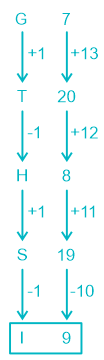
What comes next? G7, T20, H8, S19, ?
  1. Q17
  2. J10
  3. R18
  4. I9
Answer aur solution dekho

Archived marked answer: D

Question 4 solution figure The logic followed here is: Question 4 solution figure So, 'I9' will replace the question mark in the given series. Hence, the correct answer is "Option 4".

Q5 · Series

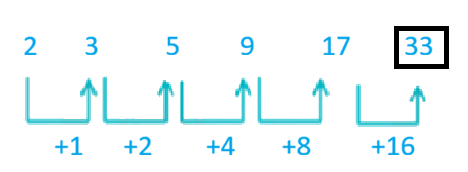
Complete the series. 2, 3, 5, 9, 17, ___
  1. 30
  2. 31
  3. 32
  4. 33
Answer aur solution dekho

Archived marked answer: D

The logic followed here is: Question 5 solution figure thus, "33" will replace the question mark in the given series. Hence, the correct option is "Option 4".

Q6 · Series

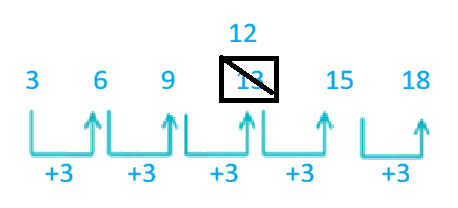
Find the INCORRECT number in the series. 3, 6, 9, 13, 15, 18
  1. 6
  2. 9
  3. 13
  4. 15
Answer aur solution dekho

Archived marked answer: C

The logic followed here is: Question 6 solution figure Thus, 13 is the incorrect number in the series. Hence, the correct answer is Option 3.

Q7 · Analogy

Find the odd one out.
  1. Germany
  2. Kenya
  3. France
  4. Italy
Answer aur solution dekho

Archived marked answer: B

The logic is based on the continent in which the country is located. Option 1: Germany – A country in Europe. Option 2: Kenya – A country in Africa. Option 3: France – A country in Europe. Option 4: Italy – A country in Europe. Among these, Kenya is the only country that is not in Europe. Hence, the odd one out is Option 2.

Q8 · Puzzle Subtypes Not To Miss

The sum of two numbers is 40 and their difference is 4. What is the product of the numbers?
  1. 390
  2. 396
  3. 400
  4. 404
Answer aur solution dekho

Archived marked answer: B

Given: Sum of two numbers = 40 Difference of the numbers = 4 Let the numbers be a and b. a + b = 40 a − b = 4 Add the two equations: (a + b) + (a − b) = 40 + 4 2a = 44 a = 22 Now, b = 40 − 22 = 18 Product of the numbers: 22 × 18 = 396 Hence, the correct answer is Option 2.

Q9 · Puzzle Subtypes Not To Miss

If + = x, - = ÷, x = -, ÷ = +; 6 + 2 - 4 x 2 ÷ 1 = ?
  1. 2
  2. 4
  3. 10
  4. 8
Answer aur solution dekho

Archived marked answer: A

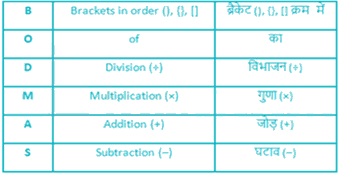
BODMAS Table: Question 9 solution figure Given equation: 6 + 2 − 4 × 2 ÷ 1 = ? Now, if the operations are interchanged as: + → ×, − → ÷, × → −, ÷ → +, then: ⇒ 6 × 2 ÷ 4 − 2 + 1 = ? ⇒ 12 ÷ 4 − 2 + 1 = ? ⇒ 3 − 2 + 1 = ? ⇒ 1 + 1 = 2 Hence, the correct answer is "Option 1".

Q10 · Puzzle Subtypes Not To Miss

A cone and a cylinder have the same base radius and the same height. What is the ratio of the volume of the cone to the volume of the cylinder?
  1. 1:2
  2. 1:3
  3. 1:4
  4. 1:6
Answer aur solution dekho

Archived marked answer: B

Given: A cone and a cylinder have the same base radius (r) and the same height (h). Formulas: Volume of cone = (1/3) × π × r² × h Volume of cylinder = π × r² × h Now find the ratio: Volume of cone : Volume of cylinder = (1/3 × π × r² × h) : (π × r² × h) = 1 : 3 Hence, the correct answer is Option 2.

Q11 · Puzzle Subtypes Not To Miss

A man buys 1 banana for ₹2 and sells it for ₹3. He repeats this 100 times. Profit = ?
  1. ₹100
  2. ₹150
  3. ₹200
  4. ₹300
Answer aur solution dekho

Archived marked answer: A

Given: Cost price of 1 banana = ₹2 Selling price of 1 banana = ₹3 Profit on 1 banana = 3 − 2 = ₹1 He repeats this 100 times. Total profit = 1 × 100 = ₹100 Hence, the correct answer is Option 1.

Q12 · Coding Decoding

If in a code A=26, B=25, ..., Z=1, what is the code for CAT?
  1. 24, 26, 7
  2. 24, 26, 6
  3. 25, 26, 7
  4. 24, 27, 7
Answer aur solution dekho

Archived marked answer: A

Question 12 solution figure The logic followed here is: Logic: The code of each letter = 27 − position of the letter in the alphabet (A=1, B=2, … Z=26). C → 3 → 27 − 3 = 24 A → 1 → 27 − 1 = 26 T → 20 → 27 − 20 = 7 So, CAT → 24, 26, 7 Hence, the correct answer is "Option 1".

Q13 · Coding Decoding

If 11 - 3 = 5, 14 - 5 = 4, then 18 - 6 = ?
  1. 12
  2. 6
  3. 10
  4. 11
Answer aur solution dekho

Archived marked answer: B

The logic followed here is: Logic: Result = Larger number − 2 × Smaller number Check: 11 − 3 → 11 − 2×3 = 11 − 6 = 5 14 − 5 → 14 − 2×5 = 14 − 10 = 4 Apply to 18 − 6: 18 − 2×6 = 18 − 12 = 6 Hence, the correct answer is Option 2.

Q14 · Coding Decoding

If 4 # 3 = 7, 6 # 2 = 8, then 5 # 7 = ?
  1. 12
  2. 9
  3. 2
  4. 10
Answer aur solution dekho

Archived marked answer: A

The logic followed here is: Logic: The symbol “#” represents addition. 4 # 3 → 4 + 3 = 7 6 # 2 → 6 + 2 = 8 Apply to 5 # 7 → 5 + 7 = 12 Hence, the correct answer is Option 1.

Q15 · Coding Decoding

If 4#2=10 5#3=18 6#4=28 Then what is 7#5=?
  1. 50
  2. 60
  3. 40
  4. 70
Answer aur solution dekho

Archived marked answer: C

The logic followed here is: Logic: The operation “#” is defined as # = (first number × second number) + second number Check: 4 # 2 → 4 × 2 + 2 = 8 + 2 = 10 5 # 3 → 5 × 3 + 3 = 15 + 3 = 18 6 # 4 → 6 × 4 + 4 = 24 + 4 = 28 Apply to 7 # 5 → 7 × 5 + 5 = 35 + 5 = 40 Hence, the correct answer is Option 3.

Q16 · Coding Decoding

If in a certain code, 'APPLE' is written as 'ELPPA', how will 'PPLEA' be written?
  1. AELPP
  2. LHDHT
  3. TUCES
  4. CJXWV
Answer aur solution dekho

Archived marked answer: A

The logic followed here is: Logic: The word is reversed Given: 'APPLE' → 'ELPPA' Now, 'PPLEA' → Reverse it PPLEA → AELPP Hence, the correct answer is Option 1.

Q17 · Coding Decoding

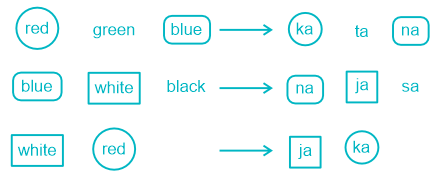
Instruction: In a language, if 'red green blue' is coded as 'ka ta na', 'blue white black' as 'na ja sa', and 'white red' as 'ja ka', Question: what is the code for 'green'?
  1. ta
  2. na
  3. ka
  4. ja
Answer aur solution dekho

Archived marked answer: A

Given codes: 'red green blue' → ka, ta, na 'blue white black' → na, ja, sa 'white red' → ja, ka Question 17 solution figure Therefore, 'green' → ta Hence, the correct answer is Option 1.

Q18 · Coding Decoding

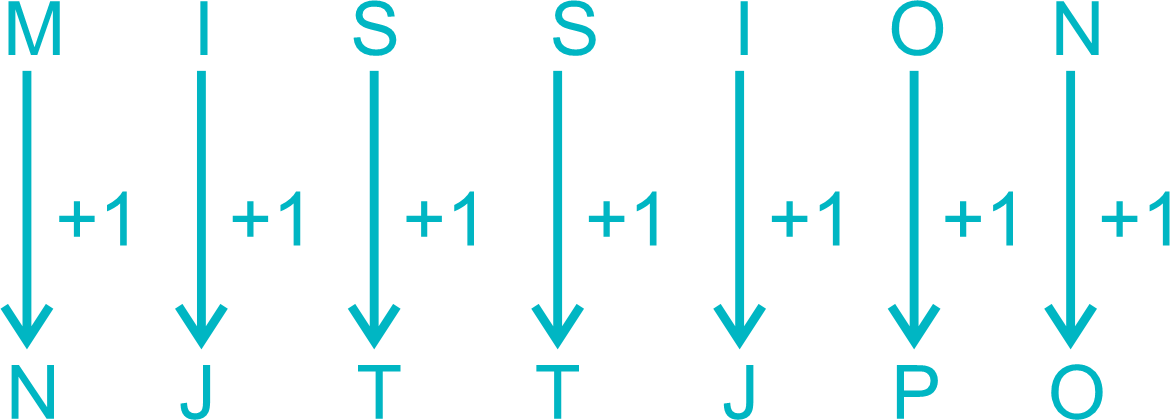
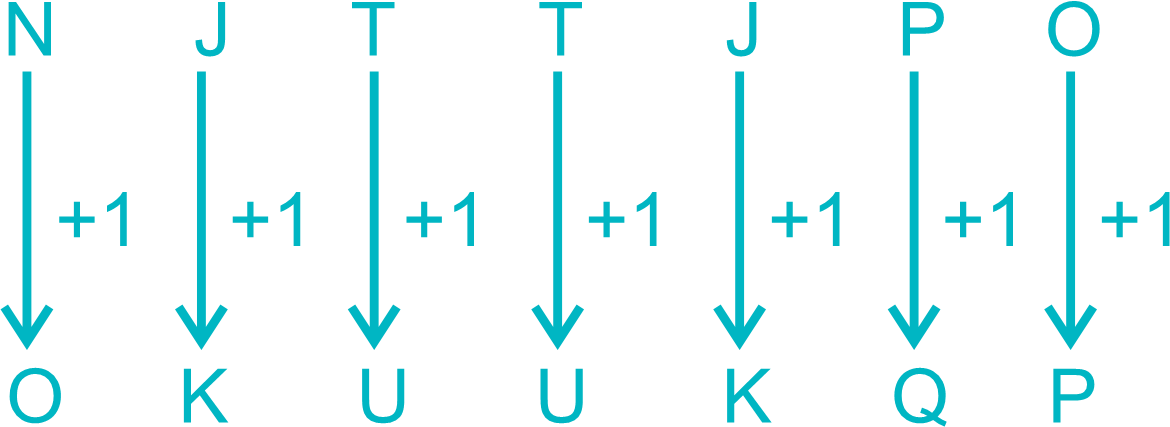
If MISSION is coded as NJTTJPO, how is NJTTJPO coded?
  1. OKUUKQP
  2. NKTUKPP
  3. OKTUKQP
  4. OKUULQP
Answer aur solution dekho

Archived marked answer: A

Question 18 solution figure The logic followed here is: Logic: Each letter is shifted +1 in the English alphabetical order Given: MISSION → NJTTJPO Question 18 solution figure Now, NJTTJPO → ? Question 18 solution figure So, NJTTJPO → OKUUKQP Hence, the correct answer is Option 1.

Q19 · Coding Decoding

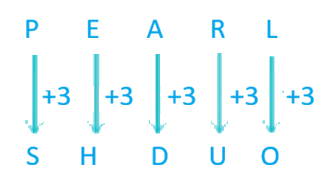
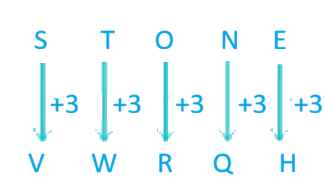
If in a code, PEARL is written as SHDUO, how is STONE written?
  1. VWRSH
  2. VWRHS
  3. VWRQH
  4. VWRSN
Answer aur solution dekho

Archived marked answer: C

Question 19 solution figure The logic followed here is: Logic: Each letter is shifted +3 in the English alphabetical order Given: PEARL → SHDUO Question 19 solution figure Now, STONE → ? Question 19 solution figure So, STONE → VWRQH Hence, the correct answer is Option 3.

Q20 · Logical Reasoning

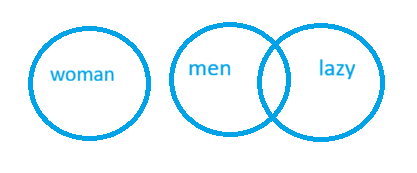
Read the following statement carefully and identify the conclusion that follows. Statement: No woman is lazy. Some men are lazy. Conclusions: I. No man is a woman. II. Some lazy people are men.
  1. Only I follows
  2. Only II follows
  3. Both I and II follow
  4. Neither I nor II follows
Answer aur solution dekho

Archived marked answer: B

Given Statements: No woman is lazy. Some men are lazy. The least possible Venn diagram for the given statements is: Question 20 solution figure Conclusions: I. No man is a woman – False (There is no information about men and women being mutually exclusive.) II. Some lazy people are men – True (Some men are lazy, so some lazy people are definitely men.) Hence, only conclusion II follows. The correct answer is "Option 2".

Q21 · Logical Reasoning

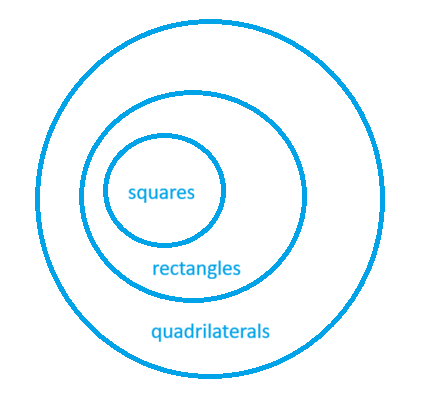
Read the following statement carefully and identify the conclusion that follows. Statement: All squares are rectangles. All rectangles are quadrilaterals. Conclusions: I. All squares are quadrilaterals. II. Some quadrilaterals are rectangles.
  1. Only I follows
  2. Only II follows
  3. Both I and II follow
  4. Neither I nor II follows
Answer aur solution dekho

Archived marked answer: C

Given Statements: All squares are rectangles. All rectangles are quadrilaterals. The least possible Venn diagram for the given statements is: Question 21 solution figure Conclusions: I. All squares are quadrilaterals – True (Squares are inside Rectangles, and Rectangles are inside Quadrilaterals.) II. Some quadrilaterals are rectangles – True (Rectangles are part of Quadrilaterals.) Hence, both conclusions I and II follow. The correct answer is "Option 3".

Q22 · Blood Relations

A is the daughter of B. B is the daughter of C. How is A related to C?
  1. Granddaughter
  2. Niece
  3. Sister
  4. Cousin
Answer aur solution dekho

Archived marked answer: A

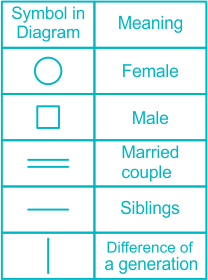
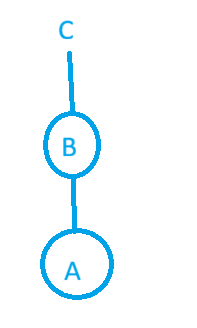
Family Chart: Question 22 solution figure Given: A is the daughter of B. B is the daughter of C. Question 22 solution figure Therefore, A is the granddaughter of C. Hence, the correct answer is "Option 1".

Q23 · Alphabet Test

Which of the following words will come first in the dictionary?
  1. apron
  2. apple
  3. aptitude
  4. apply
Answer aur solution dekho

Archived marked answer: B

Given words: apron, apple, aptitude, apply Logic: Arrange the words according to dictionary (alphabetical) order. Compare the letters: All words start with “ap”. Third letter comparison: apple → p apply → p apron → r aptitude → t So, words with p come first → apple, apply Now compare apple and apply: apple apply Since e comes before y in the alphabet, apple comes first. Hence, the correct answer is Option 2.

Q24 · Similarity and Differences

Choose the address that is the same as the one given below. D-14, New Friends Colony, South Delhi, Delhi - 110065
  1. D-14, New Friends Colony, South Delhi, Punjab - 110065
  2. D-14, New Friends Colony, South Delhi, Uttar Pradesh - 110065
  3. D-14, New Friends Colony, South Delhi, Delhi - 110065
  4. D-14, New Friends Colony, South Delhi, Haryana - 110065
Answer aur solution dekho

Archived marked answer: C

The address given is: D-14, New Friends Colony, South Delhi, Delhi - 110065 Let's match this address with the given options one by one to figure out which one is exactly the same. Option Address in Option Given Address Comment (1) D-14, New Friends Colony, South Delhi, Punjab - 110065 D-14, New Friends Colony, South Delhi, Delhi - 110065 The address in this option has 'Punjab' while the given address has 'Delhi'. (2) D-14, New Friends Colony, South Delhi, Uttar Pradesh - 110065 D-14, New Friends Colony, South Delhi, Delhi - 110065 The address in this option has 'Uttar Pradesh' while the given address has 'Delhi'. (3) D-14, New Friends Colony, South Delhi, Delhi - 110065 D-14, New Friends Colony, South Delhi, Delhi - 110065 The address is exactly the same as the given address. (4) D-14, New Friends Colony, South Delhi, Haryana - 110065 D-14, New Friends Colony, South Delhi, Delhi - 110065 The address in this option has 'Haryana' while the given address has 'Delhi'. So, the address that is exactly the same as the given address is in option (3). Hence, the correct option is "option (3)".

Q25 · Clock and Calendar

In a series of seminars held daily from 11th to 18th Feb, Calicut - 18th Feb 2022, Patna - 12th Feb 2022, Tiruchirappalli - 17th Feb 2022, Raipur - 11th Feb 2022, Rourkela - 14th Feb 2022 Jamshedpur - 13th Feb 2022, Durgapur - 15th Feb 2022, Warangal - 16th Feb 2022 Which city's seminar was held exactly two days after the seminar in Patna?
  1. Warangal
  2. Rourkela
  3. Jamshedpur
  4. Durgapur
Answer aur solution dekho

Archived marked answer: B

Given: Seminars were held daily from 11th to 18th February. Date City 11 Feb Raipur 12 Feb Patna 13 Feb Jamshedpur 14 Feb Rourkela 15 Feb Durgapur 16 Feb Warangal 17 Feb Tiruchirappalli 18 Feb Calicut Patna’s seminar was on 12th February. Two days after 12th February is 14th February. On 14th February, the seminar was held in Rourkela. Hence, the correct answer is Option 2.

General Awareness

Q1 · Art and Culture

The Sun Temple at Konark looks like a big chariot. How many horses does it have?
  1. 5
  2. 6
  3. 8
  4. 7
Answer aur solution dekho

Archived marked answer: D

The correct answer is 7. Key Points - The Sun Temple at Konark, located in Odisha, India, is renowned for its unique architectural design resembling a giant chariot. - The chariot has 24 wheels (12 pairs), symbolizing the 24 hours of a day or the 12 months of the year. - It is pulled by 7 magnificently sculpted horses, representing the seven days of the week. - The temple was built in the 13th century by King Narasimhadeva I of the Eastern Ganga dynasty and is dedicated to the Sun God (Surya). - The 7 horses signify the strength and spiritual energy needed to traverse the cosmic journey of life. &l

Q2 · Art and Culture

Which of the following best characterizes the Mathura school of Buddhist art and architecture?
  1. Use of sandstone and floral arches
  2. Hellenistic drapery and realism
  3. Indigenous features with Yaksha influence
  4. Predominantly wooden monastery design
Answer aur solution dekho

Archived marked answer: C

The correct answer is Indigenous features with Yaksha influence. Key Points - The Mathura School of Buddhist Art, which thrived during the Kushan period (1st century CE to 3rd century CE), is characterized by indigenous artistic traditions with strong influences of Yaksha and Yakshi iconography. - Unlike the Gandhara School, which exhibited Hellenistic features, the Mathura School evolved from local traditions and prominently displayed Indian motifs, techniques, and cultural themes. - The Yaksha influence is evident in the robust and cheerful figures of Buddha and Bodhisattvas, which were depicted as wearing simple drapery and adorned with ornaments. - Mathura sculptures were primarily made of red sandstone, which was locally available and had a smooth finish. This material contributed to the unique aesthetic of the Mathura art style. - Mathura artists developed the concept of anthropomorphic representations of Buddha, marking a significant departure from earlier symbolic depictions like stupas or footprints. Additional Information - Comparison with Gandhara School: - The Gandhara School, which developed in present-day Pakistan and Afghanistan, is known for its Greco-Roman influence. It used grey schist stone and displayed features like curly hair, realistic anatomy, and flowing drapery. - In contrast, the Mathura School focused on Indian traditions and emphasized cheerful expressions and indigenous themes. - Yaksha Influence in Indian Art: - Yakshas and Yakshis are ancient nature spirits associated with fertility, abundance, and protection. Their statues often depicted rounded, corpulent figures with lively expressions. - The Mathura School adopted these stylistic features to create Buddha and Bodhisattva figures that emphasized spiritual vitality. - Significance of Red Sandstone: - Red sandstone was widely used by Mathura artists due to its local availability. The smooth and durable nature of the stone allowed intricate carvings and polished finishes. - This material distinguished Mathura sculptures from those of the Gandhara School, which predominantly used grey schist stone. - Evolution of Anthropomorphic Buddha: - The Mathura School played a crucial role in transitioning from symbolic representations of Buddha (like stupas, wheels, or footprints) to anthropomorphic depictions. - Buddha statues from Mathura often depicted him in a seated or standing posture, with a serene expression and a halo behind his head. - Cultural Impact: - The Mathura School influenced later Indian art forms, including the Gupta period, which is considered the Golden Age of Indian art and architecture. - Its emphasis on indigenous themes and techniques contributed to the uniquely Indian identity of Buddhist art. Important Points - Historical Context: - The Mathura School flourished under Kushan rulers, who were patrons of art and architecture. Their support facilitated the development of Buddhist art in Mathura. - Mathura was an important center for religious and cultural activities during this period, contributing to its prominence in artistic innovations. - Examples of Mathura Art: - Iconic Buddha sculptures with distinct features like a halo, urna (mark on the forehead), and elongated ears. - Yaksha statues and images of Hindu deities, which showcased the versatility of Mathura artists. - Legacy: - The artistic traditions of the Mathura School influenced subsequent developments in Indian art, especially during the Gupta period. - Its emphasis on indigenous elements established a foundation for the evolution of Indian artistic identity. </ul

Q3 · Art and Culture

The Pola festival, celebrated in the Balaghat district of Madhya Pradesh, is dedicated to which of the following?
  1. Cow worship
  2. Rain prayer
  3. Bull worship
  4. Harvest sale
Answer aur solution dekho

Archived marked answer: C

The correct answer is Bull worship. Key Points - Pola festival is a significant cultural celebration dedicated to bull worship in the Balaghat district of Madhya Pradesh and other parts of India. - The festival is primarily celebrated by farmers to honor and express gratitude to their bulls, which are considered essential for agricultural activities such as plowing and transportation. - On the day of Pola, bulls are bathed, decorated with ornaments, and worshipped. Farmers apply turmeric, oil, and colorful patterns to their bulls as a mark of respect. - The festival includes processions, where bulls are paraded, and cultural activities such as bull races are organized in villages. - This tradition symbolizes the deep connection between humans and animals in agrarian societies and showcases the importance of bulls in rural livelihoods. Additional Information - About Pola Festival: - The Pola festival is celebrated during the month of Shravan (August-September) as per the Hindu calendar. - The term "Pola" is derived from the Marathi language and is widely celebrated in states like Madhya Pradesh, Maharashtra, and Chhattisgarh. - On this day, farmers abstain from agricultural work to give their bulls a day of rest and celebration. - Significance of Bull Worship: - Bulls are considered the backbone of traditional farming in India, especially in rural areas where mechanized farming is less prevalent. - Worshipping bulls signifies acknowledging their labor, loyalty, and contribution to agricultural productivity. - The festival also emphasizes the harmonious coexistence and respect between humans and animals. - Cultural Activities: - Farmers organize various events such as bullock cart races, bull decoration competitions, and cultural performances. - Children often play with wooden bull toys called Nandi Bail as part of the festivities. - Communities come together to share meals, celebrate, and strengthen social bonds. - Other Related Festivals: - Makar Sankranti: Another agrarian festival celebrated across India to honor cattle and the harvest season. - Mattu Pongal: Celebrated in Tamil Nadu, this festival is dedicated to cattle worship and is part of the Pongal celebrations. - Gaijatra: Celebrated in Nepal, it involves processions with cows to commemorate the deceased and honor cattle. Important Points - Option 1 (Cow Worship): While cows are also revered in Indian culture, the Pola festival specifically focuses on bull worship, not cows. - Option 2 (Rain Prayer): Rain-related rituals and festivals like Varsha Mangalam or Indra Puja are distinct from Pola. - Option 4 (Harvest Sale): Harvest festivals like Lohri, Baisakhi, and Onam celebrate the bounty of crops and are unrelated to the theme of Pola. - The Pola festival uniquely celebrates the contribution of bulls to farming, distinguishing it from other agrarian or religious festivals. ``

Q4 · Art and Culture

Consider the statements about Karma: 1. The ritual honours the Karam tree on Bhadra Ekadashi in Chhattisgarh. 2. The drum most associated is the Madal. Which is/are correct?
  1. Only 1 correct
  2. Only 2 correct
  3. Both 1 & 2 correct
  4. Neither 1 nor 2 correct
Answer aur solution dekho

Archived marked answer: A

The correct answer is Only 1 correct. Key Points - Karma Festival: The Karma festival is a significant tribal celebration observed in several regions of India, particularly in Chhattisgarh, Jharkhand, Odisha, and Madhya Pradesh. It is celebrated to honor the Karam tree, which is considered sacred, and the festival is observed during Bhadra Ekadashi. Hence, *statement 1 is correct*. - Ritual Significance: During the festival, devotees worship the Karam tree, which symbolizes fertility and prosperity. The branches of the tree are often brought to the village, where they are worshipped with rituals and songs. - Musical Element: The drum most commonly associated with the Karma festival varies by region. The Madal drum is used in certain areas, but it is not universally associated with Karma rituals. Hence, *statement 2 is incorrect*. - Social Aspect: The Karma festival is a celebration of nature and community, where people gather to sing, dance, and pray for the well-being of their families and crops. - Regional Variations: While the rituals and significance of the festival remain consistent, the music and instruments used may differ across regions, making it important to verify the association of specific instruments like the Madal drum. Additional Information - Karma Festival Origin: The Karma festival is primarily celebrated by tribal communities such as the Santals, Oraons, Mundas, and Kharias. It is deeply rooted in their agricultural practices and reverence for nature. - Timing: The festival is observed during the month of Bhadrapada (August-September) according to the Hindu calendar, on the day of Ekadashi, which holds religious significance. - Madal Drum: The Madal drum is a percussion instrument widely used in tribal music. However, its direct association with the Karma festival is not universally established across all regions. Other musical instruments like Mandar and Nagara are also used in tribal festivities. - Significance of the Karam Tree: The Karam tree is believed to bring prosperity and protect against evil. It is worshipped with offerings of flowers, rice, and milk during the festival. - Other Tribal Festivals: Similar festivals celebrating nature and community include Sarhul, Chhau, and Bhagoria, each unique to the tribal culture of specific regions in India. Important Points - Ritual Practices: The Karma festival includes ritualistic activities such as planting Karam saplings, singing traditional songs, and performing dances around the sacred tree. - Regional Differences: While the festival is widely celebrated, the specific customs, musical instruments, and rituals may vary based on the tribal group and geographic location. - Nature Worship: Karma exemplifies the tribal belief in nature worship, showcasing their harmonious relationship with the environment. - Cultural Preservation: Efforts are being made to preserve and promote such festivals, which are integral to India's cultural heritage and tribal identity. </ul

Q5 · Indian Polity and Constitution

Which of the following is a key requirement for admissibility of an electronic record under the Bharatiya Sakshya Adhiniyam (BSA), even if it's a secondary evidence?
  1. It must be handwritten and notarized
  2. It must be part of a hard drive submitted to court
  3. It must be published in the Gazette
  4. It must be accompanied by a certificate
Answer aur solution dekho

Archived marked answer: D

The correct answer is It must be accompanied by a certificate. Key Points - Under the Bharatiya Sakshya Adhiniyam (Indian Evidence Act), 1872, electronic records can be considered admissible as evidence only if they meet certain conditions. - The certificate requirement is specified under Section 65B(4) of the Act, which mandates that a certificate must accompany any electronic record submitted as secondary evidence. - This certificate must include details about the electronic device used to produce the record, confirming its authenticity and the method by which the data was generated. - The certificate is typically issued by a person in charge of the device (like a system administrator) and must be signed, providing assurance that the electronic record has not been tampered with. - Without this certificate, the electronic record cannot be admitted as secondary evidence, even if it is relevant to the case. Additional Information - Section 65B of the Indian Evidence Act: - This section deals with the admissibility of electronic records as evidence in legal proceedings. - It specifies that for electronic records to be admissible, they must meet the conditions outlined in the section, including the requirement of a certificate under Sub-section 4. - This provision ensures that the integrity and reliability of electronic evidence are maintained. - Purpose of the Certificate: - The certificate serves as a safeguard against forgery, manipulation, or alteration of electronic records. - It confirms that the information in the electronic record was produced by a reliable device and process. - It provides details about the person responsible for the operation of the device and the accuracy of the record. - Other Relevant Provisions: - Section 65A: Introduces the concept of electronic records as evidence under specific circumstances. - Section 3: Defines the term "evidence" to include all documents, including electronic records, produced for the inspection of the court. - Section 67A: Discusses the proof of digital signatures and their verification. - Examples of Admissible Electronic Records: - Emails, text messages, and chat logs accompanied by a valid Section 65B certificate. - Printed copies of financial records generated from computer systems with an authenticated certificate. Important Points - Relevance of Electronic Records: With the rise of digital transactions, electronic records have become crucial in legal cases involving contracts, financial transactions, and communications. - Judicial Precedent: In the landmark judgment Anvar P.V. vs. P.K. Basheer (2014), the Supreme Court of India ruled that electronic records without a Section 65B certificate are inadmissible as evidence. - Global Practices: Many countries, including the United States and United Kingdom, have similar provisions for the admissibility of electronic evidence to ensure its reliability and authenticity. - Exceptions: If the electronic record is presented as primary evidence (e.g., the original hard drive or device), the certificate requirement may not apply. ``

Q6 · Indian Polity and Constitution

Which of the following statements is/are correct regarding the role of the Rajya Sabha in special legislative and emergency situations? 1) Under Article 249, a Rajya Sabha resolution allowing Parliament to legislate on State List subjects remains valid for one year. 2) The Parliament can extend a proclamation of President's Rule only with the concurrence of the Rajya Sabha.
  1. Only 1
  2. Only 2
  3. Both 1 and 2
  4. Neither 1 nor 2
Answer aur solution dekho

Archived marked answer: A

The correct answer is Only 1. Key Points - Statement 1: Under Article 249 of the Indian Constitution, the Rajya Sabha can pass a resolution by a two-thirds majority to enable the Parliament to legislate on a subject in the State List in the national interest. This resolution remains valid for one year and can be extended by one year at a time. *Hence, Statement 1 is correct.* - Statement 2: The extension of a proclamation of President's Rule (Article 356) does not require the concurrence of the Rajya Sabha. It requires the approval of both the Lok Sabha and the Rajya Sabha within two months, but the Rajya Sabha's concurrence is not specifically mandated for an extension. *Hence, Statement 2 is incorrect.* - The Rajya Sabha plays a significant role in legislative matters, especially in special situations like enabling Parliament to legislate on state subjects or approving emergency provisions. However, its powers are distinct and limited compared to the Lok Sabha. - For subjects in the State List, the Rajya Sabha provides a mechanism to ensure that national interests are addressed even in areas under state jurisdiction. Additional Information - Article 249 of the Indian Constitution: - Empowers the Parliament to legislate on matters in the State List if the Rajya Sabha passes a resolution by a two-thirds majority that it is necessary in the national interest. - The resolution passed by the Rajya Sabha remains in force for one year and can be renewed for additional one-year terms. - President's Rule (Article 356): - Imposed when a state government is unable to function according to constitutional provisions. - Requires the approval of both Houses of Parliament within two months of proclamation. - Can be extended for a maximum period of three years with periodic parliamentary approval every six months. - Role of the Rajya Sabha in Emergency Provisions: - The Rajya Sabha plays a role in approving or extending a proclamation of National Emergency (Article 352). - Its role is to act as a check and balance in the legislative process, especially when state interests are involved. - Comparison of Rajya Sabha and Lok Sabha Powers: - The Rajya Sabha has equal powers as the Lok Sabha in approving constitutional amendments and emergency provisions. - However, in financial matters, such as the passage of money bills, the Lok Sabha has overriding powers. Important Points - Article 250: Parliament can legislate on State List subjects during a National Emergency. - Article 252: Empowers Parliament to legislate for two or more states by consent on State List subjects. - While the Lok Sabha represents the people directly, the Rajya Sabha represents the interests of states and ensures federal balance in legislative decisions. </ul

Q7 · Indian Economy

Which of the following statements about factors affecting the Money Multiplier (MM) is/are correct? 1. Cash held by individuals acts as a leakage and reduces the money multiplier. 2. Higher reserves held by banks with the RBI increase the money multiplier. 3. A higher Cash Reserve Ratio (CRR) reduces the banking system's capacity to create money.
  1. Only 1 and 3
  2. Only 2 and 3
  3. Only 1 and 2
  4. All 1,2 and 3 are three
Answer aur solution dekho

Archived marked answer: A

The correct answer is Only 1 and 3. Key Points - Cash held by individuals acts as a leakage and reduces the money multiplier: When individuals hold cash instead of depositing it in banks, it reduces the funds available for banks to lend. This reduces the capacity of the banking system to create credit, thereby lowering the Money Multiplier (MM). *Hence, statement 1 is correct.* - Higher reserves held by banks with the RBI: When banks hold higher reserves with the Reserve Bank of India (RBI), it reduces the funds available for lending. However, the statement incorrectly claims that it increases the money multiplier. In reality, higher reserves restrict the money creation process, which decreases the MM. *Hence, statement 2 is incorrect.* - Higher Cash Reserve Ratio (CRR) reduces the banking system's capacity to create money: CRR is the percentage of a bank's total deposits that must be kept as reserves with the RBI. A higher CRR reduces the funds available for lending, thereby reducing the money multiplier. *Hence, statement 3 is correct.* - Correct Option: Only statements 1 and 3 are correct, making the correct answer Only 1 and 3. Additional Information - Money Multiplier (MM): - The money multiplier measures the maximum amount of money that banks can create with a given level of reserves. It is mathematically expressed as MM = 1/Reserve Ratio. - It represents the relationship between the monetary base (currency + reserves) and the total money supply. - Cash Reserve Ratio (CRR): - CRR is a regulatory requirement imposed by the RBI on banks to maintain a certain percentage of their deposits as reserves with the central bank. - CRR affects the liquidity in the banking system and directly influences the money creation process. - Factors Affecting the Money Multiplier: - Public's Preference for Cash: If people prefer to hold more cash, the funds available for banks to lend decrease, reducing the MM. - Reserve Requirements: Higher reserve requirements (CRR or Statutory Liquidity Ratio) reduce the banking system's capacity to create credit, lowering the MM. - Economic Environment: In times of economic uncertainty, banks may adopt a more cautious approach, holding higher reserves and lending less, which reduces the MM. - Role of RBI in Money Supply: - The RBI regulates the money supply through tools such as CRR, Statutory Liquidity Ratio (SLR), and Open Market Operations (OMO). - By adjusting reserve requirements, the RBI can influence the MM and the availability of credit in the economy. Important Points - Example of Money Multiplier: - If the reserve ratio is 10%, the money multiplier is 1/0.10 = 10. This means every ₹1 in reserves can support ₹10 in total deposits. - Impact of Excess Reserves: - Banks may choose to hold excess reserves to mitigate risks, especially during economic downturns. This reduces the MM as fewer funds are available for lending. - Global Comparison: - Countries with lower reserve requirements typically have higher money multipliers, leading to greater credit creation capacity. 7c

Q8 · Indian Economy

The lead bank scheme was introduced in which year?
  1. 1969
  2. 1975
  3. 1980
  4. 1990
Answer aur solution dekho

Archived marked answer: A

The correct answer is 1969. Key Points - The Lead Bank Scheme (LBS) was introduced by the Reserve Bank of India (RBI) in 1969. It was based on the recommendations of the Gadgil Study Group. - The scheme aimed to address regional disparities in banking and credit accessibility by designating a specific bank as the "Lead Bank" for each district. - The primary objective was to ensure that banking services and credit facilities reached the underserved and unbanked regions, especially rural areas, to promote financial inclusion. - Under this scheme, the Lead Bank was responsible for coordinating with other banks and financial institutions in the district to prepare and implement a District Credit Plan (DCP). - The scheme contributed significantly to the rural development of India by supporting sectors like agriculture, small-scale industries, and self-employment ventures. Additional Information - Background and Objectives of the Lead Bank Scheme: - The scheme was launched in 1969, coinciding with the period when the Indian government nationalized 14 major commercial banks to expand banking services. - The Gadgil Committee identified the lack of banking penetration in rural and semi-urban areas as a significant hurdle to economic development. - The main objective was to bridge the gap between credit supply and demand in underdeveloped regions. - Role of Lead Banks: - Each district was assigned a Lead Bank, which acted as the coordinator for all developmental and financial activities in that district. - The Lead Bank was tasked with conducting surveys, identifying credit gaps, and preparing plans to enhance credit flow to priority sectors. - It also promoted cooperation among banks, government agencies, and local bodies to achieve regional development goals. - Priority Sectors under the Scheme: - The scheme emphasized providing credit to sectors like agriculture, small-scale industries, artisans, and self-employed individuals. - It aimed to improve the living standards of rural populations and reduce poverty by enabling access to institutional credit. - Evolution and Current Status: - Over the years, the Lead Bank Scheme has undergone several modifications to align with the changing economic and banking landscape. - Even today, it plays a critical role in fostering financial inclusion and ensuring the availability of banking facilities in remote regions. Important Points - The Reserve Bank of India (RBI) periodically reviews and updates the guidelines of the Lead Bank Scheme to ensure its relevance. - Post-2005, the scheme gained further momentum with the introduction of the Financial Inclusion Plan and Pradhan Mantri Jan Dhan Yojana (PMJDY). - The District Credit Plan (DCP) is a key component of the scheme, ensuring that credit flow aligns with district-level development goals. - Currently, the scheme emphasizes the use of digital banking and technology to improve access to financial services in rural areas. </ul

Q9 · Indian Economy

Which of the following best defines Capital Receipts?
  1. Receipts that increase government revenue permanently
  2. Receipts that reduce financial liabilities of the government
  3. Receipts that create liability or reduce government assets
  4. Receipts that do not impact government assets or liabilities
Answer aur solution dekho

Archived marked answer: C

The correct answer is Receipts that create liability or reduce government assets. Key Points - Capital Receipts refer to the funds received by the government that either create a liability or reduce its assets. These receipts are non-recurring in nature and are not a part of the regular income stream of the government. - These receipts include borrowings, loans, disinvestment proceeds, and recovery of loans given by the government to other entities. - Examples: Borrowing from internal or external sources, loans raised from the Reserve Bank of India, proceeds from the sale of public sector undertakings (disinvestment), and recovery of loans. - Capital Receipts differ from revenue receipts, as revenue receipts do not create liabilities or reduce assets; rather, they contribute to the regular income of the government. - Statement A

Q10 · Indian Economy

Which Five Year Plan laid the foundation of India's socialist pattern of society?
  1. First Plan
  2. Second Plan
  3. Third Plan
  4. Fourth Plan
Answer aur solution dekho

Archived marked answer: B

The correct answer is Second Plan. Key Points - The Second Five-Year Plan (1956–1961) laid the foundation of India's socialist pattern of society by emphasizing economic and social equality through state-led planning. - It focused on the rapid industrialization of the country, particularly the establishment of heavy industries, aiming to reduce dependence on agricultural incomes and create a balanced economy. - The architect of the Second Five-Year Plan was P.C. Mahalanobis, whose approach to economic planning was based on the Mahalanobis model, prioritizing the development of the industrial sector. - The plan adopted the principles of socialism, emphasizing public sector investment and equitable distribution of resources. - The Second Plan also introduced the concept of reducing income inequalities by focusing on employment generation and the equitable distribution of wealth. - The plan succeeded in establishing key industries like steel plants in Bhilai, Rourkela,

Q11 · Indian Economy

Which sectors were largely excluded from industrial licensing after 1991?
  1. Defense and Telecom
  2. Alcohol, Cigarettes, Explosives
  3. Textiles and Fertilizers
  4. Agriculture and Education
Answer aur solution dekho

Archived marked answer: B

The correct answer is Alcohol, Cigarettes, Explosives. Key Points - In 1991, India underwent significant economic reforms, marking the beginning of economic liberalization, which aimed to reduce government control over industries and encourage private sector participation. - As part of these reforms, the industrial licensing system was largely dismantled to promote ease of doing business, except for a few sectors due to their critical nature or social impact. - The sectors that remained under licensing included alcohol, cigarettes, and explosives, as they are either considered socially sensitive or pose security concerns. - Alcohol: Licensing remains due to its regulation under state excise laws and its implications on health and social behavior. - Cigarettes: Licensing is required due to public health concerns, as tobacco use is a leading cause of preventable deaths in India. - Explosives: Licensing is essential for safety and security reasons, as the misuse of explosives can lead to severe consequences. - Other sectors, such as defense and telecom, required licensing until reforms in later years, but they were not included in the initial exclusions post-1991. - The removal of licensing requirements for most sectors contributed significantly to India's rapid industrial growth and integration into the global economy. Additional Information - Industrial Policy of 1991: - This policy was a landmark decision by the Government of India under the leadership of Prime Minister P.V. Narasimha Rao and Finance Minister Dr. Manmohan Singh. - The policy aimed to deregulate industries, reduce the role of public sector enterprises, and encourage foreign direct investment (FDI). - It introduced measures such as abolishing industrial licensing for most industries, reducing import tariffs, and removing export restrictions. - Exceptions to Licensing: - While most industries were freed from licensing, certain sectors remained controlled due to national security, public health, or environmental concerns. - These sectors included alcohol, tobacco products (such as cigarettes), explosives, defense equipment, and hazardous chemicals. - In these sectors, stringent licensing requirements ensured that production and distribution were regulated to prevent misuse or adverse social impacts. - Impact of Liberalization: - The reforms of 1991 led to higher economic growth rates, increased foreign investments, and the emergence of India as a global economic power. - It allowed private companies to compete with state-owned enterprises, leading to better efficiency, innovation, and customer services. - The removal of licensing also helped reduce bureaucratic red tape, improving India's Ease of Doing Business rankings. - Key Characteristics of Excluded Sectors: - Alcohol: Includes the production of liquor and spirits, which are regulated under state excise laws. Their consumption is taxed heavily and controlled due to health and social concerns. - Cigarettes: Involves tobacco products heavily regulated due to their association with diseases such as cancer and their impact on public health. - Explosives: Includes materials used for construction, mining, or defense purposes. Strict licensing is mandatory to ensure safety and prevent misuse in criminal or terrorist activities. Important Points - Public Sector vs. Private Sector: The 1991 reforms reduced the role of the public sector in the economy, except in critical areas such as defense, atomic energy, and railways. - Foreign Investment: The reforms allowed automatic approval for foreign investments up to a certain limit in most sectors, spurring economic growth. - Social Impact: The government ensured that industries with potential negative social impacts (e.g., alcohol and cigarettes) were still tightly regulated post-reforms. - Environment and Safety: Licensing persisted for industries dealing with dangerous substances (e.g., explosives) to maintain public safety and environmental standards. </ul

Q12 · Sports Static GK

Consider the following statements about the 38th National Games Judo 2025 Final Results: 1) Sidharth Rawat from Uttarakhand won the gold medal in the men's 60 kg category, while Asmita Dev from Uttar Pradesh won the women's 48 kg category. 2) Rohit Majgul of Gujarat won gold in men's -66 kg, and Shraddha Chopade of Maharashtra won gold in women's 52 kg. Which of the statements is/are correct?
  1. Only 1 is Correct
  2. Only 2 is Correct
  3. 1 and 2 are Correct
  4. Neither 1 nor 2 are Correct
Answer aur solution dekho

Archived marked answer: C

The correct answer is Option 3 (1 and 2 are Correct). Key Points - Statement 1: It is mentioned that Sidharth Rawat from Uttarakhand won the gold medal in the men's 60 kg category, while Asmita Dev from Uttar Pradesh secured gold in the women's 48 kg category. This detail is accurate as per official reports from the 38th National Games Judo 2025 Final Results. *Hence, statement 1 is correct.* - Statement 2: The statement claims that Rohit Majgul of Gujarat won gold in men's -66 kg category and Shraddha Chopade of Maharashtra won gold in women's 52 kg category. These results have been officially confirmed, ensuring the accuracy of the claim. *Hence, statement 2 is correct.* - Statement Analysis: Both statements provide accurate information regarding the winners of specific weight categories in Judo competitions during the 38th National Games Judo 2025. Therefore, the correct option is Option 3, which states that both statements are correct. - Judo Results Confirmation: The results align with the official records and announcements made during the event, showcasing accomplishments by athletes from different states in India. Additional Information - National Games: - The National Games serve as a platform for athletes across India to showcase their skills and compete at a national level. - The 38th edition of the National Games was held in 2025, featuring multiple sports categories, including Judo. - Sports competitions like Judo highlight the development and promotion of martial arts in India. - Judo in India: - Judo is a popular martial art and Olympic sport that has gained significant traction in India over the years. - Indian athletes have consistently participated in international Judo championships, contributing to its growth in the country. - The National Games provide an opportunity for athletes to prepare for international competitions. - Key Achievements: - Athletes like Sidharth Rawat, Asmita Dev, Rohit Majgul, and Shraddha Chopade represent the growing talent pool in martial arts across various states. - States like Uttarakhand, Uttar Pradesh, Gujarat, and Maharashtra contribute significantly to sports development in India. - Important Points : - Judo competitions are categorized by weight classes, ensuring fair and equal competition among athletes. - The National Games promote inter-state rivalry and foster a spirit of excellence in sports. - Winners of the National Games often go on to represent India in international tournaments, including the Olympics. </ul

Q13 · Sports Static GK

Who did Maharashtra's Kavya Bhatta defeat to win gold at the Khelo India Youth Games 2025 in the girls' singles table tennis final?
  1. P.B. Abhinand
  2. Priyanuj Bhattacharyya
  3. Suhana Saini
  4. M. Hansini
Answer aur solution dekho

Archived marked answer: D

The correct answer is M. Hansini. Key Points - Kavya Bhatta, representing Maharashtra, clinched the gold medal in the girls' singles table tennis final at the Khelo India Youth Games 2025. - She achieved this victory by defeating M. Hansini, who was her opponent in the final match. - M. Hansini is known for her remarkable skills in table tennis and has previously represented her state in multiple national-level tournaments. - The Khelo India Youth Games is a prestigious event organized to promote young talent in sports across India, and the 2025 edition saw intense competition in various disciplines, including table tennis. - This win adds another accolade to Kavya Bhatta's growing sports career, showcasing her exceptional talent and determination in the field of table tennis. Additional Information - Khelo India Youth Games (KIYG): - The Khelo India Youth Games is an initiative by the Government of India to promote sports among the youth and identify emerging talent for future international competitions. - The event includes multiple sports disciplines, such as athletics, hockey, badminton, table tennis, and more, encouraging widespread participation from across the country. - It was launched in 2018 and has since become a key platform for young athletes to showcase their skills. - M. Hansini: - M. Hansini is a talented young table tennis player who has represented her state and India in national and international tournaments. - She is recognized for her precision, agility, and strategic gameplay in the sport. - Kavya Bhatta: - Kavya Bhatta is a rising star in Indian table tennis, representing Maharashtra in national-level tournaments. - Her victory at the Khelo India Youth Games 2025 highlights her dedication and skill in table tennis. - Importance of Khelo India Initiative: - The Khelo India initiative is aimed at building a robust sports culture in India by investing in young talent and grassroots development. - It provides financial support and infrastructure to nurture athletes and prepare them for international competitions. Important Points - Table Tennis in India: - Table tennis is a popular sport in India, with players like Sharath Kamal and Manika Batra achieving international recognition. - The sport is governed by the Table Tennis Federation of India (TTFI), which organizes events and promotes the game across the country. - Talent Identification: - Events like the Khelo India Youth Games are crucial for identifying and nurturing young talent in various sports, including table tennis. - Such platforms provide exposure to young athletes and help them gain experience in competitive environments. - Future Prospects: - Players like Kavya Bhatta and M. Hansini have the potential to represent India at international events, contributing to the country's success in sports. - Continued support and training can help these athletes achieve greater milestones in their careers. ``

Q14 · Sports Static GK

Consider the following statements about badminton strokes: 1) Backhand Net Kill and Forehand Net Kill are examples of forecourt strokes played near the net. 2) Backhand Drive and Forehand Drive are midcourt strokes played from the middle of the court. 3) Forehand Clear is a type of rear court stroke played from the back of the court. Which of the statements given above are correct?
  1. Only 1 and 2 are Correct
  2. Only 2 and 3 are Correct
  3. Only 1 and 3 are correct
  4. 1, 2 and 3 are Correct
Answer aur solution dekho

Archived marked answer: D

The correct answer is 4) 1, 2, and 3 are Correct. Key Points - Statement 1: The Backhand Net Kill and Forehand Net Kill are forecourt strokes played close to the net. These strokes are executed with speed and precision to counter opponents’ shots near the net. *Hence, this statement is correct.* - Statement 2: The Backhand Drive and Forehand Drive are examples of midcourt strokes. These strokes are generally played from the middle of the court, allowing players to either maintain or regain control during a rally. *Hence, this statement is correct.* - Statement 3: The Forehand Clear is a type of rear court stroke. It is typically played from the back of the court and is used to send the shuttle deep into the opponent’s court to create space for the next shot. *Hence, this statement is correct.* - *As all three statements are correct, the correct answer is 1, 2, and 3 are Correct.* Additional Information - Types of Badminton Strokes: - Forecourt Strokes: These include net shots, net kills, and net lifts. They are played near the net and require finesse and control. - Midcourt Strokes: These include drives and pushes that are used to maintain control or apply pressure during rallies. - Rear Court Strokes: These include clears, smashes, and drops. These strokes are played from the back of the court and are often used to create attacking opportunities. - Key Characteristics of Strokes: - Net Kill: A sharp, downward stroke played close to the net to end a rally quickly. - Drive: A fast, flat stroke that travels horizontally over the net, often used in doubles matches. - Clear: A high, deep shot played to move the opponent to the back of their court, creating space for an attack. - Importance of Stroke Techniques in Badminton: - Proper execution of strokes helps in controlling the pace and direction of the game. - Each stroke is designed for specific situations, such as defense, attack, or rallying. - Mastering a variety of strokes allows players to adapt to different opponents and strategies. - Training Tips: - Practice footwork to ensure proper positioning for each stroke. - Focus on grip and wrist movement to improve stroke precision and power. - Engage in drills that simulate match situations to enhance reaction time and shot selection. Important Points - Badminton Court Divisions: - The court is divided into forecourt, midcourt, and rear court. - Each area is associated with specific types of strokes, such as net shots (forecourt), drives (midcourt), and clears or smashes (rear court). - Badminton Basics: - The objective of badminton is to score points by landing the shuttle in the opponent’s court. - It requires a combination of physical fitness, technical skill, and tactical intelligence. - Common Errors in Stroke Execution: - Improper Grip: Using the wrong grip can reduce power and accuracy. - Poor Footwork: Inadequate positioning can lead to mistimed or weak shots. - Lack of Follow-Through: Not completing the stroke can affect shuttle trajectory. 60:T

Q15 · Sports Static GK

Read the below statements marked as Assertion (A) and Reason (R). Mark the correct options: Assertion (A): In squash, the serve must hit the front wall between the service line and out line and land in the opposite half of the court beyond the half-court line for it to be legal. Reason (R): Players must alternate between service boxes after each successful serve to maintain fairness and court coverage during the match.
  1. Both A and R are true, and R is the correct explanation of A.
  2. Both A and R are true, but R is not the correct explanation of A.
  3. A is true, but R is false.
  4. A is false, but R is true.
Answer aur solution dekho

Archived marked answer: C

The correct answer is 3) A is true, but R is false.. Key Points - Assertion (A): In squash, the serve must hit the front wall between the service line and out line and land in the opposite half of the court beyond the half-court line for it to be legal. This statement is correct. - The serve in squash must be executed properly to ensure fairness and adherence to the rules. The ball must strike the front wall between the service line and the out line, and then land in the opposite quarter of the court beyond the half-court line. These rules are designed to maintain the competitive integrity of the game. - Reason (R): Players must alternate between service boxes after each successful serve to maintain fairness and court coverage during the match. This statement is incorrect. - In squash, players do not alte

Q16 · Modern Indian History

Thakkar Bapa was a dedicated social worker and freedom fighter primarily known for his lifelong efforts towards the upliftment and welfare of which section of Indian society?
  1. Women
  2. Children
  3. Tribal (Adivasi) communities
  4. Industrial workers
Answer aur solution dekho

Archived marked answer: C

The correct answer is Tribal (Adivasi) communities. Key Points - Thakkar Bapa, born as Amritlal Vithaldas Thakkar in 1869, was a prominent social worker and freedom fighter in India. - He is primarily known for his lifelong efforts towards the upliftment and welfare of the Tribal (Adivasi) communities, focusing on their education, healthcare, and social empowerment. - Thakkar Bapa founded the Bhil Seva Mandal in 1922, which aimed to improve the socio-economic conditions of the Bhil tribe in Gujarat and nearby regions. - He worked closely with Mahatma Gandhi during India’s freedom struggle and was deeply influenced by Gandhi’s philosophy of non-violence and rural development. - His efforts to bring attention to the plight of tribal communities led to the formation of specific policies and programs for their welfare post-independence.

Q17 · Modern Indian History

Which of the following best describes the role and personality traits of Shaheed Kanhu and Sidhu Murmu during the Santhal Rebellion of 1855?
  1. Visionary tribal leaders who united the Santhal community to resist exploitation with courage and strategic acumen.
  2. Passive intermediaries who negotiated peace treaties between the British and Santhals without resorting to conflict.
  3. Religious preachers who inspired rebellion solely through spiritual teachings without active participation in battles.
  4. Local zamindars who switched allegiance from British rulers to lead a revolt for personal gains.
Answer aur solution dekho

Archived marked answer: A

The correct answer is Visionary tribal leaders who united the Santhal community to resist exploitation with courage and strategic acumen. Key Points - Shaheed Kanhu and Sidhu Murmu were prominent leaders of the Santhal Rebellion of 1855-56, which was one of the most significant tribal uprisings against the British colonial rule and local zamindars. - They united the Santhal community, predominantly located in the present-day regions of Jharkhand, Bihar, and West Bengal, to rise against the exploitative practices of British officials, moneylenders, and landlords. - The rebellion was driven by their vision to establish a society free from oppression, usury, and unjust land revenue systems. They were known for their courage and strategic acumen in organizing and leading their community. - The rebellion began in June 1855, with Kanhu and Sidhu rallying 10,000 Santhals under the banner of resistance, declaring their independence from British rule and landlords. - Their leadership was characterized by their ability to inspire collective action, employing indigenous methods of warfare and mobilizing their community with a strong sense of unity and purpose. - The uprising was eventually suppressed by the British using military force, but their sacrifice is remembered as a symbol of resistance and tribal pride. Additional Information - Santhal Rebellion: - The Santhal Rebellion, also known as the Santhal Hul, was a tribal revolt against the exploitative practices of zamindars, moneylenders, and the British East India Company. - It began on 30 June 1855 in the village of Bhognadih, led by Sidhu and Kanhu Murmu. - The rebellion was rooted in the grievances of the Santhals, who faced economic exploitation, loss of traditional land, and oppressive revenue systems. - Role of Kanhu and Sidhu Murmu: - Sidhu and Kanhu declared their intent to establish a self-governed region, free from British interference. - They believed in restoring tribal autonomy and protecting their cultural identity. - The rebellion showcased their exceptional organizational skills and leadership in uniting thousands of Santhals for a common cause. - Outcome of the Rebellion: - The uprising was brutally suppressed by the British, who deployed an army and used advanced weaponry against the poorly armed Santhals. - While the rebellion failed to achieve its immediate goals, it highlighted the plight of tribal communities and forced the British to reconsider their policies towards them. - Legacy: - Sidhu and Kanhu Murmu are celebrated as freedom fighters and martyrs in India. - Their struggle is commemorated annually in tribal regions, especially in Jharkhand, Bihar, and West Bengal. - Their story serves as a powerful reminder of the indigenous communities' resilience and their fight for justice and autonomy. Important Points - Key Characteristics of the Santhal Rebellion: - The rebellion was one of the earliest tribal uprisings against British colonial rule in India. - It was marked by the use of traditional weapons like bows, arrows, and spears, as well as guerrilla tactics. - The rebellion was a response to the unjust practices of moneylenders, revenue officials, and landlords, who exploited the Santhals through high taxes and loans. - Santhal Parganas: - After the rebellion, the British government created a separate administrative region called Santhal Parganas in 1856 to address the grievances of the Santhal community. - This area was designated to provide a degree of autonomy to the Santhals and protect their rights over land. - Commemorations: - The contributions of Sidhu and Kanhu Murmu are celebrated during the annual Hul Diwas in memory of the rebellion. - Statues, memorials, and educational institutions have been established in their honor across India. </ul

Q18 · Modern Indian History

What was the role of the India Council established by the Government of India Act, 1858?
  1. To control trade with India
  2. To advise the Secretary of State
  3. To represent Indian opinion in Britain
  4. To review court judgments
Answer aur solution dekho

Archived marked answer: B

The correct answer is To advise the Secretary of State. Key Points - The India Council was established by the Government of India Act, 1858, following the transfer of power from the East India Company to the British Crown. - The Council was composed of 15 members, most of whom were experienced officials with knowledge of Indian affairs. - Its primary role was to advise the Secretary of State for India, who was responsible for overseeing Indian administration from Britain. - The Council ensured continuity in governance by providing expert opinions on issues such as financial administration, military strategy, and legislation. - This advisory body was crucial in shap

Q19 · Medieval Indian History

The reign of Prithviraj Chauhan concluded in which year?
  1. 1175 CE
  2. 1192 CE
  3. 1206 CE
  4. 1210 CE
Answer aur solution dekho

Archived marked answer: B

The correct answer is 1192 CE. Key Points - Prithviraj Chauhan, also known as Rai Pithora, was a prominent ruler of the Chauhan dynasty who ruled over parts of present-day Rajasthan, Haryana, Delhi, and Uttar Pradesh. - His reign ended in 1192 CE after the Second Battle of Tarain, where he was defeated by Mohammed Ghori, the ruler of the Ghurid dynasty. - The Second Battle of Tarain was a pivotal conflict in Indian history that marked the beginning of Muslim dominance in northern India. - After being defeated, Prithviraj Chauhan was captured by Ghori and was reportedly executed, thus bringing an end to his reign. - The year 1192 CE is considered a watershed moment in Indian history, as it marked the decline of Rajput power and the rise of Islamic influence in the Indian subcontinent. Additional Information - First Battle of Tarain (1191 CE): - The First Battle of Tarain took place in 1191 CE between Prithviraj Chauhan and Mohammed Ghori. - Prithviraj emerged victorious in this battle, forcing Ghori to retreat. - Despite this victory, Prithviraj failed to consolidate his position, which led to his downfall in the subsequent battle. - Second Battle of Tarain (1192 CE): - In the Second Battle of Tarain, Mohammed Ghori returned with a well-prepared and larger army. - The Rajput forces, though valiant, were defeated due to strategic errors and the superior tactics of Ghori. - This battle is often cited as the turning point that led to the establishment of the Delhi Sultanate. - Mohammed Ghori's Role: - Ghori's victory in the Second Battle of Tarain laid the foundation for Muslim rule in India. - Following this, his general Qutb-ud-din Aibak established the Mamluk Dynasty, marking the beginning of the Delhi Sultanate. - Legacy of Prithviraj Chauhan: - Prithviraj Chauhan is remembered as a brave and skilled warrior, as well as a symbol of Rajput valor and resistance. - He is a central figure in Indian folklore and history, often celebrated in ballads and poems such as the Prithviraj Raso. Important Points - Second Battle of Tarain: This battle is considered one of the most significant turning points in Indian history, as it marked the beginning of foreign rule in India. - Strategic Mistakes: Prithviraj Chauhan's lack of preparation and underestimation of Ghori's forces contributed to his defeat in the second battle. - Formation of the Delhi Sultanate: After the victory in 1192 CE, the groundwork was laid for the establishment of the Delhi Sultanate, which lasted for several centuries. - Prithviraj Raso: This historical epic, attributed to Chand Bardai, glorifies Prithviraj Chauhan's bravery and valor but contains several legendary and exaggerated accounts. ``

Q20 · Ancient Indian History

In the context of Gupta dynasty's administration, which of the following officers is correctly paired with their respective role?
  1. Utkhetayita-Keeper of Royal Kitchen
  2. Dhruvadikaranika- Chief Judicial Officer
  3. Pustapala-Notary and Keeper of Records
  4. Bhandagaradhikrita-Head of Village Watchmen
Answer aur solution dekho

Archived marked answer: C

The correct answer is Pustapala-Notary and Keeper of Records. Key Points - Pustapala: In the administration of the Gupta dynasty, the Pustapala was a Notary and Keeper of Records. They were responsible for maintaining important documents and administrative records, ensuring proper documentation and smooth functioning of governance. - Utkhetayita: This term refers to the Keeper of the Royal Kitchen, who oversaw all activities related to food preparation and supplies for the royal household. This designation was critical for maintaining the royal family's dietary needs.* (Incorrect pairing)* - Dhruvadikaranika: The term was associated with Chief Judicial Officers and was responsible for ensuring justice and legal order in the realm. Their role encompassed adjudicating disputes and upholding the king's law.* (Incorrect pairing)* - Bhandagaradhikrita: This officer was in charge of the royal treasury and not the Head of Village Watchmen. They ensured proper management of state funds and assets.* (Incorrect pairing)* - The correct answer highlights the accurate pairing of roles based on historical records of the Gupta administration. Additional Information - Gupta Dynasty Administration: - The Gupta period (4th to 6th century CE) is regarded as a golden age of Indian history, with advancements in art, science, literature, and administration. - The Gupta administration was highly organized, with officers assigned specific roles to ensure efficient governance. - Prominent officers included Kumaramatyas (senior officials), Mahadandanayaka (chief judicial officers), and Pustapala (record keepers). - Role of Pustapala: - Pustapala played a vital role in maintaining administrative efficiency by ensuring that all royal decrees, land grants, and other important documents were systematically recorded. - Their work was instrumental in preserving historical records, which provide valuable insights into the Gupta period's governance and social structure. - Hierarchy in Gupta Administration: - Gupta administration was hierarchical, with the king at the top, followed by ministers, provincial governors, and local officers. - Each officer had a defined role, ensuring specialization and efficiency in governance. - Historical Significance: - The Gupta period's administrative structure influenced subsequent Indian kingdoms and is studied for its systematic and decentralized approach. - Records maintained by officers like the Pustapala have helped historians understand the socio-economic conditions of the time. Important Points - Gupta Land Grants: - Land grants during the Gupta period were meticulously documented by officers like the Pustapala. These records were inscribed on copper plates and stone inscriptions. - Such grants often included tax exemptions and were issued for religious or charitable purposes, reflecting the socio-cultural priorities of the era. - Economic Administration: - The Gupta period saw a flourishing economy with advancements in trade, agriculture, and craftsmanship. - Officials like the Pustapala ensured proper documentation of economic transactions, which contributed to stable governance. - Judicial and Military Organization: - Gupta rulers maintained a balanced judicial and military system, with officers like Mahadandanayaka ensuring law and order. - The military was well-organized, with a focus on protecting the empire from external invasions. </ul

Q21 · Ancient Indian History

Which script is predominantly used in the inscriptions of Emperor Asoka?
  1. Kharosthi
  2. Devanagari
  3. Tamil
  4. Brahmi
Answer aur solution dekho

Archived marked answer: D

The correct answer is Brahmi. Key Points - Brahmi script was predominantly used in the inscriptions of Emperor Asoka, particularly in his rock edicts and pillar inscriptions. - Emperor Asoka's inscriptions are found across the Indian subcontinent, and the use of Brahmi script helped in the widespread communication of his policies and Dhamma. - Brahmi is regarded as one of the oldest writing scripts in India, and it served as the precursor to many modern Indian scripts, including Devanagari. - The script was utilized for Prakrit, the lingua franca of the time, which made Asoka's messages accessible to the majority of the population. - Some inscriptions in the northwestern part of the empire were written in the Kharosthi script, but Brahmi remained the primary script for most regions under Asoka's rule. - The decipherment of Brahmi script was achieved by James Prinsep in 1837, which marked a significant milestone in understanding ancient Indian history and Asoka's contributions. Additional Information - Brahmi Script: - Brahmi is an abugida, meaning that each character represents a consonant with an inherent vowel sound. - It is believed to have been in use from the 3rd century BCE to the 5th century CE, evolving into various regional scripts. - The script was written from left to right, a characteristic that distinguishes it from Kharosthi, which was written from right to left. - Brahmi inscriptions are not limited to Asoka's reign; they are found in various historical sites like Sanchi, Bharhut, and Ajanta. - Kharosthi Script: - Kharosthi was predominantly used in the northwestern regions of Asoka's empire, including modern-day Pakistan and Afghanistan. - It was derived from the Aramaic script and was used for writing Prakrit and Gandhari languages. - Unlike Brahmi, Kharosthi was written from right to left. - Its usage declined after the 3rd century CE. - Devanagari Script: - Devanagari is a descendant of Brahmi and is one of the most widely used scripts in modern India. - It is used for writing languages like Sanskrit, Hindi, Marathi, and Nepali. - Devanagari evolved significantly after Asoka's time and was not used for his inscriptions. - Tamil Script: - The Tamil script is primarily used for writing the Tamil language and is not related to the inscriptions of Asoka. - It evolved independently in southern India and has a distinct structure compared to Brahmi. - Although Tamil inscriptions exist, they are mostly post-Asokan and were influenced by Brahmi. - James Prinsep's Contribution: - James Prinsep was an English scholar who deciphered the Brahmi script in 1837, unlocking the historical significance of Asoka's inscriptions. - His work enabled historians to understand the social, political, and religious aspects of Asoka's reign. - Through decipherment, he revealed key details about Asoka's propagation of Buddhism and his efforts to maintain ethical governance. Important Points - Asoka’s Edicts: - Asoka’s inscriptions are categorized into Major Rock Edicts, Minor Rock Edicts, Pillar Edicts, and Cave Inscriptions. - These edicts provide insights into his policies on governance, environmental conservation, and religious tolerance. - Key locations of Asoka’s inscriptions include Girnar, Dhauli, Sanchi, and Kalinga. - Spread of Buddhism: - Asoka played a crucial role in the spread of Buddhism across India and beyond, sending missionaries to regions like Sri Lanka, Central Asia, and Southeast Asia. - Brahmi inscriptions were a medium to propagate Buddhist teachings and ethical principles. - Historical Significance: - Deciphering Brahmi script helped establish an accurate timeline for ancient Indian history. - Asoka’s inscriptions serve as one of the earliest examples of written communication for governance and religion. 5a:T2c

Q22 · General Science Physics

The minimum number of rays required to locate the image formed by a spherical mirror is _____.
  1. One
  2. Two
  3. Three
  4. Four
Answer aur solution dekho

Archived marked answer: B

The correct answer is Two. Key Points - Spherical mirrors are curved mirrors with a spherical surface, either concave or convex, used to reflect light. - To locate the image formed by a spherical mirror, at least two rays are required to determine the position and characteristics of the image. - The first ray is typically drawn parallel to the principal axis and reflects through the focus of the mirror. - The second ray is drawn passing through the focus (in case of concave mirrors) or appearing to pass through the focus (in case of convex mirrors) and reflects parallel to the princ

Q23 · Books and Authors Static

Which of the following statements correctly identifies the author and thematic focus of the novel "A Fine Balance"?
  1. Salman Rushdie, focusing on post-colonial identity and magical realism
  2. Rohinton Mistry, exploring social injustices during India's Emergency period
  3. Jhumpa Lahiri, depicting the immigrant experience in 1980s New York
  4. Arundhati Roy, examining environmental activism and political corruption
Answer aur solution dekho

Archived marked answer: B

The correct answer is Rohinton Mistry, exploring social injustices during India's Emergency period. Key Points - "A Fine Balance" is a novel written by Rohinton Mistry, a celebrated Indian-Canadian author, published in 1995. - The novel is set during the tumultuous period of India's Emergency (1975-1977), declared by then Prime Minister Indira Gandhi. - The book primarily focuses on the themes of social injustice, caste discrimination, and the struggles of marginalized communities in India. - The story revolves around four characters from diverse backgrounds who come together during the Emergency, exploring their lives amidst political upheaval and personal hardships. - "A Fine Balance" has received widespread acclaim for its rich character development, poignant storytelling, and vivid depiction of the socio-political realities of India. Additional Information - About Rohinton Mistry: - Rohinton Mistry was born in 1952 in Bombay (Mumbai), India, and later immigrated to Canada in the late 1970s. - He is known for his works that explore the socio-political landscapes of India, including novels like "Such a Long Journey" and "Family Matters". - Rohinton Mistry is a recipient of numerous awards, including the Commonwealth Writers' Prize and nominations for the Booker Prize. - The Emergency Period in India: - The Emergency lasted from 1975 to 1977 and was declared by Indira Gandhi, citing internal disturbances. - During this period, fundamental rights were suspended, press censorship was imposed, and political opponents were jailed. - The Emergency is widely regarded as one of the darkest chapters in Indian democracy, with significant socio-political impacts. - Other Works Exploring India's Emergency: - Books like "Midnight's Children" by Salman Rushdie also explore the socio-political changes during India's post-independence era, including the Emergency. - Documentaries and films such as "Hazaaron Khwaishein Aisi" have depicted the impact of the Emergency on India’s youth and society. - Significance of "A Fine Balance": - The novel is regarded as a masterpiece in contemporary literature, shedding light on the human cost of political decisions. - It has been included in several academic curriculums and remains a favorite among literary critics and readers. Important Points - Option Analysis: - Salman Rushdie: Known for works like "Midnight's Children," which focus on post-colonial identity and magical realism, but he did not write "A Fine Balance." *Incorrect*. - Rohinton Mistry: The author of "A Fine Balance," focusing on social injustices during India's Emergency period. *Correct*. - Jhumpa Lahiri: Famous for works like "The Namesake", which explore the immigrant experience, but this is unrelated to "A Fine Balance." *Incorrect*. - Arundhati Roy: Known for works like "The God of Small Things", which examine environmental activism and political corruption, but she did not write "A Fine Balance." *Incorrect*.

Q24 · Books and Authors Static

Who is the author of the book 'The Great Indian Novel'?
  1. Devdutt Pattanaik
  2. Shashi Tharoor
  3. Sanjeev Sanyal
  4. Gurcharan Das
Answer aur solution dekho

Archived marked answer: B

The correct answer is Shashi Tharoor. Key Points - Shashi Tharoor is the author of the book 'The Great Indian Novel', which is a satirical novel that reinterprets the Indian epic Mahabharata in the context of India's modern history and politics. - The book was first published in 1989 and is highly acclaimed for its wit, cultural references, and integration of Indian politics with mythology. - Tharoor, a renowned Indian politician, diplomat, and writer, is known for his command over the English language and his ability to blend humor with intellectual insight in his works. - The title of the book, 'The Great Indian Novel', is a play on the title of the classic work 'The Great American Novel' and reflects the intertwining of literature and national identity. - Through this novel, Shashi Tharoor critiques and explores the socio-political landscap

Q25 · Environment and Ecology

Which universities collaborate to produce the Environmental Performance Index (EPI)?
  1. Harvard & Stanford
  2. Yale & Columbia
  3. Oxford & Cambridge
  4. MIT & Caltech
Answer aur solution dekho

Archived marked answer: B

The correct answer is Yale & Columbia. Key Points - The Environmental Performance Index (EPI) is a biennial index developed by Yale University and Columbia University in collaboration with the World Economic Forum and the Joint Research Centre of the European Commission. - The EPI provides a data-driven summary of the state of sustainability around the world by evaluating national performance on a range of environmental health and ecosystem vitality indicators. - Yale Center for Environmental Law & Policy and Columbia University's Center for International Earth Science Information Network (CIESIN) are the primary institutions driving this initiative. - The index ranks countries based on their environmental performance across categories such as air quality, water resources, biodiversity, and climate change mitigation. - The EPI is widely regarded as one of the most comprehensive tools for assessing and comparing the environmental progress made by nations globally. Additional Information - Yale University: - Located in New Haven, Connecticut, USA, Yale is one of the oldest and most prestigious institutions of higher learning, founded in 1701. - The university is known for its contributions to various fields, including environmental science and policy development. - The Yale Center for Environmental Law & Policy plays a critical role in the creation of the EPI. - Columbia University: - Situated in New York City, USA, Columbia University is an Ivy League university founded in 1754. - Its Center for International Earth Science Information Network (CIESIN) is instrumental in environmental research and data analysis. - CIESIN specializes in leveraging data and information systems to understand the interaction between humans and the environment. - World Economic Forum: - The EPI is developed in collaboration with the World Economic Forum (WEF), which is based in Geneva, Switzerland. - WEF is known for its global initiatives that promote sustainable development and international cooperation. - Environmental Performance Index Methodology: - The EPI uses a set of quantitative metrics derived from public data sources, including government reports and scientific studies. - The index evaluates countries' performance in two main areas: environmental health (which measures how the environment affects people’s health) and ecosystem vitality (which assesses natural resource management and sustainability). - It includes indicators like air pollution, CO2 emissions, forest cover, and water quality. Important Points - Global Rankings: The EPI ranks countries globally, helping governments identify strengths and weaknesses in their environmental policies. - Policy Applications: The index is used by policymakers, researchers, and NGOs to promote better environmental governance and sustainable practices. - Latest EPI Report: The most recent EPI report provides insights into areas such as climate change preparedness and global trends in air and water quality. - Recognition: The EPI is acknowledged internationally as a reliable tool for assessing environmental progress and sustainability.

Mathematics

Q1 · Geometry

A sector of a circle having a radius of 10 cm and has a central angle of 3π/4 radians. What is the area of the sector?
  1. 30π cm²
  2. 37.5π cm²
  3. 45π cm²
  4. 75π cm²
Answer aur solution dekho

Archived marked answer: B

Shortcut Trick When the angle θ is given in radians, the formula for the area of a sector is: Area = 1/2 × r² × θ Area = 1/2 × 10² × (3π ÷ 4) Area = 50 × 0.75π = 37.5π cm² ∴ The correct answer is 37.5π cm². Alternate Method 3π/4 rad 10 cm 10 cm O Given: Radius of the circle (r) = 10 cm Central angle (θ) = 3π ÷ 4 radians Formula Used: Area of a sector = 1/2 × r² × θ (where θ is measured in radians) Calculations: ⇒ Area = 1/2 × (10)² × (3π ÷ 4) ⇒ Area = 1/2 × 100 × (3π ÷ 4) ⇒ Area = 50 × (3π ÷ 4) ⇒ Area = 150π ÷ 4 ⇒ Area = 37.5π cm² ∴ The correct answer is 37.5π cm². Additional Information Area of a Sector (Degree Measure) If the central angle is given in degrees instead of radians, the formula changes to: Area = (θ ÷ 360) × πr². Length of an Arc The curved boundary length of the sector (Arc Length, L) is calculated using L = r × θ (when θ is in radians). Perimeter of a Sector The total boundary length of a sector can be found by adding the arc length and both radii: P = L + 2r.

Q2 · Geometry

The radii of two circles are 6 cm and 2 cm. The centers of the two circles are 10 cm apart. What is the length of a transverse common tangent?
  1. 6 cm
  2. 8 cm
  3. 10 cm
  4. 12 cm
Answer aur solution dekho

Archived marked answer: A

Shortcut Trick Length of Transverse Common Tangent (TCT) = √(D² − (R + r)²) ⇒ TCT = √(10² − (6 + 2)²) ⇒ TCT = √(100 − 8²) ⇒ TCT = √(100 − 64) = √36 ⇒ TCT = 6 cm ∴ The correct answer is 6 cm. Alternate Method Given: Radius of the larger circle (R) = 6 cm Radius of the smaller circle (r) = 2 cm Distance between centers (D) = 10 cm - - - - C₁ C₂ P Q 6 cm 2 cm 10 cm PQ = Transverse Common Tangent Formula Used: Length of a transverse common tangent (TCT) = √(D² − (R + r)²) Calculation: ⇒ TCT = √(10² − (6 + 2)²) ⇒ TCT = √(100 − 8²) ⇒ TCT = √(100 − 64) ⇒ TCT = √36 ⇒ TCT = 6 cm ∴ The correct answer is 6 cm. Additional Information Direct Common Tangent (DCT) A common tangent that does not cross the line segment joining the centers of the two circles. Formula: DCT = √(D² − (R − r)²). Number of Common Tangents Rule When the distance between centers D > R + r, there are exactly 4 common tangents (2 direct and 2 transverse). If D = R + r, the circles touch externally and have exactly 3 common tangents.

Q3 · Geometry

In a circle, a chord PQ subtends an angle of 50° at point R on the circumference. What is the angle it subtends at point S on the circumference, on the same side as R?
  1. 25°
  2. 50°
  3. 100°
  4. 150°
Answer aur solution dekho

Archived marked answer: B

Shortcut Trick According to the circle theorem, angles subtended by the same arc or chord in the same segment of a circle are always equal. Since points R and S lie on the same side of chord PQ, they fall within the same segment of the circle. Therefore, the angle subtended at S is exactly equal to the angle subtended at R. Angle at S = Angle at R = 50° ∴ The correct answer is 50°. Alternate Method

Q4 · Geometry

In a circle, chord AB subtends an angle of 60° at the center. What is the angle subtended by the same chord AB at any point C on the major arc (opposite side of the center)?
  1. 30°
  2. 60°
  3. 90°
  4. 120°
Answer aur solution dekho

Archived marked answer: A

Shortcut Trick The angle subtended by a chord at the center is always double the angle subtended by it at any point on the remaining part of the circle (major arc). ⇒ Angle at major arc = (Angle at center) ÷ 2 ⇒ Angle = 60° ÷ 2 = 30° ∴ The correct answer is 30°. Alternate Method Given: Angle subtended by chord AB at the center O, ∠AOB = 60° Point C is any point on the major arc of the circle. - - 60° 30° O A B C Formula Used: According to the circle theorem, the angle subtended by an arc at the center is double the angle subtended by it at any remaining part of the circle. ⇒ ∠AOB = 2 × ∠ACB Calculations: ⇒ 60° = 2 × ∠ACB ⇒ ∠ACB = 60° ÷ 2 ⇒ ∠ACB = 30° ∴ The correct answer is 30°. Additional Information Angles in the Same Segment Angles subtended by the same arc at any point on the remaining part of the circle are always equal. Cyclic Quadrilateral If a quadrilateral is inscribed in a circle, the sum of its opposite interior angles is always 180°. Angle in a Semicircle The angle subtended by the diameter at any point on the circumference of the circle is always a right angle (90°).

Q5 · Geometry

A circle with a radius of 20 cm. A chord of length 32 cm is drawn. What is the distance from the center of the circle to the chord?
  1. 16 cm
  2. 12 cm
  3. 8 cm
  4. 4 cm
Answer aur solution dekho

Archived marked answer: B

Shortcut Trick The perpendicular drawn from the center to a chord bisects it, forming a right-angled triangle. Base of triangle = Half of the chord = 32 ÷ 2 = 16 cm. Hypotenuse = Radius = 20 cm. Distance from center = √(20² − 16²) = √(400 − 256) = √144 = 12 cm. ∴ The correct answer is 12 cm. Alternate Method Given: Radius of the circle (r) = 20 cm Length of the chord (AB) = 32 cm Formula Used: In a circle, the perpendicular distance from the center to a chord bisects the chord. Pythagoras Theorem: (Hypotenuse)² = (Perpendicular)² + (Base)² - O - - - A B D 20 cm d = ? 16 cm 16 cm Right-angled Triangle ODA Calculations: ⇒ Let the perpendicular distance from the center O to the chord AB be OD = d. ⇒ The perpendicular bisects the chord, so AD = DB = 32 ÷ 2 = 16 cm. ⇒ In right-angled triangle ODA, (Radius OA)² = (Distance OD)² + (Base AD)² ⇒ (20)² = d² + (16)² ⇒ 400 = d² + 256 ⇒ d² = 400 − 256 ⇒ d² = 144 ⇒ d = 12 cm ∴ The correct answer is 12 cm. Additional Information Perpendicular from Center to Chord The straight line drawn from the center of a circle perpendicular to a chord bisects the chord. Conversely, a line drawn from the center to bisect a chord is perpendicular to the chord. Equal Chords Property Equal chords of a circle are always equidistant from the center. Conversely, chords that are equidistant from the center must be equal in length. Pythagorean Triplets Recognizing standard Pythagorean triplets like (3, 4, 5) or its common multiples such as (12, 16, 20) saves valuable calculation time in exams.

Q6 · Geometry

A regular hexagonal nut has outer side 6 cm and inner hollow side 3 cm. What is the material approximate area in the cross-section?
  1. 70 cm²
  2. 60 cm²
  3. 56 cm²
  4. 66 cm²
Answer aur solution dekho

Archived marked answer: A

Shortcut Trick Area of a hollow regular hexagon = (3√3 ÷ 2) × (Outer Side² − Inner Side²) ⇒ Area = (3 × 1.732 ÷ 2) × (6² − 3²) ⇒ Area = 2.598 × (36 − 9) ⇒ Area = 2.598 × 27 = 70.146 ≈ 70 cm² ∴ The correct answer is 70 cm². Alternate Method Given: Outer side of the hexagonal nut (R) = 6 cm Inner hollow side of the hexagonal nut (r) = 3 cm - - - 6 cm - - - 3 cm Cross-section of Hexagonal Nut Formula Used: Area of a regular hexagon = (3√3 ÷ 2) × a² Calculations: ⇒ Area of the outer regular hexagon = (3√3 ÷ 2) × 6² ⇒ Area of outer hexagon = (3√3 ÷ 2) × 36 = 54√3 cm² ⇒ Area of the inner hollow regular hexagon = (3√3 ÷ 2) × 3² ⇒ Area of inner hexagon = (3√3 ÷ 2) × 9 = 13.5√3 cm² ⇒ Cross-sectional area of the material = Area of outer hexagon − Area of inner hexagon ⇒ Material Area = 54√3 − 13.5√3 = 40.5√3 cm² ⇒ Taking √3 ≈ 1.732, Area = 40.5 × 1.732 = 70.146 cm² ⇒ Rounding to the nearest whole number, Area ≈ 70 cm² ∴ The correct answer is 70 cm². Additional Information Area of a Regular Hexagon A regular hexagon can be completely divided into 6 equilateral triangles. The total area is exactly 6 × (√3 ÷ 4) × a² = (3√3 ÷ 2) × a², where 'a' is the length of its side. Inradius of a Regular Hexagon The radius of the inscribed circle (also called the apothem) is the perpendicular distance from the geometric center to any flat side, given by r = (√3 ÷ 2) × a. Circumradius of a Regular Hexagon The radius of the circumscribed circle passing through all six outer vertices is exactly equal to the side length of the regular hexagon, therefore R = a.

Q7 · Geometry

A line is drawn from a point P located 13 cm away from the center O of a circle with radius 5 cm. If the line is tangent to the circle, what is the length of the tangent from point P to the point of contact with the circle?
  1. 8 cm
  2. 9 cm
  3. 12 cm
  4. 10 cm
Answer aur solution dekho

Archived marked answer: C

Shortcut Trick The tangent to a circle, the radius, and the distance from the point to the center form a right-angled triangle. The distance from the center forms the hypotenuse of this right-angled triangle. Given the radius is 5 cm and the hypotenuse is 13 cm, we can use the common Pythagorean triplet (5, 12, 13). Thus, the length of the tangent is directly 12 cm. ∴ The correct answer is 12 cm. Alternate Method - - - O P T 13 cm 5 cm Tangent PT = ? Given: Radius of the circle (OT) = 5 cm Distance of point P from the center O (OP) = 13 cm Formula Used: Pythagoras Theorem: (Hypotenuse)² = (Perpendicular)² + (Base)² Calculations: ⇒ Let PT be the tangent to the circle at point T. ⇒ A key property of circles is that the radius drawn to the point of tangency is perpendicular to the tangent line. ⇒ ∴ ∠OTP = 90° ⇒ In right-angled triangle OTP, applying Pythagoras theorem: ⇒ (OP)² = (OT)² + (PT)² ⇒ (13)² = (5)² + (PT)² ⇒ 169 = 25 + (PT)² ⇒ (PT)² = 169 − 25 ⇒ (PT)² = 144 ⇒ PT = √144 = 12 cm ∴ The correct answer is 12 cm. Additional Information Tangent to a Circle A tangent is a straight line that touches the circle at exactly one distinct point. The radius intersecting this point of contact is always perpendicular to the tangent line. Secant-Tangent Theorem If a tangent segment and a secant segment are drawn to a circle from an exterior point, the square of the tangent length is equal to the product of the secant segment and its external portion: PT² = PA × PB. Direct Common Tangent (DCT) The length of a DCT between two non-intersecting circles with radii r₁ and r₂ and distance d between their centers is calculated as √[d² − (r₁ − r₂)²]. Transverse Common Tangent (TCT) The length of a TCT between two circles with radii r₁ and r₂ and a central distance d is given by the formula √[d² − (r₁ + r₂)²].

Q8 · Trigonometry

IftanA = 3/4, then what is the value of sinA?
  1. 3/5
  2. 4/5
  3. 5/3
  4. 1
Answer aur solution dekho

Archived marked answer: A

Shortcut Trick We are given tanA = 3/4. In a right-angled triangle, tanA = Perpendicular ÷ Base. This forms a standard Pythagorean triplet of (3, 4, 5). Hence, Hypotenuse = √(3² + 4²) = 5. Therefore, sinA = Perpendicular ÷ Hypotenuse = 3/5. ∴ The correct answer is 3/5. Alternate Method Given: tanA = 3/4 Formula Used: tanA = Perpendicular ÷ Base sinA = Perpendicular ÷ Hypotenuse Pythagoras Theorem: Hypotenuse² = Perpendicular² + Base² A B C Base = 4x Perp = 3x Hyp = 5x ⇒ Let the Perpendicular (BC) = 3x and Base (AB) = 4x ⇒ In right triangle ABC, applying Pythagoras theorem: ⇒ AC² = AB² + BC² ⇒ AC² = (4x)² + (3x)² ⇒ AC² = 16x² + 9x² = 25x² ⇒ AC = √(25x²) = 5x ⇒ Now, sinA = Perpendicular ÷ Hypotenuse ⇒ sinA = BC ÷ AC = 3x ÷ 5x = 3/5 ∴ The correct answer is 3/5. Additional Information Trigonometric Ratios In a right-angled triangle, the primary trigonometric ratios are defined as: sin A = Perpendicular ÷ Hypotenuse, cos A = Base ÷ Hypotenuse, and tan A = Perpendicular ÷ Base. Pythagorean Triplets A set of three positive integers a, b, and c that satisfy the rule a² + b² = c². Common fundamental triplets include (3, 4, 5), (5, 12, 13), and (8, 15, 17). Fundamental Trigonometric Identity The most commonly used identity is sin²A + cos²A = 1, which acts as a direct link between the sine and cosine of the exact same angle.

Q9 · Trigonometry

If cos(90° – θ) = x and θ is acute, then what is the value of cos θ in terms of x?
  1. √(1-x²)
  2. x
  3. 1/x
  4. Undefined
Answer aur solution dekho

Archived marked answer: A

Shortcut Trick Using the complementary angle property, we know that cos(90° − θ) = sin θ. Therefore, we are given that sin θ = x. From the standard trigonometric identity, cos θ = √(1 − sin² θ). Substituting the value of sin θ directly, we get cos θ = √(1 − x²). ∴ The correct answer is √(1 − x²). Alternate Method θ 90° − θ x 1 √(1 − x²) A B C Given: ⇒ cos(90° − θ) = x Formula Used: ⇒ cos(90° − θ) = sin θ ⇒ Base² + Perpendicular² = Hypotenuse² Calculations: ⇒ Since cos(90° − θ) = sin θ, we have sin θ = x ⇒ sin θ = Perpendicular ÷ Hypotenuse = x ÷ 1 ⇒ In right-angled ΔABC, let AB = x and AC = 1 ⇒ BC² + AB² = AC² ⇒ BC² + x² = 1 ⇒ BC = √(1 − x²) ⇒ Now, cos θ = Base ÷ Hypotenuse = BC ÷ AC ⇒ cos θ = √(1 − x²) ÷ 1 = √(1 − x²) ∴ The correct answer is √(1 − x²). Additional Information Complementary Angle Identities The trigonometric ratios of complementary angles are related such that sin(90° − θ) = cos θ and cos(90° − θ) = sin θ. Pythagorean Identities The fundamental relation linking sine and cosine in any right-angled triangle is sin² θ + cos² θ = 1. First Quadrant Rule If θ is strictly an acute angle (0° < θ < 90°), it lies in the first quadrant where all trigonometric ratios are strictly positive, eliminating the need for negative square roots.

Q10 · Trigonometry

If 1 + cot²θ = cosec²θ, then what is the value of cosec²60° - cot²60°?
  1. 1
  2. 2
  3. 3
  4. 4
Answer aur solution dekho

Archived marked answer: A

Shortcut Trick From the given trigonometric identity: 1 + cot²θ = cosec²θ Rearranging this, we get: cosec²θ − cot²θ = 1 This is a universal identity valid for any angle θ. Putting θ = 60°, the value directly becomes 1. ∴ The correct answer is 1. Alternate Method Given: Equation: 1 + cot²θ = cosec²θ Expression to find: cosec²60° − cot²60° Formula Used: Standard trigonometric values for 60°: ⇒ cosec 60° = 2/√3 ⇒ cot 60° = 1/√3 Calculation: ⇒ cosec²60° − cot²60° ⇒ (2/√3)² − (1/√3)² ⇒ (4/3) − (1/3) ⇒ (4 − 1) / 3 ⇒ 3 / 3 ⇒ 1 ∴ The correct answer is 1. Additional Information Fundamental Trigonometric Identities There are three primary Pythagorean identities in trigonometry: 1) sin²θ + cos²θ = 1 2) sec²θ − tan²θ = 1 3) cosec²θ − cot²θ = 1 Standard Trigonometric Values for 60° sin 60° = √3/2 | cos 60° = 1/2 | tan 60° = √3 cosec 60° = 2/√3 | sec 60° = 2 | cot 60° = 1/√3

Q11 · Mensuration 2D

A rectangular aquarium (100 cm L × 50 cm W × 60 cm H) contains water with an initial level of 20 cm. 10 identical metal spheres, each with a diameter of 10 cm, are gently lowered into the aquarium. Assuming the spheres are fully submerged, what is the rise in the water level?
  1. π/6 cm
  2. π/3 cm
  3. 2π/3 cm
  4. π cm
Answer aur solution dekho

Archived marked answer: B

Shortcut Trick Rise in water level = (Total Volume of submerged objects) ÷ (Base Area of the container) Rise in level = [10 × (4/3) × π × 5³] ÷ (100 × 50) Rise in level = (5000π / 3) ÷ 5000 Rise in level = π/3 cm ∴ The correct answer is π/3 cm. Alternate Method Given: ⇒ Aquarium length (L) = 100 cm, width (W) = 50 cm ⇒ Number of metal spheres (n) = 10 ⇒ Diameter of each sphere = 10 cm ⇒ Radius (r) = 5 cm Formula Used: ⇒ Volume of a sphere = (4/3) × π × r³ ⇒ Displaced Volume = Base Area of container × Rise in fluid level - - - 20 cm - - Rise: h Base Area = 100 × 50 = 5000 cm² - 10 Spheres r = 5 cm Volume Displaced = Total Volume of Spheres Calculations: ⇒ Base area of the aquarium = 100 × 50 = 5000 cm² ⇒ Volume of one sphere = (4/3) × π × 5³ = 500π / 3 cm³ ⇒ Total volume of 10 spheres = 10 × (500π / 3) = 5000π / 3 cm³ ⇒ Let the rise in water level be h cm. ⇒ Volume of water displaced = Total volume of the fully submerged spheres ⇒ Base Area × h = 5000π / 3 ⇒ 5000 × h = 5000π / 3 ⇒ h = π / 3 cm ∴ The correct answer is π/3 cm. Additional Information Archimedes' Principle (Submerged Volume) When solid objects are completely submerged in a liquid, the volume of liquid displaced is exactly equal to the total volume of the submerged objects. Volume of a Sphere The volume of a sphere is given by V = (4÷3) × π × r³, where r is the radius of the sphere. Rise in Liquid Level The rise in the fluid level (h) in any container with a uniform vertical cross-section can be calculated directly by the relation: h = (Total Volume of submerged objects) ÷ (Base Area).

Q12 · Mensuration 2D

A floor is 12 m by 9 m. If tiles of 1.5 m × 1.5 m are used, how many tiles are needed?
  1. 48
  2. 68
  3. 72
  4. 80
Answer aur solution dekho

Archived marked answer: A

Shortcut Trick Number of tiles along the length = 12 ÷ 1.5 = 8 Number of tiles along the breadth = 9 ÷ 1.5 = 6 Total number of tiles required = 8 × 6 = 48 ∴ The correct answer is 48 tiles. Alternate Method Given: Length of the floor (L) = 12 m Breadth of the floor (B) = 9 m Side of one square tile (a) = 1.5 m Formula Used: Number of tiles = Total Area of floor ÷ Area of one tile Number of tiles = (L × B) ÷ a² 12 m 9 m - Tile: 1.5 m × 1.5 m Calculation: ⇒ Area of the floor = 12 × 9 = 108 m² ⇒ Area of one square tile = 1.5 × 1.5 = 2.25 m² ⇒ Number of tiles = 108 ÷ 2.25 ⇒ Number of tiles = 10800 ÷ 225 = 48 ∴ The correct answer is 48 tiles. Additional Information Area of a Rectangle The area of a rectangle is the product of its length and breadth: Area = L × B. Its perimeter is defined as 2 × (L + B). Area of a Square The area of a square is the square of its side length: Area = a². Its perimeter is defined as 4 × a. Tiling Concept When covering a larger flat area with smaller uniform regular shapes (like tiles), the total number required is always the total area divided by the area of one unit shape.

Q13 · Mensuration 2D

A store sign is a 5 m × 4 m rectangle with a 2 m × 1 m rectangle cut out. Painting cost is ₹180/m². How much will the painting cost for the exposed area?
  1. ₹3,240
  2. ₹3,600
  3. ₹3,960
  4. ₹4,200
Answer aur solution dekho

Archived marked answer: A

Shortcut Trick Total area of the sign = 5 × 4 = 20 m² Area of cut-out = 2 × 1 = 2 m² Exposed area to be painted = 20 − 2 = 18 m² Total painting cost = 18 × 180 = ₹3,240 ∴ The correct answer is ₹3,240. Alternate Method 5 m 4 m 2 m 1 m Cut out Exposed Area Given: Dimensions of the full store sign = 5 m × 4 m Dimensions of the cut-out section = 2 m × 1 m Rate of painting = ₹180 per m² Formula Used: Area of a Rectangle = Length × Width Calculations: ⇒ Area of the entire store sign = 5 × 4 = 20 m² ⇒ Area of the rectangular cut-out = 2 × 1 = 2 m² ⇒ Exposed Area = Area of store sign − Area of cut-out ⇒ Exposed Area = 20 − 2 = 18 m² ⇒ Cost of painting = Exposed Area × Rate of painting ⇒ Cost of painting = 18 × 180 = 3240 ∴ The correct answer is ₹3,240. Additional Information Area of a Rectangle The space occupied by a 2D rectangle is found by the formula: Area = Length × Width. Area of Composite Figures The area of a composite shape having a missing portion (cut-out) is determined by calculating the total area of the primary shape and subtracting the exact area of the removed portion. Total Cost Calculation The total cost of painting, paving or fencing a specific region is obtained by multiplying the required area (or perimeter) by the designated unit rate. (Cost = Total Area × Unit Rate). 98:T1b

Q14 · Profit and Loss

A dealer sells a packet of cookies at Rs. 120 after giving a 25% discount on the marked price. If the profit earned is 20%, find the cost price.
  1. Rs. 96
  2. Rs. 90
  3. Rs. 100
  4. Rs. 80
Answer aur solution dekho

Archived marked answer: C

Shortcut Trick In this problem, the Selling Price (SP) is given directly as Rs. 120 and the profit is 20%. The information about the 25% discount on the marked price is extraneous and not required to find the Cost Price (CP). We can calculate the CP directly using the SP and Profit percentage: CP = (SP × 100) ÷ (100 + Profit%) CP = (120 × 100) ÷ 120 = 100 ∴ The correct answer is Rs. 100. Alternate Method Given: Selling Price (SP) = Rs. 120 Discount = 25% Profit = 20% Formulas Used: MP = (SP × 100) ÷ (100 − Discount%) CP ÷ MP = (100 − Discount%) ÷ (100 + Profit%) CP = ? SP = 120 MP = 160 +20% Profit -25% Discount CP × 1.20 = 120 → CP = 100 Calculations: ⇒ First, let's determine the Marked Price (MP) for reference: ⇒ MP = (120 × 100) ÷ (100 − 25) ⇒ MP = 12000 ÷ 75 = Rs. 160 ⇒ Now, applying the direct ratio formula between CP and MP: ⇒ CP ÷ 160 = (100 − 25) ÷ (100 + 20) ⇒ CP ÷ 160 = 75 ÷ 120 ⇒ CP ÷ 160 = 5 ÷ 8 ⇒ CP = (160 × 5) ÷ 8 ⇒ CP = 800 ÷ 8 = 100 ∴ The correct answer is Rs. 100. Additional Information Marked Price & Discount Marked Price (MP) is the price printed on the label. Discount is always calculated on the MP. Formula: SP = MP × (100 − D%) ÷ 100. Direct CP and MP Relationship When profit percentage and discount percentage are known, the ratio of Cost Price to Marked Price is given directly by: CP ÷ MP = (100 − Discount%) ÷ (100 + Profit%). Extraneous Data in Competitive Exams In many competitive exams, extra data (like the 25% discount in this problem) is provided to consume your time. Always identify the minimum variables needed to reach the final value before calculating blindly.

Q15 · Profit and Loss

A wholesaler marks up a batch of 100 identical clocks by 80% on cost and offers a trade discount of 25% to retailers. A retailer purchases all the clocks and spends Rs. 48,000. What is the cost price per clock for the wholesaler?
  1. Rs. 355.56
  2. Rs. 426.56
  3. Rs. 385.56
  4. Rs. 435.56
Answer aur solution dekho

Archived marked answer: A

Shortcut Trick Net profit % = 80 − 25 − (80 × 25) ÷ 100 = 35% Selling Price (SP) of 1 clock = 48000 ÷ 100 = Rs. 480 Cost Price (CP) × 1.35 = 480 ⇒ CP = 480 ÷ 1.35 CP = 3200 ÷ 9 ≈ Rs. 355.56 ∴ The correct answer is Rs. 355.56. Alternate Method Given: Total clocks = 100 Total amount paid by retailer = Rs. 48,000 Markup % = 80% Discount % = 25% Formula Used: SP = CP × (1 + Markup%/100) × (1 − Discount%/100) CP = ? SP = 480 MP Markup: +80% Discount: −25% Net: +35% Calculations: ⇒ SP of 1 clock = 48000 ÷ 100 = Rs. 480 ⇒ 480 = CP × (1 + 80/100) × (1 − 25/100) ⇒ 480 = CP × 1.80 × 0.75 ⇒ 480 = CP × 1.35 ⇒ CP = 480 ÷ 1.35 ⇒ CP = 48000 ÷ 135 ⇒ CP = 3200 ÷ 9 ≈ 355.56 ∴ The correct answer is Rs. 355.56. Additional Information Marked Price & Discount Discount is always calculated on the Marked Price (MP). Final Selling Price = MP × (1 − Discount%/100). Effective Profit % When a markup% and a discount% are applied, Effective profit % = Markup% − Discount% − (Markup% × Discount%) ÷ 100. Successive Discount When two discounts d₁% and d₂% are given successively, the equivalent net discount = d₁ + d₂ − (d₁ × d₂) ÷ 100.

Q16 · Profit and Loss

A', 'B', and 'C' formed a consulting firm. Their capital investments were Rs. 6,00,000, Rs. 4,00,000, and Rs. 5,00,000, respectively. After 3 months, 'A' withdrew Rs. 1,00,000, and 'B' added Rs. 1,00,000. The partnership lasted for 9 months. What was the ratio of their effective capital contributions?
  1. 16:14:15
  2. 16:15:14
  3. 14:15:16
  4. 14:16:15
Answer aur solution dekho

Archived marked answer: A

Shortcut Trick Effective Capital = Capital × Time A's effective capital = (6 × 3) + (5 × 6) = 18 + 30 = 48 B's effective capital = (4 × 3) + (5 × 6) = 12 + 30 = 42 C's effective capital = 5 × 9 = 45 Ratio = 48 : 42 : 45 = 16 : 14 : 15 ∴ The correct answer is 16:14:15. Alternate Method Given: Initial investments: A = Rs. 6,00,000, B = Rs. 4,00,000, C = Rs. 5,00,000 After 3 months: A withdrew Rs. 1,00,000; B added Rs. 1,00,000 Total time of partnership = 9 months Formula Used: Ratio of Profit = Ratio of Effective Capital = (C₁ × T₁) : (C₂ × T₂) : (C₃ × T₃) A 6L × 3m 5L × 6m B 4L × 3m 5L × 6m C 5L × 9m - 0 3 Months 9 Months Calculations: ⇒ A's investment for first 3 months = Rs. 6,00,000 ⇒ A's investment for remaining 6 months = 6,00,000 − 1,00,000 = Rs. 5,00,000 ⇒ A's effective capital = (6,00,000 × 3) + (5,00,000 × 6) = 18,00,000 + 30,00,000 = Rs. 48,00,000 ⇒ B's investment for first 3 months = Rs. 4,00,000 ⇒ B's investment for remaining 6 months = 4,00,000 + 1,00,000 = Rs. 5,00,000 ⇒ B's effective capital = (4,00,000 × 3) + (5,00,000 × 6) = 12,00,000 + 30,00,000 = Rs. 42,00,000 ⇒ C's investment for entire 9 months = Rs. 5,00,000 ⇒ C's effective capital = 5,00,000 × 9 = Rs. 45,00,000 ⇒ Ratio of their effective capitals = 48,00,000 : 42,00,000 : 45,00,000 ⇒ Canceling 1,00,000 from all terms, Ratio = 48 : 42 : 45 ⇒ Dividing by 3, Ratio = 16 : 14 : 15 ∴ The correct answer is 16:14:15. Additional Information Simple Partnership When all partners invest their capital for the exact same period, profits are distributed strictly in the ratio of their original investments. Compound Partnership When partners invest different amounts for different time periods, profits are distributed in the ratio of their effective capitals (calculated as Capital × Time). Active and Sleeping Partners An active partner receives a fixed salary or a certain percentage of total profit for managing the business operations, while the remaining profit is shared among all partners according to their effective capital ratios.
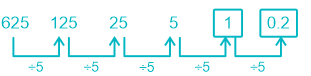
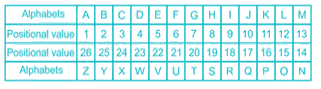
Q17 · Number System

Which of the following statement is TRUE for Whole Numbers?
  1. They include fractions.
  2. They include negative numbers.
  3. They include zero and positive integers.
  4. They start from 1.
Answer aur solution dekho

Archived marked answer: C

Shortcut Trick Whole numbers are simply the set of natural numbers (counting numbers) along with zero. Set of Whole Numbers (W) = {0, 1, 2, 3, 4, ...} This means they include zero and all positive integers, but no fractions or negative numbers. ∴ The correct answer is They include zero and positive integers. Alternate Method Checking all the given statements: ⇒ Option 1: They include fractions. (False, fractions like 1/2 or 3/4 are Rational Numbers, not Whole Numbers) ⇒ Option 2: They include negative numbers. (False, negative numbers like −1 or −5 belong to Integers, not Whole Numbers) ⇒ Option 4: They start from 1. (False, numbers starting from 1 are called Natural Numbers) ⇒ Option 3: They include zero and positive integers. (True) Derivation: ⇒ The set of Whole Numbers is mathematically denoted by W. ⇒ W = {0, 1, 2, 3, 4, ...} ⇒ The numbers {1, 2, 3, 4, ...} are positive integers. ⇒ Therefore, Whole Numbers = {0} + Positive Integers. ∴ The correct answer is They include zero and positive integers. Additional Information Natural Numbers (N) These are the counting numbers starting from 1. N = {1, 2, 3, 4, ...}. They do not include zero, negative numbers, or fractions. Integers (Z) This set includes all whole numbers and their negative counterparts. Z = {..., −3, −2, −1, 0, 1, 2, 3, ...}. Rational Numbers (Q) Any number that can be expressed in the form of p/q, where p and q are integers and q is not equal to zero. It includes fractions, terminating decimals, and repeating decimals. Real Numbers (R) The set of all rational and irrational numbers. They represent all possible continuous points on the number line.

Q18 · Time and Distance

Dhiraj goes to his school from his house at a speed of 3.8 km/hr and returns at 2.6 km/ hr. If he takes 5 hours going and coming, the distance between his house and school is:
  1. 6.79 km
  2. 6.5 km
  3. 7 km
  4. 7.72 km
Answer aur solution dekho

Archived marked answer: D

Shortcut Trick When total time (T) to travel a distance (D) back and forth with speeds S₁ and S₂ is given, use the direct formula: D = T × (S₁ × S₂) ÷ (S₁ + S₂) D = 5 × (3.8 × 2.6) ÷ (3.8 + 2.6) D = 5 × 9.88 ÷ 6.4 = 7.71875 ≈ 7.72 km ∴ The correct answer is 7.72 km. Alternate Method Given: Speed going to school (v₁) = 3.8 km/hr Speed returning from school (v₂) = 2.6 km/hr Total time taken (T) = 5 hours Formula Used: Time = Distance ÷ Speed Total Time = (Distance ÷ v₁) + (Distance ÷ v₂) House School - Distance = D - 3.8 km/hr - 2.6 km/hr Total Time = 5 hours Calculations: ⇒ Let the distance between his house and school be D km. ⇒ Total time = Time taken to go + Time taken to return ⇒ (D ÷ 3.8) + (D ÷ 2.6) = 5 ⇒ D × [(1 ÷ 3.8) + (1 ÷ 2.6)] = 5 ⇒ D × [(2.6 + 3.8) ÷ (3.8 × 2.6)] = 5 ⇒ D × (6.4 ÷ 9.88) = 5 ⇒ D = (5 × 9.88) ÷ 6.4 ⇒ D = 49.4 ÷ 6.4 ⇒ D = 7.71875 km ⇒ Rounding to two decimal places, we get D ≈ 7.72 km ∴ The correct answer is 7.72 km. Additional Information Average Speed for Equal Distances When a person travels equal distances at two different speeds S₁ and S₂, the average speed for the complete journey is calculated using the formula: Average Speed = (2 × S₁ × S₂) ÷ (S₁ + S₂). Distance from Difference in Time If instead of total time, the difference in time (ΔT) taken to cover a distance D at speeds S₁ and S₂ is given, the distance is: D = ΔT × (S₁ × S₂) ÷ |S₁ − S₂|. Relative Speed When two entities travel in opposite directions towards each other, their relative speed is the sum of their individual speeds (S₁ + S₂). If they travel in the same direction, it becomes the difference of their speeds (S₁ − S₂).

Q19 · Percentage

The price of a product is decreased by x% and then increased by x%. The final price becomes 10% less than the original. What is the value of x (approximately)?
  1. 31.6
  2. 33.6
  3. 30.6
  4. 39.6
Answer aur solution dekho

Archived marked answer: A

Shortcut Trick When a value is first decreased by x% and then increased by x%, the net change is always a decrease of (x² ÷ 100)%. Given the net decrease is 10%: ⇒ x² ÷ 100 = 10 ⇒ x² = 1000 ⇒ x = √1000 ≈ 31.62 ∴ The correct answer is 31.6. Alternate Method Given: Initial decrease in price = x% Subsequent increase in price = x% Final price is 10% less than the original price. Formula Used: Net percentage change for successive changes a% and b% = (a + b + a × b ÷ 100)% Calculation: Original Price 100 - − x% Intermediate Decreased - + x% Final Price 90 Net Decrease: 10% ⇒ Let the original price be 100. ⇒ Since the final price is 10% less, Final Price = 100 − 10 = 90. ⇒ Using the successive percentage formula where a = −x and b = +x: ⇒ Net Change = −x + x + (−x × x) ÷ 100 ⇒ Net Change = −x² ÷ 100 ⇒ The negative sign confirms an overall decrease. ⇒ Equating the net decrease to the given 10%: ⇒ x² ÷ 100 = 10 ⇒ x² = 1000 ⇒ x = √1000 ≈ 31.62 ∴ The correct answer is 31.6. Additional Information Successive Percentage Change When a value undergoes two successive percentage changes of a% and b%, the net percentage change is given by the formula: Net Change = (a + b + a × b ÷ 100)%. Use a positive sign for an increase and a negative sign for a decrease. Equal Increase and Decrease If a quantity is increased by x% and subsequently decreased by the same x%, or vice versa, the final value is always less than the original. The net percentage decrease is always exactly (x² ÷ 100)%. Base Value Concept Any percentage calculation is computed on a reference base value. When multiple percentage changes occur sequentially, the intermediate value immediately becomes the new base for the next percentage calculation.

Q20 · Average

The average of 9 numbers is 63. When one number is removed, the average becomes 60. What number was removed?
  1. 87
  2. 90
  3. 84
  4. 78
Answer aur solution dekho

Archived marked answer: A

Shortcut Trick Using the average deviation method: Removed Number = Old Average + (Remaining terms × Decrease in average) ⇒ Removed Number = 63 + (8 × 3) ⇒ Removed Number = 63 + 24 = 87 ∴ The correct answer is 87. Alternate Method Given: Average of 9 numbers = 63 Average of remaining 8 numbers = 60

Q21 · Average

In a company, the average salary of 5 engineers is Rs. 60,000. If one engineer leaves and the average salary becomes Rs. 58,000, what was the salary of the engineer who left?
  1. Rs. 70,000
  2. Rs. 68,000
  3. Rs. 64,000
  4. Rs. 62,000
Answer aur solution dekho

Archived marked answer: B

Shortcut Trick Salary of the person who left = Initial Average + (Decrease in Average × Remaining Persons) Decrease in average = 60,000 − 58,000 = 2,000 Remaining engineers = 5 − 1 = 4 Salary = 60,000 + (2,000 × 4) = 60,000 + 8,000 = 68,000 ∴ The correct answer is Rs. 68,000. Alternate Method Given: Initial number of engineers = 5 Initial average salary = Rs. 60,000 New average salary = Rs. 58,000 Formula Used: Sum of observations = Average × Number of observations

Q22 · Compound Interest

Vidhya lent Rs. 6000 to Kavya for 3 years at the rate of 4% per annum compound interest. Calculate the amount that Vidhya will get after 3 years.
  1. 6849.18
  2. 6750.18
  3. 6749.18
  4. 6649.18
Answer aur solution dekho

Archived marked answer: C

Shortcut Trick The effective Compound Interest rate for 3 years at r% is calculated as: 3r . 3r² . r³ For r = 4%, Effective Rate = 3(4) . 3(16) . (64) = 12.4864% Total Amount = Principal + Interest = 100% + 12.4864% = 112.4864% Amount = 112.4864% of 6000 = 6749.184 ≈ 6749.18 ∴ The correct answer is Rs. 6749.18. Alternate Method Given: ⇒ Principal (P) = Rs. 6000 ⇒ Rate (R) = 4% per annum ⇒ Time (T) = 3 years Formula Used: ⇒ Amount (A) = P(1 + R/100)T

Q23 · Compound Interest

A man got 10% of his investment as profit. If he invested Rs. 5000, and the profit was reinvested, what will be the total value after the second year with the same profit rate?
  1. Rs. 6000
  2. Rs. 6050
  3. Rs. 6100
  4. Rs. 6150
Answer aur solution dekho

Archived marked answer: B

Shortcut Trick Reinvesting the profit is equivalent to calculating Compound Interest. Effective interest rate for 2 successive years at 10% = 10 + 10 + (10 × 10) ÷ 100 = 21%. Total value after 2 years will be 121% of the initial investment. Total Value = (121 ÷ 100) × 5000 = 121 × 50 = 6050. ∴ The correct answer is Rs. 6050. Alternate Method Given: Initial Investment (P) = Rs. 5000 Profit Rate (R) = 10% per year Time (n) = 2 years Since the earned profit is reinvested at the same rate, this acts as Compound Interest. Formula Used: Total Amount (A) = P × (1 + R ÷ 100)ⁿ ₹5000 Initial ₹5500 End Year 1 ₹6050 End Year 2 - +10% - +10% Total Value after 2 Years = ₹6050 Calculations: ⇒ A = 5000 × (1 + 10 ÷ 100)² ⇒ A = 5000 × (1 + 1 ÷ 10)² ⇒ A = 5000 × (11 ÷ 10)² ⇒ A = 5000 × (121 ÷ 100) ⇒ A = 50 × 121 ⇒ A = 6050 ∴ The correct answer is Rs. 6050. Additional Information Effective Percentage Rate The effective net percentage change for two successive changes of x% and y% is calculated using the formula: Net Change = x + y + (x × y) ÷ 100. Concept of Reinvestment When profit or interest is reinvested along with the principal to earn further returns, it acts as Compound Interest because you are generating "interest on interest". SI vs CI Difference The exact difference between Compound Interest and Simple Interest for 2 years on a principal P at rate R is given by the formula: Difference = P × (R ÷ 100)². 9a:T23

Q24 · Mensuration 3D

A spherical shell has an outer diameter of 20 cm and is 1 cm thick. What is the volume of the material in the shell? (Use π=3.14).
  1. 1134.6cm³
  2. 1256.6cm³
  3. 1340.4cm³
  4. 1046.7cm³
Answer aur solution dekho

Archived marked answer: A

Shortcut Trick Outer radius (R) = 20 ÷ 2 = 10 cm, Inner radius (r) = 10 − 1 = 9 cm. Volume of spherical shell = (4/3) × π × (R³ − r³) Volume = (4/3) × 3.14 × (10³ − 9³) = (4/3) × 3.14 × (1000 − 729) Volume = (4/3) × 3.14 × 271 = 3403.76 ÷ 3 ≈ 1134.6 cm³ ∴ The correct answer is 1134.6 cm³. Alternate Method Given: Outer diameter of the spherical shell = 20 cm Thickness of the shell = 1 cm Value of π = 3.14 - r = 9 cm - R = 10 cm - Thickness = 1 cm Cross-section of the Spherical Shell Formula Used: Volume of a spherical shell = (4/3) × π × (R³ − r³) Where R = Outer radius and r = Inner radius Calculations: ⇒ Outer radius (R) = Outer diameter ÷ 2 = 20 ÷ 2 = 10 cm ⇒ Inner radius (r) = Outer radius − Thickness = 10 − 1 = 9 cm ⇒ Volume = (4/3) × 3.14 × (10³ − 9³) ⇒ Volume = (4/3) × 3.14 × (1000 − 729) ⇒ Volume = (4/3) × 3.14 × 271 ⇒ Volume = 3403.76 ÷ 3 ⇒ Volume = 1134.586... ≈ 1134.6 cm³ ∴ The correct answer is 1134.6 cm³. Additional Information Volume of a Solid Sphere The volume of a solid sphere of radius r is given by V = (4/3) × π × r³. Surface Area of a Sphere The total surface area of a solid sphere of radius r is given by A = 4 × π × r². Volume of a Hemisphere The volume of a solid hemisphere of radius r is exactly half of a full sphere: V = (2/3) × π × r³. Total Surface Area of a Hemispherical Shell For a hemispherical shell with outer radius R and inner radius r, the total surface area = 3 × π × R² + π × r².

Q25 · Mensuration 3D

A triangular storage prism has a base shaped like a right triangle with side lengths in the ratio 5:12:13. If the total perimeter of the base is 60 cm and the height of the prism is 8 cm, calculate the lateral surface area of the prism.
  1. 360 cm²
  2. 300 cm²
  3. 480 cm²
  4. 400 cm²
Answer aur solution dekho

Archived marked answer: C

Shortcut Trick The Lateral Surface Area (LSA) of any right prism depends only on its base perimeter and height. LSA = Perimeter of the base × Height of the prism LSA = 60 × 8 = 480 cm² The side ratio 5:12:13 is extra data and is not required to find the lateral area. ∴ The correct answer is 480 cm². Alternate Method Given: Base side ratio = 5 : 12 : 13 Base perimeter = 60 cm Prism height (h) = 8 cm Formula Used: LSA = (Side₁ × h) + (Side₂ × h) + (Side₃ × h)

English

Q1 · Vocabulary

Select the most appropriate antonym of the given word. Pulverize
  1. Crumble
  2. Shatter
  3. Restore
  4. Crush
Answer aur solution dekho

Archived marked answer: C

The correct answer is '3' i.e. Restore . Key Points - The word pulverize means to crush, grind, or break something into fine particles or powder. - The antonym of this would be a word that indicates the opposite action: Restore, which means to bring something back to its original state. - Options like Crumble, Shatter, and Crush are synonymous with pulverize, but Restore is the most appropriate antonym. Correct answer: *Restore*. Additional Information - Synonyms: Pulverize is similar to terms like crush, grind, crumble, and shatter, all of which describe breaking something into smaller pieces. - Antonyms: Restore is the opposite, as it focuses on repair or bringing something back to its original state. </ul

Q3 · Vocabulary

Choose the correct meaning of idiom: The writing on the wall
  1. A public confession
  2. A clear warning of inevitable doom
  3. A declaration of love
  4. A mark of brilliance
Answer aur solution dekho

Archived marked answer: B

The correct answer is '2' i.e. a clear warning of inevitable doom. Key Points - The idiom "The writing on the wall" refers to a situation where there are clear signs or warnings of an impending disaster or inevitable doom. - It originates from the biblical story of Belshazzar's feast in the Book of Daniel, where mysterious writing appeared on the wall, predicting the downfall of the Babylonian king. - In the context of the question, the correct meaning is option 2: "A clear warning of inevitable doom." Correct sentence: *The company ignored the writing on the wall, and eventually, it went bankrupt.* Additional Information - Idioms often have meanings that are not directly related to the literal interpretation of the words. - For example: - "A public confession" (option 1) refers to openly admitting something, which does not align with the idiom's meaning. - "A declaration of love" (option 3) and "A mark of brilliance" (option 4) are unrelated to the context of warnings or doom. - Understanding the historical or cultural origin of idioms can help clarify their meanings. </ul

Q4 · Vocabulary

Choose the correct one-word substitute for: 'A person who is unable to pay debts'.
  1. Pauper
  2. Bankrupt
  3. Spendthrift
  4. Debtor
Answer aur solution dekho

Archived marked answer: B

The correct answer is '2' i.e. Bankrupt . Key Points - The question asks for a one-word substitute for "A person who is unable to pay debts". - The correct word is "Bankrupt", which directly refers to a person or entity that is legally declared as unable to meet financial obligations. - Let us analyze the options: - Pauper (Option 1): Refers to a very poor person, but doesn’t necessarily imply the inability to pay debts. - Bankrupt (Option 2): Correct answer, as it specifically means someone unable to pay their debts. - Spendthrift (Option 3): Refers to someone who spends money irresponsibly, but this does not imply they cannot pay debts. - Debtor (Option 4): Refers to someone who owes money, but it doesn’t mean they are unable to pay. Correct sentence: *The one-word substitute for a person who is unable to pay debts is Bankrupt.* Additional Information - Pauper: Refers to a destitute individual, but not necessarily someone who cannot pay debts. - Bankrupt: Legally recognized as someone who cannot fulfill financial obligations. - Spendthrift: A person who wastes money carelessly, unrelated to debt repayment. - Debtor: Someone who owes money, but may still have the means to repay. 3d

Q5 · Vocabulary

Choose the correct one-word substitute for: 'A person who is skilled in many areas'.
  1. Polymath
  2. Prodigy
  3. Savant
  4. Virtuoso
Answer aur solution dekho

Archived marked answer: A

The correct answer is '1' i.e. Polymath . Key Points - The term Polymath refers to a person who is skilled or knowledgeable in multiple fields or disciplines. - Prodigy refers to someone who is exceptionally talented, usually at a young age, but does not imply expertise across many fields. - Savant typically refers to someone with extraordinary skills or knowledge in a specific area, often associated with a mental disability. - Virtuoso is a term used for someone who is highly skilled in a specific art, particularly music. Correct definition: *A Polymath is a person who is skilled in many areas or has expertise across multiple disciplines.* Additional Information - Examples of Polymaths: - Leonardo da Vinci: Renowned for his contributions to art, science, engineering, anatomy, and more. - Benjamin Franklin: Known for his achievements as a scientist, inventor, writer, and statesman. - Usage: - The term is often used to describe individuals who excel across multiple fields rather than specializing in just one. </ul

Q6 · Vocabulary

Fill in the blank with the correctly spelt word. The species showed remarkable _____ to extreme conditions.
  1. adaptibility
  2. adaptability
  3. adaptabilitye
  4. adaptabilitty
Answer aur solution dekho

Archived marked answer: B

The correct answer is '2' i.e. adaptability . Key Points - The blank in the sentence needs to be filled with a correctly spelled word that fits the context of the sentence. - The word “adaptability” refers to the ability of a species or an entity to adjust to new or extreme conditions, making it the appropriate choice. - The correct spelling is adaptability (Option 2). Other options contain misspellings or incorrect variations: - Option 1: "adaptibility" – Incorrect spelling. - Option 3: "adaptabilitye" – Incorrect due to the extra 'e'. - Option 4: "adaptabilitty" – Incorrect due to the extra 't'. Correct sentence: *The species showed remarkable adaptability to extreme conditions*. Additional Information - Adaptability is a highly valued trait in living organisms and systems, allowing them to survive and thrive in changing or challenging environments. - It is often used in discussions related to biology, behavior, and technology.

Q7 · Vocabulary

Choose the correct spelling of the word meaning 'easily broken'.
  1. Brittel
  2. Brittle
  3. Brittlle
  4. Britle
Answer aur solution dekho

Archived marked answer: B

The correct answer is '2' i.e. Brittle . Key Points - The word "easily broken" refers to something that is fragile or delicate. - The correct spelling of the word is "Brittle". - The other options, i.e., "Brittel", "Brittlle", and "Britle", are incorrect as they do not represent the standard spelling of the word. Correct Sentence: *The word meaning "easily broken" is spelled as Brittle.* Additional Information - Definition of Brittle: Brittle means something that is hard but liable to break or shatter easily, such as glass or a thin piece of ice. - Examples of Usage: - The old tree branches were so brittle that they snapped under the weight of the snow. - The ceramic plate was brittle and broke when it fell on the ground. </ul

Q8 · Vocabulary

Select the most appropriate synonym of the given word: TRUNCATED
  1. Lengthened
  2. Extended
  3. Shortened
  4. Complicated
Answer aur solution dekho

Archived marked answer: C

The correct answer is '3' i.e. Shortened . Key Points - The word "truncated" means something that has been shortened by cutting off

Q9 · Grammar

Find the part of the sentence that contains an error: It's central location (1)/ makes the conference venue (2)/ convenient for delegates (3)/ travelling from different cities. (4)/
  1. 1
  2. 2
  3. 3
  4. 4
Answer aur solution dekho

Archived marked answer: A

The correct answer is '1' i.e. It's central location contains an error. Key Points - The phrase "It's central location" contains a grammatical error. Here, "It's" is a contraction of "It is", which is incorrect in this context. - The correct form should be "Its", which is the possessive pronoun used to indicate ownership. - The error lies in the use of the contraction "It's" instead of the possessive pronoun "Its". Correct sentence: *Its central location makes the conference venue convenient for delegates travelling from different cities.* Additional Information - Difference between "It's" and "Its": - It's: A contraction of "It is" or "It has". - Example: It's raining outside. (It is raining outside.) - Its: A possessive pronoun used to show possession. - Example: The dog wagged its tail. </ul

Q10 · Grammar

Find the part of the sentence that contains an error: The suddenness with which the issue escalated (1)/ took not only the negotiators but also the observers (2)/ by surprise who were expecting (3)/ a gradual resolution process. (4)
  1. 1
  2. 2
  3. 3
  4. 4
Answer aur solution dekho

Archived marked answer: C

The correct answer is '3'. Key Points - The clause "by surprise who were expecting" is awkward and grammatically incorrect in placement. - The relative pronoun "who" incorrectly appears to modify "surprise" instead of "negotiators and observers". - The sentence should be restructured for proper meaning, such as: *"...took not only the negotiators but also the observers, who were expecting a gradual resolution process, by surprise."* - Therefore, the error lies in Part 3. Therefore, the correct answer is Option 3. Correct Sentence: *"The suddenness with which the issue escalated took not only the negotiators but also the observers, who were expecting a gradual resolution process, by surprise."* Additional Information - A relative clause should be placed close to the noun it modifies. - Misplaced modifiers can create confusion in sentence meaning.

Q11 · Grammar

Choose the correct article: She aspires to become ____ UN envoy for climate affairs.
  1. an
  2. a
  3. the
  4. no article
Answer aur solution dekho

Archived marked answer: C

The correct answer is '3' i.e. the . Key Points - The use of the article "the" is correct in this sentence because it refers to a specific position or title—"UN envoy for climate affairs." - When referring to unique roles or positions, the definite article "the" is used to emphasize their singularity or distinctiveness. - For instance, we say, "the President," "the Prime Minister," or "the CEO," as these roles are specific and unique. Correct sentence: *She aspires to become the UN envoy for climate affairs.* Additional Information - Usage of "a/an": - "A" or "an" is used with singular, non-specific nouns. Example: "She wants to become a doctor." - "An" is used when the next word starts with a vowel sound. Example: "He is an artist." - Usage of "the": - "The" is used with specific nouns, often when the speaker and listener know what is being referred to, or when the noun is unique. Example: "The moon is bright tonight."

Q12 · Grammar

Select the correct option: The chief engineer recommended replacing the obsolete part ____ than repairing it.
  1. rather
  2. as
  3. other
  4. more
Answer aur solution dekho

Archived marked answer: A

The correct answer is '1' i.e. rather . Key Points - The word "rather" is used to express preference between two options. - In the given sentence, the chief engineer is recommending one action (*replacing the obsolete part*) instead of another (*repairing it*). - Therefore, the correct word to use in this context is "rather", which fits grammatically and logically. Correct sentence: *The chief engineer recommended replacing the obsolete part rather than repairing it*. Additional Information - Usage of "rather than": - "Rather than" is often used to indicate a choice or preference. - Example: I would prefer to stay home rather than go out in the rain. - Incorrect options explained: - Option 2: "as" - Doesn't express a preference or contrast. - Option 3: "other" - Grammatically and contextually incorrect here. - Option 4: "more" - Doesn't fit the sentence structure or meaning. </ul

Q13 · Grammar

A sentence is provided in indirect speech. From the four given options, choose the one that most accurately conveys the sentence in its corresponding direct speech. The historian observed that the records had been tempered with.
  1. The historian said, "Someone tempered with the records."
  2. The historian said, "The records had been tempered with."
  3. He said, "The records are tempered with."
  4. He observed, "The records are fake."
Answer aur solution dekho

Archived marked answer: B

The correct answer is '2' i.e. The historian said, "The records had been tempered with." Key Points - The given sentence is written in indirect speech, and the task is to convert it into direct speech while preserving the original meaning. - In the indirect speech, the historian observed that the records "had been tempered with." - When converting to direct speech, we must use the past perfect tense ("had been tempered with") to match the indirect speech tense. - Among the options, only option 2 accurately conveys the same meaning in direct speech. Correct sentence: *The historian said, "The records had been tempered with."* Additional Information - Rules for Converting Indirect Speech to Direct Speech: - Match the tense: Retain the same tense used in the indirect speech. - Use quotation marks: Direct speech requires the use of quotation marks to enclose the spoken words. - Replace reporting verbs: Words like "observed" or "said" should be retained in the direct speech format. - Incorrect Options Explained: - Option 1: "Someone tempered with the records." This introduces "someone," which is not mentioned in the original sentence. - Option 3: "The records are tempered with." This changes the tense to present, which is incorrect. - Option 4: "The records are fake." This changes the meaning entirely. </ul

Q14 · Grammar

A sentence is provided in direct speech. From the four given options, choose the one that most accurately conveys the sentence in its corresponding indirect speech. I said, "Let us start early."
  1. I said let us start early.
  2. I told that we must start early.
  3. I suggested that we should start early.
  4. I suggested us to start early.
Answer aur solution dekho

Archived marked answer: C

The correct answer is '3' i.e. I suggested that we should start early . Key Points - The given sentence is in direct speech, and we need to convert it into indirect speech. - In indirect speech, the phrase "Let us" is typically changed to a suggestion, as it implies a proposal or idea. - The verb "suggested" is appropriate for this context, and it is followed by "that" and a structure using "should", which conveys the same meaning as the original sentence. - Option 3 accurately converts the direct speech into indirect speech: "I suggested that we should start early." Correct sentence: *I suggested that we should start early.* Additional Information - Option 1: *I said let us start early.* – Incorrect because it retains the direct speech structure and does not properly convert to indirect speech. - Option 2: *I told that we must start early.* – Incorrect because "told" is not used correctly here (it requires an object, e.g., "I told them"). - Option 4: *I suggested us to start early.* – Incorrect because "suggested" is not followed directly by "us to." Instead, it should use "that we." 50:T

Q17 · Voice Change

Change the following from active to passive: Does the statute bind municipal councils to such obligations?
  1. Have municipal councils been bound by the statute to such obligations?
  2. Were municipal councils being bound by the statute to such obligations?
  3. Are municipal councils bound by the statute to such obligations?
  4. Do municipal councils are bound by the statute to such obligations?
Answer aur solution dekho

Archived marked answer: C

The correct answer is '3' i.e. Are municipal councils bound by the statute to such obligations?. Key Points - To convert a sentence from active to passive voice, the object of the active sentence becomes the subject of the passive sentence. - In the given question, the active sentence is: Does the statute bind municipal councils to such obligations? - When converting this into passive voice, the structure becomes: Are municipal councils bound by the statute to such obligations? - This matches the grammatical structure and tense of the original active sentence. Correct sentence: *Are municipal councils bound by the statute to such obligations?*. Additional Information - Passive Voice Formation: - Structure: Subject + auxiliary verb (to be) + past participle + (optional agent with "by"). - Example: Active: The teacher explains the lesson. Passive: The lesson is explained by the teacher. - Key Tense Used in Passive: - Here, the present simple tense is used in the passive voice: "Are bound." - The auxiliary verb "are" indicates the plural subject, and "bound" is the past participle of the verb "bind." </ul

Q18 · Voice Change

Convert the sentence provided below from its passive voice structure to an active voice structure: The guests were being served refreshments by the host.
  1. The host has served refreshments to the guests.
  2. The host serves refreshments to the guests.
  3. The host had been serving refreshments to the guests.
  4. The host was serving refreshments to the guests.
Answer aur solution dekho

Archived marked answer: D

The correct answer is '4' i.e. The host was serving refreshments to the guests. Key Points - The given sentence is written in the passive voice: "The guests were being served refreshments by the host." - To convert this sentence into the active voice, the subject (the host) must take the position of the doer of the action. - The verb tense in the passive voice sentence is in the past continuous tense ("were being served"). Hence, in the active voice, the verb must also be in the past continuous tense ("was serving"). - Therefore, the correct active voice sentence is: "The host was serving refreshments to the guests." Correct sentence: *The host was serving refreshments to the guests.* Additional Information - Active Voice: The subject performs the action. Example: "The host was serving refreshments." - Passive Voice: The subject receives the action. Example: "Refreshments were being served by the host." - When converting from passive to active, always ensure: - The doer of the action (subject) is clearly stated. - The verb tense remains consistent. </ul

Q19 · Para Jumble

Rearrange the following sentences to form a meaningful passage: 1. International space law governs satellite placement and liability. 2. Treaties emerged during the Cold War to prevent militarization. 3. New challenges include space debris and commercial mining. 4. Regulation needs adaptation to current realities.
  1. 2-1-3-4
  2. 1-3-4-2
  3. 1-2-3-4
  4. 3-2-1-4
Answer aur solution dekho

Archived marked answer: C

The correct answer is Option 3. Key Points - The paragraph begins by introducing the concept of international space law and then moves chronologically from its historical origins to modern challenges and future needs. - Sentence 1 is the first sentence as it defines the main subject and explains its primary function: - "International space law governs satellite placement and liability." - Sentence 2 follows as it provides the historical background and context for these legal frameworks: - "Treaties emerged during the Cold War to prevent militarization." - Sentence 3 is the third sentence because it shifts the timeline from the past to the present, introducing modern issues that have arisen since those early treaties: - "New challenges include space debris and commercial mining." - Sentence 4 is the fourth as it serves as the logical conclusion, stating the ultimate takeaway based on the new challenges presented: - "Regulation needs adaptation to current realities." - The correct sequence is 1-2-3-4. Coherent paragraph after rearrangement: "International space law governs satellite placement and liability. Treaties emerged during the Cold War to prevent militarization. New challenges include space debris and commercial mining. Regulation needs adaptation to current realities."

Q25 · Verbal Ability

Rearrange the following sentences in correct order to make a logical passage. 1. This ensures fairness and minimizes potential conflicts. 2. Conflict resolution is an essential skill in any workplace. 3. It involves active listening and seeking common ground. 4. Training in this area improves team dynamics.
  1. 2-1-3-4
  2. 2-3-1-4
  3. 2-4-1-3
  4. 3-4-2-1
Answer aur solution dekho

Archived marked answer: B

The correct answer is '2' i.e. 2-3-1-4. Key Points - The passage logically begins with the importance of conflict resolution in any workplace (Sentence 2). - It then elaborates on the process of conflict resolution, emphasizing active listening and finding common ground (Sentence 3). - This is followed by the statement that fairness and minimizing conflicts are ensured through effective conflict resolution (Sentence 1). - Finally, the passage concludes by highlighting the benefits of training in conflict resolution, which enhances team dynamics (Sentence 4). Correct sentence order: *Conflict resolution is an essential skill in any workplace. It involves active listening and seeking common ground. This ensures fairness and minimizes potential conflicts. Training in this area improves team dynamics.* Additional Information - Logical sequencing: Always identify the introductory sentence and follow the flow that builds on ideas logically. - Contextual clues: Pay attention to phrases that connect sentences, such as "this ensures" or "training in this area," which indicate continuation or conclusion of ideas. - Practice: Rearranging sentences improves comprehension and logical reasoning skills. </ul

All archived papers · 2026 answer explanations