91 questions available to read. Bina signup padho; timed practice ke liye free sign in karo.
Archive coverageThis saved paper contains 99 of 100 expected questions. 8 stored records are excluded from this study page while their source or wording is checked. Missing original questions: 1. Local question numbers follow the saved archive; match the wording and choices when comparing another response sheet.
Archived marked answers and available solution notes are preserved. These are not claimed to be fully checked final SSC keys. How questions are checked.
Reasoning
Q1 · Series
What comes next? ARB, BSC, CTD, DUE, ?
- EWF
- FVE
- EVF
- FVG
Answer aur solution dekho
Archived marked answer: C
The position and positional values or English Alphabets are:
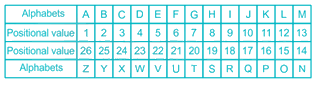 Given: ARB, BSC, CTD, DUE, ?
The logic followed here is:
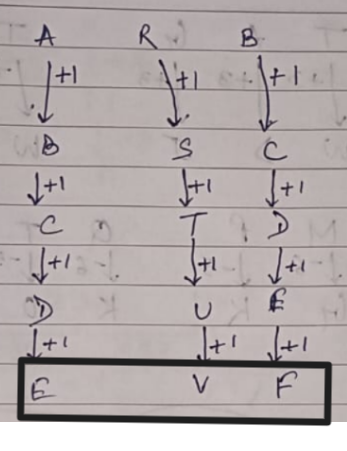 Thus, EVF comes next.
Hence, the correct answer is "Option 3".
Q2 · Series
Select the letter-cluster from among the given options that can replace the question mark (?) in the following series: ACE, BDF, CEG, ?
- DFH
- DEH
- DFI
- DEI
Answer aur solution dekho
Archived marked answer: A
The position and positional values or English Alphabets are:
Given: ACE, BDF, CEG, ?
The logic followed here is:
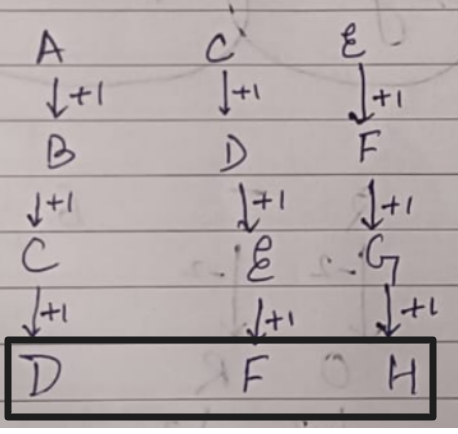 Thus, DFH can replace the question mark (?) in the following series.
Hence, the correct answer is "Option 1".
Q3 · Series
3, 6, 18, 72, 360, ?
- 1800
- 1400
- 2160
- 1080
Answer aur solution dekho
Archived marked answer: C
Given: 3, 6, 18, 72, 360, ?
The logic followed here is:
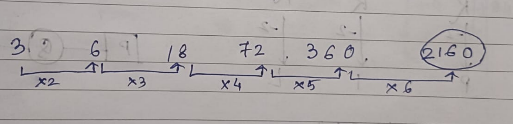 Thus, 2160 will come in the place of ?.
Hence, the correct answer is "Option 3".
Q4 · Series
Find the odd one out in the series: P1*, Q2*, R3*, S4*, T5*, E6*, V7*, W8*, X9*
- W8*
- X9*
- E6*
- T5*
Answer aur solution dekho
Archived marked answer: C
The position and positional values or English Alphabets are:
Given: P1*, Q2*, R3*, S4*, T5*, E6*, V7*, W8*, X9*
The logic followed here is:
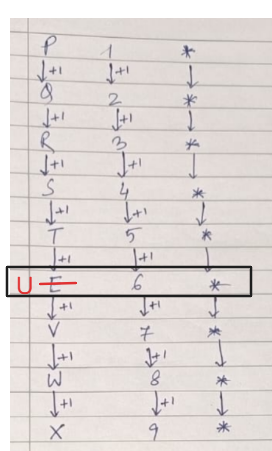 Thus, E6* is the odd one out.
Hence, the correct answer is "Option 3".
Q5 · Series
The series given below contains a sequence of numbers. Accordingly identify the incorrect combination. 5, 9, 27, 31, 94, 97, 292
- 27, 292
- 97, 292
- 31, 94
- 94, 292
Answer aur solution dekho
Archived marked answer: D
Given: 5, 9, 27, 31, 94, 97, 292
The logic followed here is:
Q6 · Series
What should come at the place of question mark? 144, 121, 100, 81, ?, 49
- 64
- 72
- 66
- 70
Answer aur solution dekho
Archived marked answer: A
Given: 144, 121, 100, 81, ?, 49
The l
Q7 · Analogy
If 9 @ 3 = 108 and 10 @ 2 = 80, what is 7 @ 1?
- 18
- 35
- 28
- 43
Answer aur solution dekho
Archived marked answer: C
Given: If 9 @ 3 = 108 and 10 @ 2 = 80, what is 7 @ 1?
The logic followed here is:
Logic: a @ b = a × b × 4
9 @ 3 = 108 → 9 × 3 × 4 = 108
10 @ 2 = 80 → 10 × 2 × 4 = 80
Similarly,
7 @ 1? → 7 × 1 × 4 = 28
Thus 7 @ 1 is related to 28.
Hence, the correct answer is "Option 3".
Q8 · Puzzle Subtypes Not To Miss
The following equation is incorrect. Which two signs should be interchanged to correct the equation? 14 - 7 × 30 ÷ 10 + 4 = 54
- + and -
- × and -
- - and ÷
- ÷ and ×
Answer aur solution dekho
Archived marked answer: C
BODMAS Rule:
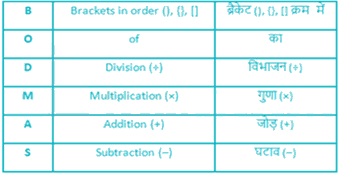 Given equation: 14 - 7 × 30 ÷ 10 + 4 = 54
Let's check each option one by one
1. + and -
Now replacing the sign from left to right using BODMAS Rule, we get:
⇒ 14 + 7 × 30 ÷ ____10 − 4 = 54
⇒ 14 + 7 × 3 − 4 = 54
⇒ 14 + 21 − 4 = 54
⇒ 35__ − __4 = 54
⇒ 31 ≠ 54
⇒ LHS ≠ RHS
2. × and -
Now replacing the sign from left to right using BODMAS Rule, we get:
⇒ 14 × 7 − 30 ÷ 10 + 4 = 54
⇒ 14 × 7 − 3 + 4 = 54
⇒ 98 − 3 + 4 = 54
⇒ 102____ − 3 = 54
⇒ 99 ≠ 54
⇒ LHS ≠ RHS
3. - and ÷
Now replacing the sign from left to right using BODMAS Rule, we get:
⇒ 14 ÷ ____7 × 30 − 10 + 4 = 54
⇒ 2__ × __30 − 10 + 4 = 54
⇒ 60 − 10 + ____4 = 54
⇒ 64____ − 10 = 54
⇒ 54 = 54
⇒ LHS = RHS
4. ÷ and ×
Now replacing the sign from left to right using BODMAS Rule, we get:
⇒ 14 − 7 ÷ ____30 × 10 + 4 = 54
⇒ 14 − 0.23__ × __10 + 4 = 54
⇒ 14 − 2.3 + ____4 = 54
⇒ 18 ____− 2.3 = 54
⇒ 15.67 ≠ 54
⇒ LHS ≠ RHS
Hence, the correct answer is "Option 3".
Q9 · Puzzle Subtypes Not To Miss
By interchanging the given two signs which of the following equation will NOT be correct?
+ and ÷
I. 27 ÷ 3 - 18 × 3 + 9 = 24
II. 12 ÷ 8 × 12 + 16 - 7 = 19
- Only I
- Both I and II
- Neither I nor II
- Only II
Answer aur solution dekho
Archived marked answer: D
BODMAS Rule:
I. 27 ÷ 3 - 18 × 3 + 9 = 24
Interchanging the given two signs + and ÷, we get:
⇒ 27 + 3 − 18 × 3 ÷ 9 = 24
⇒ 27 Q10 · Puzzle Subtypes Not To Miss
If the signs are interchanged as follows:
• '+' means 'x'
• 'x' means '-'
• '-' means '+'
• '÷' means '÷'
Which equation is incorrect after applying these symbol transformations?
- 6 + 3 - 2 x 1 = 19
- 8 - 4 x 2 + 1 = 10
- 5 + 2 x 4 - 3 = 11
- 10 x 3 - 5 + 2 = 17
Answer aur solution dekho
Archived marked answer: C
BODMAS Rule:
Decoding the given information:
Symbol
+
×
- ÷
Meaning
×
- +
÷
Let's check each option one by one:
1. 6 + 3 - 2 x 1 = 19
After replacing the symbols by their meaning, we get:
⇒ 6 × 3 + 2 - 1 = 19
⇒ 18____ + 2 - 1 = 19
⇒ 20____ - 1 = 19
⇒ 19 = 19
⇒ LHS = RHS
2. 8 - 4 x 2 + 1 = 10
After replacing the symbols by their meaning, we get:
⇒ 8 + 4 - 2 × 1 = 10
⇒ 8 + 4 - 2 = 10
⇒ 12 - 2 = 10
⇒ 10 = 10
⇒ LHS = RHS
3. 5 + 2 x 4 - 3 = 11
After replacing the symbols by their meaning, we get:
⇒ 5 × 2 - 4 + 3 = 11
⇒ 10 - 4 + 3 = 11
⇒ 13____ - 4 = 11
⇒ 9 ≠ 11
⇒ LHS ≠ RHS
4. 10 x 3 - 5 + 2 = 17
After replacing the symbols by their meaning, we get:
⇒ 10 - 3 + 5 × 2 = 17
⇒ 10 - 3 + 10 = 17
⇒ 20 - 3 = 17
⇒ 17 = 17
⇒ LHS = RHS
Thus, equation 3 is incorrect after applying these symbol transformations.
Hence, the correct answer is "Option 3". Q11 · Puzzle Subtypes Not To Miss
In this mathematical expression, the symbols have been replaced by code symbols. You are required to substitute each symbol with its actual arithmetic operator as per the given code :
Find the value of the expression:
3 * 4 # 2 @ 5
Symbol
Actual Operator
*
+ (Addition)
@
- (Subtraction)
#
× (Multiplication)
&
÷ (Division)
- 9
- 6
- 10
- 7
Answer aur solution dekho
Archived marked answer: B
BODMAS Rule:
Given: 3 * 4 # 2 @ 5
Now replacing the symbol by their meaning, we get:
= 3 + 4 × ____2 − 5
= 3 + 8 − 5
= 11 − 5
= 6
Thus, the value of the expression is 6.
Hence, the correct answer is "Option 2". Q12 · Coding Decoding
If 'LION' is coded as '12-9-15-14', how will 'NOIL' be coded?
- 22-24-3-18
- 14-3-21-8
- 25-4-20-13
- 14-15-9-12
Answer aur solution dekho
Archived marked answer: D
Given: 'LION' is coded as '12-9-15-14'.
L
I
O
N
12
9
15
14
Similarly,
N
O
I
L
14
15
9
12
Thus, 'NOIL' will be coded as '14-15-9-12'.
Hence, the correct answer is "Option 4".
Q13 · Classification Odd One Out
Find the odd one out from the given alternatives:
- Razia Sultana
- Rani Durgavati
- Rani Lakshmi Bai
- Sarojini Naidu
Answer aur solution dekho
Archived marked answer: D
Given:
1. Razia Sultana – She was a queen/ruler of the Delhi Sultanate.
2. Rani Durgavati – She was a queen and ruler of Gondwana.
3. Rani Lakshmibai – She was the queen of Jhansi and a warrior ruler.
4. Sarojini Naidu – She was a freedom fighter, poet, and political leader, not a queen.
The first three were women rulers/queens, while Sarojini Naidu was a freedom fighter, poet, and political leader.
Hence, the correct answer is "Option 4".
Q14 · Logical Reasoning
Read the following statement carefully and identify the conclusion that follows.
Statement:
Some pens are pencils. All pencils are stationary. No stationary is electronic.
Conclusions:
I. Some pens are not electronic.
II. Some stationary are pens.
- Only I follows
- Only II follows
- Both I and II follow
- Neither I nor II follows
Answer aur solution dekho
Archived marked answer: C
Statement:
Some pens are pencils. All pencils are stationary. No stationary is electronic.
The least possible Venn diagram for the given statement is:
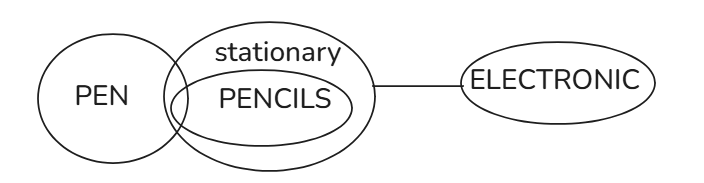 Conclusions:
I. Some pens are not electronic. - Follows (Because Some pens are pencils, All pencils are stationary and No stationary is electronic, which means some pens that are stationary are not electronic.)
II. Some stationary are pens. - Follows (Because Some pens are pencils. All pencils are stationary, which means some stationary are pens.)
Thus, both I and II follow.
Hence, the correct answer is "Option 3".
Q15 · Logical Reasoning
Statements: Some keys are locks. Some locks are doors. Conclusions: I. Some keys are doors. II. All locks being keys is a possibility.
- Only Conclusion II follows
- Only Conclusion I follows
- Both I and II follow
- Neither I nor II follows
Answer aur solution dekho
Archived marked answer: A
Statements: Some keys are locks. Some locks are doors.
The least possible Venn diagram for the given statement is:
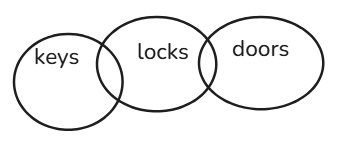 Conclusions:
I. Some keys are doors. - False (There is no definite relation between keys and doors, it can be possible but it is not definite)
II. All locks being keys is a possibility. - True (There is no definite relation between keys and doors, it can be possible but it is not definite)
Thus, only Conclusion II follows.
Hence, the correct answer is "Option 1".
Q16 · Blood Relations
A is the mother of B. B is the sister of C. How is A related to C?
- Sister
- Aunt
- Mother
- Grandmother
Answer aur solution dekho
Archived marked answer: C
Family Chart:
 Given: A is the mother of B. B is the sister of C.
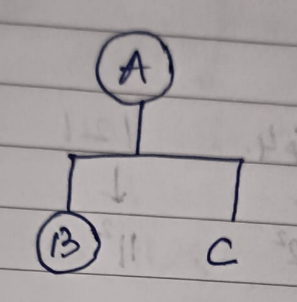 Thus, A is mother of C.
Hence, the correct answer is "Option 3".
Q17 · Blood Relations
P is the brother of Q. Q is the sister of R. R is the father of S. How is P related to S?
- Father
- Grandfather
- Brother
- Uncle
Answer aur solution dekho
Archived marked answer: D
Family Chart:
Given: P is the brother of Q. Q is the sister of R. R is the father of S.
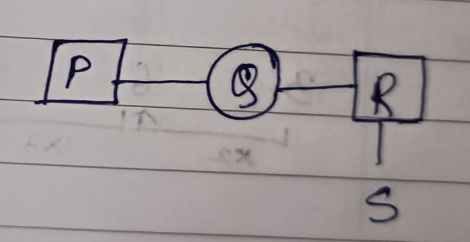 Thus, P is Uncle of S.
Hence, the correct answer is "Option 4".
Q18 · Alphabet Test
Which of the following prefixes can complete all three words meaningfully? _ABLE, _LIKELY, _BALANCE
- IN
- UN
- RE
- DE
Answer aur solution dekho
Archived marked answer: B
Given: _ABLE, _LIKELY, _BALANCE
Now, let's check each option one by one:
1. IN → INABLE, INLIKELY, INBALANCE
All three words become meaningless.
2. UN → UNABLE, UNLIKELY, UNBALANCE
All three words become meaningful.
3. RE → REABLE, RELIKELY, REBALANCE
All three words become meaningless.
4. DE → DEABLE, DELIKELY, DEBALANCE
All three words become meaningless.
Thus, UN can complete all three words meaningfully.
Hence, the correct answer is "Option 2".
Q19 · Alphabet Test
From the given words, select the word that can be formed using the letters of the given word. PREACHER
- TEACH
- TOUCH
- CHAR
- CREATE
Answer aur solution dekho
Archived marked answer: C
Given Word: PREACHER
Let's check each option one by one:
1. TEACH → PREACHER → It cannot be formed as T is missing.
2. TOUCH → PREACHER → It cannot be formed as T, O, U is missing.
3. CHAR → PREACHER → It can be formed
4. CREATE → PREACHER → It cannot be formed as T is missing.
Thus, CHAR can be formed using the letters of the word PREACHER.
Hence, the correct answer is "Option 3".
Q20 · Similarity and Differences
Choose the address that is the same as the one given below. Sample Address:D.No. 4-98, Krishna Colony, Guntur, Andhra Pradesh - 522002
- Door No. 4-98, Krishna Colony, Guntur, Andhra Pradesh - 522002
- D.No. 4-89, Krishna Colony, Guntur, Andhra Pradesh - 522002
- D.No. 4-98, Krushna Colony, Guntur, Andhra Pradesh - 522002
- D.No. 4-98, Krishna Colony, Guntur, Andhra Pradesh - 522002
Answer aur solution dekho
Archived marked answer: D
Address
Options
Verdict
D.No. 4-98, Krishna Colony, Guntur, Andhra Pradesh - 522002
1
Door No. 4-98, Krishna Colony, Guntur, Andhra Pradesh - 522002
Door is written instead of D.
D.No. 4-98, Krishna Colony, Guntur, Andhra Pradesh - 522002
2
D.No. 4-89, Krishna Colony, Guntur, Andhra Pradesh - 522002
89 is written instead of 98.
D.No. 4-98, Krishna Colony, Guntur, Andhra Pradesh - 522002
3
D.No. 4-98, Krushna Colony, Guntur, Andhra Pradesh - 522002
Krushna is written instead of Krishna.
D.No. 4-98, Krishna Colony, Guntur, Andhra Pradesh - 522002
4
D.No. 4-98, Krishna Colony, Guntur, Andhra Pradesh - 522002
Exactly Same
Thus, option 4 is exactly the same as the one given.
Hence, the correct answer is "Option 4".
Q21 · Logical Statement Questions
Read the following statement carefully and identify the action that follows. A student fails to submit assignments repeatedly.
Course of Action:
1. Give extra time and counseling.
2. Suspend the student.
- Only 1
- Only 2
- Both follow
- Neither follows
Answer aur solution dekho
Archived marked answer: A
Given: A student fails to submit assignments repeatedly.
Course of Action:
1. Give extra time and counseling - Follows (This is a reasonable and constructive step. The student may be facing academic or personal difficulties. Providing counseling and some additional time can help understand the reason and improve the student’s performance.)
2. Suspend the student - Does not follow (This is a very strict action and should usually be taken only after
Q22 · Miscellaneous Other Possibilities
While walking to office, you witness a road accident. What will you do?
- Ignore and move ahead
- Call emergency services and inform traffic police
- Wait until someone else helps
- Post it on social media
Answer aur solution dekho
Archived marked answer: B
Situation: While walking to the office, you witness a road accident.
1. Ignore and move ahead
This is irresponsible. In an emergency, ignoring the situation may delay help for the injured person.
2. Call emergency services and inform traffic police
This is the most appropriate and responsible action. Informing emergency services ensures that medical help and authorities arrive quickly.
3. Wait until someone else helps
This shows a lack of responsibility. Immediate action is important in accident situations.
4. Post it on social media
This does not help the victim and may violate privacy. The priority should be assistance, not publicity.
Thus, 'Call emergency services and inform traffic police' is what I will do.
Hence, the correct answer is "Option 2".
Q23 · Miscellaneous Other Possibilities
You are a nurse in an emergency ward. A patient arrives with severe chest pain. What should you do first?
- Call the doctor immediately
- Check patient's insurance
- Fill out admission form
- Contact the family
Answer aur solution dekho
Archived marked answer: A
Given: You are a nurse in an emergency ward. A patient arrives with severe chest pain.
1. Call the doctor immediately. - Follows
Reason: Severe chest pain in an emergency ward can indicate a life-threatening condition such as a heart attack (myocardial infarction). In such situations, immediate medical attention is critical. A nurse’s first priority is to ensure that the patient receives urgent medical evaluation and treatment. Therefore, the nurse should alert the doctor immediately so that proper diagnosis and emergency treatment can begin.
2. Check patient's insurance - Does not follows
Reason: Administrative tasks are not a priority during a medical emergency.
3. Fill out admission form - Does not follows
Reason: Documentation can be completed later after the patient is stabilized.
4. Contact the family - Does not follows
Reason: Informing family members is important but not the first step in an emergency.
Thus, 'Call the doctor immediately' is what a Nurse should do first.
Hence, the correct answer is "Option 1".
Q24 · Miscellaneous Other Possibilities
A product is originally priced at ₹2,000. A 15% discount is applied to the original price. After the discount, a 10% Value Added Tax (VAT) is charged on the discounted price. What is the net amount paid for the product?
- ₹1870
- ₹1720
- ₹1530
- ₹1960
Answer aur solution dekho
Archived marked answer: A
Given:
Original price = ₹2000
Discount = 15%
VAT = 10%
Formula used:
Discounted price = MP − Discount
Final price = Discounted price + VAT
Calculation:
Discount = 2000 × 15 ÷ 100 = 300
Price after discount = 2000 − 300 = 1700
VAT = 1700 × 10 ÷ 100 = 170
Final amount = 1700 + 170 = 1870
∴ Net amount paid = ₹1870.
General Awareness
Q1 · Art and Culture
Consider the statements about Jhumar :
1. It is a harvest dance of Jharkhand, performed in linked rows with mandar and nagara drums.
2. Women alone perform the Mardani variant wielding swords. Which is/are correct?
- Only 1 correct
- Only 2 correct
- Both 1 & 2 correct
- Neither 1 nor 2 correct
Answer aur solution dekho
Archived marked answer: A
The correct answer is Only 1 correct.
Key Points
- Statement 1: Jhumar is indeed a harvest dance of Jharkhand. It is performed in linked rows, with the accompaniment of traditional musical instruments like the mandar and nagara drums. The dance is closely associated with the celebration of nature and agricultural prosperity. *Hence, statement 1 is correct.*
- Statement 2: The claim that women alone perform the Mardani variant wielding swords is inaccurate. Jhumar primarily involves men and women dancing together in harmony, and there is no specific "Mardani" variant where women perform with swords. *Hence, statement 2 is incorrect.*
- The Jhumar dance is performed during festive and social occasions, often marking the end of the harvest season. It
Q2 · Art and Culture
Which of the following best reflects a distinct cultural feature of the Festival of Salhesh?
- Harvest ceremonies involving animal sacrifice by elders in Mithila
- Dramatic retelling of Salhesh legends by a Bhagat and Manarias
- Buddhist chants invoking Salhesh for monsoon rains
- Sword dances performed by women warriors in tribal hill regions
Answer aur solution dekho
Archived marked answer: B
The correct answer is Dramatic retelling of Salhesh legends by a Bhagat and Manarias.
Key Points
- The Festival of Salhesh is a significant cultural event celebrated primarily by the Dalit communities in Mithila, a region spanning parts of Bihar and Nepal.
- The festival is centered around the worship and celebration of Salhesh, a folk hero and deity revered for his bravery and justice.
- A distinct feature of this festival is the dramatic retelling of Salhesh legends, performed by a Bhagat (folk storyteller or bard) and the Manarias (a group of performers who enact the tales).
- These performances typically include musical narratives, dance, and theatrics to bring the stories of Salhesh to life, making them a vibrant cultural express
Q3 · Art and Culture
Which Indian state is known for its traditional archery competitions called "Teer"?
- Kerala
- Meghalaya
- Rajasthan
- Tamil Nadu
Answer aur solution dekho
Archived marked answer: B
The correct answer is Meghalaya.
Key Points
- Traditional Archery Competitions: Meghalaya is renowned for its traditional archery competitions, locally known as "Teer." These competitions are deeply rooted in the culture of the Khasi tribe.
- Unique Format: Teer is not just a sport but also a form of legalized gambling in Meghalaya. Participants bet on the number of arrows that will hit the target during the competition.
- Daily Events: The competitions are conducted daily at designated "Teer counters" across the state, where people can place bets. The results are announced later in the evening.
- Cultural Significance: Teer holds immense cultural importance and is considered a traditional pastime in the region, reflecting the indigenous practices of the local communities.
- Government Regulation: Teer is regulated under the Meghalaya Amusement and Betting Tax Act, ensuring legal oversight of the activity.
Additional Information
- History of Teer: Teer originated as a traditional form of archery practiced by the Khasi tribe in Meghalaya. Over time, it evolved into a structured activity with betting elements.
- Legal Framework: The Meghalaya government legalized Teer betting through the Meghalaya Amusement and Betting Tax Act, making it a regulated form of gambling unique to the state.
- Betting System: Participants bet on two rounds of archery: the first round involves 50 archers shooting 30 arrows each, while the second round includes 20 arrows per archer. The winning numbers are derived from the total number of arrows hitting the target.
- Economic Impact: Teer betting has become a significant economic activity in Meghalaya, providing employment opportunities and generating revenue for the state government.
- Cultural Festivals: Archery competitions are often part of traditional festivals and celebrations in Meghalaya, showcasing the skill and heritage of the local communities.
Important Points
- Distinct from Other States: While archery is practiced in various forms across India, the unique betting system and cultural integration make Teer exclusive to Meghalaya.
- Tourist Attraction: Teer competitions attract tourists interested in experiencing the rich cultural heritage of Meghalaya and its unique traditions.
- Social Interaction: Teer serves as a social gathering point for locals, fostering community bonds and celebrating their cultural identity.
- Other States: Kerala, Rajasthan, and Tamil Nadu do not have similar traditional archery competitions or legal betting systems like Teer.
</ul
Q4 · Indian Polity and Constitution
What is one of the following digital reforms was included under Bharatiya Nyaya Sanhita for courts?
- No trials allowed
- Introduction of virtual court hearings
- Online registration for judges
- Abolition of police reports
Answer aur solution dekho
Archived marked answer: B
The correct answer is Introduction of virtual court hearings.
Key Points
- The Bharatiya Nyaya Sanhita, introduced as a replacement for the Indian Penal Code (IPC), includes provisions aimed at modernizing the judicial process in India.
- A significant reform under the Bharatiya Nyaya Sanhita is the introduction of virtual court hearings, which ensures that judicial processes can continue seamlessly using technology.
- Virtual hearings allow litigants, lawyers, and judges to participate in court proceedings without being physically present, thereby reducing delays and improving accessibility, particularly during emergencies like the COVID-19 pandemic.
- These hearings are conducted using secure digital platforms to maintain the integrity and confidentiality of the judicial process.
- The reform emphasizes efficiency, transparency, and accessibility by leveraging technology to reduce pendency in courts and make justice delivery more effective.
Additional Information
- Digital Reforms for Courts:
- The Indian judiciary has been adopting digital reforms such as the e-Courts Mission Mode Project, which aims to computerize courts and enhance their functioning.
- Virtual court hearings are part of this broader initiative, enabling remote access and reducing the time taken for proceedings.
- Such reforms promote a paperless environment, improving efficiency and reducing costs.
- Impact of Virtual Hearings:
- Virtual hearings have made justice delivery more inclusive by allowing individuals from remote and rural areas to participate in proceedings without incurring significant travel expenses.
- They are particularly beneficial for cases involving environmental disasters, pandemics, or other emergencies.
- Other Proposed Reforms Under Bharatiya Nyaya Sanhita:
- The Bharatiya Nyaya Sanhita emphasizes streamlining procedures, such as fast-tracking cases and introducing time limits for specific processes.
- The focus on using digital evidence highlights the importance of technology in modern justice delivery.
- Technological Integration in Judiciary:
- Besides virtual hearings, the judiciary is exploring the use of tools like Artificial Intelligence (AI) for case management and legal research.
- Other technological advancements include online case filing, digital case records, and e-payment systems for court fees.
Important Points
- Comparison of Other Options:
- No trials allowed: This is not a reform under Bharatiya Nyaya Sanhita. Trials remain an integral part of the judicial process.
- Online registration for judges: While technology is used for administrative tasks, this specific option is not directly related to the reforms under Bharatiya Nyaya Sanhita.
- Abolition of police reports: This is incorrect as police reports (FIRs) are a critical part of the criminal justice system in India.
- Examples of Virtual Hearings:
- During the COVID-19 pandemic, the Supreme Court and several High Courts in India conducted virtual hearings to ensure continuity in justice delivery.
- Countries like the United States and the United Kingdom have also adopted virtual court systems to modernize their judiciary.
Q5 · Indian Polity and Constitution
Consider the following statements:
1. Article 263 empowers Parliament to establish Inter-State Council.
2. The Council can investigate inter-state disputes.
3. Its composition includes PM and Union Ministers.
Which of the above is/are correct?
- 2 and 3 only
- 1 and 2 only
- 1 and 3 only
- 1, 2 and 3
Answer aur solution dekho
Archived marked answer: A
The correct answer is 4) 2 and 3.
Key Points
- Article 263 of the Constitution of India empowers the President, not Parliament, to establish the Inter-State Council. *Hence, statement 1 is incorrect.*
- The Inter-State Council is tasked with investigating and discussing subjects of common interest between states or between the Union and states. It also makes recommendations for better coordination of policy and action on such subjects. *Hence, statement 2 is correct.*
- The composition of the Inter-State Council includes the Prime Minister as the Chairperson, Union Ministers, and Chief Ministers of states. It is structured to ensure representation from all levels of government. *Hence, statement 3 is correct.*
- The Council's role is consultative, and it does not have adjudicatory or binding decision-making power over inter-state disputes.
- Article 263 does not mandate the creation of an Inter-State Council but leaves it to the discretion of the President, based on the necessity for coordination and cooperation.
Additional Information
- Constitutional Provision (Article 263):
- Article 263 of the Constitution provides for the establishment of an Inter-State Council to serve as a platform for discussion and resolution of disputes between states or between states and the Union.
- The article outlines three main purposes of the council: investigating inter-state disputes, discussing subjects of common interest, and making recommendations for coordination of policy and action.
- The Council is consultative in nature and does not have binding authority.
- Composition of the Inter-State Council:
- The Prime Minister serves as the Chairperson of the Council.
- Other members include Chief Ministers of all states, Administrators of Union Territories, and Union Ministers as designated by the Prime Minister.
- Inter-State Council's Functions:
- Facilitates coordination between states and the Union in areas of mutual interest.
- Provides recommendations for better policy implementation and dispute resolution.
- Investigates and discusses specific issues referred to it by the President.
- Significance of the Council:
- Helps in promoting cooperative federalism by providing a platform for dialogue between states and the Union.
- Addresses administrative and legislative challenges in a non-adjudicative manner.
- Encourages harmonization of policies across states for common goals such as economic growth and social development.
- Historical Context:
- The Inter-State Council was established in 1990 by a Presidential Order based on the recommendations of the Sarkaria Commission.
- The Sarkaria Commission emphasized the need for such a forum to improve Centre-State and inter-state relations.
Important Points
- Role of the Inter-State Council: It is purely advisory in nature and does not have the power to adjudicate disputes or enforce its recommendations.
- Sarkaria Commission: Recommended the establishment of the Inter-State Council to address Centre-State and inter-state conflicts and enhance cooperative federalism.
- Article 262 vs. Article 263: While Article 262 deals with the adjudication of inter-state water disputes, Article 263 focuses on a consultative mechanism for broader inter-state issues.
- Cooperative Federalism: The council is an essential mechanism for fostering dialogue and collaboration between states and the Union, promoting the ideal of cooperative federalism enshrined in the Constitution.
Q6 · Indian Economy
Consider the following statements about the book 'India on Our Minds':
1) The book offers an insightful analysis of India's economic growth and social challenges.
2) It is a fictional novel about India's freedom struggle. Which of the above statements is/are correct?
- Only statement 1 is correct
- Only statement 2 is correct
- Both statements 1 and 2 are correct
- Neither statement 1 nor 2 is correct
Answer aur solution dekho
Archived marked answer: A
The correct answer is Only statement 1 is correct.
Key Points
- Statement 1: The book "India on Our Minds" offers an insightful analysis of India's economic growth and social challenges. This statement is correct as the book focuses on examining India's advancements in economic sectors and the hurdles faced in addressing socio-economic disparities. It provides a detailed and analytical overview of India's transformation in various domains. *Hence, statement 1 is correct.*
- Statement 2: The book is a fictional novel about India's freedom struggle. This statement is incorrect as "India on Our Minds" is a non-fictional work that delves into India's contemporary socio-economic landscape rather than being a historical or fictional account of the freedom struggle. *Hence, statement 2 is incorrect.*
- Given the nature of the book and its analytical insights, it is evident that it is not a fictional novel. It is recognized for its contribution to understanding India's growth trajectory and challenges.
- The book is an important resource for individuals interested in India's current status in global economics and its socio-political challenges. It provides a platform for critical analysis and debate regarding India's progress and future potential.
- *Hence, the correct answer is "Only statement 1 is correct."*
Additional Information
- Focus of "India on Our Minds":
- The book examines India's economic growth in the context of global markets and its role as a key player in the global economy.
- It provides an analysis of social challenges such as poverty, inequality, and access to education and healthcare.
- It discusses the implications of India's policies and reforms on its citizens and on the global stage.
- India's Economic Growth:
- India has emerged as the world's fifth-largest economy in terms of nominal GDP and third-largest by purchasing power parity (PPP).
- The country has seen significant growth in sectors such as technology, manufacturing, and services.
- Despite this growth, challenges such as income inequality and rural-urban disparities persist.
- Social Challenges in India:
- India faces challenges in providing universal access to quality education and healthcare.
- Issues such as gender inequality and lack of infrastructure in rural areas affect development.
- Efforts such as the National Education Policy (NEP) 2020 and Ayushman Bharat aim to address these challenges.
- Importance of Non-fictional Analysis:
- Non-fictional works like "India on Our Minds" provide a factual and analytical perspective on contemporary issues.
- They serve as valuable resources for policymakers, researchers, and students interested in India's socio-economic landscape.
Important Points
- Other Books on India's Socio-economic Landscape:
- "India After Gandhi" by Ramachandra Guha: Covers India's political history and socio-economic developments after independence.
- "The Invention of India" by Shashi Tharoor: Explores India's history, culture, and contributions to the global stage.
- "Why Nations Fail" by Daron Acemoglu and James Robinson: Includes references to India's development challenges in the context of global economic history.
- Key Reports and Indices:
- Human Development Index (HDI): India ranked 132nd in the 2022 report, highlighting areas for improvement in education, health, and income.
- Global Hunger Index (GHI): India's ranking reflects ongoing challenges in eradicating hunger and malnutrition.
- Ease of Doing Business Report: India has made significant progress, ranking 63rd in the 2020 report, up from 142nd in 2014.
Q7 · Indian Economy
Fill in the blanks: A Bill that "imposes a new tax" is categorised at the Centre as a ______ Bill.
- Money
- Ordinary
- Private
- Constitutional
Answer aur solution dekho
Archived marked answer: A
The correct answer is Money Bill.
Key Points
- A Money Bill is a type of bill in the Indian Parliament that exclusively deals with matters specified in Article 110 of the Constitution of India.
- It includes provisions for the imposition, abolition, remission, alteration, or regulation of any tax or revenue collection.
- Under Article 110, a bill is classified as a Money Bill if it deals with:
- The imposition or abolition of taxes.
- The custody and withdrawal of money from the Consolidated Fund of India or the Contingency Fund of India.
- The appropriation of money out of the Consolidated Fund.
- A Money Bill can only be introduced in the Lok Sabha, not in the Rajya Sabha.
- After being passed by the Lok Sabha, the Rajya Sabha can only suggest amendments, which the Lok Sabha may accept or reject. The Rajya Sabha cannot reject or amend a Money Bill without the concurrence of the Lok Sabha.
Additional Information
- Ordinary Bill:
- An Ordinary Bill is a regular bill that deals with any matter other than financial matters specified under Article 110.
- It can be introduced in either the Lok Sabha or the Rajya Sabha.
- It requires the approval of both houses and has no special financial provisions.
- Private Bill:
- A Private Bill is introduced by a private member (a Member of Parliament who is not a minister).
- It deals with public interest issues but is rarely passed in the Indian Parliament.
- Constitutional Amendment Bill:
- It is introduced to amend the provisions of the Constitution of India under Article 368.
- It requires a special majority in both houses of Parliament and, in some cases, the ratification of half of the state legislatures.
- Procedure for a Money Bill:
- The Speaker of the Lok Sabha decides whether a bill is a Money Bill or not, and the decision is final.
- After passage in the Lok Sabha, the Money Bill is sent to the Rajya Sabha, which must return it within 14 days.
- If the Rajya Sabha fails to return the bill within 14 days, it is deemed to have been passed by both houses in the form in which it was passed by the Lok Sabha.
Important Points
- Article 110: It lays down the definition of a Money Bill in the Indian Constitution.
- Role of the Speaker: The Speaker of the Lok Sabha has the final authority to decide whether a bill is a Money Bill or not.
- Exclusive Introduction: Money Bills can only be introduced in the Lok Sabha on the recommendation of the President of India.
- Examples: The Finance Bill and the Appropriation Bill are types of Money Bills.
Q8 · Indian Economy
Which of the following is another name for the revenue account of the government budget?
- Finance budget
- Expenditure budget
- Revenue budget
- Capital budget
Answer aur solution dekho
Archived marked answer: C
The correct answer is Revenue Budget.
Key Points
- Revenue Budget refers to the government’s accounting of its revenue receipts (both tax and non-tax) and the expenditure met from this revenue.
- It includes all recurring income sources such as tax revenues (e.g., income tax, GST, corporate tax) and non-tax revenues (e.g., dividends from public sector enterprises, interest receipts).
- The revenue budget details the government’s recurring expenditures on areas such as administration, subsidies, pensions, interest payments, and defense expenditure.
- When revenue receipts exceed revenue expenditure, it results in a Revenue Surplus. Conversely, when the expenditure surpasses receipts, it leads to a Revenue Deficit.
- It differs from the Capital Budget, which deals with long-term investments and liabilities, focusing on creating assets like infrastructure.
Additional Information
- Capital Budget:
- Deals with the government’s revenue from loans, borrowings, and the creation of assets like roads, schools, and hospitals.
- Includes capital receipts (e.g., loans, recovery of loans, disinvestment) and capital expenditure (e.g., infrastructure development).
- Finance Budget:
- It refers to the overall annual financial statement presented in Parliament, containing details of both revenue and capital budgets.
- It is an umbrella term encompassing all aspects of the government’s financial planning.
- Expenditure Budget:
- It is a part of the Union Budget that provides a detailed account of the government’s expenditure for the fiscal year.
- It is divided into revenue expenditure and capital expenditure.
- Revenue Receipts:
- Comprises tax revenues (e.g., GST, customs duties) and non-tax revenues (e.g., dividends, interest receipts).
- These receipts do not lead to an increase in liabilities or a reduction in assets.
- Revenue Expenditure:
- Includes day-to-day operational expenses such as salaries, subsidies, and interest payments.
- Unlike capital expenditure, it does not result in the creation of assets or reduction of liabilities.
Important Points
- Key Differences between Revenue and Capital Budget:
- Revenue Budget: Focuses on recurring income and expenditure, does not create assets.
- Capital Budget: Focuses on long-term investments, asset creation, and liabilities.
- Revenue Deficit: Occurs when revenue expenditure exceeds revenue receipts, indicating a shortfall in meeting day-to-day expenses.
- Budget Presentation: In India, the Union Budget is presented annually by the Finance Minister, as mandated under Article 112 of the Indian Constitution.
- Key Components of Union Budget: Revenue Budget, Capital Budget, Finance Bill, and Appropriation Bill.
- Fiscal Responsibility: The Fiscal Responsibility and Budget Management (FRBM) Act guides the government to reduce fiscal deficits and ensure fiscal discipline.
b1:T2141
Q9 · Indian Economy
Why did the Indian government resort to licensing even for expanding existing private sector industries under IPR 1956?
- To promote export competition
- To keep production under government control
- To prevent technological innovation
- To encourage luxury production
Answer aur solution dekho
Archived marked answer: B
The correct answer is To keep production under government control.
Key Points
- The Industrial Policy Resolution (IPR) of 1956 was a landmark in India’s economic policy, laying the foundation of a mixed economy where both the public and private sectors could co-exist under state regulation.
- The government introduced licensing even for expansion of private industries to maintain control over production capacity and ensure that resources were allocated based on national priorities.
- The licensing system aimed to regulate the growth of certain industries, ensuring that they aligned with the development goals of the government, such as equitable distribution of resources and prevention of monopolies.
- This measure was implemented to ensure that the private sector did not dominate critical industries and that the state maintained a significant role in economic planning and resource allocation.
- The focus was particularly on industries considered critical for national development, such as steel, heavy machinery, and defense, which were placed under stringent control to meet long-term goals.
Additional Information
- Industrial Policy Resolution (IPR) of 1956:
- The IPR 1956 categorized industries into three schedules:
- Schedule A: Industries exclusively reserved for the public sector, such as defense and atomic energy.
- Schedule B: Industries where both the public and private sectors could operate, but the government took an active role.
- Schedule C: Industries left to the private sector but regulated by the government through licensing.
- The policy emphasized the importance of the public sector in commanding the economy and achieving socialist-inspired goals of equitable distribution of wealth.
- Objectives of Licensing:
- To prevent excessive concentration of economic power in a few hands and ensure balanced regional development.
- To prioritize the allocation of resources to industries crucial for the country’s development, such as infrastructure and heavy industries.
- To regulate production to meet domestic demands and prevent overproduction or underproduction in specific sectors.
- Impact of Licensing:
- The licensing system led to the emergence of the License Raj, where businesses had to obtain multiple clearances and approvals, often leading to inefficiencies and corruption.
- While the system aimed to ensure equitable growth, it also hindered innovation and competitiveness in the private sector.
- The government retained significant control over industrial growth, aligning production with its planned economic goals.
- Alternatives to Licensing:
- In the 1991 economic reforms, the government dismantled the License Raj, allowing industries to grow freely with fewer restrictions.
- This liberalization policy aimed to boost economic efficiency, innovation, and competitiveness in the global market.
Important Points
- Option 1: To promote export competition: This is incorrect. Licensing was not aimed at promoting exports but at regulating industrial growth domestically.
- Option 3: To prevent technological innovation: This is incorrect. Licensing was not intended to hinder innovation but to ensure government control over critical industries.
- Option 4: To encourage luxury production: This is incorrect. The focus was on essential industries, not luxury goods, to meet the developmental needs of the country.
b9
Q10 · Sports Static GK
Which sports player won the bronze medal in the 50m Rifle 3 Position Men's event at the Paris 2024 Olympics, becoming the first Indian to do so?
- Aishwary Pratap Singh Tomar
- Swapnil Kusale
- Rudrankksh Patil
- Saurabh Chaudhary
Answer aur solution dekho
Archived marked answer: B
The correct answer is Swapnil Kusale.
Key Points
- Swapnil Kusale won the bronze medal in the 50m Rifle 3 Position Men's event at the Paris 2024 Olympics, marking a historic achievement as the first Indian to secure a medal in this shooting event.
- The 50m Rifle 3 Position is a highly technical shooting event where athletes compete in three positions: kneeling, prone, and standing, testing both precision and endurance.
- Swapnil Kusale's victory was a result of consistent performance, including high scores across all three positions, showcasing his mastery in rifle shooting.
- This achievement holds immense significance for India's Olympic shooting history, demonstrating the growth of the sport in the country and inspiring future generations of Indian shooters.
- The medal win also reflects the success of government-backed sports initiatives and training programs aimed at nurturing shooting talent in India.
Additional Information
- 50m Rifle 3 Position Event:
- In the 50m Rifle 3 Position event, shooters fire at a target from a distance of 50 meters in three positions: kneeling, prone, and standing.
- Each shooter competes in a total of 120 shots, divided into 40 shots per position.
- The event demands a high level of mental focus, physical stability, and technical precision.
- India's Shooting Achievements:
- India has been steadily advancing in shooting sports at the international level, with shooters like Abhinav Bindra and Rahi Sarnobat earning accolades.
- Abhinav Bindra is India's first individual gold medalist in shooting at the 2008 Beijing Olympics.
- Indian shooters regularly perform well in events such as the ISSF World Cup and Asian Games.
- Swapnil Kusale - Profile:
- Swapnil Kusale is a professional shooter representing India in rifle shooting events.
- He has competed in various national and international championships, earning recognition for his consistent performances.
- His success at the Paris 2024 Olympics highlights his dedication to the sport and his ability to perform under pressure.
- Shooting Federations and Support:
- The National Rifle Association of India (NRAI) oversees shooting sports in India, ensuring athletes receive proper training and resources.
- Government programs like Target Olympic Podium Scheme (TOPS) and Khelo India provide financial and infrastructural support to athletes.
- These initiatives have played a crucial role in enhancing India's performance at global shooting events.
Important Points
- Key Characteristics of Rifle Shooting:
- Requires precise body control and steady breathing to maintain focus and accuracy.
- Modern rifles are equipped with advanced features like adjustable stocks and sophisticated sights for enhanced precision.
- Shooting events are governed by the International Shooting Sport Federation (ISSF), which sets rules and standards for competitions.
- Olympics and Indian Shooting:
- India's participation in shooting at the Olympics began in the 20th century, with notable improvements in recent decades.
- Indian shooters have earned medals in both rifle and pistol categories, showcasing versatility.
- The success of athletes like Swapnil Kusale highlights India's growing dominance in international shooting competitions.
Q11 · Sports Static GK
The 2018 Intercontinental Cup final, where India won under Sunil Chhetri's leadership, was held in which city?
- Kochi
- Mumbai
- Bengaluru
- Kolkata
Answer aur solution dekho
Archived marked answer: B
The correct answer is Mumbai.
Key Points
- The 2018 Intercontinental Cup final was held at the Mumbai Football Arena, located in Andheri, Mumbai.
- India's national football team, led by Sunil Chhetri, emerged victorious in the final, defeating Kenya 2-0.
- Sunil Chhetri, India's all-time leading goal scorer, played a pivotal role in the tournament by scoring both goals in the final match.
- The Intercontinental Cup was organized as a preparatory tournament for the Indian team ahead of the 2019 AFC Asian Cup.
- The Mumbai Football Arena is known for hosting several football events and has become a hub for Indian football matches, owing to its modern facilities and central location.
Additional Information
- Sunil Chhetri:
- Sunil Chhetri is considered one of India's greatest football players and has captained the national team in numerous tournaments.
- As of 2018, he is the third-highest active international goal scorer in the world, behind Cristiano Ronaldo and Lionel Messi.
- Chhetri’s performance in the 2018 Intercontinental Cup was instrumental in India's success, as he scored crucial goals throughout the tournament.
- Mumbai Football Arena:
- The Mumbai Football Arena is part of the Andheri Sports Complex and has hosted various national and international football events.
- It is renowned for its vibrant atmosphere, with passionate fans supporting the Indian football team during crucial matches.
- The arena has a seating capacity of approximately 7,000 spectators, making it an intimate venue for high-energy games.
- 2018 Intercontinental Cup:
- The tournament featured four teams: India, Kenya, New Zealand, and Chinese Taipei.
- The event was organized to provide competitive exposure to the Indian team ahead of the 2019 AFC Asian Cup.
- India won the tournament, showcasing significant improvement in their gameplay under coach Stephen Constantine.
- Kenya’s Performance:
- Kenya was the runner-up in the tournament, losing to India in the final.
- Their team showcased strong defensive capabilities but struggled to counter India’s offensive strategies led by Sunil Chhetri.
Important Points
- Sunil Chhetri’s Milestone:
- During the tournament, Sunil Chhetri equaled and later surpassed the international goal tally of Argentine superstar Lionel Messi, highlighting his prolific scoring ability.
- Chhetri’s performance earned him widespread recognition and boosted Indian football’s profile globally.
- Venue Selection:
- The choice of the Mumbai Football Arena as the venue was strategic, considering its modern facilities and strong football fanbase in Mumbai.
- The compact stadium ensured an electrifying atmosphere, contributing to the players’ morale during the matches.
- Impact on Indian Football:
- The victory in the Intercontinental Cup was a significant morale booster for the Indian football team ahead of the 2019 AFC Asian Cup.
- The tournament helped improve India’s FIFA ranking and showcased the growing potential of Indian football on the international stage.
Q12 · Modern Indian History
Kanaklata Barua, a young female revolutionary, was shot dead by the police while attempting to hoist the Indian national flag during the "Quit India Movement" in which state?
- Odisha
- West Bengal
- Assam
- Bihar
Answer aur solution dekho
Archived marked answer: C
The correct answer is Assam.
Key Points
- Kanaklata Barua was a courageous young female revolutionary who actively participated in India’s freedom struggle during the Quit India Movement.
- She was born on 22 December 1924, in the village of Bohgaon, located in Assam. Her early life was marked by a strong sense of patriotism and social awareness.
- During the Quit India Movement in 1942, Kanaklata Barua, along with other protesters, attempted to hoist the Indian National Flag at the local police station in Gohpur, Assam.
- On 20 September 1942, while leading a procession of unarmed protesters, Kanaklata was shot dead by the police. Her act of bravery and sacrifice made her a symbol of courage and patriotism in the Indian freedom struggle.
- The state of Assam honors her memory, and she is widely regarded as a martyr who fought for India's independence
Q13 · Modern Indian History
Baji Raut, a young boy from Odisha, became a martyr when he was shot by British police for refusing to ferry them across a river to reach freedom fighters. How old was he?
- 8 years old
- 10 years old
- 12 years old
- 15 years old
Answer aur solution dekho
Archived marked answer: C
The correct answer is 12 years old.
Key Points
- Baji Raut was a 12-year-old boy from Odisha who became a martyr in India’s freedom struggle.
- He was shot dead by the British police for refusing to ferry them across the Brahmani River to pursue freedom fighters.
- Baji Raut was a member of the Banara Satyagraha, which was a movement opposing British colonial rule in Odisha.
- Despite his young age, Baji Raut displayed immense courage and refused to assist the British police, knowing the consequences.
- His sacrifice is remembered as an act of bravery and patriotism, symbolizing the resistance of ordinary Indians, including children, against colonial oppression.
Additional Information
- Baji Raut’s Background:
- He was born into a poor family in the village of Nilakanthapur in Odisha.
- His father was a boatman, and Baji followed in his footsteps, working as a ferryman on the Brahmani River.
- Incident Details:
- In 1938, during the Prajamandal Movement, the British police were chasing freedom fighters who had taken refuge across the Brahmani River.
- Baji Raut, upon realizing the police intentions, refused to ferry them across the river, despite threats.
- He was shot dead along with other volunteers, making him one of the youngest martyrs in India’s freedom struggle.
- Legacy:
- Baji Raut’s heroism is celebrated in Odisha and across India as an example of selfless sacrifice for the nation.
- Several monuments and schools in Odisha have been named after him to honor his contribution.
- Prajamandal Movement:
- This movement was a significant part of India’s freedom struggle, focused on opposing the British rule in princely states.
- It aimed to organize protests against the oppressive policies of feudal rulers and the British administration.
Important Points
- Youngest Martyrs:
- Baji Raut is regarded as one of the youngest martyrs in India’s history, symbolizing the involvement of people from all walks of life and age groups in the freedom struggle.
- Other young martyrs include Khudiram Bose, who was executed at the age of 18 for his role in revolutionary activities.
- Role of Odisha in Freedom Struggle:
- Odisha played a significant role in India’s independence movement, with movements like the Quit India Movement and the Prajamandal Movement.
- Leaders such as Gopabandhu Das and Harekrushna Mahatab contributed immensely to the struggle against colonial rule.
Q14 · Modern Indian History
Fill in the blank: The Factory Act 1881 primarily regulated ____.
- working hours of women and children
- industrial pollution and working conditions
- night shifts hours for men only
- minimum wage for women and children
Answer aur solution dekho
Archived marked answer: A
The correct answer is working hours of women and children.
Key Points
- The Factory Act of 1881 was introduced during British rule in India to regulate working conditions in factories, particularly focusing on the working hours of women and children.
- The Act limited the number of working hours for children under the age of 12 to 9 hours per day, aiming to prevent exploitation and ensure their welfare.
- It also mandated that children working in factories were to receive four holidays in a month and adequate rest intervals during work hours.
- For women, the Act aimed to regulate working hours to ensure they were not subjected to long or harsh working hours, which could negatively impact their health and family responsibilities.
- The Factory Act of 1881 was significant because it marked the beginning of legislative efforts to regulate labor conditions in India, paving the way for future labor reforms.
Additional Information
- Important Provisions of Factory Act 1881:
- The Act was introduced by the British government as a response to social reform efforts aimed at improving labor conditions.
- It was applicable to factories employing 100 or more workers, focusing on industries where exploitation of labor was rampant.
- The Act mandated the provision of ventilation, lighting, and sanitary conditions in factories to improve worker health.
- It required factory owners to maintain records of child workers to ensure compliance with age and working hour restrictions.
- Subsequent Developments:
- The Factory Act of 1891 further enhanced the provisions of the 1881 Act by reducing working hours for children and introducing restrictions on night work for women.
- Later, the Indian Factories Act of 1948 replaced earlier legislations and introduced comprehensive measures for labor welfare, including safety, working conditions, and health regulations.
- Impact on Labor Welfare:
- The Factory Act of 1881 was the first step toward improving labor conditions in India, though its scope was limited to specific industries and regions.
- It raised awareness of the need for labor laws in India and led to increased focus on worker rights and welfare in subsequent decades.
- Similar Laws in Other Countries:
- In England, the Factory Acts of the 19th century aimed to improve working conditions, especially for women and children, setting an example for India.
- Other countries, such as the United States, also passed labor laws during the Industrial Revolution to regulate working hours and ensure safety in factories.
Important Points
- Historical Context: The Factory Act of 1881 was introduced during the tenure of Lord Ripon, who is known for his reform-oriented policies in India.
- Age Restrictions: The Act defined a child worker as someone under the age of 12 years, marking an early attempt to regulate child labor.
- Industrial Revolution Influence: The Act was inspired by similar labor laws enacted in Britain during the Industrial Revolution.
- Social Impact: While the Act was limited in scope, it marked an important step toward addressing labor exploitation and improving working conditions in colonial India.
Q15 · Current Affairs
What is the primary strategic significance of Chabahar Port?
- Access to the Persian Gulf
- Connecting India to the Mediterranean Sea
- Bypassing Pakistan for trade with Afghanistan
- Enhancing Iran's naval capabilities
Answer aur solution dekho
Archived marked answer: C
The correct answer is Bypassing Pakistan for trade with Afghanistan.
Key Points
- Chabahar Port is strategically located on the southeastern coast of Iran, providing India with a direct route to Afghanistan and Central Asia, bypassing Pakistan. This is especially critical for enhancing India-Afghanistan trade relations.
- India has invested significantly in the development of Chabahar Port, as it provides access to the landlocked countries of Central Asia through the International North-South Transport Corridor (INSTC), avoiding reliance on Pakistani routes.
- The port serves as a gateway for India to counter China’s influence in the region, particularly in the context of China’s partnership with Pakistan on the Gwadar Port, which is part of the China-Pakistan Economic Corridor (CPEC).
- It facilitates the transportation of goods to Afghanistan, including humanitarian aid, ensuring uninterrupted trade and strengthening India’s geopolitical influence in the region.
- Chabahar Port plays a critical role in India’s strategic objectives, enabling it to establish a foothold in the energy-rich regions of the Middle East and Central Asia while circumventing political and logistical c
Q16 · Current Affairs
Who was appointed as the Executive Director of Foods at Hindustan Unilever Limited (HUL) in March 2025?
- CS Setty
- Rajneet Kohli
- Dr. Jay Bhattacharya
- Sunil Kakkar
Answer aur solution dekho
Archived marked answer: B
The correct answer is Rajneet Kohli.
Key Points
- Rajneet Kohli was appointed as the Executive Director of Foods at Hindustan Unilever Limited (HUL) in March 2025.
- Hindustan Unilever Limited (HUL) is one of India’s largest fast-moving consumer goods (FMCG) companies, and the Foods category is a significant segment of its business operations.
- Rajneet Kohli is a seasoned professional with years of experience in the FMCG sector, having held leadership positions in reputed organizations before joining HUL.
- The appointment of Kohli is part of HUL’s strategic focus on strengthening its food business, which includes brands in segments like packaged foods, beverages, and culinary products.
- This development aligns with HUL’s plans to enhance its market share and expand its footprint in the rapidly growing Indian packaged food industry.
Additional Information
- Hindustan Unilever Limited (HUL):
- HUL is an Indian subsidiary of the British company Unilever, which has a legacy of over 80 years in the Indian market.
- The company operates in various sectors, including personal care, home care, and foods & beverages.
- HUL’s popular food brands include Kissan, Knorr, Brooke Bond, and Lipton, among others.
- The Foods and Refreshments segment contributes significantly to HUL’s overall revenue and growth in the Indian market.
- Rajneet Kohli’s Professional Background:
- Rajneet Kohli has extensive experience in managing brands and driving growth in the consumer goods industry.
- He has held senior management roles, contributing to product innovation, strategic planning, and market expansion in the FMCG domain.
- Indian Packaged Food Industry:
- The Indian packaged food market is rapidly growing, driven by changing lifestyles, urbanization, and increasing health-consciousness among consumers.
- By 2025, the Indian packaged food market is projected to grow at a compound annual growth rate (CAGR) of around 10-12%.
- Major players in this market include HUL, Nestle, ITC, Britannia, and Parle Products.
- HUL’s Strategy for Growth:
- HUL is focusing on strengthening its premium product portfolio, including health and wellness products, to cater to a growing consumer base.
- Investments in R&D and marketing are being ramped up to maintain HUL’s competitive edge in the food and beverage sector.
- HUL’s commitment to sustainable business practices has further enhanced its reputation in the market.
Important Points
- Leadership in the Indian FMCG Sector:
- HUL has consistently been a market leader in the FMCG sector in India, leveraging its strong distribution network and innovative product portfolio.
- Appointments like that of Rajneet Kohli aim to further solidify HUL’s position in the highly competitive food category.
- HUL’s focus on consumer-centric solutions and sustainable practices sets it apart in the industry.
- FMCG Industry in India:
- The Indian FMCG market is projected to grow at a CAGR of around 14% during the 2022-2027 period, driven by increasing disposable incomes and demand for high-quality products.
- Food and beverages account for a significant share of the FMCG market, with companies introducing innovative and health-focused products to meet consumer preferences.
Q17 · Current Affairs
Which of the following accurately represents India's trend in the Global Gender Gap Report 2025?
- India significantly improved its rank
- India remained at same rank
- India slipped in its global rank
- India joined the top twenty nations
Answer aur solution dekho
Archived marked answer: C
The correct answer is India slipped in its global rank.
Key Points
- The Global Gender Gap Report is published annually by the World Economic Forum (WEF), which measures gender equality across four key dimensions: economic participation and opportunity, educational attainment, health and survival, and political empowerment.
- India has seen a slip in its global rank in recent editions of the report, indicating a widening gender gap in areas such as workforce participation, political representation, and educational equality.
- As per the latest trends, India’s performance has been particularly poor in economic participation and opportunity, where the gap between men and women has widened due to low female workforce participation and unequal pay.
- In the health and survival category, India continues to struggle due to issues such as sex ratio imbalances and access to healthcare for women.
- The decline in rank reflects broader systemic issues, including social norms, cultural barriers, and the impact of economic disruptions like the COVID-19 pandemic, which disproportionately affected women.
Additional Information
- Global Gender Gap Report:
- The report was first introduced by the World Economic Forum (WEF) in 2006 and aims to benchmark progress toward gender equality worldwide.
- The index ranks countries based on their performance across four dimensions: economic participation, educational attainment, health and survival, and political empowerment.
- In recent years, countries like Iceland, Finland, and Norway have consistently ranked at the top due to their progressive policies and cultural acceptance of gender equality.
- India's Position:
- In the 2023 edition of the report, India ranked 127th out of 146 countries, showing a decline from previous years.
- India’s economic participation and opportunity score remains low, mainly due to limited access to leadership roles and unequal pay.
- India’s political empowerment score is relatively better, attributed to the representation of women in the Lok Sabha and state assemblies.
- Impact of COVID-19:
- The COVID-19 pandemic exacerbated existing inequalities, pushing more women out of the workforce and increasing unpaid caregiving responsibilities.
- Many women in India faced challenges such as job losses, reduced income, and limited access to healthcare and education.
- Government Initiatives:
- India has launched several schemes to bridge the gender gap, such as Beti Bachao Beti Padhao, Mahila-E-Haat, and Stand-Up India.
- Programs focusing on education, entrepreneurship, and healthcare aim to empower women and reduce disparities.
Important Points
- Key Challenges:
- India’s low female labor force participation rate remains a major challenge in achieving gender equality.
- Persistent issues such as gender-based violence, discrimination, and patriarchal norms hinder progress.
- Lack of access to education and healthcare in rural areas disproportionately affects women and widens the gender gap.
- Recommendations:
- Promote policies that encourage women’s economic participation, such as flexible work arrangements and skill development programs.
- Increase investments in healthcare and education for women, especially in rural and underserved areas.
- Strengthen legal frameworks to address gender-based violence and workplace discrimination.
a7:T283e
Q18 · Medieval Indian History
Consider the following statements:
Statement 1. Qutub-ud-din Aibak established the Slave Dynasty after the death of Mohammad Ghori.
Statement 2. The Delhi Sultanate began with the rule of Balban, one of the notable rulers of the Khalji dynasty.
Which of the statements given above is/are correct?
- Only 1
- Only 2
- Both 1 and 2
- Neither 1 nor 2
Answer aur solution dekho
Archived marked answer: A
The correct answer is Option 1.
Key Points
- Statement 1: Qutub-ud-din Aibak established the Slave Dynasty after the death of Mohammad Ghori. This statement is correct.
- Qutub-ud-din Aibak was a former slave of Muhammad Ghori, who later rose to power after Ghori's death in 1206.
- He laid the foundation of the Slave Dynasty (also known as the Mamluk Dynasty), which was the first dynasty of the Delhi Sultanate.
- He was known for his contribution to architecture, including the construction of the famous Qutub Minar in Delhi.
- Statement 2: The Delhi Sultanate began with the rule of Balban, one of the notable rulers of the Khalji dynasty. This statement is incorrect.
- The Delhi Sultanate began wi
Q19 · Medieval Indian History
Which structural elements enhance the visual grandeur of Kangra Fort?
- Wooden sculptures
- Colorful glass windows
- Arches, domes, and rock carvings
- Painted ceilings and tiled floors
Answer aur solution dekho
Archived marked answer: C
The correct answer is Arches, domes, and rock carvings.
Key Points
- Kangra Fort's architectural grandeur: The fort is renowned for its majestic arches, domes, and rock carvings, which depict exquisite craftsmanship and contribute significantly to its visual appeal.
- Arches: The intricately designed arches within the fort serve both structural and aesthetic purposes, symbolizing the Indo-Islamic architectural style prevalent during the era of its construction.
- Domes: The fort features elegantly crafted domes, which add to its monumental appearance and showcase the influence of Mughal architecture.
- Rock carvings: The walls and gateways of Kangra Fort are adorned with intricate rock carvings, reflecting the artistic and cultural heritage of ancient India.
- Strategic location: Built on a steep hill overlooking the Ban Ganga and Majhi rivers, the fort's design and structural elements emphasize its defensive and aesthetic significance.
Additional Information
- History: Kangra Fort, located in Himachal Pradesh, is one of the oldest forts in India. It was built by the Royal Rajput family of Kangra, the Katoch dynasty, and has a history dating back to more than 4,000 years.
- Religious significance: The fort houses ancient temples, including the Laxmi Narayan Temple and Ambika Devi Temple, which are adorned with artistic carvings and hold religious importance.
- Defensive architecture: The fort's design incorporates features such as high ramparts, multiple gateways, and narrow passageways, ensuring its defense against invaders.
- Tourist attraction: Kangra Fort is a popular tourist destination due to its historical significance, architectural beauty, and panoramic views of the surrounding valleys.
- Preservation: The fort is maintained by the Archaeological Survey of India (ASI), ensuring its legacy for future generations.
Important Points
- Option 1: Wooden sculptures: Wooden sculptures are not a feature of Kangra Fort. The fort is primarily built using stone, showcasing rock carvings instead. Hence, this option is incorrect.
- Option 2: Colorful glass windows: While colorful glass windows are associated with other architectural styles, they are not significant elements of Kangra Fort's design. Hence, this option is incorrect.
- Option 4: Painted ceilings and tiled floors: Kangra Fort does not have painted ceilings or tiled floors as key architectural features. Its focus is on stone structures and carvings. Hence, this option is incorrect.
- Option 3: Arches, domes, and rock carvings: These are integral elements of Kangra Fort's architecture, contributing to its historical and visual magnificence. Hence, this option is correct.
Q20 · Ancient Indian History
Which of the following is a primary literary source for the Gupta period?
- Nasik Prashasti of Gautamiputra Satakarni
- Aihole inscription of Pulakeshin II
- Allahabad Pillar Inscription of Samudragupta
- Hathigumpha Inscription of Kharavela
Answer aur solution dekho
Archived marked answer: C
The correct answer is Allahabad Pillar Inscription of Samudragupta.
Key Points
- The Allahabad Pillar Inscription is one of the most important literary sources for the Gupta period. It provides detailed information about the reign of Samudragupta, one of the greatest rulers of the Gupta Empire.
- It was composed by Harisena, the court poet and minister of Samudragupta, and is written in Sanskrit using the Brahmi script.
- The inscription glorifies the achievements, conquests, and administrative policies of Samudragupta, describing him as a great warrior, statesman, and patron of arts and culture.
- The Allahabad Pillar Inscription is located on a pillar at Kausambi (near Allahabad) and is a crucial source for understanding the political and military history of the Gupta Empire.
- It also mentions the extent of Samudragupta's empire, including his campaigns across northern and southern India, and his relations with other rulers and kingdoms.
Additional Information
- Nasik Prashasti of Gautamiputra Satakarni:
- The Nasik Prashasti was issued by Gautamiputra Satakarni, a ruler of the Satavahana dynasty. It provides information about his military achievements and administrative policies.
- It is an inscription found in the Nasik caves and predates the Gupta period, making it unrelated to the literary sources of the Gupta era.
- Aihole Inscription of Pulakeshin II:
- The Aihole inscription was issued by Pulakeshin II, a ruler of the Chalukya dynasty. It describes his conquests and achievements.
- It belongs to the early medieval period and is not connected to the Gupta period.
- Hathigumpha Inscription of Kharavela:
- The Hathigumpha inscription is attributed to Kharavela, a ruler of the Kalinga dynasty. It is engraved on a rock near Bhubaneswar, Odisha.
- This inscription predates the Gupta period and describes the achievements of Kharavela, making it unrelated to Gupta literary sources.
- Samudragupta's Significance:
- Samudragupta is often referred to as the Napoleon of India due to his extensive military campaigns and ability to establish a vast empire.
- The Gupta Empire under Samudragupta witnessed significant advancements in art, culture, and administration, earning it the title of the Golden Age of India.
- The Allahabad Pillar Inscription is a primary source for understanding the extent of his empire, which stretched from the Himalayas to the southern tip of India.
Important Points
- Gupta Period: The Gupta Empire (circa 320-550 CE) is known for its contributions to literature, science, mathematics, astronomy, and art. The Allahabad Pillar Inscription is a testament to its historical richness.
- Samudragupta's Conquests: The inscription mentions his conquests over numerous kingdoms, including northern India and parts of southern India, showcasing his military prowess.
- Court Poet Harisena: Harisena's composition of the inscription highlights the importance of royal patronage of literature and scholarship during the Gupta era.
- Political History: The inscription serves as a valuable resource for reconstructing the political and military history of ancient India during the Gupta reign.
</ul
Q21 · Government Schemes and Welfare Static Semi Static
Under Universal Immunisation Programme (UIP), how many diseases are covered for free immunization nationally and sub-nationally?
- 5
- 7
- 9
- 12
Answer aur solution dekho
Archived marked answer: D
The correct answer is 12.
Key Points
- The Universal Immunisation Programme (UIP) is one of the largest public health programs globally, aimed at reducing child mortality and morbidity due to vaccine-preventable diseases in India.
- Under UIP, 12 diseases are covered for free immunization nationally and sub-nationally. These include:
- Tuberculosis (BCG vaccine)
- Diphtheria, Pertussis, and Tetanus (DPT vaccine)
- Polio (OPV/IPV)
- Measles and Rubella (MR vaccine)
- Hepatitis B
- Japanese Encephalitis (JE vaccine) in endemic districts
- Haemophilus Influenzae Type B (HiB) (as Pentavalent vaccine)
- Rotavirus
- Pneumococcal Conjugate Vaccine (PCV)
- Measles second dose
- The program was initiated in 1985 and has expanded significantly over the years to include newer vaccines and reach remote areas.
- The Ministry of Health and Family Welfare oversees the UIP, ensuring vaccine availability and distribution across the c
Q22 · Government Schemes and Welfare Static Semi Static
Under the "National Mission for Clean Ganga", which river was newly added to the 'National Aquatic Ecosystem Restoration Mission' in 2025 for ecological rejuvenation alongside the Ganga mainstream?
- Ghaghara River
- Gandak River
- Son River
- Yamuna River
Answer aur solution dekho
Archived marked answer: D
The correct answer is Yamuna River.
Key Points
- The National Mission for Clean Ganga (NMCG) aims to rejuvenate the Ganga River and its tributaries by addressing pollution, ecological restoration, and sustainable river management.
- In 2025, the Yamuna River, a major tributary of the Ganga, was added to the 'National Aquatic Ecosystem Restoration Mission' to enhance its ecological health and tackle severe pollution issues.
- The Yamuna River is the second-largest tributary of the Ganga, flowing through states like Uttarakhand, Haryana, Uttar Pradesh, and Delhi, making it crucial for urban and rural water needs.
- The inclusion of the Yamuna River under the mission aligns with the government’s commitment to addressing pollution hotspots, including industrial effluents and untreated sewage, particularly in urban areas like Delhi and Agra.
- Several restoration efforts under NMCG include bioremediation, afforestation, public awareness campaigns, and infrastructure development for se
Q23 · World Geography
Read the following Assertion (A) and Reason (R) carefully and choose the correct option:
Assertion (A): The retreating monsoon winds are associated with dry weather and clear skies in northern India.
Reason (R): During the retreating monsoon, the low-pressure area over the northern plains is replaced by a high-pressure system.
- Both A and R are true, and R is the correct explanation of A
- Both A and R are true, but R is not the correct explanation of A
- A is true, but R is false
- A is false, but R is true
Answer aur solution dekho
Archived marked answer: A
The correct answer is Both A and R are true, and R is the correct explanation of A.
Key Points
- Assertion (A): The retreating monsoon winds are associated with dry weather and clear skies in northern India.
- This statement is correct. During the retreating monsoon phase (typically from October to November), the southwest monsoon winds withdraw from the Indian subcontinent.
- As the moist monsoon winds retreat, they no longer bring rainfall to northern India, leading to clear skies and dry weather conditions.
- Reason (R): During the retreating monsoon, the low-pressure area over the northern plains is replaced by a high-pressure system.
- This statement is also correct. As the monsoon withdraws, the low-pressure system that dominated during the rainy season dissipates, and a high-pressure system takes its place.
- The high-pressure system results in subsidence of air, which suppresses cloud formation, causing clear skies and dry conditions.
- Explanation: The Reason (R) correctly explains the Assertion (A).
- The retreating monsoon is characterized by the withdrawal of moist winds and the establishment of high-pressure systems in northern India, resulting in clear skies and dry weather.
- This phenomenon marks the transition from the monsoon season to the winter season in India.
Additional Information
- Retreating Monsoon:
- The retreating monsoon occurs during October and November, marking the transition from the rainy season to winter in India.
- It is characterized by the withdrawal of the southwest monsoon winds and the establishment of dry, northeast trade winds.
- The retreating monsoon is most prominent in regions like North India, the Western Ghats, and Tamil Nadu, where it often brings light showers.
- High-Pressure Systems:
- A high-pressure system forms when air converges aloft and descends, causing subsidence (downward movement of air).
- This results in clear skies, low humidity, and dry weather, typical of post-monsoon conditions in northern India.
- Impact on Tamil Nadu:
- While northern India experiences dry weather during the retreating monsoon, Tamil Nadu receives significant rainfall due to the northeast monsoon winds.
- This phenomenon is known as the northeast monsoon season, which is crucial for agricultural activities in Tamil Nadu.
- Climatological Significance:
- The retreating monsoon period is critical for the onset of the Rabi crop season in India, as the dry weather provides favorable conditions for sowing.
- This period also marks the beginning of a reduction in humidity and a gradual drop in temperatures in northern India.
Important Points
- Weather Patterns: The retreating monsoon is marked by clear skies, reduced rainfall, and cooler nights, especially in northern and central India.
- Seasonal Transition: This phase represents a transition from the wet monsoon season to the dry winter season, with significant changes in wind patterns and atmospheric pressure.
- Regional Variations: While northern and central India experience dry weather, southern states like Tamil Nadu benefit from the northeast monsoon, which brings rainfall.
- Temperature Changes: The retreating monsoon is often accompanied by a drop in night temperatures, leading to a cooler climate in many regions.
Q24 · General Science Physics
The moment of inertia of a rigid body about an axis:
- Is a scalar quantity, independent of the axis
- Is a vector quantity, dependent on the axis
- Is a scalar quantity, dependent on the axis
- Is a tensor quantity, independent of the axis
Answer aur solution dekho
Archived marked answer: C
The correct answer is Is a scalar quantity, dependent on the axis.
Key Points
- The moment of inertia of a rigid body is a measure of its resistance to angular acceleration when a torque is applied about an axis.
- Moment of inertia is a scalar quantity and depends on the distribution of mass in the rigid body and the specific axis about which it is being calculated.
- It is calculated mathematically as the integral of mass elements multiplied by the square of their perpendicular distances from the axis of rotation (I = ∫r² dm).
- The value of the moment of inertia changes based on the geometry, shape, and orientation of the body relative to the axis. For example, the moment of inertia of a rod about its center is different from that about one of its ends.
- *Hence, the moment of inertia is a scalar quantity, but it is dependent on the axis.*
Additional Information
- Definition of Moment of Inertia:
- The moment of inertia represents the rotational equivalent of mass in linear motion. It quantifies how the mass is distributed relative to the axis of rotation.
- Its SI unit is kg.m², and it is always a positive scalar quantity.
- Factors Affecting Moment of Inertia:
- Mass Distribution: The farther the mass is from the axis, the greater the moment of inertia.
- Axis of Rotation: The axis's location and orientation significantly affect the value of the moment of inertia. For example, a uniform disc has different moments of inertia when rotated about its central axis and its diameter.
- Shape and Geometry: The shape (sphere, cylinder, rod, etc.) of the object influences its moment of inertia.
- Applications of Moment of Inertia:
- It is crucial in mechanical systems involving rotation, such as flywheels and turbines.
- In the design of vehicles, it helps determine the stability and control of rotating components like wheels and propellers.
- It is also used in structural engineering to analyze beams and other elements subject to torque or rotational forces.
- Parallel and Perpendicular Axis Theorems:
- Parallel Axis Theorem: If the moment of inertia of a body about an axis passing through its center of mass is known, the moment of inertia about any parallel axis can be calculated as I = I_cm + Md², where d is the distance between the axes.
- Perpendicular Axis Theorem: For a planar body, the moment of inertia about an axis perpendicular to the plane is the sum of the moments of inertia about two mutually perpendicular axes in the plane.
Important Points
- Moment of Inertia for Common Shapes:
- Thin Rod: About an axis through the center and perpendicular to its length: I = (1/12)ML².
- Solid Sphere: About its diameter: I = (2/5)MR².
- Solid Cylinder: About its central axis: I = (1/2)MR².
- Hollow Cylinder: About its central axis: I = MR².
- The moment of inertia is an integral property that underpins key concepts in rotational dynamics, such as angular momentum and torque.
- It is not a vector quantity but a scalar, although its influence is directional based on the axis of rotation.
- Understanding the moment of inertia is essential in designing efficient mechanical systems and analyzing rotational motion in physics.
a9:T23d
Q25 · General Science
What does ISRO stand for?
- Indian Scientific Research Organization
- Indian Space Research Organization
- Indian Satellite Rocket Organization
- International Space Research Organization
Answer aur solution dekho
Archived marked answer: B
The correct answer is Indian Space Research Organization.
Key Points
- Indian Space Research Organization (ISRO) is the national space agency of India, responsible for the planning, execution, and development of space exploration and satellite programs.
- It was established in 1969 by Dr. Vikram Sarabhai, who is considered the father of the Indian space program.
- ISRO operates under the Department of Space, which comes directly under the Prime Minister of India. Its headquarters is located in Bengaluru, Karnataka.
- The main objective of ISRO is to develop space technology and its application for various national tasks, such as communication, weather forecasting, navigation, and Earth observation.
- ISRO is globally recognized for its cost-effective space missions, such as the Mars Orbiter Mission (MOM), also known as Mangalyaan, which made India the first Asian nation to reach Mars and the first nation globally to do so in its maiden attempt.
Additional Information
- Option 1: Indian Scientific Research Organization
- This is an incorrect option. The name does not correspond to any existing scientific organization in India.
- While scientific research is a focus of various institutions in India, ISRO is specifically dedicated to space exploration and technology development.
- Option 3: Indian Satellite Rocket Organization
- This is an incorrect option. ISRO is not limited to satellite and rocket development but encompasses broader aspects of space technology and its applications.
- Although ISRO is known for its successful launch vehicles such as the PSLV (Polar Satellite Launch Vehicle) and GSLV (Geosynchronous Satellite Launch Vehicle), its scope extends beyond this.
- Option 4: International Space Research Organization
- This is also incorrect. ISRO is a national agency of India, not an international organization.
- However, ISRO collaborates with various international space agencies such as NASA, ESA, and Roscosmos for research and missions.
- ISRO’s Achievements:
- Successful launch of Chandrayaan-1, India’s first lunar probe, in 2008.
- Launch of Mangalyaan (Mars Orbiter Mission) in 2013, making India the first Asian country to reach Mars.
- Development of NavIC, India’s own navigation system, comparable to GPS.
- GSLV Mk III’s successful launch, which is capable of carrying heavier payloads and was used for the Chandrayaan-2 mission in 2019.
- Future Missions:
- Planned launch of Gaganyaan, India’s first manned space mission.
- Development of a reusable launch vehicle to reduce the cost of space missions.
7d:T1ed6
Mathematics
Q1 · Geometry
The line segment from the center of a circle to the midpoint of a chord is 10 cm long. If the radius is 26 cm, what is the length of the chord?
- 12 cm
- 24 cm
- 36 cm
- 48 cm
Answer aur solution dekho
Archived marked answer: D
Shortcut Trick
The radius, the perpendicular distance, and half the chord form a right-angled triangle.
The given dimensions are multiples of the standard Pythagorean triplet (5, 12, 13).
Hypotenuse (radius) = 26 cm = 13 × 2
Perpendicular distance = 10 cm = 5 × 2
Thus, the half-chord must be = 12 × 2 = 24 cm.
The total length of the chord is 24 × 2 = 48 cm.
∴ The correct answer is 48 cm.
Alternate Method
Given:
Radius of the circle (OA) = 26 cm
Distance from center to the midpoint of the chord (OM) = 10 cm
- - - O
A
B
M
10 cm
26 cm
24 cm
24 cm
Formula Used:
Pythagoras Theorem: Hypotenuse² = Base² + Perpendicular²
Calculations:
⇒ The line segment joining the center of a circle to the midpoint of a chord is perpendicular to the chord.
⇒ In right-angled ΔOMA, OA² = OM² + AM²
⇒ 26² = 10² + AM²
⇒ 676 = 100 + AM²
⇒ AM² = 676 − 100 = 576
⇒ AM = √576 = 24 cm
⇒ Since M is the midpoint of chord AB, the total length of the chord AB = 2 × AM
⇒ AB = 2 × 24 = 48 cm
∴ The correct answer is 48 cm.
Additional Information
Perpendicular from Center
The perpendicular drawn from the center of a circle to any chord bisects the chord into two equal halves.
Equal Chords Property
Chords that are equal in length are always equidistant from the center of the circle.
Pythagorean Triplets
A set of three positive integers a, b, and c that perfectly satisfy a² + b² = c². Commonly used triplets in geometry include (3, 4, 5), (5, 12, 13), and (8, 15, 17).
Q2 · Geometry
A chord of a circle subtends an angle of 60° at the center. What is the angle subtended at a point on the circle in the same segment?
- 60°
- 30°
- 90°
- 120°
Answer aur solution dekho
Archived marked answer: B
Shortcut Trick
According to the Inscribed Angle Theorem, the angle subtended by a chord at the center is double the angle subtended by it at any point on the remaining part of the circle.
⇒ Angle at circle = Angle at center ÷ 2
⇒ Angle at circle = 60° ÷ 2 = 30°
∴ The correct answer is 30°.
Alternate Method
Given:
Angle subtended by the chord at the center = 60°
Formula Used:
Angle subtended by an arc at the center = 2 × Angle subtended by it at the circumference in the same segment.
- - - - - 60°
30° O A B P ∠APB = 30°
Calculations:
Let AB be the chord and O be the center of the circle.
⇒ ∠AOB = 60°
Let P be a point on the circumference in the same segment.
⇒ ∠APB = ∠AOB ÷ 2
⇒ ∠APB = 60° ÷ 2
⇒ ∠APB = 30°
∴ The correct answer is 30°.
Additional Information
Inscribed Angle Theorem
The angle subtended by an arc or chord at the center is double the angle subtended by it at any point on the remaining part of the circle.
Angles in the Same Segment
Angles subtended by the same arc at any points on the remaining part of the circle are always equal to each other.
Angle in a Semicircle
An angle subtended by a diameter at any point on the circumference is always a right angle (90°).
Cyclic Quadrilateral
If all four vertices of a quadrilateral lie on the circumference of a circle, the sum of its opposite angles is always equal to 180°.
Q3 · Geometry
Find slope of the line passing through points (-2,5) and (4,-7).
- 2
- -2
- 3
- -3
Answer aur solution dekho
Archived marked answer: B
Shortcut Trick
The slope of a straight line passing through any two given points is calculated directly by the ratio of the change in y to the change in x.
Slope = Change in y ÷ Change in x
Slope = (−7 − 5) ÷ (4 − (−2))
Slope = −12 ÷ 6 = −2
∴ The correct answer is −2.
Alternate Method
Given:
Coordinates of the first point: (x₁, y₁) = (−2, 5)
Coordinates of the second point: (x₂, y₂) = (4, −7)
Formula Used:
Slope (m) = (y₂ − y₁) ÷ (x₂ − x₁)
- - X Y O
- - - Δx = 6 Δy = −12 (−2, 5) (4, −7) m = −12 ÷ 6 = −2
Calculations:
⇒ m = (−7 − 5) ÷ (4 − (−2))
⇒ m = −12 ÷ (4 + 2)
⇒ m = −12 ÷ 6
⇒ m = −2
∴ The correct answer is −2.
Additional Information
Equation of a Line (Two-Point Form)
The equation of a straight line passing through (x₁, y₁) and (x₂, y₂) is given by y − y₁ = m(x − x₁), where m is the slope.
Parallel and Perpendicular Lines
Two lines are considered parallel if their slopes are equal (m₁ = m₂) and perpendicular if the product of their slopes is −1 (m₁ × m₂ = −1).
Distance Formula
The straight-line distance between two points (x₁, y₁) and (x₂, y₂) is d = √[(x₂ − x₁)² + (y₂ − y₁)²].
Q4 · Geometry
What is the minimum distance from the origin (0,0) to a point on the line segment connecting the points A(3, 0) and B(0, 4)?
- 2.4
- 3.2
- 4.6
- 6.8
Answer aur solution dekho
Archived marked answer: A
Shortcut Trick
The points A(3, 0), B(0, 4) and Origin O(0, 0) form a right-angled triangle.
The minimum distance from the origin to the line segment AB is simply the altitude drawn to the hypotenuse.
Altitude (h) = (Base × Perpendicular) ÷ Hypotenuse
Here, Base = 3, Perpendicular = 4, Hypotenuse = √(3² + 4²) = 5.
h = (3 × 4) ÷ 5 = 12 ÷ 5 = 2.4
∴ The correct answer is 2.4 units.
Alternate Method
Given:
Origin O = (0, 0), Point A = (3, 0) and Point B = (0, 4)
Formula Used:
Area of right-angled triangle = 1/2 × base × height
Hypotenuse = √(base² + height²)
- - - O(0, 0) A(3, 0) B(0, 4) 3 4 AB = 5 h h = (3 × 4) ÷ 5 = 2.4 units
Calculations:
⇒ OA = 3 units and OB = 4 units
⇒ In ΔOAB, Hypotenuse AB = √(OA² + OB²)
⇒ AB = √(3² + 4²) = √(9 + 16) = √25 = 5 units
⇒ The minimum distance from origin O to line AB is the perpendicular altitude (h) from O to AB.
⇒ Area of ΔOAB = 1/2 × base × height = 1/2 × OA × OB
⇒ Area of ΔOAB = 1/2 × 3 × 4 = 6 sq. units
⇒ Using AB as the base, Area of ΔOAB = 1/2 × AB × h
⇒ 1/2 × 5 × h = 6
⇒ 5 × h = 12
⇒ h = 12 ÷ 5 = 2.4 units
∴ The correct answer is 2.4 units.
Additional Information
Perpendicular Distance from Origin
The perpendicular distance from the origin (0, 0) to any straight line given by the equation ax + by + c = 0 is determined using the formula d = |c| ÷ √(a² + b²).
Altitude to Hypotenuse
In any right-angled triangle with base 'a', perpendicular 'b' and hypotenuse 'c', the length of the altitude drawn to the hypotenuse is h = (a × b) ÷ c.
Line Intercept Form
The standard equation of a straight line making an x-intercept 'a' and a y-intercept 'b' on the coordinate axes is x/a + y/b = 1.
Q5 · Geometry
If in △LMN and △OPQ, ∠L=∠O, LM = OP, and ∠M=∠P, which rule proves △LMN≅△OPQ?
- SSS
- SAS
- ASA
- AAS
Answer aur solution dekho
Archived marked answer: C
Shortcut Trick
Identify the position of the given equal parts in △LMN and △OPQ:
1. ∠L = ∠O (Angle)
2. LM = OP (Included Side)
3. ∠M = ∠P (Angle)
Since the equal side is positioned exactly between the two equal angles, the triangles are congruent by the ASA (Angle-Side-Angle) rule.
∴ The correct answer is ASA.
Alternate Method
Given:
⇒ In △LMN and △OPQ, ∠L = ∠O, LM = OP, and ∠M = ∠P
L M N
- O P Q
- Step-by-step Proof:
⇒ ∠L = ∠O (Given equal angles)
⇒ LM = OP (Given equal included sides)
⇒ ∠M = ∠P (Given equal angles)
⇒ When two angles and the included side of one triangle are equal to the corresponding two angles and included side of another triangle, the two triangles are defined as congruent.
⇒ Therefore, by the Angle-Side-Angle (ASA) property, △LMN ≅ △OPQ.
∴ The correct answer is ASA.
Additional Information
SAS (Side-Angle-Side) Congruence
Two triangles are congruent if two sides and the included angle of one are equal to the corresponding sides and included angle of the other.
SSS (Side-Side-Side) Congruence
Two triangles are congruent if all three sides of one triangle are respectively equal to the three sides of the other.
AAS (Angle-Angle-Side) Congruence
Two triangles are congruent if any two angles and a non-included side of one are equal to the corresponding parts of the other.
RHS (Right Angle-Hypotenuse-Side) Congruence
Two right-angled triangles are congruent if the hypotenuse and one side of one triangle are equal to the hypotenuse and corresponding side of the other.
Q6 · Trigonometry
If cotA = x + (1/x), then what is cosec²A?
- x² + (1/x²) + 3
- x² + (1/x²)
- x + (1/x)
- x² + (1/x²) - 2
Answer aur solution dekho
Archived marked answer: A
Shortcut Trick
The standard trigonometric identity is cosec²A = 1 + cot²A.
Substitute cotA = x + (1/x) directly into the formula.
cosec²A = 1 + [x + (1/x)]²
cosec²A = 1 + x² + (1/x²) + 2
cosec²A = x² + (1/x²) + 3
∴ The correct answer is x² + (1/x²) + 3.
Alternate Method
Given:
cotA = x + (1/x)
Formula Used:
cosec²A − cot²A = 1
(a + b)² = a² + b² + 2ab
Calculations:
⇒ cosec²A = 1 + cot²A
⇒ cosec²A = 1 + [x + (1/x)]²
⇒ cosec²A = 1 + x² + (1/x)² + 2 × x × (1/x)
⇒ cosec²A = 1 + x² + (1/x²) + 2
⇒ cosec²A = x² + (1/x²) + 3
∴ The correct answer is x² + (1/x²) + 3.
Additional Information
Pythagorean Trigonometric Identities
- sin²θ + cos²θ = 1
- sec²θ − tan²θ = 1
- cosec²θ − cot²θ = 1
Reciprocal Trigonometric Identities
- sinθ = 1 ÷ cosecθ
- cosθ = 1 ÷ secθ
- tanθ = 1 ÷ cotθ
Standard Algebraic Identity
- (a + b)² = a² + b² + 2ab
Q7 · Trigonometry
If secA + tanA = 5/2, then what is secA-tanA?
- 2/5
- 5/2
- 1/2
- 1/5
Answer aur solution dekho
Archived marked answer: A
Shortcut Trick
We know the standard trigonometric identity: sec²A − tan²A = 1
This expands to: (secA − tanA) × (secA + tanA) = 1
Thus, (secA − tanA) is always the reciprocal of (secA + tanA).
⇒ secA − tanA = 1 ÷ (5/2) = 2/5
∴ The correct answer is 2/5.
Q8 · Mensuration 2D
A triangular flag has base and height in the ratio 5:4. If the area is 160 cm², what are the base and height?
- 10 cm and 8 cm
- 20 cm and 16 cm
- 25 cm and 20 cm
- 30 cm and 24 cm
Answer aur solution dekho
Archived marked answer: B
Shortcut Trick
Let the base and height of the triangle be 5x and 4x respectively.
Area = (1 ÷ 2) × Base × Height = (1 ÷ 2) × 5x × 4x = 10x².
Given Area = 160 cm² ⇒ 10x² = 160 ⇒ x² = 16 ⇒ x = 4.
Base = 5 × 4 = 20 cm, and Height = 4 × 4 = 16 cm.
∴ The correct answer is 20 cm and 16 cm.
Alternate Method
Given:
Ratio of base to height = 5 : 4
Area of the triangular flag = 160 cm²
Q9 · Mensuration 2D
A water tank is shaped like a composite prism: the bottom part is a triangular prism with base area 60 cm² and height 1.2 m, while the top part is a rectangular prism with base 40 cm × 30 cm and height 0.8 m. What is the total volume of the tank in liters? (1 m³ = 1000 L)
- 103.2 L
- 134.4 L
- 153.6 L
- 172.8 L
Answer aur solution dekho
Archived marked answer: A
Shortcut Trick
Convert all heights to cm: 0.8 m = 80 cm and 1.2 m = 120 cm.
Volume of top part = Length × Width × Height = 40 × 30 × 80 = 96,000 cm³ = 96 L.
Volume of bottom part = Base Area × Height = 60 × 120 = 7,200 cm³ = 7.2 L.
Total Volume = 96 L + 7.2 L = 103.2 L.
∴ The correct answer is 103.2 L.
Alternate Method
Given:
Base dimensions of the top rectangular prism = 40 cm × 30 cm
Height of the top rectangular prism = 0.8 m = 80 cm
Base area of the bottom triangular prism = 60 cm²
Height of the bottom triangular prism = 1.2 m = 120 cm
Formula Used:
Volume of a rectangular prism = Length × Width × Height
Volume of any prism = Base Area × Height
1 Liter (L) = 1,000 cm³
Top Part (Rectangular Prism) Base = 40 × 30 cm, Height = 80 cm Volume = 96,000 cu cm = 96 L Bottom Part (Triangular Prism) Base Area = 60 sq cm, Height = 120 cm Volume = 7,200 cu cm = 7.2 L Total Volume = 96 L + 7.2 L = 103.2 L
Calculations:
⇒ Volume of the top rectangular part = 40 × 30 × 80
⇒ Volume of the top rectangular part = 96,000 cm³
⇒ Convert top part to liters: 96,000 ÷ 1000 = 96 L
⇒ Volume of the bottom triangular part = 60 × 120
⇒ Volume of the bottom triangular part = 7,200 cm³
⇒ Convert bottom part to liters: 7,200 ÷ 1000 = 7.2 L
⇒ Total capacity of the water tank = 96 L + 7.2 L = 103.2 L
∴ The correct answer is 103.2 L.
Additional Information
Volume of a Prism
The volume of any prism is calculated by the product of its uniform base area and its height (V = Base Area × Height), regardless of the geometric shape of its base.
Important Volume Conversions
1 m³ = 1,000 Liters and 1 Liter = 1,000 cm³. By relation, 1 m³ equals 1,000,000 cm³.
Composite Solids
The total volume of a composite figure is simply the direct sum of the volumes of its individual 3D components without any geometric loss.
Q10 · Profit and Loss
A person invested in two items — one gave a 10% profit and the other a 5% loss. If the total investment was Rs. 5,000 and the net result was a Rs. 100 profit, what was the investment in the profit-making item?
- Rs. 2,333.33
- Rs. 3,333.33
- Rs. 4,333.33
- Rs. 2,222.33
Answer aur solution dekho
Archived marked answer: A
Shortcut Trick
Overall profit percentage = (100 ÷ 5000) × 100 = +2%
By Alligation, ratio of profit to loss investment = (2 − (−5)) : (10 − 2) = 7 : 8
Total investment parts = 7 + 8 = 15 parts
Investment in profit item = (7 ÷ 15) × 5000 ⇒ 35000 ÷ 15 = 2333.33
∴ The correct answer is Rs. 2,333.33.
Alternate Method
Given:
Total Investment = Rs. 5000
Profit on 1st item = 10%
Loss on 2nd item = 5%
Net profit = Rs. 100
Formula Used:
Net Profit = (Profit on 1st item) − (Loss on 2nd item)
- - - - Profit Item Loss Item +10% −5% +2% 7 8 Ratio = 7 : 8
Calculations:
Let the investment in the profit-making item be x.
⇒ Investment in the loss-making item = 5000 − x
⇒ Profit from 1st item = 10% of x = 0.10x
⇒ Loss from 2nd item = 5% of (5000 − x) = 0.05 × (5000 − x)
⇒ Net profit = 0.10x − 0.05 × (5000 − x)
⇒ 100 = 0.10x − 250 + 0.05x
⇒ 100 + 250 = 0.15x
⇒ 350 = 0.15x
⇒ x = 350 ÷ 0.15
⇒ x = 35000 ÷ 15
⇒ x = 7000 ÷ 3 ≈ 2333.33
∴ The correct answer is Rs. 2,333.33.
Additional Information
Alligation Method
Used to find the ratio in which two components at given prices/percentages are mixed to produce a mixture at a target value. The components are subtracted diagonally with respect to the overall mixture average.
Overall Profit/Loss Percentage
Net Profit % = (Net Profit ÷ Total CP) × 100. It combines individual profits and losses across parts of an investment.
Profit and Loss Basics
Profit occurs when Selling Price > Cost Price. Loss occurs when Cost Price > Selling Price. Both values are fundamentally calculated on the initial Cost Price or Investment.
Q11 · Profit and Loss
Partners X and Y entered into a business investing Rs. 50,000 and Rs. 1,00,000 respectively. After 6 months, Z joins with Rs. 1,50,000. At year-end, profit was Rs. 90,000. How much more did Z earn than X?
- Rs. 5,000
- Rs. 10,000
- Rs. 12,000
- Rs. 15,000
Answer aur solution dekho
Archived marked answer: B
Shortcut Trick
Profit ratio is directly proportional to (Capital × Time).
Ratio of X : Y : Z = (50 × 12) : (100 × 12) : (150 × 6)
Ratio = 600 : 1200 : 900 = 2 : 4 : 3
Total profit = 2 + 4 + 3 = 9 parts = Rs. 90,000 ⇒ 1 part = Rs. 10,000
Difference in earnings of Z and X = 3 − 2 = 1 part.
∴ The correct answer is Rs. 10,000.
Alternate Method
Given:
Investment by X = Rs. 50,000
Investment by Y = Rs. 1,00,000
Investment by Z = Rs. 1,50,000
Total Profit at year-end = Rs. 90,000
Formula Used:
Profit Ratio = (C₁ × T₁) : (C₂ × T₂) : (C₃ × T₃)
- X 50k 12 mths Ratio: 2 Y 100k 12 mths Ratio: 4 Z 150k 6 mths Ratio: 3
Diff (Z − X) = 3 − 2 = 1 part
Calculations:
⇒ Time period for X = 12 months
⇒ Time period for Y = 12 months
⇒ Z joined after 6 months, so Time period for Z = 12 − 6 = 6 months
⇒ Profit Ratio (X : Y : Z) = (50,000 × 12) : (1,00,000 × 12) : (1,50,000 × 6)
⇒ Ratio = 6,00,000 : 12,00,000 : 9,00,000
⇒ Dividing each term by 3,00,000 ⇒ Ratio = 2 : 4 : 3
⇒ Total profit parts = 2 + 4 + 3 = 9 parts
⇒ 9 parts = Rs. 90,000
⇒ 1 part = 90,000 ÷ 9 = Rs. 10,000
⇒ Profit share of X = 2 × 10,000 = Rs. 20,000
⇒ Profit share of Z = 3 × 10,000 = Rs. 30,000
⇒ Difference (Z − X) = 30,000 − 20,000 = Rs. 10,000
∴ The correct answer is Rs. 10,000.
Additional Information
Compound Partnership
When partners invest different capital amounts for different time durations, the profit is divided in the ratio of the product of their respective capital and time period: (C₁ × T₁ : C₂ × T₂).
Joining Mid-Way
If a partner joins the business later in the year, their effective time period is calculated by subtracting their joining time from the total business duration. Here, Z joined after 6 months, so the effective active time was 12 − 6 = 6 months.
Active vs Sleeping Partner
A partner who physically manages the business is called an active or working partner. They often receive a fixed salary or commission from the net profit before the remaining amount is distributed among all partners based on their capital ratios.
Q12 · Time and Work
A group of 5 men or 12 women can complete a task in 70 days. Find the time taken by 5 men and 12 women to complete the task.
- 40 Days
- 35 Days
- 30 Days
- 48 Days
Answer aur solution dekho
Archived marked answer: B
Shortcut Trick
For questions where groups work as 'OR', Time = Given Days ÷ [(Mₐₙd ÷ Mₒᵣ) + (Wₐₙd ÷ Wₒᵣ)]
Time = 70 ÷ [(5 ÷ 5) + (12 ÷ 12)]
Time = 70 ÷ (1 + 1) = 70 ÷ 2
Time = 35 days
∴ The correct answer is 35 Days.
Alternate Method
Given:
Time taken by a group of 5 men = 70 days
Time taken by a group of 12 women = 70 days
Formula Used:
Efficiency = Total Work ÷ Time Taken
Person
Days
Total Work
Efficiency
5 Men
70
70
70 ÷ 70 = 1
12 Women
70
70 ÷ 70 = 1
Calculations:
⇒ Let the total work be the LCM of given days (70, 70) = 70 units.
⇒ Efficiency of 5 men = 1 unit/day
⇒ Efficiency of 12 women = 1 unit/day
⇒ Combined efficiency of (5 men + 12 women) = 1 + 1 = 2 units/day.
⇒ Time taken by 5 men and 12 women together = Total Work ÷ Combined Efficiency
⇒ Required Time = 70 ÷ 2 = 35 days.
∴ The correct answer is 35 Days.
Additional Information
OR - AND Concept
When a task is done by 'x' men OR 'y' women in D days, the time taken by 'a' men AND 'b' women together directly uses the formula: D ÷ [(a ÷ x) + (b ÷ y)].
Total Work Equivalence
Total Work = Men × Days. Equating different groups (M₁ × D₁ = M₂ × D₂) helps in finding individual efficiency ratios.
Efficiency and Time Relationship
Time taken to complete a task is inversely proportional to the working efficiency. Increasing efficiency reduces the time proportionately.
Q13 · Time and Work
A machine can fill 120 milk bottles in 6 minutes. How many milk bottles can it fill in 14 minutes?
- 190 milk bottles
- 250 milk bottles
- 280 milk bottles
- 200 milk bottles
Answer aur solution dekho
Archived marked answer: C
Shortcut Trick
Using the unitary method, we can first find the number of bottles filled in 1 minute.
Bottles filled per minute = 120 ÷ 6 = 20 bottles.
Bottles filled in 14 minutes = 20 × 14 = 280 bottles.
∴ The correct answer is 280 milk bottles.
Alternate Method
Given:
Initial work (W₁) = 120 bottles
Initial time (T₁) = 6 minutes
New time (T₂) = 14 minutes
Formula Used:
Using the chain rule for direct proportion: W₁ / T₁ = W₂ / T₂
6 minutes
× 20 (Rate) 120 bottles 14 minutes
× 20 (Rate) 280 bottles
Calculations:
⇒ 120 / 6 = W₂ / 14
⇒ 20 = W₂ / 14
⇒ W₂ = 20 × 14
⇒ W₂ = 280
∴ The correct answer is 280 milk bottles.
Additional Information
Direct Proportion
When two quantities increase or decrease together, they are in direct proportion. The ratio of their values remains constant: X₁ / Y₁ = X₂ / Y₂.
Inverse Proportion
When one quantity increases while the other decreases, they are in inverse proportion. Their product remains constant: X₁ × Y₁ = X₂ × Y₂.
Unitary Method
A technique to solve proportion problems by first finding the value of a single unit, and then multiplying that rate to find the required proportional value.
Q14 · Number System
Which of the following is a non-zero number that belongs to every set: Whole, Integer, Rational, and Real?
- 1
- 0
- -1
- √2
Answer aur solution dekho
Archived marked answer: A
Shortcut Trick
Every Whole number is automatically an Integer, a Rational number, and a Real number.
The set of Whole numbers is {0, 1, 2, 3, ...}.
We need a non-zero number, which eliminates 0.
Among the given options, only 1 is a non-zero whole number.
∴ The correct answer is 1.
Alternate Method
Given:
Sets to check: Whole, Integer, Rational, and Real numbers.
Condition: The number must be non-zero.
Definitions:
⇒ Whole numbers = {0, 1, 2, 3, ...}
⇒ Integers = {..., −2, −1, 0, 1, 2, ...}
⇒ Rational numbers = Numbers of the form p/q (where q ≠ 0).
⇒ Real numbers = All rational and irrational numbers.
Checking the Options:
⇒ Option 1: 1 is non-zero. It is a Whole number, Integer, Rational (1/1), and Real. (Satisfies all)
⇒ Option 2: 0 is a Whole number, but the question asks for a non-zero number. (Rejected)
⇒ Option 3: −1 is an Integer but NOT a Whole number. (Rejected)
⇒ Option 4: √2 is a Real number but NOT a Whole, Integer, or Rational number. (Rejected)
∴ The correct answer is 1.
Additional Information
Natural Numbers
Counting numbers starting from 1 are called Natural numbers (N = {1, 2, 3, 4, ...}). They do not include 0, fractions, or decimals.
Irrational Numbers
Numbers that cannot be written as a simple fraction p/q. Their decimal expansions are non-terminating and non-repeating. Examples: √2, π, e.
Prime Numbers
Natural numbers greater than 1 that have exactly two distinct positive divisors: 1 and themselves. Examples: 2, 3, 5, 7, 11.
Q15 · Number System
You earn 52.50 in 3.5 hours. Find your hourly wage as a fraction.
- 15/1
- 12/1
- 15/4
- 17/4
Answer aur solution dekho
Archived marked answer: A
Shortcut Trick
Hourly Wage = Total Earnings ÷ Total Hours
⇒ Hourly Wage = 52.50 ÷ 3.5
⇒ Multiply by 10 to clear decimals: 525 ÷ 35
⇒ 525 ÷ 35 = 15
⇒ As a fraction: 15/1
∴ The correct answer is 15/1.
Alternate Method
Given:
Total Earnings = 52.50
Total Time = 3.5 hours
Formula Used:
Hourly Wage = Total Earnings ÷ Total Time
Calculations:
⇒ Hourly Wage = 52.50 ÷ 3.5
⇒ To remove the decimal point, multiply the numerator and the denominator by 10.
⇒ Hourly Wage = (52.50 × 10) ÷ (3.5 × 10)
⇒ Hourly Wage = 525 ÷ 35
⇒ Simplify by dividing both terms by 5:
⇒ 525 ÷ 5 = 105
⇒ 35 ÷ 5 = 7
⇒ Hourly Wage = 105 ÷ 7 = 15
⇒ Expressing the integer 15 as a fraction gives 15/1.
∴ The correct answer is 15/1.
Additional Information
Unitary Method
It is a mathematical technique used to find the value of a single unit by dividing the total value by the number of units. Here, Value of 1 hour = Total Earnings ÷ Total Hours.
Decimal Division
When dividing by a decimal value, you can multiply both the dividend and the divisor by the same power of 10 to transform the divisor into a whole number before computing the final division.
Integers as Fractions
Any whole number or integer can easily be written in a fraction format by placing it over a denominator of 1. For example, x = x/1.
Q16 · Time and Distance
An athlete runs a 300-meter race in 24 seconds. How much is his speed in km/h?
- 45 km/h
- 30 km/h
- 35 km/h
- 40 km/h
Answer aur solution dekho
Archived marked answer: A
Shortcut Trick
To directly find the speed in km/h, calculate distance over time and multiply by the conversion factor (18 ÷ 5).
Speed = (300 ÷ 24) × (18 ÷ 5)
Speed = 12.5 × 3.6 = 45 km/h
∴ The correct answer is 45 km/h.
Alternate Method
Given:
Distance covered by the athlete = 300 m
Time taken = 24 seconds
Formula Used:
Speed = Distance ÷ Time
Speed in km/h = Speed in m/s × (18 ÷ 5)
- Start Finish Distance = 300 m A
- Time = 24 s Speed = ? km/h
Calculations:
⇒ Speed in m/s = 300 ÷ 24
⇒ Speed = 12.5 m/s
⇒ Speed in km/h = 12.5 × (18 ÷ 5)
⇒ Speed in km/h = 2.5 × 18
⇒ Speed = 45 km/h
∴ The correct answer is 45 km/h.
Additional Information
Speed Conversion Factors
To convert speed from m/s to km/h, always multiply by 18 ÷ 5. Conversely, to convert from km/h to m/s, multiply by 5 ÷ 18.
Average Speed
When an object travels equal distances at two different speeds S₁ and S₂, the average speed for the entire journey is given by (2 × S₁ × S₂) ÷ (S₁ + S₂).
Relative Speed
If two bodies move in the same direction at speeds S₁ and S₂, their relative speed is |S₁ − S₂|. If they move in opposite directions, the relative speed is S₁ + S₂.
Q17 · Time and Distance
A runner completes 7.2 km in 48 minutes. What is his speed in km/h?
- 9 km/h
- 8 km/h
- 10 km/h
- 11 km/h
Answer aur solution dekho
Archived marked answer: A
Shortcut Trick
Convert time directly to hours: 48 minutes = 48 ÷ 60 = 4/5 hours.
Speed = Distance ÷ Time
Speed = 7.2 ÷ (4/5) = 7.2 × 5/4 = 9 km/h.
∴ The correct answer is 9 km/h.
Alternate Method
Q18 · Simplification
The value of √(11 - 2√30) - 1/(√(11-2√(30))) is:
- 1 + √5
- 2√5
- -2√5
- 1 - √5
Answer aur solution dekho
Archived marked answer: C
Shortcut Trick
For a surd of the form √(a − 2√b), find two numbers whose sum is a and product is b.
Since 6 + 5 = 11 and 6 × 5 = 30, we get √(11 − 2√30) = √6 − √5.
Its reciprocal is 1/(√6 − √5), which simplifies to its conjugate √6 + √5.
Substituting back: (√6 − √5) − (√6 + √5) = −2√5.
∴ The correct answer is −2√5.
Alternate Method
Given:
Expression = √(11 − 2√30) − 1
Q19 · Simplification
What is the simplified value of: 0.0140424²+6²-144
- 3×10⁻⁵
- 6×10⁻⁵
- 2.4×10⁻⁴
- 3×10⁻⁴
Answer aur solution dekho
Archived marked answer: A
Shortcut Trick
Solve the denominator directly: 24² + 6² − 144 = 576 + 36 − 144 = 468.
Convert the decimal numerator to an integer with a negative power of 10: 0.01404 = 1404 × 10−⁵.
Divide the converted numerator by the denominator: 1404 ÷ 468 = 3.
Combine with the power of 10 to get the final result: 3 × 10−⁵.
∴ The correct answer is 3 × 10−⁵.
Q20 · Proportion
Three friends share a winning prize in the ratio 2:3:4. If the total prize is Rs. 9000, how much more does the person with the highest share get than the lowest?
- 1000
- 1500
- 2000
- 2500
Answer aur solution dekho
Archived marked answer: C
Shortcut Trick
Total parts in ratio = 2 + 3 + 4 = 9 parts.
Value of 9 parts = ₹9000 ⇒ 1 part = ₹1000.
Difference in ratio (Highest − Lowest) = 4 − 2 = 2 parts.
Difference amount = 2 × 1000 = ₹2000.
∴ The correct answer is ₹2000.
Alternate Method
Given:
Total prize amount = ₹9000
Ratio of shares of three friends = 2 : 3 : 4
2 Parts</tex
Q21 · Percentage
The population of a village increases by 8% annually. If the current population is 58,320, what was it two years ago (approx)?
- 50000
- 49900
- 49980
- 49800
Answer aur solution dekho
Archived marked answer: A
Shortcut Trick
Fractional equivalent of 8% = 8/100 = 2/25
Multiplying factor for 2 years = (1 + 2/25)² = (27/25)² = 729/625
Here, 729 units represent the current population and 625 units represent the past population.
⇒ 729 units = 58320 ⇒ 1 unit = 80
⇒ Past Population = 625 × 80 = 50000
∴ The correct answer is 50000.
Alternate Method
Given:
Current Population = 58,320
Annual increase rate (R) = 8%
Time (T) = 2 years
Formula Used:
Current Population = P × (1 + R/100)T
Past (P) Year 1 58,320
- - + 8% + 8% Population Growth over 2 Years P × 1.08 × 1.08 = 58,320
Calculations:
Let the population 2 years ago be P.
⇒ 58320 = P × (1 + 8/100)²
⇒ 58320 = P × (108/100)²
⇒ 58320 = P × (27/25)²
⇒ 58320 = P × (729/625)
⇒ P = 58320 × (625/729)
⇒ P = 80 × 625
⇒ P = 50000
∴ The correct answer is 50000.
Additional Information
Population Decrease (Depreciation)
If the population decreases by R% annually, the population after T years is P × (1 − R/100)T.
Successive Percentage Change
If a value undergoes two successive percentage changes of A% and B%, the net percentage change is given by: Net Change = A + B + (A × B)/100.
Population After n Years vs n Years Ago
Population after n years = P × (1 + R/100)ⁿ. Population n years ago = P ÷ (1 + R/100)ⁿ.
Q22 · Average
The average weight of 10 boxes is 15.5 kg. If the heaviest box weighs 21 kg and the lightest weighs 10 kg, what is the average weight of the remaining boxes?
- 15.8 kg
- 15.5 kg
- 15.7 kg
- 15.3 kg
Answer aur solution dekho
Archived marked answer: B
Shortcut Trick
Average weight of the two removed boxes = (21 + 10) ÷ 2 = 15.5 kg.
If the average of the removed items is exactly equal to the original average of the group, the new average remains unchanged.
Since the removed boxes have the same average as the whole group, there is 0 net deviation.
∴ The correct answer is 15.5 kg.
Alternate Method
Given:
Average weight of 10 boxes = 15.5 kg
Weight of the heaviest box = 21 kg
Weight of the lightest box = 10 kg
Formula Used:
Sum of observations = Average × Number of observations
- - - Total 10 boxes = 155 kg (15.5 kg/box) 10 kg Remaining 8 boxes (124 kg) 21 kg
- - - New Average = 124 ÷ 8 = 15.5 kg
- - Calculations:
⇒ Total weight of 10 boxes = 10 × 15.5 = 155 kg
⇒ Total weight of the heaviest and lightest boxes = 21 + 10 = 31 kg
⇒ Weight of the remaining 8 boxes = 155 − 31 = 124 kg
⇒ Average weight of the remaining boxes = 124 ÷ 8
⇒ Average weight = 15.5 kg
∴ The correct answer is 15.5 kg.
Additional Information
Net Deviation Method
If the average of a sub-group removed from a total group is perfectly equal to the original average, the new average remains unchanged.
Combined Average
When combining two separate groups, the combined average is represented by: (n₁A₁ + n₂A₂) ÷ (n₁ + n₂).
Replacement in Average
New value = Old value + (Number of items × Change in average). A positive change means the incoming item is heavier.
Q23 · Compound Interest
A sum of money invested at compound interest amounts to twice itself in 4 years. In how many years will it become 8 times itself?
- 12 years
- 10 years
- 13 years
- 15 years
Answer aur solution dekho
Archived marked answer: A
Shortcut Trick
If a sum becomes n times in t years at compound interest, it becomes nm times in m × t years.
Here, the sum becomes 2 times in 4 years.
We need to find the time for the sum to become 8 times itself.
8 can be written as 2³ (so m = 3).
Time required = 3 × 4 = 12 years.
∴ The correct answer is 12 years.
Alternate Method
Given:
A sum invested at compound interest doubles itself in 4 years.
Formula Used:
A = P(1 + R/100)T
- 0 yrs
P
4 yrs
2P
8 yrs
4P
12 yrs
8P
×2
×2
×2
Calculations:
⇒ 2P = P(1 + R/100)⁴
⇒ 2 = (1 + R/100)⁴
Let the sum become 8 times in T years.
⇒ 8P = P(1 + R/100)T
⇒ 8 = (1 + R/100)T
We know that 8 can be written as 2³:
⇒ 2³ = (1 + R/100)T
Substitute the value of 2 from the first equation:
⇒ ((1 + R/100)⁴)³ = (1 + R/100)T
⇒ (1 + R/100)¹² = (1 + R/100)T
Comparing the exponents on both sides:
⇒ T = 12
∴ The correct answer is 12 years.
Additional Information
Simple vs Compound Interest
Simple Interest grows by adding a constant amount each year, whereas Compound Interest grows by multiplying a constant factor each year.
Compound Interest Formula
Amount A = P(1 + R/100)ⁿ and CI = A − P, where P is the principal sum, R is the rate of interest, and n is the time period.
Rule of 72
The Rule of 72 is a quick mental math shortcut to estimate the number of years required to double your money at a given annual compound interest rate (Years ≈ 72 ÷ Rate).
Q24 · Mixture and Alligation
A mixture of 150 litres contains acid and water in the ratio 2:3. If 30 litres of the mixture is replaced with water, what will be the percentage of acid in the final mixture?
- 20%
- 24%
- 28%
- 32%
Answer aur solution dekho
Archived marked answer: D
Shortcut Trick
Initial acid percentage in the mixture = (2 / 5) × 100 = 40%
Fraction of original mixture remaining = (150 − 30) / 150 = 120 / 150 = 4 / 5
Since the removed part is replaced by pure water, the acid concentration reduces proportionally.
Final acid percentage = Initial % × Fraction remaining = 40% × (4 / 5) = 32%
∴ The correct answer is 32%.
Alternate Method
Given:
Total initial volume of mixture = 150 litres
Ratio of acid to water = 2 : 3
Amount of mixture replaced with water = 30 litres
150 Litres Ratio 2:3 Acid: 60L Water: 90L
- − 30L Mixture
- + 30L Water 150 Litres Acid: 48L Water: 102L Acid = 32%
Calculations:
⇒ Quantity of acid initially = [2 / (2 + 3)] × 150 = (2 / 5) × 150 = 60 litres
⇒ When 30 litres of mixture is removed, the acid removed proportionally = (2 / 5) × 30 = 12 litres
⇒ Remaining acid in the mixture = 60 − 12 = 48 litres
⇒ Total volume after replacing with 30 litres of water remains 150 litres
⇒ Percentage of acid in final mixture = (Remaining Acid / Total Volume) × 100
⇒ Percentage of acid = (48 / 150) × 100 = 32%
∴ The correct answer is 32%.
Additional Information
Successive Replacement Formula
If a vessel contains V litres of pure liquid, and R litres are repeatedly removed and replaced with another liquid n times, the remaining pure liquid = V × (1 − R/V)ⁿ.
Alligation Rule
Ratio of quantities = (Cheaper quantity / Dearer quantity) = (Price of dearer − Mean price) / (Mean price − Price of cheaper). This easily computes mixture proportions.
Concentration in Mixtures
When two mixtures of volumes V₁ and V₂ with concentrations C₁ and C₂ are mixed, the final concentration is (C₁V₁ + C₂V₂) ÷ (V₁ + V₂).
Q25 · Mensuration 3D
If the numerical value of the volume of a sphere is equal to the numerical value of its surface area, find the radius of the sphere.
- 1 unit
- 4 units
- 2 units
- 3 units
Answer aur solution dekho
Archived marked answer: D
Shortcut Trick
According to the given condition, directly equate the volume and surface area of the sphere:
⇒ (4/3)πr³ = 4πr²
⇒ r/3 = 1 (Canceling 4πr² from both sides)
⇒ r = 3
∴ The correct answer is 3 units.
Alternate Method
Given:
Volume of the sphere = Surface area of the sphere
Formula Used:
Volume of a sphere = (4/3)πr³
Surface Area of a sphere = 4πr²
- O r Volume = Surface Area
Calculation:
According to the given condition:
⇒ (4/3) × π × r³ = 4 × π × r²
⇒ (4/3) × r³ = 4 × r²
⇒ (1/3) × r = 1 (Since radius r ≠ 0, we can divide both sides by 4r²)
⇒ r = 3 × 1
⇒ r = 3 units
∴ The correct answer is 3 units.
Additional Information
Volume of a Hemisphere
When a sphere is divided into two equal parts, each part is called a hemisphere. Volume = (2/3)πr³
Curved Surface Area (CSA) of a Hemisphere
The surface area of the curved surface only, excluding the flat circular top. CSA = 2πr²
Total Surface Area (TSA) of a Hemisphere
Includes the curved surface area plus the area of the flat circular base (πr²). TSA = 3πr²
English
Q1 · Vocabulary
Select the most appropriate antonym of the given word. Nugatory
- Worthless
- Futile
- Significant
- Trivial
Answer aur solution dekho
Archived marked answer: C
The correct answer is '3' i.e. Significant .
Key Points
- The word "Nugatory" means something that is of no val
Q3 · Vocabulary
Choose the correct meaning of idiom: Mad as a hatter
- Poor but honest
- Overly focused
- Completely insane or eccentric
- Fashionable and bold
Answer aur solution dekho
Archived marked answer: C
The correct answer is '3' i.e. Completely insane or eccentric .
Key Points
- The idiom "Mad as a hatter" originated from the 18th and 19th centuries when hat makers were exposed to mercury during the manufacturing process, which often caused neurological damage, leading to erratic or eccentric behavior.
- When someone is described as "mad as a hatter," it means they are completely insane or eccentric.
- This idiom does not refer to being poor, overly focused, or fashionable, as suggested by other options.
Correct interpretation: *The phrase means completely insane or eccentric.*
Additional Information
- Similar idioms:
- "Off one's rocker": Also means someone is crazy or eccentric.
- "Barking mad": Another phrase to describe someone acting irrationally.
- Usage in a sentence: "After hearing his bizarre plan, I thought he was as mad as a hatter."
</ul
Q4 · Vocabulary
Choose the correct meaning of idiom: By the skin of one's teeth
- With deceptive appearance
- With the barest possible margin
- Through inherited privilege
- With false humility
Answer aur solution dekho
Archived marked answer: B
The correct answer is '2' i.e. With the barest possible margin.
Key Points
- The idiom "By the skin of one’s teeth" means achieving something with the narrowest or barest possible margin.
- It is often used to describe narrowly escaping failure, danger, or disaster.
- In this context, the correct option is 2) With the barest possible margin, as it accurately conveys the meaning of the idiom.
Correct example: *He passed the exam by the skin of his teeth, scoring just one mark above the passing grade.*
Additional Information
- Other options explained:
- Option 1 - With deceptive appearance: This does not relate to the meaning of the idiom.
- Option 3 - Through inherited privilege: This is unrelated to the idiom's meaning.
- Option 4 - With false humility: This also does not match the idiom’s definition.
- Origin: The phrase "by the skin of one’s teeth" originates from the Bible (Job 19:20) and has since been widely used in English to express narrow escapes or achievements.
38:T
Q5 · Vocabulary
Choose the correct one-word substitute for: 'The study of human races, origins, and societies'.
- Anthropology
- Archaeology
- Ethnology
- Sociology
Answer aur solution dekho
Archived marked answer: A
The correct answer is '1' i.e. Anthropology .
Key Points
- The given question requires identifying the one-word substitute for the phrase: "The study of human races, origins, and societies."
- Anthropology is the correct term because it is the scientific study of humans, human behavior, societies, and cultures, both past and present.
- The other options are incorrect for the following reasons:
- Archaeology: This is the study of ancient human history through the excavation of sites and analysis of artifacts.
- Ethnology: This focuses on the comparative study of cultures and ethnic groups.
- Sociology: This is the study of social behavior, societies, and social interactions, but it does not focus on human origins and races.
Correct Answer: Anthropology.
Additional Information
- Anthropology: Deals with the holistic study of human beings, including their biology, culture, and societal developments.
- Archaeology: A subfield of anthropology that focuses specifically on the material remains of past societies.
- Ethnology: Often considered a branch of anthropology, it involves comparing and analyzing different cultures.
- Sociology: Focuses on understanding social structures, relationships, and institutions within societies.
</ul
Q6 · Vocabulary
Select the correct spelling of a word meaning 'complex administrative system'.
- Bureaucracy
- Bureaucrcy
- Bureaucrasy
- Bureaucazy
Answer aur solution dekho
Archived marked answer: A
The correct answer is '1' i.e. Bureaucracy.
Key Points
- The word "Bureaucracy" refers to a complex administrative system, typically characterized by rigid procedures, hierarchy, and specialized roles.
- Option 1, "Bureaucracy", is the correct spelling of the word.
- Other options such as "Bureaucrcy," "Bureaucrasy," and "Bureaucazy" are misspelled and incorrect.
Correct spelling: *Bureaucracy*
Additional Information
- The term "bureaucracy" originates from the French word *"bureau"* (meaning office) and the Greek suffix *"-cracy"* (meaning rule or government).
- Bureaucracies are often associated with government institutions, corporations, or any organization requiring structured governance.
- While bureaucracies can ensure order and consistency, they are sometimes criticized for inefficiency due to excessive red tape.
</ul
Q7 · Vocabulary
Choose the correct spelling of a word meaning 'harmless'.
- Innocuous
- Inoccuous
- Innocous
- Innocuouss
Answer aur solution dekho
Archived marked answer: A
The correct answer is '1' i.e. Innocuous .
Key Points
</sp
Q8 · Vocabulary
Select the most appropriate synonym of the given word: TRENCHANT
- Blurry
- Weak
- Incisive
- Vague
Answer aur solution dekho
Archived marked answer: C
The correct answer is '3' i.e. Incisive .
Key Points
- The word ‘trenchant’ refers to something that is sharp, incisive, or keen in expression or thought.
- Among the options:
- Option 1: Blurry - Means unclear or indistinct. This is not related to the meaning of "trenchant".
- Option 2: Weak - Refers to lacking strength or intensity. This is the opposite of "trenchant".
- Option 3: Incisive - Means sharp, clear, and direct, which is synonymous with "trenchant".
- Option 4: Vague - Refers to something unclear or lacking precision. This is not the meaning of "trenchant".
Correct meaning: *The word "trenchant" is best represented by the synonym ‘incisive’, which conveys sharpness and clarity in thought or expression.*
Additional Information
- Usage of the word "trenchant":
- Example 1: The critic's trenchant review highlighted the flaws in the movie with piercing clarity.
- Example 2: Her trenchant remarks during the debate left a strong impression on the audience.
- Related Synonyms: Acute, penetrating, sharp, cutting.
- Antonyms: Blunt, dull, vague, weak.
36:T8c
Q9 · Vocabulary
Choose the correct one-word substitution for: 'A praising speech made when someone dies'.
- Eulogy
- Obituary
- Elegy
- Tribute
Answer aur solution dekho
Archived marked answer: A
The correct answer is '1' i.e. Eulogy .
Key Points
- The word Eulogy refers to a speech or writing in praise of a person, often given at a funeral or memorial service.
- It is specifically used to honor and celebrate the life of someone who has recently passed away.
- Let's briefly understand the other options for clarity:
- Option 2 - Obituary: A notice of death, typically published in a newspaper, giving a brief account of a person's life.
- Option 3 - Elegy: A poem or song expressing sorrow or lamentation, especially for someone who has died.
- Option 4 - Tribute: An act, statement, or gift intended to show gratitude, respect, or admiration, not necessarily for someone deceased.
Correct sentence: *A praising speech made when someone dies is called a Eulogy*.
Additional Information
- Eulogy vs. Elegy: While both terms are related to death, a eulogy is a speech in praise of the deceased, while an elegy is a poem lamenting the loss.
- Eulogy vs. Obituary: An obituary is a published notice of death, while a eulogy is a spoken tribute at a funeral or memorial service.
</ul
Q10 · Grammar
Find the part of the sentence that contains an error: He objected to the new policy (1)/ on the grounds that (2)/ it violated the principle rights (3)/ of the employees. (4)/
- 1
- 2
- 3
- 4
Answer aur solution dekho
Archived marked answer: C
The correct answer is '3' i.e. it violated the principle rights .
Key Points
- The error in the sentence lies in part 3.
- The phrase "pr
Q11 · Grammar
Choose the correct comparison structure: Few solutions were ______ promising as this one.
- so
- as
- that
- too
Answer aur solution dekho
Archived marked answer: A
The correct answer is '1' i.e. so .
Key Points
- In English grammar, when making comparisons of equality or degree, we use the "as...as" or "so...as" structure.
- Rule for Negative Sentences: While *"as...as"* can be used in both positive and negative sentences, "so...as" is specifically used in negative sentences to show a comparison.
- The word "Few" has a negative connotation (meaning 'hardly any'), which makes the sentence semantically negative.
- Therefore, "so" is the most appropriate choice to complete the structure *"so promising as."*
Additional Information
- Comparison Examples:
- *Positive:* He is as tall as his brother.
- *Negative:* He is not so/as tall as his brother.
- *With 'Few':* Few poets write so beautifully as Keats.
- Why other options are incorrect:
- That/Too: These do not fit the correlative comparison structure required by the trailing "as."
- As: While grammatically possible in modern English, many traditional grammar rules and competitive exams prefer "so" when the sentence starts with a negative limiter like *Few* or *No*.
Q12 · Grammar
Select the correct option: Not until the auditors had submitted their exhaustive report ____ the full extent of procedural lapses become evident.
- did
- had
- was
- has
Answer aur solution dekho
Archived marked answer: A
The correct answer is '1' i.e. did .
Key Points
- The given sentence employs the inversion rule, which is often used for emphasis in formal or literary writing.
- Inversion typically occurs when negative adverbs or adverbial phrases (e.g., "Not until," "Never," "Rarely," "Seldom") begin the sentence.
- When inversion is applied, the auxiliary verb precedes the subject. For example, "did" comes before "the full extent of procedural lapses."
- In the sentence, the correct auxiliary verb to use is "did" because the main verb "become" is in the base form (present simple).
Correct sentence: *Not until the auditors had submitted their exhaustive report did the full extent of procedural lapses become evident.*
Additional Information
- Inversion Rules:
- Inversion happens when the sentence starts with negative adverbs like "Not until," "Never," "Rarely," etc.
- For example: "Never have I seen such beauty." (Here, "have" comes before the subject "I.")
- In the given sentence, "Not until" triggers the use of inversion, and hence "did" precedes the subject.
- Why not other options?
- Option 2 (had): Incorrect, as "had" is used for past perfect tense, which is not suitable here.
- Option 3 (was): Incorrect, as "was" is a linking verb, not suitable with "become."
- Option 4 (has): Incorrect, as "has" is present perfect, which does not fit the sentence structure.
</ul
Q13 · Grammar
A sentence is provided in indirect speech. From the four given options, choose the one that most accurately conveys the sentence in its corresponding direct speech. The CEO admitted that the company's projections had been overly optimistic.
- "Our projections were overly optimistic," admitted the CEO.
- "The company's projections are overly optimistic," the CEO admitted.
- The CEO said, "Company Projections had been too optimistic."
- The CEO said, "The company's projections had been overly optimistic."
Answer aur solution dekho
Archived marked answer: D
The correct answer is '4' i.e. "The CEO said, "The company's projections had been overly optimistic."" .
Key Points
- The given sentence is in indirect speech and describes a past admission by the CEO.
- When converting from indirect to direct speech, we must use the same tense as in the reported clause. The sentence uses the past perfect tense ("had been overly optimistic"), so the direct speech must also reflect this tense.
- Option 4 correctly conveys the tense and structure: "The CEO said, 'The company's projections had been overly optimistic.'"
- Other options are incorrect for the following reasons:
- Option 1: Uses the past simple ("were overly optimistic") instead of the past perfect, which does not match the tense in the indirect speech.
- Option 2: Uses the present tense ("are overly optimistic"), which is incorrect as the original sentence refers to a past situation.
- Option 3: Is grammatically awkward and omits the article "the" before "company projections." Proper grammar requires "The company's projections."
Correct sentence: *"The CEO said, 'The company's projections had been overly optimistic.'"*
Additional Information
- Direct Speech: Refers to quoting someone's exact words, typically enclosed in quotation marks.
- Indirect Speech: Reports what someone said without quoting them directly, often changing the tense and pronouns accordingly.
- Key Conversion Rules:
- Past Perfect in indirect speech remains Past Perfect in direct speech.
- Ensure proper grammar, punctuation, and tense agreement when converting speech.
</ul
Q14 · Grammar
A sentence is provided in direct speech. From the four given options, choose the one that most accurately conveys the sentence in its corresponding indirect speech. He said, "Would you help me with this work?"
- He said if I would help him with that work.
- He asked if I would help him with that work.
- He asked would I help him with this work.
- He told me would I help him.
Answer aur solution dekho
Archived marked answer: B
The correct answer is '2' i.e. He asked if I would help him with that work.
Key Points
- The given sentence is in direct speech, where the speaker is asking a question.
- To convert it into indirect speech, we use the reporting verb "asked", as the original sentence is a question.
- The interrogative structure (Would you...) changes into a statement format when converted to indirect speech.
- The words "this work" change to "that work" to maintain the correct perspective in indirect speech.
Correct sentence: *He asked if I would help him with that work.*
Additional Information
- Rules for converting direct to indirect speech:
- Remove quotation marks and use a reporting verb like asked, told, said, etc., depending on the context.
- Change the tense of the verb in the reported speech as needed (e.g., present to past).
- Pronouns and time expressions need to be adjusted to match the perspective of the reporting speaker (e.g., "this" changes to "that").
- Example:
- Direct: She said, "Can you meet me tomorrow?"
- Indirect: She asked if I could meet her the next day.
</ul
Q17 · Voice Change
Change the following from active to passive: The court let the plaintiff argue the motion without interruption.
- The motion was argued by the plaintiff without interruption.
- The plaintiff was let to argue the motion without interruption.
- The plaintiff was allowed to argue the motion without interruption.
- The court was letting the plaintiff argue the motion.
Answer aur solution dekho
Archived marked answer: C
The correct answer is '3' i.e. The plaintiff was allowed to argue the motion without interruption.
Key Points
- The given sentence is in the active voice, where the court is the subject that performs the action.
- To convert a sentence from active to passive, the object of the active sentence becomes the subject of the passive sentence.
- In this case, the plaintiff (object in the active sentence) becomes the subject in the passive sentence.
- The correct passive structure is: Object + was/were + past participle + (by + subject, optional).
- Option 3 correctly follows this structure: "The plaintiff was allowed to argue the motion without interruption."
Correct sentence: *The plaintiff was allowed to argue the motion without interruption*.
Additional Information
- Option 1: "The motion was argued by the plaintiff without interruption" is incorrect because it changes the original meaning of the sentence.
- Option 2: "The plaintiff was let to argue the motion without interruption" is grammatically incorrect because "let" is not followed by "to" in passive constructions.
- Option 4: "The court was letting the plaintiff argue the motion" is incorrect because it is still in the active voice and does not complete the transformation to passive.
</ul
Q18 · Voice Change
Convert the sentence provided below from its passive voice structure to an active voice structure: The car had been parked in front of the gate by the visitor.
- The visitor parks the car in front of the gate.
- The visitor had parked the car in front of the gate.
- The car was being parked in front of the gate by the visitor.
- The visitor will park the car in front of the gate.
Answer aur solution dekho
Archived marked answer: B
The correct answer is '2' i.e. The visitor had parked the car in front of the gate .
Key Points
Q19 · Para Jumble
Rearrange the following sentences to form a coherent paragraph:
1. Molecular structure is a fundamental concept in chemistry that describes the three-dimensional arrangement of atoms in a molecule. 2. These differences can significantly alter the physical and chemical properties of the substance, a concept known as isomerism. 3. It is typically represented by structural formulas, which illustrate the connectivity between atoms. 4. However, molecules with the same chemical formula can have different arrangements of atoms in space.
- 3, 1, 2, 4
- 2, 4, 3, 1
- 1, 3, 4, 2
- 1, 4, 3, 2
Answer aur solution dekho
Archived marked answer: C
The correct answer is '3' i.e. 1, 3, 4, 2 .
Key Points
- The paragraph starts with the definition of molecular structure, which is given in Sentence 1.
- Sentence 3 logically follows, as it explains how molecular structure is represented using structural formulas.
- Next, Sentence 4 introduces a contrasting idea about molecules with the same chemical formula but different arrangements of atoms in space.
- Sentence 2 concludes the paragraph by explaining the concept of isomerism, which is directly related to the differences in molecular arrangements.
Rearranged paragraph: *1. Molecular structure is a fundamental concept in chemistry that describes the three-dimensional arrangement of atoms in a molecule. 3. It is typically represented by structural formulas, which illustrate the connectivity between atoms. 4. However, molecules with the same chemical formula can have different arrangements of atoms in space. 2. These differences can significantly alter the physical and chemical properties of the substance, a concept known as isomerism.*
Additional Information
- When solving sentence rearrangement questions, it is important to identify the introductory sentence (usually a definition or general statement) and logical connections between sentences.
- Pay attention to transition words like "however," "next," and "therefore," as they indicate the sequence or relationship between ideas.
- In this case, the progression from definition to representation, contrast, and conclusion creates a coherent flow of ideas.
</ul
Q25 · Verbal Ability
Rearrange the following sentences in correct order to make a logical passage.
1. This creates a sense of belonging and support.
2. Community engagement is vital for social cohesion.
3. It involves active participation in local initiatives and events.
4. Strong communities lead to improved quality of life for all residents.
- 2-1-3-4
- 2-4-1-3
- 3-4-2-1
- 2-3-1-4
Answer aur solution dekho
Archived marked answer: D
The correct answer is '4' i.e. 2-3-1-4 .
Key Points
- The logical order of the sentences follows the progression of introducing the importance of community engagement, explaining what it involves, emphasizing the sense of belonging it creates, and concluding with the benefits for all residents.
- Sentence 2 introduces the topic by stating the importance of community engagement for social cohesion.
- Sentence 3 elaborates on the concept by explaining active participation in initiatives and events.
- Sentence 1 highlights the outcome of such participation, which is creating a sense of belonging and support.
- Sentence 4 concludes the passage by presenting the overall benefit of strong communities, i.e., improved quality of life for all residents.
Correct Order: *Community engagement is vital for social cohesion. It involves active participation in local initiatives and events. This creates a sense of belonging and support. Strong communities lead to improved quality of life for all residents.*
Additional Information
- Logical flow: When arranging sentences into a passage, ensure the sequence introduces the topic, explains details, and concludes with a summary or impact.
- Understanding the meaning of each sentence and identifying keywords like "vital," "involves," "creates," and "leads to" can help in organizing the passage correctly.
- Practice questions like these improve comprehension and logical reasoning skills.
</ul