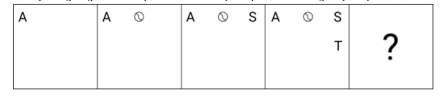
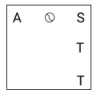
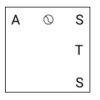
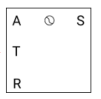
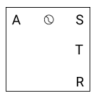
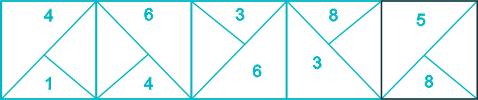
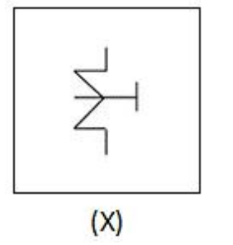
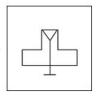
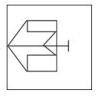
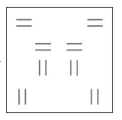
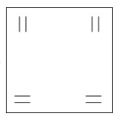
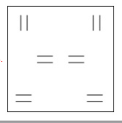
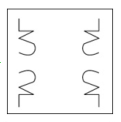
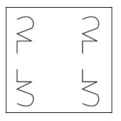
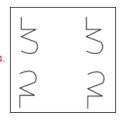
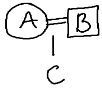
Q1 · Series
Answer aur solution dekho
Archived marked answer: A
SSC CGL · Tier 1 · Previous-year archive
91 questions available to read. Bina signup padho; timed practice ke liye free sign in karo.
This saved paper contains 93 of 100 expected questions. 2 stored records are excluded from this study page while their source or wording is checked. Missing original questions: 7. Local question numbers follow the saved archive; match the wording and choices when comparing another response sheet.
Archived marked answers and available solution notes are preserved. These are not claimed to be fully checked final SSC keys. How questions are checked.
Printable archive and coverage notes · Prepare this shift as a timed test
Archived marked answer: A

Archived marked answer: D

Archived marked answer: D
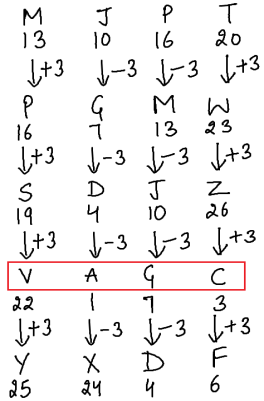
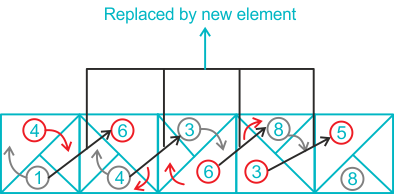
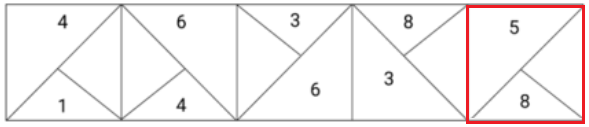
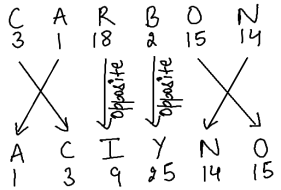
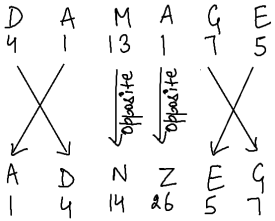
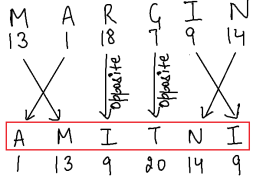
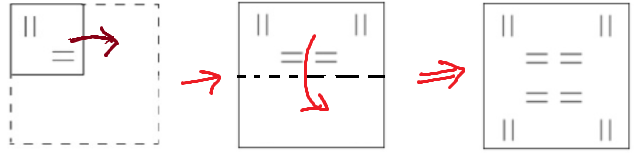
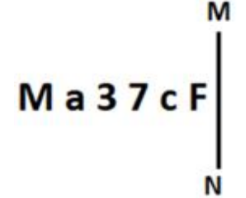
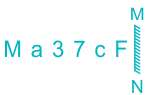
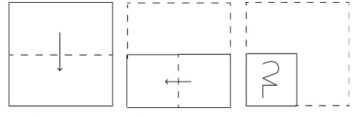
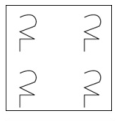
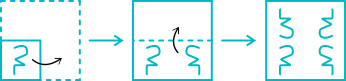
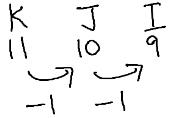
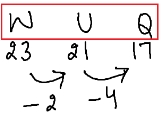
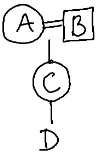
Thus, the final series is:
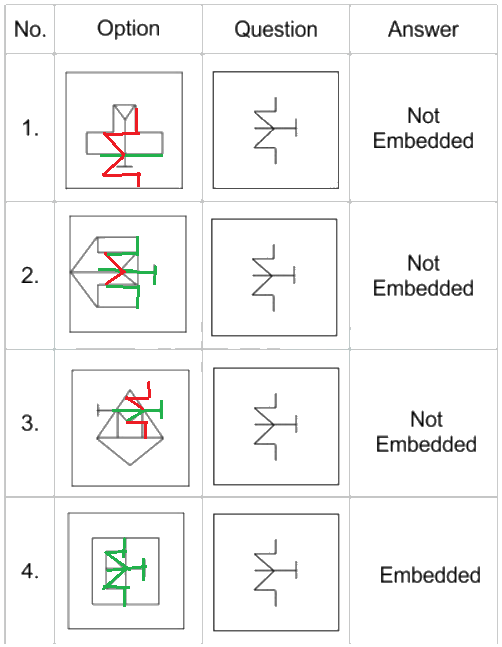
Hence, "Option 4" is the correct answer.Archived marked answer: A
Archived marked answer: B
Archived marked answer: A
Archived marked answer: D
Archived marked answer: A
Archived marked answer: C
Archived marked answer: A
Archived marked answer: C
Archived marked answer: B
Archived marked answer: A
Archived marked answer: C
Archived marked answer: D
Archived marked answer: B
Archived marked answer: D
Archived marked answer: A
Archived marked answer: D
Archived marked answer: C
Archived marked answer: A
Archived marked answer: B
Archived marked answer: C
Archived marked answer: B
Archived marked answer: A
Archived marked answer: C
Archived marked answer: D
Archived marked answer: C
Archived marked answer: D
Archived marked answer: B
Archived marked answer: D
Archived marked answer: C
Archived marked answer: B
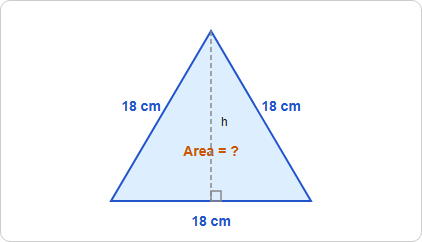
Calculations:
⇒ Area = (√3 ÷ 4) × (18)²
⇒ Area = (√3 ÷ 4) × 324
⇒ Area = 81√3 cm²
∴ The correct answer is 81√3 cm².
Additional Information
Altitude of an Equilateral Triangle
The height or altitude (h) bisects the base and divides the triangle into two equal right-angled triangles. Formula: h = (√3 ÷ 2) × a.
Inradius of an Equilateral Triangle
The radius (r) of the inscribed circle touches all three sides from the inside. Formula: r = a ÷ (2√3).
Circumradius of an Equilateral Triangle
The radius (R) of the circumscribed circle touches all three outer vertices. Formula: R = a ÷ √3.
</pArchived marked answer: A
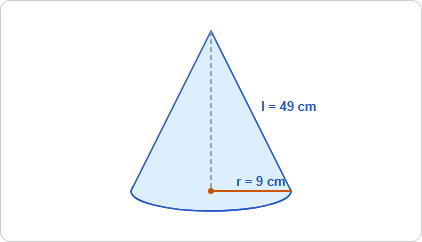
Given:
Radius of the base (r) = 9 cm
Slant height (l) = 49 cm
Formula Used:
Curved Surface Area (CSA) of a right circular cone = πrl
Calculations:
⇒ CSA = (22/7) × 9 × 49
⇒ CSA = 22 × 9 × 7
⇒ CSA = 198 × 7
⇒ CSA = 1386 cm²
∴ The correct answer is 1386 cm².
Additional Information
Total Surface Area of a Cone
The total surface area includes the curved surface area and the area of the circular base. Formula: TSA = πr(l + r).
Volume of a Cone
The volume represents the total capacity of the cone. Formula: V = (1/3)πr²h, where h is the perpendicular height of the cone.
Slant Height of a Cone
The slant height (l), radius (r), and height (h) form a right-angled triangle. Formula: l = √(r² + h²).
</pArchived marked answer: C
Archived marked answer: B
Calculations:
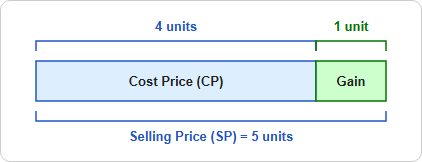
⇒ Gain = (1 ÷ 5) × 71785 = ₹14357
⇒ CP = 71785 − 14357 = ₹57428
⇒ Gain % = (14357 ÷ 57428) × 100
⇒ Gain % = (1 ÷ 4) × 100 = 25%
∴ The correct answer is 25%.
Additional Information
Base of Profit/Loss Calculation
Profit and Loss percentages are always calculated on the Cost Price (CP) unless specifically stated to be calculated on the Selling Price.
Marked Price & Discount
Discount is always offered on the Marked Price (MP). Formula: Selling Price = Marked Price × (100 − Discount%) ÷ 100.
Successive Discount
If two successive discounts of x% and y% are given, the effective single discount is (x + y − xy ÷ 100)%.
d4:TArchived marked answer: C
Formula Used:
Selling Price = MP × (1 − D₁/100) × (1 − D₂/100)
Calculations:
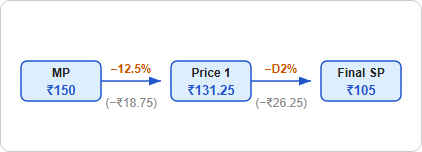
⇒ Price after first discount = 150 − (12.5% of 150)
⇒ 12.5% in fraction = 1/8, so discount amount = 1/8 × 150 = ₹18.75
⇒ Price after first discount = 150 − 18.75 = ₹131.25
⇒ The second discount is given on ₹131.25 to make the final SP ₹105.
⇒ Value of second discount = 131.25 − 105 = ₹26.25
⇒ Second discount percentage = (26.25 / 131.25) × 100
⇒ D₂ = (1 / 5) × 100 = 20%
∴ The correct answer is 20%.
Additional Information
Equivalent Single Discount
For two successive discounts of a% and b%, the equivalent single discount is given by the formula: [a + b − (a × b) / 100]%.
Marked Price vs Cost Price
The direct relationship between Marked Price (MP) and Cost Price (CP) when profit and discount are given is: MP / CP = (100 + Profit%) / (100 − Discount%).
Buy X Get Y Free
When Y items are given free on the purchase of X items, the discount percentage is calculated on total items: Discount% = [Y / (X + Y)] × 100.
<Archived marked answer: B
Archived marked answer: C
Archived marked answer: D
Formula Used:
Relative Speed (Opposite Direction) = Speed of A + Speed of B
Time taken to meet = Distance ÷ Relative Speed
1 km/h = 5/18 m/s
Calculations:
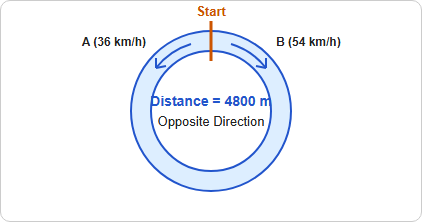
⇒ Speed of A in m/s = 36 × (5/18) = 10 m/s
⇒ Speed of B in m/s = 54 × (5/18) = 15 m/s
⇒ Relative Speed = 10 + 15 = 25 m/s
⇒ Time to meet = Total Distance ÷ Relative Speed
⇒ Time = 4800 ÷ 25
⇒ Time = 192 seconds
∴ The correct answer is 192 second.
Additional Information
Meeting for the first time anywhere on the track
Time = Length of track ÷ Relative Speed. The relative speed is the sum of their speeds if moving in opposite directions, and difference of their speeds if moving in the same direction.
Meeting for the first time at the starting point
Time = LCM of individual times taken to complete one full round (LCM of T₁, T₂, ...). This applies irrespective of the direction of motion.
Speed Unit Conversion
To convert km/h to m/s directly, multiply the given speed by 5/18. Conversely, to convert m/s to km/h, multiply by 18/5.
</p
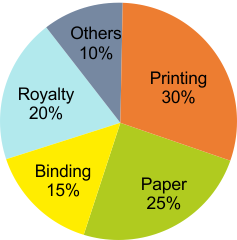
Given that marked price of a book is ₹270, what is the cost of paper to publish a single copy of the book if the marked price of a book is 20% more than its cost price?Archived marked answer: B
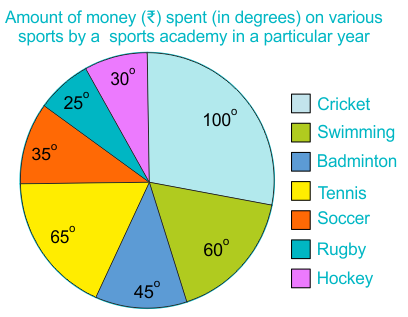
If ₹42,000 were spent on Soccer, then the money spent on Badminton, Tennis and Rugby taken together is what percentage (rounded off to 2 decimal places) more/less than the money spent on Cricket, Swimming and Hockey taken together?Archived marked answer: D
Archived marked answer: D
Archived marked answer: A
Calculations:
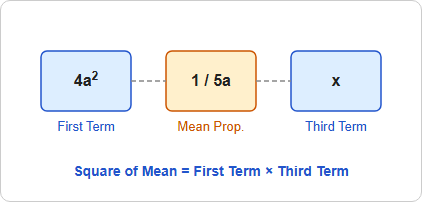
⇒ 1 / (5a) = √(4a² × x)
⇒ Squaring both sides, we get:
⇒ [1 / (5a)]² = 4a² × x
⇒ 1 / (25a²) = 4a² × x
⇒ x = 1 / (25a² × 4a²)
⇒ x = 1 / (100a⁴)
∴ The correct answer is 1 / (100a⁴).
Additional Information
Mean Proportional
For two given numbers a and b, the mean proportional x is calculated as x = √(a × b). It serves as the geometric mean between the two values in a continued proportion.
Third Proportional
For two numbers a and b, the third proportional c satisfies the continued proportion a : b :: b : c. It is calculated directly using the formula c = b² / a.
Fourth Proportional
For three distinct numbers a, b, and c, the fourth proportional d completes the standard proportion a : b :: c : d, yielding the formula d = (b × c) / a.
Compound Ratio
When two or more distinct ratios are multiplied together term by term (for example, a:b and c:d merge into ac:bd), the resulting combined ratio is known as a compound ratio.
</pArchived marked answer: A
Calculations:
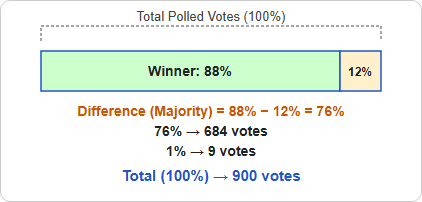
⇒ Let the total number of polled votes be x.
⇒ Votes secured by the winning candidate = 0.88x
⇒ Votes secured by the losing candidate = x − 0.88x = 0.12x
⇒ Difference in their votes (Majority) = 0.88x − 0.12x = 0.76x
⇒ According to the problem, the majority is 684 votes.
⇒ 0.76x = 684
⇒ x = 684 ÷ 0.76
⇒ x = (684 × 100) ÷ 76
⇒ x = 9 × 100
⇒ x = 900
∴ The correct answer is 900 votes.
Additional Information
Valid and Invalid Votes
If some votes are declared invalid, then Valid Votes = Total Votes − Invalid Votes. The percentages of the winner and loser are typically calculated based on valid votes, unless specified otherwise.
Multiple Candidates Election
When there are more than two candidates, the majority is calculated as the difference between the votes of the winner and the runner-up (the candidate with the second-highest votes).
Percentage Base Method
Finding the total quantity when a part is given is a direct application of base percentage. Total Value = Given Value ÷ Percentage Fraction.Archived marked answer: A
Archived marked answer: A
Calculations:
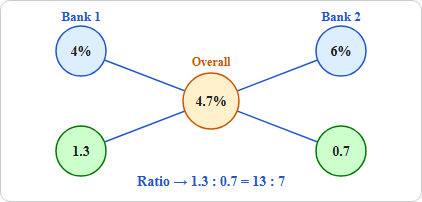
⇒ Total interest earned at 4.7% = (2,00,000 × 4.7 × 1) ÷ 100 = ₹9,400
⇒ Let the principal invested in Bank 1 be ₹x. Thus, the principal in Bank 2 will be ₹(2,00,000 − x).
⇒ Total Interest = Interest from Bank 1 + Interest from Bank 2
⇒ [(x × 4 × 1) ÷ 100] + [((2,00,000 − x) × 6 × 1) ÷ 100] = 9400
⇒ 4x + 12,00,000 − 6x = 9,40,000
⇒ 2x = 12,00,000 − 9,40,000
⇒ 2x = 2,60,000
⇒ x = ₹1,30,000
⇒ Investment in Bank 2 = 2,00,000 − 1,30,000 = ₹70,000
∴ The correct answer is ₹1,30,000 and ₹70,000.
Additional Information
Mixtures and Alligations
It is an analytical method used to find the ratio in which two quantities must be mixed to obtain a desired average value. Rule: (Quantity of Cheaper) ÷ (Quantity of Dearer) = (Price of Dearer − Average Price) ÷ (Average Price − Price of Cheaper).
Simple Interest (SI)
It is the interest calculated only on the original principal amount. The principal remains constant throughout the tenure. Formula: SI = (P × R × T) ÷ 100.
Overall / Effective Interest Rate
When multiple investments are made at different interest rates, the overall interest rate is the weighted average of the individual rates based on the amount of capital invested in each scheme.Archived marked answer: A
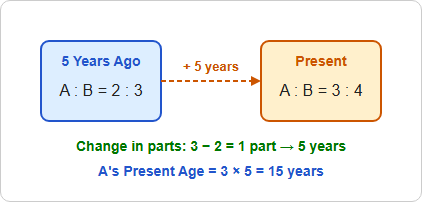
Calculations:
⇒ Let the present ages of A and B be 3x and 4x respectively.
⇒ 5 years ago, age of A = 3x − 5
⇒ 5 years ago, age of B = 4x − 5
⇒ According to the question, the ratio 5 years ago was 2 : 3.
⇒ (3x − 5) / (4x − 5) = 2 / 3
⇒ By cross-multiplying, we get:
⇒ 3 × (3x − 5) = 2 × (4x − 5)
⇒ 9x − 15 = 8x − 10
⇒ 9x − 8x = 15 − 10
⇒ x = 5
⇒ Present age of A = 3x = 3 × 5 = 15 years.
∴ The correct answer is 15 years.
Additional Information
Constant Age Difference
The absolute difference between the ages of two persons remains constant throughout their lifetime. If A is 5 years older than B today, A will always be 5 years older than B, regardless of past or future scenarios.
Equalising Ratios for Age Problems
If the difference in the ratio parts of ages across two time periods is not equal for both persons, you can make them equal by multiplying the first ratio by the numerical difference of the second ratio, and vice versa.
Cross-Multiplication Method
For an initial ratio a:b, if both quantities change by exactly the same amount 'x' to form a new ratio c:d, then 1 unit part of the original ratio is given by x(c − d) ÷ (ad − bc).
</pArchived marked answer: D
Archived marked answer: B
Archived marked answer: A
Archived marked answer: D
Archived marked answer: C
Archived marked answer: A
Archived marked answer: C
Archived marked answer: D
Archived marked answer: B
Archived marked answer: A
Archived marked answer: C
Archived marked answer: A
Archived marked answer: D
Archived marked answer: C
Archived marked answer: B