93 questions available to read. Bina signup padho; timed practice ke liye free sign in karo.
Archive coverageThis saved paper contains 93 of 100 expected questions. 0 stored records are excluded from this study page while their source or wording is checked. Missing original questions: 7. Local question numbers follow the saved archive; match the wording and choices when comparing another response sheet.
Archived marked answers and available solution notes are preserved. These are not claimed to be fully checked final SSC keys. How questions are checked.
Reasoning
Q1 · Series
Which of the following letter-clusters will replace the question mark (?) in the given series to make it logically complete?
WIX, VHW, UGV, TFU, ?
- TEU
- SEU
- SET
- SFT
Answer aur solution dekho
Archived marked answer: C
The logic followed here is:
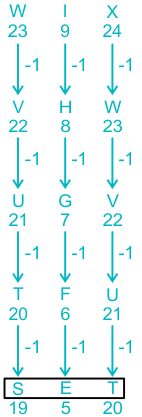 Hence, "Option 3" is the correct answer.
Q2 · Series
Select the option that represents the letters that when placed from left to right in the blanks below will complete the letter series.
_ Y Z K X K X _ Z K X _ X Y _ K X K X Y Z _ X K X Y
- XYZKK
- XYKZK
- KXYKZ
- KYXZK
Answer aur solution dekho
Archived marked answer: B
Given series: _ Y Z K X K X _ Z K X _ X Y _ K X K X Y Z _ X K X Y
Option 1) XYZKK → X Y Z K X K X Y Z K X Z X Y K K X K X Y Z K X K X Y → (It doesn't follow any patte
Q3 · Series
Identify the figure given in the options which when put in place of ? will logically complete the series.





Answer aur solution dekho
Archived marked answer: A
The logic followed here is:
1) First box series →
The elements shift anticlockwise subsequently.
The top left corner element is replaced by new element.
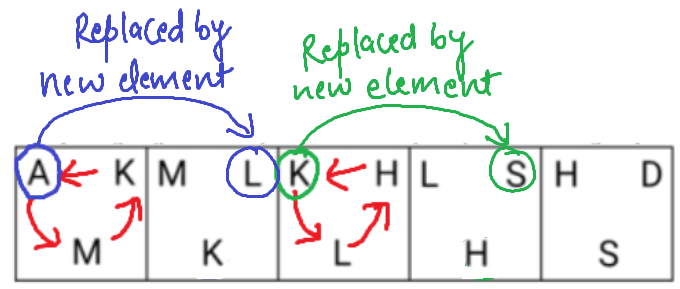
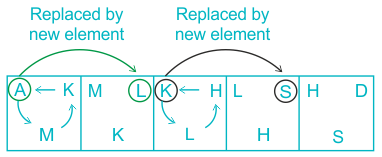 2) Second box series →
The elements shift clockwise subsequently.
The top left corner element is replaced by new element.
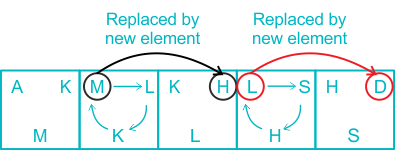 Thus, the final series is:
 Hence, "Option 1" is the correct answer.
Q4 · Series
Identify the figure given in the options, which when put in place of the question mark (?) will logically complete the series.

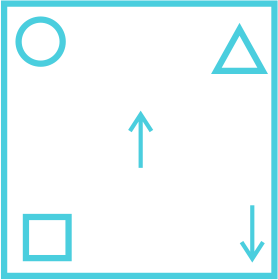
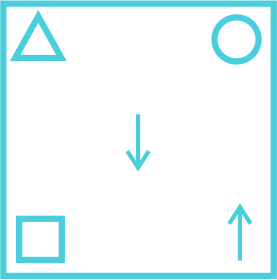
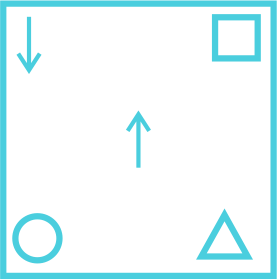
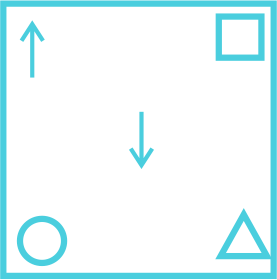
Answer aur solution dekho
Archived marked answer: D
The logic followed here is:
1) First box series →
The left diagonal elements shift anticlockwise subsequently.
No change in the rest of the elements.
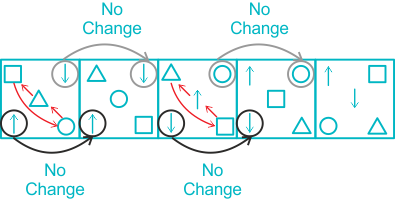 2) Second box series →
The right diagonal elements shift clockwise subsequently.
No change in the rest of the elements.
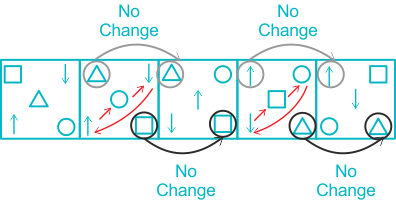 Thus, the final series is:
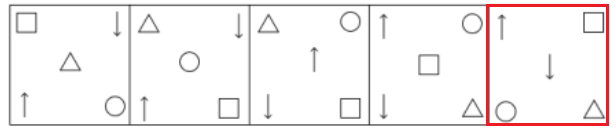
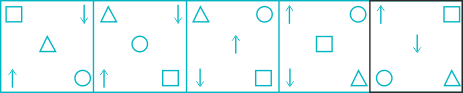 Hence, "Option 4" is the correct answer.
Q5 · Series
Select the number from among the given options that can replace the question mark (?) in the following series.
300, 152, 80, 48, 40, 52, ?
- 60
- 80
- 90
- 100
Answer aur solution dekho
Archived marked answer: C
The logic followed here is:
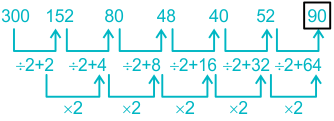 Hence, "Option 3" is the correct answer.
Q6 · Analogy
Select the option that is related to the fifth letter-cluster in the same way as the second letter-cluster is related to the first letter-cluster and the fourth letter-cluster is related to the third letter-cluster.
JAP: BSH :: NDZ: FVR ::LCX:?
- EVP
- DUP
- DVP
- EUP
Answer aur solution dekho
Archived marked answer: B
The logic followed here is:
JAP: BSH
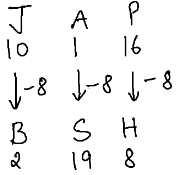 And,
NDZ: FVR
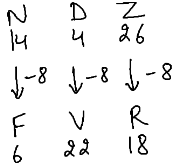 Similarly,
LCX:?
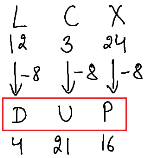 Hence, "Option 2" is the correct answer.
Q7 · Analogy
Select the set in which the numbers are related in the same way as are the numbers of the following set.
3 — 20 — 7
5 — 26 — 8
NOTE: Operations should be performed on the whole numbers, without breaking down the numbers into its constituent
digits. E.g. 13 – Operations on 13 such as adding/subtracting/multiplying etc. to 13 can be performed. Breaking down 13 into
1 and 3 and then performing mathematical operations on 1 and 3 is not allowed)
- 18 — 70 — 6
- 5 — 20 — 8
- 8 — 28 — 6
- 17 — 20 — 13
Answer aur solution dekho
Archived marked answer: C
The logic followed here is:
Logic: (1st number + 3rd number) × 2 = 2nd number.
Now,
For, 3 — 20 — 7
⇒ (3 + 7) × 2
⇒ 10 × 2 = 20.
Q8 · Analogy
Select the set in which the numbers are related in the same way as are the numbers of the following sets.
(NOTE : Operations should be performed on the whole numbers, without breaking down the numbers into its constituent
digits. E.g. 13 – Operations on 13 such as adding /deleting /multiplying etc., to 13 can be performed. Breaking down 13 into 1
and 3 and then performing mathematical operations on 1 and 3 is not allowed.)
(5, 80, 16)
(18, 108, 6)
- (15, 185, 14)
- (13, 91, 7)
- (17, 8, 135)
- (9, 81, 8)
Answer aur solution dekho
Archived marked answer: B
The logic followed here is:
Logic: 1st number × 3rd number = 2nd number.
Now,
For (5, 80, 16):
⇒ 5 × 16 = 80.
(18, 108, 6)
⇒ 18 × 6 = 108.
Similarly, for (13, 91, 7)
⇒ 13 × 7 = 91.
Hence, the correct answer is "Option 2".
Q9 · Analogy
51 is related to 256 by certain logic. Following the same logic, 53 is related to 266. To which of the following is 55 related,
following the same logic? (NOTE : Operations should be performed on the whole numbers, without breaking down the
numbers into its constituent digits. E.g. 13 – Operations on 13 such as adding /deleting /multiplying etc., to 13 can be
performed. Breaking down 13 into 1 and 3 and then performing mathematical operations on 1 and 3 is not allowed.)
- 276
- 290
- 249
- 213
Answer aur solution dekho
Archived marked answer: A
The logic followed here is:
Logic: (1st number × 5) + 1 = 2nd number.
Now,
For, 51 : 256
⇒ (51 × 5) + 1
⇒ 255 + 1 = 256.
For, 53 : 266
⇒ (53 × 5) + 1
⇒ 265 + 1 = 266.
Similarly, for 55 ∶ ?
⇒ (55 × 5) + 1
⇒ 275 + 1 = 276.
Hence, the correct answer is "Option 1".
Q10 · Analogy
Select the option that is related to the third word in the same way as the second word is related to the first word.(The words must be considered as meaningful English words and must not be related to each other based on the number of letters/number of consonants/vowels in the word)
Sugar : Sweet :: Habanero : ?
- Salty
- Bitter
- Sour
- Spicy
Answer aur solution dekho
Archived marked answer: D
The logic followed here is:
Logic: Taste association.
Here,
Sugar : Sweet → Sugar is associated with Sweet taste.
Similarly,
Habanero : Spicy → Habanero is associated with Spicy taste.
Hence, the correct answer is "Option 4".
Q11 · Non Verbal Reasoning
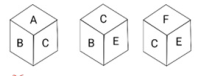
Six letters A, B, C, D, E and F are written on different faces of a dice. Three positions of this dice are shown in the figure. Find the letter on the face opposite to A.
- C
- D
- E
- F
Answer aur solution dekho
Archived marked answer: C
The logic followed here is :-
From the given three different dices the adjacent sides are as shown below :
As C is common on both the dices I and III, it is clear that A, B, F, and E are adjacent to it, and the remaining i.e. D will be opposite to it.
Q12 · Non Verbal Reasoning
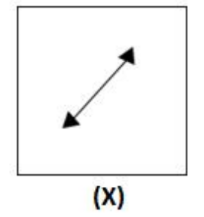
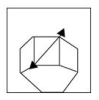
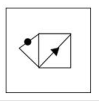
Select the option figure in which the given figure (X) is embedded (rotation is NOT allowed).


Answer aur solution dekho
Archived marked answer: A
The image embedded in the given figure is as shown below :
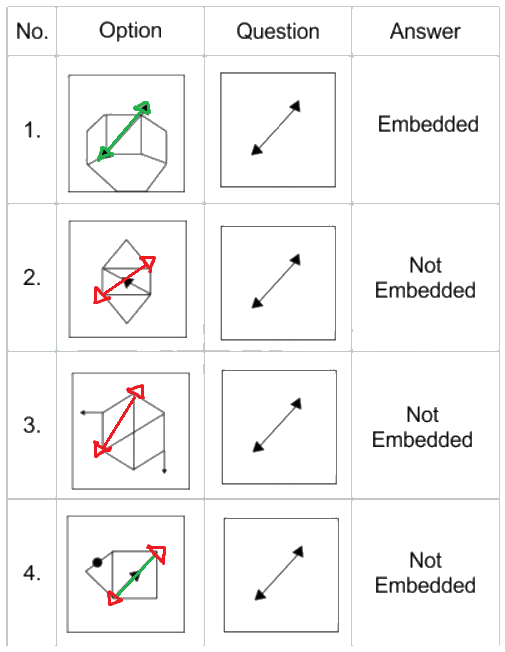 ∴ Here, given figure is embedded in the option figure 1.
Hence, the correct answer is "Option 1".
Q13 · Non Verbal Reasoning
How many triangles are there in the figure shown below?
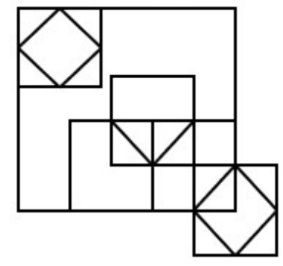
- 12
- 14
- 9
- 11
Answer aur solution dekho
Archived marked answer: B
The number of triangles in the given figure is shown below:
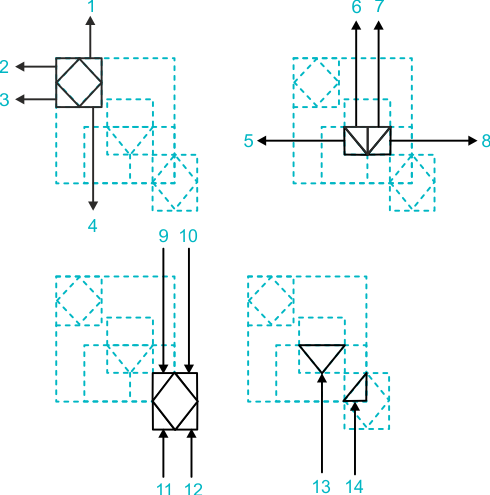 Thus, as marked there are a total of 14 triangles.
Hence, "Option 2" is the correct answer.
Q14 · Non Verbal Reasoning
Select the correct mirror image of the given figure when the mirror is placed at MN as shown.



Answer aur solution dekho
Archived marked answer: D
The correct mirror image of the given figure is:
 Hence, the correct answer is "Option 4".
Q15 · Non Verbal Reasoning
A square sheet of paper is folded along the dotted line successively along the directions shown and is then punched in the last as shown. How would the paper look when unfolded?
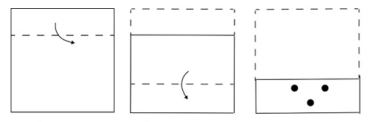
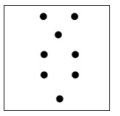
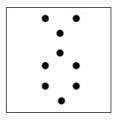
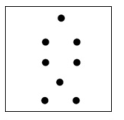
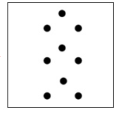
Answer aur solution dekho
Archived marked answer: B
The figure which will look like the paper when unfolded is shown below:
 Thus, option Figure 2 will look like the paper when unfolded.
Hence, "Option 2" is the correct answer.
Q16 · Puzzle Subtypes Not To Miss
What will come in place of the question mark (?) in the following equation, if '+' and '−' are interchanged and '×' and '÷' are interchanged?
1064 × 2 − 653 ÷ 2 + 89 = ?
- 1974
- 1749
- 1947
- 1497
Answer aur solution dekho
Archived marked answer: B
Given: 1064 × 2 − 653 ÷ 2 + 89 = ?480÷0.3×5+500190+9×27÷1.6=2" id="MathJax-Element-9-Frame" role="presentation" style="display: inline; position: relative;" tabindex="0">480÷0.3×5+500190+9×27÷1.6=2" id="MathJax-Element-2-Frame" role="presentation" style=" position: relative;" tabindex="0">480÷0.3×5+500190+9×27÷1.6=2480÷0.3×5+500190+9×27÷1.6=2
According to the question, after '+' and '−' are interchanged and '×' and '÷' are interchanged:
1064 × 2 − 653 ÷ 2 + 89 = ? ⇒ 1064 ÷ 2 + 653 × 2 − 89 = ?
⇒ 1064 ÷____ 2 + 653 × 2 − 89 = ?
⇒ 532 + 653 __×__ 2 − 89 = ?
⇒ 53____2 + 1306 − 89 = ?
⇒ 1838__ −__ 89 = ?
⇒ 1749 = ?
Hence, "Option 2" is the correct answer.
Q17 · Puzzle Subtypes Not To Miss
What will come in the place of '?' in the following equation, if '÷' and '–' are interchanged and '×' and '+' are interchanged?
37 ÷ 56 – 7 × 2 + 6 = ?
- 41
- 55
- 37
- 47
Answer aur solution dekho
Archived marked answer: A
Given: 37 ÷ 56 – 7 × 2 + 6 = ?480÷0.3×5+500190+9×27÷1.6=2" id="MathJax-Element-9-Frame" role="presentation" style="display: inline; position: relative;" tabindex="0">480÷0.3×5+500190+9×27÷1.6=2" id="MathJax-Element-2-Frame" role="presentation" style=" position: relative;" tabindex="0">480÷0.3×5+500190+9×27÷1.6=2480÷0.3×5+500190+9×27÷1.6=2
According to the question, after '÷' and '–' are interchanged and '×' and '+' are interchanged:
37 ÷ 56 – 7 × 2 + 6 = ? ⇒ 37 – 56 ÷ 7 + 2 × 6 = ?
⇒ 37 – 56 __÷__ 7 + 2 × 6 = ?
⇒ 37 – 8 + 2 __×__ 6 = ?
⇒ 37 + 12 – 8 = ?
⇒ 49 ____– 8 = ?
⇒ 41 = ?
Hence, "Option 1" is the correct answer.
Q18 · Coding Decoding
In a certain code language, 'TABU' is written as 'SBAV' and 'TANK' is written as 'SBML.' How will 'TAIL' be written in that language?
- SMBH
- SMHB
- SBHM
- SBMH
Answer aur solution dekho
Archived marked answer: C
The logic followed here is:
'TABU' is written as 'SBAV'
Q19 · Coding Decoding
In a certain code language, ‘she is girl’ is coded as ‘7 3 9’; ‘he is boy’ is coded as ‘9 6 5’ and ‘girl is tall’ is coded as ‘9 3 8’. How is ‘she’ coded in that language?
- 7
- 3
- 8
- 9
Answer aur solution dekho
Archived marked answer: A
According to the given information,
Q20 · Coding Decoding
In a certain code language, 'DRIVE' is coded as '62749' and 'RIDES' is coded as '76284'. What is the code for 'V' in that language?
- 8
- 7
- 9
- 6
Answer aur solution dekho
Archived marked answer: C
The logic followed here is:
'DRIVE' is coded as '62749'
Q21 · Classification Odd One Out
Three of the following numbers are alike in a certain way and one is different. Pick the odd one out.
(NOTE : Operations should be performed on the whole numbers, without breaking down the numbers into its constituent
digits. E.g. 13 – Operations on 13 such as adding /deleting /multiplying etc., to 13 can be performed. Breaking down 13 into 1
and 3 and then performing mathematical operations on 1 and 3 is not allowed.)
- 16 – 9 – 139
- 25 – 7 – 175
- 12 – 7 – 79
- 17 – 5 – 80
Answer aur solution dekho
Archived marked answer: B
The logic followed here is:
So, checking each option one by one:
Option 1) 16 – 9 – 139
16 × 9 - 5 = 139
144 - 5 = 139
139 = 139 (LHS = RHS)
Option 2) 25 – 7 – 175
25 × 7 - 5 = 175
175 - 5 = 175
170 ≠ 175 (LHS ≠ RHS)
Option 3) 12 – 7 – 79
12 × 7 - 5 = 79
84 - 5 = 79
79 = 79 (LHS = RHS)
Option 4) 17 – 5 – 80
17 × 5 - 5 = 80
85 - 5 = 80
80 = 80 (LHS = RHS)
Thus, out of all the options '25 – 7 – 175' is the odd one out.
Hence, "Option 2" is the correct answer.
Q22 · Classification Odd One Out
The question contains pairs of words that are related to each other in a certain way. Three of the following four word pairs are alike as these have the same relationship and thus form a group. Which word pair is the one that DOES NOT belong to that group?
(The words must be considered as meaningful English words and must not be related to each other based on the number of letters/number of consonants/vowels in the word.)
- Tired - exhausted
- Loud - noisy
- Close - open
- Honest - truthful
Answer aur solution dekho
Archived marked answer: C
The logic followed here is:
Option 1) Tired - exhausted ⇒ Correct
Tired is a synonym of exhausted.
Option 2) Loud - noisy ⇒ Correct
Loud is a synonym of </spa
Q23 · Logical Reasoning
Three statements are given, followed by three conclusions numbered I, II and III. Assuming the statements to be true, even if they seem to be at variance with commonly known facts, decide which of the conclusions logically follow(s) from the statements.
Statements:
Some pineapples are oranges.
All oranges are bananas.
All bananas are plums.
Conclusions:
I. Some pineapples are plums.
II. All oranges are plums.
III. No pineapple is a banana.
- Only conclusions I and III follow
- Only conclusions I and II follow
- Only conclusion III follows
- Only conclusions II and III follow
Answer aur solution dekho
Archived marked answer: B
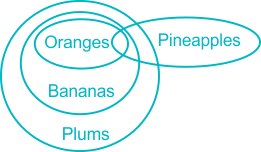
The least possible Venn diagram for the given statements is as shown below :
 Conclusions:
I. Some pineapples are plums → Follow (As some pineapples are oranges, all oranges are bananas and all bananas are plums. As whole oranges comes in bananas which whole comes in plums and some part of pineapples is common with oranges, therefore it is true.)
II. All oranges are plums → Follow (As all oranges are bananas and all bananas are plums. As whole oranges comes in bananas which whole comes in plums, therefore it is true.)
III. No pineapple is a banana → Does not follow (As some pineapples are oranges and all oranges are bananas. No direct relation is given between pineapples and bananas.
∴ Here, Only conclusions I and II follow.
Hence, the correct answer is "Option 2".
Q24 · Blood Relations
In a certain code language,
‘A + B’ means ‘A is the mother of B’;
‘A − B’ means ‘A is the brother of B’;
‘A × B’ means ‘A is the wife of B’ and
‘A ÷ B’ means ‘A is the father of B’.
Based on the above, how is S related to P if ‘P × Q ÷ R − S × A’?
- Mother
- Daughter
- Son
- Father
Answer aur solution dekho
Archived marked answer: B
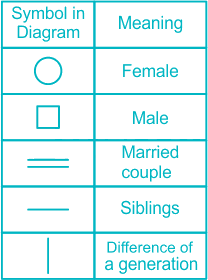 Decoding symbols:
A is
Symbol
+
–
×
÷
Meaning
Mother
Brother
Wife
Father
to B
Given: P × Q ÷ R − S × A
P × Q → P is the wife of Q.
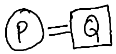 Q ÷ R → Q is the father of R.
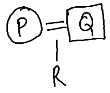 R − S → R is the brother of S.
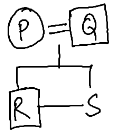 S × A → S is the wife of A.
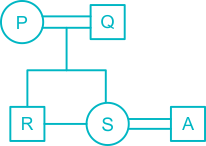 Thus, S is P's daughter.
Hence, the correct answer is "Option 2".
Q25 · Alphabet Test
The position of how many letters will remain unchanged if all the letters in the word MENTOR are arranged in English alphabetical order?
- Two
- One
- None
- Three
Answer aur solution dekho
Archived marked answer: B
Given word: 'MENTOR'
After arranged in alphabetical order:
Alphabets
M
E
N
T
O</td
General Awareness
Q1 · Art and Culture
Who among the following is/was a famous sitarist?
- Ravi Shankar
- Ustad Bismillah Khan
- Pandit Bhimsen Joshi
- Zakir Hussain
Answer aur solution dekho
Archived marked answer: A
The correct answer is Ravi Shankar.
Key Points
- Ravi Shankar was an Indian sitar virtuoso and a composer of Hindustani classical music.
- He was the best-known proponent of the sitar in the second half of the 20th century and influenced many musicians worldwide.
- Ravi Shankar collaborated with many international artists, including George Harrison of The Beatles, which helped to popularize Indian classical music in the West.
- He received numerous awards and honors
Q2 · Art and Culture
Three Poets Pampa, Ponna and Ranna are called as the 'Three Jewels' of:
- Kannada Literature
- Telugu Literature
- Tamil Literature
- Sanskrit Literature
Answer aur solution dekho
Archived marked answer: A
The correct answer is Kannada Literature.
Key Points
- Pampa, Ponna, and Ranna are renowned as the ‘Three Jewels’ (Ratnatraya) of Kannada literature.
- These poets made significant contributions during the period of Kannada classical literature which is also known as the Old Kannada period.
- Pampa is celebrated for his epic works like ‘Adi Purana’ and ‘Vikramarjuna Vijaya’.
- Ranna is known for his famous work ‘Sahasa Bhima Vijaya’ or ‘Gadayuddha’.
Additional Information
- Pampa
- Pampa, also known as Adikavi, is one of the earliest poets of Kannada literature.
- His significant works include ‘Adi Purana’, which narrates the story of the first Jain Tirthankara Rishabhadeva, and ‘Vikramarjuna Vijaya’, which is a Jain version of the Mahabharata.
- Ponna
- Ponna was another celebrated Kannada poet and a contemporary of Pampa.
- He is known for his work ‘Shanti Purana’ which is a Jain epic that narrates the life of Shantinatha, the 16th Tirthankara.
- Ranna
- Ranna is considered one of the greatest Kannada poets.
- His notable work ‘Gadayuddha’ (The Battle of Clubs) is a retelling of the Mahabharata focusing on the duel between Bhima and Duryodhana.
- Kannada Literature
- Kannada literature has a rich heritage dating back over a thousand years.
- It includes a wide range of texts in poetry, prose, and drama, and is known for its classical and medieval works.
- The period of the ‘Three Jewels’ is particularly significant in the history of Kannada literature, often regarded as its golden age.
Q3 · Indian Polity and Constitution
Part IV A of the Indian Constitution was inserted in the Indian Constitution through __________ Constitutional Amendment Act.
- 44th
- 45th
- 48th
- 42nd
Answer aur solution dekho
Archived marked answer: D
The correct answer is 42nd Constitutional Amendment Act.
Key Points
- The 42nd Amendment Act, also known as the Constitution (Forty-second Amendment) Act, 1976, was enacted during the Emergency period in India.
- It is considered one of the most comprehensive amendments to the Indian Constitution and was brought in by the Indira Gandhi government.
- This amendment made significant changes to the Constitution, including the insertion of Part IV A, which deals with the Fundamental Duties of the citizens.
- The 42nd Amendment also attempted to reduce the power of the judiciary and increase the power of the Parliament.
Additional Information
- Part IV A (Fundamental Duties)
- Part IV A was added to the Constitution of India by the 42nd Amendment Act, 1976.
- It consists of Article 51A which enumerates the Fundamental Duties of the citizens of India.
- These duties are inspired by the Constitution of the former Soviet Union and aim to remind the citizens of their moral obligations towards the nation.
- There are currently 11 Fundamental Duties listed in Article 51A.
- 42nd Amendment Act, 1976
- Known as a "mini-Constitution" due to its wide-ranging amendments.
- It made extensive changes to the Preamble, Fundamental Rights, Directive Principles, and the structure of the executive and judiciary.
- This amendment curtailed the power of the judiciary and strengthened the central government.
- Many of the provisions of this amendment were later undone by the 44th Amendment Act, 1978.
- Emergency Period
- The Emergency in India was declared by President Fakhruddin Ali Ahmed upon the advice of Prime Minister Indira Gandhi from 1975 to 1977.
- This period is considered one of the most controversial times in Indian political history, marked by the suspension of elections and civil liberties.
- The 42nd Amendment was passed during this period, and it significantly altered the balance of power between the executive, legislature, and judiciary.
Q4 · Indian Polity and Constitution
The ______ of every state unfurls the flag in its capital on the Republic Day.
- Judge of High Court
- Chief Minister
- Governor
- Speaker
Answer aur solution dekho
Archived marked answer: C
The correct answer is Governor.
Key Points
- The Governor is the constitutional head of a state in India, appointed by the President of India.
- On Republic Day, the Governor unfurls the national flag at the state capital as part of the official celebration.
- The Governor's role is to represent the central government in the state and act according to the advice of the state's Council of Ministers.
- The Governor has various powers and functions including legislative, executive, and discretionary powers as outlined in the Constitution of India.
Additional Information
- Republic Day
- Republic Day in India is celebrated on January 26th every year to honor the date on which the Constitution of India came into effect in 1950.
- It marks the transition of India from a British Dominion to a republic.
- The day is celebrated with grand parades in the national capital, New Delhi, and state capitals, showcasing India's defense capability, cultural and social heritage.
- Role of the Governor
- The Governor is the nominal executive head of the state, functioning as a representative of the President of India.
- The Governor's powers and duties include summoning and proroguing the state legislature, granting pardons, and appointing the Chief Minister.
- Governors can also reserve bills passed by the state legislature for the President's consideration.
- Chief Minister
- The Chief Minister is the head of the government in a state and is responsible for running the state administration.
- They are appointed by the Governor and are usually the leader of the majority party in the state legislature.
- The Chief Minister advises the Governor on various matters related to the state's governance.
Q5 · Indian Polity and Constitution
The Upper House of a State Legislature is known as the _________.
- Vidhan Parishad
- Rajya Sabha
- Lok Sabha
- Vidhan Sabha
Answer aur solution dekho
Archived marked answer: A
The correct answer is Vidhan Parishad.
Key Points
- The Vidhan Parishad is the Upper House of the State Legislature in India.
- It is similar to the Rajya Sabha, which is the Upper House of the Parliament of India.
- Not all states in India have a Vidhan Parishad; it exists only in a few states like Uttar Pradesh, Bihar, Karnataka, Maharashtra, Andhra Pradesh, and Telangana.
- Members of the Vidhan Parishad are not directly elected by the public; they are elected by members of the Legislative Assembly, graduates, teachers, and local authority members.
Additional Information
- Rajya Sabha
- The Rajya Sabha is the Upper House of the Parliament of India.
- It represents the states and union territories of India.
- Members of the Rajya Sabha are elected by the elected members of the State Legislative Assemblies, and by the members of the Electoral college for Union Territories, using a single transferable vote system.
- The Rajya Sabha is a permanent body and is not subject to dissolution, but one-third of its members retire every two years.
- Lok Sabha
- The Lok Sabha is the Lower House of the Parliament of India.
- Members of the Lok Sabha are directly elected by the people of India through general elections held every five years.
- The Lok Sabha is also known as the House of the People.
- It plays a crucial role in the law-making process in India.
- Vidhan Sabha
- The Vidhan Sabha is the Lower House of the State Legislature in India.
- Members of the Vidhan Sabha are directly elected by the people of the respective states through general elections held every five years.
- The Vidhan Sabha is also known as the Legislative Assembly.
- It is responsible for making laws on matters listed in the State List and Concurrent List in the Seventh Schedule of the Indian Constitution.
Q6 · Indian Economy
Harrod Domar model was the main idea behind the ________ Five Year Plan.
- Third
- First
- Second
- Fourth
Answer aur solution dekho
Archived marked answer: B
The correct answer is First.
Key Points
- The Harrod-Domar model was the foundation for the First Five Year Plan of India.
- This plan was implemented between 1951 and 1956.
- The model emphasizes the importance of savings and investments for economic growth.
- It was aimed at addressing the country's immediate need for development in agriculture, irrigation, and energy.
Additional Information
- Harrod-Domar Model:
- This model is an economic growth model that was developed independently by Sir Roy Harrod in 1939 and Evsey Domar in 1946.
- The model suggests that the economy's growth rate depends on the level of savings and the productivity of capital investment.
- The key equation of the Harrod-Domar model is: Growth Rate = Savings Ratio / Capital-Output Ratio.
- The model highlights the need for investment to spur economic growth and the importance of efficient use of capital.
- First Five Year Plan of India:
- Launched in 1951, the First Five Year Plan focused on the primary sector, especially agriculture.
- It aimed to increase food production, improve irrigation facilities, and develop transport and communication infrastructure.
- The plan was successful in achieving its targets and laid the foundation for future economic planning in India.
- It also emphasized the need for industrialization to create job opportunities and improve the standard of living.
- Importance of Savings and Investments:
- Savings provide the funds necessary for investment, which in turn leads to economic growth.
- Higher savings rates can lead to higher investment rates, which can enhance productive capacity and increase GDP.
- Efficient allocation and use of savings are crucial for maximizing the returns on investment.
- Government policies often aim to encourage savings and investments through various incentives and reforms.
- Development Goals of the First Plan:
- To increase agricultural production to ensure food security for the population.
- To develop irrigation facilities to support agriculture and manage water resources effectively.
- To build infrastructure such as roads, railways, and ports to facilitate trade and movement of goods.
- To address the immediate needs of the country in terms of employment and poverty alleviation.
Q7 · Indian Economy
Money supply is a ____ concept.
- stock
- measurable
- non-measurable
- flow
Answer aur solution dekho
Archived marked answer: A
The correct answer is stock.
Key Points
- Money supply is considered a stock concept because it represents the total amount of money available in an economy at a specific point in time.
- Unlike a flow concept, which is measured over a period of time, a stock concept is measured at one particular time.
- The money supply includes various components such as currency in circulation, demand deposits, and other liquid assets.
- Central banks and government agencies typically measure the money supply to monitor and manage the economy.
Additional Information
- Stock vs. Flow Concepts
- A stock concept is a quantity measured at a particular point in time. Examples include the money supply, wealth, and the number of goods in inventory.
- A flow concept is a quantity measured over a period of time. Examples include income, expenditure, and production.
- Components of Money Supply
- M1: This is the narrow measure of money supply, which includes currency in circulation and demand deposits (checking accounts).
- M2: This is a broader measure, which includes M1 plus savings accounts, small time deposits, and non-institutional money market funds.
- M3: This includes M2 plus large time deposits, institutional money market funds, and other larger liquid assets.
- Importance of Money Supply
- The money supply is a critical factor in determining inflation levels, interest rates, and overall economic stability.
- Central banks, such as the Federal Reserve or the Reserve Bank of India, use measures of the money supply to implement monetary policy.
- Changes in the money supply can affect the economy's performance, influencing everything from consumer spending to business investment.
Q8 · Sports Static GK
Which of the following states was the overall champion in both men and women categories in the first Janjatiya Khel Mahotsav?
- Maharashtra
- Chhattisgarh
- Jharkhand
- Odisha
Answer aur solution dekho
Archived marked answer: D
The correct answer is Odisha.
Key Points
- Odisha emerged as the overall champion in both men and women categories in the first Janjatiya Khel Mahotsav.
- The event saw participation from various states, but Odisha dominated in terms of overall performance.
- Odisha's athletes showcased exceptional talent and skills, leading to their top position.
- The state has been investing in sports infrastructure and athlete development, which is reflected in their performance.
Additional Information
- Janjatiya Khel Mahotsav
- The Janjatiya Khel Mahotsav is a national sports event organized to promote and encourage the participation of tribal communities in sports.
- This event aims to recognize and nurture the sporting talent in tribal areas, providing a platform for athletes to showcase their skills.
- The initiative is part of the government's efforts to promote sports among marginalized communities and ensure their inclusion in the national sports ecosystem.
- The event includes various sports competitions, workshops, and cultural programs to celebrate the heritage and talent of tribal communities.
- Sports Infrastructure in Odisha
- Odisha has been making significant strides in developing sports infrastructure, including the construction of world-class facilities and training centers.
- The state has hosted several national and international sports events, showcasing its capability to support large-scale sports competitions.
- Odisha's government has been proactive in providing financial support and incentives to athletes, ensuring they have the resources needed to excel.
- The focus on sports development has helped Odisha produce top athletes who compete at national and international levels.
Q9 · Sports Static GK
Who was the first Indian woman wrestler to represent the country at the 2012 London Olympic Games?
- Babita Phogat
- Sakshi Malik
- Vinesh Phogat
- Geeta Phogat
Answer aur solution dekho
Archived marked answer: D
The correct answer is Geeta Phogat.
Key Points
- Geeta Phogat is the first Indian woman wrestler to qualify for the Olympic Games.
- She represented India at the 2012 London Olympics in the women's freestyle 55 kg category.
- Geeta Phogat is also a gold medalist at the Commonwealth Games, winning in 2010.
- She hails from a family of wrestlers, with her sisters Babita and Vinesh Phogat also being notable wrestlers.
Additional Information
- Olympic Games
- The Olympic Games are a major international multi-sport event held every four years.
- They are divided into Summer and Winter Olympic Games, with each occurring every four years but two years apart.
- The modern Olympic Games were inspired by the ancient Olympic Games held in Olympia, Greece, from the 8th century BC to the 4th century AD.
- The International Olympic Committee (IOC) is the governing body of the Olympic Movement, with the Olympic Charter defining its structure and authority.
- Commonwealth Games
- The Commonwealth Games is an international multi-sport event involving athletes from the Commonwealth of Nations.
- The event was first held in 1930 and, with the exception of 1942 and 1946 (cancelled due to World War II), has taken place every four years since then.
- The games are overseen by the Commonwealth Games Federation (CGF), which ensures the event is held in a manner consistent with its principles of equality and inclusivity.
- The Commonwealth Games include a range of sports and are known for their spirit of friendly competition and camaraderie among the member countries.
- Freestyle Wrestling
- Freestyle wrestling is a style of amateur wrestling that is practiced worldwide.
- In freestyle wrestling, athletes can use their legs in both offense and defense and are allowed to hold their opponents above or below the waist.
- It is one of the two styles of wrestling contested in the Olympic Games, the other being Greco-Roman wrestling.
- Freestyle wrestling emphasizes both the physical and technical aspects of the sport, making it a dynamic and challenging discipline.
- Phogat Family
- The Phogat family from Haryana, India, is renowned for their achievements in wrestling.
- Mahavir Singh Phogat, the patriarch of the family, is a former wrestler and coach who trained his daughters in the sport.
- Geeta, Babita, Ritu, and Vinesh Phogat have all achieved significant success in wrestling, making the family a symbol of perseverance and excellence.
- Their story was popularized in the 2016 Bollywood film "Dangal," which portrayed Mahavir Phogat's efforts to train his daughters to become world-class wrestlers.
Q10 · Indian Geography
Which of the following are west flowing rivers?
- Godavari and Mahanadi
- Krishna and Kaveri
- Ganga and Yamuna
- Mahi and Sabarmati
Answer aur solution dekho
Archived marked answer: D
The correct answer is Mahi and Sabarmati.
Key Points
- The Mahi River is one of the major west-flowing rivers in India, flowing through the states of Madhya Pradesh, Rajasthan, and Gujarat before draining into the Arabian Sea.
- The Sabarmati River originates in the Aravalli Range of the Udaipur District of Rajasthan and flows into the Gulf of Khambhat in the Arabian Sea, making it a west-flowing river.
- Both rivers play a crucial role in the irrigation and water supply for the regions they flow through, supporting agriculture and local communities.
- West-flowing rivers like Mahi and Sabarmati are less common in India compared to the east-flowing rivers, which generally drain into the Bay of Bengal.
Additional Information
- West Flowing Rivers in India
- Most of the rivers in India flow eastwards towards the Bay of Bengal. However, there are a few significant rivers that flow westwards and drain into the Arabian Sea.
- Besides Mahi and Sabarmati, other notable west-flowing rivers include the Narmada and the Tapti.
- The Narmada River is one of the largest west-flowing rivers in India, originating from the Amarkantak Plateau and flowing through Madhya Pradesh and Gujarat before emptying into the Arabian Sea.
- The Tapti River originates from the Satpura Range of Madhya Pradesh and flows westward through Maharashtra and Gujarat, also draining into the Arabian Sea.
- Importance of River Systems
- Rivers are vital for the ecosystem as they provide water for drinking, irrigation, and industrial purposes.
- They also support a diverse range of flora and fauna, contributing to biodiversity.
- Rivers play a crucial role in shaping the landscape, influencing soil fertility and agricultural productivity.
- Many civilizations have historically settled along riverbanks, benefiting from the natural resources and transportation routes provided by rivers.
- Challenges Facing River Systems
- Pollution from industrial, agricultural, and domestic sources poses a significant threat to river ecosystems.
- Over-extraction of water for irrigation and other uses can lead to reduced water flow, affecting both human and ecological health.
- Climate change impacts, such as altered precipitation patterns and increased frequency of extreme weather events, can affect river flow and water availability.
- Efforts to manage and conserve river systems involve integrated water resource management, pollution control measures, and conservation initiatives to protect and restore river ecosystems.
Q11 · Indian Geography
According to the Ministry of Road Transport and Highways' annual report (2020-2021), which position does India have in terms of road networks in the world?
- First
- Second
- Fourth
- Third
Answer aur solution dekho
Archived marked answer: B
The correct answer is Second.
Key Points
- India has the second-largest road network in the world, as per the Ministry of Road Transport and Highways' annual report (2020-2021).
- The total length of the road network in India is over 5.89 million kilometers.
- The Indian road network comprises National Highways, State Highways, and other roads.
- This extensive network facilitates efficient transportation and connectivity throughout the country.
Additional Information
- National Highways:
- National Highways are the primary roadways that connect major cities and regions across India.
- They are managed by the National Highways Authority of India (NHAI).
- National Highways constitute about 2% of the total road network but carry about 40% of the road traffic.
- State Highways:
- State Highways are roads that connect important cities within a state and link them with National Highways or highways of neighboring states.
- These highways are managed and maintained by the respective state governments.
- Other Roads:
- Other roads include district roads, rural roads, and urban roads that provide connectivity within districts, rural areas, and cities respectively.
- These roads are crucial for the last-mile connectivity and are maintained by local bodies such as Panchayats and Municipalities.
- Importance of Road Network:
- A well-developed road network is essential for economic growth, as it facilitates the movement of goods and people.
- It improves access to services such as healthcare and education, especially in rural areas.
- It also plays a critical role in national security by enabling the quick movement of defense forces and supplies.
Q12 · Modern Indian History
Who founded the Brahmo Samaj in Calcutta in 1828?
- Ram Mohan Roy
- Swami Vivekanand
- Gopal Krishna Gokhale
- Ramabai Ranade
Answer aur solution dekho
Archived marked answer: A
The correct answer is Ram Mohan Roy.
Key Points
- Raja Ram Mohan Roy is known as the father of the Indian Renaissance due to his significant contributions to social, religious, and educational reforms in India.
- He founded the Brahmo Samaj in 1828 in Calcutta with the aim of reforming and modernizing Indian society by promoting monotheism and rationalism.
- Raja Ram Mohan Roy campaigned vigorously against social evils like sati (the practice of widow immolation) and child marriage, advocating for the rights of women and other marginalized groups.
- He also played a crucial role in the abolition of sati in 1829, collaborating closely with the British government to ensure its eradication.
Additional Information
- Brahmo Samaj
- The Brahmo Samaj was one of the earliest socio-religious reform movements in India, aimed at eradicating social and religious practices that were considered regressive and superstitious.
- It advocated for the worship of one God without any rituals or priestly intermediaries, and emphasized the importance of rationality and human dignity.
- The Brahmo Samaj also worked towards promoting education, especially for women, and campaigned for social reforms such as the abolition of caste discrimination and the promotion of widow remarriage.
- It laid the foundation for many future reform movements in India and influenced prominent leaders and thinkers such as Keshab Chandra Sen and Rabindranath Tagore.
- Raja Ram Mohan Roy
- Born on May 22, 1772, in Radhanagar, Bengal, Raja Ram Mohan Roy was a polymath who made significant contributions to Indian society through his work as a social and educational reformer, and his advocacy for human rights.
- He was a proponent of modern scientific knowledge and believed in the importance of English education for the progress of India.
- In addition to founding the Brahmo Samaj, he also established the Atmiya Sabha (Society of Friends) in 1815 to debate and discuss theological and philosophical issues.
- Raja Ram Mohan Roy was also a prolific writer and published several works in Bengali, Hindi, Persian, and English, addressing various social, political, and religious issues.
Q13 · Modern Indian History
Under which of the following Acts, the Board of Control was established in England to control and supervise the administration of British India?
- Charter Act of 1813
- Regulating Act of 1773
- Charter Act of 1793
- Pitt's India Act of 1784
Answer aur solution dekho
Archived marked answer: D
The correct answer is Pitt's India Act of 1784.
Key Points
- The Pitt's India Act of 1784 was introduced to address the shortcomings of the Regulating Act of 1773.
- This act established the Board of Control in England to control and supervise the administration of British India.
- The Board of Control consisted of six members, including two members of the British cabinet and was headed by the British Secretary of State.
- This act also created a dual system of governance, with the East India Company retaining its commercial functions, while the British government assumed control over political affairs.
Additional Information
- Charter Act of 1813
- This act ended the trade monopoly of the East India Company in India, except for trade in tea and trade with China.
- It allowed Christian missionaries to come to India and spread their religion.
- The act also provided for the promotion of education in India and allocated funds for the same.
- Regulating Act of 1773
- This was the first step taken by the British government to control and regulate the affairs of the East India Company in India.
- It established a system of dual governance, where the British government and the East India Company both had a say in the administration of India.
- The act established a Governor-General of Bengal with an executive council of four members to assist him.
- Charter Act of 1793
- This act extended the charter of the East India Company for another 20 years.
- It allowed the company to retain its monopoly over trade in India.
- The act also increased the salaries of the company's officials to reduce corruption.
- Pitt's India Act of 1784
- This act was introduced by the British Prime Minister William Pitt the Younger.
- It established the Board of Control to oversee the affairs of the East India Company in India.
- The act created a dual system of governance, with the company retaining its commercial functions and the British government assuming control over political affairs.
- The Board of Control consisted of six members, including two members of the British cabinet, and was headed by the British Secretary of State.
Q14 · Modern Indian History
Sido and Kanhu were leaders of which of the following tribal rebellions?
- Moplah Rebellion
- Santhal Rebellion
- Kol Rebellion
- Munda Rebellion
Answer aur solution dekho
Archived marked answer: B
The correct answer is Santhal Rebellion.
Key Points
- The Santhal Rebellion, also known as the Santhal Hool, was a tribal rebellion in present-day Jharkhand, India, against both British colonial authority and zamindari system.
- The rebellion was led by the four Murmu Brothers - Sidhu, Kanhu, Chand, and Bhairav.
- The Santhals were an indigenous tribal community that faced exploitation and oppression under the British rule and local landlords.
- The rebellion began on 30th June 1855 and lasted until the suppression of the uprising by the British in 1856.
Additional Information
- Moplah Rebellion
- The Moplah Rebellion of 1921 was an armed revolt by the Mappila Muslims of Kerala against British authority and the Hindu landlords.
- The rebellion was part of the Khilafat Movement and was characterized by communal violence between Mappilas and Hindus.
- The British suppressed the rebellion with considerable violence, and it is considered one of the significant uprisings against colonial rule in India.
- Kol Rebellion
- The Kol Rebellion (1831-32) was a revolt by the Kols, a tribal community in the Chotanagpur region against British rule and local landlords.
- The rebellion was primarily against the introduction of new revenue policies and exploitation by moneylenders and landlords.
- The British eventually suppressed the rebellion, but it remains a significant event in the history of tribal resistance in India.
- Munda Rebellion
- The Munda Rebellion (1899-1900) was led by Birsa Munda, a tribal leader, against British colonial rule in the Chotanagpur Plateau area.
- The rebellion aimed to establish Munda Raj and remove British government and missionaries from the region.
- The British suppressed the rebellion, but Birsa Munda is remembered as a prominent tribal freedom fighter in Indian history.
Q15 · Current Affairs
The Parliament passed the Essential Defence Services Bill, 2021 in August 2021. Which of the following is an objective behind passing it?
- To encourage more FDI in defence services
- To prohibit strikes, lockouts and layoffs in units engaged in essential defence services
- To appoint more women in defence services
- To implement one rank one pension
Answer aur solution dekho
Archived marked answer: B
The correct answer is To prohibit strikes, lockouts and layoffs in units engaged in essential defence services.
Key Points
- The Essential Defence Services Bill, 2021 was introduced to ensure the uninterrupted supply of essential services concerning the nation's defence and security.
- The Bill aims to prohibit strikes, lockouts, and layoffs in units engaged in essential defence services to maintain operational efficiency and readiness.
- This legislation empowers the government to declare any service in the defence sector as an essential defence service if its stoppage would affect the nation’s security, defence preparedness, or the functioning of the armed forces.
- Violations of the provisions of this Bill can lead to penalties, including imprisonment and fines, to ensure strict compliance and maintain discipline within these critical sectors.
Additional Information
- Foreign Direct Investment (FDI) in Defence Services:
- The Indian government allows up to 74% FDI in the defence sector through automatic route and beyond 74% through the government route wherever it is likely to result in access to modern technology or for other reasons to be recorded.
- FDI in the defence sector is aimed at boosting domestic manufacturing and reducing dependency on imports.
- Women in Defence Services:
- India has been progressively increasing the induction of women in various branches of the defence forces.
- Women are now allowed in combat roles, and the government has also taken steps to ensure permanent commission for women officers.
- One Rank One Pension (OROP):
- OROP is a long-standing demand of the Indian armed forces for uniform pension to be paid to military personnel retiring in the same rank with the same length of service, irrespective of their date of retirement.
- The scheme aims to bridge the gap between the pensions of current and past pensioners at periodic intervals.
Q16 · Current Affairs
Who among the following was the Former Secretary (HRD), Information and Broadcasting (I&B) and has been appointed as the advisor to the Prime Minister of India in October 2021?
- Shri Apurva Chandra
- PK Sinha
- Amarjeet Sinha
- Amit Khare
Answer aur solution dekho
Archived marked answer: D
The correct answer is Amit Khare.
Key Points
- Amit Khare is a retired IAS officer of the 1985 batch from the Bihar cadre.
- He has served as the Secretary of the Ministry of Information and Broadcasting (I&B) and the Ministry of Human Resource Development (HRD), now known as the Ministry of Education.
- He is credited with the drafting of the National Education Policy (NEP) 2020, a significant reform in the Indian education system.
- In October 2021, Amit Khare was appointed as an advisor to the Prime Minister of India.
Additional Information
- Ministry of Information and Broadcasting (I&B)
- The Ministry of Information and Broadcasting is a branch of the Government of India responsible for formulating and administering the rules, regulations, and laws relating to information, broadcasting, the press, and films in India.
- The ministry is responsible for the administration of Prasar Bharati, the broadcasting corporation of India, and the regulation of content on television and radio.
- It plays a crucial role in disseminating information to the public and promoting cultural and artistic expression through various media platforms.
- National Education Policy (NEP) 2020
- NEP 2020 is a comprehensive framework to guide the development of education in the country, replacing the previous National Policy on Education, 1986.
- The policy aims to transform the Indian education system by 2040, with a focus on providing high-quality education, fostering critical thinking, and promoting innovation.
- Key highlights of NEP 2020 include the introduction of a new curricular structure (5+3+3+4), emphasis on early childhood care and education, and the integration of vocational education into mainstream education.
- The policy also emphasizes the use of technology in education, multilingualism, and the promotion of Indian culture and values.
- Advisor to the Prime Minister
- An advisor to the Prime Minister is a senior official appointed to provide expert advice and support on various matters of governance, policy formulation, and implementation.
- Advisors play a critical role in assisting the Prime Minister in making informed decisions and ensuring the effective execution of government initiatives.
- They bring specialized knowledge and experience to the administration, contributing to the overall efficiency and effectiveness of the government.
Q17 · Current Affairs
Who among the following is one of the Deputy Chief Ministers of Uttar Pradesh as of July 2023?
- Narottam Mishra
- Yogi Adityanath
- Manoj Sinha
- Keshav Prasad Maurya
Answer aur solution dekho
Archived marked answer: D
The correct answer is Keshav Prasad Maurya.
Key Points
- Keshav Prasad Maurya is one of the Deputy Chief Ministers of Uttar Pradesh as of July 2023.
- He has been serving as the Deputy Chief Minister since 19 March 2017, following the BJP's victory in the state assembly elections.
- Maurya has a significant political career and is known for his work in the Bharatiya Janata Party (BJP).
- He represents the Sirka constituency in the Uttar Pradesh Legislative Assembly.
Additional Information
- Deputy Chief Minister:
- A Deputy Chief Minister (DCM) is a member of the executive branch of the state government in India who typically acts as the second-in-command to the Chief Minister.
- The position is not a constitutional post but can be created by the ruling party to balance power within the party or coalition.
- DCMs may handle important portfolios and play a crucial role in the administration of the state.
- Uttar Pradesh:
- Uttar Pradesh is a state in northern India, known for its historical, cultural, and political significance.
- It is the most populous state in India and has a diverse socio-economic structure.
- The capital of Uttar Pradesh is Lucknow, and it has a major legislative and administrative setup.
- Bharatiya Janata Party (BJP):
- The Bharatiya Janata Party is one of the two major political parties in India, alongside the Indian National Congress.
- Founded in 1980, the BJP follows a right-wing political ideology and promotes policies that reflect Hindu nationalist positions.
- It is currently the ruling party in India and has a significant presence in various states, including Uttar Pradesh.
- Yogi Adityanath:
- Yogi Adityanath is the current Chief Minister of Uttar Pradesh, having assumed office on 19 March 2017.
- He is known for his strong leadership and focus on law and order, development, and cultural heritage of the state.
- Prior to becoming the Chief Minister, he served as a Member of Parliament from the Gorakhpur constituency for five consecutive terms.
Q18 · General Science Biology
Which marine carotenoid is abundant in brown seaweed, macroalgae and diatoms?
- Fucoxanthin
- Astaxanthin
- Neoxanthin
- β-cryptoxanthin
Answer aur solution dekho
Archived marked answer: A
The correct answer is Fucoxanthin.
Key Points
- Fucoxanthin is a marine carotenoid found in brown algae such as wakame and hijiki.
- It is responsible for giving brown seaweed its characteristic color.
- Fucoxanthin has been studied for its potential health benefits, including its effects on metabolism and weight management.
- It also possesses antioxidant properties, which help in protecting cells from damage.
Additional Information
- Carotenoids:
- Carotenoids are pigments found in plants, algae, and photosynthetic bacteria. They play a critical role in plant health by absorbing light energy for use in photosynthesis.
- They are divided into two classes: xanthophylls (which contain oxygen) and carotenes (which are purely hydrocarbons and contain no oxygen).
- Carotenoids are important for human health as they have antioxidant properties and can be converted into vitamin A in the body.
- Astaxanthin:
- Astaxanthin is another marine carotenoid, primarily found in microalgae, shrimp, and salmon. It is known for its strong antioxidant properties.
- It is often used as a dietary supplement for its potential health benefits, including eye and skin health, and anti-inflammatory effects.
- Neoxanthin:
- Neoxanthin is a type of xanthophyll found in green leafy vegetables and plays a role in the light-harvesting complex of photosynthesis.
- It has been studied for its potential anti-cancer properties.
- β-cryptoxanthin:
- β-cryptoxanthin is a carotenoid found in fruits such as oranges, papayas, and tangerines.
- It is a provitamin A carotenoid, meaning it can be converted into vitamin A in the body.
- It has been associated with various health benefits, including bone health and reducing the risk of certain chronic diseases.
Q19 · General Science Chemistry
Find out why white silver chloride turns grey in sunlight.
- Due to rusting of silver in presence of oxygen
- Due to redox reaction
- Due to the decomposition of silver chloride into silver and chlorine by light
- Due to the displacement of silver chloride to silver oxide
Answer aur solution dekho
Archived marked answer: C
The correct answer is Due to the decomposition of silver chloride into silver and chlorine by light.
Key Points
- Silver chloride (AgCl) is a white crystalline solid.
- When exposed to sunlight, AgCl decomposes into silver (Ag) and chlorine gas (Cl₂).
- The silver formed is a grey metal, which imparts the grey color to the white AgCl.
- This reaction is a type of photodecomposition reaction, where light energy causes the chemical breakdown of a compound.
Additional Information
- Photodecomposition Reaction
- This is a chemical reaction in which a compound is broken down into simpler substances by the action of light.
- In the case of silver chloride, light energy breaks the bond between silver and chlorine atoms.
- Such reactions are common in photochemistry and are used in various applications including photography.
- Silver Chloride (AgCl)
- It is a white crystalline solid that is well known for its low solubility in water.
- AgCl is used in photographic films and papers, where it plays a crucial role in capturing images.
- Photographic Process
- Silver halides like AgCl are used in photographic films because they are sensitive to light.
- When exposed to light, they decompose to form silver, which creates the image on the film.
- This process is the basis for traditional film photography.
Q20 · General Science Chemistry
Why does the milkman add a very small amount of baking soda to fresh milk?
- To reduce the pH of the fresh milk from 6 to slightly more acidic
- To increase the pH of the fresh milk from 6 to slightly alkaline
- To maintain the pH of the fresh milk at 6 for a longer time
- To reduce the pH of the fresh milk from 6 to slightly alkaline
Answer aur solution dekho
Archived marked answer: B
The correct answer is Option 2: To increase the pH of the fresh milk from 6 to slightly alkaline.
Key Points
- Adding baking soda, which is a mild base, to fresh milk increases its pH, making it slightly alkaline.
- This process helps in delaying the souring of milk, which is caused by the production of lactic acid by bacteria.
- By making the milk slightly alkaline, the growth of acid-producing bacteria is slowed down, thereby preserving the milk for a longer duration.
- This practice is particularly useful in warmer climates where milk spoils faster due to higher temperatures.
Additional Information
- pH Scale
- The pH scale measures how acidic or basic a substance is, ranging from 0 to 14.
- A pH of 7 is considered neutral, below 7 is acidic, and above 7 is basic (alkaline).
- Milk typically has a pH of around 6, making it slightly acidic.
- Baking Soda (Sodium Bicarbonate)
- Baking soda, chemically known as sodium bicarbonate (NaHCO3), is a mild alkaline compound.
- It is commonly used in baking to cause dough to rise by producing carbon dioxide gas.
- In addition to its culinary uses, baking soda is also used for cleaning, deodorizing, and as an antacid.
- Lactic Acid and Milk Souring
- Lactic acid is produced by lactic acid bacteria during the fermentation of lactose (milk sugar).
- The accumulation of lactic acid lowers the pH of milk, leading to its souring.
- Souring is a natural process that occurs as milk ages and is influenced by temperature and bacterial activity.
Q21 · Awards Static
Indian classical violinist Annavarapu Rama Swamy was awarded with the __________ in 2021.
- Padma Shri
- Sangeet Natak Akademi
- Padma Vibhushan
- Padma Bhushan
Answer aur solution dekho
Archived marked answer: A
The correct answer is Padma Shri.
Key Points
- Annavarapu Rama Swamy is a renowned Indian classical violinist known for his significant contribution to Indian classical music.
- In recognition of his contributions, he was awarded the Padma Shri in 2021.
- The Padma Shri is the fourth highest civilian award in India.
- This award is given for distinguished service in any field including the arts, education, industry, literature, science, sports, medicine, social service, and public affairs.
Additional Information
- Padma Awards
- The Padma Awards are one of the highest civilian honors of India announced annually on the eve of Republic Day.
- They are given in three categories: Padma Vibhushan (for exceptional and distinguished service), Padma Bhushan (for distinguished service of a high order), and Padma Shri (for distinguished service in any field).
- The awards were instituted in 1954 and are awarded by the Government of India.
- The Padma Awards recognize achievements in all fields of activities or disciplines where an element of public service is involved.
- Sangeet Natak Akademi
- It is the national academy for music, dance, and drama in India.
- It was created by a resolution of the Ministry of Education, Government of India in 1952 and became functional the following year.
- The Akademi's fellowship and awards are considered the highest national recognition given to practicing artists.
- It is an autonomous body under the Ministry of Culture, Government of India.
- Padma Bhushan
- The Padma Bhushan is the third-highest civilian award in the Republic of India, preceded by the Bharat Ratna and the Padma Vibhushan and followed by the Padma Shri.
- It is awarded for "distinguished service of a high order... without distinction of race, occupation, position, or sex."
- The award was established on 2 January 1954 by the President of India.
- Padma Vibhushan
- The Padma Vibhushan is the second-highest civilian award of the Republic of India, after the Bharat Ratna.
- It is awarded for "exceptional and distinguished service," without distinction of race, occupation, position, or sex.
- The award was instituted by the Government of India on 2 January 1954.
Q22 · Ancient Indian History
According to the Varna system that was prevalent in the Vedic period, which of the following was NOT a Varna?
- Brahmanas
- Kshatriyas
- Samiti
- Vaishyas
Answer aur solution dekho
Archived marked answer: C
The correct answer is Samiti.
Key Points
- The Varna system is a social stratification system found in the Vedic period in ancient India.
- The four main Varnas are Brahmanas, Kshatriyas, Vaishyas, and Shudras.
- Brahmanas were priests and teachers, Kshatriyas were warriors and rulers, Vaishyas were traders, and Shudras were laborers.
- Samiti, however, was not a Varna; it was an assembly of people in the Vedic period used for administrative and deliberative purposes.
Additional Information
- Varna System
- The Varna system is an ancient social hierarchy found in Vedic India, dividing society into four main classes: Brahmanas, Kshatriyas, Vaishyas, and Shudras.
- Brahmanas were considered the highest Varna, responsible for religious rituals, teaching, and maintaining sacred knowledge.
- Kshatriyas were the warrior class and rulers, responsible for protecting and governing the land.
- Vaishyas were the merchant and artisan class, responsible for trade, agriculture, and commerce.
- Shudras were the laborers and service providers, meant to serve the other three Varnas.
- Samiti
- Samiti was not a Varna but an important assembly in the Vedic period.
- It was a gathering of people, often involved in decision-making, administrative matters, and the governance of the community.
- The Samiti worked alongside the Sabha, another assembly, to discuss and deliberate on important issues.
- The role of the Samiti was significant in the participatory governance system of Vedic society.
Q23 · Government Schemes and Welfare Static Semi Static
When was the Rashtriya Swasthya Bima Yojana introduced to provide health insurance to people below the poverty line?
- 2017
- 2009
- 2014
- 2008
Answer aur solution dekho
Archived marked answer: D
The correct answer is 2008.
Key Points
- The Rashtriya Swasthya Bima Yojana (RSBY) was launched by the Government of India in 2008.
- RSBY aims to provide health insurance coverage for Below Poverty Line (BPL) families.
- Under this scheme, beneficiaries are entitled to hospitalization coverage up to Rs. 30,000 for most of the diseases that require hospitalization.
- The scheme was designed to protect poor families from financial liabilities arising out of health shocks that involve hospitalization.
Additional Information
- Rashtriya Swasthya Bima Yojana (RSBY)
- RSBY was introduced by the Ministry of Labour and Employment, Government of India.
- The scheme provides for cashless insurance for hospital services through an empaneled network of healthcare providers.
- Beneficiaries need to pay a registration fee of Rs. 30, and the government pays the premium to the insurer selected by the state government on the basis of a competitive bidding.
- The scheme covers all pre-existing conditions and there is no age limit for the beneficiaries.
- Transport expenses are also provided to the patient, within an overall limit of Rs. 1000.
- Health Insurance in India
- Health insurance in India is a type of insurance that covers medical expenses incurred by the insured due to health conditions.
- Health insurance policies can be purchased by individuals or families to cover a wide range of medical expenses, including hospitalization, surgery, and other medical treatments.
- Several government schemes like Ayushman Bharat, PM-JAY, and others aim to provide health insurance coverage to various segments of the population.
- The goal of these schemes is to reduce the financial burden of medical expenses and ensure access to quality healthcare services for all.
Q24 · World Geography
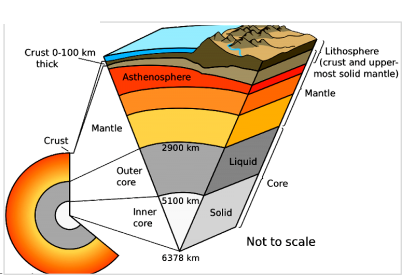
The outermost part of the Earth is known as ________.
- volcano
- the crust
- the core
- the mantle
Answer aur solution dekho
Archived marked answer: B
The correct answer is the crust.
Key Points
- The crust is the outermost layer of the Earth, varying in thickness from about 5 km under the oceans to about 70 km under the continents.
- The crust is made up of a variety of rocks, primarily granite and basalt.
- It forms the solid surface of the Earth, where we live, and is divided into several tectonic plates.
- The Earth's crust is distinct from the underlying mantle and core, which are composed of different materials and have different physical properties.
Additional Information
- Volcano
- A volcano is an opening in the Earth's crust through which molten lava, ash, and gases are ejected.
- Volcanic activity is a result of the movement of tectonic plates and the presence of magma beneath the Earth's surface.
- Volcanoes can form on land or underwater, and they can create mountains and islands over time.
- The Core
- The core is the innermost part of the Earth, composed mainly of iron and nickel.
- It is divided into two parts: the solid inner core and the liquid outer core.
- The movement of the liquid outer core generates the Earth's magnetic field.
- The Mantle
- The mantle is the layer of the Earth located between the crust and the core.
- It is composed of silicate rocks that are rich in iron and magnesium.
- The mantle extends to a depth of about 2,900 kilometers (1,800 miles) and is involved in tectonic activity and convection currents.
Q25 · General Science Physics
In the context of periodicity, a unit called picometre is used to measure the ________.
- atomic radius
- molar mass
- atomic density
- spin quantum number
Answer aur solution dekho
Archived marked answer: A
The correct answer is atomic radius.
Key Points
- The atomic radius is measured in picometres (pm), where 1 pm = 10⁻¹² meters.
- The atomic radius is defined as the distance from the nucleus of an atom to the outer boundary of the electron cloud.
- The atomic radius varies across the periodic table, generally decreasing from left to right across a period and increasing down a group.
- Understanding atomic radius is crucial for explaining the physical and chemical properties of elements, including bonding and reactivity.
Additional Information
- Atomic Radius:
- The atomic radius is a measure of the size of an atom, usually the mean or typical distance from the nucleus to the boundary of the surrounding electron cloud.
- In a group, the atomic radius increases from top to bottom due to the addition of electron shells.
- In a period, the atomic radius decreases from left to right due to the increase in nuclear charge, which pulls electrons closer to the nucleus.
- Molar Mass:
- Molar mass is the mass of a given substance (chemical element or chemical compound) divided by the amount of substance, measured in grams per mole (g/mol).
- It is used to convert between the mass of a substance and the amount in moles.
- Atomic Density:
- Atomic density is the number of atoms per unit volume of a material.
- It is often measured in atoms per cubic centimeter (atoms/cm³).
- Spin Quantum Number:
- The spin quantum number (s) describes the intrinsic angular momentum (spin) of an electron within an atom.
- It can have values of +1/2 or -1/2, indicating the two possible spin states of an electron.
Mathematics
Q1 · Geometry
If ∆ABC and ∆QPR are congruent triangles such that AB = 7 cm, AC = 8 cm, ∠B = 65° and ∠C = 75°, then which of the following is true?
- ∠R = 75° and PQ = 8 cm
- PQ = 7 cm and ∠R = 75°
- ∠Q = 40° and RQ = 7 cm
- AC = PR and ∠P = 65°
Answer aur solution dekho
Archived marked answer: B
Shortcut Trick
For congruent triangles ΔABC ≅ ΔQPR, the vertices map to each other in the exact order written.
Mappings: A → Q, B → P, C → R.
Side PQ maps directly to AB, so PQ = AB = 7 cm.
Angle R maps directly to angle C, so ∠R = ∠C = 75°.
This matches the given condition perfectly without calculating any other unknown sides or angles.
∴ The correct answer is PQ = 7 cm and ∠R = 75°.
Alternate Method
A
B
C
7 cm
8 cm
65°
75°
Q
P
R
7 cm
8 cm
65°
75°
∆ABC ≅ ∆QPR
Given:
⇒ ΔABC ≅ ΔQPR
⇒ AB = 7 cm, AC = 8 cm
⇒ ∠B = 65°, ∠C = 75°
Concept Used:
⇒ CPCT (Corresponding Parts of Congruent Triangles): If two triangles are congruent, their corresponding angles and sides are precisely equal.
Calculations:
⇒ Since ΔABC ≅ ΔQPR, the exact correspondence is given by A ↔ Q, B ↔ P, and C ↔ R.
⇒ Corresponding sides match: AB = QP, BC = PR, and AC = QR
⇒ Corresponding angles match: ∠A = ∠Q, ∠B = ∠P, and ∠C = ∠R
⇒ Applying the given dimensions directly to the mapped parts:
⇒ PQ = AB = 7 cm
⇒ QR = AC = 8 cm
⇒ ∠P = ∠B = 65°
⇒ ∠R = ∠C = 75°
⇒ Also, by the angle sum property, ∠A = 180° − (65° + 75°) = 40°, meaning ∠Q = 40°.
⇒ Comparing our derived values with the given options, we find that PQ = 7 cm and ∠R = 75° is the only correct statement.
∴ The correct answer is PQ = 7 cm and ∠R = 75°.
Additional Information
Congruence Criteria
Two triangles are strictly congruent if they satisfy SSS, SAS, ASA, AAS, or RHS congruency conditions.
CPCT Theorem
CPCT denotes 'Corresponding Parts of Congruent Triangles'. It establishes that if two triangles are congruent, all their equivalent angles and sides are identical.
Angle Sum Property
The total sum of interior angles in any triangle is exactly 180°. This helps determine the third angle if two are known (∠A = 180° − ∠B − ∠C).
Similar vs Congruent
Congruent triangles have an identical shape and exact size, whereas similar triangles possess the identical shape but may differ proportionally in size.
</p
Q2 · Trigonometry
{If } sec(t) = x/y, { then } cot(t) { is equal to:}
- (y)/(√(x² - y²))
- (x)/(√(x² + y²))
- (x)/(√(x² - y²))
- (y)/(√(x² + y²))
Answer aur solution dekho
Archived marked answer: A
Shortcut Trick
Using the trigonometric identity: 1 + tan²(t) = sec²(t)
⇒ tan²(t) = (x/y)² − 1 = (x² − y²) / y²
⇒ tan(t) = √(x² − y²) / y
⇒ cot(t) = 1 / tan(t) = y / √(x² − y²)
∴ The correct answer is y / √(x² − y²).
Alternate Method
Given:
sec(t) = x / y
Formula Used:
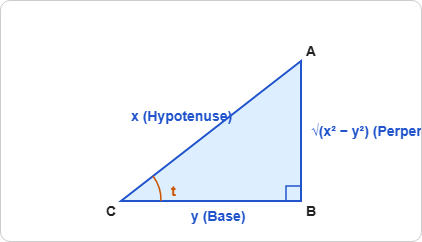
sec(θ) = Hypotenuse / Base
cot(θ) = Base / Perpendicular
 Calculations:
⇒ Let the right-angled triangle be ΔABC with a right angle at B and angle t at vertex C.
⇒ From sec(t) = x / y, we assign Hypotenuse (AC) = x and Base (BC) = y.
⇒ By Pythagoras Theorem: Hypotenuse² = Perpendicular² + Base²
⇒ x² = Perpendicular² + y²
⇒ Perpendicular (AB) = √(x² − y²)
⇒ The value of cot(t) represents the ratio of the Base to the Perpendicular.
⇒ cot(t) = y / √(x² − y²)
∴ The correct answer is y / √(x² − y²).
Additional Information
Trigonometric Identities
The fundamental identities linking basic trigonometric functions are: sin²(θ) + cos²(θ) = 1, sec²(θ) − tan²(θ) = 1, and cosec²(θ) − cot²(θ) = 1.
Pythagoras Theorem
For any right-angled triangle, the square of the longest side (hypotenuse) equals the sum of the squares of the base and perpendicular: H² = P² + B².
Trigonometric Ratios
Basic ratios include sin(θ) = P / H, cos(θ) = B / H, and tan(θ) = P / B. Their corresponding reciprocals are cosec(θ), sec(θ), and cot(θ).
</p
Q3 · Trigonometry
If 3 sin A + 4 cos A = 5, then the value of tan A is:
- 3/4
- 3/5
- 5/4
- 4/5
Answer aur solution dekho
Archived marked answer: A
Shortcut Trick
If an equation is of the form a sin A + b cos A = c, and satisfies a² + b² = c².
Then we can directly write the result: tan A = a / b.
Here, a = 3, b = 4, and c = 5.
Since 3² + 4² = 5² (9 + 16 = 25), the condition is perfectly satisfied.
⇒ tan A = 3 / 4
∴ The correct answer is 3/4.
Alternate Method
Given:
⇒ 3 sin A + 4 cos A = 5
Formula Used:
⇒ sin² A + cos² A = 1
⇒ tan A = sin A ÷ cos A
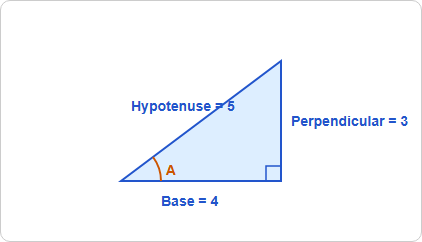 Calculations:
⇒ 3 sin A + 4 cos A = 5
⇒ Dividing the entire equation by 5, we get:
⇒ (3/5) sin A + (4/5) cos A = 1
⇒ We know the fundamental trigonometric identity: sin A × sin A + cos A × cos A = 1
⇒ By comparing the two equations directly, we can conclude:
⇒ sin A = 3/5
⇒ cos A = 4/5
⇒ Now, substitute these values to find tan A:
⇒ tan A = sin A ÷ cos A
⇒ tan A = (3/5) ÷ (4/5)
⇒ tan A = 3/4
∴ The correct answer is 3/4.
Additional Information
General Trigonometric Rule
For any given equation of the form a sin θ + b cos θ = c, if the condition a² + b² = c² holds true, then sin θ = a/c, cos θ = b/c, and tan θ = a/b.
Pythagorean Triplets
A set of three positive integers (a, b, c) that satisfy the relation a² + b² = c². Common examples include (3, 4, 5), (5, 12, 13), (7, 24, 25), and (8, 15, 17).
Fundamental Trigonometric Identities
- sin² θ + cos² θ = 1
- 1 + tan² θ = sec² θ
- 1 + cot² θ = cosec² θ
</p
Q4 · Trigonometry
At what angle θ , the value of sin (θ) and cos (θ) will have the same value?
- 45°
- 30°
- 60°
- 75°
Answer aur solution dekho
Archived marked answer: A
Shortcut Trick
Given that sin(θ) = cos(θ).
Divide both sides by cos(θ) to get the ratio.
⇒ sin(θ) ÷ cos(θ) = 1
⇒ tan(θ) = 1
From the standard trigonometric table, we know that tan(45°) = 1.
∴ The correct answer is 45°.
Alternate Method
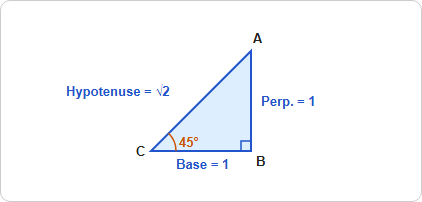 Given:
An equation where sin(θ) and cos(θ) are equal.
Concept Used:
In a right-angled triangle, if the Perpendicular and Base are equal in length, the corresponding acute angle θ is 45°.
Calculations:
⇒ Let Perpendicular = 1 unit and Base = 1 unit.
⇒ Hypotenuse = √(1² + 1²) = √2 units.
⇒ sin(45°) = Perpendicular ÷ Hypotenuse = 1 ÷ √2
⇒ cos(45°) = Base ÷ Hypotenuse = 1 ÷ √2
⇒ Therefore, at θ = 45°, both trigonometric functions yield the exact same value of 1 ÷ √2.
∴ The correct answer is 45°.
Additional Information
Complementary Angles Rule
Since sin(90° − θ) = cos(θ), equating sin(θ) = cos(θ) implies sin(θ) = sin(90° − θ). Solving this gives θ = 90° − θ, which means 2θ = 90° ⇒ θ = 45°.
Key Trigonometric Values at 45°
At 45°, both sine and cosine are equal (1 ÷ √2), both tangent and cotangent are equal (1), and both secant and cosecant are equal (√2).
Quadrants and Equality
Sine and Cosine are positive and equal at 45° (1st quadrant). They are both negative and equal at 225° (3rd quadrant) where both are −(1 ÷ √2).
</p
Q5 · Mensuration 2D
A chord of length 32 cm is drawn at a distance of 12 cm from the centre of a circle. Find the radius of the circle.
- 18 cm
- 22 cm
- 20 cm
- 28 cm
Answer aur solution dekho
Archived marked answer: C
Shortcut Trick
The perpendicular from the centre bisects the chord, so half the chord is 32 ÷ 2 = 16 cm.
The radius, distance from the centre, and half-chord form a right-angled triangle.
Recognize the common Pythagorean triplet (12, 16, 20), which is a multiple of the (3, 4, 5) base triplet.
Hence, the radius of the circle is 20 cm.
∴ The correct answer is 20 cm.
Alternate Method
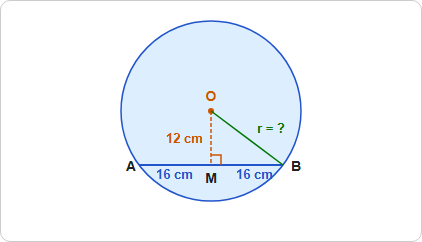 Given:
Length of the chord (AB) = 32 cm
Distance of the chord from the centre (OM) = 12 cm
Formula Used:
Pythagoras Theorem: Hypotenuse² = Perpendicular² + Base²
Calculations:
⇒ The perpendicular drawn from the centre of a circle to a chord bisects the chord.
⇒ Therefore, AM = MB = 32 ÷ 2 = 16 cm.
⇒ In right-angled triangle ΔOMB,
⇒ OB² = OM² + MB²
⇒ Radius (r)² = 12² + 16²
⇒ r² = 144 + 256
⇒ r² = 400
⇒ r = √400 = 20 cm
∴ The correct answer is 20 cm.
Additional Information
Perpendicular from Centre to Chord
A perpendicular drawn from the centre of a circle to a chord bisects the chord into two equal halves. Conversely, a line drawn through the centre of a circle to bisect a chord is perpendicular to the chord.
Equal Chords and Distance
Equal chords of a circle are equidistant from the centre. Similarly, chords that are equidistant from the centre of a circle are always equal in length.
Intersecting Chords Theorem
If two chords AB and CD intersect internally at a point P, then the product of their respective line segments is always equal: AP × PB = CP × PD.
</p
Q6 · Mensuration 2D
The perimeter of a rectangular garden is 48 m. If the length is 6 m more than the breadth, the area (in m²) of the garden is:
- 135
- 96
- 84
- 112
Answer aur solution dekho
Archived marked answer: A
Shortcut Trick
Sum of Length (L) and Breadth (B) = Perimeter ÷ 2 = 48 ÷ 2 = 24 m
Given the difference L − B = 6 m
L = (24 + 6) ÷ 2 = 15 m
B = (24 − 6) ÷ 2 = 9 m
Area = L × B = 15 × 9 = 135 m²
∴ The correct answer is 135 m².
Alternate Method
Given:
Perimeter of rectangular garden = 48 m
Length (L) = Breadth (B) + 6 m
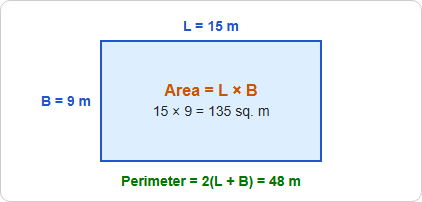 Formula Used:
Perimeter of rectangle = 2(L + B)
Area of rectangle = L × B
Calculation:
⇒ 2(B + 6 + B) = 48
⇒ 2(2B + 6) = 48
⇒ 2B + 6 = 24
⇒ 2B = 18
⇒ B = 9 m
⇒ L = 9 + 6 = 15 m
⇒ Area = L × B
⇒ Area = 15 × 9 = 135 m²
∴ The correct answer is 135 m².
Additional Information
Properties of a Rectangle
Opposite sides are equal and parallel. All interior angles are exactly 90°.
Diagonal of a Rectangle
Length of diagonal = √(L² + B²). Diagonals are equal in length and bisect each other.
Square as a Rectangle
A square is a special type of rectangle where Length = Breadth. For a square, Area = Side² and Perimeter = 4 × Side.
</p
Q7 · Mensuration 2D
A circular arc whose radius is 24 cm makes an angle of 60° at the centre. The perimeter of the sector formed is:
(Use π = 3.14)
- 73.22 cm
- 63.12 cm
- 74.32 cm
- 73.12 cm
Answer aur solution dekho
Archived marked answer: D
Shortcut Trick
The perimeter of a circular sector is the sum of its arc length and twice its radius.
Perimeter (P) = 2r + (θ ÷ 360°) × 2πr
⇒ P = (2 × 24) + (60° ÷ 360°) × 2 × 3.14 × 24
⇒ P = 48 + (1 ÷ 6) × 150.72
⇒ P = 48 + 25.12 = 73.12 cm
∴ The correct answer is 73.12 cm.
Alternate Method
Given:
Radius (r) = 24 cm
Central angle (θ) = 60°
π = 3.14
Formula Used:
Length of Arc (l) = (θ ÷ 360°) × 2πr
Perimeter of Sector = Length of Arc + 2 × Radius
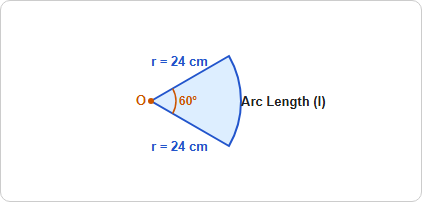 Calculations:
⇒ Length of Arc (l) = (60° ÷ 360°) × 2 × 3.14 × 24
⇒ l = (1 ÷ 6) × 150.72
⇒ l = 25.12 cm
⇒ Perimeter = 25.12 + 24 + 24
⇒ Perimeter = 73.12 cm
∴ The correct answer is 73.12 cm.
Additional Information
Area of a Sector
The area enclosed by the sector is calculated using the formula: Area = (θ ÷ 360°) × πr² or Area = (1 ÷ 2) × l × r.
Length of an Arc
The curve joining the two radii is called the arc. Its length is a fraction of the circle's full circumference: l = (θ ÷ 360°) × 2πr.
Perimeter of a Semicircle
A semicircle is a special sector with a central angle of 180°. Its perimeter formula simplifies to: P = πr + 2r = r(π + 2).
</p
Q8 · Mensuration 2D
If three cubes of volume 512 cm³ each are joined end to end, find the surface area of the resulting cuboid.
- 896 cm²
- 986 cm²
- 895 cm²
- 869 cm²
Answer aur solution dekho
Archived marked answer: A
Shortcut Trick
Side of each cube (a) = ³√512 = 8 cm.
When 'n' cubes are joined end-to-end, the total surface area = (4n + 2)a².
For 3 cubes, Surface area = (4 × 3 + 2)a² = 14a².
⇒ 14 × (8)² = 14 × 64 = 896 cm².
∴ The correct answer is 896 cm².
Alternate Method
Given:
Volume of each cube = 512 cm³
Number of cubes joined = 3
Formula Used:
Volume of cube = a³ (where a is the side length)
Surface area of cuboid = 2 × (lb + bh + hl)
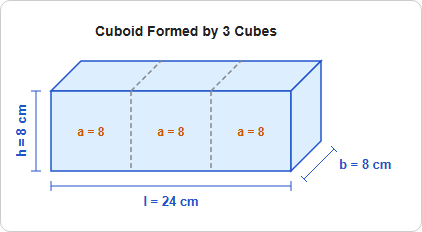 Calculations:
⇒ a³ = 512
⇒ a = ³√512 = 8 cm
When 3 cubes are joined end to end, a resulting cuboid is formed with dimensions:
⇒ Length (l) = 8 + 8 + 8 = 24 cm
⇒ Breadth (b) = 8 cm
⇒ Height (h) = 8 cm
⇒ Surface Area = 2 × (lb + bh + hl)
⇒ Surface Area = 2 × (24×8 + 8×8 + 8×24)
⇒ Surface Area = 2 × (192 + 64 + 192)
⇒ Surface Area = 2 × 448 = 896 cm²
∴ The correct answer is 896 cm².
Additional Information
Total Surface Area of Cubes Joined
When 'n' cubes of side 'a' are joined in a row, the exposed surface area becomes (4n + 2)a² because (2n − 2) connecting faces become hidden.
Volume of the New Cuboid
The volume of the resulting cuboid is simply the sum of the individual volumes, calculated as n × a³.
Diagonal of a Cuboid
The length of the longest internal diagonal inside a cuboid is determined using the formula √(l² + b² + h²).
</p
Q9 · Mensuration 2D
In a circle with centre O, AOC is the diameter. B is a point on the circumference of the circle such that arc AB is (1/5) of the arc BC. What is the degree measure of angleBOC?
- 120°
- 150°
- 80°
- 30°
Answer aur solution dekho
Archived marked answer: B
Shortcut Trick
The central angle subtended by an arc is directly proportional to its arc length.
Given the ratio of Arc AB to Arc BC is 1 : 5, the ratio of their central angles ∠AOB : ∠BOC is also 1 : 5.
Since AOC is a diameter, the total angle on the straight line is 180°.
∠BOC = [5 ÷ (1 + 5)] × 180°
∠BOC = (5 ÷ 6) × 180° = 150°.
∴ The correct answer is 150°.
Alternate Method
Given:
AOC is the diameter of the circle with centre O.
Arc AB = (1 ÷ 5) × Arc BC
Concept Used:
The angle subtended by an arc at the centre is directly proportional to the length of the arc.
The angle of a straight line (diameter) at the centre is 180°.
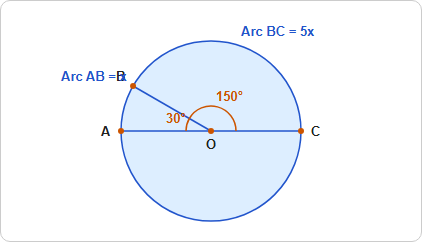 Calculation:
⇒ Let the length of Arc AB be x.
⇒ Then, the length of Arc BC = 5x.
⇒ Ratio of ∠AOB to ∠BOC = Arc AB : Arc BC = x : 5x = 1 : 5.
⇒ Let ∠AOB = k and ∠BOC = 5k.
⇒ Since AOC is a straight line, the sum of angles on one side is 180°.
⇒ ∠AOB + ∠BOC = 180°
⇒ k + 5k = 180°
⇒ 6k = 180°
⇒ k = 30°
⇒ Therefore, ∠BOC = 5k = 5 × 30° = 150°
∴ The correct answer is 150°.
Additional Information
Arc and Angle Proportion Rule
In any given circle, the central angle subtended by an arc is completely proportional to its physical arc length. (∠ ∝ Arc length).
Semicircle Property
The arc of a semicircle subtends exactly 180° at the centre of the circle and 90° at any point on the remaining circumference.
Inscribed Angle Theorem
The angle subtended by an arc at the centre is exactly double the angle subtended by the same arc at any remaining part of the circle's boundary.
Q10 · Algebra
If x = 7 - 4√3 , then find the value of ( x² + 1/x² ).
- 188
- 194
- 186
- 196
Answer aur solution dekho
Archived marked answer: B
Shortcut Trick
If x = a − √b and a² − b = 1, then 1/x = a + √b.
Here, 7² − (4√3)² = 49 − 48 = 1, so 1/x = 7 + 4√3.
⇒ x + 1/x = (7 − 4√3) + (7 + 4√3) = 14
⇒ x² + 1/x² = k² − 2 = 14² − 2 = 196 − 2 = 194
∴ The correct answer is 194.
Alternate Method
Given:
x = 7 − 4√3
Formula Used:
(a − b)(a + b) = a² − b²
(a + b)² = a² + b² + 2ab
Calculations:
⇒ 1/x = 1 / (7 − 4√3)
⇒ Rationalizing the denominator by multiplying the numerator and denominator by (7 + 4√3):
⇒ 1/x = (7 + 4√3) / [(7 − 4√3)(7 + 4√3)]
⇒ 1/x = (7 + 4√3) / (7² − (4√3)²)
⇒ 1/x = (7 + 4√3) / (49 − 48)
⇒ 1/x = 7 + 4√3
⇒ Now, x + 1/x = (7 − 4√3) + (7 + 4√3)
⇒ x + 1/x = 14
⇒ Squaring both sides:
⇒ (x + 1/x)² = 14²
⇒ x² + 1/x² + 2(x)(1/x) = 196
⇒ x² + 1/x² + 2 = 196
⇒ x² + 1/x² = 196 − 2 = 194
∴ The correct answer is 194.
Additional Information
Rationalization Concept
If the difference between the squares of two terms in a binomial surd is 1, then its reciprocal is simply its conjugate. For example, if a = √p + √q and p − q = 1, then 1/a = √p − √q.
Important Algebraic Identities
If x + 1/x = k, then x² + 1/x² = k² − 2.
Higher Power Identities
If x + 1/x = k, then x³ + 1/x³ = k³ − 3k. Also, x⁴ + 1/x⁴ = (k² − 2)² − 2.
Q11 · Algebra
If the system of the following equations has the value of the variables as three consecutive integers, then the value of a is ____.
x - y + z = 2a
x + 4y - 2z = 3(4 - a)
2x - 3y + 4z = 6 - 2a
- 2
- 4
- 1
- 3
Answer aur solution dekho
Archived marked answer: C
Shortcut Trick
Solve for x, y, z in terms of a using basic elimination: we get x = 3a, y = 6 − 4a, and z = 6 − 5a.
The difference between y and z is y − z = (6 − 4a) − (6 − 5a) = a.
For x, y, z to be three consecutive integers, the difference between any two must be an integer and cannot exceed 2.
From the given options, substituting a = 1 gives x = 3, y = 2, z = 1, which perfectly forms a set of three consecutive integers (1, 2, 3).
∴ The correct answer is 1.
Alternate Method
Given:
x − y + z = 2a ... (i)
x + 4y − 2z = 12 − 3a ... (ii)
2x − 3y + 4z = 6 − 2a ... (iii)
Calculations:
⇒ Multiply equation (i) by 2 and add to equation (ii):
⇒ 2(x − y + z) + (x + 4y − 2z) = 4a + 12 − 3a
⇒ 2x − 2y + 2z + x + 4y − 2z = a + 12
⇒ 3x + 2y = a + 12 ... (iv)
⇒ Multiply equation (i) by 4 and subtract equation (iii):
⇒ 4(x − y + z) − (2x − 3y + 4z) = 8a − (6 − 2a)
⇒ 4x − 4y + 4z − 2x + 3y − 4z = 8a − 6 + 2a
⇒ 2x − y = 10a − 6 ... (v)
⇒ Multiply equation (v) by 2 and add to equation (iv):
⇒ 2(2x − y) + (3x + 2y) = 2(10a − 6) + (a + 12)
⇒ 4x − 2y + 3x + 2y = 20a − 12 + a + 12
⇒ 7x = 21a
⇒ x = 3a
⇒ Substitute x = 3a into equation (v):
⇒ 2(3a) − y = 10a − 6
⇒ 6a − y = 10a − 6
⇒ y = 6 − 4a
⇒ Substitute x = 3a and y = 6 − 4a into equation (i):
⇒ 3a − (6 − 4a) + z = 2a
⇒ 7a − 6 + z = 2a
⇒ z = 6 − 5a
⇒ Since x, y, and z are consecutive integers, let us check the difference between them.
⇒ y − z = (6 − 4a) − (6 − 5a) = a
⇒ For the variables to be consecutive integers, the absolute difference between any two cannot exceed 2.
⇒ Substitute a = 1 from the given options:
⇒ x = 3(1) = 3
⇒ y = 6 − 4(1) = 2
⇒ z = 6 − 5(1) = 1
⇒ The values 1, 2, and 3 correctly form a set of three consecutive integers.
∴ The correct answer is 1.
Additional Information
System of Linear Equations
A system of three linear equations can be solved by progressively eliminating variables until a single variable remains. Substitution and coefficient matching (addition/subtraction) are the most common algebraic methods.
Consecutive Integers
A sequence of integers where each number is exactly 1 more than the previous number. The maximum difference between the largest and the smallest number in a set of three consecutive integers is exactly 2.
</p
Q12 · Profit and Loss
A shopkeeper sold 5/8 of his articles at a gain of 20% and the remaining at the cost price. What is his gain percentage in the whole transaction?
- 16 1/2
- 14 1/2
- 13 1/2
- 12 1/2
Answer aur solution dekho
Archived marked answer: D
Shortcut Trick
Net Gain % = Sum of (Part fraction × Gain/Loss % of that part)
Gain on ⁵/₈ part = 20%
Gain on remaining ³/₈ part = 0% (since sold at Cost Price)
Net Gain % = (⁵/₈ × 20%) + (³/₈ × 0%)
Net Gain % = ¹⁰⁰/₈% = 12.5% = 12 ¹/₂%
∴ The correct answer is 12 ¹/₂%.
Alternate Method
Given:
Fraction of articles sold at 20% gain = ⁵/₈
Remaining fraction sold at cost price (0% gain) = 1 − ⁵/₈ = ³/₈
Formula Used:
Overall Gain % = (Total Profit ÷ Total Cost Price) × 100
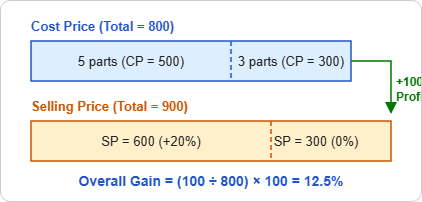 Calculations:
Let the total number of articles be 8 and the CP of each article be 100.
⇒ Total CP = 8 × 100 = 800
⇒ SP of 5 articles (sold at 20% gain) = 5 × 100 × 1.20 = 600
⇒ SP of 3 articles (sold at CP) = 3 × 100 = 300
⇒ Total SP = 600 + 300 = 900
⇒ Total Profit = Total SP − Total CP = 900 − 800 = 100
⇒ Overall Gain % = (100 ÷ 800) × 100
⇒ Overall Gain % = ¹⁰⁰/₈ = 12.5% = 12 ¹/₂%
∴ The correct answer is 12 ¹/₂%.
Additional Information
Net Profit Percentage Rule
When goods are sold in multiple parts, the net profit or loss percentage is the weighted average of the profit/loss percentages of each part: Net % = (Part₁ × %₁) + (Part₂ × %₂) + ...
Selling at Cost Price
If any part of the total quantity is sold exactly at the cost price, the profit or loss on that particular fraction is 0%, effectively making its contribution to the net percentage equation zero.
Assuming Favourable Values
To avoid complex fractional calculations, it is always best to assume the total quantity to be equal to the LCM of the denominators of the given fractions (e.g., assuming total 8 articles when dealing with ⁵/₈).
</p
Q13 · Profit and Loss
A shopkeeper offers the following discount schemes for buyers.
I. Two successive discounts of 15% and 20%
II. Successive discount of 25 % and 10%
III. A discount of 33%
The selling price will be minimum under the scheme:
- I
- I or II
- III
- II
Answer aur solution dekho
Archived marked answer: C
Shortcut Trick
Effective discount formula = x + y − (x × y) ÷ 100
Discount I = 15 + 20 − (15 × 20) ÷ 100 = 32%
Discount II = 25 + 10 − (25 × 10) ÷ 100 = 32.5%
Discount III = 33%
Selling price is minimum when discount is maximum, which is 33%.
∴ The correct answer is Scheme III.
Alternate Method
Given:
Three discount schemes:
I. Successive discounts of 15% and 20%
II. Successive discount of 25% and 10%
III. A discount of 33%
Formula Used:
Effective Discount = x + y − (x × y) ÷ 100
Selling Price (SP) = Marked Price × (100 − Discount%) ÷ 100
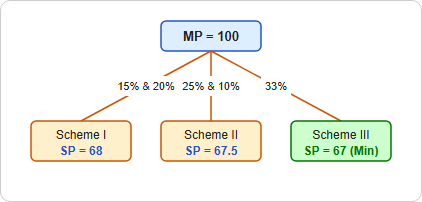 Calculations:
⇒ Scheme I Discount = 15 + 20 − (15 × 20) ÷ 100 = 35 − 3 = 32%
⇒ Scheme I Selling Price = 100% − 32% = 68% of Marked Price
⇒ Scheme II Discount = 25 + 10 − (25 × 10) ÷ 100 = 35 − 2.5 = 32.5%
⇒ Scheme II Selling Price = 100% − 32.5% = 67.5% of Marked Price
⇒ Scheme III Discount = 33%
⇒ Scheme III Selling Price = 100% − 33% = 67% of Marked Price
⇒ Comparing the Selling Prices: 67%
Additional Information
Successive Discounts
When two discounts x% and y% are given consecutively on an item, the equivalent single discount is given by the formula [x + y − (x × y) ÷ 100]%.
Marked Price vs Selling Price
The selling price is calculated after applying the discount on the marked price. It can be found directly using the formula: SP = MP × (100 − Discount%) ÷ 100.
Maximising Discount for Consumer
For a consumer, if the sum of successive discounts given in different schemes is the same, the sequence with the largest numerical difference between the individual discounts always yields a higher overall discount.
</p
Q14 · Time and Work
Pipe X can fill a tank in 60 hours while pipe Y can fill the tank in 72 hours. Both pipes are opened together for 20 hours. How much of the tank is left empty?
- 1/8
- 243/360
- 7/18
- 3/8
Answer aur solution dekho
Archived marked answer: C
Shortcut Trick
Part of the tank filled by X in 20 hours = 20 ÷ 60 = 1/3
Part of the tank filled by Y in 20 hours = 20 ÷ 72 = 5/18
Total part filled by both in 20 hours = 1/3 + 5/18 = 6/18 + 5/18 = 11/18
Part of the tank left empty = 1 − 11/18 = 7/18
∴ The correct answer is 7/18.
Alternate Method
Given:
Time taken by Pipe X to fill the tank = 60 hours
Time taken by Pipe Y to fill the tank = 72 hours
Time for which both pipes are opened = 20 hours
Concept Used:
Total capacity of the tank = LCM of the individual times
Efficiency = Total capacity ÷ Time taken
Pipe
Hours
Total Work
Efficiency
X
60
360
6
Y
72
5
Calculations:
⇒ Total efficiency of X and Y together = 6 + 5 = 11 units/hour
⇒ Work done by both pipes in 20 hours = 11 × 20 = 220 units
⇒ Remaining work (empty part of the tank) = Total capacity − Work done
⇒ Remaining work = 360 − 220 = 140 units
⇒ Fraction of the tank left empty = Remaining work ÷ Total capacity
⇒ Fraction left = 140 ÷ 360 = 14/36 = 7/18
∴ The correct answer is 7/18.
Additional Information
Inlet and Outlet Pipes
An inlet pipe fills a tank and its work is considered positive, whereas an outlet pipe empties the tank and its work is considered negative.
Combined Time Formula
If pipe A can fill a tank in x hours and pipe B can fill it in y hours, they together will fill the tank in (x × y) ÷ (x + y) hours.
Total Capacity (LCM Method)
The most efficient way to solve pipe & cistern problems is to assume the total capacity of the tank as the LCM of all given times.
</p
Q15 · Number System
A number r when divided by 8 leaves remainder 3. What will be the remainder when (r² +6r + 7) is divided by 8?
- 2
- 3
- 1
- 4
Answer aur solution dekho
Archived marked answer: A
Shortcut Trick
By using the remainder directly, substitute r = 3 into the given polynomial expression.
⇒ r² + 6r + 7
⇒ (3)² + 6 × 3 + 7
⇒ 9 + 18 + 7 = 34
Now, find the remainder when 34 is divided by 8.
⇒ 34 ÷ 8 gives a remainder of 2.
∴ The correct answer is 2.
Alternate Method
Given:
A number r leaves a remainder of 3 when divided by 8.
Formula Used:
Dividend = Divisor × Quotient + Remainder
Calculations:
Let the quotient be k. We can write the number as:
⇒ r = 8k + 3
Substitute the value of r in the expression (r² + 6r + 7):
⇒ (8k + 3)² + 6 × (8k + 3) + 7
⇒ (64k² + 48k + 9) + (48k + 18) + 7
⇒ 64k² + 96k + 34
Now, break 34 into 32 + 2 to factor out 8:
⇒ 64k² + 96k + 32 + 2
⇒ 8 × (8k² + 12k + 4) + 2
The first term is completely divisible by 8 as it is a multiple of 8.
⇒ The remaining part is 2.
∴ The correct answer is 2.
Additional Information
Remainder Theorem Application
When solving questions related to remainders of algebraic expressions, if a variable x leaves remainder a when divided by n, the expression P(x) will leave the same remainder as P(a) divided by n.
Modular Arithmetic Properties
Addition Rule: (A + B) mod n = [(A mod n) + (B mod n)] mod n. This allows simplifying each term individually before taking the final remainder.
Divisibility Rule of 8
A number is exactly divisible by 8 if the number formed by its last three digits is a multiple of 8.
</p
Q16 · Time and Distance
A motorboat travelling at some speed can cover 24 km upstream and 40 km downstream in 17 hours. At the same speed it can travel 32 km downstream and 12 km upstream in 10 hours. The speed of the stream is:
- 5 km/h
- 4 km/h
- 2 km/h
- 3 km/h
Answer aur solution dekho
Archived marked answer: D
Shortcut Trick
Let downstream speed = D and upstream speed = U.
We have: 24/U + 40/D = 17 and 12/U + 32/D = 10.
Double the 2nd equation and subtract the 1st: 24/D = 3 ⇒ D = 8 km/h.
Substitute D = 8 in 1st equation: 24/U + 5 = 17 ⇒ U = 2 km/h.
Speed of stream = (D − U) ÷ 2 = (8 − 2) ÷ 2 = 3 km/h.
∴ The correct answer is 3 km/h.
Alternate Method
Q17 · Data Interpretation
In 2010, a company’s total expenditure was categorised under different expense heads, and their percentage distribution is illustrated in the bar graph given below.
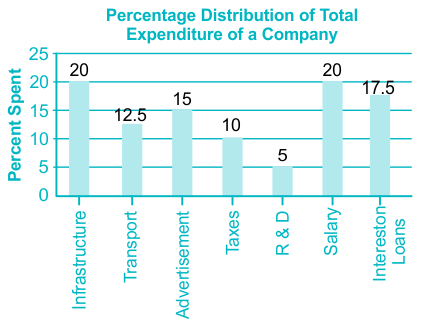 If the expenditure on an advertisement is ₹2.1 crore, then the difference between the expenditure on transport and taxes is?
- ₹32 lakh
- ₹42 lakh
- ₹30 lakh
- ₹35 lakh
Answer aur solution dekho
Archived marked answer: D
Given:
Expenditure on advertisement: ₹2.1 crore
Percentage of total expenditure on advertisement: 15%
Percentage of total expenditure on transport: 12.5%
Percentage of total expenditure on taxes: 10%
Formula used:
Total Expenditure = Expenditure on Advertisement ÷ (Percentage on Advertisement ÷ 100)
Expenditure on Transport = Total Expenditure × (Percentage on Transport ÷ 100)
Expenditure on Taxes = Total Expenditure × (Percentage on Taxes ÷ 100)
Difference = Expenditure on Transport - Expenditure on Taxes
Calculations:
Step 1: Calculate Total Expenditure
Total Expenditure = ₹2.1 crore ÷ (15 ÷ 100)
⇒ Total Expenditure = ₹2.1 crore ÷ 0.15
⇒ Total Expenditure = ₹14 crore
Step 2: Calculate Expenditure on Transport
Expenditure on Transport = ₹14 crore × (12.5 ÷ 100)
⇒ Expenditure on Transport = ₹14 crore × 0.125
⇒ Expenditure on Transport = ₹1.75 crore
Step 3: Calculate Expenditure on Taxes
Expenditure on Taxes = ₹14 crore × (10 ÷ 100)
⇒ Expenditure on Taxes = ₹14 crore × 0.10
⇒ Expenditure on Taxes = ₹1.4 crore
Step 4: Calculate the Difference
Difference = Expenditure on Transport - Expenditure on Taxes
⇒ Difference = ₹1.75 crore - ₹1.4 crore
⇒ Difference = ₹0.35 crore
∴ The difference between the expenditure on transport and taxes is ₹35 Lakh.
Q18 · Data Interpretation
Study the given pie chart and select the most appropriate option to fill in the blank.
The given pie chart shows the sales of different fruits in a day for a shop.
If the total number of fruits sold by a fruit seller in a day is 1200, then the number of bananas sold is ___.
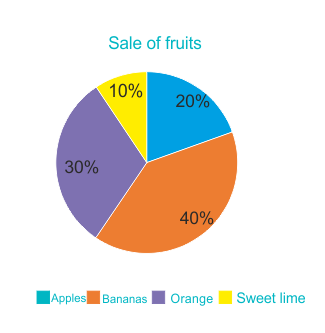
- 360
- 520
- 240
- 480
Answer aur solution dekho
Archived marked answer: D
Given:
Total number of fruits sold in a day: 1,200
Percentage of bananas sold: 40%
Formula used:
Number of bananas sold = Total fruits sold × (Percentage of bananas ÷ 100)
Calculations:
Number of bananas sold = 1,200 × (40 ÷ 100)
⇒ Number of bananas sold = 1,200 × 0.40
⇒ Number of bananas sold = 480
∴ The number of bananas sold is 480.
Q19 · Simplification
Simplify the following:
[ ( 5 1/2 - 3 1/3 ) { of } 1 5/13 + 1 - 2 times 3 5/2 ÷ 2 3/4 ]
- 0
- 11/2
- -2
- 3 1/2
Answer aur solution dekho
Archived marked answer: A
Given:
[ ( 5 1/2 - 3 1/3 ) { of } 1 5/13 + 1 - 2 times 3 5/2 ÷ 2 3/4 ]
Formula used:
1. Mixed fraction: (ab/c = ac + bc)
2. "of" means multiplication
3. Division: (a ÷ b = a times 1/b)
Calculations:
Convert all mixed fractions into improper fractions:
5(1/2 = 11/2), 3(1/3 = 10/3), 1(5/13 = 18/13), 3(5/2 = 11/2), 2(3/4 = 11/4)
Step 1: Subtraction inside brackets
(11/2 - 10/3 = ((11 times 3) - (10 times 2))/(6))
⇒ (33 - 206 = 13/6)
Step 2: Multiply with (1 5/13 = 18/13)
(13/6 times 18/13 = 13 times 186 times 13)
⇒ (18/6 = 3)
Step 3: Simplify (2 times 3 5/2 ÷ 2 3/4)
(3 5/2 = 11/2, 2 3/4 = 11/4)
Division:
(11/2 ÷ 11/4 = 11/2 times 4/11 = 44/22 = 2)
Multiply by 2: (2 times 2 = 4)
Step 4: Add and subtract remaining terms (3 + 1 - 4)
⇒ 3 + 1 = 4
⇒ 4 - 4 = 0
∴ The simplified value is 0.
Q20 · Proportion
Find the mean proportional of 36 and 100.
- 65
- 60
- 55
- 70
Answer aur solution dekho
Archived marked answer: B
Shortcut Trick
The mean proportional between any two numbers a and b is given directly by the square root of their product.
⇒ Mean proportional = √(a × b)
⇒ Mean proportional = √(36 × 100)
⇒ Mean proportional = 6 × 10 = 60
∴ The correct answer is 60.
Alternate Method
Given:
The two given numbers are 36 and 100.
Formula Used:
If x is the mean proportional between a and b, then a : x :: x : b, which implies the product of extremes equals the product of means.
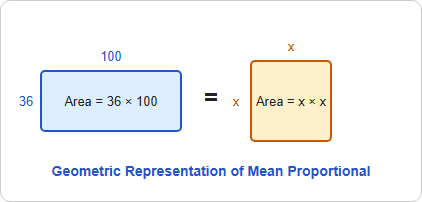 Calculations:
⇒ Let the mean proportional be x.
⇒ 36 : x = x : 100
⇒ x × x = 36 × 100
⇒ x² = 3600
⇒ x = √3600
⇒ x = 60
∴ The correct answer is 60.
Additional Information
Mean Proportional
For any two numbers a and b, the mean proportional is their geometric mean, calculated as √(a × b).
Third Proportional
For two numbers a and b, the third proportional c satisfies a : b :: b : c, which results in the formula c = b² ÷ a.
Fourth Proportional
For three numbers a, b, and c, the fourth proportional d satisfies a : b :: c : d, yielding the formula d = (b × c) ÷ a.
Compound Ratio
When two or more ratios are multiplied together, the resultant ratio is called a compound ratio. For ratios a:b and c:d, it is (a × c) : (b × d).
</p
Q21 · Percentage
In a constituency, 45% of the total number of voters are males and the rest are females. If 60% of the males are illiterate and 60% of the females are literate, then by what per cent is the number of illiterate females more than that of literate males? (Rounded off to 2 decimal places)
- 19.11%
- 27.23%
- 30.24%
- 22.22%
Answer aur solution dekho
Archived marked answer: D
Shortcut Trick
Assume total voters = 100, then Males = 45 and Females = 55.
Literate males = 40% of 45 = 18.
Illiterate females = 40% of 55 = 22.
Required % = [(22 − 18) ÷ 18] × 100 = (4 ÷ 18) × 100 = 22.22%.
∴ The correct answer is 22.22%.
Alternate Method
Given:
Total males = 45% of total voters
Illiterate males = 60% of total males
Literate females = 60% of total females
Formula Used:
Percentage More = (Difference ÷ Base Value) × 100
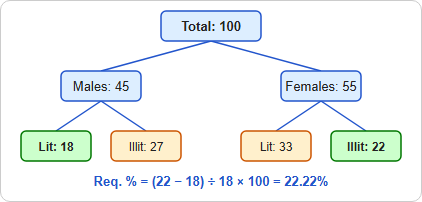 Calculations:
⇒ Let the total number of voters in the constituency be 100.
⇒ Number of male voters = 45% of 100 = 45
⇒ Number of female voters = 100 − 45 = 55
⇒ Since 60% of males are illiterate, literate males = (100 − 60)% of 45
⇒ Literate males = 40% of 45 = 18
⇒ Since 60% of females are literate, illiterate females = (100 − 60)% of 55
⇒ Illiterate females = 40% of 55 = 22
⇒ Difference between illiterate females and literate males = 22 − 18 = 4
⇒ Required percentage = (4 ÷ 18) × 100
⇒ Required percentage = (2 ÷ 9) × 100 = 22.22%
∴ The correct answer is 22.22%.
Additional Information
Base Value in Percentages
The term immediately following 'than' or 'of' in a question generally determines the base value (denominator) for percentage calculations.
Percentage Change
Formula: [(Final Value − Initial Value) ÷ Initial Value] × 100. A positive result indicates a percentage increase, and a negative result indicates a decrease.
Successive Percentage
When multiple percentage changes occur successively, the effective percentage change is calculated using: a + b + (a × b) ÷ 100.
</p
Q22 · Average
The sum of five consecutive numbers is 80. Find the largest number.
- 18
- 15
- 19
- 14
Answer aur solution dekho
Archived marked answer: A
Shortcut Trick
For an odd number of consecutive terms, the average is always the exact middle number.
Average (Middle number) = Total Sum ÷ Number of terms
Middle number = 80 ÷ 5 = 16
Since the middle (3rd) number is 16, the consecutive series is: 14, 15, 16, 17, 18.
∴ The correct answer is 18.
Alternate Method
Given:
The sum of five consecutive numbers is 80.
Formula Used:
If the first number is x, then 5 consecutive numbers are x, x + 1, x + 2, x + 3, and x + 4.
Q23 · Simple Interest
A certain sum of money is given at a certain rate of simple interest for 6 years. Had it been given at 7% higher rate, it would have fetched ₹1,512 more. Find the sum (in ₹).
- 3,200
- 3,600
- 3,100
- 4,200
Answer aur solution dekho
Archived marked answer: B
Shortcut Trick
Total additional interest percentage = Time × Extra Rate = 6 × 7% = 42%
This 42% additional interest on the principal corresponds to ₹1512.
Since Principal is always exactly 100%, we calculate:
Principal (100%) = (1512 ÷ 42) × 100
Principal = 36 × 100 = ₹3600
∴ The correct answer is ₹3600.
Alternate Method
Given:
Time (T) = 6 years
Increase in Rate of Interest = 7%
Increase in Simple Interest = ₹1512
Formula Used:
Simple Interest (SI) = (P × R × T) ÷ 100
Difference in SI = (P × Change in Rate × T) ÷ 100
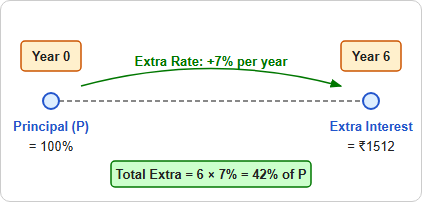 Calculations:
⇒ Let the initial principal sum be P.
⇒ The additional interest earned is strictly due to the extra 7% rate applied over the 6 years duration.
⇒ Total extra interest percentage = 7% × 6 = 42%
⇒ According to the question, this 42% of P equals ₹1512.
⇒ (42 ÷ 100) × P = 1512
⇒ P = (1512 × 100) ÷ 42
⇒ P = 36 × 100
⇒ P = 3600
∴ The correct answer is ₹3600.
Additional Information
Direct Proportionality in Simple Interest
Simple Interest is directly proportional to the Principal, Rate, and Time. If only the Rate increases by an amount, say r%, the extra interest is calculated directly as Extra SI = (P × r × T) ÷ 100.
Amount in Simple Interest
The final amount obtained after time T is the sum of the Principal and the accumulated Simple Interest. Formula: A = P + SI = P × [1 + (R × T) ÷ 100].
Simple Interest vs Compound Interest
In Simple Interest, the principal remains the same every year and interest does not compound. In Compound Interest, the interest earned in previous years is added back to the principal, yielding interest on interest.
English
Q1 · Vocabulary
Select the most appropriate ANTONYM of the underlined word.
The long-standing feud between the two villages was settled due to the intervention of the two chiefs.
- Humility
- Harmony
- Humble
- Honesty
Answer aur solution dekho
Archived marked answer: B
The correct answer is: Option 2 i.e. Harmony.
Key Points
- The word "feud" means a prolonged and bitter quarrel or dispute.
- Example: The feud between the two families lasted for generations.
- "Harmony" refers to a state of being in agreement or concord, free from disputes and conflicts.
- Example: The two communities lived in harmony after the peace agreement was signed.
- Hence, we can infer that the opposite of 'feud' is 'harmony'.
Therefore, the correct answer is: Option 2 i.e. Harmony.
Additional Information
Here are the other options explained along with their Hindi meanings and example sentences:
- Humility: A modest or low view of one's own importance.
- Example: Her humility made her very approachable despite her achievements.
- Humble: Having or showing a modest or low estimate of one's importance.
- Example: He remained humble even after winning the prestigious award.
- Honesty: The quality of being truthful and sincere.
- Example: His honesty is one of the reasons why people trust him so much.
Q2 · Vocabulary
Select the most appropriate ANTONYM of the underlined word in the given sentence.
The appearance of most of the animals in jungle is deceptive in nature.
- honest
- illusive
- ugly
- beautiful
Answer aur solution dekho
Archived marked answer: A
The correct answer is: Option 1 i.e. honest.
Key Points
- The word "deceptive" means something that tends to deceive or give a false impression.
- Example: The calm surface of the lake was deceptive, hiding strong currents beneath.
- "Honest" refers to someone or something that is free from deceit; truthful and sincere.
- Example: She gave an honest account of the events that took place.
- Hence, the opposite of 'deceptive' is 'honest'.
Therefore, the correct answer is: Option 1 i.e. honest.
Additional Information
Here are the other options explained along with their Hindi meanings and example sentences:
- Illusive: Something that is deceptive or misleading.
- Example: The magician's tricks were illusive, making it hard to believe what we saw.
- Ugly: Unpleasant or repulsive, especially in appearance.
- Example: The building was so ugly that it was an eyesore in the otherwise beautiful neighborhood.
- Beautiful: Pleasing the senses or mind aesthetically.
- Example: The garden was filled with beautiful flowers of various colors.
The correct answer
Q3 · Vocabulary
Select the most appropriate ANTONYM of the given word.
Autonomy
- Dependence
- Permanence
- Independence
- Economical
Answer aur solution dekho
Archived marked answer: A
The correct answer is: Option 1 i.e. Dependence.
Key Points
- The word "Autonomy" means the right or condition of self-government; independence.
- Example: Many countries fought for autonomy from colonial rule.
- "Dependence" refers to the state of relying on or being controlled by someone or something else.
- Example: His dependence on technology for daily tasks is quite evident.
- Hence, the antonym of 'autonomy' is 'dependence'.
Therefore, the correct answer is: Option 1 i.e. Dependence.
Additional Information
Here are the other options explained along with their Hindi meanings and example sentences:
- Permanence: The state or quality of lasting or remaining unchanged indefinitely.
- Example: The permanence of the monument ensures that it will be seen by future generations.
- Independence: The fact or state of being independent; self-sufficiency.
- Example: India gained independence from British rule in 1947.
- Economical: Giving good value or service in relation to the amount of money, time, or effort spent.
- Example: The new car is very economical on fuel.
Q4 · Vocabulary
Select the most appropriate homophone to fill in the blank.
He ______ his bike as fast as he could to reach home.
- rode
- road
- rowed
- rote
Answer aur solution dekho
Archived marked answer: A
The correct answer is 'Option (1)' i.e.* 'rode'.*
Key Points
- Rode: Past tense of ride, which means to travel by sitting on a bicycle, horse, etc.
- Example: He rode his bike as fast as he could to reach home.
Therefore, the correct answer is 'Option (1)' i.e.* 'rode'.*
Additional Information
- Road: A wide way leading from one place to another, typically one with a specially prepared surface which vehicles can use
- Example: The road was closed for repairs.
- Rowed: Past tense of row, which means to propel a boat with oars
- Example: They rowed across the lake.
- Rote: Mechanical or habitual repetition of something to be learned
- Example: Learning by rote is not always effective.
The correct answer is
Q5 · Vocabulary
Select the most appropriate option that can substitute the idiom in the given brackets.
His PhD degree seems to be (Penelope's web).
- An important task
- A difficult task
- A secret task
- An endless task
Answer aur solution dekho
Archived marked answer: D
The correct answer is: Option 4.
Key Points
- The idiom "Penelope's web" refers to a task that is endless and can never be completed.
- Example: His PhD degree seems to be Penelope's web.
- "Endless task" means a task that seems to have no end or conclusion, continuing indefinitely.
- Example: Cleaning the beach of all the plastic waste is an endless task.
Therefore, the correct answer is: Option 4.
Additional Information
Here are the other options explained along with their Hindi meanings and example sentences:
- An important task : A task that holds significant value or importance.
- Example: Securing funding for the project is an important task that we must prioritize.
- A difficult task : A task that requires a lot of effort, skill, or hard work.
- Example: Completing the marathon was a difficult task for him.
- A secret task: A task that is kept hidden or not disclosed to others.
- Example: The spy was assigned a secret task to gather intelligence.
Q6 · Vocabulary
Select the most appropriate idiom to fill the blank in the given situation.
I thought Sadhna would always stick by me, but when I got into trouble, she turned out to be a/an __________.
- hard nut to crack
- open secret
- fair-weather friend
- white elephant
Answer aur solution dekho
Archived marked answer: C
The correct answer is: Option 3 i.e. fair-weather friend.
Key Points
- The word "fair-weather friend" refers to someone who is only a friend when circumstances are pleasant or profitable and abandons others in times of trouble.
- Example: When I lost my job, I realized he was just a fair-weather friend because he stopped calling me.
Therefore, the correct answer is: Option 3 i.e. fair-weather friend.
Additional Information
Here are the other options explained along with their Hindi meanings and example sentences:
- Hard nut to crack: A problem that is difficult to solve or a person who is difficult to deal with.
- Example: The detective found the case to be a hard nut to crack due to the lack of evidence.
- Open secret: Something that is supposed to be confidential but is widely known.
- Example: It is an open secret that the celebrity couple is planning to get married.
- White elephant: An expensive item that is troublesome to maintain and often more costly than it is worth.
- Example: That luxury car quickly became a white elephant due to its high maintenance costs.
Q7 · Vocabulary
Select the most appropriate option to substitute the underlined word segment in the given sentence.
Her thinning grey hair was hanging on her bony forehead.
- falling about
- urging ahead
- straggling over
- sinking from
Answer aur solution dekho
Archived marked answer: C
The correct answer is 'straggling over' i.e. this part of the sentence has an error.
Key Points
- In the given sentence, the phrase 'hanging on' is incorrect.
- The word 'straggling over' better describes the action of hair being spread out untidily over the forehead.
- Therefore, the phrase 'straggling over' should be used in place of the incorrect phrase 'hanging on'.
Hence, the correct answer is option 3.
Correct sentence: *Her thinning grey hair was straggling over her bony forehead*.
Q8 · Vocabulary
Select the option that can be used as a one-word substitute for the underlined segment.
My father always tells amusing and true stories from his childhood at bedtime.
- anecdotes
- sonnets
- fables
- allegories
Answer aur solution dekho
Archived marked answer: A
The correct answer is 'Option 1'.
Key Points
- The word "anecdotes" refers to short and amusing or interesting stories about real incidents or people.
- It accurately describes the stories told by the father in the sentence, which are amusing and true, fitting the context.
Hence, the correct answer is 'Option 1'.
Correct Sentence: *My father always tells amusing and true anecdotes from his childhood at bedtime.*
Additional Information
- Option 2: "sonnets" refers to a form of poetry, which is unrelated to the context.
- Option 3: "fables" are fictional stories often with moral lessons, which do not apply here as the stories are true.
- Option 4: "allegories" are narratives with symbolic meanings, which is not the case in the sentence.
Q9 · Vocabulary
Select the option that can be used as a one-word substitute for the underlined group of words.
Humour that describes the weaknesses of the other person is itself a crime among peer groups.
- A joke
- Attire
- Satire
- A curse
Answer aur solution dekho
Archived marked answer: C
The correct answer is 'Option 3'.
Key Points
- The word "satire" refers to a genre of humour that criticizes or mocks human weaknesses or shortcomings, often with the intent of provoking thought or change. It perfectly matches the context of the sentence, where the humour describes the weaknesses of others.
Hence, the correct answer is 'Option 3'.
Correct Sentence: *Humour that describes the weaknesses of the other person is itself a crime among peer groups.*
Additional Information
- Option 1: "A joke" does not imply the same critical and mocking tone that "satire" does.
- Option 2: "Attire" refers to clothing or dress, not a form of humour.
- Option 4: "A curse" doesn't match the tone or meaning of the sentence.
Q10 · Vocabulary
Select the option that can be used as a one-word substitute for the given group of words.
One who eats the flesh of his own species
- Non-vegetarian
- Vegan
- Cannibal
- Mammal
Answer aur solution dekho
Archived marked answer: C
The correct answer is 'Option 3'.
Key Points
Q11 · Vocabulary
Select the INCORRECTLY spelt word.
- Conscientious
- Mischievious
- Ostentatious
- Accommodate
Answer aur solution dekho
Archived marked answer: B
The correct answer is option 2.
Key Points
The misspelled word is 'Mischievious'.
- The correct spelling would be 'Mischievous'.
- The word 'Mischievous' is an adjective which means 'showing a fondness for causing trouble in a playful way'.
- For Example -
- The child had a mischievous glint in his eye as he planned his next prank.
- Therefore, the correct answer would be 'Mischievous'.
Additional Information
Let's understand the meanings of the other marked words -
- Conscientious - wishing to do one's work or duty well and thoroughly
- Ostentatious - characterized by vulgar or pretentious display; designed to impress or attract notice
- Accommodate - (of physical space, especially a building) provide lodging or sufficient space for
The correct answer is &
Q12 · Vocabulary
Select the correctly spelt word to fill in the blank.
Helium is used with oxygen for asthma treatment because it __________ very easily.
- diffusez
- difuses
- diffuses
- diffuzes
Answer aur solution dekho
Archived marked answer: C
The correct answer is 'diffuses'.
Key Points
- The word "diffuses" means to spread or cause to spread over a wide area or among a large number of people.
- Helium is used with oxygen for asthma treatment because it diffuses very easily.
- The other options: "diffusez," "difuses," and "diffuzes" are not correctly spelled.
Therefore, the correct answer is 'Option 3'.
Complete Sentence: *Helium is used with oxygen for asthma treatment because it diffuses very easily.*
Additional Information
- Diffusez: Incorrect spelling, does not convey the intended meaning.
- Difuses: Incorrect spelling, should be "diffuses".
- Diffuzes: Incorrect spelling, does not convey the intended meaning.
Q13 · Vocabulary
Select the most appropriate synonym of the given word.
Exceptional
- Trivial
- Emotional
- Total
- Outstanding
Answer aur solution dekho
Archived marked answer: D
The correct answer is: Option 4 i.e. Outstanding.
Key Points
- The word "Exceptional" means something that is unusually good or outstanding.
- Example: Her performance in the exam was exceptional, earning her the top rank in the class.
- "Outstanding" refers to something that is remarkably good and much better than average.
- Example: His outstanding contributions to science earned him a Nobel Prize.
Therefore, the correct answer is: Option 4 i.e. Outstanding.
Additional Information
Here are the other options explained along with their Hindi meanings and example sentences:
- Trivial: Of little value or importance.
- Example: The argument they had was over something trivial and unimportant.
- Emotional: Relating to a person's emotions.
- Example: The movie was so emotional that it brought tears to my eyes.
- Total: Comprising the whole number or amount.
- Example: The total cost of the project was much higher than expected.
Q14 · Vocabulary
Select the most appropriate option that can substitute the underlined word in the given sentence.
An intense wish to learn something keeps the nerves active.
- powerful
- fixed
- lazy
- half-hearted
Answer aur solution dekho
Archived marked answer: A
The correct answer is 'powerful' i.e. option 1.
Key Points
- In the given sentence, the word "intense" means having or showing strong feelings or opinions; extremely earnest or serious.
- Option 1: "powerful" - means having great power or strength, which is appropriate to substitute "intense".
Hence, the correct answer is option 1.
Additional Information
- Option 2: "fixed" - means securely placed or fastened or set, which is not suitable in this context.
- Option 3: "lazy" - means unwilling to work or use energy, which is the opposite of "intense".
- Option 4: "half-hearted" - means without enthusiasm or energy, which is not suitable in this context.
Q15 · Vocabulary
Select the most appropriate synonym of the given word.
Forsake
- Accelerate
- Reveal
- Abandon
- Clutch
Answer aur solution dekho
Archived marked answer: C
The correct answer is: Option 3.
Key Points
- The word "Forsake" means to abandon or leave someone or something entirely, often with the implication of renouncing or giving up.
- Example: She decided to forsake her life in the city for a simpler one in the countryside.
- "Abandon" refers to leaving someone or something completely and finally, often in a difficult situation.
- Example: They had to abandon the sinking ship to save their lives.
- Hence, we can infer that the most appropriate synonym of 'forsake' is 'abandon'.
Therefore, the correct answer is: Option 3.
Additional Information
Here are the other options explained along with their Hindi meanings and example sentences:
- Accelerate : To increase in speed or cause to move faster.
- Example: The car began to accelerate as it entered the highway.
- Reveal : To make known something that was previously hidden or secret.
- Example: The magician refused to reveal his tricks.
- Clutch: To grasp or hold tightly.
- Example: She had to clutch the railing to keep from falling.
The correct answer is: Option 3 i.e. <
Q16 · Grammar
Select the option that spots the error in the use of preposition in the given sentence.
Deepa and Seema are both good with running, but Deepa is also good at catching the ball and throwing it to the right corner in time.
- to the right corner.
- at catching the ball
- good with running
- in time
Answer aur solution dekho
Archived marked answer: C
The correct answer is Option 3.
Key Points
- The prim
Q17 · Grammar
Select the most appropriate option that can substitute the underlined segment in the given sentence.
Sivamani is working as an electrician for the past 22 years.
- had been worked
- has been working
- have been working
- would work
Answer aur solution dekho
Archived marked answer: B
The correct answer is Option 2.
Key Points
- The given sentence uses the present continuous tense ("is working") incorrectly for an action that has been ongoing for a long period.
- For actions that started in the past and are still continuing in the present, the present perfect continuous tense ("has been working") is used.
- The phrase "for the past 22 years" indicates the duration of the action, supporting the use of present perfect continuous tense.
Therefore, the correct answer is Option 2.
Correct Sentence: *"Sivamani has been working as an electrician for the past 22 years."*
Additional Information
- Option 1: "had been worked" – Incorrect tense and voice (past perfect passive).
- Option 3: "have been working" – Incorrect subject-verb agreement as "Sivamani" is singular, and "have" is plural.
- Option 4: "would work" – Incorrect tense and meaning (future conditional).
Q18 · Grammar
Select the sentence in which the ‘-ing’ form of verb expresses the continuity of an action/event.
- Reading novels is my favourite pastime.
- I am fond of reading science fiction.
- Please do not disturb me. I am preparing for exams.
- The optician advised me to use reading glasses.
Answer aur solution dekho
Archived marked answer: C
The correct answer is '3' i.e. this part of the sentence has an error.
Key Points
- In the third part of the given sentence, the continuous form of the verb 'preparing' is used correctly.
- The sentence "I am preparing for exams" uses the continuous form of the verb to indicate an ongoing action.
- Therefore, the -ing form in this context represents the continuity of an action.
Hence, the correct answer is option 3.
Correct sentence: *Please do not disturb me. I am preparing for exams*.
Additional Information
- The continuous form of verbs, also known as the progressive form, is used to indicate actions that are ongoing at the moment of speaking.
- It is formed using the verb 'to be' in the appropriate tense followed by the -ing form of the main verb.
- Example: *I am reading a book right now.*
Q19 · Voice Change
Select the option that expresses the given sentence in active voice.
Why are you repeatedly called by her?
- Why she calls you repeatedly?
- Why had she called you repeatedly?
- Why was she calling you repeatedly?
- Why does she call you repeatedly?
Answer aur solution dekho
Archived marked answer: D
The correct answer is Option 4.
Key Points
- To convert the given sentence into active voice, the subject (she) should be placed at the beginning and the verb should match the correct tense.
- The original sentence in passive voice is: "Why are you repeatedly called by her?"
- In active voice, it becomes: "Why does she call you repeatedly?"
Therefore, the correct answer is Option 4.
Correct Sentence: *"Why does she call you repeatedly?"*
Additional Information
- Option 1: "Why she calls you repeatedly?" – This option lacks the correct structure for a question in active voice.
- Option 2: "Why had she called you repeatedly?" – Incorrect tense (past perfect) for this context.
- Option 3: "Why was she calling you repeatedly?" – Incorrect tense (past continuous) for this context.
Q20 · Voice Change
Select the option that expresses the given sentence in passive voice.
Dipesh will send Rakesh away to college for certain reasons.
- Rakesh will have to be sent away to college for certain reasons by Dipesh.
- Rakesh will be sent away to college for certain reasons by Dipesh.
- Rakesh would have been sent away to college for certain reasons by Dipesh.
- Rakesh would be sent away to college for certain reasons by Dipesh.
Answer aur solution dekho
Archived marked answer: B
The correct answer is Option 2.
Key Points
- Passive voice structure: The object of the active voice sentence becomes the subject of the passive voice sentence.
- In the active voice, the sentence is: "Dipesh will send Rakesh away to college for certain reasons."
- To convert to passive voice: Place the object "Rakesh" at the beginning.
- Change the active verb form "will send" to "will be sent" (future simple passive).
- Add the preposition "by" followed by the original subject "Dipesh."
Therefore, the correct answer is Option 2.
Correct Sentence: *"Rakesh will be sent away to college for certain reasons by Dipesh."*
Additional Information
- Option 1: "Rakesh will have to be sent away to college for certain reasons by Dipesh." – Incorrect tense (future necessity passive).
- Option 3: "Rakesh would have been sent away to college for certain reasons by Dipesh." – Incorrect tense (past conditional passive).
- Option 4: "Rakesh would be sent away to college for certain reasons by Dipesh." – Incorrect tense (conditional passive).