Skip to content

SSC CGL · Tier 1 · Previous-year archive

CGL Tier 1 · 26 July 2023 · Shift 2

93 questions available to read. Bina signup padho; timed practice ke liye free sign in karo.

Archive coverage

This saved paper contains 93 of 100 expected questions. 0 stored records are excluded from this study page while their source or wording is checked. Missing original questions: 7. Local question numbers follow the saved archive; match the wording and choices when comparing another response sheet.

Archived marked answers and available solution notes are preserved. These are not claimed to be fully checked final SSC keys. How questions are checked.

Printable archive and coverage notes · Prepare this shift as a timed test

Reasoning

Q1 · Series

Which of the following numbers will replace the question mark (?) in the given series? 2, 10, 40, 120, 240, ?
  1. 480
  2. 300
  3. 360
  4. 240
Answer aur solution dekho

Archived marked answer: D

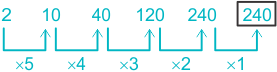
The logic followed here is :- Question 1 solution figure Hence, the correct answer is "240".

Q2 · Series

Select the option that represents the letters that, when sequentially placed from left to right in the blanks below, will complete the letter series. C UP EX PC XU E UP
  1. EXCUPEXC
  2. EXCUEPCX
  3. EXUECPCX
  4. XECUEPCX
Answer aur solution dekho

Archived marked answer: B

Given :- C _ _ UP __ EX PC XU _ _ E _ UP By checking options and substituting accordingly. 1) EXCUPEXC → C E X U P - C E X U P - C P X U E - X E C U P 2) EXCUEPCX → C E X U P - C E X U P - C E X U P - C E X U P - Here, 'CEXUP' is repeated. 3) EXUECPCX → C E X U P - U E X E P - C C X U P - C E X U P 4) XECUEPCX → C X E U P - C E X U P - C E X U P - C E X U P - Option (2) gives the pattern of :- C E X U P - C E X U P - C E X U P - C E X U P Hence, the correct answer is "EXCUEPCX".

Q3 · Series

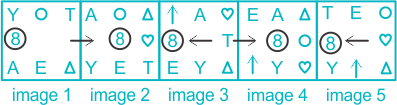
Select the figure that will replace the question mark (?) in the following figure series. Question 3 figure
  1. Question 3, option A
  2. Question 3, option B
  3. Question 3, option C
  4. Question 3, option D
Answer aur solution dekho

Archived marked answer: B

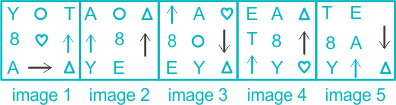
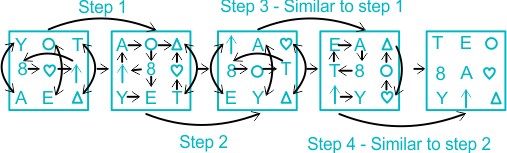
The logic followed here is: Step 1: 8 moves forward and backward horizontally. Question 3 solution figure Step 2: Question 3 solution figure moves upside down vertically. Question 3 solution figure Thus, the complete arrangement will be: Question 3 solution figure So, image 5 will replace the question mark in the given series. Hence, the correct answer is *'Option 2'.* Alternate Method* * Question 3 solution figure

Q4 · Series

Select the figure from the options that can replace the question mark (?) and complete the given pattern. x Question 4 figure
  1. Question 4, option A
  2. Question 4, option B
  3. Question 4, option C
  4. Question 4, option D
Answer aur solution dekho

Archived marked answer: A

The logic here followed is 1) Question 4 solution figure 2)

Q5 · Analogy

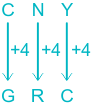
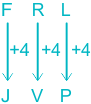
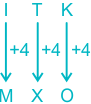
Select the option that is related to the fifth letter-cluster in the same way as the second letter-cluster is related to the first letter-cluster and the fourth letter-cluster is related to the third letter-cluster. CNY : GRC :: FRL : JVP :: ITK : ?
  1. MYO
  2. EOG
  3. MXO
  4. EPG
Answer aur solution dekho

Archived marked answer: C

Question 5 solution figure The logic followed here is :- - CNY : GRC Question 5 solution figure and - FRL : JVP Question 5 solution figure Similarly, - ITK : ? Question 5 solution figure Hence, the correct answer is "MXO".

Q6 · Analogy

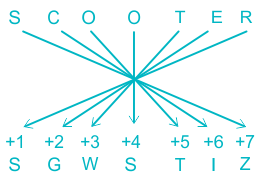
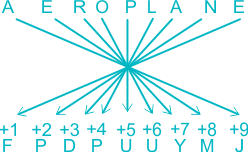
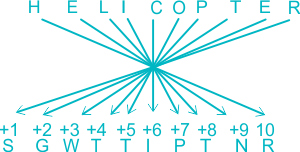
Select the option that is related to the fifth letter-cluster in the same way as the second letter-cluster is related to the first letter-cluster and the fourth letter-cluster is related to the third letter-cluster. SCOOTER : SGWSTIZ :: AEROPLANE : FPDPUUYMJ :: HELICOPTER : ?
  1. RETPOCILEH
  2. SGWTTIPTNR
  3. SFUQPDJMFI
  4. SGWTTIPLEH
Answer aur solution dekho

Archived marked answer: B

Question 6 solution figure The logic followed here is :- - SCOOTER : SGWSTIZ Question 6 solution figure and - AEROPLANE : FPDPUUYMJ Question 6 solution figure Similarly, - HELICOPTER : ? Question 6 solution figure Hence, the correct answer is "SGWTTIPTNR".

Q7 · Analogy

Select the set in which the numbers are related in the same way as are the numbers of the following set. (NOTE: Operations should be performed on the whole numbers, without breaking down the numbers into its constituent digits. E.g. 13 - Operations on 13 such as adding/subtracting/multiplying etc. to 13 can be performed. Breaking down 13 into 1 and 3 and then performing mathematical operations on 1 and 3 is NOT allowed) (9, 18, 324) (14, 11, 308)
  1. (14, 15, 320)
  2. (11, 12, 268)
  3. (7, 12, 168)
  4. (8, 13, 206)
Answer aur solution dekho

Archived marked answer: C

The logic followed here is :- (First number × Second number) × 2 - (9, 18, 324) → (9 × 18) × 2 = 162 × 2 = 324 and - (14, 11, 308) → (14 × 11) × 2 = 154 × 2 = 308 Similarly, - (7, 12, 168) → (7 × 12) × 2 = 84 × 2 = 168 Hence, the correct answer is "(7, 12, 168)".

Q8 · Analogy

Select the option that is related to the fifth number in the same way as the second number is related to the first number and the fourth number is related to the third number. 2 : 9 :: 6 : 121 :: 5 : ?
  1. 81
  2. 84
  3. 64
  4. 72
Answer aur solution dekho

Archived marked answer: A

Given: 2 : 9 :: 6 : 121 :: 5 : ? The logic followed here is: Logic: Second number : (2 × First number - 1)² For, 2 : 9 2 : (4 -1)² 2 : (3)² 2 : 9. For, 6 : 121 6 : (12 -1)² 6 : (11)² 6 : 121. Similarly, 5 : ? 5 : (10 - 1)² 5 : (9)² 5 : 81. Here, 5 : 81 is the correct pair. Hence, the correct answer is* 'Option 1'.*

Q9 · Analogy

Select the set in which the numbers are NOT related in the same way as are the numbers of the following set. (NOTE : Operations should be performed on the whole numbers, without breaking down the numbers into their constituent digits. E.g. 13 - Operations on 13 such as adding/subtracting/multiplying etc. to 13 can be performed. Breaking down 13 into 1 and 3 and then performing mathematical operations on 1 and 3 is not allowed) (8, 13, 21) (13, 18, 31)
  1. (14, 19, 33)
  2. (8, 3, 11)
  3. (11, 16, 29)
  4. (17, 12, 29)
Answer aur solution dekho

Archived marked answer: C

Mistake Points The question is asking to find the NOT related pair, so you also need to find the wrong option. The logic followed here is: (First Number + Second Number = Third Number) Now, For, (8, 13, 21) 8 + 13 = 21 (13, 18, 31) 13 + 18 = 31 Let's Check each Option One by One: Option 1) (14, 19, 33) 14 + 19 = 33 (Option 2) (8, 3, 11) 8 + 3 = 11 Option 3) (11, 16, 29) 11 + 16 = 27 ≠ 29 Option 4) (17, 12, 29) 17 + 12 = 29. So, (11, 16, 29) does not follow the logic. Hence, the correct answer is *'Option 3'.*

Q10 · Analogy

Select the set in which the numbers are related in the same way as are the numbers of the following set. (NOTE : Operations should be performed on the whole numbers, without breaking down the numbers into its constituent digits. E.g. 13 - Operations on 13 such as adding/subtracting/multiplying etc. to 13 can be performed. Breaking down 13 into 1 and 3 and then performing mathematical operations on 1 and 3 is NOT allowed) (47, 11, 61) (13, 68, 84)
  1. (52, 88, 143)
  2. (55, 11, 70)
  3. (16, 62, 80)
  4. (33, 43, 83)
Answer aur solution dekho

Archived marked answer: A

The logic followed here is :- (First number + Second number) + 3 - (47, 11, 61) → (47 + 11) + 3 = 58 + 3 = 61 and - (13, 68, 84) → (13 + 68) + 3 = 81 + 3 = 84 Similarly, - (52, 88, 143) → (52 + 88) + 3 = 140 + 3 = 143 Hence, the correct answer is "143".

Q11 · Analogy

Select the set in which the numbers are related in the same way as are the numbers of the following sets. (NOTE : Operations should be performed on the whole numbers, without breaking down the numbers into its constituent digits. E.g., 13 - Operations on 13 such as adding/subtracting/multiplying etc. to 13 can be performed. Breaking down 13 into 1 and 3 and then performing mathematical operations on 1 and 3 is NOT allowed) (2, 9, 85) (3, 9, 90)
  1. (7, 23, 130)
  2. (7, 9, 130)
  3. (13, 9, 130)
  4. (12, 9, 130)
Answer aur solution dekho

Archived marked answer: B

The logic followed here is :- First number² + Second number² = Third number - (2, 9, 85) → 2² + 9² = 4 + 81 = 85 and - (3, 9, 90) → 3² + 9² = 9 + 81 = 90 Similarly, - (7, 9, 130) → 7² + 9² = 49 + 81 = 13 Hence, the correct answer is "(7, 9, 130)".

Q12 · Non Verbal Reasoning

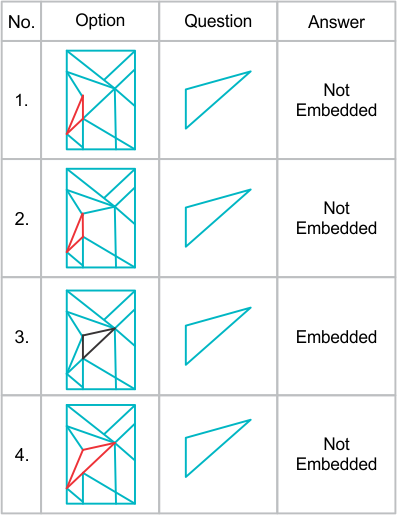
Select the option figure in which the given figure is embedded (rotation is NOT allowed). Question 12 figure
  1. Question 12, option A
  2. Question 12, option B
  3. Question 12, option C
  4. Question 12, option D
Answer aur solution dekho

Archived marked answer: C

Question 12 solution figure Hence, the correct answer is "Option 3".

Q13 · Non Verbal Reasoning

Select the correct mirror image of the given figure when the mirror is placed at PQ as shown below. Question 13 figure
  1. Question 13, option A
  2. Question 13, option B
  3. Question 13, option C
  4. Question 13, option D
Answer aur solution dekho

Archived marked answer: A

The correct mirror image of the given figure when the mirror is placed at PQ is as shown below : Question 13 solution figure Detailed Explanation: - The line PQ is the mirror. - The word 'FGHTKD' ends with last second letter 'K'. So, the mirror image should be ' Question 13 solution figure ' ⇒ Option 2 and 3 are eliminated. - The word 'FGHTKD' ends with last third letter as 'T'. So, the mirror image will be ' Question 13 solution figure ' ⇒ Option 4 is eliminated. Hence, the correct answer is "Option 1".

Q14 · Non Verbal Reasoning

Select the correct mirror image of the given figure when the mirror is placed at MN as shown below. Question 14 figure
  1. Question 14, option A
  2. Question 14, option B
  3. Question 14, option C
  4. Question 14, option D
Answer aur solution dekho

Archived marked answer: D

The correct mirror image of the given figure when the mirror is placed at MN as shown below : Question 14 solution figure Detailed Explanation: - The line MN is the mirror. - The word 'HJQ6RyE' starts with letter 'H'. So, the mirror image of the letter should start with 'H' ⇒ Option 1 is eliminated. - The word 'HJQ6RyE' second letter is 'J'. So, the mirror image of the letter is ' Question 14 solution figure ' ⇒ Option 2 is eliminated. - The word 'HJQ6RyE' third letter is 'Q'. So, the mirror image of letter is ' Question 14 solution figure ' ⇒ Option 3 is eliminated. Hence, the correct answer is "Option 4".

Q15 · Non Verbal Reasoning

A paper is folded and cut as shown below. How will it appear when unfolded? Question 15 figure
  1. Question 15, option A
  2. Question 15, option B
  3. Question 15, option C
  4. Question 15, option D
Answer aur solution dekho

Archived marked answer: A

After unfolding the given paper the figure obtained is as shown below : Question 15 solution figure Hence, the correct answer is "Option 1".

Q16 · Puzzle Subtypes Not To Miss

Select the correct combination of mathematical signs to sequentially replace the * signs and balance the given equation. 45 * 86 * 23 * 36 * 18 * 2021
  1. ×, +, -, ÷, =
  2. +, -, ×, ÷, =
  3. -, ×, +, ÷, =
  4. +, ×, -, ÷, =
Answer aur solution dekho

Archived marked answer: D

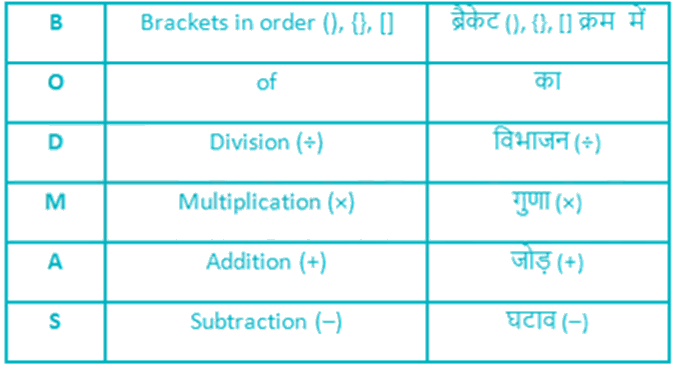
The logic followed here is :- By using BODMAS RULE : Question 16 solution figure Option 1) : ×, +, -, ÷, = Given equation : 45 * 86 * 23 * 36 * 18 * 2021 After inserting the mathematical operators in given equation the equation is as follows : 45 × 86 + 23 - 36 ÷ 18 = 2021 ⇒ 45 × 86 + 23 - 36 ÷ 18 = 2021 ⇒ 45 × 86 + 23 - 2 = 2021 ⇒ 3870 + 23 - 2 = 2021 ⇒ 3893 - 2 = 2021 ⇒ 3891 ≠ 2021

Q17 · Puzzle Subtypes Not To Miss

Select the correct combination of mathematical signs that can sequentially replace the * signs and balance the given equation. 12 * 70 * 5 * 5 * 5 * 11 * 2
  1. +, -, ×, =, ×, +
  2. ×, +, +, -, ×, =
  3. ×, =, ×, ×, +, -
  4. ×, +, -, ×, =, ×
Answer aur solution dekho

Archived marked answer: A

The logic followed here is :- By using BODMAS RULE : Question 17 solution figure Option 1) : +, -, ×, =, ×, + Given equation : 12 * 70 * 5 * 5 * 5 * 11 * 2 After inserting the mathematical operators in given equation the equation is as follows : 12 + 70 - 5 × 5 = 5 × 11 + 2 ⇒ 12 + 70 - 5 × 5 = 5 × 11 + 2 ⇒ 12 + 70 - 25 = 55 + 2 ⇒ 82 - 25 = 57 ⇒&a

Q18 · Puzzle Subtypes Not To Miss

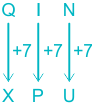
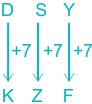
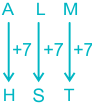
Select the option that is related to the fifth letter-cluster in the same way as the second letter-cluster is related to the first letter-cluster and the fourth letter-cluster is related to the third letter-cluster. QIN : XPU :: DSY : KZF :: ALM : ?
  1. HTU
  2. IST
  3. ITU
  4. HST
Answer aur solution dekho

Archived marked answer: D

Question 18 solution figure The logic followed here is :- - QIN : XPU Question 18 solution figure and - DSY : KZF Question 18 solution figure Similarly, - ALM : ? Question 18 solution figure Hence, the correct answer is "HST".

Q19 · Coding Decoding

In a certain code language, "MELODY" is written as "LEMYDO" and "PURPLE" is written as "RUPELP". How will "CLAUSE" be written in that language?
  1. EUSLAC
  2. ASUELC
  3. ALCESU
  4. ESUALC
Answer aur solution dekho

Archived marked answer: C

Th e logic followed here is :- "MELODY" is written as "LEMYDO". Question 19 solution figure and "PURPLE" is written as "RUPELP".

Q20 · Coding Decoding

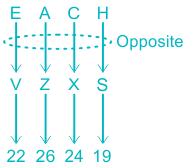
In a certain code language, 'EACH' is written as '97', 'EASY' is written as '64'. How will 'ECHO' be written in that language?
  1. 85
  2. 82
  3. 83
  4. 86
Answer aur solution dekho

Archived marked answer: C

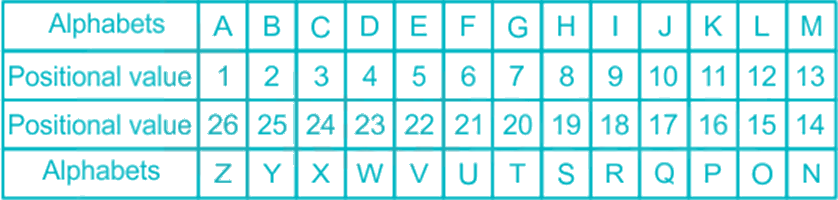
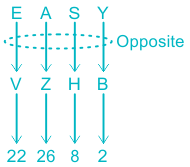
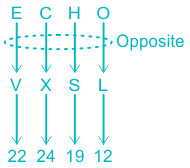
Question 20 solution figure The logic followed here is :- Sum of opposite alphabetical positional value of given word + 6. 'EACH' is written as '97'. Question 20 solution figure = (22 + 26 + 24 + 19) + 6 = 91 + 6 = 97 and 'EASY' is written as '64'. Question 20 solution figure = (22 + 26 + 8 + 2) + 6 = 58 + 6 = 64 Similarly, 'ECHO' will be written as : Question 20 solution figure = (22 + 24 + 19 + 12) + 6 = 77 + 6 = 83 Hence, the correct answer is "83".

Q21 · Classification Odd One Out

Four letter-clusters have been given, out of which three are alike in some manner and one is different. Select the one that is different.
  1. EIJN
  2. DHIM
  3. BDFH
  4. CGHL
Answer aur solution dekho

Archived marked answer: C

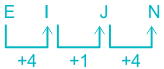
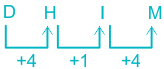
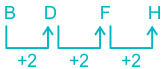
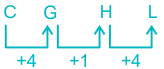
Question 21 solution figure The logic followed here is :- 1) EIJN Question 21 solution figure 2) DHIM Question 21 solution figure 3) BDFH Question 21 solution figure 4) CGHL Question 21 solution figure ∴ Here, 'BDFH' is different from other three alternatives. Hence, the correct answer is "BDFH".

Q22 · Logical Reasoning

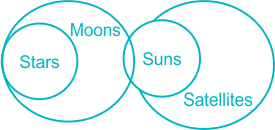
Three Statements are given followed by Three conclusions numbered I, II and III. Assuming the statements to be true, even if they seem to be at variance with commonly known facts, decide which of the conclusions logically follow(s) from the statements. Statements : All stars are moons. Some moons are suns. All suns are satellites. Conclusions : I. Some satellites are moons. II. Some satellites are stars. III. Some moons are stars.
  1. Both conclusions I and II follow.
  2. All conclusions follow.
  3. Both conclusions I and III follow.
  4. Both conclusions II and III follow.
Answer aur solution dekho

Archived marked answer: C

The least possible Venn diagram for the given statements is as shown below : Question 22 solution figure Conclusions : I. Some satellites are moons → True (As Some moons are suns and All suns are satellites so, Some satellites ar

Q23 · Blood Relations

Looking at a photograph of a woman, Samuel said, "She is the mother of the daughter of my father's brother." How is Samuel related to the woman in the picture?
  1. Son
  2. Brother
  3. Husband's Brother
  4. Husband's Brother's Son
Answer aur solution dekho

Archived marked answer: D

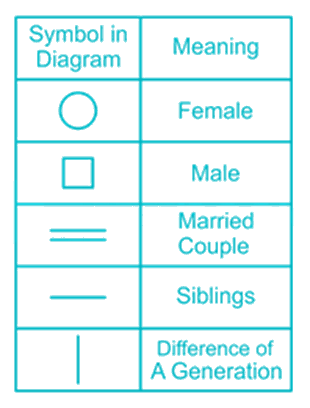
Preparing the family tree using the following symbol: Question 23 solution figure Family Tree&a

Q24 · Alphabet Test

Select the option that represents the correct order of the given words as they would appear in an English dictionary. 1. Accompany 2. Accident 3. Accuracy 4. Acclaimed 5. Accepted 6. Accessary
  1. 5, 6, 4, 2, 3, 1
  2. 6, 5, 4, 2, 3, 1
  3. 5, 6, 2, 4, 1, 3
  4. 6, 5, 2, 4, 1, 3
Answer aur solution dekho

Archived marked answer: C

The arrangement of the given words in the order in which they appear in an English dictionary is as shown below : 5. Accepted 6. Accessary 2. Accident 4. Acclaimed 1. Accompany 3. Accuracy Hence, the correct answer is "5, 6, 2, 4, 1, 3".

Q25 · Alphabet Test

Arrange the following words in the correct order as per the English Dictionary. 1. Pandemonium 2. Pandemic 3. Pandering 4. Pandanus 5. Pandarus
  1. 4, 5, 3, 1, 2
  2. 4, 5, 1, 2, 3
  3. 4, 5, 1, 3, 2
  4. 4, 5, 2, 1, 3
Answer aur solution dekho

Archived marked answer: D

The correct dictionary order for the given words are: 4. Pandanus 5. Pandarus 2. Pandemic 1. Pandemonium 3. Pandering So, the correct dictionary for the given words are: 4, 5. 2, 1, 3. Hence, the correct answer is *'Option 4'.*

General Awareness

Q1 · Art and Culture

Which of the following groups of classical dancers is related to Kathak?
  1. Yamini Krishnamurthy, Shobha Naidu and Swapnasundari
  2. Sitara Devi, Shaswati Sen and Urmila Nagar
  3. Alarmel Valli, Malavika Sarukkai and Sucheta Chaphekar
  4. Kumkum Mohanty, Sonal Mansingh and Kiran Sehgal
Answer aur solution dekho

Archived marked answer: B

The correct answer is Sitara Devi, Shaswati Sen and Urmila Nagar. Key Points - Kathak is divided into three separate styles known as "gharanas," which are named after the places where the Kathak dance heritage evolved: Jaipur, Banaras, and Lucknow. - The Jaipur Gharana is mainly concerned with foot motions. - Banaras and Lucknow gharanas provide a greater emphasis on facial expressions and beautiful hand gestures. - The Vedic Sanskrit word "Katha," which means "tale," is where the term "kathak" initially originates. - The stories told in Kathak performances are usually about the Hindu god Krishna (or, in certain circumstances, Shiva or Devi). - The stories are based on the Bhagavata Purana or the Indian Epics. - Sitara Devi, Shaswati Sen, and Urmila Nagar are related to Kathak. - Raigarh Gharana: It originated in the Raigarh state of Madhya Pradesh, India. It is known for its distinct musical style and contribution to both vocal and instrumental music. Additional Information - The Indian States and Folk Dances - Andhra Pradesh- Kuchipudi, Bhamakalpam, Lambadi, Dhimsa, Kolattam, Butta Bommalu. - Assam- Bihu, Bichhua, Natpuja, Maharas, Kaligopal, Bagurumba, Naga dance, Khel Gopal, Tabal Chongli, Canoe, Jhumura Hobjanai - Bihar- Jata-Jatin, Bakho-Bakhain, Panwariya, Sama Chakwa, Bidesia. - Gujarat- Garba, Dandiya Ras, Tippani Juriun, Bhavai. - Haryana- Jhumar, Phag, Daph, Dhamal, Loor, Gugga, Khor, Gagor. - Himachal Pradesh- Jhora, Jhali, Chharhi, Dhaman, Chhapeli, Mahasu, Nati, Dangi. - Jammu and Kashmir- Rauf, Hikat, Mandjas, Kud Dandi Nach, Damali. - Karnataka- Yakshagan, Huttari, Suggi, Kunitha, Karga, Lambi. - Kerala- Kathakali (Classical), Ottamthullal, Mohiniattam, Kaikottikali. - Maharashtra- Lavani, Nakata, Koli, Lezim, Gafa, Dahikala Dasavtar or Bohada. - Odisha- Odissi (Classical), Savari, Ghumara, Painka, Munari, Chhau. - West Bengal- Kathi, Gambhira, Dhali, Jatra, Baul, Marasia, Mahal, Keertan. - Punjab- Bhangra, Giddha, Daff, Dhaman, Bhand, Naqual. - Rajasthan- Ghumar, Chakri, Ganagor, Jhulan Leela, Jhuma, Suisini, Ghapal, Kalbeliya. - Tamil Nadu- Bharatanatyam, Kumi, Kolattam, Kavadi. - Uttar Pradesh- Nautanki, Raslila, Kajri, Jhora, Chappeli, Jaita. - Uttarakhand- Garhwali, Kumayuni, Kajari, Jhora, Raslila, Chappeli. - Goa- Tarangamel, Koli, Dekhni, Fugdi, Shigmo, Ghode, Modni, Samayi nrutya, Jagar, Ranmale, Gonph, Tonnya mell. - Madhya Pradesh- Jawara, Matki, Aada, Khada Nach, Phulpati, Grida Dance, Selalarki, Selabhadoni, Maanch. - Chhattisgarh- Gaur Maria, Panthi, Raut Nacha, Pandwani, Vedamati, Kapalik, Bharthari Charit, Chandaini. - Jharkhand- Alkap, Karma Munda, Agni, Jhumar, Janani Jhumar, Mardana Jhumar, Paika, Phagua,Hunta Dance, Mundari Dance, Sarhul, Barao, Jhitka, Danga, Domkach, Ghora Naach. - Arunachal- Pradesh Buiya, Chalo, Wancho, Pasi Kongki, Ponung, Popir, Bardo Chham. - Manipur- Dol Cholam, Thang Ta, Lai Haraoba, Pung Cholom, Khamba Thaibi, Nupa Dance, Raslila, Khubak Ishei, Lhou Sha. - Meghalaya- Ka Shad Suk Mynsiem, Nongkrem, Laho. - Mizoram- Cheraw Dance, Khuallam, Chailam, Sawlakin, Chawnglaizawn, Zangtalam, Par Lam, Sarlamkai/Solakia, Tlanglam, Bamboo Dance. - Nagaland- Rangma, Zeliang, Nsuirolians, Gethinglim, Temangnetin, Hetaleulee. - Tripura- Hojagiri. - Sikkim- Chu Faat Dance, Sikmari, Singhi Chaam or the Snow Lion Dance, Yak Chaam, Denzong Gnenha, Tashi Yangku Dance, Khukuri Naach, Chutkey Naach, Maruni Dance.
Q2 · Art and Culture

Bhortal dance is famous in _________ .
  1. Odisha
  2. Madhya Pradesh
  3. Punjab
  4. Assam
Answer aur solution dekho

Archived marked answer: D

The correct answer is Assam. Key Points - Bhortal dance is a traditional dance form of Assam, which is famous for its rhythmic footwork and synchronized movements. - The dance is accompanied by the sound of traditional instruments like the dhol, pepa, and taal. - The dancers wear traditional attire like dhoti, gamosa, and turban while dancing. - Bhortal dance is also known as 'Baratal' or 'Barat' in some parts of Assam. Additional Information - The Indian States and Folk Dances - Andhra Pradesh- Kuchipudi, Bhamakalpam, Lambadi, Dhimsa, Kolattam, Butta Bommalu. - Assam- Bihu, Bichhua, Natpuja, Maharas, Kaligopal, Bagurumba, Naga dance, Khel Gopal, Tabal Chongli, Canoe, Jhumura Hobjanai - Bihar- Jata-Jatin, Bakho-Bakhain, Panwariya, Sama Chakwa, Bidesia. - Gujarat- Garba, Dandiya Ras, Tippani Juriun, Bhavai. - Haryana- Jhumar, Phag, Daph, Dhamal, Loor, Gugga, Khor, Gagor. - Himachal Pradesh- Jhora, Jhali, Chharhi, Dhaman, Chhapeli, Mahasu, Nati, Dangi. - Jammu and Kashmir- Rauf, Hikat, Mandjas, Kud Dandi Nach, Damali. - Karnataka- Yakshagan, Huttari, Suggi, Kunitha, Karga, Lambi. - Kerala- Kathakali (Classical), Ottamthullal, Mohiniattam, Kaikottikali. - Maharashtra- Lavani, Nakata, Koli, Lezim, Gafa, Dahikala Dasavtar or Bohada. - Odisha- Odissi (Classical), Savari, Ghumara, Painka, Munari, Chhau. - West Bengal- Kathi, Gambhira, Dhali, Jatra, Baul, Marasia, Mahal, Keertan. - Punjab- Bhangra, Giddha, Daff, Dhaman, Bhand, Naqual. - Rajasthan- Ghumar, Chakri, Ganagor, Jhulan Leela, Jhuma, Suisini, Ghapal, Kalbeliya. - Tamil Nadu- Bharatanatyam, Kumi, Kolattam, Kavadi. - Uttar Pradesh- Nautanki, Raslila, Kajri, Jhora, Chappeli, Jaita. - Uttarakhand- Garhwali, Kumayuni, Kajari, Jhora, Raslila, Chappeli. - Goa- Tarangamel, Koli, Dekhni, Fugdi, Shigmo, Ghode, Modni, Samayi nrutya, Jagar, Ranmale, Gonph, Tonnya mell. - Madhya Pradesh- Jawara, Matki, Aada, Khada Nach, Phulpati, Grida Dance, Selalarki, Selabhadoni, Maanch. - Chhattisgarh- Gaur Maria, Panthi, Raut Nacha, Pandwani, Vedamati, Kapalik, Bharthari Charit, Chandaini. - Jharkhand- Alkap, Karma Munda, Agni, Jhumar, Janani Jhumar, Mardana Jhumar, Paika, Phagua,Hunta Dance, Mundari Dance, Sarhul, Barao, Jhitka, Danga, Domkach, Ghora Naach. - Arunachal- Pradesh Buiya, Chalo, Wancho, Pasi Kongki, Ponung, Popir, Bardo Chham. - Manipur- Dhol Cholam, Thang Ta, Lai Haraoba, Pung Cholom, Khamba Thoibi, Nupa Dance, Raslila, Khubak Ishei, Lhou Sha. - Meghalaya- Ka Shad Suk Mynsiem, Nongkrem, Laho. - Mizoram- Cheraw Dance, Khuallam, Chailam, Sawlakin, Chawnglaizawn, Zangtalam, Par Lam, Sarlamkai/Solakia, Tlanglam, Bamboo Dance. - Nagaland- Rangma, Zeliang, Nsuirolians, Gethinglim, Temangnetin, Hetaleulee. - Tripura- Hojagiri. - Sikkim- Chu Faat Dance, Sikmari, Singhi Chaam or the Snow Lion Dance, Yak Chaam, Denzong Gnenha, Tashi Yangku Dance, Khukuri Naach, Chutkey Naach, Maruni Dance

Q3 · Art and Culture

How many times in a year is the Bihu festival celebrated in Assam?
  1. 5
  2. 4
  3. 3
  4. 2
Answer aur solution dekho

Archived marked answer: C

The correct answer is 3. Key Points - Bihu is the official state festival of Assam, which is celebrated thrice a year. - Bihu in Assam marks the three distinct phases of the farming calendar. - Bihu is a secular festival that is celebrated by people from all parts of Assam irrespective of caste creed or religious background.

Q4 · Indian Polity and Constitution

Which Article of the Indian Constitution deals with the Right against Exploitation?
  1. Article 22
  2. Article 23
  3. Article 21
  4. Article 20
Answer aur solution dekho

Archived marked answer: B

The correct answer is Article 23. - Article 23 deals with 'Right against Exploitation. Key Points - Right against exploitation(Article 23-24). - Article 23 deals with the Prohibition of Human Trafficking and Forced Labour: - Forced labour in India was imposed by landlords, moneylenders and other wealthy persons in the past. - Article 23 of the Indian Constitution prohibits human trafficking and begar (forced labour without payment) to protect the millions of underprivileged and deprived people of the country. - The right is available to citizens of India as well as to non-citizens. - The right provides against human trafficking in the form of: - Selling and buying of men, women and children. - Prostitution - Devadasis - Slavery. - The Immoral Traffic (Prevention) Act 13, 1956 has been enacted to deal with violations of this fundamental right. - Prohibition of Child Labour: Article 24 of the Indian Constitution forbids the employment of children below the age of 14 years in dangerous jobs like factories and mines. - However, it did not prohibit their employment in any harmless or innocent work. - The Child Labour (Prohibition and Regulation) Act, 1986 (renamed as Child & Adolescent Labour (Prohibition and Regulation) Act, 1986 in 2016) specifically deals with the violations related to this right. - The 2016 amendment of this act completely prohibited the employment of children below 14 years of age in all occupations and processes. - It also prohibited the employment of adolescents (14-18 years of age) in hazardous occupations or processes. Question 4 solution figure Additional Information - Article 20 of the Constitution of India deals with the protection in respect of conviction for offences. - Article 22 deals with the protection against arrest and detention in certain cases. - Article 21 deals with the Protection of Life and Personal Liberty.

Q5 · Indian Polity and Constitution

Which of the following institutions was set up in 1982 in order to streamline credit facilities to farmers at a national level?
  1. NEDFI
  2. NABARD
  3. IFCI
  4. SIDBI
Answer aur solution dekho

Archived marked answer: B

The correct answer is NABARD. Key Points - NABARD was set up in 1982 to coordinate the activities of all institutions involved in the rural financing system. - NABARD(National Bank for Agriculture and Rural Development): - NABARD is a development bank focussing primarily on the rural sector of the country. - It is the apex banking institution to provides finance for Agriculture and rural development. - Its headquarter is located in Mumbai, the country’s financial capital. - It is responsible for the development of small industries, cottage industries, and any other such village or rural projects. - It is a statutory body established in 1982 under the Parliamentary Act-National Bank for Agriculture and Rural Development Act, 1981. - NABARD’s initiatives are aimed at building an empowered and financially inclusive rural India through specific goal-oriented departments which can be categorized broadly into three heads: Financial, Developmental, and Supervision. - It provides refinance support for building rural infrastructure. - It prepares district-level credit plans to guide and motivate the banking industry in achieving these targets. - It supervises Cooperative Banks and Regional Rural Banks (RRBs) and helps them develop sound banking practices and integrate them into the CBS (Core Banking Solution) platform. Additional Information - NEDFI (North Eastern Development Finance Corporation Ltd.) provides financial assistance for the development of industries, infrastructure, and service sectors in the Northeast region of India. - IFCI (Industrial Finance Corporation of India) provides long-term financial assistance to medium and large-scale industries. - SIDBI (Small Industries Development Bank of India) provides financial support to MSMEs (Micro, Small and Medium Enterprises).

Q6 · Indian Economy

Under Statutory liquidity ratio, commercial banks are required to keep a fraction of __________ in form of liquid assets.
  1. current deposits
  2. total demand and term deposits
  3. term deposits
  4. saving deposits
Answer aur solution dekho

Archived marked answer: B

The correct answer is total demand and term deposits. Key Points Statutory liquidity ratio(SLR) is a government term where commercial banks are mandated to keep a specific proportion of __total demand and term deposits__ in the form of liquid assets. - It is determined by the RBI. - It is used to control inflation and fuel growth, by decreasing or increasing the money supply. - Liquid Assets, Net Demand and Time Liabilities (NDTL) and SLR Limit are the three components of SLR under Section 24 and Section 56 of the Banking Regulation Act 1949. - Liquid Assets: Here assets like gold, security bonds can be easily converted to cash. - Net Demand and Time Liabilities (NDTL): It refers to the total demand and time liabilities (deposits) of the public that are held by the banks with other banks. - Demand deposits consist of all liabilities, which the bank needs to pay on demand. They include current deposits, demand drafts etc. - Time deposits consist of deposits that will be repaid on maturity. - SLR Limit in India was a maximum of 40% and minimum of 20.75%. However, the Reserve Bank of India (RBI) amended the Banking Regulation Act in January 2017 to remove the floor rate of 20.75% for SLR. This means that the RBI can now set the SLR at any level between 0% and 40%. - The RBI will incur a penalty on a bank if it does not keep the required SLR ratio. - SLR is calculated using the given formula: SLR rate = (liquid assets / (demand + time liabilities)) × 100% Additional Information Cash reserve ratio - The Cash Reserve Ratio (CRR) is a monetary policy tool used by central banks, including the Reserve Bank of India (RBI), to regulate and control the money supply in the economy. - CRR is the percentage of total deposits that commercial banks are required to keep as reserves with the central bank. - It is a portion of the bank's demand and time liabilities. - The primary objective of implementing CRR is to ensure the liquidity and stability of the banking system while controlling inflation and managing credit growth. - When the central bank increases the CRR, it reduces the amount of money available for lending by commercial banks. - This helps reduce excess liquidity in the economy, controlling inflationary pressures, and curbing excessive credit expansion. - On the other hand, when the central bank decreases the CRR, it increases the amount of money available for lending by commercial banks. - This can stimulate credit growth, promote economic activity, and ease liquidity conditions in the economy.

Q7 · Indian Economy

In November 2022, which of the following Union Ministries has launched a month-long campaign titled, 'Nai Chetna-Pahal Badlav Ki' - A Community-led National Campaign against Gender-Based Discrimination?
  1. Ministry of Rural Development
  2. Ministry of Culture
  3. Ministry of Women and Child Development
  4. Ministry of Social Justice and Empowerment
Answer aur solution dekho

Archived marked answer: A

The correct option is Ministry of Rural Development. Key Points Nai Chetna-Pahal Badlav Ki - The campaign aims to sensitize rural communities across India on issues related to gender-based discrimination and promote gender equality. - The campaign will be led by women's self-help groups, who will conduct various activities such as rallies, street plays, and awareness sessions. - The Ministry of Rural Development has allocated Rs. 50 crore for the campaign, which will be implemented in collaboration with state governments and other stakeholders. - The campaign is part of the government's efforts to empower women in rural areas and promote their participation in development activities.

Q8 · Sports Static GK

Deepika Pallikal is assoicated with ___________ .
  1. squash
  2. biliards
  3. chess
  4. cricket
Answer aur solution dekho

Archived marked answer: A

The correct answer is Squash. Key Points - Deepika Pallikal is related to Squash. - Dipika Pallikal Karthik (born 21 September 1991) is an Indian professional squash player. - She is the first Indian to break into the top 10 in the Professional Squash Association Women's rankings. - Dipika Pallikal came to prominence in 2011, when she won three WISPA tour titles to attain a career-best ranking of 13th. - Dipika started her career in a promising fashion. - She reached the final of the Chennai Open in 2008, beating the first and third seeds on her way. - This phenomenal player is known to play a prominent role in making Squash popular among the Indian masses. Additional Information - Deepika Pallikal Achievements Titles : - Indian Challenger 2010 - Macau Open 2013 - Bronze at the 2014 Incheon Asian Games (Women’s Singles) - Silver at 2014 Incheon Asian Games (Women’s Team) - Bronze at 2018 Jakarta Asian Games (Women’s Singles)

Q9 · Sports Static GK

Who was the winner of ICC Men's T20 World Cup - 2021?
  1. India
  2. West Indies
  3. Australia
  4. England
Answer aur solution dekho

Archived marked answer: C

The correct answer is Australia. Key Points - Australia was the winner of the ICC Men's T20 World Cup 2021. - The T20 World Cup 2021 was started on 17th October in UAE and Oman. - The final match was played between Australia and New Zealand. - That was the first time when the Australian cricket team won the T20 World Cup 2021. - Australian cricketer Mitchell Marsh was the player of the match in the T20 World Cup 2021. Additional Information - ICC headquarter is located in Dubai, United Arab Emirates. - It was established in 1909 by the representatives of Australia, England, and South Africa as Imperial Cricket Conference. - The ICC is the global governing body for cricket which is also responsible for all ICC events.

Q10 · Indian Geography

Identify the option that arranges the following states' literacy rates in descending order, according to Census 2011. A. Kerala B. Himachal Pradesh C. Haryana
  1. (A), (C), (B)
  2. (B), (A), (C)
  3. (C), (B), (A)
  4. (A), (B), (C)
Answer aur solution dekho

Archived marked answer: D

The correct answer is (A), (B), (C). Key Points - According to Census 2011, the literacy rates of the states in descending order are Kerala, Himachal Pradesh, and Haryana. - Kerala has the highest literacy rate of 94% among all the states in India. - Haryana has a literacy rate of 75.6%. - Himachal Pradesh has a literacy rate of 82.80%. Additional Information - The Indian Census is the largest single source of a variety of statistical information on different characteristics of the people of India. - The first census of India was conducted by Lord Mayo in 1872. - The first official census was started by Lord Ripon in 1881. - In 2011 it is 15 census of India. - It comes to the Ministry of Home Affairs From 1961. - The slogan of the 2011 Census is Our Census Our Future. - C M Chandramauli was the Registrar General and Census Commissioner of India for the 2011 Indian Census.

Q11 · Indian Geography

Nor Westers are dreaded evening thunderstorms seen in __________ .
  1. Bengal and Assam
  2. Punjab and Haryana
  3. Rajasthan and Madhya Pradesh
  4. Telangana and Maharashtra
Answer aur solution dekho

Archived marked answer: A

The correct answer is Bengal and Assam. Key Points - Norwesters or the Kalbaishakhi is

Q12 · Indian Geography

The National Highway Authority of India (NHAI) was operationalised in which year?
  1. 2005
  2. 2000
  3. 1993
  4. 1995
Answer aur solution dekho

Archived marked answer: D

The correct answer is 1995. Key Points - NHAI: - The National Highways Authority of India or NHAI is an autonomous agency of the Government of India. - It was set up in 1995 under the NHAI Act, 1988.. - It is responsible for the management of a network of over 50,000 km of National Highways out of 1,32,499 km in India. - It is a nodal agency of the Ministry of Road Transport and Highways. Additional Information - In June 2022, India built 75km of road in under 5 days and set Guinness World Record. - The stretch lies on the NH 53 between Amravati and Akola in Maharashtra.

Q13 · Modern Indian History

By which of the following acts was a bicameral legislature introduced in India at the centre level?
  1. Indian councils Act of 1861
  2. Regulating Act of 1773
  3. Government of India Act of 1919
  4. Government of India Act of 1935
Answer aur solution dekho

Archived marked answer: C

The correct answer is Government of India Act of 1919. Key Points - Government of India Act, 1919 - The matters, which were of National importance or related to more than one province were governed at the central level, such as Foreign Affairs, Defence, Political Relations, Communication, Public Debt, Civil and Criminal Laws, Wire services, etc. - The Central Legislature was made more powerful and more representative by this Act. - The Act introduced a bicameral legislature; the Lower House or Central Legislative Assembly and the Upper House or Council of State. - The legislators, under the new reforms, could now ask questions and supplementary, pass adjournment motions, and vote a part of the budget, but 75% of the budget was still not votable. - The legislature had virtually no control over the Governor-General and his Executive Council. Question 13 solution figure Additional Information - Government of India Act 1935 - There was a growing demand for constitutional reforms in India by Indian leaders. - India’s support to Britain in the First World War also aided in British acknowledgment of the need for the inclusion of more Indians in the administration of their own country. - The Act was based on - Simon Commission Report - The recommendations of the Round Table Conferences - The White Paper published by the British government in 1933 (based on the Third Round Table Conference) - Report of the Joint Select Committees. - Morley-Minto Reforms 1909 - The legislative councils at the Centre and the provinces increased in size. - Central Legislative Council – from 16 to 60 members. - Legislative Councils of Bengal, Madras, Bombay, and United Provinces – 50 members each. - Legislative Councils of Punjab, Burma, and Assam – 30 members each. - The legislative councils at the Centre and the provinces were to have four categories of members as follows: - Ex officio members: Governor-General and members of the executive council. - Nominated official members: Government officials who were nominated by the Governor-General. - Nominated non-official members: nominated by the Governor-General but were not government officials. - Elected members: elected by different categories of Indians.

Q14 · Modern Indian History

Who founded the Tattvabodhini Sabha that was set up to explore spiritual truth?
  1. Keshab Chandra Sen
  2. Raja Ram Mohan Roy
  3. Debendranath Tagore
  4. Dayanand Saraswati
Answer aur solution dekho

Archived marked answer: C

The correct answer is Debendranath Tagore. Key Points - Debendranath Tagore founded 'Tattavabodhini Sabha'. - On 6 October 1839, Debendranath Tagore established Tattvaranjini Sabha which was shortly thereafter renamed the Tattwabodhini ('Truth-seekers') Sabha. - Debendranath Tagore was a Hindu philosopher and religious reformer. - Brahmo Samaj was founded by Raja Ram Mohan Roy and Debendranath Tagore - In 1859, the Tattwabodhini Sabha was dissolved back into the Brahmo Samaj by Debendranath Tagore. - Raja Ram Mohan Roy is regarded as the Father of Modern India. Additional Information Important movements/Sabha and their founder: Arya Samaj Swami Dayanand Sarswati Ramakrishna mission Swami Vivekanand Abhinav Bharat V. Savarkar Prarthana samaj Atma Ram Pandurang and Dadoba Pandurang Atmiya Sabha Raja Ram Mohan Roy Gadar Party Lala Hardyal and Kashiram Hindustan Socialist Republic Association Chandrasekhar Azad Muslim League Agha Khan & Salimullah

Q15 · General Science Biology

In which of the following animal phyla, is the body divided into head, thorax and abdomen?
  1. Annelida
  2. Mollusca
  3. Arthropoda
  4. Chordata
Answer aur solution dekho

Archived marked answer: C

The correct answer is Arthropoda. Key Points Arthropoda - Phylum Arthropoda is the largest phylum in the animal kingdom. - Over two-thirds of all named species on Earth are arthropods. - Phylum Arthropoda was first created by Von Seibold in 1845. - The body of arthropods is covered by a chitinous exoskeleton. - The body of arthropods consists of a head, thorax, and abdomen. - Phylum Arthropoda has<

Q16 · General Science Chemistry

In which year did Antoine Lavoisier publish 'Methods of Chemical Nomenclature', which included the rules for naming chemical compounds that are still in use today?
  1. 1783
  2. 1780
  3. 1790
  4. 1787
Answer aur solution dekho

Archived marked answer: D

The correct answer is 1787. Key Points - In 1787, four prominent French chemists – Louis Bernard Guyton de Morveau, Antoine-Laurent Lavoisier, Claude Louis Berthollet, and Antoine François Fourcroy – published a book with the title Méthode de nomenclature chimique. - In this book, they proposed a new nomenclature of chemical substances, explicated their principles of methodically constructing chemical names, and further presented a taxonomic table of chemical substances. - Historians of chemistry have unanimously praised the Method as a key document of eighteenth-century chemistry, particularly of Lavoisier’s epoch. - Since the nomenclatural and the taxonomic proposals of the Méthode were constructed in accordance with Lavoisier’s antiphlogistic chemical system, most historians have regarded it as a fruit and manifestation of this chemical system.

Q17 · General Science Chemistry

In which method of cooking is food heated slowly over a source of heat and cooked by high heat and air convection depending on the position of the food in relation to the fire?
  1. Spit-roasting
  2. Braising
  3. Poaching
  4. Stewing
Answer aur solution dekho

Archived marked answer: A

The correct answer is Spit-roasting. - In spit-roasting, the food is skewered on a spit and rotated slowly over a source of heat. - The heat source can be an open flame or hot coals, and the food is cooked by the radiant heat and hot air that surrounds it. - Spit-roasting is often used for large cuts of meat, such as whole chickens or pigs, and can result in a crispy, flavorful exterior and juicy interior. - This method of cooking requires constant attention and turning off the spit to ensure even cooking. Braising - Braising involves cooking food slowly in a covered pot with a small amount of liquid, such as broth or wine. - The food is first seared on the stovetop to develop flavor, then simmered in the liquid for a long period of time. - This method is often used for tough cuts of meat, as the slow cooking and liquid help to tenderize the meat. - Braising can result in a flavorful, tender dish with a rich sauce. Poaching - Poaching involves cooking food in a liquid that is just below boiling point. - The liquid can be water, broth, or other flavorful liquids, and the food is typically submerged in the liquid. - This method is often used for delicate foods, such as fish or eggs, as it is a gentle cooking method that helps to retain moisture and flavor. - Poaching can result in a tender, moist dish with a subtle flavor. Stewing - Stewing involves cooking food slowly in a covered pot with a larger amount of liquid than braising. - The food is typically cut into smaller pieces and simmered in the liquid for a long period of time. - This method is often used for tougher cuts of meat, as the slow cooking and liquid help to tenderize the meat. - Stewing can result in a flavorful, tender dish with a rich sauce.

Q18 · Awards Static

At the 108th Indian Science Congress concluded at Rashtrasant Tukdoji Maharaj Nagpur University on 7 January 2023. Who among the following won the Dr CV Raman Birth Centenary Award?
  1. Prof Subhash Chandra Parija
  2. Dr Ranjan Kumar Nandy
  3. Prof SR Niranjana
  4. Dr Kaushal Prasad Mishra
Answer aur solution dekho

Archived marked answer: C

The correct answer is Prof SR Niranjana. Key Points - The Dr. CV Raman Birth Centenary Award is given to recognize outstanding contributions in the field of Plant Sciences. - Prof SR Niranjana is a renowned Plant Pathologist and has contributed significantly to the field of Plant Sciences. - Prof SR Niranjana won the Dr. CV Raman Birth Centenary Award at the 108th Indian Science Congress concluded at Rashtrasant Tukdoji Maharaj Nagpur University on 7 January 2023. Additional Information - Facts About Dr. C V Raman: - Name: Dr. Chandrashekhra Venkataraman or C.V. Raman - Born on: 7 November 1888 - Place of Birth: Tiruchirappalli, Tamil Nadu - Father's Name: R. Chandrashekhara Aiyer - Mother's Name: Parvathi Ammal - Spouse Name: Lokasundari Ammal - Died on: 21st November 1970 - Place of Death: Bangalore, India - Discovery: Raman Effect - Awards: Matteucci Medal, Knight Bachelor, Hughes Medal, Nobel Prize in Physics, Bharat Ratna, Lenin Peace Prize, Fellow of the Royal Society.

Q19 · Awards Static

On the occasion of National Youth Day on 12th January 2023, also known as Vivekananda Jayanti, the Government of India gave awards to 82 of the best _________ of the country.
  1. engineers
  2. agripreneurs
  3. doctors
  4. teachers
Answer aur solution dekho

Archived marked answer: B

The correct answer is agripreneurs. Key Points - In 1984 Government decided to celebrate 12th January as National Youth Day. - First National Youth Day is celebrated in the year 1985. - National Youth Day celebrates every to mark the birth anniversary of

Q20 · Awards Static

Hindustani vocalist Pandit M Venkatesh Kumar was awarded which of the following awards in 2022?
  1. Tagore Puraskar
  2. Kalidas Samman
  3. Sangeet Natak Akademi
  4. Sangeeta Kalanidhi
Answer aur solution dekho

Archived marked answer: B

The correct answer is Kalidas Samman. Key Points - Noted Hindustani vocalist Pandit Venkatesh Kumar

Q21 · Medieval Indian History

Who among the following was the head of the Diwan-i-Insha department under the Delhi sultanate?
  1. Dabir-i-Khas
  2. Barid-i-Mumalik
  3. Amir-i-Dad
  4. Wakil-i-Dar
Answer aur solution dekho

Archived marked answer: A

The correct answer is Dabir-i-Khas. Key Points - The Diwan-i-Insha department was responsible for the correspondence and communication of the Sultanate. - It was headed by the Dabir-i-Khas who was the chief secretary and the personal assistant to the Sultan. - Barid-i-Mumalik was the department responsible for the postal system of the Sultanate. - Amir-i-Dad was the department responsible for the administration of justice in the Sultanate. - Wakil-i-Dar was the department responsible for the management of the royal household. Additional Information - Administration under the Sultanate: - It was also influenced by the Iranian system of administration. - The situation in India and Indian traditions was kept in mind during these systems. - Organs of the Government: - Diwan-i-Wizarat: Department of Revenue and finance headed by the Wazir. - Diwan-i-Arz: Department of Military headed by Ariz-i-Mamalik. - Diwan-i-Insha: Department of Royal Correspondence headed by Dabir-i-lnsha. - Diwan-i-Risalat: Department of Foreign Affairs - Diwan-i-bandagan: Diwan-i-bandagan (department of slaves). - Diwan-i-Khairat: (charity department) was created by Firuz Shah Tughlaq. - Diwan-i-mustakhraj: Diwan-i-mustakhraj (to realize arrears) was created by Alauddin Khiiji. - Diwan- i-kohi: Diwan- i-kohi (department of agriculture) was created by Muhammad bin Tughluq.

Q22 · Ancient Indian History

Which of the four Vedas contains a collection of magic spells and charms to fend off evil spirits and diseases?
  1. Rig Veda
  2. Sama Veda
  3. Yajur Veda
  4. Atharva Veda
Answer aur solution dekho

Archived marked answer: D

The correct answer is Atharvaveda. Key Points - The "Atharva Veda" is an ancient Hindu scripture and is one of the four Vedas commonly known as the fourth Veda. - It is a Vedic-era collection of spells, prayers, charms, and hymns. - Atharvan denotes directions and mantras, especially in connection to ward off evil and hardship, and also contains philosophical thoughts. - "Atharvan" originally means ‘priest’ and the Mantras in the Atharva Veda-Samhita were brought to light by Rishi Atharva. Additional Information - Rigveda: - Rigveda, (Sanskrit: “The Knowledge of Verses”) also spelt Ṛgveda, the oldest of the sacred books of Hinduism, composed in an ancient form of Sanskrit about 1500 BCE, in what is now the Punjab region of India and Pakistan. - It consists of a collection of 1,028 poems grouped into 10 “circles” (mandalas). - It is generally agreed that the first and last books were created later than the middle books. - The Rigveda was preserved orally before it was written down about 300 BCE. - Samaveda: - The Samaveda was created for liturgical purposes. - The Samaveda was also derived from the hymns of the Rigveda, but the words were distorted by the repetition of syllables, pauses, prolongations, and phonetic changes, as well as the insertion of certain meaningless syllables believed to have magical significance. - The Brahmanas of the Samaveda are the Panchavimsha (“of 25 [books]”), the Shadvimsha (“of 26 [books]”), and the Jaiminiya (or Talavakara) Brahmana. - They show almost complete accordance in their exposition of the “going of the cows” ceremony, the various soma ceremonies, and the different rites lasting from 1 to 12 days. - Also described are the atonements required when mistakes or evil portents have occurred during sacrifices. - Yajurveda: - Yajurveda, collection of mantras (sacred formulas) and verses that forms part of the ancient sacred literature of India known as the Vedas. - Sacred formulas known as mantras were recited by the adhvaryu, the priest responsible for the sacrificial fire and for carrying out the ceremony. - Those mantras and verses were drawn into the Samhita known as the Yajurveda (“Knowledge of the Sacrifice”).

Q23 · World Geography

Which is the correct sequence of oceans according to size (from largest to smallest)?
  1. Pacific Ocean > Antarctic Ocean > Indian Ocean > Atlantic Ocean
  2. Pacific Ocean > Indian Ocean > Antarctic Ocean > Atlantic Ocean
  3. Pacific Ocean > Atlantic Ocean > Indian Ocean > Antarctic Ocean
  4. Pacific Ocean > Indian Ocean > Atlantic Ocean > Antarctic Ocean
Answer aur solution dekho

Archived marked answer: C

The correct answer is Pacific Ocean > Atlantic Ocean > Indian Ocean > Antarctic Ocean. Key Points - The correct sequence of oceans according to size (from largest to smallest) Pacific Ocean > Atlantic Ocean > Indian Ocean > Antarctic Ocean.

Q24 · General Science Physics

Which of the following materials or elements is highly effective for making a permanent magnet?
  1. Zinc
  2. Aluminium
  3. Copper
  4. Steel
Answer aur solution dekho

Archived marked answer: D

The correct answer is Steel. Key Points Permanent magnet: - Substances that at room temperature retain their ferromagnetic property for a long period of time are called permanent magnets. - Permanent magnets can be made in the following ways: - By holding an iron rod in the north-south direction and hammering it repeatedly. - By holding a steel rod and stroke it with one end of a bar magnet a large number of times. - An efficient way to make a permanent magnet is to place a ferromagnetic rod in a solenoid and pass a current. - The hysteresis curve allows us to select suitable materials for permanent magnets. - The hysteresis curve should be tall and wide for the material that is used to make a permanent magnet. - The material that is used to make a permanent magnet should have high retentivity and high coercivity. - Steel is a one-favored choice to make a permanent magnet. - Other suitable materials for permanent magnets are alnico, cobalt steel, and ticonal. Additional Information - Zinc is a chemical element with the symbol Zn. - It is a bluish- metal that is not magnetic and has weak magnetic properties. - It is commonly used in galvanizing to protect iron and steel from corrosion. - Aluminium is a chemical element with the symbol Al. - It is a lightweight metal that has weak magnetic properties. - It is commonly used in the manufacturing of aircraft, packaging, and electrical conductors. - Copper is a chemical element with the symbol Cu. - It is a reddish-brown metal that has weak magnetic properties. - It is commonly used in electrical wiring, plumbing, and roofing.

Q25 · Static GK

Which state had the first female Governor in independent India?
  1. West Bengal
  2. Rajasthan
  3. Uttar Pradesh
  4. Gujarat
Answer aur solution dekho

Archived marked answer: C

The correct answer is Uttar Pradesh. Key Points a - Sarojini Naidu was the first woman governor of a state in independent India. - Indian freedom fighter Sarojini Naidu became the first female Governor of a state in independent India when she was appointed as Governor of the United Provinces, now Uttar Pradesh, in 1947. - She governed Uttar Pradesh from 15 August 1947 to 2 March 1949. - She is also known as the 'Nightingale of India', Naidu also served as the first Indian woman President of the Indian National Congress. - She was born on February 13, 1879.

Mathematics

Q1 · Geometry

The area of a sector of a circle is 110 cm² and the central angle of the sector is 56°, what is the radius of the circle? (Take π = 22/7)
  1. 35 cm
  2. 20 cm
  3. 25 cm
  4. 15 cm
Answer aur solution dekho

Archived marked answer: D

Given: Area of a sector is 110 cm2 and the central angle of the sector is 56° Formula used: Area of a sector = θ/360° πr2. Calculation: As per the formula, ⇒ 110 cm2 = 56°/360° πr2. ⇒ r2 = 225 ⇒ r = 15 cm ∴ The correct option is 4

Q2 · Trigonometry

In a right triangle for an acute angle x, if sin x = 3/7, then find the value of cosx.
  1. 2/7
  2. 3/4
  3. 1/√3
  4. (2(√10))/7
Answer aur solution dekho

Archived marked answer: D

Given: In a right triangle for an acute angle x, if sin x = 3/7 Calculation: So perpendicular is 3 unit and hypotenuse is 7 units So base is, √7² - 3² = √40 units ⇒ 2√10 units As we know, cosx = Base / hypotenuse So, cosx= (2(√10))/7 The correct option is 4

Q3 · Trigonometry

ΔABC is a right triangle. If ∠B = 90° and tan A = 1/√2, then the value of sin A cos C + cos A sin C is :
  1. 1
  2. 2
  3. 2/3
  4. 1/3
Answer aur solution dekho

Archived marked answer: A

Given: ΔABC is a right triangle. If ∠B = 90° and tan A = 1/√2 Concept used: Sum of the angles of a triangle is 180° Formula used: sin(A + B) = sin A cos B + cos A sin B Calculation: tanA = 1/√2 B = 90° A + B + C = 180° So A + C = 180° - 90° = 90° The value of, sin A cos C + cos A sin C ⇒ sin (A + C) ⇒ sin(90)° ⇒ 1 ∴ The correct option is 1

Q4 · Trigonometry

If 21 cosA+3 sinA3 cosA+4 sinA = 2, then find the value of cot A
  1. 9/11
  2. 11/9
  3. 1/3
  4. 11/10
Answer aur solution dekho

Archived marked answer: C

Concept used: Cosθ/ Sinθ = Cotθ Calculation: 21 cosA+3 sinA3 cosA+4 sinA = 2 By dividing by Sin A we get ⇒ (21 cot A + 3) / (3 cot A + 4) = 2 ⇒ 15 cot A = 5 cot A = 1/3 ∴ The correct option is 3

Q5 · Mensuration 2D

For congruent triangles ΔABC and ΔDEF, which of the following statement is correct?
  1. Perimeter of ΔABC = 1/2 Perimeter of ΔDEF
  2. Perimeter of ΔABC = Perimeter of ΔDEF
  3. Perimeter of ΔABC < Perimeter of ΔDEF
  4. Perimeter of ΔABC > Perimeter of ΔDEF
Answer aur solution dekho

Archived marked answer: B

Given: Two triangles are ΔABC and ΔDEF Concept used: For congruent triangles, the perimeter of the triangles are always equal. Calculation: Among the given options, Perimeter of ΔABC = Perimeter of ΔDEF ∴ The correct option is 2

Q6 · Mensuration 2D

What is the surface area (in cm²) of a spherical sculpture whose radius is 35 cm? (Take π = 22/7)
  1. 16540
  2. 15700
  3. 15400
  4. 14500
Answer aur solution dekho

Archived marked answer: C

Formula used: Surface area (in cm2) of a spherical sculpture = 4πr² Calculation: As per the question, The surface area of a spherical sculpture whose radius is 35 cm is ⇒ 4× 22/7 × 35 × 35 = 15400 cm2

Q7 · Mensuration 2D

A petrol tank is of length 50 m, breadth 25 m, and depth 10 m. How many litres of petrol can be accommodated in the petrol tank when it is completely filled?
  1. 1,25,00,000
  2. 12,50,000
  3. 1,25,000
  4. 12500
Answer aur solution dekho

Archived marked answer: A

Given: Length of petrol tank = 50 m Breadth of petrol tank = 25 m Height of petrol tank = 10 m Formula used: Volume of cuboid = Length × breadth × height

Q8 · Algebra

If (a + b + c) = 13, and (ab + bc + ca) = 54, find the value of (a² + b² + c²).
  1. 63
  2. 65
  3. 61
  4. 59
Answer aur solution dekho

Archived marked answer: C

Formula used: (a + b + c)² = a2 + b2 + c2+ 2(ab + bc + ca) Calculation: ⇒ 13² = a2 + b2 + c2+ 2 × 54 ⇒ 169 - 108 = a2 + b2 + c2 ⇒ a2 + b2 + c2 = 61 ∴ The correct option is 3

Q9 · Algebra

If x + 1/x = 1, then the value of x²+7x+1x²+11x+1 = ?
  1. 3/4
  2. 2/3
  3. 1/3
  4. 1/4
Answer aur solution dekho

Archived marked answer: B

Calculation: x + 1/x = 1 ⇒ x² + 1 = x By putting the value x2 + 1 = x we get, x²+7x+1x²+11x+1 = xspace +space 7xover xspace +space 11x ⇒ 8x/12x = 2/3 ∴ The correct option is 2

Q10 · Algebra

If (a³ + b³ + c³ - 3abc) = 405, and (a - b)² + (b - c)² + (c -a)² = 54, find the value of (a + b + c).
  1. 15
  2. 45
  3. 9
  4. 27
Answer aur solution dekho

Archived marked answer: A

Shortcut Trick Formula: a³ + b³ + c³ − 3abc = 1/2 × (a + b + c) × [(a − b)² + (b − c)² + (c − a)²] Substitute the given values directly: 405 = 1/2 × (a + b + c) × 54 405 = 27 × (a + b + c) ⇒ a + b + c = 15 ∴ The correct answer is 15. Alternate Method Given: a³ + b³ + c³ − 3abc = 405 (a − b)² + (b − c)² + (c − a)² = 54 Formula Used: a³ + b³ + c³ − 3abc = 1/2 × (a + b + c) × [(a − b)² + (b − c)² + (c − a)²] Calculation: ⇒ 405 = 1/2 × (a + b + c) × 54 ⇒ 405 = (a + b + c) × 27 ⇒ a + b + c = 405 ÷ 27 ⇒ a + b + c = 15 ∴ The correct answer is 15. Additional Information Standard Form of the Identity a³ + b³ + c³ − 3abc = (a + b + c)(a² + b² + c² − ab − bc − ca) Conditional Identity If a + b + c = 0, then a³ + b³ + c³ = 3abc. Important Variation a³ + b³ + c³ − 3abc = (a + b + c)[(a + b + c)² − 3(ab + bc + ca)] </p

Q11 · Profit and Loss

Which of the following will yield maximum discount on Rs. 7,500? 1. Two successive discounts of 5% and 5% 2. Single discount of 10% 3. Two successive discounts of 8% and 2%
  1. 2
  2. 1
  3. All will yield the same discount
  4. 3
Answer aur solution dekho

Archived marked answer: A

Given: 1. Two successive discounts of 5% and 5% 2. Single discount of 10% 3. Two successive discounts of 8% and 2% Calculation: Case 1: Effective discount = 5 + 5 - (5 × 5)/100 = 10 - 0.25 = 9.75% Case 2: A single discount is always more profitable than two successive discounts of the same value. A single discount of 10 % is always more profitable. Case 3: Effective discount = 8 + 2 - (8 × 2)/100 = 10 - 0.16 = 9.84% ∴ The correct option is 2

Q12 · Time and Work

Pipe A and pipe B running together can fill a cistern in 6 minutes. If B takes 5 minutes more than A to fill it, then the time in which A and B will fill that cistern separately will be, respectively, __________ .
  1. 15 min and 10 min
  2. 15 min and 20 min
  3. 25 min and 20 min
  4. 10 min and 15 min
Answer aur solution dekho

Archived marked answer: D

Given: Pipe A and pipe B running together can fill a cistern in 6 minutes. B takes 5 minutes more than A to fill it. Concept used: Efficiency = (Total work / Total time taken) Efficiency = work done in a single day Calculation: Let Pipe A takes x minutes So pipe B takes x+5 minutes As per the question, 1/x + 1/(x+5) = 1/6 2x + 5 = x(x+5) 1/6 12x + 30 = x² + 5x x2 - 7x - 30 = 0 (x+3)(x-10) = 0 So x = 10 Time taken by B is 10 + 5 = 15 minutes ∴ The correct option is 4

Q13 · Time and Work

Pipe A can fill 50% of the tank in 6 hours and pipe B can completely fill the same tank in 18 hours. If both the pipes are opened at the same time, in how much time (in minutes) will the empty tank be completely filled?
  1. 420
  2. 425
  3. 432
  4. 435
Answer aur solution dekho

Archived marked answer: C

Shortcut Trick Time taken by A to fill 100% = 6 × 2 = 12 hours, B = 18 hours. Total work (LCM of 12, 18) = 36 units. Combined Efficiency = (36 ÷ 12) + (36 ÷ 18) = 3 + 2 = 5 units/hr. Time taken = 36 ÷ 5 hours = (36 ÷ 5) × 60 minutes = 432 minutes. ∴ The correct answer is 432 minutes. Alternate Method Given: Pipe A fills 50% of the tank in 6 hours ⇒ It fills 100% of the tank in 12 hours. Pipe B completely fills the tank in 18 hours. Formula Used: Total Work = Efficiency × Time Pipe Hours Total Work Efficiency A 12 36 3 B 18 2 Calculations: ⇒ Total combined efficiency of A and B = 3 + 2 = 5 units/hr ⇒ Time taken to fill the tank together = Total Work ÷ Total Efficiency ⇒ Time taken = 36 ÷ 5 hours ⇒ Converting hours to minutes: Time = (36 ÷ 5) × 60 ⇒ Time = 36 × 12 = 432 minutes ∴ The correct answer is 432 minutes. Additional Information Emptying Pipe (Leakage) If an emptying pipe or leak is present, its efficiency is taken as negative. Net efficiency = (Filling Efficiency) − (Emptying Efficiency). Fractional Work Method If pipe A fills a tank in x hours and pipe B fills it in y hours, the part of the tank filled by both in 1 hour is (1/x) + (1/y). Efficiency and Time Relationship Efficiency is inversely proportional to the time taken. If the ratio of time taken by pipe A and pipe B is a : b, then the ratio of their efficiencies will be b : a. </p

Q14 · Time and Work

A can complete a piece of work alone in 120 days, while A and B, working together, can complete this piece of work in 72 days. In how many days can B, working alone, complete this piece of work?
  1. 180
  2. 200
  3. 160
  4. 216
Answer aur solution dekho

Archived marked answer: A

Given: A can complete a piece of work alone in 120 days A and B, working together, can complete this piece of work in 72 days. Concept used: Efficiency = (Total work / Total time taken) Efficiency = work done in a single day Calculation: B alone can complete in 1 day is 1/72 - 1/120 ⇒ 5-3over360 ⇒ 2/360 = 1/180 part So B alone can complete the total work in 180 days

Q15 · Time and Work

Each inlet pipe can fill an empty cistern in 84 hours while each drain pipe can empty the same cistern from a filled condition in 105 hours. When the cistern is empty, 9 inlet pipes and 10 outlet pipes are simultaneously opened. After how many hours will the cistern be completely filled?
  1. 84
  2. 88
  3. 80
  4. 90
Answer aur solution dekho

Archived marked answer: A

Given: Each inlet pipe can fill an empty cistern in 84 hours while each drain pipe can empty the same cistern from a filled condition in 105 hours. When the cistern is empty, 9 inlet pipes and 10 outlet pipes are simultaneously opened Concept used: Efficiency = (Total work / Total time taken) Efficiency = work done in a single day Calculation: Let total work is 420 units ( LCM of 84 and105 and) The efficiency of 1 inlet pipe = 420 /84 ⇒ 5 units The efficiency of 1 out let pipe= 420 / 105 ⇒ 4 units The efficiency of 9 inlet pipes = 9 × 5 ⇒ 45 units The efficiency of 10 outlet pipes = 10 × 4 ⇒ 40 units Total efficiency of is (45 - 40) / = 5 units The time will be 420 / 5 = 84 hrs ∴ The correct option is 1

Q16 · Number System

A 9-digit number 846523X7Y is divisible by 9, and Y - X = 6. Find the value of √(2X+4Y).
  1. 4
  2. 2
  3. 6
  4. 8
Answer aur solution dekho

Archived marked answer: C

Given: A 9-digit number 846523X7Y is divisible by 9, and Y - X = 6. Calculation: A 9-digit number 846523X7Y is divisible by 9. And Y - X = 6. From this we can assume that Y = 8 and x = 2 So, value of √{2X+4Y} = √(2 × 2 + 8 × 4) ⇒ √(36) = 6 ∴ The correct option is 3

Q17 · Time and Distance

Ram and Shyam are racing along a circular track. The speed of Ram is thrice the speed of Shyam. The length of the circular track is 1440 m. After the start of the race from the same point simultaneously, Ram meets Shyam for the first time at the end of the 8th minute. If Ram and Shyam start the race again from the same starting point simultaneously, then the time taken by Shyam to finish the race is: (given that the length of the race is same as the length of the track)
  1. 7.5 min
  2. 16 min
  3. 30 min
  4. 22.5 min
Answer aur solution dekho

Archived marked answer: B

Given: Ram and Shyam are racing along a circular track. The speed of Ram is thrice the speed of Shyam. The length of the circular track is 1440 m. After the start of the race from the same point simultaneously, Ram meets Shyam for the first time at the end of the 8th minute. Calculation: Speed ration of Ram and Shyam is 3 : 1</

Q18 · Time and Distance

A policeman spots a thief at a distance of 360 m. Both the policeman and the thief simultaneously start running, with the former chasing the latter. While the thief runs at the speed of 8 km/h, the policeman runs at 9.2 km/h. How many metres will the policeman have to run before he catches up with the thief?
  1. 2852
  2. 2714
  3. 2668
  4. 2760
Answer aur solution dekho

Archived marked answer: D

Given: A policeman spots a thief at a distance of 360 m. Both the policeman and the thief simultaneously start running, with the former chasing the latter. While the thief runs at the speed of 8 km/h, the policeman runs at 9.2 km/h.

Q19 · Simplification

What is the value of 6 - (6 ÷ 2 - 3 + 7 - 2) × [{3 - 2 ÷ 2} × 5 - 6]?
  1. -4
  2. -14
  3. -12
  4. -16
Answer aur solution dekho

Archived marked answer: B

Concept used: Question 19 solution figure Calculation: 6 - (6 ÷ 2 - 3 + 7 - 2) × [{3 - 2 ÷ 2} × 5 - 6] ⇒ 6 - (3 - 3 + 7 - 2) × [{3 - 1} × 5 - 6] ⇒ 6 - 5 × 4 = - 14 ∴ The correct option is 2

Q20 · Proportion

The ratio of the number of boys in a school to the total number of boys and girls in that school is 7 ∶ 17. If the number of boys in that school is 1099, then how many girls are there in that school?
  1. 1570
  2. 1580
  3. 1560
  4. 1550
Answer aur solution dekho

Archived marked answer: A

Given: The ratio of the number of boys in a school to the total number of boys and girls in that school is 7 ∶ 17. The number of boys in that school is 1099, Calculation: Let the number of boys be 7x, So the total number of girls 17x - 7x = 10x As per the question, The value of 7x = 1099 The value of 10x is 1099 × 10/7 = 1570

Q21 · Percentage

If, in a competitive exam, the marks obtained by Sam are 19% less than those of Peter, then the marks obtained by Peter are how much percentage more than the marks obtained by Sam? (Correct to two decimal places)
  1. 28.64%
  2. 22.25%
  3. 21.50%
  4. 23.46%
Answer aur solution dekho

Archived marked answer: D

Given: In a competitive exam, the marks obtained by Sam are 19% less than those of Peter. Calculation: Let Peter gets 100 marks Then Sam gets 100 - 19 = 81 marks The marks obtained by Peter is more than the marks obtained by Sam , ⇒ 19over81 × 100 = 23.46% ∴ The correct option is 4

Q22 · Average

In a class of 60 students, there are 35 boys. The average weight of boys is 42 kg and the average weight of the full class is 46.5 kg. Find the average weight of girls in the class.
  1. 48.7 kg
  2. 49.7 kg
  3. 52.8 kg
  4. 56.7 kg
Answer aur solution dekho

Archived marked answer: C

Given: In a class of 60 students, there are 35 boys. The average weight of boys is 42 kg and the average weight of the full class is 46.5 kg. Calculation: The number of girls will be 60 - 35 = 25 The total weight of the boys is ⇒ 42 × 35 = 1470 kg The total weight of the full class is ⇒ 60 × 46.5 = 2790 kg The total weight of the girls is ⇒ 2790 - 1470 = 1320 kg The average weight of girls in the class is ⇒ 1320 / 25 = 52.80 kg ∴ The correct option is 3

Q23 · Simple Interest

The interest earned on Rs. 21,000 in 3 years at simple interest is Rs. 6,400. What is the rate of interest per annum?
  1. 10 5/63%
  2. 10 2/63%
  3. 10 13/63%
  4. 10 10/63%
Answer aur solution dekho

Archived marked answer: D

Given: The interest earned on Rs. 21,000 in 3 years at simple interest is Rs. 6,400 Concept used: S.I = P × R × T / 100 ( P = Principal , R = Rate of interest, T = Time) Calculation: S.I =6400 As per formula 6400 = 21000 × R × 3 / 100 ⇒ R =6400/630 ⇒ R =10 10/63% ∴ The correct option is 4

English

Q1 · Vocabulary

Select the most appropriate ANTONYM of the underlined word. The musician gave a dismal performance of a few old melodies at last night's concert.
  1. smart
  2. melancholy
  3. exhausting
  4. lively
Answer aur solution dekho

Archived marked answer: D

The correct answer is: lively. Key Points - The word "dismal" means something that is depressing, gloomy, or without hope. - Example: The constant rain and dark clouds made for a dismal day. - "Lively" refers to something full of life and energy; it is the opposite of being dull or depressing. - Example: The lively music at the festival lifted everyone's spirits. - Hence, we can infer that the opposite of "dismal" is "lively". Therefore, the correct answer is: Option 4. Additional Information Here are the other options explained along with their Hindi meanings and example sentences: - Smart: Being intelligent or quick-witted. - Example: She always provides smart solutions to complex problems. - Melancholy: A feeling of deep sadness or sorrow. - Example: There was a melancholy tone in his voice after he read the news. - Exhausting: Extremely tiring and draining. - Example: The exhausting hike up the mountain left us all in need of rest. The correct answer is


Q2 · Vocabulary

Select the most appropriate ANTONYM of the underlined word. She chided her son for being impatient with the customers.
  1. reproved
  2. scolded
  3. applauded
  4. rebuked
Answer aur solution dekho

Archived marked answer: C

The Correct answer is: applauded Key Points - "Chided" means to scold or rebuke someone. Therefore, we are looking for a word that means the opposite, which would be to praise or approve of someone. - "Applauded" is the antonym of "chided" as it means to show approval or praise by clapping or through a similar gesture of approval. - For example: The audience applauded the performer for an outstanding show. - The other options "reproved," "scolded," and "rebuked" are synonyms for "chided," not antonyms. Thus, the correct sentence expressing the opposite meaning would be:* "She applauded her son for being patient with the customers."* Additional Information - Synonyms for "chided" include reprimanded, admonished, and reproached, all of which suggest a form of correction or disapproval. - Antonyms for "chided" would be words like "commended," "praised," or "extolled," which all imply a positive acknowledgment of someone's behavior or actions. - "Reproved" and "rebuked" are synonyms of "chided," both indicating criticism or disapproval. - For example: The manager reproved the employee for not meeting the deadline. - "Scolded" is also a synonym, suggesting a reprimand or telling off, similar in meaning to "chided." - For example: The mother scolded her child for playing in the mud.

Q3 · Vocabulary

Choose the ANTONYM of the word 'disenfranchise' in the given sentence. The parliament of Tonoco authorised the king to take over the reins of the government and disable the power of the council of ministers.
  1. Authorised
  2. Powers
  3. Disabled
  4. Reins
Answer aur solution dekho

Archived marked answer: A

The correct option is: Authorised. Key Points - "Disenfranchise" means to deprive someone of the right to vote or of power, rights, or privileges. - "Authorised" means to give legal or official approval to do something, which is the opposite of deprivation. (" - For example: The board authorised the new policy during the last meeting. - *Thus, the parliament authorising the king implies granting him powers or rights, which is the opposite of disenfranchising.* Therefore, the correct answer is Authorised. Additional Information - "Disabled" is similar in meaning to "disenfranchise" as it can imply being deprived of certain abilities or functions. - For example: The accident left him disabled and unable to work. - "Powers" is not the direct antonym of "disenfranchise" but rather a related concept. Disenfranchisement often involves the removal of powers, but "powers" itself does not imply the act of granting rights. - For example: The constitution divides powers between the federal and state governments. - "Reins" metaphorically relates to control or guidance and does not directly oppose "disenfranchise." - For example: When he retired, he handed over the reins of the company to his daughter. - The phrase "take over the reins" does imply gaining control, but "reins" alone does not constitute an antonym for disenfranchise. The correct answer is: broaden.</

Q4 · Vocabulary

Select the most appropriate homonym to fill in the blank. Please __________ more sugar to the juice so that it becomes sweeter.
  1. aide
  2. ad
  3. aid
  4. add
Answer aur solution dekho

Archived marked answer: D

The correct option is: add. Key Points - "Add" means to join something to something else so as to increase the size, number, or amount, which is what is intended in the sentence. - Example: Please add more sugar to the recipe to enhance the flavour. Thus, the completed sentence is: "Please add more sugar to the juice so that it becomes sweeter." Additional Information - "Aide" is a person who helps another person, especially a political leader or a superior. - Example: The senator's aide answered the phone. - "Ad" is an abbreviation for advertisement. - Example: She saw an interesting ad in the newspaper. - "Aid" means to provide support, help, or assistance. - Example: She provided aid to the injured hiker. The correct option is:

Q5 · Vocabulary

Select the most appropriate meaning of the underlined phrase. Though very rich, Alexander always saves for a rainy day.
  1. Saves money for later
  2. Lives like a miser
  3. Spends too much
  4. Accumulates less wealth
Answer aur solution dekho

Archived marked answer: A

The correct answer is: Saves money for later. Key Points - The phrase "saves for a rainy day" is an idiom. Idioms are expressions whose meanings cannot be inferred from the meanings of the words that make them up. This particular idiom means to save money for a time when it might be needed unexpectedly, such as during an emergency or in times of difficulty, which could be referred to metaphorically as a "rainy day." - Therefore, in the context of the sentence "Though very rich, Alexander always saves for a rainy day," it indicates that despite his wealth, Alexander is cautious and saves money for future unforeseen expenses. Thus, the first option,* "Saves money for later,"* is the most appropriate as it directly relates to the meaning of the idiom. Additional Information - "Lives like a miser" implies extreme frugality, which is not the same as saving for future needs. - "Spends too much" is the opposite of the idiom's meaning. - "Accumulates less wealth" does not align with the concept of saving; it suggests not gaining wealth, not saving it.

Q6 · Vocabulary

Choose the most appropriate meaning of the underlined phrase. His voice gets on my nerves.
  1. Makes me ill
  2. Pierces my eardrums
  3. Irritates me
  4. Makes me sad
Answer aur solution dekho

Archived marked answer: C

The correct answer is: Irritates me. Key Points - The word "irritates" means to make someone annoyed or a little angry; causing discomfort or annoyance. - Example: The constant noise from the construction site irritates me every morning. - The phrase "gets on my nerves" refers to something that annoys or bothers someone to a great extent. - Example: His habit of interrupting others during conversations really gets on my nerves. - Hence, we can infer that "gets on my nerves" means "irritates me". Therefore, the correct answer is: Option 3. Additional Information Here are the other options explained along with their Hindi meanings and example sentences: - Makes me ill: Causes a feeling of sickness or discomfort. - Example: The sight of blood makes me ill. - Pierces my eardrums: Produces a very loud or sharp noise that is painful to hear. - Example: The high-pitched sound of the alarm pierces my eardrums. - Makes me sad: Causes a feeling of sorrow or unhappiness. - Example: Watching a heartbreaking movie often makes me sad. The correct op

Q7 · Vocabulary

Select the option that can be used as a one-word substitute for the given group of words. The murder of a large number of people from a particular nation or ethnic group.
  1. Geronticide
  2. Honour killing
  3. Genocide
  4. Matricide
Answer aur solution dekho

Archived marked answer: C

The correct answer is: Genocide. Key Points - The term "genocide" refers to the intentional action to destroy a people—usually defined as an ethnic, national, racial, or religious group—in whole or in part. -

Q8 · Vocabulary

Select the option that can be used as a one-word substitute for the given group of words. Life history written by oneself.
  1. Autography
  2. Autobiography
  3. Autophagy
  4. Autocracy
Answer aur solution dekho

Archived marked answer: B

The correct option is 'Autobiography'. Key Points - The term "autobiography" is a compound word derived from the Greek words "autos" meaning "self," "bios" meaning "life," and "graphein" meaning "to write." - An autobiography is a written account of the life of a person written by that person themselves. - The prefix "auto-" means "self," and "biography" is the written record of someone's life. Hence, "autobiography" is the life history written by oneself. - For example: The celebrity penned an autobiography detailing her rise to fame. Therefore, the correct one-word substitute for "Life history written by oneself" is "Autobiography." Additional Information - Autography: This word refers to a person's own handwriting or signature, not their life history. - For example: Her autography revealed a fascinating, yet previously unknown aspect of her life. - Autophagy: A biological term that means the destruction of cells within the body during normal physiological processes. - For example: Autophagy is a cellular process where cells digest parts of themselves for energy. - Autocracy: A system of government by one person with absolute power, not related to life history or writing. (" - For example: The country was under the rule of an autocracy where one person held absolute power. The correct answer is <

Q9 · Vocabulary

Select the INCORRECTLY spelt word.
  1. Hinterland
  2. Haughty
  3. Drifter
  4. Bellweather
Answer aur solution dekho

Archived marked answer: D

The incorrect word is Bellweather. Key Points - The correct spelling of the word is "bellwether," which refers to something that leads or indicates a trend. - For example: The company is considered a bellwether in the tech industry. - The misspelt "Bellweather" contains an 'a' that does not belong. - The correct spelling is 'bellwether' with an 'e'. Therefore, the incorrectly spelled word in the given options is "Bellweather". Additional Information - Correct spelling is crucial for clear communication and to avoid misunderstandings. - "Bellwether" is often misspelled because people may mistakenly associate it with "weather," which is a familiar word, while the correct spelling derives from an old Middle English word combining 'bell' and 'wether' (a castrated ram who leads the flock and often carries a bell). - "Hinterland" refers to an area lying beyond what is visible or known. - For example: The farmers live in the hinterland where the soil is fertile. - "Haughty" means arrogantly superior and disdainful. - For example: His haughty demeanor made him few friends. - "Drifter" means a person who is continually moving without fixed routes or goals. - For example: The drifter traveled from town to town without a permanent home. - Learning the etymology of words can be helpful in remembering their correct spelling. A mnemonic device to remember "bellwether" could be: "The bellwether leads with a bell, not with the weather." The correct answer is: <

Q10 · Vocabulary

Select the INCORRECTLY spelt word in the given sentence. To achieve somthing gigantic, you have to grind for a considerable amount of time.
  1. somthing
  2. considerable
  3. gigantic
  4. achieve
Answer aur solution dekho

Archived marked answer: A

The correct answer is 'somthing'. Key Points - The correct spelling of the word is "something." - Hence, the sentence with the correct spelling is:* "To achieve something gigantic, you have to grind for a considerable amount of time.*" - **For Example: Something mysterious stirred in the shadows, capturing his undivided attention. Therefore, the correct answer is: *Somthing (incorrectly spelled, should be Something).* Additional Information - The other options, 'considerable,' 'gigantic,' and 'achieve,' are spelled correctly. - Considerable: This term typically refers to something that is notably large in size, amount, or extent. - For Example: The project required considerable planning and resources. - Gigantic: This word is used to describe something that is extremely large. - For Example: They marveled at the gigantic sculpture dominating the city square. - Achieve: To achieve something means to successfully bring about or reach a desired objective or result by effort, skill, or courage. - For Example:With hard work and perseverance, she was able to achieve her dreams.

Q11 · Vocabulary

Select the most appropriate synonym for the underlined word. His modest nature made all the difference.
  1. courageous
  2. horrific
  3. shy
  4. dry
Answer aur solution dekho

Archived marked answer: C

The correct answer is shy. Key Points - "Modest" refers to someone who does not like to attract attention to themselves and does not boast about their abilities or achievements. - An example of using "modest" in a sentence could be: "Despite his vast wealth, he lived in a modest house." - While "modest" encompasses a range of meanings, including humility and the lack of desire to draw attention to oneself, "shy" can be considered a synonym within the right context, especially when it pertains to a person's nature or demeanour. - For example: His modest and shy demeanour made him well-liked by his classmates. Therefore, the correct synonym for "modest" in this sentence is "shy". Additional Information - "Courageous" is not a synonym for modest; it refers to someone who is brave. - *For example*: The courageous firefighter saved the family from the burning building. - "Horrific" is completely unrelated, meaning causing horror. - *For example*: The horrific accident left the community in shock. - "Dry" can refer to lack of moisture, humour, or interest and does not fit as a synonym for modest. - *For example*: The lecture was dry and lacked any engaging visuals.

Q12 · Grammar

The following sentence has been split into four segments. Identify the segment that contains a grammatical error. You should / see a oculist; / your eyes look / worse today.
  1. your eyes look
  2. You should
  3. worse today
  4. see a oculist;
Answer aur solution dekho

Archived marked answer: D

The correct answer is 'see a oculist'. Key Points - The mistake in the sentence lies in the segment "see a oculist;" where the indefinite article "a" is used incorrectly before a vowel sound. - The correct indefinite article to use before a word that starts with a vowel sound is "an," not "a." - So, the corrected segment should be "see an oculist;" to properly align with the rules of English grammar regarding the usage of articles. Therefore, the correct sentence is: "*You should see an oculist; your eyes look worse today."* Additional Information - "A" is used before words that begin with a consonant sound, while "an" is used before words that begin with a vowel sound. - This rule is based on sound, not spelling, so the use of "a" or "an" is determined by the pronunciation of the word that follows it. - For example, we say "a university" (because 'university' begins with a 'yoo' sound, which is a consonant sound) and "an hour" (because 'hour' starts with a silent 'h' and therefore the first sound is 'ow', which is a vowel sound).

Q13 · Grammar

Select the most appropriate option to fill in the blank. The actress is very __________ and takes pride in her appearance all the time.
  1. vein
  2. wane
  3. vane
  4. vain
Answer aur solution dekho

Archived marked answer: D

The correct word is: vain. Key Points - The sentence is describing someone who takes excessive pride in their appearance, which is the definition of "vain." - "Vain" means having or showing an excessively high opinion of one's appearance, abilities, or worth. - For example: She was vain about her looks, spending hours in front of the mirror. Thus, the complete sentence is: *"The actress is very vain and takes pride in her appearance all the time."* Additional Information - "Vein" is a blood vessel or a distinctive style. - For example: The nurse found a vein to draw blood from the patient's arm. - "Wane" means to decrease in size, extent, or degree. - For example: His interest in the hobby began to wane after a few months. - "Vane" refers to a device that shows the direction of the wind, typically a weather vane. - For example: The weather vane showed that the wind was coming from the north.

Q14 · Grammar

Select the option that expresses the given sentence in past tense form. The methods Arunima adopts for taming the dogs create awe and wonder among them.
  1. The methods Arunima adopted for taming the dogs created awe and wonder among them.
  2. The methods Arunima adopts for taming the dogs created awe and wonder among them.
  3. The methods Arunima adopted for taming the dogs create awe and wonder among them.
  4. The methods Arunima adopts for taming the dogs will create awe and wonder among them.
Answer aur solution dekho

Archived marked answer: A

The correct answer is The methods Arunima adopted for taming the dogs created awe and wonder among them. Key Points - The original sentence is in the present tense, discussing Arunima's current methods for taming dogs. - To change to past tense, we must convert both the verbs "adopts" and "create" to their past forms. - Option 1 correctly changes "adopts" to "adopted" and "create" to "created," which aligns with past tense usage. - The other options either do not correctly change the tense of both verbs or alter the tense inconsistently. Therefore, *"The methods Arunima adopted for taming the dogs created awe and wonder among them." *is the correct transformation of the sentence into past tense. Additional Information - Options 2 and 4 present the sentence in the present and future tenses, respectively, which do not meet the requirement of expressing the sentence in past tense. - Option 3 incorrectly maintains the present tense verb "create," failing to convert the entire sentence into the past tense.

Q15 · Grammar

Select the most appropriate option that can substitute the underlined segment in the given sentence. If there is no need to substitute it, select 'No substitution'. Honesty as well as discipline are required to succeed in life.
  1. are requirement to succeed in life
  2. is required to succeed in life
  3. has required to succeed in life
  4. No substitution
Answer aur solution dekho

Archived marked answer: B

The correct answer is: is required to succeed in life. Key Points - The phrase "are required to succeed in life" needs to be substituted to match the singular subject "Honesty" which is being combined with "discipline" using the phrase "as well as," which does not make the subject plural. - When "as well as" is used, the verb agrees with the first subject, which in this case is "Honesty," hence the singular verb "is" should be used. - The correct substitution maintains the meaning and grammatical integrity of the original sentence. Therefore, the sentence with the correct substitution is: *"Honesty as well as discipline is required to succeed in life."* Additional Information - Option 1 "are requirement to succeed in life" is grammatically incorrect because "are" does not agree with the singular subject, and "requirement" is a noun, not a verb. - Option 3 "has required to succeed in life" incorrectly uses "has," which is not appropriate for the present tense or the infinitive "to succeed." - Option 4 "No substitution" is incorrect because the verb needs to be singular to match the singular subject.

Q16 · Voice Change

Select the option that expresses the given sentence in active voice. Were the cakes being baked by them?
  1. Were they baking the cakes?
  2. Did the cakes baked by them?
  3. Were they baking the cake?
  4. Was cakes being baked by them?
Answer aur solution dekho

Archived marked answer: A

The correct answer is: Were they baking the cakes? Key Points - The given sentence is in the passive voice, with the subject 'the cakes' receiving the action of being baked by 'them'. - To convert to active voice, the subject performing the action ('they') should be at the beginning of the sentence. - The correct active voice construction maintains the plural form of 'cakes' to match the original sentence and uses the same continuous tense. Thus, the sentence in active voice corresponding to "Were the cakes being baked by them?" is *"Were they baking the cakes?"* Additional Information - Option 2 "Did the cakes baked by them?" is grammatically incorrect and mixes past simple with a passive construction. - Option 3 "Were they baking the cake?" changes the number from plural "cakes" to singular "cake," altering the meaning. - Option 4 "Was cakes being baked by them?" is grammatically incorrect due to the singular verb "was" with the plural noun "cakes."

Q17 · Voice Change

Select the option that expresses the given sentence in passive voice. The tour guide always answers the visitors' questions.
  1. The visitors' question was always answered by the tour guide.
  2. The visitors' questions are answered by the tour guide always.
  3. The visitors' questions are always answered by the tour guide.
  4. The visitors' questions are answered always by the tour guide.
Answer aur solution dekho

Archived marked answer: C

The correct option is: The visitors' questions are always answered by the tour guide. Key Points - The active sentence has "the tour guide" as the subject who performs the action and "the visitors' questions" as the object that receives the action. - In passive voice, the object of the active sentence becomes the subject of the sentence. - The verb "answers" in active voice corresponds to "are answered" in passive voice, and the adverb "always" should remain in its usual position before the main verb. Therefore, the sentence in passive voice that accurately reflects the original meaning is:* "The visitors' questions are always answered by the tour guide."* Additional Information - Option 1 changes the tense to past simple, which does not match the present simple tense of the active sentence. - Option 2 places the adverb 'always' incorrectly and lacks the verb 'to be,' which is necessary for the passive construction.

Q18 · Para Jumble

Sentences of a paragraph are given below in jumbled order. Arrange the sentences in the correct order to form a meaningful and coherent paragraph. A. According to him, Rupees 75 lakhs has been spent to make the gymnasium fully equipped with state-of-the-art fitness machines. B. The Honorable Commissioner of Police inaugurated the Gymnasium and Swimming pool and appended the management for their efforts in providing such amenities to students. C. A new indoor gymnasium and swimming pool was inaugurated at APJ International School, Goa. D. Mr. Mercia, the Principal of the school familiarised the guests about the cost incurred and the various facilities available.
  1. CBDA
  2. BDCA
  3. ADBC
  4. DABC
Answer aur solution dekho

Archived marked answer: A

The correct order is: CBDA. Key Points - The opening sentence should introduce the topic, which in this case is the inauguration of a new facility. - Sentence C does this by mentioning the inauguration of the gymnasium and swimming pool. - Following the introduction of the event in sentence C, the next logical step is to mention who inaugurated the facility, which is provided in sentence B. - Once the event and the dignitary are introduced, the next detail often includes additional information about the event or comments made during it. Sentence D provides this by detailing the Principal's actions during the event. - Finally, sentence A gives specific information about the investment made, which is usually mentioned after the formalities of introduction and inauguration are covered. Therefore, the correct order is: CBDA Additional Information - Starting with costs (A) or facility details (C) is less logical without first introducing the event (B). - Sequences that do not start with B (the inauguration) lack a clear and logical introduction.

Q19 · Para Jumble

Sentences of a paragraph are given below in jumbled order. Arrange the sentences in the correct order to form a meaningful and coherent paragraph. A. Diwali, referred to as the 'festival of lights', ushers in the winter season with joy, shopping, presents, and a slew of new occasions and celebrations, such as Dussehra, Dhanteras, Govardhan, Bhaidooj, and Narak Chaturdashi. B. In the spiritual world, the event symbolises 'the triumph of light over darkness'. C. The five-day festival of Diwali is observed during the Hindu month of Kartika as an event. D. In India, Diwali is also known as Deepawali.
  1. BACD
  2. DBCA
  3. CDBA
  4. ACBD
Answer aur solution dekho

Archived marked answer: D

The correct answer is: ACBD. Key Points - Sentence A is a broad opening statement that introduces Diwali as the 'festival of lights' and mentions its celebration with various activities and related festivals. - Sentence C gives specific information about the timing of Diwali, which logically follows the introduction of the festival. - Sentence B provides further detail on the significance of the festival, building upon the information given in Sentence A about the celebrations. - Sentence D offers an additional fact about the festival's name, which is a suitable concluding detail after discussing its timing and spiritual significance. Therefore, the sentences in the correct order to form a meaningful and coherent paragraph are ACBD. Additional Information - The order of the information presented is essential for coherence. Starting with background information (C, D) and moving to specific details (B, A) helps the reader follow the text logically.

Q20 · Para Jumble

Sentences of a paragraph are given below in jumbled order. Arrange the sentences in the correct order to form a meaningful and coherent paragraph. A. This has an impact not just on global poverty, but also on Indians' awareness of the country's poverty for the first time in a decade. B. And, for the first time in a decade, this update includes India's poverty data. C. From 15 September 2022, a new global poverty line has been established, with the World Bank revising its data in the Poverty and Inequality Platform on this basis. D. According to Sunitha Sinha, Roy and Roy van der Weide of the World Bank's Policy Research Working Paper, "poverty in India had dropped over the recent decade, although not as much as previously thought."
  1. DBAC
  2. CBAD
  3. CADB
  4. DBCA
Answer aur solution dekho

Archived marked answer: B

The correct order is 'CBAD'. Key Points - Sentence C introduces a new development concerning the global poverty line, making it a natural starting point for the paragraph. - Sentence B elaborates on the new development mentioned in sentence C by adding the detail that this update includes India's poverty data for the first time in a decade. - Sentence A builds on sentence B by explaining the impact of this new global poverty line on both global poverty and Indians' awareness of their country's poverty. - Sentence D provides a specific statement from experts, which serves as supporting information to the details given in sentences A and B. Therefore, the correct order is CBAD. Additional Information - Sequence DBAC starts with expert commentary, which is less effective without the context of the new poverty line. - Sequence CADB introduces the impact on India before the new poverty line has been established, which disrupts the logical flow. - Sequence DBCA again leads with commentary and follows with an alternative name, which is not coherent as the name should come after introducing the festival.

All archived papers · 2026 answer explanations