Answer aur solution dekho
Archived marked answer: C
The correct answer is Option 3.
Key Points
- The Indian Olympic Association (IOA) launched India's first Olympic Values Education Programme (OVEP) in Odisha in September 2019.
- The programme is aimed at inculcating values of Olympism and Olympic education in school-going children across the country.
- The programme was launched in collaboration with the International Olympic Committee (IOC) and the United Nations Children's Fund (UNICEF), and was initially implemented in 100 schools in Odisha. The programme has since been expanded to other states in India.
Additional Information
- Odisha is a state located in the eastern part of India. It is also known as Orissa.
- The state capital of Odisha is Bhubaneswar, and the largest city is Cuttack.
- Odisha has a rich cultural heritage and is known for its classical dance form, Odissi, and its ancient temples, including the famous Jagannath Temple in Puri.
- The state has a diverse geography that includes coastal plains, forests, and hills.
- Odisha's economy is largely based on agriculture, with major crops including rice, sugarcane, and pulses. The state also has significant mineral resources, including coal and iron ore.
- Punjab is a state located in the northern part of India.
- It is bordered by the Indian states of Jammu and Kashmir to the north, Himachal Pradesh to the northeast, Haryana to the south and southeast, Rajasthan to the southwest, and the Pakistani province of Punjab to the west.
- The capital city of Punjab is Chandigarh, which is a union territory and also serves as the capital of Haryana.
- Punjab is known for its rich cultural heritage, including traditional music and dance forms like Bhangra and Giddha, as well as its delicious cuisine which includes dishes like Sarson ka Saag and Makki di Roti. The state is also known for its agricultural production, particularly in the cultivation of wheat and rice.
- The Sikh religion, which originated in Punjab, is a major part of the state's culture and identity. The famous Golden Temple, located in the city of Amritsar, is one of the most important religious sites for Sikhs and is visited by millions of people every year.
- Haryana is a state located in northern India. It was carved out of the former state of East Punjab on 1st November 1966.
- The state is bordered by the states of Punjab and Himachal Pradesh to the north, Rajasthan to the west and south, and Uttar Pradesh and Uttarakhand to the east.
- Chandigarh is the capital of both Haryana and Punjab, and is a union territory administered by the central government. The major cities of Haryana include Gurgaon (now known as Gurugram), Faridabad, Ambala, Hisar, Panipat, Karnal, Rohtak, and Panchkula.
- The economy of Haryana is largely driven by agriculture, with the state being one of the largest producers of wheat, rice, and sugarcane in the country. It also has a rapidly growing industrial sector, with major industries including automobile manufacturing, textiles, and information technology. Haryana is also known for its sportspersons, especially in the field of wrestling.
- Uttar Pradesh is a state located in the northern part of India.
- It is the most populous state in India, with a population of over 200 million people.
- The capital of Uttar Pradesh is Lucknow, and other major cities include Kanpur, Varanasi, Agra, and Allahabad.Uttar Pradesh has a rich history and is known for its cultural and religious diversity.
- It is home to many important Hindu, Buddhist, and Muslim pilgrimage sites, including the cities of Varanasi, Ayodhya, and Mathura.The economy of Uttar Pradesh is mainly based on agriculture, but the state also has a growing industrial sector.
- Some of the major industries in the state include textiles, sugar, and leather. Uttar Pradesh is also known for its handicrafts, including pottery, embroidery, and wood carving.
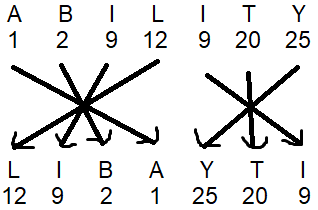
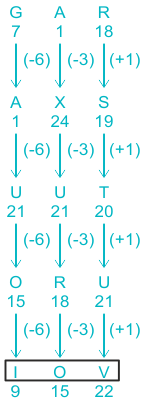 Hence, the correct answer is "IOV".
4e